The Bioinformatics CRO Podcast
Episode 61 with Elizabeth Ruzzo

On The Bioinformatics CRO Podcast, we sit down with scientists to discuss interesting topics across biomedical research and to explore what made them who they are today.
You can listen on Spotify, Apple Podcasts, Amazon, YouTube, Pandora, and wherever you get your podcasts.
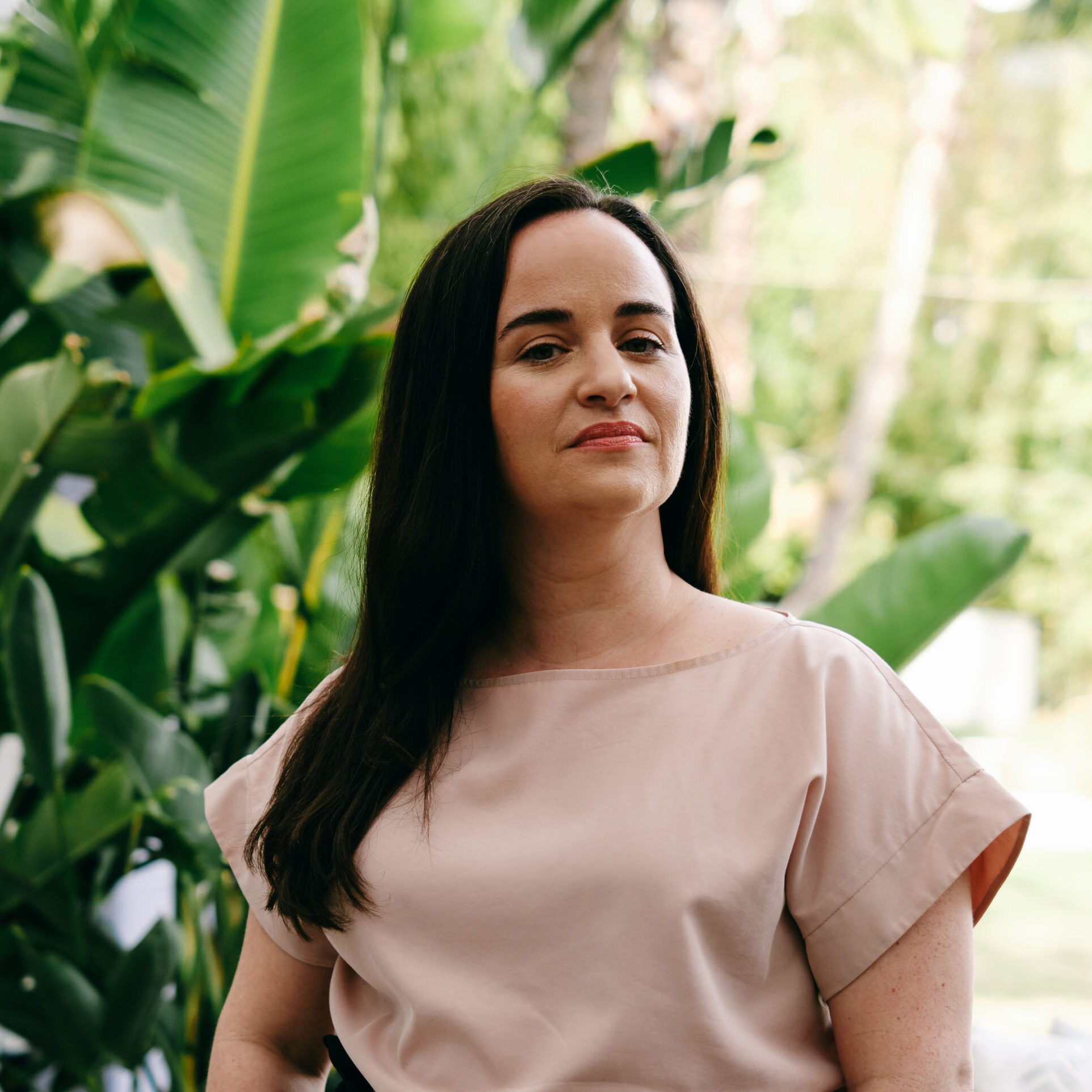
Dr. Elizabeth Ruzzo is the founder and CEO of Adyn, a precision medicine startup pioneering personalized birth control.
Transcript of Episode 61: Elizabeth Ruzzo
Disclaimer: Transcripts are automated and may contain errors.
Grant Belgard: Welcome to the Bioinformatics CRO podcast. I’m Grant Belgard and joining me today is Dr. Elizabeth Ruzzo. Dr. Ruzzo is the founder and CEO of Adyn, a precision medicine startup pioneering personalized birth control. Welcome to the show.
Elizabeth Ruzzo: Hi, thanks for having me.
Grant Belgard: Thanks for coming on. So what is Adyn and what big problem are you aiming to solve with the company?
Elizabeth Ruzzo: Yeah, so Adyn is a precision medicine company and our first product is called the birth control test and that is the first and only test that is designed to prevent birth control side effects. Our bigger mission is really around helping make scientific discovery more inclusive by pioneering endogenomics, which is the combination of genetic data with hormone data.
Grant Belgard: And can you share the personal story behind founding Adyn?
Elizabeth Ruzzo: Yeah, so I was in graduate school working on finding genes that were causing mostly epilepsy and later autism. And at some point in that journey, I unfortunately experienced an adverse drug response from my birth control prescription. In my case, my adverse drug response was suicidal ideation. I was gaslit by my medical professional who told me that no, birth control does not do that. And so I listened to that medical professional, suffered a while longer, and then finally instead trusted myself because everything in my body was screaming, this is the only thing that changed that was associated with you feeling this way.
Elizabeth Ruzzo: So when I finally went off of it and switched to a different medication and started feeling better, I started looking back on it, conducting what were informal user interviews, talking to my girlfriends and realized, you know, not all of them had had depression or suicidal ideation. But I had two friends who had one friend who had crippling death anxiety. I had another friend who had her gallbladder removed in what has it from a drug that’s still on the market despite a class action lawsuit. And then I had a whole other group of friends who were like, no, I love my birth control, right? My mood is better. My skin is better. I use it to skip my period or manage this medical condition. And I realized that this was not only a huge problem, but a precision medicine problem that I was very well trained and positioned to help try to solve for.
Grant Belgard: How big of an issue are birth control side effects in the trial and error process today? Like, what percentage of women would this affect?
Elizabeth Ruzzo: Yeah. So CDC data has shown that 80% of women have to try three or more methods, not counting multiple types of the pill. And 63% of women switch methods due to unwanted side effects. Perhaps the biggest kind of scariest readout from that is a UN study that recently showed that birth control non-use used to be due to cost and lack of access. And now it’s due to experience of or fear of side effects. And that’s at least contributing in large part to why even in the U.S. we have a 50% unintended pregnancy rate.
Grant Belgard: How would you summarize Adyn’s broader mission or vision?
Elizabeth Ruzzo: Yeah, so we really are, this came about, right, when I was studying, like I mentioned, epilepsy and later autism. And when I was doing that work, I had two kind of realizations about health inequities. The first was any time I went to do a sequencing study trying to find disease genes or variants, I had less statistical power to make discovery in non-European populations, which was incredibly, incredibly frustrating. And the second was working in autism. Autism has a sex bias, like many diseases, in this case, four times as many males as females are diagnosed. So one of our studies was trying to understand what’s the biological basis of that difference. And in doing that research, it really became impossible to ignore this massive medical gender research gap that exists, in large part because women weren’t even required to be included in clinical trials in the U.S.
Elizabeth Ruzzo: until, do you want to guess, what year?
Grant Belgard: A few years ago? I don’t know.
Elizabeth Ruzzo: 1993. So this means we just have this massive void in information. So our stated mission is to make scientific discovery more inclusive. And the insight that I had was that hormone levels in particular are just a really underutilized biomarker. They contribute to the etiology or progression of hundreds of diseases. And we’re kind of still taking this, like, dark ages approach to how we analyze them and when we look at them and why. And it’s very reactive as opposed to proactive. And no one has been taking a really big population health approach to understanding them, such that we can leverage them to be more personalized and ideally predictive of disease state.
Grant Belgard: Cool. So let’s dive into the science. How does the birth control test actually work? What does the at-home kit involve and what data are you collecting?
Elizabeth Ruzzo: Yeah. So we have built out a pretty traditional e-commerce experience for a user to come to the site. So maybe I’ll describe her from their point of view and then we can talk more about the back end. So someone would come to Adyn.com. They could purchase the birth control test and then they fill out some general information about themselves, including a detailed medical history to understand general medical history as well as reproductive health goals and preferences, I should say. And then they get shipped a kit. So it’s collection materials for collecting a saliva sample that we use to analyze DNA and then hormone samples that we actually get from a serum separating card. So you can do that at home by pricking your finger. It’s 99% concordant with the venous blood draw. And then you get back personalized recommendations in a report.
Elizabeth Ruzzo: And we didn’t want to leave people there with information like you might be at a 30-fold increased risk of a blood clot. So we actually vertically integrated to offer virtual care visits. You can have a 25-minute visit with a licensed medical provider who can then also write a prescription that we can ship discreetly to your door. So really this end-to-end care experience. And on the back end, technically a physician is ordering that test for you. So we then generate your genetic data and hormone data at CLIA-certified labs. We then run this all through our bioinformatic pipeline where we can combine all of that information. So the medical history with the genetic data and the hormone data, obviously that’s all supported by peer-reviewed publications and CDC guidelines to create these personalized reports.
Elizabeth Ruzzo: And right now each individual is getting one of about 1,000 possible reports, soon to be one of 100,000 possible reports. So a really high level of specificity in terms of which of the 200 prescription birth controls on the market might be the best option for you and why.
Grant Belgard: What kinds of genetic and hormonal factors are you looking at and how do they influence the birth control recommendations?
Elizabeth Ruzzo: Yeah, so we look at things like genetic risk for blood clot, genetic risk for depression, which we actually do using a polygenic risk score. And then we also look at six key reproductive hormones. So it’s really critical that we have you collect on day three of your cycle. So we look at things like estrogen, FSH, AMH, SHBG, and DHEAS. And we can then use those to help basically point out, we kind of think about the recommendations that we give people in one of two categories, either guiding personalization or warning personalization. So guiding personalization is something like, you know, you expressed wanting to use your birth control for the treatment of acne. Here are the options that are best for that. A warning personalization would be something like, you know, you carry the Factor V Leiden mutation, which means you need to avoid these specific birth controls.
Elizabeth Ruzzo: They pose a really unacceptable health risk. In fact, it can be up to a 30-fold increased risk in experiencing a blood clot when you’re on the wrong medication. And I should also say that’s not routinely being screened for in the standard of care today. And we’ve actually identified that risk in about 8% of our population, half of whom were actively using contraindicated birth control method.
Grant Belgard: Wow. So from a bioinformatics or data perspective, how is all the information integrated?
Elizabeth Ruzzo: Yeah, so we, first we make sure to generate, and I said this term, I don’t know how familiar your audience is with the idea of CLIA certified labs, but basically they help, they’re held to the highest standards to make sure you’re generating really reliable data, but we still run those data through a quality control pipeline to do things like a sex check, ancestry check, things like that. And then we have our pipeline create, like pull out of all the genetic variants we look at, just the ones we’re specifically interested in, and then the hormones are sort of reduced down to, right now from a reporting standpoint, are these hormones in or outside of the required reference range? And so then we reduce down what is lots of complex and very valuable data into the most critical ones that we can actually report on and leverage to help drive medical decision making.
Elizabeth Ruzzo: And then we put it all together with what we call triggers. So if you have a certain trigger, then you get a certain piece of language in the report that’s associated with that specific recommendation. And then, of course, we spend time on the front end creating a pretty interactive user experience for individuals who we kind of think of them as skimmers, swimmers, or divers. So do you want to just skim through your report, get to the key takeaways, and be done? Or do you want to go a little bit deeper to understand what genetic variant was it, etc.? Or do you really want to go all the way and read all the drop-downs, get your background information on, you know, what is the genetic variant? What does this population frequency mean? Those kinds of things. So it’s kind of a choose-your-own-adventure in that regard.
Grant Belgard: How did you determine the specific genes and hormones to include in the test?
Elizabeth Ruzzo: So a combination of things. I mean, we did a pretty exhaustive manual literature curation. And I’ll give you just one example. For the blood clot variants, there were, I think, 15 that had been implicated in the literature, sites in the genome associated with blood clot, right? But only two of them met our criteria in terms of sample size, study design, and statistical significance for us to be reporting on them. So when I talk about our mission of making scientific discovery more inclusive, part of what we hope to be able to do is replicate some of those putative findings that were in different non-European populations, for example, so we can really improve upon the way we’re making these recommendations. And on the hormone side, we worked with also with a really incredible endocrinologist. I should say, we didn’t say this already. My PhD is in genetics. So that part I know very well.
Elizabeth Ruzzo: The hormone part I knew less well. So we worked with an amazing advisor there who helped us decide which hormones made the most sense and the proper times to collect them, the proper biospecimen, etc.
Grant Belgard: How are you, at Adyn, how are you dealing with the paucity of data on various minority populations?
Elizabeth Ruzzo: Yeah, so I mean, right now we can only report on what’s really well established in the literature. And so as I alluded to, for some of the genetic variants, they’re more common in European populations. And so we just address that head on by saying, you know, these are the frequencies of this variant in these different populations. We also talk about things like for, you know, the depression polygenic risk score that we look at. Depression is a complex disease. So just because you, let’s say, don’t have an increased genetic likelihood of experiencing depression doesn’t mean you’re not going to experience it when something in your environment changes, for example. But what we’re trying to do is help empower people with that information so that they can pick the right method.
Elizabeth Ruzzo: And if they choose a method that is associated with that increased risk, that they know to maybe monitor their potential symptoms more closely than they might otherwise do.
Grant Belgard: Do you expect one day to have enough data generated at Adyn to start to answer some of these research questions directly?
Elizabeth Ruzzo: Yeah, absolutely. So I think a big part of why I’m optimistic that we can do that is, one, our data is already more diverse than the U.S. Census. But two, one of our key kind of differentiators when you compare what Adyn’s test is doing in the market compared to a lot of other at-home tests is that we’re really rooted in providing insights that have medical actionability. So there’s a lot of tests in the market out there that are more what I would consider infotainment, right? It’s interesting to know. It’s nice to know. But if you brought it to your doctor, they would most likely say, what is this? I don’t know what to do with this.
Elizabeth Ruzzo: And so by giving people something that is medically actionable, I’m hoping that we appeal to all kinds of individuals, including those who have been previously marginalized by the healthcare community and are therefore less likely to participate in research studies or kind of wellness, just infotainment kinds of tests. Whereas what we’re providing is something that is helping solve for a pain point they’re actively experiencing.
Grant Belgard: So you have a rich background in academic research. Could you walk us through your scientific career prior to Adyn?
Elizabeth Ruzzo: Oh, wow. What a fun question. I never get to talk about this. So I went to University of Washington here in Seattle for my undergrad, which is where I like to say I discovered and fell in love with human genetics. So never wanted to be a medical doctor, get kind of woozy around blood. But as soon as I learned that you could use genetics to find the root cause of disease and potentially tailor treatment, I knew that’s what I wanted to do. So I worked briefly at a Paul Allen EdTech startup, which was amazing and kind of my first experience in the startup world. But I missed I missed I missed that science. And so I ended up going back to a research lab in the medical genetics department at University of Washington, where the lab next to me discovered the first gene using next generation sequencing technology. And then I applied to graduate schools. And then I applied to graduate schools.
Elizabeth Ruzzo: I ended up at Duke University and my lab at Duke discovered the second gene using next generation sequencing technology. So I really helped get to pioneer a lot of those early computational biology approaches necessary to analyze those large data sets and find human disease genes. And then I went on to do a postdoc at UCLA where you and I met, worked with Daniel Geschwind. I initially went there thinking I would take my learnings, right? Oh, OK, I know how to find these genetic variants associated with disease in the genome. And now maybe I can model them in iPSCs and organoids and do all of this cool stuff. And instead, there was just an opportunity that I couldn’t pass up because I do love that discovery and got to work with a large whole genome sequencing data set from autism families with two or more children.
Elizabeth Ruzzo: So we ended up using machine learning and that data set to find initially 16 and ultimately 25 new genes causing autism and also demonstrated some of the first evidence for inherited risk in autism. But really have always been passionate about wanting to see that translational aspect, I guess. So being able to not just find, you know, a variant associated with disease, but figure out how that translates into changes in medical care, whether that’s an earlier diagnosis or a change in treatment and really helping move medicine away from this one size fits all or sick care model to really being perfect. So being able to be proactive about how we’re proactive about how we’re delivering personalized care to each patient.
Grant Belgard: So going from academia to founding a startup is a pretty bold leap. Was there a specific moment or motivation to kind of get you over that hump? I mean, you described your motivation earlier, but, you know, I think a lot of academic scientists have dreams and motivation, but, you know, very few kind of go out and do what you did.
Elizabeth Ruzzo: Yeah. I mean, I will say I was a, I don’t know if reluctant founder is the right word, but I was very, very cautious. Right. I kind of only knew this academic world. And so I just, when I started thinking about it, I just took almost like a nerdy scientist academic research approach to it and started reading about startups and reading books from startup founders and watching YC startup videos. And I even did this like mini MBA course and just kind of like dipping my toes in. Right. I didn’t know what a D to C model, the amount of jargon you have to learn is insane. So I didn’t know what a D to C was a B to B business model was. I didn’t know how to think about margins. I didn’t know any of that.
Elizabeth Ruzzo: And so I think there were a few people in my life who were kind of in the San Francisco startup scene that were just really generous with their time and really encouraging of me to, to try it, to do it. But I would say ultimately the biggest push was that I, I did YC at the time. I think they might still have it, had something called startup school. And it was kind of like an accountability.
Grant Belgard: Yeah, we did that as well.
Elizabeth Ruzzo: You did it?
Grant Belgard: Yeah.
Elizabeth Ruzzo: Oh, cool. So, yeah, I don’t, maybe we did it around the same time, but it was kind of like an accountability program. They had like lectures and then you would meet with a small group and just talk about stuff. And at the, at that time they had a apply to YC, do the full application. You might, if you don’t get in, you’ll get, I can’t, I think it was $50,000 equity free or something like that. And so at the time I was like, well, this is idea stage. I’m a solo female technical founder. Like this feels like very much a long shot, but I applied and I got in. And so that was the really big push off the ledge that I needed to, to do it because if Y Combinator was going to think I had a good idea and the ability to execute, then I probably did. And so that was, that was really good.
Elizabeth Ruzzo: And then going through Y Combinator was really helpful in terms of helping me shift my mindset from academic thinking and more importantly, pace to startup thinking and startup speed.
Grant Belgard: What were some of the biggest challenges you faced in the early days as a first time founder?
Elizabeth Ruzzo: I mean, I think fundraising for, as a woman and for a women’s health company was and continues to be one of the biggest challenges. Unfortunately, I wish that weren’t the case, but it just is. So that was definitely, definitely challenging. I also think just learning how to do every aspect of the business. I think I like to joke that if I knew how many legal contracts I would have to read, I might have reconsidered. But it’s sort of just like, you know, I had mentored people before. I’ve been mentoring and managing people in my career for decades at that point. But it’s very different when there’s truly no one above you to, you know, lean on or blame something on or anything else. So just that, that total shift in like pressure of everything lies on you, I think was, was a challenging one.
Elizabeth Ruzzo: So just learning, I think, then how to lean on mentors and my network to, to really get through that helped a ton. Oh, the other fun challenge was once we had the product launched, learning that anything a user can do wrong, they will. Like anything. So we had, I remember we had one, there are two really clear examples in my mind. The first was we launched like our alpha, alpha test to just like close friends in the platform. And I remember we had discovered there was like just, it wasn’t a bug, but it was something really weird about like how you entered your birthday. Like so simple, right? And we were like, nobody’s going to do that. Nope, somebody did it immediately. And then you add the, like, that’s a software issue, right? Users will do something wrong. But then you add in, oh no, you need to collect physical biospecimen, right?
Elizabeth Ruzzo: And so we have, because you have to prick your finger, we learned that people were, you know, potentially nervous about that, et cetera. So we’ve, we’ve started doing what we call prick parties where you can get on a Zoom call with someone on the team. We’ll literally talk you through it. And we watched someone spit into the wrong end of a saliva tube. And that’s the easy part of the two sample collections. So just learning, like, we’ve really had to iterate on everything about those, those collection instructions and, and how to walk people through it to get, to get accurate samples.
Grant Belgard: Consumer facing businesses are hard.
Elizabeth Ruzzo: Yeah. Exactly.
Grant Belgard: Can you, can you talk more about your fundraising journey and, and things you learned?
Elizabeth Ruzzo: Yeah. So, I mean, I think one thing that used to get talked about a lot, I think it’s gotten slightly better is just whenever I pitched a male VC, not whenever, frequently when I pitched a male VC, the answer I got was one of two things. Either like, oh, we already have a women’s health company. Like, okay, doing what? So what? You probably also have 20 e-commerce companies already. Like, so that was one having to, like, explain that it’s not a niche and it’s a huge market. Right. And the second was I would often get, oh, I went home, like, I thought this was interesting, but I went home and I talked to my fill in the blank wife, girlfriend, daughter, sister, and they didn’t have this problem. So I don’t believe it’s real. And I’m like, well, what about this CDC paper I can send you right this second or that was linked in my slides? Doesn’t matter. I don’t think it’s a real problem.
Elizabeth Ruzzo: So that was probably by far and away the biggest hurdle. And then I think the, the close third was just the why hasn’t someone done this before? Almost like it’s too good to be true if this was, you know, something people needed. Surely someone would have figured this out before. Right. But it kind of takes this, like, they talk about this idea of, like, founder market fit. Like, it takes this unique combination of, like, deeply understanding or having experienced the problem with the expertise to actually be able to solve it. So we’ve had a couple of kind of copycats come, come up into the market that have all pivoted away from having a biological testing product involved. I think because it is incredibly hard and complicated to build what we’ve built.
Grant Belgard: Day to day, how different is the life of a startup CEO from life as a researcher? What skills have you found to be transferable from your scientific training and what new skills did you have to develop?
Elizabeth Ruzzo: That’s a good question. Transferable skills, I think, communication, rigorous, critical thinking. I’d say academia does a decent job of teaching you how to take feedback. Sometimes it’s, that’s maybe most frequently in the form of peer review, but that’s, that’s a helpful muscle to be able to continue to flex. And I think the new skills that I needed were being a salesperson, which is not something I’m comfortable with at all. And some of that, I guess, back to the fundraising, you know, academia taught me to be like, well, here, the sky is blue, but here are the 10 caveats about why that might not be 100% true. Right. But if you’re in salesperson mode, you don’t give those caveats. You say it and you maybe even say the biggest picture of it. And if they want to double click down, you can get into all of those reasons. Right.
Elizabeth Ruzzo: Um, I think the other skills I’ve had to learn or skill that’s been really helpful to me is just how powerful network is. I don’t know why this didn’t happen for me in academia to the same extent. And it was sort of just like, you know, you had people around you and you networked with them. And then if there was a collaboration, I guess usually your PI set that up, which is very different than being on your own and figuring out how to network and really try to quickly get to understanding, like, what is this person all about? Where are they in their journey versus me? How can I help them and vice versa? Um, and how do I nurture that relationship? That’s really been a skill that I’ve learned more recently.
Grant Belgard: So building a health tech startup comes with unique challenges. What have been some of the biggest challenges in developing Adyn’s product and bringing it to the market?
Elizabeth Ruzzo: I think startup mentality is move fast and break things. That does not work in healthcare, right? You can’t really have an MVP because the end result is really impacting someone’s life and health. Um, and so that just looks different in terms of the, your ability to go quickly. It’s just a different scale of quickness, right? So I’d say that was one main thing. And then also just really, I think I benefited like probably any direct consumer company, uh, in the genetic space has from watching companies like 23andMe go ahead of us, make those mistakes. And so I was able to find really great regulatory counsel to help us, you know, navigate what we needed to be able to navigate to operate. Um, but all of that has red tape, right? And, and extra things you need to build.
Elizabeth Ruzzo: So for example, in our case, we physically have to have physicians who can, um, order the test and then also review the results before a patient ever sees that. So just figuring out all aspects of, of how to be compliant. It’s not just about language and your terms of service by any means, right? And so checking all of those boxes, um, was really important. But my attitude, I know this isn’t the attitude of all founders, was to really be above and beyond in terms of being conservative and compliant because that will set us up with the foundation to be successful in the long run.
Grant Belgard: What’s a key lesson you’ve learned as a founder that you think other scientists, entrepreneurs would benefit from knowing?
Elizabeth Ruzzo: I think one key lesson is probably to figure out how to fail quickly. I think in academia or in science, a lot of times what you’re trying to do is maybe you’re trying to disprove something, but I also think our attitude is like, let’s keep hammering at it and like figure it out. That’s some, some of that is a similarity, but in entrepreneurship, what you need to be able to do is really quickly say like, that didn’t work. And I believe I have enough data to know that that didn’t work. And then move on to the next idea. And, and that can be radically different, right? It doesn’t have to be like an incremental. Now I’m going to try, I’m going to go from A to B. I might go from A to Z and try something totally on the other side of the spectrum.
Grant Belgard: If you could go back and do one thing differently in your startup journey, what would it be?
Elizabeth Ruzzo: I think I probably would have spent more money more quickly, which sounds insane. But I think that I was so petrified about fundraising again that I didn’t, that I was overly cautious in, at the, at the sacrifice of some, some speed, basically.
Grant Belgard: What advice would you give to fellow scientists or academics who have an idea and are considering starting a company?
Elizabeth Ruzzo: I think I would say, try to find mentors who have done this and ask them for advice. I also think I would say, don’t be too precious with your idea. I think a lot of times people are like, oh, I shouldn’t tell anyone because then they’re going to go and copy me. This is so incredibly hard to start a company. Execution is everything. Execution is everything. And like there aren’t, there probably aren’t that many people, especially if you’re coming from academia, like with your specific set of expertise and with your passion to go and execute against this idea. So especially when you’re trying to figure things out in the beginning, you don’t need to be too cautious about what you share with who. I also think if you’re in an academic setting and trying to spin out technology from that institution, you can potentially work with tech transfer offices.
Elizabeth Ruzzo: I also think I would say, I would probably, looking back, I mean, YC was great for me in terms of being a catalyst to, to go and try it. I think if you can get non-dilutive funding first for those early days of R&D, I absolutely would because venture capital money is very dilutive, meaning you have less ownership over your business ultimately. And so I think I would recommend people look into those options first, including SBIR grants to help you get started.
Grant Belgard: How can life scientists begin to develop the skills or mindset needed for entrepreneurship?
Elizabeth Ruzzo: There’s probably lots of ways to do this. I think I would recommend trying to art surrounding yourself with like-minded individuals who are maybe one step ahead of you in their entrepreneurship journey, as well as just doing things like there’s a ton of free Y Combinator videos online that you can listen to to start understanding the concepts, things like product market fit, go-to-market strategy, all of these things. To really help you start thinking about all the pieces because you might have the best scientific idea in the world, but that doesn’t mean you have a business.
Grant Belgard: Do you have any advice specifically for women in science who want to follow a similar path?
Elizabeth Ruzzo: I think just don’t be afraid to be super gritty and don’t feel alone. You’re going to get rejected a hundred times more than the man down the lab bench from you. And that just is what it is. So be ready and try to let it feed you with that anger. Let it feed you and fuel you rather than make you discouraged because it’s just it’s an uphill battle. And I think, again, find mentors, find resources. There’s tons of communities and groups built for female entrepreneurs that you can be a part of and definitely, definitely have at least some peers that are also women because they’ll be able to relate to what you’re going through in a very different way.
Grant Belgard: Speaking of mentors, who have been your mentors and what impact have they had on you?
Elizabeth Ruzzo: Yeah, I mean, I’ve had quite a few. I think my YC partner Gustav was amazing. He led Airbnb at growth and was incredibly helpful. I had a founder friend named [Kasser] who’s exited successful companies before and now is running, I think, a Series D company. So he has been an incredible mentor. And my sister was incredibly helpful. She worked in startups for a long time on the HR side. So she was incredibly helpful in helping us think about how to build out our culture for the company, which is something that I watched a lot of my peers put kind of on. Oh, you think, oh, hiring culture, whatever. I’ll think about that later when we’re bigger. But really having it baked in from the beginning was incredibly helpful. And then just lots of my other founder peers, I think. I’m in a great women’s health network and just healthcare CEOs that are female network in Seattle.
Elizabeth Ruzzo: That has been incredibly helpful. And I feel very lucky to have found all of those individuals. But they didn’t all come, you know, at the same time. It wasn’t like an overnight, oh, I have all the perfect, perfect mentors for this next phase.
Grant Belgard: Well, what’s the best piece of career advice you’ve ever received?
Elizabeth Ruzzo: Oh, that’s a good question. I think probably either having have a have a growth mindset or be a servant leader. I think both of those have been really helpful to me. Growth mindset kind of goes along with what I was saying before about the skill of being able to, like, take feedback and apply it. Right. I think I definitely have the attitude that I am constantly learning and constantly trying to improve and that that’s just critical for the company to keep evolving and be the best that it can be. And this idea of servant leadership is like you you maybe get side by side with someone on something you’re about to try to ask them to do so that you understand really what it takes or you jump in on the weekend for one of those prick parties. I was saying so that the other people on my team can go have a weekend. Right.
Elizabeth Ruzzo: You don’t have to have this like, well, I’m the boss, so I don’t do that attitude. Right. Really roll up your sleeves and and help. And I think that creates a really strong culture.
Grant Belgard: What’s next for Adyn? How do you see the company and its products evolving in the next few years?
Elizabeth Ruzzo: Yeah. So I think the the next biggest area of focus we want to work on is helping with menopause. So helping women think about hormone replacement therapy and what the best options for them are there. Another huge unmet need, big market, big pain point. Right. But really where I want to see us go is become more of a household name for people who look at us as a company that delivers medically actionable insights from genetic and hormone testing. Right. So they’ll know they’ll know and respect us. And what I mean by they is not just patients, but also hopefully physicians and payers as well. So in the big picture, how do you envision the future of women’s health and precision medicine?
Grant Belgard: What changes do you hope to see and what role do you want Adyn to play in that future?
Elizabeth Ruzzo: I mean, there are a lot of changes I would like to see. I think that a big part of that has to be that we’re investing research dollars and venture dollars into businesses that are capable of conducting research to actually advance the field, to actually understand these conditions. I said that stat earlier, women weren’t even required to be included in clinical trials in the U.S. until 1993. We have a lot of ground to cover, a lot of catching up to do. And so really, I think investing in those companies is part of it. But then also being able to take those learnings and translate them to actually improving care. And I think the other thing that needs to happen is we’re at sort of a really interesting moment in time in terms of women’s health. There has been more investment, more companies that have popped up over the last few years.
Elizabeth Ruzzo: And so now we have to figure out, you know, what does that look like to have what in health care they love to talk about this idea of like, oh, no, a point solution. No one wants a point solution. Like, I don’t want to have to go to one company for my diabetes management and another company for my osteoporosis. Right. I want one company that can give me all of those things in one vertical, integrated, beautiful platform. Right. So in women’s health, we have so much opportunity that there are so many of these different companies that have come up. So how do we synthesize that? Where does that happen? Is there a company who comes in and helps synthesize that for us? What I would hope is that Adyn plays a role in helping deliver that end-to-end care since we are able to do the testing, the virtual care and the pharmaceutical delivery.
Elizabeth Ruzzo: And we can potentially help provide novel insights that then lead to actionable care outcomes. So that might look like us then referring back to a physical hospital or a physician. It might look like us referring to a different digital health company for a specific indication or disease that they might have. And so I really hope that we’re central to this next phase of women’s health that becomes more personalized and leads to measurably improved outcomes.
Grant Belgard: For listeners interested in Adyn, how can they learn more?
Elizabeth Ruzzo: Yeah, I would recommend you come to our website, Adyn.com, A-D-Y-N.com. You can sign up for our newsletter. You can read tons of great medically or PhD-reviewed blog articles on our blog called Mind the Gap. We also have socials at Adyn Health that you can follow, and you can also follow me on LinkedIn.
Grant Belgard: Before we wrap up, on a lighter note, you’re working so hard on revolutionizing health care. How do you unwind or maintain balance in your life?
Elizabeth Ruzzo: This is something I really am working on hard these days. I’m trying to go for many more walks. I’m standing on a walking pad at my desk right now, so that was half the battle. And doing yoga and making more time for friends and dinner parties and walks outside with those friends. So it’s been good.
Grant Belgard: Well, thank you so much for the enlightening conversation. Really appreciate you coming on today. And to our listeners, we hope you enjoyed the discussion. Be sure to check out Adyn if you’re interested. And thanks for tuning in to the Bioinformatics CRO podcast.
Elizabeth Ruzzo: Thank you so much.