The Bioinformatics CRO Podcast
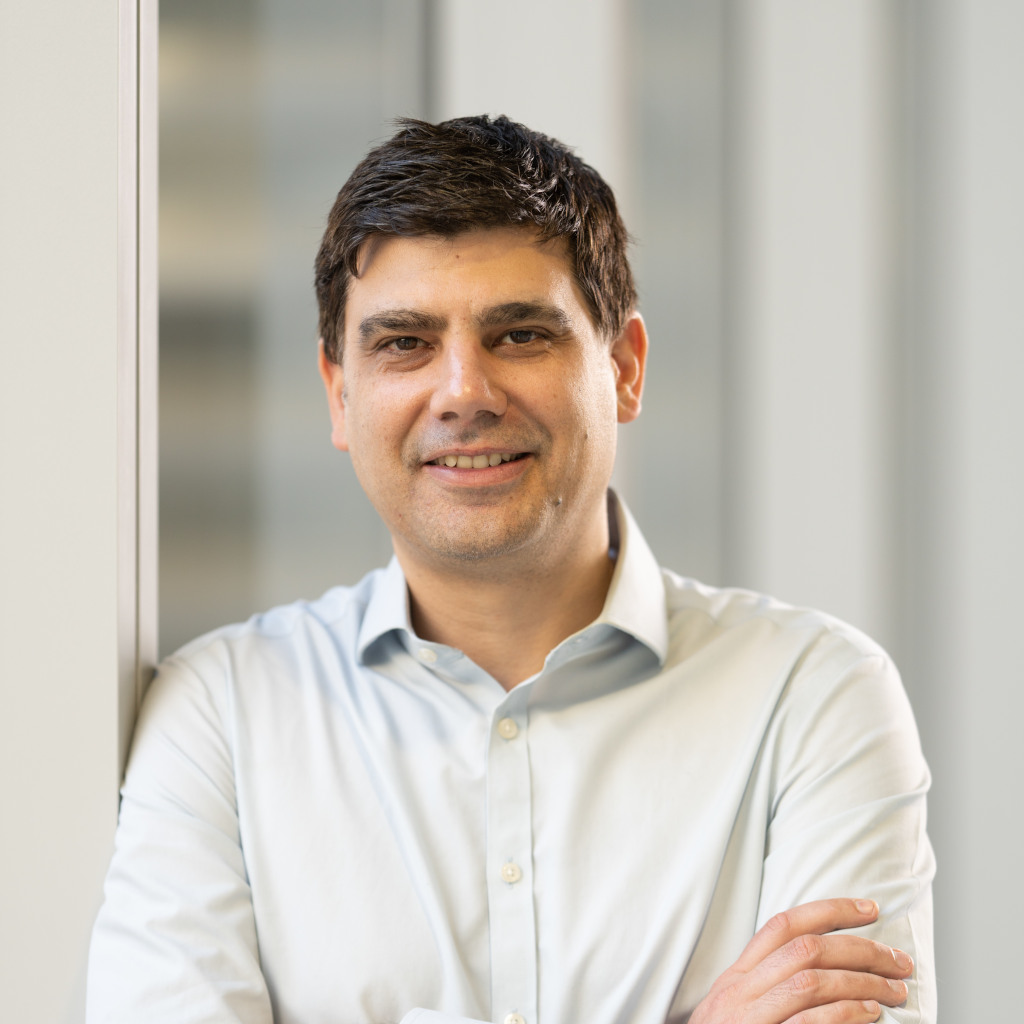
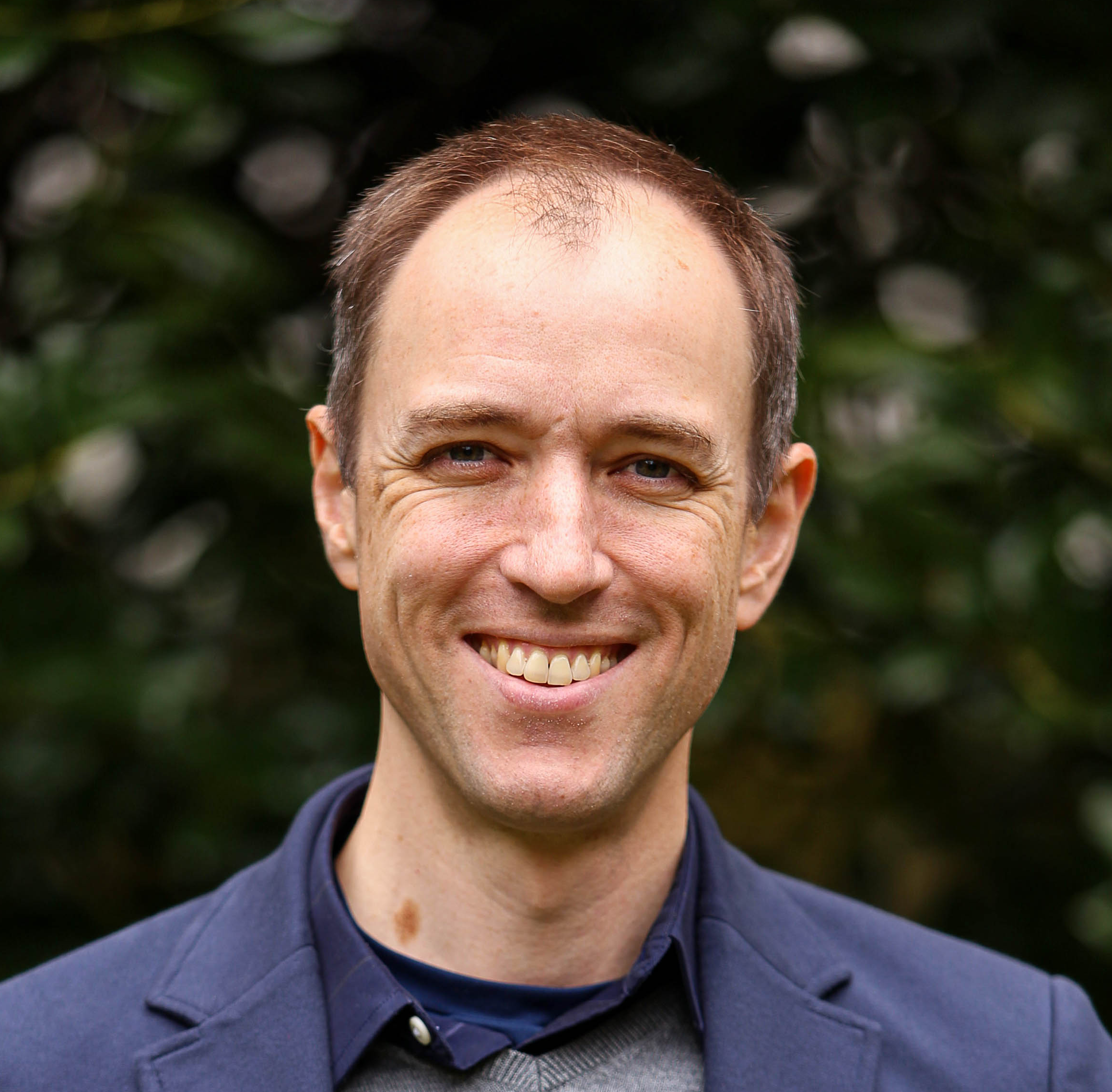
Episode 94 with Michael Fanous
On The Bioinformatics CRO Podcast, we sit down with scientists to discuss interesting topics across biomedical research and to explore what made them who they are today.
You can listen on Spotify, Apple Podcasts, Amazon, YouTube, Pandora, and wherever you get your podcasts.
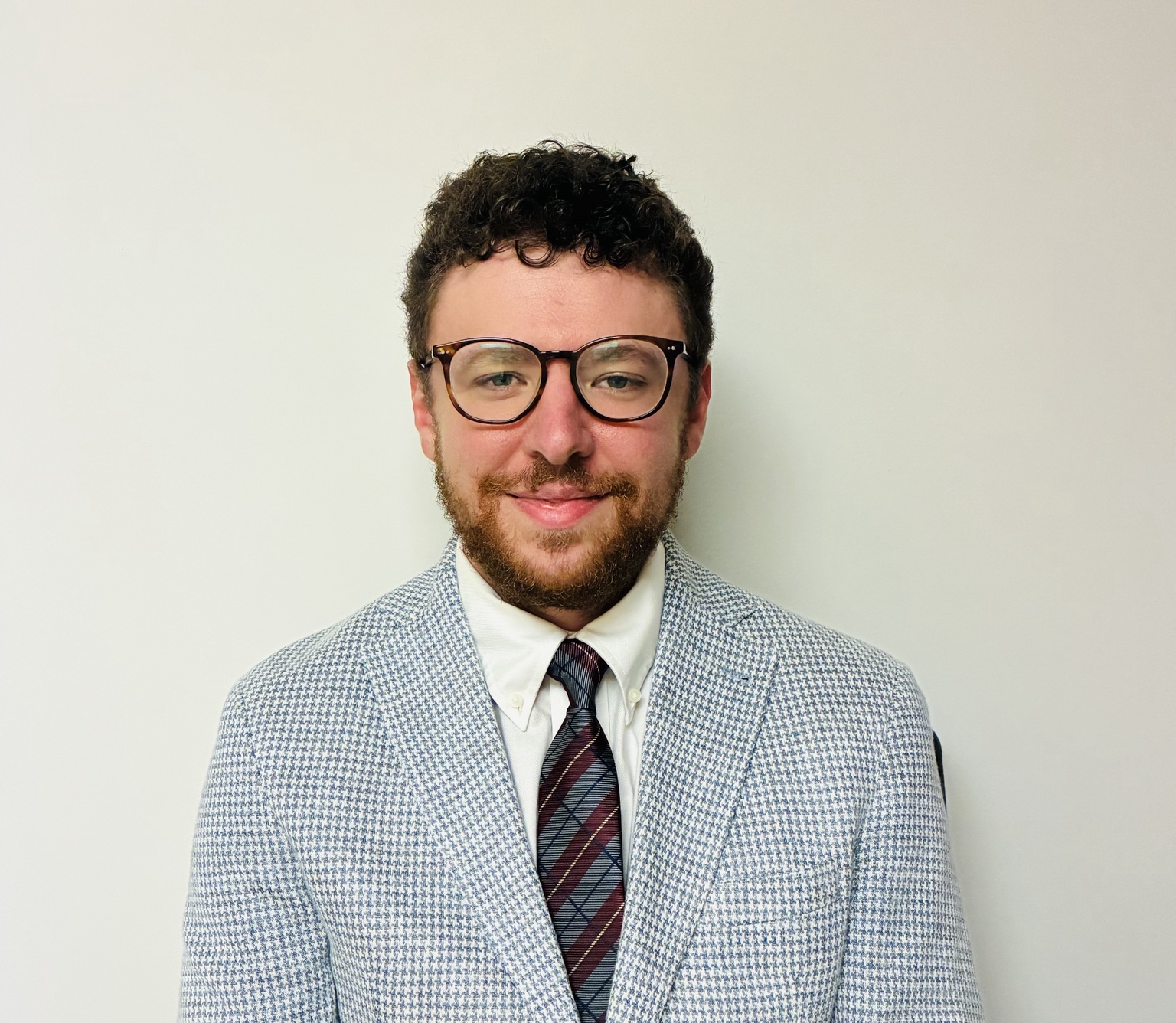
Michael Fanous is the founder and CEO of FanousPhotonics, which makes AI-powered digital pathology scanners. Scanimus is a research-use only portable digital microscope and slide scanner for pathology.
Transcript of Episode 94: Michael Fanous
Disclaimer: Transcripts are automated and may contain errors.
Grant Belgard: Welcome to the Bioinformatics CRO Podcast. I’m Grant Belgard, and today I’m joined by Dr. Michael Fanous, founder and CEO of Fanous Photonics, which is developing Scanimus, a research use only imaging system. Michael’s research at the University of Illinois Urbana-Champaign and UCLA brings together microscopy and machine learning, including work on continuous scanning and automated tissue analysis. Today, we’ll explore what we should demand from a scientific image, how an idea finds its way out of the lab, and what he’s learned about choosing problems and building a career. Michael, welcome to the podcast.
Michael Fanous: Thanks a lot, Grant. It’s great to be here
Grant Belgard: How would you describe the work you’re doing now, and how do your different roles fit together?
Michael Fanous: Yeah, so I’m definitely juggling a lot of different tasks, different roles scientific, entrepreneurial. so on a daily basis, I’m transitioning from a design, scientific, engineering mentality to a more like financial, entrepreneurial pitch, sales, that sort of thing. becoming increasingly easy and smooth, but it’s still a work that I have to navigate through. And so it’s not always as tidy as I’d like, but I think I’m increasingly getting the hang of it and making things more efficient, understanding which efforts are helpful and, productive and which are just draining and time-consuming. So I’ve been getting better at making it tidy and, know, efficient.
Grant Belgard: What is Scanimus and who would you most like to see using it?
Michael Fanous: What is Scanimus? it’s a microscope, it’s a scanner, it’s a hybrid microscope scanner. It’s a category-defining product. I don’t know exactly what it may be called in the future if it really takes off. Maybe it’ll be called a scanoscope, maybe it’ll be called a micro scanner. We’re really trying to create something in between the two systems that are available to pathologists right now, which is the manual microscope, the centuries-old technology, and the modern scanner which is usually operated by someone else in a different facility, an involved piece of equipment. And so we’re really trying to bridge that gap. We find that there’s a great gulf in between the two worlds of the manual old tech and the modern scanner.
Michael Fanous: And we think there’s a real opportunity there to try and emulate what a pathologist is doing when they’re interacting with a microscope and try to digitize that process and facilitate and streamline that workflow. what we’re trying to do. And of course, the pathologist is our main primary potential customer. So that’s what we’re really trying to cater to is the pathologist first and foremost.
Grant Belgard: Could you walk us through one intended use case from a specimen arriving to a pathologist deciding what to do with the result?
Michael Fanous: So this is a research use only device. I should specify that. And really in terms of intended use, because the statistics in pathology are so modest with respect to how much is being digitized in the state-of-the-art top-tier clinics, institutions, what have you, are just trying to improve those numbers. So whatever the use case may be, assistive review, triage, finding a region of interest quickly, we’re able to intelligently navigate through using different objectives and magnifications and depth of fields the way that a pathologist might. so in just improving the numbers and the statistics and having a scan, irrespective of how it’s gonna be used, if it’s gonna be used for just save it later for further examination, maybe use it for one of the software companies, the training data sets. You hear about like millions of slides that they’ll have, and it’s considered like a boast.
Michael Fanous: But millions of slides is really scratching the surface. The human body has so much tissue. If you were to actually section everything, you’d have billions of slides. For one human an adult with sixty liters, seventy liters of volume you have way more information, and there’s a great deal to be done. I think we’re just really at the absolute beginning. This is a very embryonic. The whole digital pathology field is we’re at the inception of it. This is the dawn, I think it’s an exciting time, but it’s also a time to, I think, take action and be more proactive about digitization, making scans, and, more images and creating larger data sets. I think that’s in itself very useful.
Grant Belgard: Where do you see the most consequential bottleneck in turning a glass slide into useful biological information?
Michael Fanous: Yeah. The, the greatest bottleneck currently is just to take images. It sounds trivial and obvious, but if you’re not taking pictures, you can have all the AI algorithm and sophistication and power that you like. But if nothing is recorded, even at lower magnifications, even at cruder resolutions, then you cannot process that information. So having affordable, accessible, ergonomic, this is another important one, systems, portable this is a, a real big barrier right now that we’re trying to overcome with a system that is just very easy, very intuitive, and really affordable. This is undercutting a lot of the, the competition by orders of magnitude.
Grant Belgard: How does continuous scanning work and what trade-offs does it entail?
Michael Fanous: Yeah, so trade-offs are really important. So is nothing free. There is no free lunch. We pay for everything that we initially are able to compromise. We pay very heavily in training. It’s all about training. If you see what happens behind the scenes, you’ll realize that our system, yes, it goes very fast. We’re able to reconstruct rapidly, but our training is very slow. So let’s go through what is continuous scanning exactly in our case and how it compares with most scanners. Most scanners will use what’s called stop and stare. So the specimen is literally physically halted during an acquisition. There is no movement or else you would get what’s known as motion blur.
Michael Fanous: There are some special types of cameras that use a line scanner configuration where the sample is moving continuously, but you’re not seeing that interactively, and then there’s a post-processing event that computationally renders the image. And so that’s expensive. It needs to be synced with the stage. It’s involved. We are trying to circumvent all of that with standard, more modest microscopy hardware and use just a standard global shutter camera, CMOS, and have it interact, being displayed as you’re taking the scan. So the pathologist is seeing this. They’re looking at the slide move by, and they’re able to see the scanning process real-time, which already gives them an idea of what they wanna look at and what they wanna see. And so this is really helpful.
Michael Fanous: And then we use what’s called an image-to-image translation network to convert that motion blur image into its sharp counterpart, which sounds a little bit bold and maybe a little reckless. But because our data sets are carefully put together and all this is supervised, so there needs to be labels. So can’t just throw in data and hope for the best and make sure the algorithm just works out. No. This is very carefully selected in terms of hyperparameters, the trainings all of the data for each different staining type needs to be carefully picked out and hand-selected. And then, different objectives require different training types. So when we have our ground truth, we get that through slow scans. We can’t do that just using a normal stop-and-stare stitch. So it’s actually very time-consuming. It’s boring on our end for that part.
Michael Fanous: We’re just trying to make sure that the fidelity is as high as possible. So that’s what we’re doing, if that makes sense.
Grant Belgard: How do GANscan, BlurryScope, and Scanimus relate to one another, and what are the important differences?
Michael Fanous: So those are three different names for the three real big milestones of the evolution of this technology. GANscan is really proof of principle. It’s a theoretical, mathematical-based concept of converting the motion blur into the sharp image. We used at that point lab benchtop microscope. We fiddled in the background software, and were able to manipulate the stage to some degree. We were able to make it go fast, make it go slow, and then make an image to image. But we didn’t build anything. There was no concrete hardware assembly on our end. And so we didn’t pursue anything commercially or patent anything at that point.
Michael Fanous: When I then went to UCLA as a postdoc and we wanted to take it to another level, make it a little bit more dexterous in terms of how much we can manipulate the speed, how we can play around with a video that is not sync with the stage but increase the post-processing ability. We actually built something, and that was designed for immediate classification on images, comparing that, determination with a real pathologist assessment. And so we wanted to see how far we can take that. And at that point, there was a device. It was in the lab, it was sitting there, and it was, asking itself, “Can I be presented to a pathologist in a commercial setting?” To me. So that’s when I decided, this is really potentially something, and I had this notion that, pathologists in the West would find it very appealing if I had just added a few components. At that time, it wasn’t an integrated device.
Michael Fanous: You needed separate laptop, a separate computing device, And so I thought if it was a whole integrated system, which pathologists don’t have really on their desks, ’cause I had worked with many pathologists in my PhD program, at the postdoc. I had seen their offices, and I figured they could really use a nice, elegant, easy-to-use gadget where it’s all there, and they just need to push a button. It’s extremely simple to use. And that was the designing. The engineering was the same as BlurryScope really. There was no new groundbreaking engineering or science. It was just about design. And from BlurryScope to Scanimus, and the reason why we renamed it for obvious reasons. We don’t want to include the name of the primary defect that we’re trying to resolve in the name of a marketing strategy. So I thought Scanimus just sounded more elegant and more presentable at conferences and so on.
Michael Fanous: And so from BlurryScope to Scanimus, there must have been eight or nine different prototypes that we were playing around with, just little things, little edits in terms of the dimensions, things that You may appreciate subconsciously, but you would never say, “Oh, look, this is 35 centimeters tall, that the angle of the screen now is 20 degrees tilted a little bit.” But it was all done in a way to make it more appealing and more inviting for the average pathologist. And it’s very open, the system, and that took a while to figure out that would actually be little bit more appealing to a pathologist.
Grant Belgard: How do you decide which problems to solve with optics or mechanics and which to solve with computation?
Michael Fanous: Yeah, that is a really good question. So that is something that I wanna keep asking myself constantly, and that’s something I think we should Nowadays, especially with the power of AI, because so much can be reconfigured and reinvented on the mechanical end, I think we should constantly suspend our notions of what needs to be physically there and what cannot be challenged. We need to continuously challenge longstanding notions of like what is traditionally acceptable and what can be replaced or edited or reconfigured using AI. And I think the, the boundaries for this are limitless. It never ends, basically. You can keep trading. It’s a constant push and pull, playing around, editing, changing.
Michael Fanous: And if you take it all the way to the extreme of computation and you say “let’s just get rid of every single component and compensate for it with AI,” and then you’re left with one photodiode, and it’s just, you’re inferring everything from the most minute signal. That is, of course, not realistic. So you wanna be able to capture as much information, but what you’re trying to do is increase speed, reduce price, improve the portability. Those are the three main factors that you’re trying to optimize, and I think it never ends. I think with all of this new printing of any type of material really, sky’s the limit, and, your imagination, given what the AI could do and the algorithm and building around the AI, which is something that’s still novel.
Michael Fanous: Most people, when they’re trying to make so-called intelligent devices, they’re just tagging on at the tail end the algorithm and using the same data but then just processing it differently. But the real channel to true novelty and real advancement, in my opinion, will be doing the precisely the opposite, asking yourself, “the data can be processed any which way you like. Now let’s reconfigure, redesign the whole mechanics.” And so asking that question constantly I think is really healthy in this sphere and pretty exciting too.
Grant Belgard: How do you distinguish recovering information from generating something that just looks biologically plausible?
Michael Fanous: Yeah. So that’s really important in our case because some of these models are exceedingly good at presenting you something that is very pretty. so the, the big mistake here is assessing things qualitatively. So it’s quantitative versus qualitative. And for us, we’ve used every possible technical scientific metric to assess the acceptability of the image, like SSIM, PSNR. And so the other thing that we do is we use classifications to compare it against pathologist determinations. After that, we need to consult with a pathologist. Just asking yourself if it’s pretty, because some of these models especially, and you need to be careful which model you choose.
Michael Fanous: So with our model, we’re never reinterpreting features below a certain resolution which is important because certain models like Diffusion, for instance, they can be programmed to optimize for visible attractiveness and appearance and just how handsome is the image. And that’s not something you wanna be doing when you potentially may be compromising important medical features. So we’re very careful and cautious about that.
Grant Belgard: What evidence would persuade a skeptical pathologist to trust an output? Or what would you still tell them not to use it for?
Michael Fanous: Yeah. So if there’s any form of skepticism, I always like to compare with three different methods. So our system can handle all of this. They can do one, just the analog manual. You manually move the slide, and you’re looking at a live feed. That’s that’s one. The second thing you can do is you can have the traditional stop and stare method on our device. So you’re looking at just a crisp, sharp acquisition the whole way, and then the stitch is rendered normally. And then you can compare it with our deep learning deblurring system and see how you like it. Now if possible, and this pathologists typically have a set of slides that they keep at home or that they’re very intimately familiar with. They know all the details.
Michael Fanous: It’s like their precious little samples that they’ve just had for a number of years, and they know, and they’ve analyzed in different ways, and they wanna continue looking at it. So if they can bring the slide to me at my exhibit or on our device, that I think is the best way to convince them.
Grant Belgard: If scanning became much easier to access, what biological question would you want people to tackle?
Michael Fanous: Yeah, so I love that question because it’s a thought experiment. So if you take it to the absolute limit and you say to yourself, “Okay, now we’ve reached a point where digitization is trivial.” In fact, we have the luxury of digitizing more than we, we can handle. That’s not currently the case. In fact, currently, it’s the opposite. We have an unmet need. There’s a dire situation where we have too many scans that are not being processed and not enough pathologists. So it’s the opposite of what many people think. let’s say that we reach a point where anyone can digitize so easily that… and all of the classifications and the AI power and so on, so the pathologist now, all they need to do is make final approvals and make sure that with the edge cases and the extreme scenarios, that there are no problems. And then they have now, a very cushy career. It’s already good now.
Michael Fanous: It pays well and it’s a comfortable lifestyle, I think. But I think it’ll be really truly remarkable once all of the AI advancements come into effect. And then you have the option, I think, to reach for the stars, to try and do something absurdly scientifically novel and make some sort of breakthrough. And think about it, in terms of a biological insight that you would never find normally but now with AI empowerment, you can reach for a Nobel Prize or something. I know it sounds silly, but I think you can really strive for something very ambitious now at that point.
Grant Belgard: What do you try to learn from potential users and how has that feedback changed your priorities?
Michael Fanous: Absolutely. So when I go to conferences, when I’m meeting with pathologists and interacting with them, initially, I was just trying to ask myself, “Do they want this device?” That question was answered very robustly, very quickly. And so it wasn’t really a problem. Then I had to ask myself, ” what can I do to make sure that everybody likes it, and how can I please everyone?” But then I realized that’s the wrong question because if you have too many use cases, too many features, it gets too complicated, and that defeats the point. So the real question is, how do I make it irresistible to as many users as possible? That is maybe a cheeky question, but it’s the one I liked, and it’s the one that I’m still thinking about constantly. How do I make it irresistible? No excuses. We’ve pushed the mechanics and the optics and the AI as far as we can.
Michael Fanous: The ergonomics, the portability, It’s five pounds. When you lift it it’s unbelievable because this is a complicated optical device, and it just feels like maybe there’s a football in your hand. So that’s the thing that I’m trying to hone in on. How do I make it irresistible and make sure that there are no excuses for most people, that there are no excuses?
Grant Belgard: How are you Approaching funding, and what evidence do you think matters most to potential backers?
Michael Fanous: So that has been probably the biggest challenge on the entrepreneurial side, is trying to transmit the strong responses that I’m getting from pathologists to the average investor. The showing them and presenting the value proposition has been very tricky on my end. They’re mostly interested in figures and finances, and no amount of emails or, recommendations is really convincing for them. And I understand, that there’s quotas and they have to meet– they don’t necessarily understand the field of pathology. So that has been the trickiest aspect in terms of securing funding. It’s been very hard to try and transmit the response I’m getting at conferences and from pathologists, and to somehow distill it and bottle it up and then present it to them a way which they interpret as profitable.
Michael Fanous: that has been certainly very challenging and continues to be, I suspect, will be until this becomes widely adopted.
Grant Belgard: Which capabilities Are usable today and which are still research questions or future ambitions?
Michael Fanous: So we we have a lot of things that are in the works that we want to implement. Because it’s a research use only device, we’re very cautious with classifications, for instance. In terms of speed, we can always push the boundaries of that given how robust the AI is. So we’re still quite conservative, even though it doesn’t look like it. When I’m showing you the demo, people are saying, “It’s going so fast,” but they’re not saying it like in a negative way. They’re kinda saying, “And I think I may enjoy actually this whole new phenomenon here that I’m watching unfold before me.” So we can always go faster actually with the same frame rate, but using more robust networks. then there’s all sorts of different modalities that we would like to try and implement.
Michael Fanous: So there’s no end to the amount of features that can be included with this sort of scanning style, but we wanna be conservative right now. So I would say continuous scanning, deep learning, deblurring, that’s our niche. That’s what we’re trying to hone in on, and that’s what is our primary focus.
Grant Belgard: Where, if anywhere, would you connect this kind of imaging with genomic, functionalomic, or other molecular measurements?
Michael Fanous: Yeah, so that would involve fluorescence, and this is something that I am so eager to try and put together and implement because it really lends itself beautifully to, a GANscan-like modality. Unfortunately, fluorescence will have to wait. I’m just gonna have to be patient on this, bide my time. Fluorescence will involve because of long exposure times, it complicates things. But for me as, as an engineer, I already have all these… I don’t wanna give too much away, but there’s crazy ideas involving new kind of filter cubes, and I really can’t wait to unveil this. Probably, though, it won’t be for another year, probably a year and a half, because there’s just so much to do right now with the basic bright field compound transmission system. So yeah it’s definitely on our list, fluorescence with different types of fluorophores and so on.
Michael Fanous: And I think that motion blur would actually improve the situation and help you get more information. So that will hopefully be revealed 2028 or so. That’s– I’m very excited about that actually.
Grant Belgard: Let’s talk about how you got here. Before we get to degrees and job titles what were you like as a kid? What held your attention?
Michael Fanous: It may surprise people to know that I was very artistic I, I didn’t care for video games very much or computers. In, in the early 2000, I actually detested all things that were related to computers and software. I found it ugly and just unattractive and awkward. I liked instrumentation. I liked music. I was obsessed actually in my teenage years with guitar and violin, the possibility of improvising I thought was just so exhilarating. And I still have very artistic inclinations, but if I’m honest with myself, my aptitudes are more on the technical side. I was always better at math and physics especially was my best subject than I was at, for instance, literature or painting or anything like that, even with music. But I like to try and merge those two worlds together now. I think of a microscope as an instrument.
Michael Fanous: To me, what we’re building is one of the most exciting objects because of all of the degrees of freedom and all of the intelligence that’s involved. And so also, like histology data, to me, that’s like a painting. That’s like a work of art. So I see things in a very like romantic, artistic lens, and it used to be the arts and sciences. If you go to the Getty Center and you look at the microscope there, 1750s, half of it is a sculpture. It’s all filigree, gold, beautiful, intricate, ornate all of this stuff, and that’s half of the system. Because at that time, it was about being erudite and also fashionable, and those two things were not distinct. Now it’s like opposite. It’s diverged. Art and science couldn’t be more further apart, and it’s like the uglier the device, now you know that it truly has many functionalities, and it’s a very impressive advanced system.
Michael Fanous: where I think we should try to go back and try to make things a little bit more attractive, and I don’t know if that resonates with anyone, but that’s my kind of mindset.
Grant Belgard: How did you decide what to study, and what did that decision look like from the inside?
Michael Fanous: My father was very keen for me to be a doctor and work for him basically, and I really disliked that idea. I remember I thought I could never, work in hospitals because I’m too sensitive, and I immediately start commiserating with everybody. And I’m not trying to say, certain doctors are less sensitive or anything, but especially pathologists, they, I think can sympathize with this. They’re not really interacting with people directly. They’re interacting with slides. They’re alone. They can listen to music. They can be in their world, and so that’s something I have in common, I think, with pathol– And that was… If I was going to be a physician at all, it would be something like that. So I decided to pursue math, engineering because that’s what I was good at, very basically.
Michael Fanous: That may sound not terribly romantic but that’s what I was good at, so that’s just what I did because I knew I would be reasonably competent and I could pass, the exams okay. Because with physiology and biology, I remember I struggled terribly. I don’t have a good recollection. I have difficulty memorizing things, and that’s why being a physician or a doctor would never work out. There’s just too much to recall
Grant Belgard: How did You find your way to work uh, connecting biology, optics, and computing?
Michael Fanous: So I’ve always been fascinated by light. To me, light is magic especially on the visible spectrum, what is light? The more you study it, the more you realize that scientists are just approximating the different categories. It’s a ray, it’s a wave, it’s a beam, it’s a photon. Nowadays you’ll go to conferences, and it’ll be optics and photonics, as if these are two distinct things, it’s like optics is… No, optics is this. It’s the microscope with the incoherent illumination, and photonics, that’s, lasers and stimulated emission and all this, and I’m thinking, “Okay they’re really just two words that mean the same thing.” And it’s all just magical to me and extraordinary. With biology for me, the thing that’s most fascinating is human biology, the human body. That’s life. That’s organic, and there’s real intelligence. The brain is the original intelligence.
Michael Fanous: That is the authentic intelligence. So that to me will always be more remarkable to me to see intelligence in a human being than in a machine, and I think a lot of people will feel that way as well. And so combining what’s called the field of biophotonics or biology and photonics, that’s just a natural marriage, which is you don’t need to sell it to me. You don’t need to make the pitch. That to me is immediately very attractive. Computation, I would say is like the junction. It’s the connection between them. It’s the way it communicates. When you take an image of a biological specimen, you have now some data which can be processed using computation. So that’s… it’s the language that bridges them, I would say.
Grant Belgard: How Did you choose your doctoral research direction, and what were you hoping to understand?
Michael Fanous: So initially I joined niche kind of lab because it had computational imaging, basically. And it was called Quantitative Phase Imaging Lab. And extremely niche and the vision for my doctoral program I really didn’t have the capacity to pick the projects and make big, bold ideas. At that point, when I started my doctoral program, I just wasn’t there. There was a lot of work to do, I had too much to learn. So really, it was just trying different directives that my advisor gave me, and along the way, certain projects failed, and I faltered terribly. then other… And not necessarily what I expected that took the longest. Projects, they take two or three years, and it’s barely making it through the submission process and, it’s not a terribly impressive journal necessarily. And then some other ones, they go so quickly, and they immediately are accept– It’s just, it’s totally different.
Michael Fanous: So back, that’s when I reframed my whole thesis around pathology because those were the ones that did the best. And so I just ended up pursuing the combination of deep learning and pathology, and I was really happy with how that turned out. But it wasn’t by design and that wasn’t the inception.
Grant Belgard: What did your time at Illinois teach you about how to do science beyond the techniques?
Michael Fanous: But I should say that when I got to Illinois and when I got finally into the lab group, I felt so inferior to all my colleagues. They just surpassed me in every way, especially technically and, setting up experiments. And a lot of people don’t necessarily know this, but at the higher levels of academia, in physics and optics and these things, you need to be able to know a lot of information. It actually helps to have a photographic memory. These are the people that tend to excel the most, at first at least. And like, a colleague of mine, Chen Fei, he could do 3D Fourier transforms in his head. And for the first few years, I was trying to catch up with him and play that game. But it took me like three or four years to realize that I could never compete with this sort of style.
Michael Fanous: And also, the way that they picked their new projects, they would find the incremental progress in that niche field. I could never… I would be at meeting after meeting, and I always felt like something is off here. I’m not making any progress. And it took me finally, like the fourth or fifth year, I would– I stepped back and tried to think of things outside of the boundaries and the, the box that is our lab and our specific subjects. Because once you do that, then you have more possibilities, and you can always bring it back to the niche field that you are in. I’m a bit of a daydreamer. I get lost in distractions. And I always thought that was useless. But actually, some of my best ideas appeared ludicrous and silly and unworkable at the time. But when you tame it a little bit, and this is what I learnt ultimately. And I think I had to do this the hard way.
Michael Fanous: It had to be being humiliated and feeling inferior for a number of years until finally I just accepted I cannot win at this style and that game. I’ll never be able to compete at that level at specifically those faculties. I have to change the mindset, step back, look at the whole situation from a wider angle and be a little bit more imaginative, and then try to narrow it down and fit it within whatever topic and whatever resources are available. It’s just trying to reorient your whole perspective instead of just like learning things, which is also important. I learnt a great deal from my advisor at the time, who was very mathematically oriented. He was very physics-based, like theoretical. He was a very theoretical kind of guy, would derive all sorts of crazy things right in front of us which was inspiring, but it’s just not something that I could really aspire to.
Grant Belgard: How Did you find your way to UCLA and what were you hoping to get out of that?
Michael Fanous: That’s a very interesting story. Professor Ozcan, Aydogan Ozcan, a big professor at UCLA, his work was so popular in our specific field. I remember we would have meetings where we would discuss a whole new project and a whole new topic, and we thought we had found something novel and really exciting. And then we realized that Professor Ozcan had already published it two years ago. So this happened again and again. His productivity was like legend, and the, the caliber of his work was very high. And so I had been an admirer of his for, for some years. Out of nowhere, I realized one day ’cause near the end of my doctoral program, regrettably, my professor passed away and that was… I was sad about that, and I just abandoned a lot of my academic, ambitions.
Michael Fanous: And one day someone sends me an email saying, “Oh, you should look at this.” And Professor Ozkan had written a review on our paper, and I couldn’t believe it. so that’s when I reached out to him and I thought “maybe I could take this a step further. If he’s interested, it would be great.” I didn’t think, would, I would really have a chance. But once he wrote the review, I thought maybe there is, an opportunity here. And thankfully, he gave me a shot. I went to UCLA we took GANscan to the next level. It’s really been a remarkable journey.
Grant Belgard: Who has most influenced how you think about problems, and what do they do that has stayed with you?
Michael Fanous: My father actually has a lot of advice, and a lot of it he’s not a very technical guy so he doesn’t necessarily know all the engineering details and so on, but he’ll give me general bits of counsel. one that s- that sticks with me and I’ve always used is he tells me, “When you don’t know what to do nothing, and time will solve the problem.” And that has been to me proven to be very true and extremely helpful. Oftentimes I rush in to solve the problem. You feel this pressure and the need to solve something quickly and release the tension. But if you just stay with the tension and let time pass, often the answer will be revealed to you over time. And I think this can apply to anything almost. So I just wait. I actually let time solve pro-… time is an extraordinary collaborator for me. And I think it, it’s probably in general a, a useful tip.
Grant Belgard: Which part of the work has taken you furthest outside your existing training, and how did you go about learning that?
Michael Fanous: Definitely anything entrepreneurial is very much outside of my comfort zone, and for better or worse, I can’t really change who I am to suddenly become like a Type A person, very aggressive closer, and pitching, with, like, all of the, the right terminology and convincing, compelling phrasing and so on. That’s not my style. I am an engineer, technical person at heart, and that helps me in certain situations, for instance, like sales. I am quite, timid around the booth. I don’t aggressively try to pitch people and ask, pointed questions about how this could their particular workflow and then follow up aggressively. I’m incapable of that. I’m just having… I’m just a normal guy having conversations, trying to work through the problems, and I experimented for a while, know, with trying to play a different character, and that just didn’t work.
Michael Fanous: But, I think there’s still some room left to maybe refine areas and be a little bit more at the finances and at pitching, things like that.
Grant Belgard: Has An experiment ever changed Your mind about an idea you were excited about?
Michael Fanous: Oh, yeah. I, there’s so many instances where I’ll be sitting at a cafe, listening to Mozart or something, and sipping an iced tea and thinking, “Oh, I, I just stumbled across the most glamorous concept. It’s just, it’s gonna be beautiful. We’re gonna go to the lab. We’re gonna publish it in Nature. It’s gonna, e- everything is…” And then the next day, I’m in the lab, and it’s a complete catastrophe. Because empirically things don’t always work out like what you imagined. And so one particular example was, I can tell you, this is at U of I. I had this crazy notion of improving the temporal resolution of monitoring live cells ’cause there’s a problem with phototoxicity if you expose them to too much light. So I was trying to interpolate frames and then create this sort of glamorous video of a very slowed down high frame rate scene.
Michael Fanous: And I had all these crazy interpolation schemes and training scenarios. and the movies were, they were abysmal. And I remember my professor was trying to encourage me, but really the situation was pitiful. So after six or seven months we eventually abandoned it. But it was really one of those examples where I thought this was so promising, and this was really gonna be working out beautifully. But in practice, the reality was just the complete opposite.
Grant Belgard: How did you Make the decision to start Fanous Photonics and what felt most uncertain at that time?
Michael Fanous: GANscan had a commercial aspect about it, but it was all proof of principle. It was all theoretical. We didn’t– It would have been a licensing play and I didn’t really feel like pursuing that. By the time a device was actually built, again, that– this wasn’t the first thing on my mind at all, and it wasn’t by design. It wasn’t what I had been thinking when we put it together. But it was just nagging at me, there’s a device here. It’s a physical device, and I thought “maybe one of the undergrads will go and make a company and do something about it.” But, months would go by and no one was taking action, and I realized no one would take action. And I’m pretty much the one that is gonna have to do it if anyone does it at all. And I thought there was a real opportunity. I really didn’t know about, would pathologists really buy this? Are they really gonna be interested? Do they really care?
Michael Fanous: There was always that fear and insecurity lingering, lurking behind in the background. But There was also that strong sense that this is a device here. This is new. This is novel. Let’s– I could see this potentially working out. So there are two conflicting, notions and forces, and I finally gave in to just the one saying, “This is an opportunity. If you pass it now, it, it may not come again.” So that’s when I decided to follow through, take action to form the company. It was, again, it wasn’t like immediate. It was only really when I took it to a conference and I saw, okay, the demand here is real. This is tangible, because when you show it to family or friends, or even pathologists that you know, that’s not necessarily the right way to gauge interest because they may just be doing it, they may just be saying it to please you.
Michael Fanous: But when I realized that there was a real demand, that dissolved a lot of my insecurities.
Grant Belgard: Which habits from research have been helpful in building a company, and which have you had to unlearn?
Michael Fanous: That’s a tough one. Let’s see. I would say with research, being extremely flexible and always changing your mind a good thing up until the end, up until the final submission. even the title, the whole value of the work can be re-edited. is not necessarily the mindset you wanna have when you’re pitching to investors, when you’re going about trying to sell the device. You need to have a concise message which is same and unaltered and in cement and crystallized. That way it’s easy for people to digest. You can’t be changing your… nobody knows what you’re talking about. They think you’re selling one thing, and then you’re talking about something else, and there are too many features, and it’s all just blending in this bizarre amalgam that is not helpful. That’s something I need to work on still, I think, ’cause I like playing around and continually changing things.
Michael Fanous: But in terms of marketing, this is the last thing you want. You wanna be precise, consistent, re-repetition.
Grant Belgard: A life scientist who wants to work at this intersection of imaging and machine learning, what would you suggest they spend their next three months doing?
Michael Fanous: My advice, take it or leave it, but if you wanna make the biggest impact, I think look at the hardware, study the hardware, because that is really where there’s the most possibility and the greatest chance for truly something groundbreaking. If you’re just playing around with the software and the various AI tricks and you’re, using LLMs, that has a limitation. There’s only so much you can do. But if you examine the hardware and think how can this be reinvented?” And you only need one great idea. So you can spend three months failing, repeatedly, thinking of all the wrong… And the LLMs won’t feed this to you. This is something they still struggle at, getting really original, truly groundbreaking ideas. You can feed it all you like and play around with the deep search mode or whatever mode you like. I’m still playing with that, and it’s not giving me something truly unique.
Michael Fanous: So I would say this is something that’s still in the domain of human dominance. if you’re gonna pursue something for three months, you really only need one great concept a piece of insight. And if you focus on the hardware, I think that’s where there’s You know, you can, you could revolutionize something with just a small tweak in the hardware. That’s where I would say that’s a goldmine right now. So focus on that. That’s my take it or leave it. That would be my advice.
Grant Belgard: How should a scientist de-risk before deciding that a research project deserves a company?
Michael Fanous: Yeah. that’s, again, that’s a tricky one. For me, it was an, an increasingly loud voice nagging at me that this really should… something should be done about it. I think if there’s a lot of hesitancy and it’s not in the hardware space. Again, this is counterintuitive and contrary to what most people would recommend nowadays especially, ’cause I’m pitching to investors and when I say this is hardware-based or primarily, that’s a red flag. They dismiss it. They’re thinking this is the AI bubble. This is the era of software. And I’m thinking no, no. software players, that is very dangerous right now. You do not wanna be just playing around with code. The LLMs are gonna eat you up and in the next few months. So that’s what I would caution. Again, this is not necessarily a popular opinion. This is just coming from me and from what I’m seeing and my experiences.
Michael Fanous: don’t feel like software is safe. Hardware, and especially novel thing that are designed specifically around a new AI concept, that’s if that’s what you have, and you have it, and it’s truly novel, and then you make sure that there’s a demand, I would say would be something to worth worth pursuing.
Grant Belgard: What advice would you give your younger self at the beginning of this journey, and would your younger self have listened?
Michael Fanous: Wow. So I probably would not have listened to myself because I typically don’t take advice. There’s too many conflicting pieces of counsel that are coming my way, and I’ve made a decision early on to just try and a lot of the… But if I could get through to me, to my earlier self, I would say trust your intuition more because a lot of people disagreed with many micro decisions that I was just doing naturally because I intuited. I just– my intuition dictated. No, There has to be a screen here. It needs to be tilted. A lot of things like that, that no… And also the demographic. People were telling me, “You need to start in developing nations,” and things like… and my intuition is just screaming at me no. The West is the problem. We have serious, dire, unmet needs.
Michael Fanous: The technology in the state-of-the-art clinics is Like, when you compare that with what people are showing at these conferences, and they have their badges, and they’re sh– and they’re telling you all of these things that are so extraordinary. And then you go to the average clinic, and you realize, wait a second, there’s a time difference here of a hundred years. So I would just say I would amplify that intuition and be a little bit shameless about listening to the things that are being said in, in the background of my mind and not necessarily being too scared about carrying that out. Because I was always so uncertain, I think if I could just tell myself, just let the intuition run wild. Just let it, just let it have its say, that’s what I would say.
Grant Belgard: What would you most like listeners to take away from this conversation, and where can they follow your work?
Michael Fanous: Yeah, so I hope that they en-enjoyed it, that it brought them some degree of amusement. I think, if it was any degree entertaining, I think that’s worthwhile. If there’s any engineers or any technical like AI kind of people that are listening, I hope that they adopt some of these contrary concepts of, starting with the AI being disruptive on the hardware side. I hope that they use that ’cause that– I really think there’s gonna be a great wave of innovation and novelty, and it’s really an exciting time. as far as anyone who’s more on, on the uh, clinical side or pathology especially, I, obviously, I hope that they are piqued and interested in the device. And will maybe ask for a demo and seek to come to the conferences or look me up. And you can follow me on LinkedIn. My name is just Michael John Fanous.
Michael Fanous: We also have a company page on, on LinkedIn, Fanous Photonics, and the website is scanimus.ai. We post all of our news and new articles that we’re doing, so there’s more publications that are coming out. So that’s where you could follow me, and I’d appreciate it.
Grant Belgard: Michael thank you for joining us and sharing both the science and the story behind it.
Michael Fanous: Hey, Grant. Thanks so much for the opportunity. Been a real pleasure