The Bioinformatics CRO Podcast
Episode 83 with Jenny Yang
On The Bioinformatics CRO Podcast, we sit down with scientists to discuss interesting topics across biomedical research and to explore what made them who they are today.
You can listen on Spotify, Apple Podcasts, Amazon, YouTube, Pandora, and wherever you get your podcasts.
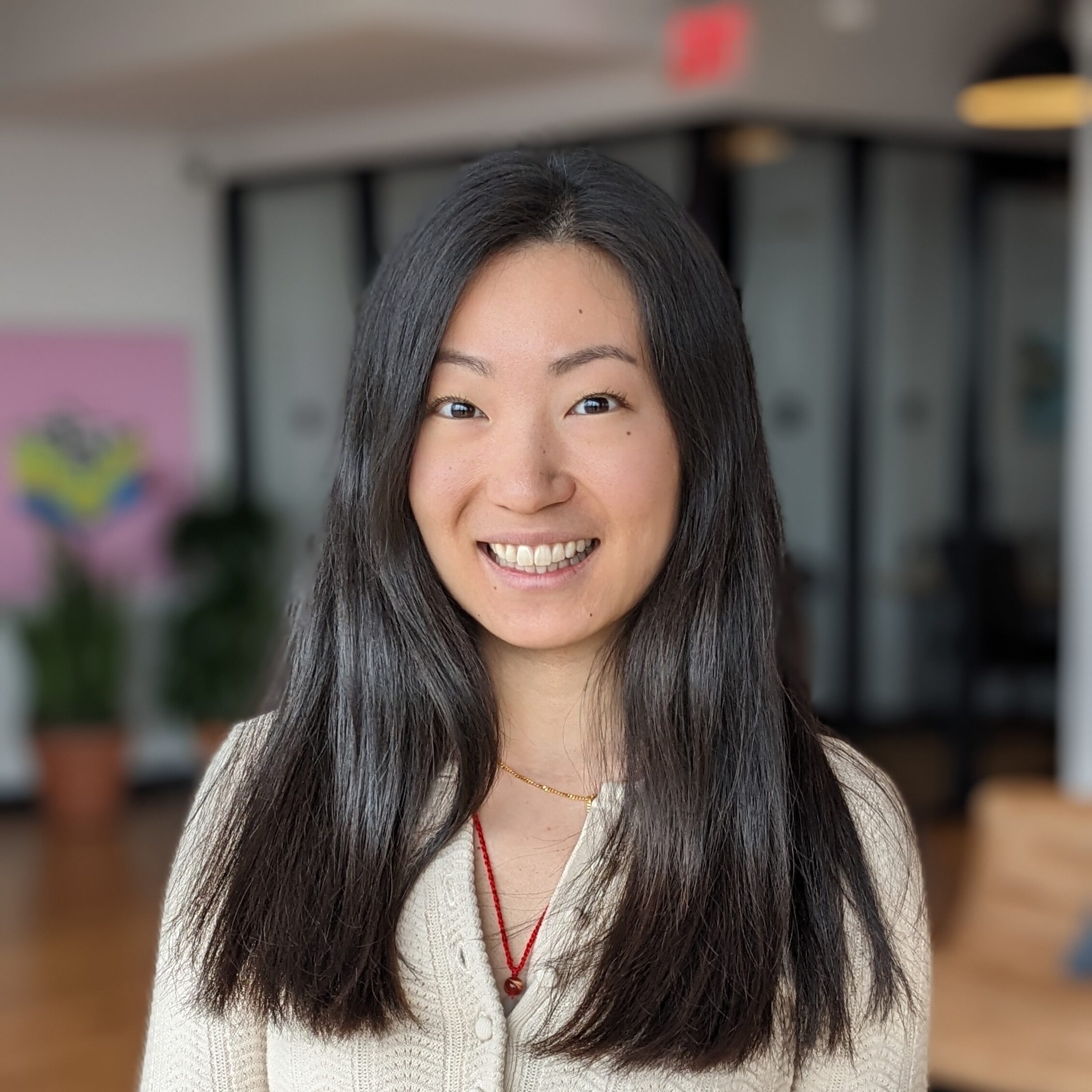
Dr. Jenny Yang is the co-founder and CEO of Oupost Bio, which is focused on building a platform that pairs automated experimentation with machine learning to better understand how microbial communities shape drug response, nutrition, and health.
Transcript of Episode 83: Jenny Yang
Disclaimer: Transcripts are automated and may contain errors.
Grant Belgard: Welcome to the Bioinformatics CRO Podcast. I’m Grant Belgard. Today I’m joined by Dr. Jenny Yang, co-founder and CEO of Outpost Bio. Jenny works at the intersection of biology, machine learning and precision medicine. At Outpost, she and her team are building a platform that pairs automated experimentation with machine learning to better understand how microbial communities shape drug response, nutrition and health.
Grant Belgard: Before starting Outpost, Jenny studied engineering, physics and bioinformatics at UBC and completed her doctorate at Oxford, where her work focused on clinical machine learning. We’ll talk about what she’s building now, the path that brought her there, and what she’s learned about building important things at the edge of science and computation.
Grant Belgard: Jenny, welcome.
Jenny Yang: Thank you Grant, excited to be here.
Grant Belgard: I’m excited to have you. So for listeners just meeting you, what are you spending your time on right now and what are you trying to build?
Jenny Yang: So really we’re trying to make human microbiology computable. So what that really looks like day to day is we have team members in the wet lab and team members on the dry lab side working on machine learning models. So in the wet lab we’re actually, sourcing human derived microbial communities, running perturbation assays and taking multi omic measurements.
Jenny Yang: So think, metagenomics, sometimes transcriptomics, definitely metabolomics. So really trying to understand communities of bacteria before and after. With different chemical compounds and how those microbial communities actually break down these compounds. For example, microbial communities from the gut.
Jenny Yang: How do those break down a drug chemical or a food molecule? And then in the dry lab, we’re building machine learning models on top of this to help create tools that will allow other people to do their own analyses on these microbial communities.
Grant Belgard: What problem keeps you most intellectually stimulated right now?
Jenny Yang: I think I’m definitely motivated by the question of. How can we make meaningful pushes forward in the field of personalized health? I’ve definitely spent a lot of my last 10 years of my adult career looking at human genomics, and I’ve seen incredible advancements in that field. We can identify, exact mutations that lead to certain subtypes of disease and even choose targeted therapies towards that disease. And I really want to understand why despite all this progress, we still can’t push forward improvements in clinical trials and drug development. So the metric I like to show is that 90% of drugs failed 40 years ago and 90% of drugs are failing during clinical trials today. So why have we not pushed forward that metric despite all these huge advancements in the field? That definitely does keep me up. And I feel like the next addition of biological information that needs to be added to this picture is really all the microbes that are in and on our body that affect how we all independently experience health and disease.
Grant Belgard: So for what you’re doing what is the most difficult aspect of the problem from the biology side and what’s the most difficult from the data or a modeling side.
Jenny Yang: Definitely on the biology side it is reproducibility and scalability of these experiments. So when people have been doing microbiome based analyses in their own respective labs, there’s bias that’s going to exist. So it’s been really hard to reproduce findings in one lab to another lab. And then also scaling up these experiments is hard.
Jenny Yang: So if we specifically focus on the gut microbiome, these are anaerobes that we’re dealing with. They have to be in a oxygen free or really oxygen low environment to keep them alive and actually perform experiments. So scaling that process up is very difficult. So when we first started the company, we knew we wanted to focus on both developing a high throughput method that could perform these perturbation experiments, but also make sure we cross validate findings in the lab.
Jenny Yang: So not only do we generate our own data in our lab, but we’re making sure to generate external data sets with other partners just so we can demonstrate that our findings in our lab can be reproduced elsewhere. And in the, on the computational side, we’re dealing with a very high dimensional space.
Jenny Yang: So even compared to human genomics where there’s only about 20,000 genes, the gut microbiome can have up to 150 to 250 times more genetic diversity there. So it’s already a much more. Complex space that we’re dealing with. And again, bringing it back to human genomics between you and I and everyone else in the world, we share 99.9% the exact same human genome.
Jenny Yang: But if we look at our gut microbiomes, we can be up to 90% different. So not only is there huge individual variability, that multiplied with the diversity of bugs that exist in our guts. That is a huge computational challenge. So without the sophisticated machine learning models that we now finally have, as well as the cloud compute infrastructure that we now have, this is just such a huge problem that we couldn’t have tackled before. So that, that level of complexity, I think is what makes it very challenging on the actual computational side.
Grant Belgard: And can you tell us more about the stage you’re at right now with Outpost Bio and what your role actually looks like week to week at this stage?
Jenny Yang: Yeah, absolutely. We have been a company for one year. We raised our pre-seed last July. So that was a 3.5 million round and really the focus of the past year and. And the rest of this year as well was validating our wet lab method and starting to build initial machine learning models and really benchmarking against current state-of-the-art models and benchmarking specific problems. Just to demonstrate the usability and the accuracy of both the data we’re generating and the models we’re, we’re building. My day to day has. Changed significantly from when we first started the company to now. So really when we first started the company, a lot of it was making sure we build up a vision for the company that could inspire people, but also we could see ourselves growing into over the course of the company.
Jenny Yang: And that really is trying to make human microbiology computable so we can improve personalized health. And then it moved into building up our values. So when we hired, we really wanted to make sure that we built up the culture that we were looking for. So not just look for the technical skillset, but also just the cultural fit for the company we envision having.
Jenny Yang: ’cause when you have such a small team, at the beginning, culture is really everything. And I still believe that one year down the road, and now it’s really transitioned into. Just a little bit of everything. We have so many different things going on at the same time. So we have a wet lab in-house that we just opened last week. We have multiple models being trained. A lot of partnership conversations with potential customers, so I have my toes in everything. But the team, is fantastic on, on staying organized, so it’s been very exciting.
Grant Belgard: What decisions do you feel you still need to hold closely, and which ones are you happy to let others own?
Jenny Yang: I very much believe in this quote that I think Steve Jobs and probably a lot of people have said, which is, basically you hire incredible people and you shouldn’t be telling them exactly what to do because you hired them to tell you what the right thing to do is.
Jenny Yang: And I, I really believe that. So we wanted to be very rigorous on the scientific side. So we hired a VP of RD with a lot of experience in microbiology. This is Heidi. She’s trained in incredible labs and she’s just so good at what she does, and I would never want. Want it to be me telling her how to do good science.
Jenny Yang: Like I can point her in the direction that we’d love to go as a company, but I really trust her to be the expert in what the position that we’ve hired her for. Same with Seth and Nathan on the data engineering and machine learning side of things. I’m very happy to let them do the tasks that they think are right to reach the milestones we want to reach. And I think that’s really important because especially at a startup where there’s so many things that need to get done as one person, you just can’t do it all. And you’re gonna have to have trust in your team to, to do the tasks that they’re the best at.
Grant Belgard: What tradeoffs are you navigating between scientific depth and execution speed?
Jenny Yang: I think a big one is the trade off between generating a lot of data really quickly, really broadly, or generating a bit less data, but focusing more in depth on specific verticals. And that is a trade off because we are trying to build a foundation model. And that term in itself suggests that you have a lot of data to build this large machine learning model that’s going to be generalizable. But I do believe because we’re tackling such an important problem that has to do with pushing forward human health and our understanding of it, we have to be scientifically rigorous, especially if the tools we’re creating are meant to be used by other scientists. There’s a level of validation. And scientific rigor that’s really needed for people to trust that you’ve built something that is usable and accurate and if they implemented it into their own work, which is very important that being rigorous and deciding to use our tooling. So especially at this stage of the company where we are trying to make sure we prove that we can do what we say we can do, We are making sure that we focus really rigorously on validating specific verticals, so we won’t go hugely broad and generalizable at the beginning. We’ll demonstrate that we have a method that can lead us there down the road but we need to be more rigorous on proving the science in specific niches first.
Grant Belgard: On that note. How do you think about robustness, bias, and generalizability when the biology itself is so variable and complicated?
Jenny Yang: Yeah, so I think about this a lot. When I did my PhD, I specifically focused on bias mitigation and machine learning generalizability. So from the wet lab side, we are generating data in-house. But we’re making sure to have additional partners generate subsets of data for us. So we’re working with a West coast US institution as well as a CRO, and we’re making sure that they generate buckets of data so we can validate findings externally across sites.
Jenny Yang: And that is really to demonstrate the reproducibility of the wet lab methods we’re using. We’re also. We’re also making sure that we validate machine learning models, so having external data sets from different sites can then demonstrate the generalizability of machine learning models. And we are making sure that we evaluate both metrics of accuracy and metrics of bias because we wouldn’t want to see model performance being dependent on where data is generated.
Jenny Yang: Ideally, it would be based on the actual science itself.
Grant Belgard: What would a truly meaningful win look like for you over the next few years?
Jenny Yang: I think something meaningful would really be demonstrating that the systems we’ve built both in the wet lab in vitro and the in silico systems we’ve built in the dry lab translate to actual h uman outcomes. So another form of validation that we really think about is how can we validate on actual human cohorts or clinical cohorts. And that is something top of mind. So we are making sure we’re working with scientific advisors that are actually running clinical trials or working with groups of patients. We have a project coming up in, in the summer specifically focused on a cohort of patients that we’ll collect samples from, and then make sure that we validate our, both our in vitro and in silico methods again.
Jenny Yang: So I think a huge win would be demonstrating that translatability into the real world. Another win that I think a lot of the team is really excited about is demonstrating that we can actually generalize between, a community of bacteria interacting with a molecule and leading to a certain biological outcome.
Jenny Yang: I think that would be incredible to see that microbiology does follow, some sort of pattern that can be predicted.
Grant Belgard: What turns a biological data set from merely interesting to decision grade?
Jenny Yang: I think that’s a super good question. And it might depend a lot on. Also the question you’re looking at and the industry that you’re trying to implement this in, for example, like there’s a lot more rigorous testing that needs to be done within drug testing versus maybe developing a consumer good. But I think for us it’s making sure that we do focus on certain verticals and then. Validate and calculate metrics that are needed at proof points that are needed for the specific problem, its itself. So there is a little of bespoke kind of tailoring needed for some problems, but I. I feel like it’s in general across all spaces, we would wanna be able to generalize across multiple data sets that are coming from the field, multiple problems that are related to those data sets and demonstrate it with really external partners because we can do a lot of testing ourselves, but when you actually bring it into the real world and it’s in someone else’s hands and not really in your control, that’s where you would wanna be able to demonstrate usability and, a certain level of accuracy there.
Grant Belgard: What does a strong feedback loop between wet lab work and computational work look like in practice in this space.
Jenny Yang: This is super important to us. So when we first started the company, a lot of people told us, make sure you keep your wet lab and dry lab close together and make sure communication is good between the two. ’cause it’s like completely different languages that these scientists would be used to speaking. So for us, we very much believe in having this quote unquote lab in the loop. So the experiments we generate in the wet lab, we make sure people on the computational side understand these experiments are part of the decision making process. Because they need to understand the data that they’re getting and what kind of problems the data can actually solve.
Jenny Yang: Like what kind of outcomes are coming from this wet lab data that they can build a model towards. And then the findings in the wet lab will inform a lot to the to the scientists in the wet lab because. The people from the dry lab will be able to communicate the quality of the data that’s coming out the accuracy of the models where bias exists.
Jenny Yang: So if bias exists in one section, maybe we need to be generating specific data sets targeting that. So we, we definitely believe in just really good communication all across and making sure everyone’s involved in understanding the overall experiment.
Grant Belgard: When you evaluate a possible collaborator or a partner, what signals make you excited?
Jenny Yang: I think people who are really interested in getting to a mechanistic or causal understanding of their food product or their offering. So one example or really any ingredient manufacturer, they wanna understand how, their ingredient or molecule will perform differently across different populations based on their microbial makeup. And also people who are trying to add another level of personalization and provide more of a personalized understanding to their clients. So you can think of people trying to come up with personalized diets for different individuals. Companies that are, that have an app that help you understand your gut microbiome and how that affects what you should eat. So really anybody who’s trying to put a molecule in or on you and wanting to understand the effects.
Grant Belgard: Where do you think the field still confuses correlation with something more actionable?
Jenny Yang: I think there’s definitely a lot of difficulties getting to that causal or mechanistic level. So I think a lot of the field previously has been just focused on correlations. They’ve been saying these communities of bacteria exist and they might lead to better or worse health. They might suggest that you should have these foods versus others. And I think it’s just still very present at that level. We’re really just at the cutting edge of being able to start getting down to the mechanistic level at a scale that just wouldn’t have been, we wouldn’t have been able to do before. So I think there, there is a little bit of an onus on us to demonstrate that this is scalable.
Jenny Yang: ’cause I don’t think people will necessarily be able to implement this high throughput until they’ve seen it demonstrated to a level that they believe they can trust it. So I think there is a lot of work to be done there.
Grant Belgard: What do people building tools for life science often misunderstand about adoption?
Jenny Yang: I think something that I’ve realized over my time in working in machine learning is that. A lot of people immediately expect machine learning models from one place to work really well when it’s brought to an external setting. And I think the attitude with foundation models is one that I believe in a bit more, which is that a foundation model is a starting point to help you fine tune to creating that really high quality model for your own application or your own purpose.
Jenny Yang: I think. Getting to generalizability in such a complex and diverse field, like anything related to biology or microbiology especially. It’s gonna be really difficult to assume that there’s one machine learning model that’s going to work for all. It’s analogous to what we’ve said about the one size fits all model in, in medicine as well.
Jenny Yang: It’s hard to believe that there’s one medicine that’s just gonna work across. Everybody and work every time. I don’t think we should have that belief for machine learning as well. So I think the foundation model space has really opened up the understanding that you start with a model that’s going to bring you to 80% of the way of solving your problem.
Jenny Yang: But if you have your own data sets that are built in the context of your own setting and the problem you’re trying to solve, if you fine tune on that data set, then you’ll be able to build a really strong machine learning model for your own purposes. So I think bringing tools into the life sciences, should not be like just flat out expecting that there’s one tool that’s going to work perfectly across every every team, every problem, every setting.
Jenny Yang: I think there needs to be care into fine tuning these models.
Grant Belgard: Couldn’t agree more. If you could instantly fix one part of the big data ecosystem, what would you change first?
Jenny Yang: I think language modeling, so like chatGPT and all these different large language models that have come out has demonstrated that you can scrape the web of its data and build really strong models that are general purpose and can be used by a lot of people. I think that is it’s a really effective problem and it works for language modeling, but that’s not something that necessarily translates to biology.
Jenny Yang: So I think you see a lot of companies coming out and people building models on all the biological data that they can scrape from the web. And I’ve definitely seen this in the field we’re in right now with the microbiome, but there’s so much bias that exists depending on where you get this data from, that I think it would be very hard to say that you could scrape the web of all this biological data and get to a general purpose model that will understand the problem. Because a lot of these data sets have their own scientific processes. The measuring tools are different. There’s just so much bias that is not controlled that I think it’s a hard attitude to bring into the life sciences. I think you can leverage public data, but I think at the end of the day you need control and confidence over the biological process that you use to generate this data. I very much believe that, especially in machine learning, it is garbage in, garbage out. So as much as you can leverage the public resources, you should, but you should take care into, again, fine tuning, using high quality data that you genuinely are very confident in for the problem you’re solving.
Grant Belgard: What first pulled you toward biology computation and the overlap between them.
Jenny Yang: I’m honestly not too sure. When I started undergrad I was in engineering physics and really working on like robotics and systems engineering. And this was around the time where machine learning was really starting to ramp up and there was a lot of hype around it. And I think naturally I’m just attracted to novelty and learning new things. So I wanted to try machine learning and when I first stepped into it, I was essentially just scraping the web of a genomics database, building a small program that would analyze it, like really simple analysis. And then I just cold emailed 20 different professors at UBC and then. Asking if I could demonstrate what I’ve built. And then Steve Jones he actually just offered me a job after he saw that program and he runs a research lab at the Genome Sciences Center and works very closely with clinicians all working on personalized medicine for oncology. So I spent a summer there and then just fell in love with the intersection of getting to actually work with clinicians to develop something that’s usable by them and would benefit patients but also bioinformatics and machine learning teams on big data challenges. And ever since then I basically asked Steve for a different position every year. I was still in school at this point, so like I would ask to come back in the summer or do a directed studies program with him, and I just kept coming back to the problem and falling more and more in love with it.
Jenny Yang: So that’s just what started me on the journey. It felt like just a positive flywheel that I’ve never jumped off of.
Grant Belgard: Looking back, what early experiences most shaped the way you go about choosing the problems you work on?
Jenny Yang: I, I think I always start with the clinical significance. So when I was at the Genome Sciences Center, the clinicians would always tell us about the problems that they or like the way that tooling could help their processes. There were models that were being built that would try to take genomics information and then predict the subtype of cancer. There was, so that’s like a decision support tool. There were teams that were working on creating annotation systems for automatically annotating histology images and marking out where tumor cells were. And that was part of my Master’s project as well. And I really believe that translational AI can be so effective.
Jenny Yang: You do have to make sure that it works with the clinicians or the people that would actually be using these tools like you. It’s if you come in as just a machine learning researcher, create a tool that you think is useful, it might not actually work with the workflow of a clinician that would be using it.
Jenny Yang: So I think I’m always driven by, let’s start with what can help the people that would be the end user of this tool. And as I’ve moved forward, like through my PhD. And then now with Outpost. I think another thing that really interests me is where are we starting to generate new data sets that we couldn’t have generated before that can unlock insights for more people, more broadly.
Jenny Yang: So I, I definitely have seen kind of the AI for drug discovery and all other biotech fields move towards data-driven analysis. So I know high- quality data that could be used for a lot of different downstream tasks is very valuable because that’s what that’s really where I believe the field is headed. so the microbiome field was really an interest to me at this point because the field of, for example, metabolomics has allowed us to actually study biochemical reactions and get down to a mechanistic level of what’s happening in the microbiome. So that means we can potentially unlock new data sets that we wouldn’t have access to before, at least not at the scale that we could have now which can help solve a lot of problems in a lot of different fields. So I think that’s been a more recent excitement for me.
Grant Belgard: What were some forks in the road that turned out to matter a lot more than they seemed they would at the time?
Jenny Yang: Ooh, this is a great question. I think one decision that we really had to decide on was at what point do we open our own wet So when we first raised our pre-seed funding, we did have the thought that we would just outsource all the experimentation, part of that is cost savings and just efficiency.
Jenny Yang: We assumed that CROs would have the capabilities to just do the experiments we wanted to them to do, and we ended up opening our wet lab t his year. And that’s not something we planned on doing for the first fundraise. And it ended up being really an important decision because what we learned is that what we were trying to do is really specialized.
Jenny Yang: I think we talked to over 60 different CROs and just couldn’t find one that could do what we did. And we had to really work with the CRO that we ended up working with really closely to develop these experiments. And yeah, bringing it into the wet lab, I think it’s really allowed us to speed up. Both data generation ended up becoming a cost saving because we could just move faster. We’re not paying for like external labor of doing the work as well, and we can just test a lot of different variables that we wouldn’t be able to really do with a CRO without adding costs and like extending the time of experiments. So that ended up being a really good decision for us. I think there is something to say about having control over, just what gets done and at what time and what speed.
Grant Belgard: What made you decide that building a company was the right vehicle for the problem you cared about?
Jenny Yang: I had I, so I’ve always been someone who’s been very motivated by the mission that I’m working on, so I’m one of those lucky people where I found a field that I liked really early on in undergrad and have been through that throughout my entire adult career. And I also am someone who had a really good experience during my PhD, so I came outta my PhD still with a positive view of academia.
Jenny Yang: So I was very fortunate for that. I think I would’ve been very happy, doing this type of work in academia, doing it in industry, or doing it in doing it at a startup scale. What I really cared about when it came to making the decision was, how much ability would I have to create vision that I see because I’ve spent a long time building up the skillset and the confidence that I have, I ideas that I can actually follow through on, which meant I really wanted to make sure I was working on a problem where I could have some autonomy over decisions that were being made. wanted to make sure I worked with a team that I really I’m really passionate about what I do, and it’s really made much more enjoyable when you’re around a team that inspires you, that you admire and you trust and are also similarly motivated. And I think if I found, an academic lab that met all those criteria, I would’ve been very happy. And if I, it just happens that I got dragged into the startup world. So definitely a decision that I’m happy I made ’cause I’m having so much fun doing it and I’m working with people that are incredible and on a problem that I think is very worthwhile. But I think one part that maybe I didn’t appreciate earlier on that there are certain constraints within being in an academic lab that I think we don’t have necess, I haven’t felt the same being in the startup world. So for example, like academic labs can really focus on a specific theme. But when you jump into the startup world, I think it really is just what you choose to do as. As a company. Of course there’s other disadvantages, but it’s been a great setting for what we wanna do right now.
Grant Belgard: What parts of your earlier training or work turned out to be unexpectedly useful once you started building?
Jenny Yang: I think one of the biggest, I think one of the biggest advantages of some of my early work that’s helped me now was actually seeing machine learning translated into the real world. So when I worked at the Genome Sciences Center, I could actually see people building the models and then clinicians using them literally the next week. And that was very rewarding. I saw people developing automated tools for annotation, and then clinicians were actually using those tools immediately. So seeing that translation was incredible. Even through my PhD, I worked on a project really closely with clinicians and we actually deployed that AI tool across hospitals and saw clinical validation of that tool in real time.
Jenny Yang: So as people came into the emergency departments, we saw them being triaged using AI and that I think is an incredible experience. ’cause I do think there are a lot of people who build AI models, they publish a paper on that model, and that’s the end of you hearing about that model or seeing the progress of it. And I think that’s a shame because I do feel like are so many ways that AI can help people and support people in their jobs. So by actually having seen multiple examples of that, especially in a field like healthcare and medicine. Gives me like a certain mindset of what kind of rigor needs to go into building AI models that we want to deploy at Outpost.
Grant Belgard: As your responsibilities have changed over time, what did you have to unlearn?
Jenny Yang: That’s a great question. And I think a big thing that I had to unlearn was, I can’t do everything on my own. So I had a very independent
Grant Belgard: PhD
Jenny Yang: where I really got to choose the projects I worked on, drive those projects, and I had to do them from beginning to end. I did all the coding, I did all the research on it.
Jenny Yang: I wrote all the papers, et cetera. I did all of that quite independently, and I of course I had my supervisor and like clinicians and other people on the projects that I could talk to, but I really made all those decisions and something that I’ve had to. Not necessarily unlearned, but like a new skill that I had to learn was delegating, being more organized and combining different people’s outcomes to create the final outcome. It’s very different than being an academia where you’re like much more of an independent researcher. Now we have a team with people working on different aspects, on a really big So That’s been a change.
Grant Belgard: Who or what most shaped your taste in science, leadership, or risk.
Jenny Yang: I think it’s a mix of two people. So Professor Steven Jones at the Genome Sciences Center. I feel like he leads with a lot of trust. He is also someone who lets the work speak. I think he is, someone who doesn’t say a lot necessarily, but everything he does say just is very inspiring, has purpose, has weight and I think that’s a really thoughtful leadership approach.
Jenny Yang: I think it’s also a person, like a personality thing as well, but I really like how he leads with trust. When I was at Oxford doing my PhD, my professor David Clifton, I also think he leads with a lot of trust, which I appreciated. He also was just so efficient. If I needed anything and I emailed him, I would get an email back in a really, like within 10 minutes probably, unless he was in the middle of a meeting. And that just made me realize how important it is. To give people the things they need to do their work really well, especially if you’re in a leadership position. You don’t wanna be the person blocking your teammates from moving quickly or being able to do their job to their best of their abilities.
Jenny Yang: So being present and trying your best organized and answering emails like e even now, like when I see my email fill up. Or my inbox fill up. It can be a little anxiety inducing and I would love to procrastinate it, but I know as a leader especially I gotta just be on top of that because there are gonna be certain things that I just have to answer to keep the machine running smoothly.
Jenny Yang: The other thing about David Clifton that’s really inspired me is that I think he’s he’s a very, he’s a very good listener. And I think Steve is like this too. I think they really enjoyed listening to what other people have to say because if you can understand the people around you, you can make better decisions, especially in a leadership position.
Jenny Yang: I think one of your main jobs is just taking the information you have and making the best decision you can at that time, and that does require more listening than speaking.
Grant Belgard: Was there a point at which your definition of success changed, and if so, what caused the shift?
Jenny Yang: I think my definition of success has not necessarily changed. And what I mean by that is I’ve always been someone who’s just having a growth mindset. I like setting small goals that are achievable along the way, but I feel like there’s always, and celebrate those goals. But there is something exciting to look forward to next.
Jenny Yang: So I think my definition of success is, and when it comes to completing tasks, it really is just finish what you start. Even if you get an outcome that isn’t great, wrap it up. And you can celebrate those small wins. And I think that’s been nice. I’m not of the mindset that you always have something else to look forward to, so you should never feel like you’re finished.
Jenny Yang: I think you should celebrate the small wins along the way, but I do success knowing that you can finish something from start to beginning, even if it’s not necessarily the preferred outcome. You can wrap it up and learn from it and then move forward. And I think now working with a team. My definition of success probably has changed a bit more because now it’s also about keeping team morale up, seeing how motivated other people are, seeing other people’s abilities to do their tasks from beginning to end, and hopefully being part of the support system to get them there. So if anything, the definition of success has just become more of like a we thing than just a independent thing.
Grant Belgard: What advice would you give to someone who wants to build at the interface of biology and computation?
Jenny Yang: I think one piece of advice would be making sure that you bring on the experts in the respective parts, because I really think if you build at the intersection of AI and like biology, healthcare, et cetera, are a lot of important components to it, and. It’s not gonna be able to be tackled by just machine learning engineers or just clinicians or just biologists. I really think it is going to be a mix of all three. And you need to tightly couple the understandings between everyone, like high level enough that people understand the overall goal and how the components connect, but in depth enough that you have the depth of knowledge for each individual component.
Jenny Yang: Because. It’s not a, it’s not a single faceted a field. And every one of those components will be just as important.
Grant Belgard: How should early career people think about depth versus breadth?
Jenny Yang: I do believe in if you’re going to take the leap into building something yourself, I think you should build up a mastery of a, at least a skill set that will contribute to that. So I think when you’re building up that mastery, it’s okay to be very focused on a specific niche but understand where it fits in the general problem a general context of the field. because as one person, you can really only tackle really well, I think, a specific component of something so big, but understanding where it fits can help you, or at least what I’ve found, help you decide maybe what the next step could be or what the next application of what you’ve done is because you’re really building modularly in that sense, rather than maybe immediately having to pivot to a new area. I really wanted everything that I did over the course of my career to build on one another. So it always felt like I was compounding with the skillset I was building and the effect it could have within the greater space.
Grant Belgard: What mistakes do smart people make when they first enter this world?
Jenny Yang: I think entering specifically the AI and biology space and probably other adjacent spaces, but entering it from a startup perspective, I think a lot of people hear that you have to maybe cut corners or take shortcuts and just move fast and break things in order to survive in the startup world.
Jenny Yang: And I think. There is some truth to that. You only have a certain amount of runway and you don’t wanna like waste time in one area and not be able to enough to know the correct direction to go. But especially with biology where experiments matter so much and like a millimeter, a milliliter of incorrect to an experiment will absolutely derail you. I think there is some care that needs to be taken in doing things in an organized fashion at a more steady pace because at the end of the day, that experiment is going to do its own thing. Whether you did it quickly or not. And wanna come out of for example, the first year of company building saying, okay, we have data and that’s all we have.
Jenny Yang: I wanna be able to say we have meaningful data that’s high quality. So I think there’s more caution that needs to be taken coming into this field from a startup perspective than maybe what you typically hear of maybe just a purely software product.
Grant Belgard: What habits or practices have helped you keep learning while the field keeps moving seemingly increasingly faster as time goes on.
Jenny Yang: That’s such a good question, especially we seem to see new AI developments every day, every hour. I think for me it’s, listening, so definitely listening to the people around me. I have incredible AI scientists and microbiologists around me. And my co-founder Alex, our COO, is also just very interested in all the novel advancements coming up, that being able to listen to the people around me really keeps me up to speed.
Jenny Yang: I also like reading. I have news on my phone that I’ll read every morning. I get an update on the news every afternoon, and I just personally. To keep up when I have a little coffee break. The other thing is even though I’m more in a business position now, whereas before I was doing hands-on coding, I’m still very involved with the experiment planning and like reading some of the new articles coming out. I think having some sort of active, component o f my day actually being a little bit more hands-on not to the extent that I was before, keeps me really up to date on what’s happening.
Grant Belgard: How do you think about credibility when the vision is bigger than the proof you can show today?
Jenny Yang: I think it’s very much about how you present the work you’re doing and how you communicate it. So I very much want people to believe our vision, and it’s a huge vision. Like I would love to see a world where can have personalized health outcomes based on our microbial communities in our gut, which is where we’re starting with, on our skin, in our mouth, et cetera.
Jenny Yang: Like I, I think we’re all so unique in that sense that our personalized health recommendations should consider that. And that’s a huge vision saying I’m gonna create some kind of generalizable model to be able to make these recommendations. Huge vision. But I think people believe in that vision.
Jenny Yang: But when we communicate the science we’re doing, we communicate it to the level that we’re achieving it at, which is we’re starting with a focus on the gut microbiome. We’re starting with these classes of drug molecules, these type of food molecules. And we’re doing it, we’re running these type of experiments, so we are going to post open source and we are gonna publish. So we’re gonna be very open with the field to allow other people to evaluate us in peer review. I think credibility is all in how you communicate what you do have. And I think you have to be very responsible there because I would hate for, anyone in the field to put out like, false statements about the truth of the science, especially when it’s in a field that’s so important for human health.
Grant Belgard: What question do you wish more people asked you?
Jenny Yang: Ooh. I think I’m not too sure. I think a lot of what. motivates me are the people that I, I work with and feel like I, I would love to have more opportunities to get to highlight them because especially as a founder of the company I tend to have to naturally be the face of the company and be the person in interviews or answering questions, but I. I think we wouldn’t be where we’re at without the team we have, and everyone is so individual in what they’ve brought to the team that it’s always nice to have more opportunities to, to highlight them because then naturally I can even go more in depth about certain aspects of the company. ’cause I, like I mentioned, being on the intersection of AI is, there’s many components to it.
Grant Belgard: What part of your work still gives you the most curiosity or wonder?
Jenny Yang: I think it is the the translation of real biology, digital form. Because to me I think it’s a very interesting problem to see whether or not we can really digitize or make certain aspects of biology, computable. I think we’ve seen a lot of bodies of evidence that suggest we can. and just really a fascinating problem to me ’cause it feels like you’re taking something that’s this is a poor analogy, but the only one I can think of right now.
Jenny Yang: But you’re taking something that is very 3D and trying to binarize it. And there’s only so many patterns you can represent. Although I do feel like with the rate that. AI is moving maybe this will be really possible, but getting there, I think it is exciting to watch that progress.
Grant Belgard: What belief about the future of biology do you think more people should wrestle with?
Jenny Yang: I think one, I think it really is that. A lot of these biological processes can eventually be automated in the way that we research them or develop data them. I think there is gonna be a very tight interplay between how biological experiments are being done from like the transition between just like humans manually doing it to some automated approach and then looping that in with AI.I think that’s like. It is something that I do believe in. I’m not sure to what extent it’ll be fully automated, but I think people should really wrestle with the idea of which parts can we start automating to make things a lot more efficient. And then where do we still need a human in the loop or how does that kind of evaluation work? And I definitely still, when I think about where Outpost is going in the future, I would love some aspect of automation to really scale up quicker and certain processes to be more efficient. It is something I wrestle with then, where do we make sure we have a human in the loop and what should we automate just yet ’cause we’re not gonna be there?
Grant Belgard: What would you say to your younger self at the very start of this journey?
Jenny Yang: I think one thing I would say to myself is to trust my gut and make decisions, make the best decision you can, even if you don’t have a full understanding of what the outcome will be. I think that’s very important. I think just naturally in a lot of different leadership roles, you don’t have time to get all the information you need, but the quicker you can make a decision and act on it, the quicker you can pivot if you’ve made a mistake.
Jenny Yang: But if the worst thing that could happen is you don’t make a decision at all and there’s no progress being made because it’s better to make the wrong decision, but you’ve learned something and then you can immediately move to the next kind of kind of solution. so I would say. Just move quicker on some decisions even if you don’t have full information.
Grant Belgard: And lastly what do you hope listeners remember from this conversation a week from now?
Jenny Yang: I think it, I think one thing I would love people to really take from this conversation is maybe like an additional peek in their curiosity on how. As humans, we’re not just human DNA, we’re actually these ecosystems, there’s trillions of microbes in and on us. They really affect how we experience health and disease. Yeah, not to creep them out or anything, but maybe just like the curiosity around like how you eat. If you eat something, all these microbes are also eating them. When you use a skin intervention, there’s a bunch of microbes that are dealing with it as well. So maybe it’s just thinking about us more on the systems and ecosystem level than just like a static human being.
Jenny Yang: We’re actually very interesting in that sense.
Grant Belgard: Jenny, thank you so much for joining us today.
Jenny Yang: Thank you so much, Grant. Really appreciate the time.