
The Bioinformatics CRO Podcast
Episode 86 with Zahra Jawad

On The Bioinformatics CRO Podcast, we sit down with scientists to discuss interesting topics across biomedical research and to explore what made them who they are today.
You can listen on Spotify, Apple Podcasts, Amazon, YouTube, Pandora, and wherever you get your podcasts.
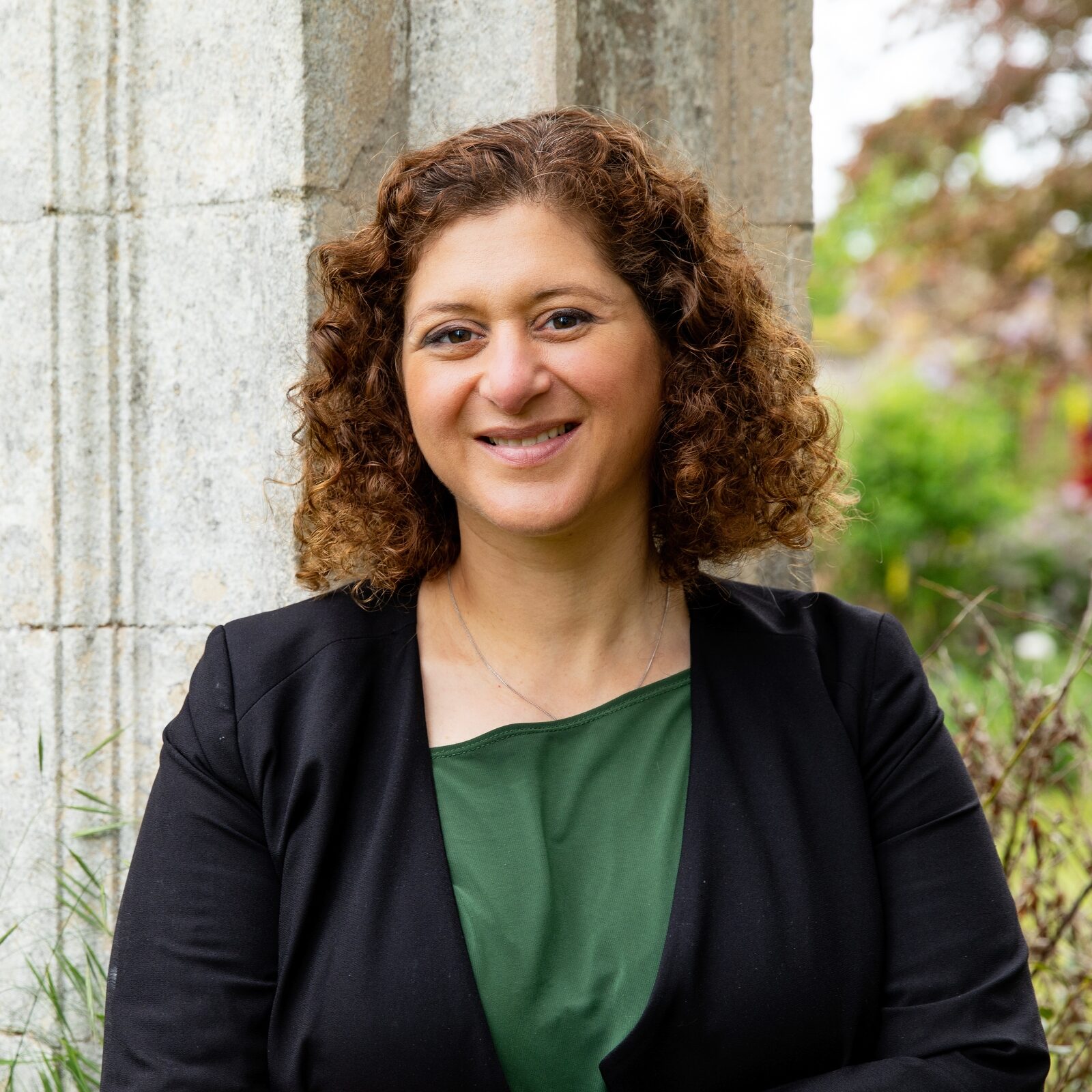
Zahra Jawad is the founder and CEO of Creasallis, which develops tumour antibody penetration technology to improve antibody diffusion into solid tumours.
Transcript of Episode 86: Zahra Jawad
Disclaimer: Transcripts are automated and may contain errors.
Grant Belgard: Welcome back to The Bioinformatics CRO Podcast. Today I’m joined by Dr. Zahra Jawad, founder and CEO of Creasallis, a biotech developing antibody engineering technology aimed at helping antibody-based drugs penetrate solid tumors. Zahra’s career has spanned antibody engineering and innovation roles across biotech and pharma, and today we’re talking about what she’s building now, how she got there, and what advice she’d offer to others building their own path in science and biotech. Zahra, welcome.
Zahra Jawad: Thanks for having me. It’s a pleasure.
Grant Belgard: So what are you building at Creasallis right now?
Zahra Jawad: At Creasallis we are really trying to improve how antibodies therapeutics penetrate solid tumors with our antibody engineering solution. It’s something that I came up with, during my sort of 20 year research in antibody engineering that I thought is really needed in the field.
Grant Belgard: What problem are you most determined to make meaningfully better?
Zahra Jawad: Antibodies are, have been amazing therapeutics and it’s really changed a lot of patients’ lives, but in reality, they’re so large in, in their molecular size that they don’t penetrate solid tumors very well at all. If you look at what a tumor is it’s got like very tightly packed cells with a very abnormal vasculature around it. And the antibodies, once they leave the blood vessel, really don’t diffuse very much into the solid tumor. And there’s been very few solutions in trying to improve that. One of them is just making the antibody a lot smaller, but when you make it a lot smaller, you have another problem is that it diffuse, it just filters out of the kidney very rapidly, and so you lose this half life and there’s always this dichotomy between half life and versus tumor penetration that no one’s really solved. So what we’ve done. Is really taking inspiration from the space industry.
Zahra Jawad: And like a rocket takes off, like we saw recently into outer space. It’s got all this fuselage attached to it, but when it actually reaches the atmosphere, drops a lot of the fuselage that’s needed. We do the same thing. We re-engineer antibodies so that they break into small fragments and only the really critical parts get into the tumor cells rapidly. And so that’s. We get that sort of size change in the tumor that we’ve engineered in.
Grant Belgard: What are the biggest buckets of work on your plate at the moment?
Zahra Jawad: The biggest problem always in therapeutics is translating what we see in the lab and what we see in animals into real clinical, meaningful data for patients. That’s really what keeps me up at night more than anything. How can I make sure what we are doing in the lab will really benefit patients at the end of the day. And how can we capture that diversity in patients, in terms of their medical diversity, their ethnic diversity, gender diversity, genetic diversity, and still be able to give them a meaningful therapeutic that isn’t gonna be so personalized that it’s gonna cost phenomenally. So the economics versus the patient benefit.
Grant Belgard: Can you tell us about your journey as a founder?
Zahra Jawad: So yeah, I probably have a bit of an unusual journey because I was working in biotech and pharma since about 2006. After I finished PhD in some postdocs, all in protein engineering, I was really happy and content in my, my role. I was learning so much from the people around me and how to make therapeutics. And was very satisfied. And I just moved naturally up the, career ladder from sort of scientist to senior scientist to investigator to team leader and then a director level in charge of innovation. And I was really content in my job. I think the turning point for me was when somebody in my group developed a stage four lymphoma. This is when I was a director. I was in charge of innovation, antibody innovation, and I think, and she was young. She was 32 and she made a full recovery.
Zahra Jawad: She was a superstar, but she said I think she was on her fourth cycle that her mother wasn’t able to come with her to the hospital for that chemotherapy and it was actually antibody therapy that she was getting. I thought I’d just be a good boss and take the day off and go with her to the hospital. I guess that was really the turning point for me ’cause that was the first time I’ve ever really been in contact the real patient experience of people, patients taking antibody therapies real life, in an outpatient department where there were several, maybe half a dozen people there all in the same situation. And when I realized we had a problem with antibody therapeutics, that they’re actually really toxic for the patients. And I was and that really affected me, impacted me quite significantly.
Zahra Jawad: And that’s really where my thinking changed to how can we improve antibody therapeutics to make it safer and less toxic for patients? And that’s where sort of this idea of changing the size of the antibody within the tumor came about. It’s not easy for someone in industry to have a startup because I don’t have the tech transfer support from a university. I don’t have- any I, any IP actually I own is owned by, or my, entirely by my employer. So I couldn’t generate any data. I actually never spoke at all about the idea and I sat on it for about three years. It was then that I joined a startup called Bit.Bio where, at the time the CEO convinced me to come and join them to help them get projects through the door. And I’m like I’m a scientist. I’m not a project manager. It was like yeah but that’s why we really want you, ’cause you understand the science and you understand scientists.
Zahra Jawad: But I did say at the time I’m a scientist and I like developing therapeutics. And the CEO was like, that’s fine, we have ambitions for that and we’ll give you a scientific role within the company. So I decided to join them, not thinking at all about my idea of penetrating antibodies and really threw myself into that role, found myself after a year being actually, a little part of me died that I really wanted to be close to the science again. But when I wanted to get back into the science, the company really needed me in project management more. And so I was quite happy to do that, but I still missed the science immensely.
Zahra Jawad: And it was really with the support of that CEO, where him and many others who encouraged me to think about like my original idea of penetrating antibodies, very generous in letting me explore that while I was in employment and eventually got to a point where I generated enough interest to be able to raise a very small pre-seed round that enabled me to leave my job and do my first ever experiment around the idea. So I was a little bit unusual where I managed to raise a little bit of VC funding, really just on an idea and, with no IP and no team. But it was really the great support network I had around me that enabled me to do that.
Grant Belgard: How has the time you’ve spent at the bench changed since then?
Zahra Jawad: What in that year that I was in Bit Bio a couple of years?
Grant Belgard: Starting from then to now.
Zahra Jawad: Not much actually. I think like when the process that we drive for therapeutics has been similar in the last, I’d say 20 years of my career. people who develop therapeutics don’t like to change their process very much. And. I just think there’s so much opportunity to go faster, to streamline a lot of things with a lot of automation coming online, AI enabling. I think it’s wonderful. So I think like I would say the only thing that changes, I moved a lot faster than I’ve traditionally moved. Taking all the experience I have, knowing where I can take a shortcut and where I couldn’t. So it was really focused. I, as soon as I quit my job I went into the bench and I filed a prophetic patent and my lawyers warned me I have 12 months to get everything in there. And I’m like, to what point? They’re like to in vivo proof of concept you’ve gotta show in a mouth. That it works.
Zahra Jawad: And I’m like, okay, I’ve got 12 months ready, steady go. using a lot of the knowledge I knew of where, what really moved the needle to get data through. I just got that all in, in just over 11 months and was able to comfortably file that patent, with all the data needed.
Grant Belgard: Can you tell us how Creasallis is using AI?
Zahra Jawad: Oh, I have like several chat bots going at the same time. So we don’t, AI isn’t integral to our engineering. But it’s integral to what, so there’s several bots that I have not only to run the company, I really do believe we are very small with, we’re really four people, I do really believe in using bots to streamline and automate a lot of operational work processes that I don’t need to get involved in. So definitely a big fan of that. But I also have a research twin or a buddy of which I use to scan the literature, interrogate X and interrogate discussions on social media to challenge my thoughts, to come up with new ideas, new targets use it for recruitment to try and find the right people. Everything. So it is quite integrated, I would say within our, the way we work every day. AI is used every single day in our organization.
Grant Belgard: How would you estimate that’s increased your productivity? Pre AI, how large would your team have to be compared to how large it is now to achieve the same level of productivity?
Zahra Jawad: Yeah. So really the only roles we haven’t replaced with AI are the people at the bench Although a lot of what we can do in terms of analysis can be streamlined with AI even with just off just with chatGPT and Claude is probably more than enough for us to do all the analysis we need to. so I think. Typically in a biotech company, I would say we used to run antibody therapeutics programs with, I’d say a minimum of four to five FTEs at the bench. It’s not operations and we are doing two programs with three FTEs at the bench. So we are definitely able to get a lot more done with a far, maybe half even, maybe. A quarter of the number of people? Operations is completely AI. All the sort of mundane tasks of emails, financing projections, report financing reports, putting things into board decks social media. It is all automated really.
Zahra Jawad: I don’t really want to I want to be, think, I want to be using AI to converse, most important strategic decisions rather than spending my time filling in Excel tables.
Grant Belgard: Makes sense. So what, what would meaningful progress look like for Creasallis over the next few years?
Zahra Jawad: Oh, racing to get to the clinic as quickly and smartly as possible on a very lean team. Definitely our plans are to probably, we are probably going to be filing an IND or some sort of regulatory submission end of next year. So that’s the next 18 months. And in that, then after that, I would really wanna be able to see some sort of safety phase one data around our concept with some early efficacy readouts. Um, there. So we do have, we have several options. We have options of. Taking all these products all the way, like improving, making the next generation of antibody therapeutics that are better than the first generation and getting all the way to market, what really my vision is that every single antibody is going to need our technology. The fastest way of doing that is partnering as much as possible with pharma companies and. Uh, to do that.
Zahra Jawad: So that’s my vision is that Creasallis’s technology will have to be in every single antibody moving forward. And the fastest way to achieve that, in my view is partnerships. So that’s really what I’m trying to focus on more, is to make that, that next generation of antibodies through as many partnerships, not just with pharma, biotech, startup, research institute, CROs, everything, like exploring that all.
Grant Belgard: What makes a partnership worth pursuing?
Zahra Jawad: I think it’s really when it comes down to it, partnerships are all down to people working with people more than anything else. And to me, that’s so important. Do I trust this partner? Do I trust that we’ve got the same vision and the same enthusiasm, the same research ethics, maybe the same drive and do we think that we can work together in being able to achieve? My big vision is that every antibody is gonna need a Creasallis technology in it in the field of oncology. And I think if we share those values, then that makes a great partnership more than any monetary or name or anything else that comes. Comes with that.
Grant Belgard: How do you decide which scientific problems are worth turning into company strategy?
Zahra Jawad: I think for me like that, that it was that firsthand patient experience. It’s whatever you, whatever scientific problem turns into a company, I think it needs to hit personally for that founder. Something that you’ve seen done, been affected by close member have been affected by, because. You need something to get you through those very dark days of when times are tough. Definitely that employee that was in my team then gets me through those very dark days when I think, why am I doing this? And there’s no point, that there’s actually people who, if firsthand I’ve seen that desperate for some improvement in the solutions. So I think there needs to be some sort of personal connection to the problem. It’s not just a scientific problem. because you need that resilience to continue all the way to the end.
Grant Belgard: Can you give an example of a low in, in building Creasallis and how you overcame that?
Zahra Jawad: Oh definitely like closing financing rounds is stressful. Very low mark points. Financing, generally, raising money in general is very demotivating. You’ve got maybe 200 nos and maybe five yeses, so it’s a lot of nos that you’re listening to a lot of people criticizing you what you’re doing. Can’t see the value in what you’re doing. You haven’t managed to convince them. Then that sort of fear of are you able to finance the company moving forward? Especially when you’ve got employees, there’s a sense of responsibility to them. Okay, I took the gamble, I’m the founder. I’m the crazy one with a crazy idea, but I convinced people to join me. And those people, I have an obligation to sure they still have a salary going. And so that’s quite a low point I think in a startup generally, very small lows are hugely exaggerated and very small highs are hugely exaggerated.
Zahra Jawad: So just seeing a band on a gel and you’re like doing cartwheels down the corridor to the lab you can’t believe your luck. In hindsight, for most researchers, that’s nothing. But it’s those little wins and even things getting you down of like. Oh our tax returns wrong. We’re gonna do that again. That can make you feel really low and it’s really insignificant ’cause you haven’t been fined and you haven’t been told off. But it can really make you feel low.
Grant Belgard: How do you think about balancing building a platform and advancing specific programs?
Zahra Jawad: So we were a platform, ’cause we’ve got a general technology of how to improve antibodies and I thought initially everyone is gonna want that. It’s gonna be a platform that every pharma company is gonna want in there. Best assets quickly. And then the and it was probably like that maybe about five years ago. And then the environment changed. And what changed is that, a lot of big blockbuster drugs for a lot of these pharma companies are coming off patents and they need to fill that gap. They are looking, then they start, they’ve shifted from looking at early stage platform things to, we actually need to plug in those, we need to get assets to plug it in. And so you have to react to that. If you can keep building a platform and you can hope that will come back, or you can, you have to, keep your pulse on the market and see what your customer really wants and they want assets.
Zahra Jawad: So we pivoted about just over a year ago we decided to go for assets as well as the platform. We still do about 20% of our work platform development, about 80% on the assets itself. because I still feel that even if we wanted to pursue the platform, we’ve got to show an end-to-end process and what best to show it than on an asset that could also be partnered or developed ourselves. Um. Tangible. So we still, any partner is gonna wanna see how you go from idea to a first injection into a human being. so it’s not wasted to work on an asset when you’re a platform company, but you do have to react to your market and what your customer really is looking for as well.
Grant Belgard: What makes an idea look exciting early, but weak in the real world?
Zahra Jawad: When you haven’t done your customer discovery well at all, every founder thinks their idea is amazing. We are delusional, we are, we can’t, we’re very blinkered in our views, and I’m definitely guilty of that. And there’s nothing more grounding than talking to your potential customers and listening, not pitching listening to what their pain points are and what they really need. And if that doesn’t align with the product you’re developing, That is gonna be a weak idea. You’ve got to pressure test your idea very as early as possible, and actually not just once. You’ve gotta continuously, and it’s really on the founder to do that because you are delusional until you actually are humbled by what your, by what your customer tells you. And if your customer is not interested in your product, then.
Zahra Jawad: You’ve got, you either continue building something that has no market value, which is then a weak idea, or you have to pivot quite rapidly to be able to meet that customer’s needs. and that’s what makes a great company from one that fails eventually, in my view.
Grant Belgard: What kinds of evidence give you the most confidence that something is really moving in the right direction?
Zahra Jawad: Definitely like customer interest. I’m gonna put the customer first. ’cause I think that’s what it is. Whoever your customer is, if they’re willing to pay for you what you’re doing or partner with you or buy what you’re doing, that’s really great evidence early on that you are on the right path and you’re building something that somebody wants and values. Yeah.
Grant Belgard: What do people outside drug development tend to underestimate about getting from a good idea to a real therapy?
Zahra Jawad: Drug discovery, drug development is a very structured process and it’s really well mapped out in my view. Once you’ve, there are nuances, of course. Every project has slightly different needs depending on who you’re trying to treat and what your competition is and how you’re gonna stand out from your competitors. I think that’s one thing that people don’t understand is that you start, you have to start a project with thinking about what does your final drug look like for it to be competitive. And of course you’ve done your customer discovery and you know that this is what my customer needs, whether it’s the patient, the hospital, the oncologist, or the pharma company. This is what they need. And so you start with that sort of. Guideline firmly at the beginning of every meet, every project meeting of this is what we are looking for. It needs to bind this, but not this.
Zahra Jawad: It needs to have this kind of affinity, not that it needs to be formulated like this so that we can give it in a syringe versus giving it in an IV bag. Like all the things that would make you competitive, you need to have there in every meeting you’ve got to. Prove it or disprove that you’ve met those criteria. And what would you do if things, and of course you’re not gonna meet everything ’cause it’s a wishlist. And then it’s what are you willing to compromise on? And every drug is a compromise. There’s no perfect drug out there. everything binds something that is not meant to. Everything is slightly toxic more than we want it to be. it’s that, and that’s where the experience comes in of people going, I think we can compromise on this, but we can never compromise on that. And, And making that judgment call to take that drug all the way to market.
Grant Belgard: When you look back, what were the biggest turning points that shaped your own path?
Zahra Jawad: I guess the first my, to being a founder or a scientist?
Grant Belgard: Both. One leads to the other, right?
Zahra Jawad: Okay. So definitely scientist, I’d say people had the most amazing from my science teacher at school from when I was 12 onwards. People who encouraged me and, um got me to actually where I am, even when I didn’t believe in myself. I never thought I was gonna ever be a scientist at 12 if it wasn’t for my science teacher who encouraged me. I never thought I would ever start a company if it wasn’t for a line manager. I had, a Janice, who told me that I could go all the way. Um, and it’s always these like key mentors in my life who have pushed me and have seen something in me that I’ve often not seen in myself. And then opportunities, right? Everyone gets to turning points in their life of which you feel doom and despair. You’ve taken the wrong job. Your job isn’t working out and you are really not enjoying it.
Zahra Jawad: your contract, your postdoc contract’s coming to an end and you need another postdoc, but no one’s giving you a job. How do you react to that? those are the, usually the biggest turning points is where I’ve gone. Oh my God, I can’t get a job. I’m just gonna have to apply for everything. And sometimes life takes you to places that you didn’t quite expect and what, the market sees you is not quite how you see yourself. those are quite big turning points where was pretty sure after I finished a PhD I was gonna be an academic then until I couldn’t get a fellowship and, but industry offered me a job. I was like, oh, that’s interesting. I never thought of industry and things like that. And, it was people, opportunities that come your way when you’re at your lowest point. So I think that’s my big advice is when time, when times are tough, look for the opportunity that’s available at that time.
Grant Belgard: What drew you into antibody engineering in the first place?
Zahra Jawad: So I’ve always been fascinated by protein engineering. I think it was the one lecture at university where I would just sit there with a pen down, just like listening intently. It was so fascinating that changes in amino, one amino acid could have such a big impact on a function. So definitely wanted to do a PhD in protein engineering. Um, again, I was actually adamant I was gonna stay in protein engineering and have an academic career I know I was on my second postdoc and struggled to find a job, really to find a third postdoc or a third fellowship, or someone who would take me on. it was an antibody engineering company that they offered me a job and that was the one industry job I applied for amongst about 20 to 30 postdocs that I applied for at that time. So life, the world had something to tell me, so I fell into it.
Zahra Jawad: Still interested in engineering proteins, but antibodies I’d never thought of before. And it was there at my first sort of industry job. I was just surrounded by some of the best people in the field, um, that I was just so hungry to learn from them. That got me really into antibody engineering.
Grant Belgard: What have different kinds of organizations taught you about how science gets done?
Zahra Jawad: So there’s of course, the startup world, the mid-size, and the pharma, I’ve seen it all and I’ve worked in it all, and science gets done really differently in all of them. I’m telling you it’s drastic and I think you are. Either you sit in one of those buckets, but I don’t think you can find yourself enjoying all three environments. In big pharma, science is compartmentalized. You play one very small role that you do every day very well. And part of a bigger field. Nobody wants to know your opinion unless it’s asked for. And if you want something to change, you have to wait for governance, you have to take it to a meeting. It needs to be approved by someone senior, and then you’re allowed to change. So there’s very little freedom, but that works really well for people who love the process and the pre predictability of their job every day.
Zahra Jawad: And there are people that love working in pharma in. You can see in that kind of way, the science is done. It stifles innovation because everyone wants to do it. The process is more important than the thought process, let’s put it that way. Startup is completely different. Science is done very differently, a little bit chaotically especially, and also in universities a lot more. In a university you would do everything from start to finish to get that project completed. In a startup, it’s a bit more compartmentalized where you are not maybe as tightly compartmentalize as in a pharma company and you have a little bit of creativity, but there is some order still. You can’t just take the project where you want to. You really have to follow and get to that big next big inflection point for the company. And that’s really important there.
Zahra Jawad: Depending on where you sit and mid-size pharma is something in between where there is a lot of structure, some governance, a little bit of freedom. But, startup is because you can follow the science, there’s a lot more innovation. Pharma are not brilliant on innovation, but really good at getting everything out on time, and cost effectively as well because they are following the process. So it’s really different how science is done in different kinds of organizations.
Grant Belgard: What have you learned from roles that stretched you in unexpected ways?
Zahra Jawad: I think it’s really important to just listen. You are not gonna hear things you like and that you may be a bit hard to take. Those are the most challenging jobs where you’ve been told that you are not doing a great job, people don’t like what you’re doing. You’ve really, advice is not to react, it’s just to listen. It’s your choice. If you want to take that feedback on whether you believe it, we think there’s some truth in it, or it’s completely not true, but someone said it, there’s some truth in it, and so you need to listen. and Those are, those difficult moments. I really, the, that pain is, I really believe that is growth. That’s you growing and maturing and adapting. And, still doing that every day. I’m not, I’m nowhere near ready have nailed it all.
Zahra Jawad: There’s challenging moments all the time, whether you’re cha challenging employees, challenging investors, challenging board, challenging partnerships. Eventually you’re gonna have to learn to deal with people and the quicker you figure that out and the you stick it through and the resilience, those are the real turning points in your personality that’s worth having.
Grant Belgard: What skills have you found transfer to leadership more naturally than you expected? And what have you found doesn’t transfer well?
Zahra Jawad: Yeah, I think like I’ve always been a good storyteller and I think being a leader, you need to tell a good story or at least explain things very well and set a vision. Those, that ability from early in my career of defending a Viva, doing a presentation, being able to like even talk about the problems you’re having in your experiment and getting that sort of constructive feedback back quite similar to being a leader. You’ve still got to set that, be able to have that clear communication with the team. Unexpected things. Are different to you and I think that’s the most unexpected thing. What motivates me, what gets me up is not what gets everyone else in the team up and that’s difficult to figure out that individual, what motivates them and how can I get the best out of them because it’s definitely not what gets you outta bed in the morning.
Zahra Jawad: And that, that took me a while to figure out that people are just not motivated in the same way that I’m motivated.
Grant Belgard: What skills have you had to learn the hard way?
Zahra Jawad: Diplomacy, like when somebody is having a bad day, any, anyone, whether it’s a supplier a partner, an investor, a team member. They’re, and they’re just going at you, you’re just tempted to go back at them. So I’ve learnt that the hard way, it’s better to just be diplomatic and step back and wait for a moment where everyone’s calmed down to. Let’s talk about that again in a calm and grounded way. And, you have to practice that. ‘Cause you can feel your blood pressure rising when someone’s going at you. I do have to like practice. Internally, counting, breathing, feeling the hem of my shirt to ground myself. It all comes like I’ve had to actively, ground myself to be able to, yeah, to be able to not react when someone’s going. You, especially as a leader, you can’t react.
Grant Belgard: How has your relationship with risk changed over time?
Zahra Jawad: I, I always see myself as the most risk averse person that ever existed. So I think it’s, it was a surprise to a lot of people when I decided I was gonna go and do the riskiest thing you could do is start your own company. Not only that, start it without a shred of data to support the idea at all. So I guess. Like I said, sometimes I just don’t know myself and how much I see myself in a particular way. And I see myself as a very risk averse person. I like the structure, I like being part of a team. And then to go and do something silly start your own startup and take all that risk. And I didn’t see it as a risk. I just tell myself a different story of this is an important problem that needs to be solved.
Zahra Jawad: I need a safe space to solve it, it’s not a failure if it doesn’t work, on me, but I’m glad I gave it a shot and that kind of was the attitude I had when going into the company that I didn’t wanna be on my deathbed with the regrets that I didn’t even try.
Grant Belgard: What advice would you give someone choosing between going deeper scientifically and going broader operationally? If they’re coming from a background as a scientist.
Zahra Jawad: First figure out yourself, what you’ll really like. If you are a scientist who likes to tinker and doesn’t like the ops operational structure, stick to the scientific route. I think do what comes naturally to you. And if you are operational and you can’t stand like the tinkering around in this lab that really bothers you, then stick to operational. I’m an unusual blend of both. and I think I could give advice to those who think they are also both. I remember being told very early on in my career that Zahra, you’ve got to choose whether you’re going down the scientific or managerial career path. And I just used to say, look, I really strongly believe in leading my team from within the laboratory, so I’m not leaving the lab. And if you think that’s a scientific role, then be it. And if you think that’s an operational, a managerial role, then so be it. But.
Zahra Jawad: I’m Zahra and I’m a square peg in a round hole. And you just have to deal with that. And I remember saying that to my manager and so they left me alone. They let me have a team. They let me still stay in the lab, and I do strongly believe in leading from within the laboratory. I think the lab is a fabulous space. There’s so much. Banter, there’s so much discussion that happens over a centrifuge that you’re turning off or a gel that you’re running. There’s just so much downtime in a lab creates real opportunities for leaders to influence or have discussion and show, show positive traits from within their, to me, more than sitting from behind a desk. So I do have that unusual skill of being able to get things done scientifically, and I enjoy, I really enjoy the science and being in the lab and I am still in the lab also being able to motivate people. But I do it from within the lab.
Grant Belgard: How should someone judge whether a role is helping them grow or quietly boxing them in?
Zahra Jawad: Listen, ask for the feedback. A lot of people are really scared of asking for feedback, in our, in Creasallis, we don’t call it feedback. We call it an encouragement and and an appreciation, because I think when you say it’s an appreciation and an encouragement, it comes from a very different place than feedback. You cannot– listen to what people say about you. You’ll always have a feeling of whether this, this position is constricting you or letting you go freely. But if you’ve got really good mentors, bosses, line managers, other people in the organization, other people that are outside of the organization, anyone you’ve met who you think, I really click with you, I’ve got respect for you, network, find those people and ask them.
Honestly: is that what you think? I think a lot of young people think that every job is boxing them in it’s not allowing them to, why? Why am I not promoted? I’ve been here a year or six months already and. I hear that a lot. Be curious about the people around you and be honest with yourself. Are you really, like promotion isn’t just about how good you are. Yeah. You’re brilliant. I know that. But promotion’s also about is there an opportunity in the company for that promotion? So be curious it’s not a failure if you’re not promoted every year. So be curious and get that feedback and and be patient. You’ve got 40 year, in some cases gonna be 50 year career ahead of you because our retirement ages are rising. You don’t have to have it all in the first five or 10 years of your career. You can pace yourself and really um, be curious about the role that you are in.
Honestly: And actually you have to find your own opportunities at the end of the day. Call yourself boxed in. But there are tons of opportunities in organizations to volunteer, to do things, to put yourself forward for things that gives you that sort of variety in the role that you really need.
Grant Belgard: What makes a manager or a mentor genuinely life changing?
Zahra Jawad: Someone who can give you really honest feedback. I can’t stress that more. Some of the most life changing managers I’ve had have been the ones who’ve made me cry the most. So yeah, cry, go to the toilets and let it all out. And then listen again and to those words because it might not be what you want to hear, but it’s definitely how people are perceiving you. people only, or people would give you real feedback if they care about you. If I didn’t care about you as a manager, I wouldn’t tell, give you any feedback. And that’s not good for you. So if you are seeing someone who likes to give you feedback, don’t shun them, I think get closer to them because they obviously, want to see you improve, change, grow. All of that is positive. Hang on to those people for dear life and don’t ever lose touch with them.
Grant Belgard: What do you wish more scientists understood about leadership?
Zahra Jawad: I think a lot of the times it’s not just about the data and the facts, it’s that you’ve gotta bring people on the journey with you. I still sometimes struggle with that, with my own team, getting people to see beyond the the logic. And a lot of scientists are like, it’s logical, therefore we should do this. And it’s more about the influencing this, coming hard at somebody with a lot of logic is not gonna turn them over. You probably have the opposite effect. They’ll probably be like you’ve just dissed all my data and I am not on your journey with you. So there’s, I think what scientists underestimate is the power of influencing. Important, that we need to learn that quickly so that we can get people on board if we think that we’re doing the right thing.
Grant Belgard: And what’s something you’ve changed your mind about in the last few years?
Zahra Jawad: I change my mind all the time as new things definitely about AI. I’ve changed my mind about that. It needs to be embraced and needs to be integrated. I’ve changed my mind. Maybe investors were quite scary when the first, before I started the company, someone I didn’t wanna talk to. I think I’ve changed my mind about that. I think they can be real. Um, pillars of support for you when you’re building your company, they’ve got the same incentive as you have. They wanna see it succeed and you can really embrace them as partners. And there’s all always little things that you change your mind about continuously. And I think it’s really good to have that open mind and and admit sometimes that you are wrong.
Grant Belgard: What advice would you give to someone who thinks they may want to found a company one day, but they don’t feel ready yet?
Zahra Jawad: Don’t do it until you’re ready. I completely agree. You’ve gotta be ready. It’s it’s it’s con, it’s so life consuming. And it’s fun For the first six months, you’re like, yeah, look at me working all hours. I’m only getting four hours sleep. All I think about is the company. But you remember, it’s not a six month stint. This is could be a 10 year stint for you. So you’ve gotta be really ready that you want to do this. Being a founder and selling a company is not for everyone. It’s. Your relationships will suffer with people personally. Children, if you’ve got that families you’ll have to sacrifice. Forget taking a holiday. You will have to take a call at some point on vacation. Or you’ll have to pay a bill or you’ll have something urgent to sort out. So it’s not for everyone. ’cause some people just want to spend time. With their families and they want to get away from it all.
Zahra Jawad: And a founder is not gonna, you’re not gonna have that. So you’ve gotta be sure that you’re really ready for it before you go. So it’s fine and you don’t have to do it. Now if you’ve got a great idea and you think maybe this isn’t the right time of my life, I’ve got. A young family, I’m about to buy a house. My parents are unwell. I have to look after them. That’s totally fine too, to wait until the time is right for you because when it does start, it is o over consuming.
Grant Belgard: Where do data computation or bioinformatics create the most leverage in therapeutic discovery today?
Zahra Jawad: I think it hasn’t happened yet, but I really think it’s that problem of going from the lab into going into mice, which I think we are okay with, but it’s then going into human, going from mice to human. I really think that is where computational biology is going to help solve that, that problem for us. All that genetic information that we are collecting. Sample information. RNASeq data from patients from tumors. We need that computational power to make sense of whether my drug is going to react in that patient or not. And then to like really simplify that down to a profile of where your drug is gonna work, rather than what we’re doing now is just, give it to everyone and then we are like, wonder why we’ve only got a 20% response rate on it. So that’s where I’ve got high hopes for the computational world that they’re gonna solve that problem of data from a mouse into data into a human.
Grant Belgard: What’s one belief you hold more strongly now than you did five years ago?
Zahra Jawad: That’s a very difficult question. I think like [plugging] through in resilience is something that I hold now much stronger than before. Like not giving up, keep going. Yeah, when things are tough sometimes you just wanna go. Okay. I can see that definitely with jobs I’ve had in the past. It’s tough, bad boss, bad colleagues, I’m not able to do the research I want to, you’ve just canned my project. It was such a good project, why? I’m leaving. And you could just throw the towel in and go to another job because you’re just annoyed. And I don’t think that anymore. I think like sticking it through has got a lot of value right to the end.
Grant Belgard: And what advice do you return to personally when things get difficult?
Zahra Jawad: So I’ve got a toolbox. When things are difficult, first of all I can, I know it’s happening because I can see physical changes in me. That I know this is Zahra’s not in a good place right now. And I know when Zahra’s not in a good place right now ’cause times are tough, I need to go for a run is one of them. So the team all knows, when Zahra’s in a bad mood tell her to go on a run because it’ll make me feel better. And I know that make always makes me feel better. There’s a lot of. Like I said, the deep breathing and the grounding myself exercises that I’ve actually trained myself as a, so that doesn’t come naturally. I have to train myself to ground myself and get myself out of that. Practice just calming myself down and getting myself out of that situation. But I’ve been really highly trained in trying to recognize. When I feel stressed, I feel it in my chest.
Zahra Jawad: I feel it difficult to breathe, and I know when those signals come on. I need to open my toolbox and go for a run, make a di–, make dinner is a big one. I do enjoy cooking and I forget just going and being creative in the kitchen and just throwing things together makes me happy and eating it makes me really happy. Seeing friends, seeing my family. Going on holiday, getting some sunshine. Okay. Sunshine is a big one. Makes me a lot happier if I’m just sat in the sun for half an hour. So I just have to open that toolbox and see what’s available. If it’s a cloudy day, then it’s definitely a run or making dinner. Yeah.
Grant Belgard: That’s nice. So what do you hope listeners remember from this conversation?
Zahra Jawad: I hope, okay, number one, if you’re gonna start a company, do your customer discovery. I cannot express that enough. Do your research and make sure your customer really likes your, wants and will pay for your idea. This is a business, not a charity. Number two. There will be lots of times when lots of times when things are very tough, you just have to plow through, find a toolbox of things that make you happy. Write them down, put them in a poster in front of like your bed so that you see them every day. remem– remind yourself of when things are tough, I’ve gotta dig into the things that make me happy to get myself as quickly as possible. Out of that, you’ve gotta get yourself out of that as quickly as possible, are the two things I would say to anyone.
Grant Belgard: Well Zahra, thank you so much for joining us. It’s been great.
Zahra Jawad: You’re very welcome. Thanks for having me, Grant.