The Bioinformatics CRO Podcast
Episode 90 with Adam Woolfe
On The Bioinformatics CRO Podcast, we sit down with scientists to discuss interesting topics across biomedical research and to explore what made them who they are today.
You can listen on Spotify, Apple Podcasts, Amazon, YouTube, Pandora, and wherever you get your podcasts.
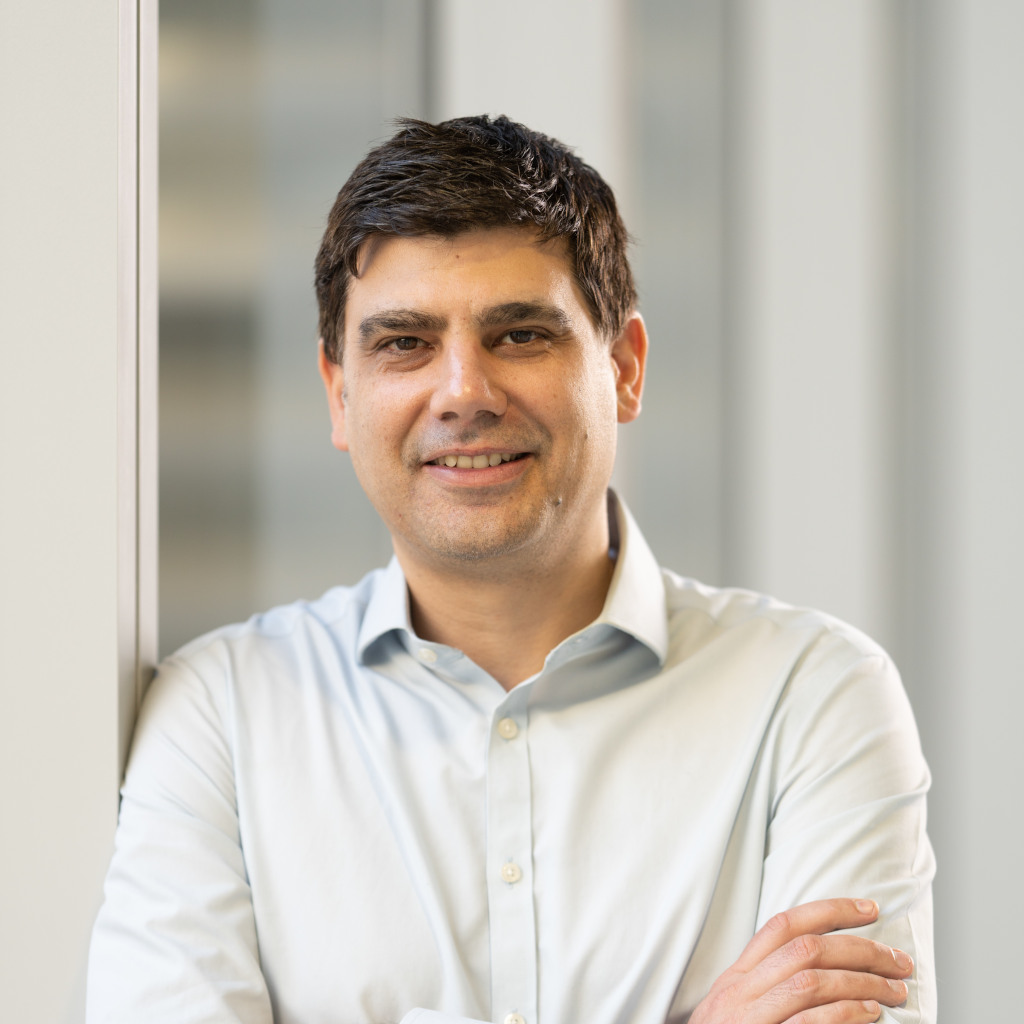
Adam Woolfe is a computational biologist and bioinformatics R&D leader at Bio-Rad, where he leads bioinformatics for the Saber project.
Transcript of Episode 90: Adam Woolfe
Disclaimer: Transcripts are automated and may contain errors.
Grant Belgard: Welcome to the Bioinformatics CRO Podcast. I’m your host, Grant Belgard. Today I’m joined by Dr. Adam Woolfe, a computational biologist and bioinformatics R&D leader at Bio-Rad. Adam’s career has taken him from comparative genomics and gene regulation to single cell technologies, antibody discovery, and computational immunology. His recent work includes Paraplume, a sequence-based approach to predicting antibody binding regions using protein language models. We’ll discuss what he’s working on today, the path that brought him there, and what he has learned about building up career at the intersection of biology and computation. Adam, welcome to the podcast.
Adam Woolfe: Nice to see you again, Grant. Thanks for inviting me here.
Grant Belgard: So for listeners meeting you for the first time, how would you describe your current role and the questions you’re responsible for?
Adam Woolfe: Okay, so my role is basically to develop the bioinformatics tools pipelines and software necessary to develop our instruments and also to support the customers that use our instruments. So I think your listeners will be familiar with Bio-Rad. I think it’s it’s one of the biggest sellers of scientific instruments. Things like digital PCR, PCR thermocyclers, gel electrophoresis machines. If you have worked in a lab, and I guess a lot of the people who do bioinformatics have not. But if you… the people who make your data will probably know about Bio-Rad because it is such a big company. So, I’m based in Paris, France, or just outside Paris, France, and how I ended up here was basically that I used to work in a startup company called Saber Bio. So I’m now part of the Saber Bio project in Bio-Rad.
Adam Woolfe: But Saber Bio was a startup company a couple of years ago, and we actually got acquired by Bio-Rad a couple of years ago to bring in single, like a droplet microfluidic single-cell science into the Bio-Rad portfolio. So that’s what we were doing. We were developing a technology called droplet microfluidics, which is basically the thing that drives a lot of single-cell science today. People may be familiar with uh, 10x te- uh, Chromium machine, to do the single-cell science, although there are a number of other technologies. But theirs is based on droplet microfluidics, and basically you’re creating picoliter, like super small droplets that you flow through channels in a chip. And what what we do differently compared to other, o- other people is that we have expertise in in-droplet assays.
Adam Woolfe: So we actually assay the function of the cell in the droplet using techniques to understand what’s going in the droplet, and then we can use droplet microfluidics to sort the droplet down channels depending on the function that they have. So we apply this, of course with the, the machine that we’re developing actually is applied to identifying therapeutic immunoglobulins, so antibodies and TCRs and what we do is we can assay the cells that produce those things, the B cells and the T cells for the function that we’re interested in. So for instance, for the antibodies, we’re interested in binding, whether they bind something or maybe whether they, whether they have a particular function they can internalize or they can activate a cell. And all that can be done inside that little droplet using fluorescent signals and laser lines. And we can sort those cells.
Adam Woolfe: We can enrich for a population of cells that are producing molecules that we’re interested in. And this is applied obviously to therapeutics, right? So antibodies make up, one of the most successful th- range of therapeutics, biologics, right? That that are on the market. They… the value of antibody biologics is something like three hundred and fifty billion dollars today, that could, could raise to one trillion in in five to 10 years. In fact, out of the five of the top 10 biggest selling drugs, five of them are antibody therapeutics. In fact the top drug which is a, a, an antibody called Keytruda made by Merck basically brings in thirty-two billion dollars to Merck every single year. So these things are big business, right? So identifying antibody therapeutics is a big deal these days. And so that’s what our instruments… they don’t necessarily have to be applied to that.
Adam Woolfe: You can use single-cell science to understand other things as well. We work with groups looking at autoimmunity or whatever. But basically, if you… One of the biggest applications obviously value-wise, is to identify new antibody drugs.
Grant Belgard: What parts of your contributions at Bio-Rad are least obvious from your job title?
Adam Woolfe: So certainly in a big company, you have to sell yourself to… Or you sell your ideas and the, the things that you wanna do, you have to sell it to the higher management or to non-scientists even to marketing team. In fact, the marketing team is like one of the most important aspects in a big company. Like what is gonna bring you value? You can, as a scientist, you often think, oh, this, the, the most interesting things or the most novel things are gonna be the things that will propel you forward. But actually, in a big company where, the bottom line is whether you can make money from something, right? Is more important. So a part of my job is to explain the value of a bioinformatics function or a bioinformatics tool that will facilitate both the analysis of data coming from the instruments that we’re creating and bring value and money to the company.
Grant Belgard: Can you trace a representative project from biological question through data generation and analysis to a final decision?
Adam Woolfe: As I mentioned I spend some of my time on R&D to to help people prioritize antibodies. Okay? So when someone uses an instrument, they may end up with, several hundred candidates that bind their antigen of interest or whatever. But the, the next stage is which of those should I take forward, to to the next stage of testing and validation, which is expensive, right? Developing drugs is expensive. If we can spend time before if the person can prioritize computationally the candidates that they can take forward, they can save a lot of time and money, later on further down the road. Because antibodies, as I say, are expensive to develop, and they fail very often because they have to be produced as drugs, and that process is quite rigorous.
Adam Woolfe: So they have to be produced at high concentration high pH high temperature, and that process can cause antibodies to aggregate and to lose their function or whatever. And so even if in the initial stages your antibody of interest was super good binder it doesn’t mean that it’s gonna make a good drug, right? It can fail in many different ways. And so computational prioritization is a really huge field that is actively worked on by many people in the world today because of how much money you can save downstream. And so what we wanted to do is to get a handle on the fundamental function of the antibody as it were. Okay, so what is the fundamental function of the antibody?
Adam Woolfe: It is to bind something in a very specific way, what’s called the affinity of the antibody, and the, the active components of that are literally the amino acids on the outside of the antibody that interact directly with the antigens, right? So those are the specific interactions between the antibody and its cognate antigen. Those are the active components. Now, there are other parts obviously, of the antibody that are important for ensuring that those amino acids are in the correct position, that they fold correctly and that the whole molecule is correct. But active parts are really the thing that drive the affinity. So if we can identify those, that would be good. Now, there were a number of different approaches that were already out there in the field but they often were quite their accuracy was not great, and they often relied on structure, right? So structure is fantastic.
Adam Woolfe: It, it’s revolutionized the field, the ability to in silico fold up a protein and know what it looks like in three dimensions, of course, is an amazing thing, right? AlphaFold has just revolutionized the field, and there are many other, and there are specific approaches to folding antibodies like what AlphaFold brought. But that obviously that comes with a lot of computational resources that require you, to expend to just to get the result. And that… And if you wanna do that on a repertoire level, so a repertoire, an antibody repertoire is a group of antibodies which can be in the scale of hundreds or thousands or tens of thousands of antibodies that come from a specific immu- immunization or immune event from an organism that you need to characterize, right? So if you have a very computationally expensive, process, you can only do stuff on a one-by-one basis.
Adam Woolfe: And this is true, in anything in bioinformatics. If something takes 20 minutes per molecule to run, on a GPU okay, that’s not gonna be very useful. It’s gonna be useful on… to characterize maybe one or two sequences. But if you need to look at this whole process in a kind of repertoire level, and, you can gain insights when you do high throughput, that you can’t gain when you’re looking at things on a one, on a single level. we wanted to have the ability to look at these specific residues that are so important and look at them in a very high throughput way. So we wanted to make sure that The process that we the, the model and the tool that we created was quick and was accurate, and it was at least as accurate as what was already available in the field.
Adam Woolfe: So we said, “Okay, let’s, there are these new things called protein language models, which are foundational models, which basically encapsulate a lot of evolutionary and structural and functional information in them because they’re trained on millions or billions in the case of antibody sequences. Sequence so they, already understand the fundamentals of what it means to be an antibody, what it means to be a protein before you fine-tune them on things and say, “Okay, now you understand about proteins, now you understand about antibodies. want you to learn what it means to be a paratope,” right? So now we trained those models on a small relatively small number of sequences because The, the availability of good, high-quality data in the field of immunoinformatics is actually quite limited. So you’ll come across this problem all the time.
Adam Woolfe: There are just not that much data available that you can train your model on. So the using these protein language models is pretty useful in that you don’t have to give it the information from scratch. It already knows the fundamentals already, and then you just have to tell it, “Okay, these are the things that look like this.” So we used structure, 3D structures of real antibody-antigen interactions to train the model and see whether we could get a good accuracy. And of course the novelty was that we didn’t just use one protein language model because there are a whole bunch of different protein language models that are trained on different datasets. Some are on just on proteins, some are just on antibodies, some are subset of antibodies, whatever. They all have different types of information encoded in them and no one model is necessarily the one model that should be used to train this.
Adam Woolfe: So we actually, we… What we did was we just stacked a whole bunch of them together the embeddings of all these across the across the sequences, and then saw whether that would improve the accuracy. And in fact it did. And using embeddings is pretty quick. So we were now able not to run one sequence in a minute, but like hundreds of sequences or a thousand sequences in a few minutes. So now we can cover the repertoire in a very rapid manner in a way that we just couldn’t before. And now trends that are interesting in that field like, like just understanding what… how do paratopes change when an antibody becomes exposed to an antigen, right? In the body when it goes from a naive to an antigen-specific antibody, how does the paratope, which is the active, component of that, how does it change? And now, Once we created that model, we were able to answer those kind of questions.
Grant Belgard: What are the most consequential false positives and false negatives in antibody or immune cell discovery?
Adam Woolfe: Okay, so if you are using computational means to predict particular functions, obviously the consequences can be great. As I mentioned, the, the advantages obviously are that you can prioritize things quickly, and you can choose antibodies that will likely not fail when you turn them into drugs. Now, the consequences of a false positive are that, you can, predict something that looks good. It may look like on paper that it works very well, but actually when you put it in the lab and you express it and you whatever it causes problems because, your model just wasn’t enough. Now, the false negative obviously is that you can miss things that were good, right? Those rare events that look possibly like a false positive when in fact it’s not a false positive at all.
Adam Woolfe: And you can, yeah, you can miss out on those, those things that would have made a fantastic drug just because the models or the predictions told you that it was not gonna be great. So yeah, we still have a long way to go. Predictions are not, biblical, right? They’re just informed guesses, right? That you just have to take with a bit of pinch of salt and some people maybe take them maybe too far. But I think there is a certain level of skepticism, I think at least in the experimental community of AI models, which I think is completely justified. But I think it’s– if you only have the ability to test a small number of sequences ’cause your budget, it’s very expensive to, to, to do that, then I think prioritization is still a pretty good way to go.
Grant Belgard: How do you approach computational workflow design when an assay or instrument’s still changing?
Adam Woolfe: Ah. So this is something that I’ve spent literally the last 12 years doing. I was in originally in a company called HiFi Bio, where we were also developing droplet microfluidics screening for antibody discovery. We were doing it for internal screening rather than trying to create a machine that was used by people. But you have to go through so many cycles of changing the approaches from scratch. It just… yeah. So effectively, you have to just be flexible and modular in your approaches so that you can take out, certain parts and just modify them in ways that will allow you to deal with the new approaches. I think just flexibility in your software design, in your analysis approaches that can, that you can switch in and out of stuff that, so that you don’t have to reinvent the wheel, but You certainly don’t have to, spend a lot of time changing stuff.
Grant Belgard: What does product readiness demand that publication readiness does not?
Adam Woolfe: So publication you have to be right once or a, a few times. Your experiment has to be, right and robust enough to get through review. But it doesn’t necessarily have to be, true in every context, right? So I think there was a study done a few years ago that showed that something like 75% of published experiments were not reproducible, right? So it just shows that the requirement for reproducibility is something that is not generally done generally because it takes time and money and effort. And once people have the result, they just wanna get out there and publish it as quickly as possible, right? So they don’t think about the reproducibility.
Adam Woolfe: So when you’re working in a company reproducibility, robustness, and the fact that a machine has to be taken and used by different people in different contexts in different environments, and it has to work every single time, is just a completely different ballgame that you have to deal with. So yeah, the two worlds, I think couldn’t be much more different. And in fact, know, a lot of companies are based on academic research that was done that looked promising, and they’re like, “Yeah, you know, just click your fingers,” and all we have to do is just develop this into a machine or into an approach, and it’ll work first time. And boy, is that wrong. The ideas are great, but turning those proof of concept experiments that perhaps drove a, biotech start-up were, uh… it takes a lot more to actually make it into a functioning product because it’s just not as easy as people think.
Grant Belgard: What evidence makes you trust or distrust a model enough to let it influence an experiment?
Adam Woolfe: Yeah, this is a really hot topic, I think, in the whole AI community right now, at least in science. I think if your model generalizes outside of the training milieu, like if it works on something that it didn’t really ever come across before, that’s the kind of the golden answer to whether your model is worth doing. Like, Is a lot of cases, I think, where data poisoning occurs. So people are not necessarily aware that the, the data that they’re validating on can look very similar to the data that they’re training on. So if your test data has things that, have high sequence identity or they are of sa-same function they may come through in the test data and of course, the model just says, “Oh, I’ve seen that before, that’s easy.” So it elevates the model’s accuracy rates. It looks like the model is much more accurate than it actually is. And when it…
Adam Woolfe: In fact, when you test the model on data that looks completely different to the model it often fails quite badly. So basically, if a model works well on data it’s never seen before, I think it’s trustworthy. Otherwise, not so much.
Grant Belgard: What’s the hardest handoff among experimental biology, microfluidics, instrumentation, software, and data science? Where do you, uh
Adam Woolfe: yeah. So the, I think the handover, Like I work with I work with engineers, I work with cell biologists, I work with molecular biologists who are working on the instruments, to make them work. And the handover of the data is trying to understand like the, the biases or the problems that propagate silently, from the instrument itself to the data that you’re looking at. It’s like you don’t necessarily have hands-on understanding of the instrument. It’s hard enough to understand bioinformatics, never mind engineering and whatever.
Adam Woolfe: So spending a little bit of time in the lab for sure goes a long way to try to understand the ins and outs of your data, like why you’re seeing what you are seeing and trying to understand that better so that you can mitigate the, the effects of those very specific aspects that you find in your data that are associated with the instrument that was creating it or the cell or molecular biology approach that was used to create the data. I think that’s the most important aspect to understand. Yeah.
Grant Belgard: What changes when a development stage platform becomes part of a larger organization and what should remain unchanged?
Adam Woolfe: Okay, so I’ve been through this process a lot. I’ve been in startup companies with a lot of change. And then as, as I say our startup company was acquired two years ago, so going through that process you understand that the big organizations just work very differently because their aims are very different. Like, when you’re in a startup company it’s effectively proof of concept largely. You have to work fast. You have to be prepared to fail, and you can… And it’s okay because you can… The cycles of development are much faster, right? So you can… You don’t have to talk to someone, you don’t have to sell it. You just have to say, “Okay, look, this is what happened. I think we should try this approach or, improve this,” whatever. And then the, the people go back in the lab and do it and so those cycles go fast.
Adam Woolfe: When you join a big organization so first of all, the teams that you work with expand, right? So you’re dealing with people in a completely different… In a different country. Now you’re dealing with people who are saying, “Okay we need to get this product out on the market in, in, in two years and it needs to be like this and this.” Things have to be more robust. Things have to be more reproducible. Things have to be just… It’s just a very different way of working. Sometimes big organizations, especially if they’ve taken over, or if they’ve acquired a small biotech company it can be like it can destroy the company. Like making that transition, if it… Especially if the team worked really well in that kind of dynamic environment and suddenly when they have to work in a very much more formalized way, it kills something.
Adam Woolfe: It kills something in the motivation, it kills something in the dynamics of the group. And the company realizes it and they go, “Okay, actually, we wanna go back to the way that you were before because we thought you worked really well.” So often sometimes big organizations will say, actually “Don’t worry too much about the formalities that we have,” especially in technologies that they’re not used to, that they haven’t developed these kind of things before. They don’t have templates, right? They don’t have things to say, “Okay, this is the way that we did it before and this…” Because your technology is like something completely new to our organization. So actually let’s… We’re gonna just let you get on with it and because it worked pretty well while you were a startup. Yeah, I think that generally is the conversation that’s had in these, in, in big companies.
Grant Belgard: And now a, a question that uh, is much discussed in our field. How do you expect AI will be impacting our field in the years to come?
Adam Woolfe: There is already the big sort of hot topic in, in, in antibody discovery and development is obviously de novo antibody generation. So now not using screening technologies or phage display or hybridoma or whatever it is that people used to use to find their target is now using computers to actually create antibodies de novo, right? So using generative techniques to create an antibody that’s never been seen before. And then using 3D modeling and other such techniques to try to predict which ones are going to be successful because as you can imagine, the search space in antibodies is absolutely huge, like phenomenal search space. So actually producing, something generatively that, that might actually bind is a huge challenge. And now there are a bunch of different companies today that claim to be able to do this pretty successfully.
Adam Woolfe: there’s companies like Chai-2 Nabla and, all sorts of other ones. Now, they have… They produced white papers that look pretty impressive. But no one has actually seen the data because I guess it’s so sensitive. Like the, the field is so competitive that they don’t want people to see exactly how they did what they did. I think basically as far as from what I hear they basically throw the kitchen sink at AI models with as much interaction data as they can so that the model can basically then predict interactions. But antibodies are slippery. They’re much more challenging than protein-protein interactions just because they’re, the active components of an antibody, which are the basically their complementary determining regions, these are loops that come out of the antibody that interact with the, the antigen are quite dynamic, right?
Adam Woolfe: So they move around a lot, and they can change their shape like after… before and after binding. So they’re much more difficult to predict than general protein-protein interactions. So it’s still a very challenging field, and I think… But AI seems to be every week, every month, there’s new advances in this field and yeah, the golden goose is to be able to produce to predict an antibody very quickly just de novo.
Grant Belgard: Where did your interest in computational biology begin?
Adam Woolfe: I grew up loving computers. I used to do a little bit of copying magazines, you know, uh, like, code. This was, like, in the 1980s, right? I’m pretty old. So I really loved playing around with computers and… But I come from a very scientific family. Both my parents are PhDs, right? So science was quite a strong driving force in my career. And I never really thought about computers as a career. I always thought, there’s science and then there’s computers, and computers are for games or I don’t know, software, whatever, and science is science, and I didn’t really ever think about the two coming together. And it was only really during my… So I did a degree in molecular biology at Manchester University, and as part of that, I spent a year in a lab at Hadassah Medical School in Jerusalem.
Adam Woolfe: I remember one day, one, one of my colleagues coming in and and he was working on some bacterial protein and trying to understand something about why it was working. I can’t remember exactly what it was. But he then said, “Look I’ve threaded my protein onto a, a 3D structure, and it looks like it seems to be this kind of structure.” And I was like, “Wow!” That really, that blew my mind. Wow, you can actually take sequences and computationally predict stuff. That was my first ever exposure to that. And at the end of my degree I took, there were some courses in bioinformatics, and it just happened to be that Manchester was one of the first places in Europe to offer a master’s in bioinformatics, and this was back in 2000, right? So I was o- I was in the right place by the right time ’cause they were offering a fully funded master’s. You even got some money to help you for accommodation.
Adam Woolfe: That’s unheard of now, right?
Grant Belgard: Yeah, it’s nice in the UK.
Adam Woolfe: so it’s- Free so they were offering that and I was like, “Wow, this is amazing. I can put, I can combine computers with biology and, the two passions, you know, together, and that’s just a fant- a fantastic opportunity.” So I did that master’s and then at that it’s funny how the, how these cycles happen because at that time, people were talking about bioinformatics being this this new hot topic, right? And that people were be- were, people were being dragged off the course to get jobs, right? Companies were so desperate for bioinformatics, bioinformaticians, that they were just dragging people off the bioinformatics course before they even finished, giving them high-paying jobs and it’s like, wow, this is gonna be amazing.
Adam Woolfe: And I spent a summer working in a British biotech um, which was an, an old biotech company that was, um- That was quite well known at the time, and I said, “Oh, I’ll finish writing my thesis, and then I’ll look for a job after.” ‘Cause clearly I’ll just find a job very simple. I don’t have to, I don’t have to worry about that. And I graduated two weeks after September 11th the economy collapsed. Bioinformatics companies at that stage the promise of bioinformatics just hadn’t been realized. There was a lot of hype, there, there was a hype cycle, and suddenly people were saying, “Eh.” And it just was a little bit too early, right? The tools were not there. The data was not there. It just it was just too early on and people were, had, had high expectations of this new field called bioinformatics, and it just wasn’t fulfilling. And so a lot of these companies were folding and all their…
Adam Woolfe: the people who had experience in bioinformatics were suddenly on the market. And I was like, “Oh, I can’t compete with my, my, my limited experience in bioinformatics.” So I was unemployed for a year what I kept hearing was, “Oh, people have got PhD,” no. I was like at that stage, I didn’t really think about continuing academia. I’d already spent four years studying, sorry, four years doing molecular biology, one year doing masters of bioinformatics. So five years already university, I was like, “Enough. I, I wanna do something else.” And you have a vision of your life and it doesn’t always work out the way you think. And actually uh, decided to go back and do a PhD because that was pretty much my only choice. And I basically was in the right place at the right time. I’m super privileged that I ended up studying the human genome just after it had been completed.
Adam Woolfe: Like you, you know, I was given the opportunity to study the human genome and apply new bioinformatics techniques, multiple alignment, whole genome multiple alignment using BLAST, whatever, just looking at comparative genomics and finding super interesting things about the human genome where that was completely uncharacterized, right? You stuck a pin and you find something interesting. So I was just in the right place at the right time, and I was, I’m I feel very privileged to have done that. Yeah.
Grant Belgard: And how did single cell biology and immunology enter your career? What made them compelling enough to to stick with it?
Adam Woolfe: Yeah. They actually came in at exactly the same time. I, I hated immunology at university. I found it so boring. There’s this cell, and there’s this cell, and there’s this receptor, and na na, CD4. And you’re just like, “Oh, this is just so boring.” And it was not on my radar at all. And as I was coming toward the end of my second postdoc, I was at the Institut Curie in Paris. This is how I ended up in Paris, okay? This is how, how a lot of scientists end up in countries that they may- maybe never imagined they, they would be in or that’s a very common experience of scientists I think outside of the US. US scientists tend to stay in the US, but scientists outside the US kind of move around. So I was finishing my postdoc, and I was wondering whether to stay in academia, but I wasn’t I wasn’t sure and hadn’t really thought about maybe… I hadn’t thought about industry either.
Adam Woolfe: I was like, I was still pretty wedded to the idea of an academic career ’cause I’d been, I’d had really fantastic experiences in that. But this, this startup company was basically wanted to pair with a, with our lab to look at single-cell chromatin, and we were the experts in chromatin at that point. And so I went to meet with them, and we discussed whatever, and I gave them my opinion and what I thought about the data. And then after the meeting, the guy’s “Oh, know, we’re looking for a bioinformatician to, to to set up the bioinformatics of our company. Would you be interested?” And I was like, “Yeah, that sounds amazing.” So this company, HiFI Bio, was melding micro droplet microfluidics to single-cell science and immunology. They’re trying to find antibody discovery all at the same time. So it’s mel- melding that, those two worlds in a single technology, and it just…
Adam Woolfe: That idea that you could use a technology to learn many different things. You can apply it to many different things. Also to TCR discovery, so looking at what, what you can do with technology that can assay like function at high speed just was very compelling. And in fact what we were– what we started working on in later on when HiFi Bio became a therapeutics company the field of immuno-oncology, right? So this is what really bit me, like the, the ability of the immune system to actually fight cancer, to actually… you can use your own immune system to fight the cancer rather than using an external drug, right? And I remember a couple of years into that my mother-in-law actually got metastatic melanoma. She had– she was diagnosed with metastatic melanoma, and there was buildup of a tumor on her, I think it was her kidneys or liver. And it was pretty fast.
Adam Woolfe: And they put her on this PD-1, immuno-oncology um, treatment. And lucky enough, because actually only thirty to forty percent of people who actually undergo this can actually respond. But lucky enough, she responded and her tumor disappeared. And I was like, “That is amazing. This is amazing.” And that really seeing the effects of something that you, that your technology can, and your company can do is really compelling.
Grant Belgard: What’s a career decision that felt least obvious at the time but became especially consequential?
Adam Woolfe: I think it’s that transition from academia to startup company. As I say, like when you’re in academia you can really, feel like, oh, this is the be-all and end-all. And I think it… My experiences were that what was happening in academia was far more interesting and radical than what was going on in companies. Companies were, for me, it felt like a few years behind the forefronts of science that were being pushed by academic circles. And I think that really was true in the early 2000s, especially with the Human Genome Project and everything else. Really academic science was really pushing the boundaries. at some point I think those advances were now being pushed by, startup companies, right? That like really incredibly interesting science was being done by those companies. And as I say, I wasn’t looking to, to transition into into industry, but it…
Adam Woolfe: And then just, it’s just for me, it just happened, and I was like, “Oh yeah, this seem, this seems pretty cool.” And I made that transition, but it was only afterwards that I realized actually I can make a lot more impact in a world in which the things that I do are actually translated into real drugs, real effects on patients rather than in academia where things are, you make advances in science, but someone ultimately will build on that to do, to help the people that you help. So you… Yeah, in both ways, but I think that transition was not so obvious at the time and now is much more obvious.
Adam Woolfe: And in fact, if I look at all the kind of big names that were in the academic field when I was in academia and now actually in companies, most of them have transitioned out of academia ’cause I think they probably can see the same thing as I did, that a lot of exciting stuff is being done in companies now rather than academia.
Grant Belgard: What should an early career bioinformatician learn deeply today and what can safely be learned as needed?
Adam Woolfe: Oh, I think I’m a bit too old to answer this question ’cause I’ve been doing bioinformatics for too long, and I think what someone does today might not be… Or what someone might think is important today is maybe what not what I think is important. But especially with AI w- before AI came along, you had to, you, you had to do all the hard work yourself to find the answer to something. You had to look at what tools were available, what databases were available. Now you can just– AI can answer that question for you. But whether AI gives you the right question is still something that bioinformaticians– Like, having the sense to understand what is plausible and what is incorrect is really where the bioinformatics will come in the next few years, I think, because AI can give you a lot of plausible code or whatever.
Adam Woolfe: But actually, when you know what the real answer is and how the tools that it’s using should really be used, you understand that it sometimes it just chooses the default method or whatever, and that’s not necessarily the best method. So understanding the tools of the field that you’re in deeply, I think is the most important part because then you understand how that tool should be used. Because using a slightly different parameter on a tool can make the difference between having a result and not having a result. And if you didn’t know the difference and really understand how the tool worked, you would never understand why you were failing or why there was not a result at the end, or the result was not as good as it should have been.
Adam Woolfe: So obviously, the fundamentals in bioinformatics, Linux command line Unix command line Python programming knowing how a server generally works in terms of memory usage and processing and how, and all that kind of stuff. then obviously the biology, is critical understanding, like how to interpret the data you get at the end, because that is the crux. If you don’t really understand why your result looks a little bit too good to be true then you’re gonna present, that as the result and ultimately you’re gonna give people the wrong answer. So yeah, it’s a hu– The thing is, it’s such a huge field. I think it must be very, you need to learn things very quickly it can be overwhelming to know where to start. And yeah I feel for those entering the field right now because obviously it was much simpler when I started. We had like BLAST and a few CLUSTALW whatever and that was it.
Adam Woolfe: And so I’ve, I’ve spent my career learning all that stuff and that I can build on. But if you start right now, it’s just wow, where do you start? It’s huge.
Grant Belgard: How should a scientist decide among academia, a startup, or a larger company?
Adam Woolfe: I think it’s really your style. Academia is great for looking at something in a lot of depth, choosing interesting questions that don’t necessarily have a financial reward or a, a, a price tag associated with them. And I don’t think you have to choose one or the other. I think you can transition between. I think transitioning from academia to industry is very easy. Transitioning back to academia might be more difficult as, academia often relies on your your name recognition and your publication record and sometimes that’s not the priority in a biotech company that publishing is a nice to have, but it’s not a, it’s definitely not a pre- a requisite of being in a biotech company.
Adam Woolfe: If you wanna work on something that’s super interesting and but not at, at big depth, it has to be good enough, It has to be good enough to get the answer that people need to move on to to make the decisions they need to move on to the next development cycle. And if you’re okay in, in working in an environment, a high, high-paced environment where you’re not necessarily doing something that is fulfilling scientifically necessarily but fulfilling in a technical and team building way I think you can be fulfilled scientifically also biotech as well. But it’s just a very different style of working.
Grant Belgard: What’s one piece of advice you wish you had received near the beginning of your career?
Adam Woolfe: Be humble. Okay? Like we as bioinformaticians, we are at the end of the process, right? We take data often produced by people in a lab, and we analyze it, and we give the result back, right? And sometimes we don’t always appreciate the amount of time and effort that went into producing that data in the lab. The experiment may have completely failed. You may get zero reads mapping to your transcriptome or whatever. Or there’s something else, something problematic, and you just… And you can go back to the person and go, “Oh, that was rubbish. Complete rubbish.” And you don’t really appreciate, like, how demoralizing it can be sometimes to be told that that something is rubbish. And for us, it was, “Oh, we just put it through some alignment, and then it didn’t work,” right?
Adam Woolfe: And it’s like, “Okay, yeah, it’s garbage.” But like you don’t understand that person took a lot of time and effort to do an experiment and it doesn’t really help them. So communicating your result to someone is almost as important as the result itself. So ensure that you are humble and that you are empathetic and understanding and be careful with your words. It’s you can sometimes be Sometimes that can, you can come across as being harsh and and it can be problematic. So yeah, if I would say to my younger self, don’t… just be a bit easier on people.
Grant Belgard: Which unsolved question at the intersection of single cell biology, immunology, and computation are you most eager to see answered?
Adam Woolfe: Yeah. The thing that we we’re working on right now is trying to come up with models that can predict to some degree the affinity of an antibody to its antigen. This is a difficult problem. And it’s… Many people have attempted to to solve it because as I say, antibodies are slippery things. Their interactions with their antigens can be very difficult to predict. And in fact, also the place that the antibody will bind to on the antigen is also a really difficult problem. Like predicting the paratopes is not super difficult problem, but predicting the epitopes the, the amino acids on the antigen that the antibody interacts with very difficult. The success rates currently of models on that is probably something like thirty percent, fifty percent at the best. So it’s really like it’s not a solved problem at all.
Adam Woolfe: And it’s in fact a really important thing ’cause people wanna know, okay, so I have this bunch of antibodies. Sometimes an antibody can bind an antigen, but it has no effect. You wanna maybe block an active site or a receptor or something like this, and if it’s binding the site of it, yeah, it may be a good binder, but it doesn’t do what you’re really wanting to do. So knowing where the antibody is binding would be an excellent problem to solve because it would help people to just choose the best antibodies that are relevant to them. Again developability of antibodies, that’s a really difficult problem. Recent benchmarking showed that models are still really bad at predicting developability. Things like aggregation or thermostability or polyreactivity or anything like this, are still quite difficult to do and a lot of that is to do with dearth of data.
Adam Woolfe: Like antibody data is not very accessible, mostly because antibodies are so valuable, right? They sit in silos in big companies, and you don’t get access to them. So publicly available data sets that you can train off just not very available. And so models have to be based on very small numbers of of observations, which, if you’re using different technologies to measure that, it can come up with a very different result that will then screw up the model. So all these things are very difficult problems right now that I think would be great to, to solve, and we are trying to solve them ourselves. Yep.
Grant Belgard: What would you like listeners to remember from this conversation?
Adam Woolfe: I would like listeners to remember um, that life doesn’t always take the path you think it does. You may have a plan. You say, “Oh, I’m gonna be a PhD, and then I’m gonna go and gonna open up my own lab, or I’m gonna join a company,” or whatever. And sometimes, you’re thrown a curveball and things like global economy or just things that you n- would never imagine happening change everything. Even AI, I think, has thrown a lot of curveball for a lot of people, and those entry-level positions are no longer available. So don’t always imagine… Don’t, one door shuts, another door opens. Your career path will often take a very different path to the one that you imagine. And it’s, that’s not always a bad thing, and that you, it may not be something that you originally thought you wanted to do, but it can end up being something that is, that you’re like thank God that happened. I’m so happy.”
Grant Belgard: Adam, thank you so much for joining us.
Adam Woolfe: My pleasure, Grant.