The Bioinformatics CRO Podcast
Episode 57 with Nick Wisniewski
On The Bioinformatics CRO Podcast, we sit down with scientists to discuss interesting topics across biomedical research and to explore what made them who they are today.
You can listen on Spotify, Apple Podcasts, Amazon, YouTube, Pandora, and wherever you get your podcasts.
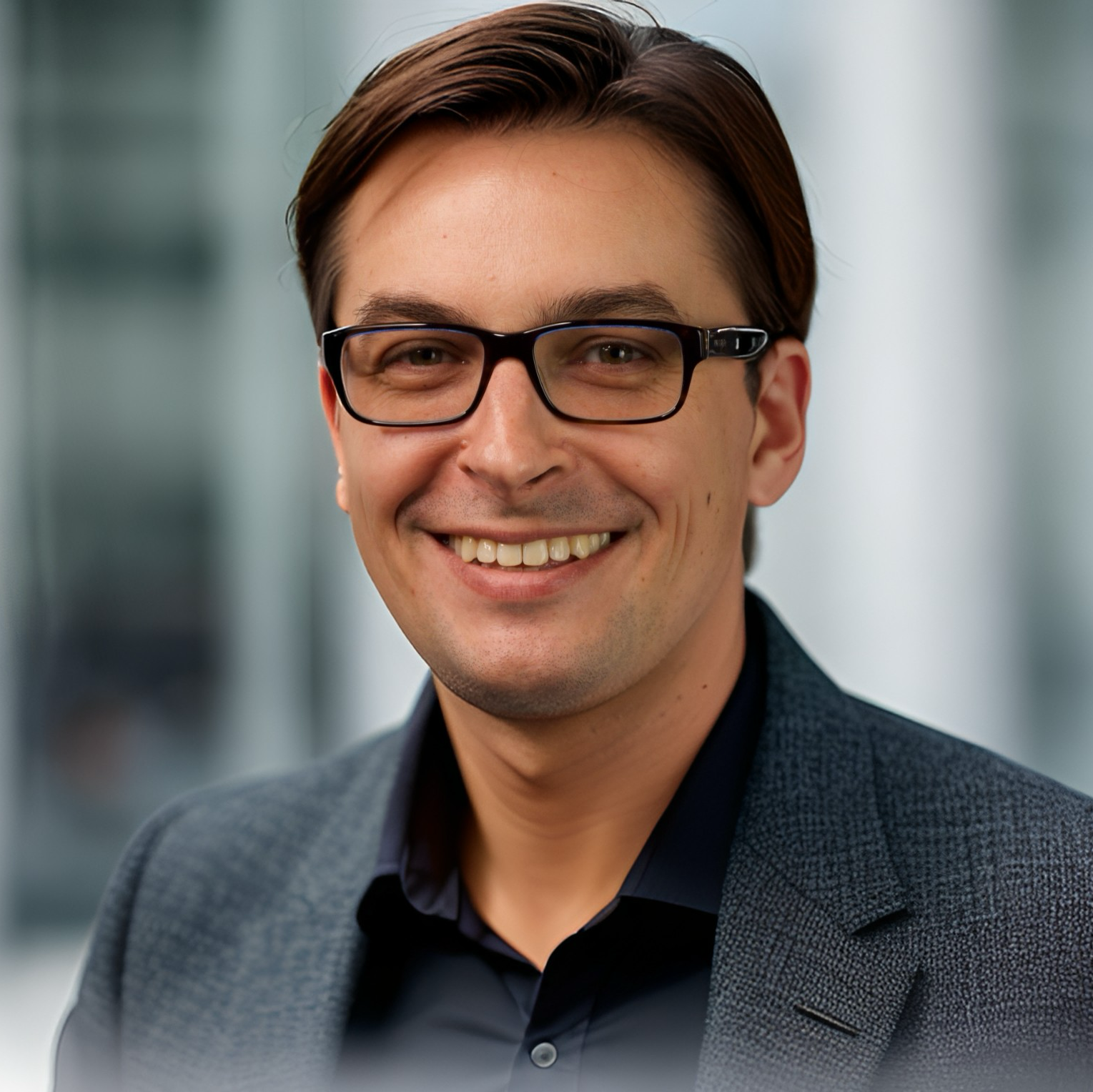
Nicholas Wisniewski is Vice President of Bioinformatics and Data Sciences at Stemson Therapeutics, and an expert on AI in drug development and regenerative medicine.
Transcript of Episode 57: Nick Wisniewski
Disclaimer: Transcripts are automated and may contain errors.
Grant Belgard: Welcome to The Bioinformatics CRO Podcast. I’m your host, Grant Belgard, and joining me today is Nick Wisniewski. Nick is Vice President of Bioinformatics and Data Sciences at Stemson Therapeutics, as well as an expert on the use of artificial intelligence in drug development and regenerative medicine. Thanks for joining us today, Nick.
Nick Wisniewski: Thanks a lot for having me on, Grant. This is great.
Grant Belgard: So, let’s start at the beginning. Who is Nick Wisniewski and how did you come to be?
Nick Wisniewski: Yeah, this is one of the things that I love about your podcast is hearing the stories of everybody’s personal growth from childhood on and stuff that you wouldn’t normally hear about when you’re having an interview or something with them. So, yeah, taking it back to the beginning, I grew up in Michigan in suburban Detroit, and I guess I had early exposure to science and computing very young in life. My dad brought home one day when I was around four years old a Texas Instruments computer. I think it was a TI-99/4A. And you could write code in BASIC and then save it to cassette tape using a normal cassette recorder at the time. So, you know, I got into writing simple programs. There would be magazines that came with programs written out in BASIC and you just type them in, transcribe them and start modifying them.
Nick Wisniewski: And that’s kind of how I learned how to program some stuff and became really fascinated with some of the early gaming that was happening, particularly like the text-based gaming of like Sierra and their mystery house games. And so I remember that being a part of my downtime. If I would get bored in elementary school, I would just start writing code on a piece of notebook paper, sort of sketching out what that sort of thing would look like. I think also around that time, I developed a passion for music. My mom’s side of the family, she played organ and piano and everybody on her side of the family was musical. So whenever all the cousins would get together, everybody played an instrument, guitar, drums, keyboards, and we would write our own songs and record stuff and had a good time there.
Nick Wisniewski: And those two parts of my background, I think, are things that interact and weave through each other throughout the rest of the career story. And so they’re both kind of important to understanding the development. I would say from there, you know, moving into junior high and high school is when you start getting exposed more to mathematics and quantitative science. The first exposure to quantitative science was chemistry in late junior high. And I was kind of captivated by the idea that you had exact mathematical descriptions of chemical reactions of atomic orbitals. And then you could go verify and test it in the lab. And that kind of broke open a new world for me and changed the way that I thought about things. And my teacher there was very supportive. I remember his name, Mr. Shotwell.
Nick Wisniewski: He saw the interest that I took with these things and in his office had a bookshelf full of all his college textbooks and everything. And kind of just let me go at it in my own time, looking at his pchem books, where I started seeing all this molecular orbital stuff and the quantum mechanics underneath it. And then that’s the fun stuff.
Grant Belgard: Yeah, it’s it’s it starts to get real at that point. You’re like, wow, this is this is pretty good stuff.
Nick Wisniewski: So I started learning very early through reading quantum mechanics, relativity. And that was my introduction to physics was through chemistry. It grew beyond that. Once I got into physics, I had already seen some stuff. And so I started asking too many questions. I became disruptive in class with the number of questions and as often happens with gifted kids. So yeah, so they started just just kicking me out and sending me to the library to study on my own, which was fantastic. And that’s where I picked up a bunch of the rest of the stuff and started, you know, just looking into whatever I could out of my own curiosity of what was going to be next, just chasing these ideas. That led me ultimately to start applying to colleges at that time. And I got accepted to Caltech and that kicked off my career as a physicist.
Nick Wisniewski: I remember there were a set of essays you had to write on your application, very open ended stuff, asking you to comment on what it is that you want to learn. What are your scientific interests? And then a lot of other personality questions based around how do you think about science? And kind of set your intent on what you’re going to get out of this experience. And I remember some of the essays that I wrote there had to do, again, with the merging of this mathematical side and all the science that I enjoyed doing combined with a creative side. And so there were particular themes that were woven throughout those essays, talking about wanting to learn about the fundamentals of nature, whatever those were, based on the things that I saw with light and quantum physics and space time, that there were a bunch of riddles that I couldn’t really crack. And I was interested in those.
Nick Wisniewski: And so I wanted to understand what the macrocosm was, what’s the principles of the universe, but then also the sense of there being a microcosm with consciousness and biology and understanding how are we perceiving this stuff? Because it’s clearly at that point, I understood much different from the underlying reality that you look at as a scientist. And I approached those both with a bunch of maybe artistic metaphors. And I remember invoking some King Crimson in the middle of an essay where they had a great album that talked about discipline versus indiscipline and how you become a master of an art form like that. And at the time, I had no idea, but Richard Feynman had a very similar quote about, in his advice to students, to just find something you’re interested in and then study it in the most irreverent, disorganized way and just go at it with everything you’ve got.
Nick Wisniewski: So when I arrived at Caltech, I ended up having two undergraduate advisors. One was Jerry Pine, who was a particle physicist that transitioned into biophysics later in his life, where he was working on a neural chip so that you could study in a dish the electrochemical interactions between neurons and how they communicated with each other. And then my other advisor was Harvey Newman, who was famous, I think, for discovering the charm quark and was a very big leader at CERN in terms of developing the scientific computing and all of the networking that went into ultimately the pig’s discovery. And so my education there straddled both of these fields, from neurobiology and that stuff, and on the particle physics side. And one of the great things about Caltech is that in your summers, you get to spend typically doing research and learning how to be a practicing scientist.
Nick Wisniewski: And so I remember, you know, my first experience was in a neurobiology lab. It was a monkey lab where there were electrodes implanted in visual cortex. And we were trying to decipher how the image processing system of the brain works. So you expose the monkey to different types of images and take the recordings and then you’re trying to demultiplex the whole thing. And it was kind of this early image processing, call it early AI. And then my second year, I started working with Harvey Newman on the particle physics side. And this became a very interesting problem involving a lot of computation. And this is where I learned more of my scientific computing side. The problems there were fascinating. At CERN, we were generating something like 40,000 exabytes of data streaming through the detector per year.
Grant Belgard: That makes NGS data sets sound pretty small.
Nick Wisniewski: Yeah. It’s so big. I think the context that I saw is that it’s like 10 times larger than any amount of data that’s ever been stored on Amazon S3 through its entire existence. And so the problem right there is there is no technology. There wasn’t back in the 90s. There really isn’t now to store that amount of data. You can’t physically write that much to disk in real time. So most of that data has to be discarded. And you have to build hardware triggers to identify in real time using ultra fast algorithms what you think is going to be interesting and that you need to record and write the tape and stuff that you’re just going to ignore and let it go by the wayside. You bring it down to a manageable, you know, 100 petabytes or whatever it was at the time. So I worked a lot on these sorts of algorithms tailored towards what do we need to do to find the Higgs.
Nick Wisniewski: And you’re running these giant Monte Carlo simulations of the physics on huge supercomputing farms that take up entire buildings. And then working on either classic likelihood-based statistical models or neural networks. At the time, were kind of the main competition. I’m just evaluating which one of these is going to perform better and how do I get them on this hardware chip. So again, it’s kind of to put it in the context of maybe the later career, I would call these things early days of AI and data science applied to the natural sciences. From there, I continued to pursue the particle physics track. I got an NSF grant that moved me to CERN in Geneva, Switzerland for a summer. I continued working on that Higgs project. And then when I came back, I started applying to grad schools. And I was already pretty well entrenched in LA, having been there a number of years at Caltech.
Nick Wisniewski: And so I applied to UCLA, also some other Southern California, UCSB. So I was going around and interviewing at all these different places, talking to the different professors that I might end up working with. And it was a lot of interesting conversations. I remember talking with, for example, Gordie Kane at University of Michigan, and Joe Polchinski at Santa Barbara. Joe was a, you know, a giant in the string theory field at the time, which was kind of the it thing to do. And I was keeping an open mind as to what I wanted to do for a PhD. Like particle physics wasn’t a default. I enjoyed it, but I also wanted to consider going back to tabletop physics, whether that’s some sort of quantum stuff or into biophysics, stuff that you can manage without a giant collaboration or theory to be even more minimalist, stuff that you can do alone in your office.
Nick Wisniewski: And what surprised me was in conversations with these folks, particularly Joe, was active discouragement of people doing those things. Not for, at the time, I believe, any disbelief in string theory or where it was going, but kind of just a frustration with maybe job prospects, you know, like trying to get your postdocs, faculty positions and watching them struggle and the funding situation going on. And, you know, I believe his advice to me at the time was to paraphrase it. Don’t go into string theory unless you would commit suicide if you didn’t.
Grant Belgard: Well, that’s a rigging endorsement.
Nick Wisniewski: Yeah, exactly. You don’t, you don’t hear that kind of recruitment a lot of different places, right? And so I thought I should, I should probably take that to heart. Joe’s a really smart guy. And, and I looked up to him. He went to Caltech. He was another Caltech alum. And, and so I felt like he was, he was giving me some solid advice and not, not trying to scare me unnecessarily. So when I eventually went to UCLA, I continued on with particle physics, now working at Fermilab on similar stuff. I mean, now it was super symmetry and looking for some stuff there, but it was more or less using the same triggers that I had developed earlier. And, you know, the more time I spent in it, the more I was hearing those same things now, not just coming from Joe, but coming from everybody.
Nick Wisniewski: And so, you know, the DOE would regularly come to every department in the country and you’d have DOE week where it’s kind of like having your board come and you’ve got to walk them through the lab and tell them everything that you’re doing. And the feedback just kept getting more and more of, well, the budget is going to be flat at best, but it’s more likely going to be declining. And just transparently communicating that we’re producing too many particle physicists as a country. There’s no way we’re going to be able to employ these people. It’s, it’s not a good use of their time.
Grant Belgard: Pyramid scheme.
Nick Wisniewski: And what’s that?
Grant Belgard: Bit of a pyramid scheme.
Nick Wisniewski: Yeah, you could say so. And so that advice was coming around more and more to where you started to have to listen to it. And the thing that I think finally got me was one day at Fermilab, Marty Veltman came and gave a talk. Marty won the Nobel prize, I think in 99 or something for the renormalization of the Higgs. And he gave a talk and the topic was basically like the end of particle physics. It was argument after argument, you know, well reasoned based on rising energy costs and projections of where that’s going to take us over the next decade and the political realities, the history of, you know, America losing the superconducting super collider and the budget fights there and what was going on in Europe at the time and all sorts of other stuff projecting what we needed to build in order to get to the next energy frontier to really probe some of these things.
Nick Wisniewski: And, you know, so his main conclusion was that this is probably the last generation of particle physics and you should be considering whether or not this is what you need to be doing. And so you’re sitting in a room full of postdocs, PhD students or, and it kind of, it kind of hit home with me at that point. And some things were happening in my life that kind of created a natural point for me to step back and take a pause. So I remember having lunch later that week with Marty and he, he kind of, you know, re-energized some of that just general curiosity in me and, and kind of, uh, gave me the, the bravery to take that step back and, and really reconsider what I was doing and think about other problems out there that people were solving that were possibly more interesting. And I think about what I could offer to those.
Nick Wisniewski: So I took a step back and then I took a bunch of time to try to figure out where else I can apply my background. And so having a broad generalist physics background was great, but like I already discussed, theory was, was in a very strange situation. String theory had taken over everything. You couldn’t, you couldn’t do any work into, let’s say more interesting things like the foundations of quantum mechanics, uh, and stuff like that. It was everything that Eric Weinstein talks about in terms of, uh, what was going on in, in physics and string theory at the time. It’s all absolutely true. I think everybody was encountering it and, and it was a bad deal. So that wasn’t, wasn’t really an option. I started looking back into the biophysics and needed to reorient myself as to what was going on. What, what did I miss out on the past few years and so forth.
Nick Wisniewski: So, you know, one of my professors from undergrad at Caltech was Christophe Koch. I got in touch with him again and, uh, and he was gracious enough to, to let me come and spend the summer, uh, back there. Like I was an undergraduate again, just crashing around, uh, different ideas and seeing what he was up to. He was at the time writing his book, the quest for consciousness. So this stuff was on everybody’s mind. And it was while I was there that I stumbled into the work of Shunichi Amari on information geometry. And so anybody who’s not familiar with Amari, this was, let’s call him like the great grandfather of AI. This was kind of slightly before Hinton and, and the others that we now know from the Nobel prize should all be famous. Amari had done a lot of work connecting differential geometry to information theory and statistics.
Nick Wisniewski: And in the ensuing years, all of the machine learning algorithms were gaining natural representations in terms of that framework. So at that time, it was a small little niche topic. AI hadn’t really exploded yet into what we know it as today, but I had the sense that I had found something very interesting that I should continue pursuing because it seemed to unite those two initial streams that I was interested in from the very start. Something having to do with consciousness and neurobiology on one hand, and then on the other hand, kind of foundations of physics and, um, how the universe works. So, uh, at that point, my main goal was trying to find somebody back at UCLA that I could work with on this topic as a way to finish up a PhD. I had taken a master’s as my break point from particle physics. And now it was trying to set up a new project.
Nick Wisniewski: Unfortunately, there weren’t very many people familiar with it because it was this small niche field at the time. And so there wasn’t anybody in physics, uh, that, that was familiar with it. There were a few people, maybe one person in the math department, but when I looked at that, it was sort of way over my head. Uh, it was not something I was going to interface with well. And I remembered I had attended a very interesting lecture by a postdoc of Alan Garfinkel over in the department of medicine at UCLA and was, it was sort of a nonlinear dynamics talk, but I was impressed that that sort of work was happening over in the department of medicine and I was intrigued. So I set up an appointment with Alan and brought these ideas to him, um, with the hopes that maybe he can point me to somebody and he might be more connected into what’s going on.
Nick Wisniewski: And, um, as soon as I started explaining the stuff to him, his eyes lit up and it was immediately a great match. He’s a great guy with a very broad background in a lot of different subjects. He himself was the student of Hillary Putnam, uh, well known for, again, being this polymath with impact in fields from computer science to philosophy to mathematics and a bunch of other stuff. So Alan was technically, I think, a philosopher in terms of his PhD. Um, but, uh, it happened that way because he was trying to do some applications of differential topology to biology, which was so off the beaten path at the time that the math department, uh, at MIT was not happy and kind of sent him elsewhere to finish that.
Nick Wisniewski: So I think we had some shared experience there too, with finding some frontier math that seemed to have a chance for huge impacts on your native field, be it biology or physics, but really nobody supportive of it. So he was, he was immediately supportive and I kind of moved in to his lab and he had a problem that I think by pure coincidence invited the use of information geometry to solve. He was working on some simulations of the electrophysiology of the heart. He was in, we did a lot of work in cardiology. And so you got to do all these simulations on, on a finite element model. And in order to get any sort of realistic behavior, we needed to bring on realistic diffusion tensors onto each of the nodes in order to, to do the, the computations.
Nick Wisniewski: And so he was working with some people in radiology doing diffusion tensor imaging of real hearts, but the resolution didn’t match what we needed in order to do these numerical simulations. And they needed to be upsampled or imputed or whatever we want to call it. It’s a really interesting problem where you’ve got tensors on a lattice and you need to, from that lattice, infer the, the continuous tensor field that exists underneath it. And so we made a deal like, um, I’ll work on that problem and try to solve that. And then he’ll be my wingman as I just start go exploring this math that to, to both of us was new, but we both found exciting. So it was, it was a great relationship and, and that’s how I ended up completing my PhD. And looking back on it, I would say, you know, it’s, it’s a very, very unique experience that most people don’t have. Everything is usually structured.
Nick Wisniewski: You’re assigned a problem and you’re kind of being trained professionally. Whereas, um, you know, this was more a pursuit of curiosity and, um, diving into, to new ideas really without a safety net. Uh, everything was at risk. You know, you had all your skin in the game at that point, uh, and you’re just doing it out of, out of the love of the science and the math and looking back on it, I don’t know if I would have wanted to do it any other way. I feel like I got, you know, actually my money’s worth out of my PhD and it was one of the most difficult experiences, but one of the most rewarding at the time. And you know, you have to, to learn a lot about resilience and facing adversity and challenges and the unknown, um, to get through something like that. So.
Grant Belgard: Right. And I think a lot of PhD students find the ambiguity, um, to be a real challenge after they’ve been in such a structured environment, uh, most of their lives until that point. Um, you know, it can be hard to know how you’re doing day to day.
Nick Wisniewski: Yeah, exactly. And these are long, long degrees, you know, I think average lengths of PhDs at that time. And I don’t know, I think it’s, I don’t think it’s changed any, any sense, but it’s gotten up there to like seven or eight years is, is becoming normal. And, you know, when you’re four years in and maybe you’re stuck on a problem, um, you start going through a dark night of the soul, you start questioning everything and you don’t know if you’re ever going to get out. So it is challenging in, in every way possible. It’s physically challenging. It’s mentally challenging, um, for that to do something for that long with that kind of uncertainty is not easy. So after getting through that, I think the benefit, what I got out of it was one, a confidence in approaching new problems and not needing a deep background before diving into something new.
Nick Wisniewski: And then the second would be, I think having spent that much time with information geometry really prepared me to look at all sorts of statistical and machine learning problems from a more unified framework so that I think everybody has this experience with statistics. When you first learn it, there’s this kind of collection of formulas. And then you learn a bunch of people’s tests and you, you have to figure out which tests do you apply to which situations, but maybe you don’t really understand everything that’s there and you don’t, you don’t really see the, the unity underneath at all. And so it’s this very fragmented rule-based thing. You have a decision tree of what do I need to do for any particular dataset?
Nick Wisniewski: And I think once you get to that underlying framework that tries to unify everything, it becomes a lot more of a first principles type thinking, like, uh, like you’re taught in physics, where you’re not trying to memorize facts or techniques, but you’re taught to be able to drive anything that you need from first principles. And I feel like it gave me a bit of that intuition about statistics and machine learning that enabled me to be able to go into varying different fields with confidence in the ability to to come up with statistical methods that were going to be useful where, where none really existed. So in biology, this was really useful because there were all sorts of new emerging datasets coming. There was obviously the human genome project was now producing, well, it was done, but the results of it were producing huge amounts of data.
Nick Wisniewski: Everybody was either generating microarray data or RNA sequencing data, and not many all that great algorithms to analyze it from, let’s say, a systems perspective. Statistics doesn’t naturally generalize to high dimensions. The stuff was thought through and created, and all the theory you learn applies to, you know, a couple of dimensions. And all sorts of weird stuff starts happening when you get into higher dimensions, and you have to rethink stuff at that point as well. So there were a lot of problems there to play with. There was a lot of more classical statistics that was getting interesting. Lots more meta-analyses started happening around this time, and you could just work with literature itself to try to figure out what’s consistent and what’s not. And that got me into the reproducibility crisis and a lot of the issues there that are happening systemically in science.
Nick Wisniewski: And I started teaching some of these things. I built a class in biostatistics at UCLA, and I started teaching life science students about these methods, how they’re used and misused, and how various factors are driving reproducibility crisis, which, if you’re doing a PhD in life sciences, is great information to have because I don’t know how you get out of it.
Grant Belgard: You don’t want to waste your life.
Nick Wisniewski: Yeah, yeah. And you inevitably are having to recreate whatever you read in some paper. You know, there’s some indication that this will work, I’m going to go in and do it, and then something doesn’t work. When you’re young, you have valid questions about, you know, did my technique mess it up? Do I have bad technique? Am I a bad scientist? And, you know, so you keep trying it, like, five, ten times, and maybe you’re still not getting something. If nobody ever told you that, oh, yeah, there’s probably like a 10% chance you’re going to be able to reproduce anything that you read in a paper, you know, then you’re going to take that, those failures with a grain of salt, and you’re being, well, this initial finding was probably false, and it doesn’t reproduce. But if nobody tells you that, and you go in with the assumption that, well, it got published in Nature, so it’s got to be great.
Nick Wisniewski: Like, all these reviewers can’t be wrong. It’s got to be me. You end up, a lot of people start developing, you know, internalizing that failure and thinking it’s them and not the science. So that’s an interesting thing. So, yeah, I kind of developed a little niche for myself during that time and became an adjunct professor at UCLA with a research program in systems biology and this kind of genomics work, and then other stuff in terms of just widespread statistical consulting. As part of the class I taught, the first five weeks were kind of theory and practice, learning some R programming and how to implement some of these methods. The last five weeks were term paper time, where everybody would take whatever they were working on in their PhD dissertation. And I’d sit down one-on-one with everybody in my class and work through, you know, what are the methods that you need to apply here?
Nick Wisniewski: How do you need to structure the data? What are the hypotheses you’re really trying to test? And work out some advice on how to tackle those problems. So this ended up making it a popular class because it took that load off of the PIs. They didn’t have to engage in statistical oversight of these works anymore. And the students liked it, too, because they got to make a lot of progress on that and felt like they understood what they were doing by the end of the work in terms of the statistics. And so in the process of these things, some of the systems biology work I was doing was centered on inference of gene regulatory networks. There was a group of people at UCLA working on this, you know, most notably was Steve Horvath and Peter Langfelder, who wrote the WGCNA algorithm that’s very popular and useful. And then over in cardiology, I was working with very talented postdoc Christoph Rau.
Nick Wisniewski: We were working in a collaboration on heart failure with a bunch of different labs. And we looked at those methods and wanted to generalize them to more nonlinear measures. So we went through an exercise of trying to generalize it and put out our own variant of this algorithm called maximal information component analysis, again, throwing back to this information geometry concept. And between the four of us at UCLA, we had a lot of coverage across different labs doing genomics across the life sciences, where I know Horvath and Langfelder did a lot of work with Geschwin’s lab, and we were working more on the medicine side and human genetics, but constantly interfacing with each other.
Nick Wisniewski: So what ended up happening was, you know, there was some overlap between my students and some students in Dan Geschwin’s lab, most notably Alice Zhang and Jason Chen, who decided to apply to Y Combinator and got in to start a company based on rolling out these ideas as kind of an AI drug discovery program. So that’s kind of how Verge Genomics got started. And I was very happy when Alice gave me a call very early on in that and recruited me to join that. I think I was like the sixth hire or something as part of that founding team. And early on in those days, I think Peter Langfelder was a consultant. One of my students, Elliot Schwartz, was a consultant. There was so much overlap.
Nick Wisniewski: It was just this very natural transition into a startup where I had the opportunity to scale up everything that I was working on already into a much larger and honestly more well-funded situation and build something really meaningful. I remember also going up during my interview process. I went up for a week and worked with the company. And I remember it as one of the most productive weeks of my life up until that point. Like everybody on the team that she had recruited was an all-star. Everything clicked. The rate that we got science done was so fast that within a week, I had developed a new method, sort of wrote it up. It was essentially ready for publication. That didn’t happen working alone as faculty. So it was an easy call. Moved up, made the decision to leave academia and go up, help build Verge Genomics.
Nick Wisniewski: And as part of one of the early technical leads on that team, I’m really proud of that technology that we were able to build. And the success that Verge has had ever since just amazes me. I think it’s valued now at over half a billion dollars or something. And the validation rates on the targets that we ended up finding in those early days is something incredibly high. It’s like 80% or something is one of the latest that I saw. So I’m amazed by how well that went. You know, but that also got me addicted to startups. I really enjoyed the startup life. Like I said, it was so productive, so fast moving. There was no bureaucracy. There was no sort of internal competition. These teams just function so smooth and you can get so much done. So I moved back to Southern California. There was another professor at Caltech that I had known from my cardiology days, Maury Garib.
Nick Wisniewski: He’s an aerospace guy, but has a lot of insights into cardiology and actually would invite Alan over to give talks at Caltech too. So we had an overlapping network and he was spinning out some medical device technology that needed some AI running on that in order to do a diagnostic for cardiovascular disease. So I came back down and helped spin out that company and put together that. And it’s been a successful company, but it got hit with the COVID lockdowns. We had a trial that was put on pause. A bunch of funding that was committed got disrupted by some of the trade war. There was just like a confluence of all these disruptive events that came down at the same time. And being in LA in biotech can be a bit unnerving because there’s not a big biotech community in LA.
Nick Wisniewski: So one of the benefits of being in a hub city like San Francisco or San Diego is if your company goes under, well, there’s another hundred on the same street that can use your skills. So there’s this built-in ecosystem that in essence provides some job security. So I made the decision at that point because the company had sort of a natural pause there as it regrouped. I made the decision to come down to San Diego to kind of de-risk some of that situation. I knew I was going to be continuing with startups and I wanted to get to a hub. And that all turned out to be, I’d say, a wise move because what we’ve seen since COVID has been this roller coaster of up and down valuations.
Grant Belgard: And a lot of turbulence.
Nick Wisniewski: Yeah. Banks collapsing. You know, the VC world has gotten very strange. Valuations are all over the map. And currently in San Diego, there’s lots of companies shutting down everywhere. There’s so much lab space for rent available here. It’s, uh, it’s really sad to see. Hopefully this is all going to turn around soon, but yeah. So along that path, that’s how I ended up where I am right now at Stemson Therapeutics. And, uh, so Stemson Therapeutics is a cell therapy company that is focused on treating hair loss. And, uh, you know, hair loss is something I think everybody is familiar with to some extent. It’s typically associated with aging. And so almost everybody experiences it to some degree, men, women, no matter which ethnicity or country you’re from around the world, no one really gets spared as part of the aging process.
Nick Wisniewski: So the fact that there aren’t any really truly effective treatments for it out there from a business point of view means there’s a gigantic market that is basically waiting to be treated. In fact, there’s more hair transplants done every year than all other transplants combined, which is an amazing fact, considering that it’s an entirely elective surgery, a self-pay market, which just is a testament to how motivated patients are. There’s a tendency to maybe dismiss hair loss as a aesthetic thing. It’s not life-threatening, so it doesn’t really deserve any research. But I’d say for a couple of reasons, it’s, it’s an interesting path. The first is it does affect people very drastically. The fact that so many people are choosing elective surgery means they’re highly motivated.
Nick Wisniewski: And they’re highly motivated because so much of your identity, your self-confidence, your sense of self is tied into your appearance. And for something on your face or your head to start changing, you know, it’s really noticeable at that point that you’ve aged, you don’t feel like yourself. And it alters your behavior and can induce all sorts of anxiety and depression that is fairly long lasting. Like there’s a pretty steep impact on quality of life that people report from that. So it is beneficial in more ways than just aesthetic. Like it is treating a number of other things as well. The second I would say is in the cell therapy field, there’s been a lot of developments for various conditions that are life-threatening, whether it’s Parkinson’s and the work that Aspen Neuro is doing, or a lot of the work that’s happened, you know, diabetics in trying to replace some of those beta cells.
Nick Wisniewski: These are all great, right? Like we definitely want to see more work done in these fields. There are common challenges that are faced across all cell therapies. Maybe the most notable one is just the cell survival and the ability to engraft into the tissue where you want it and to withstand any sort of immune response that has to follow. And these are very complicated problems to solve, particularly when you’re trying to deliver cells deep into the body where you can’t really find them too well after you put them there. I mean, you’re not, it’s not likely you’re going to be tagging these with some sort of fluorescent marker or something and then trying to locate them later inside a patient. And you can’t excise the tissue after you’ve done it there to see how well you’ve regenerated. You’ve got to rely on more indirect means. And so solving these problems is hard.
Nick Wisniewski: And with something like hair loss, where you’re trying to put a regenerative medicine solution at a surface level of the skin where you can much more easily measure the engraftments and watch it over time. You know, you can literally photograph this thing every day and build a time series of what’s going on. It has the ability to act as a model system that can benefit the entire field of cell therapy. So that’s kind of part of the reason why I got into stems and therapeutics and saw the promise of this technology. And so the basic idea behind the science is that during fetal development, stem cells of various kinds start differentiating into cell types that form little niches and start communicating and interacting with each other in such a way that gives rise to hair follicles.
Nick Wisniewski: By the time that the follicle is fully formed, it’s believed that there’s maybe two major cell types responsible for orchestrating this behavior, one being a dermal papilla, which is kind of a specialized fibroblast, and the other being a keratinocyte or epithelial stem cell of some sort that gives rise to it. And so you can start thinking of strategies to repopulate the skin with those types of cells. And one idea is to extract cells from active hair-bearing skin through a skin biopsy punch, and then to culture expand them to get some population doublings of the cells you need and inject them back into the skin to revitalize dying follicles or dormant follicles and revive them. And there’s an interesting approach. The challenges are that you can’t really culture expand these things too much. They lose their identity, their trichogenicity, whatever properties promote the hair growth.
Nick Wisniewski: They lose it pretty quickly as you start expanding them. So the kinds of solutions that are needed there are basically optimization of culture conditions, which look something like identifying small molecules or proteins that you can add to it that are in some way going to rejuvenate these cells and enable them to expand further so you can create more of them and retain their trichogenicity. A second strategy would be doing this from IPSC. So taking blood from the patient, reprogramming it, and then directing its differentiation into those particular cell types. This has an advantage of giving you an unlimited supply of cells. And so you can repopulate somebody’s entire head theoretically because you don’t have any limitations on how much you can produce. The challenge is that the developmental biology pathways aren’t fully understood yet.
Nick Wisniewski: And, you know, it’s really interesting because even though this is all happening in the skin, the dermal papilla actually come through a neural crest intermediate pathway, whereas the epithelial cells come through a completely different non-neural ectoderm path. And so there’s a bunch of science to be done there, but the more we learn about developmental biology, you know, the more that becomes clear and makes a viable path forward. The role of bioinformatics in both of those endeavors looks a lot like AI-driven drug discovery, where you would say in normal cases, like trying to cure Parkinson’s or something like that, you have examples of sick and healthy tissue. And you try to identify what are the differences between these in terms of gene regulatory networks or pathways and whatnot, and then use the network biology to identify hubs or drivers that you can target.
Nick Wisniewski: And there’s a lot of target identification there meant to make the disease cells more healthy and prove that out. More generally now in the language of AI, you have some high dimensional embedding of sick and healthy cells. And your goal is to find molecular perturbations that move sick cells closer to the healthy cells in this abstract space. So those same methods apply to cell therapies, where all you need to do is kind of redefine what you mean by sick and healthy. So as long as you have a reference cell and a cell that isn’t really doing what it needs to be doing, you can apply a lot of the same methods. And these days, it’s actually even better because you’ve got all sorts of molecular perturbation databases like PerturbSeq to work from that actually give you some causal ability to predict.
Nick Wisniewski: And so in my role as VP of bioinformatics and data science, those are some of the main methods that we applied to help optimize these culture conditions. But I think maybe those are the easier parts. And the more interesting problems have to do with getting the assays up and running and making sure that they’re actually measuring the right phenomena and that you’re quantifying them properly. So part of our challenges was we had to invent a human xenograft mouse model that was capable of dealing with the kinds of transplantations that we were doing at the time. That required a lot of leadership from data sciences in order to arrive at something sufficiently statistically powered, some quantification strategies that really worked out for us. But even with those, you know, it’s an indispensable model, but it’s like 10 weeks to bake in vivo before you start seeing your hair outcomes.
Nick Wisniewski: And then you still got to sacrifice it and section it and put it through histology to do some quantification. So in order to do more experimentation on the perturbation side, we needed to innovate on an organoid model where just by having a 384-well plate and some imaging that you could do every few days on this, you could watch self-organization and the formation of follicular structures in response to different molecular perturbogens and use that to optimize some of the techniques. And that also required a lot of leadership from data science in terms of optimizing the plate maps. You inevitably encounter reproducibility issues from month to month, even running the same positive controls. And you have a good data science team and you’ve been collecting metadata on everything that goes in.
Nick Wisniewski: Not only does it tell you a lot about your assay, it also gives you information about all of the things you’ve been doing way upstream. All of the variables that have been introducing variants into the assay. And so we were able to really have an impact on the protocols that were being used far upstream. And I think examples like that are good examples for explaining why having a good general purpose data science team is critical for any biotech. It’s easy to think about the bioinformatics part, but everything else that goes into producing a good reproducible wet lab pipeline requires a lot of data science.
Grant Belgard: It’s a good point and definitely reflects my experience wearing a variety of hats.
Nick Wisniewski: Someone I work with who is known for saying everything is an edge case, right? Especially whenever you’re talking about any kind of new assay development or new process development, right? Um, and you can have lots of things that, you know, work lots of times and then you do it the end plus one at the time and something new is different and it has to be sorted. So, uh, never a dull moment. Yeah, it’s a constant stream of surprises. I think whenever you’re you’re starting up anything and that’s what makes startups very exciting.
Grant Belgard: And so, uh, on the, the topic of AI, obviously applications, uh, and, um, you know, the pace of development is exploding all over the place. I mean, it’s kind of hard to, to keep up with and even, even triage all the, uh, the new tools that are, that are coming out in, uh, biomedical research. Uh, where do you think all that’s headed?
Nick Wisniewski: Yeah, these days there’s all sorts of new tools, obviously the transformer stuff that we see with GPT, uh, and language and all the multimodal stuff that it’s achieved is now being transferred over to biology with models like gene former SCGPT. And of course the, the alpha fold going back to the Nobel prize. And all this stuff is really promising, at least in terms of bringing the same thought processes and technology over to the field. But there are of course, many limitations and it’s good to see people openly discussing them where maybe the hype and the advances that we’ve seen with language, uh, won’t transfer so easily over to biology. I think, um, you know, one of the great essays on this was the CEO of Anthropic, uh, Dario Amodi wrote one, I think the essay’s name was machines of loving grace. And so he, he identifies kind of three bottlenecks in biology.
Nick Wisniewski: And if I remember them, the first is, is the data itself. Like it’s hard to produce large amounts of data in biology. It’s expensive to do it. And there are reproducibility issues in the data. So whether or not that’s going to scale well, I think is a open question still. Another one is the speed of the physical world. You know, some of these problems that I just discussed that we had to overcome at Stemson involving long in vivo cycles and the need to come up with shorter assays that had predictive power over the long cycles. A lot of that is irreducible. Like it just proceeds at the speed of life and life is slow. So people traditionally have been getting around that by working in model organisms, but we’ve seen that it doesn’t really translate all the, all the mouse models that people use don’t really seem to help that much in terms of clinical translation.
Nick Wisniewski: And then the third would be intrinsic complexity. And I think when people started with language, you still had like the, the Noam Chomsky school of generative grammar and a lot of the ideas based around language there. And it wasn’t clear that we were going to be able to get these sorts of results just through deep learning. And it took a while before people became convinced. And I think there’s still a whole bunch of holdouts that think it’s not actually understanding. But I think what it taught us was language is not as complex as we thought it was. And the question is, are we going to learn something like that about biology or is biology really complex? And I think there are interesting reasons maybe to believe one way or the other.
Nick Wisniewski: One of the things that struck me in the early days when I remember reading about this stuff was Chomsky had developed a classification structure for grammars and there were kind of four classes. And then decades later, Stephen Wolfram came out with his new kind of science, classifying his cellular automata models into four classes of behavior. And they seemed kind of homomorphic in terms of what was going on with each of these. The trick was, in Wolfram’s view, their, you know, class four was something that was computationally irreducible. This kind of tour and complete set, but you could not predict what was going to happen in the future without actually just running the rule forward. So you couldn’t build models of it. You just had to simulate it forward.
Nick Wisniewski: And so there’s a sense that in biology, and in nature in general, you likely have lots of situations that are computationally irreducible that you can’t figure them out without actually doing the numerical simulations. Like we have a lot of this in physics with like fluid dynamics and Navier-Stokes. Nobody has solutions to these equations yet. Possibly we don’t know if they ever will. But when you think about just cellular automata, like these are supposed to be cellular models. They’re, you know, they’re kind of almost biologically inspired coming from von Neumann back in the day and weren’t meant to be complicated, but it turns out that they were. So there was a surprise there that things are going to get complicated really quickly. And I think the argument there is that, you know, all the amount of deep learning that you can do isn’t going to be able to figure out that complexity.
Nick Wisniewski: So we’re going to have a range of phenomena in biology that I think span these four different classes, and we’re going to make good headway in some of them. And hopefully they’ll have great applications and improve quality of life and healthcare and lifespan and things of this nature. But I don’t think we’re going to be able to sort of solve biology just through machine learning.
Grant Belgard: And how do you think the interactions will change for scientists working in biotechs interacting with AI? You know, kind of where are we today and where do you expect we’ll be in five, 10 years?
Nick Wisniewski: Yeah, this is this is a great question, because it affects all of us very directly and and very soon. The different projections that we hear from leaders in the field is that AGI, artificial general intelligence, is very likely within the next three to five years. And so what we mean by AGI, there’s no real precise definition, nobody really agrees upon what it is, but it’s more or less, you can view it as human level intelligence, or AI that’s capable of being a research peer, somebody at the same level as you. And then from there, it will develop into ASI, artificial super intelligence, maybe 10 to 20 years later, with that prediction coming from a lot of just the exponential gains that are going to happen by the AGI being able to redesign itself and optimize itself and come up with new stuff. So I think we have to take those estimates very seriously.
Nick Wisniewski: In my day to day life, the amount of assistance I get with coding is increasing pretty rapidly. Last year, I just started playing around with GPT-3, 3.5. And, you know, it was wrong more than it was right and just kind of frustrating. And then you put it down. And then four came out and now 4.0. And these things are really good. Claude 3.5 is amazing. You hook it up with like cursor. And now you’ve got some superpowers, you can work way faster, it can do things that you don’t particularly enjoy doing whether that’s writing unit tests or refactoring the code to make it better, writing doc strings and improving the documentation of the code. These are all things that maybe junior programmers or bioinformaticians would be tasked with on teams. So it is quickly becoming, I think for anybody programming, it’s becoming a partner and less of a tool, more of a partner.
Nick Wisniewski: And I think that’s the direction that we’re headed in. And we’re headed there very rapidly, I believe. So I think 2025 is going to look like the year of agents. Agentic AI that has the ability to take on longer, more complicated tasks that you can just sort of turn loose on problems, and it’ll come back to you, are looking more and more like an employee of sorts. And so in those respects, it may still benefit computational people most because it’s going to be stuck in the cyber world doing these sorts of things. But it’s going to start taking on or we’re going to start delegating to a decision making authority to do some things that you don’t particularly want to make decisions on or care to make decisions on. Just let it decide which flight to book for me or, you know, let it decide which framework to use for particular software development.
Nick Wisniewski: I think rapidly developing after that, and the real game changer is the physical world. As we get more robots, like this Tesla robot and these, what is it, Boston Dynamics, scary dogs. These sorts of things, they’re already out there, right? They’re employed by the military and other things. We already have autonomous AI ready to do horrible things. I think the key is when do we have autonomous physical AI that will stand beside you at the bench and do pipetting and other tasks that an RA would be doing. And so when I look at the projections for AGI and what’s coming the next few years, I would see that sort of stuff coming. You know, that’s kind of a three-year horizon, I would bet. And the more lab automation that comes, the more efficient a lot of these processes are going to be. The more, you know, hopefully it would improve stuff having to do with reproducibility.
Grant Belgard: Well, it’s easier to get a large sample size, right? You just have them working through the night, through the day.
Nick Wisniewski: Yeah, exactly. It never stops. Come back from Christmas and all your experiments are done. Yeah. And I think people think this is still like off in the future, but there are investments being made in this right now. And I mean, the one that I know about is in Silico Medicine, which has invested in kind of an AI robotic lab that interfaces with their AI drug discovery platform so that it’s an end-to-end AI solution where you’ve got robots picking up plates, moving them to the other side of the lab, and inserting them into other robot machines. And there’s not many humans in the loop, or at least that’s the goal. I haven’t seen exactly the state of this endeavor yet. But I think that’s really visionary, and I think that’s where a lot of this is going. So the role of humans in this, I think, is the oversight of it.
Nick Wisniewski: As we transition into this new regime, of course, you’ve got to keep an eye full watch on the robots to make sure they don’t start doing things that aren’t good. The more kind of ethical frameworks and regulatory frameworks that we have to ensure these things go well is going to be key. And of course, those have to be set up by humans for humans. The alignment problem largely comes down to how do we make sure that these things happen with our values. And it’s not easy either from the technical point of view or from the political point of view. I mean, we’ve seen the issues with alignment and the biases that have been projected onto ChatGPT and some of the kind of nonsense that it puts out. So these are things that have to be negotiated on a human level.
Nick Wisniewski: It’s going to take political systems to work with it, and it’s going to take scientists working with it in order to arrive at a good solution. So I think when I talk to people, I feel like there’s a bit of fear about what’s coming. And my sense is a lot of it stems from the idea that nobody really has a good view as to what comes next. And so when we view our relationship to AI…
Grant Belgard: Well, I would imagine a lot of the consternation would probably be even more personal for most people, right? Them wondering about their own jobs and, you know, what they’ll be doing in five years.
Nick Wisniewski: Yeah, that’s that’s exactly my point is the first thing that comes to your mind is exactly what what is my job? Am I going to become useless to am I a useless input to to production and the fears that come along with that? And I think those fears are all very correct. Like without a real vision put forward for what’s coming next, we have every reason, I think, to fear what’s coming. Because in my opinion, nobody’s done a good job of trying to paint a picture of the future. The one that we have is Harari coming out and saying, you know, we’re gonna have a bunch of useless people. And all he can think of is better video games and drugs. And, you know, that’s not the future that I’m hoping to be part of. I want to continue my curiosity and I want to continue doing science and all the things that I love, rather than adopting habits like those. And so that’s kind of yeah, I agree.
Nick Wisniewski: These job concerns are the big ones. But I don’t think we’re going to be able to resist it. I think we all need to start working more to be visionary about what’s coming next and how we can we can make it good. What I do think one thing it enables is massive, massive leverage as an entrepreneur, right? The amount of capital and and even skills required to start a moderately to highly successful enterprise are going down very quickly. And so I think one possible medium term future, right, is maybe a lot of people displaced from a variety of jobs and not just routine jobs, but you know, high complexity professional careers, but even new opportunities that would be unthinkable even now that that might be very attainable a few years from now with the same technology that kind of pushes them out.
Nick Wisniewski: Yeah, being startup people, I think it’s very easy to think of that kind of next step where startups are already trending towards getting smaller and smaller teams, you know, like what we can do with a smaller computational biology team relative to 10 years ago, you know, it’s half or a third of the size of the same team to do the same things. And yeah, it kind of naturally follows as you can develop agents to perform all sorts of different tasks from legal to finance, all of these different executive functions are going to have very good helpers to carry out different directives. So yeah, one thing that that seems like a high possibility is that the barrier to just getting a few people together that are experts in their respective fields as an executive team with the rest of the company being AI agents, this seems like it’s becoming very close on the horizon.
Nick Wisniewski: And there’s probably a number of different fields that that’s going to be possible in. But I wonder how long that kind of ecosystem can last, right? Like it requires a lot of, if the cost of intelligence goes to zero, a lot of the payment dynamics and, you know, the profit motives and everything are going to catch up or break down. And so we’re going to have to be rethinking a lot of this stuff on the fly. I think like it, it’s so unpredictable and high variance future right now. I think our lack of a good vision for what this is going to look like in three to five years stems from that. Not necessarily a lack of creativity, but I do think we have a blind spot when thinking about what the economy is going to look like because we haven’t entertained alternatives in a long, long time. And that’s, that’s going to be a big challenge politically.
Grant Belgard: How do you see this interfacing with questions about data privacy and ownership, right? This is something that has been a big issue in biotech and particularly in genetics and so on, right? For, for a number of years. But as the technology really comes to a place where, you know, you can start to create some actual economic value out of that data, you know, may, may, may come to more of a head.
Nick Wisniewski: Yeah. Super interesting. What’s, what’s happening right now. Outside of biotech, we’ve got interesting problems with copyright and intellectual property and everything that the chat bots have been trained on being publicly available on YouTube or text on the internet that nobody actually authorized to turn over for that sort of purpose. There’s all sorts of concerns about the effect that this is going to have on the creative arts, whether it’s music or film, all those problems are going to become very real, very, very soon. In biotech, of course, we have some similar problems usually discussed in the context of patient related privacy. So, you know, big concerns over 23andMe, for example, and the stuff that’s happening now with the company being taken private, none of that data is protected under any sort of HIPAA regulation.
Nick Wisniewski: Private companies like that are allowed to change their terms and conditions at any time, enabling them to do what’s necessary. And in times like, like what we’re living in right now with a funding crisis, lots of companies going under, naturally, those are assets that are often up for for sale or lifelines to a company. And so people like insurance companies and pharma are eager to get their hands on on genetic data and stuff. Of course, as we move into a regime where there are more and more electronic health records associated with each of those data sets, which if things are able to be de-anonymized, which sometimes isn’t too hard, being able to link up, you know, even more data to each of these very private data sets can be very problematic.
Nick Wisniewski: And I think there’s already some evidence that in America, in certain sectors like life insurance, people are being denied based on something that may have shown up in a 23andMe test. And there’s even legal mechanisms, I think, that the insurance company can force the applicants to reveal the results of a test in order to even apply if they know that they’ve used that service. So I think even where we are now, there’s problems, there’s there’s stuff that needs to be solved. And we need to get on solid footing before the stuff really starts blowing up. So I think lots of different ethical frameworks need to be put out there. Not sure exactly everything that can be done with data to ensure that patients have individual control. There was a movement afoot about trying to integrate blockchain technology into that. I don’t know where that stands. I don’t know if it was a good idea.
Nick Wisniewski: You know, on face value, it’s it sounded good. I don’t know anything about the practical problems involved. But I think we’re going to need innovation to control some of that data, because it’s going to get more and more personal. As your social media profiles get linked to your genetic and medical records, it’s going to be very easy to predict your behavior. There’s already these results that came out this week about predicting crime. And these sorts of models are going to be employed more and more. Advertisers are going to love this, they’re going to know exactly what to say to you to get you to buy any particular product, you know, what your weaknesses and vulnerabilities are, what your predispositions are.
Nick Wisniewski: So it’s a battle, I think, at that point for control over over your autonomy, not just your data, because that data can and will be used to influence you in ways that aren’t transparent to you at the time.
Grant Belgard: Yeah, it’s interesting, even in the absence of any predictive model, right, Google has a much better idea of what I’ll be doing on any particular date at any particular time, because it’s all in my Google calendar. I don’t I don’t have it in my head, right. And likewise, probably just from, you know, navigation activity on maps and everything. You know, there’s probably a internal model they have of, you know, what’s the likelihood I’ll be in any given place in any given day and time. And it’ll be a lot more accurate than whatever I would say if I’m, if I’m asked to give an answer off the top of my head. What advice would you have for people in this industry when thinking about potential AI disruptions in the years to come? And opportunities, right? The disruption can be good and bad.
Nick Wisniewski: Yeah, I think it’s hard to predict the future at this point. It’s a high variance future. I remember seeing Jensen Huang of NVIDIA talk about how NVIDIA doesn’t have a five year plan. That’s kind of way too, too far off into the future based on where we are right now in the field. So I think those sorts of constraints limit the ability to really set goals in the way that we’re used to setting goals, because so much can change. And so a lot of what I would say to people is, I remember Steve Jobs recounting some advice about if you’re doing the right thing on the top line, the bottom line will follow. And this is great advice for businesses. I’d say there’s a lot of focus on goal setting and goal oriented thinking and behavior in business that makes a lot of sense in a business context where you know to some degree what your goals should be.
Nick Wisniewski: And you also know the consequences of not meeting your goals. All of these, these are kind of known, known variables. But in other contexts, it’s hard to know those things, particularly in personal contexts. A lot of that same reasoning doesn’t apply. So I would say personally, everybody’s goal is pretty much the same, right? We all just want to be happy. And you may have different ideas about what it takes to get there. And at some point, sit and write down a list of life milestones or, you know, chart out a trajectory of I need to have this position or the salary at this time and buy a house and have kids. And I think our generation has has gone through already the observation that those sorts of milestones that our parents had, just don’t line up with the realities of the world that we’re living in.
Nick Wisniewski: And of course, the generation after us is realizing the same about what we’re on, you know, we’re increasingly on this exponential curve that that makes it harder and harder to set these sorts of milestones. On top of that, I think there’s a problem in that people are not very good at predicting what makes them happy. You know, there’s a lot of good research on this that suggests all sorts of cognitive biases will conspire to undermine any sort of goal setting you do. And that the things to focus on have to do more with values, things like your own personal growth, relationships, these things serve you better. Since they’re more challenging to measure, I think sometimes they they get overlooked because it is kind of hard to benchmark.
Nick Wisniewski: I think, you know, the other downside of goals is it’s easy to form an attachment to goals and so much so that you might get impatient about getting to a particular milestone or you might even worse develop a fear of failure. And fear of failure is kind of the most toxic thing to to a scientist because 99% of things are failures, like you’re there to learn, learn from them, not to fear them. So I think that attachment to goals is misplaced and there’s just got to be a middle way to follow to free yourself from that attachment. So I think good advice is to, for a scientist to pursue your curiosity and use that as your north star in terms of what you should be following up on, what you should be doing next.
Nick Wisniewski: And I think as scientists, if you’re in a position where you’re not acting out of some truth-seeking curiosity, you should really be asking yourself whether or not you’re investing your time correctly. Because you’re not going to be very effective at solving the problems you need on whatever product you’re trying to develop. And you’re not going to be happy along the way either. So I find that curiosity makes a good compass because it’s difficult to force. You can’t make yourself curious about something that is either objectively or even subjectively uninteresting. And it’s more of a state of mind, like being present. And in science, it’s basically corresponds to being able to enter a state of flow. And that’s where you’re most productive, that’s where you’re most happy.
Nick Wisniewski: So I think as we progress at a rate that’s accelerating faster and faster into an unknown world where it’s hard to set goals, hard to know what’s coming next, being guided by intrinsic values like curiosity are going to be the things that get us through. And make sure that we’re always making decisions for the right reasons at the time, rather than based on some projection of what we think the following five years is going to look like, which could be totally wrong, and we’d end up over-optimizing something and creating an alternative problem that needs to be addressed then.
Grant Belgard: That’s a good point. Several stories come to mind of specific cases where people over-optimized for the wrong thing and realized their mistake maybe a bit too late, right? They’d blown through a big chunk of their life by that point.
Nick Wisniewski: Yeah, I think it’s very common. I remember seeing some bit of advice from the creator of the C language, basically saying that the same thing, just don’t specialize, be a generalist, because it’s too easy to over-specialize and over-optimize and then realize 10 years later you went down too far into the hole. And I think we see it play out in a lot of different fields. I would claim even in science right now and in medicine, there’s so much over-specialization. And it leads to a decline in crosstalk and cross-pollination between fields. And I think, you know, we kind of see a result of less impactful discoveries coming out despite more and more scientists and higher scientific output. But the differential impact that any of it’s having has plateaued or starting to decrease.
Grant Belgard: Do you have any closing thoughts for our audience?
Nick Wisniewski: Yeah, two. One is keep watching the bioinformatics podcast. Always good stuff coming on here. And these types of venues are becoming more and more important for people to discuss issues on AI and the future. It’s happening through blogs and podcasts right now. So this one’s great. Support Grant Belgard. This is a great podcast. And then the second would be the flip side of participate in these sorts of podcasts. We really need to be having conversations about this vision of the future as we’re racing into it. And these sorts of forums are where they’re going to happen, but we need to bring everybody into them and hearing all points of view. So I encourage everybody to start thinking very deeply about these issues. Start writing down your thoughts. Start putting them out on blogs, talking on podcasts.
Nick Wisniewski: And let’s really start having an open, transparent conversation about this so that we can start producing some some good visions of what’s what’s coming next. I would second that, you know, some people we have to drag on kicking and screaming. And so anyone listening to this can reach out to us info at bioinformatics cro.com and indicate your interest.
Grant Belgard: Well, Nick, thank you so much for joining us. It’s been lovely.
Nick Wisniewski: Thanks for having me on, Grant.
Grant Belgard: Bye.
Nick Wisniewski: Bye.
Outro: The Bioinformatics CRO provides computational biology services to academics, research institutions, biotechs, and pharmaceutical companies on a flexible hourly basis. Visit our website, bioinformaticscro.com to learn more.