
The Bioinformatics CRO Podcast
Episode 74 with Phillip Meade

On The Bioinformatics CRO Podcast, we sit down with scientists to discuss interesting topics across biomedical research and to explore what made them who they are today.
You can listen on Spotify, Apple Podcasts, Amazon, YouTube, Pandora, and wherever you get your podcasts.
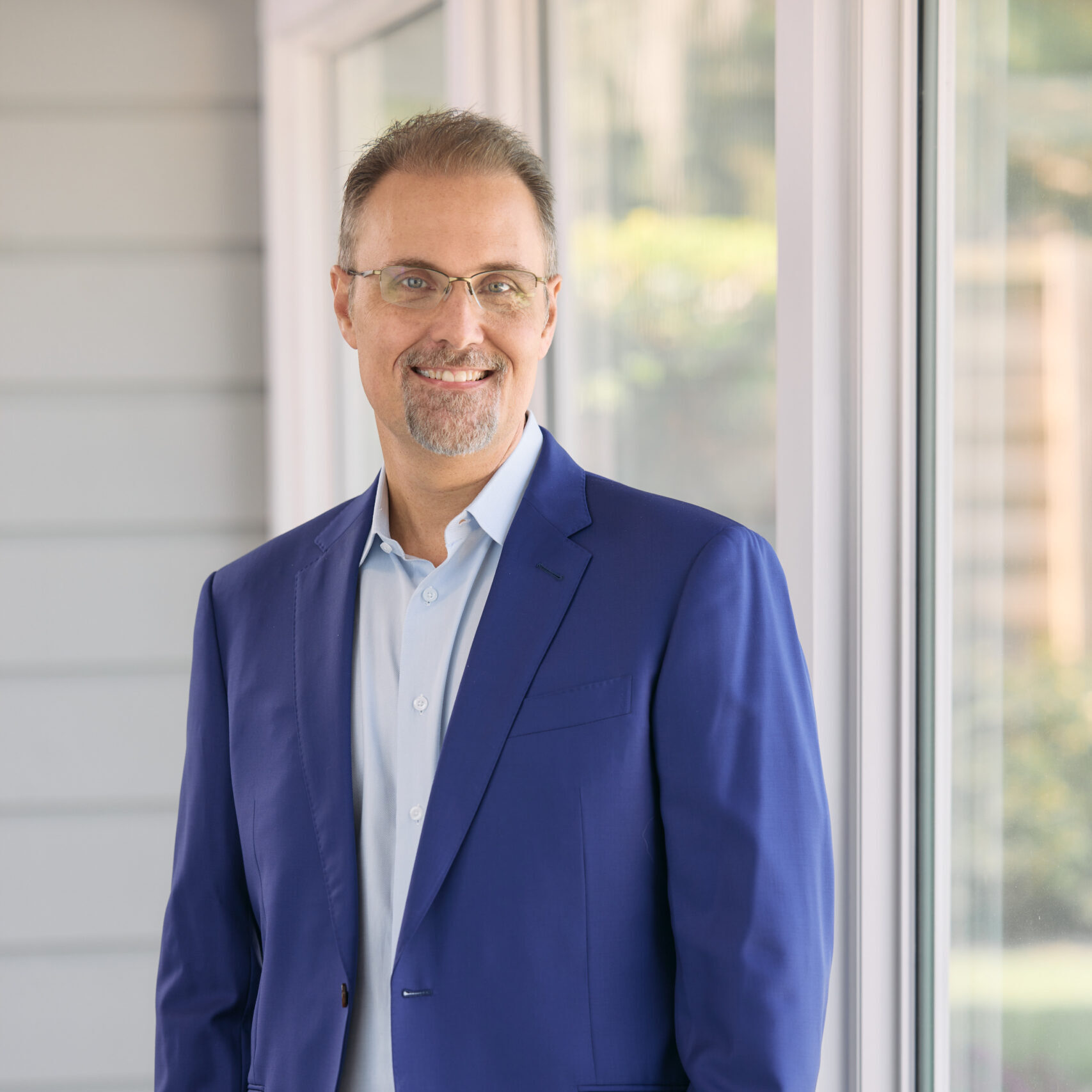
Phillip Meade is a leadership and cultural advisor at Gallaher Edge, which provides executive coaching, leadership development, strategic guidance and culture management services for businesses and organizations.
Transcript of Episode 74: Phillip Meade
Disclaimer: Transcripts are automated and may contain errors.
Grant Belgard: Welcome back to the Bioinformatics CRO podcast. Today I’m talking with Dr. Philip Meade, a leadership and culture advisor at Gallaher Edge, whose career has included extensive work inside NASA, particularly around organizational culture and return-to-flight moments after major setbacks. He’s collaborated across public and private sectors and co-authored a book on building high-performing cultures. Today we’ll translate those lessons for labs, universities, biotechs, and pharma, how to evaluate the strength of a culture, diagnose problems, and build habits that last, plus common pitfalls to avoid. Dr. Meade, thanks for joining us.
Phillip Meade: Good morning. Thank you for having me. I’m happy to be here.
Grant Belgard: So we’ll cover three arcs today, your current work and lens, how you got there, including time with NASA, and practical advice for leaders and teams in the life sciences. So to kick us off, in your current work at Gallaher Edge, what kinds of culture or leadership challenges are you most often being asked to help with right now?
Phillip Meade: The thing that we see most often is companies asking us to come in and help them because either they are in the process of growing and scaling or they want to grow and scale and they’ve hit a ceiling and they’re having trouble doing that. And so culture typically is one of those things that either is an enabler for scaling or it ends up being a roadblock that keeps them from being able to do the scaling that they’re wanting to do.
Grant Belgard: When you first meet an executive team, what signals, good or bad, do you look for the first hour?
Phillip Meade: There’s a few things that we typically see that demonstrates what we’re looking for in terms of a high-performing culture. Openness is one of them. Is every member of the executive team truly engaged and contributing or is there one or two key members that are really the ones that are doing everything and everybody else is sort of sitting there waiting and seeing what they do and hanging back? Another one is self-awareness. Are they really aware that when we’re talking about culture that they’re a part of it, that culture starts with them and so that this work is really about them and they’re a piece of it and they’re involved? Or are they talking about everybody else needs to change and this culture is about out there? And then another piece of it that’s very important is a willingness to be vulnerable.
Phillip Meade: Do they show that and demonstrate that willingness to actually let the guard down and take the armor off and be vulnerable as human beings? Or are they armored up and trying to present themselves that way?
Grant Belgard: How do you decide whether a client needs structural changes, leadership, behavioral changes, or both?
Phillip Meade: You know, it’s usually all of the above. It’s just a question of how much of each and how do we set those dials in there. When we talk about organizational culture and how is that created, people take cues for how they behave and what they believe about how they should behave. They take that from the leaders and what the leaders do and what the leaders pay attention to and what the leaders say and do and all of that, as well as from the structure. And so we really want to be intentional about all of that and be intentional about how do we design the behaviors that we want from the leaders and what are the leaders saying and doing, as well as how are we creating the structures and the experiences within the organization that people are seeing and responding to. And so it’s really a total design that we’re looking for from that perspective.
Grant Belgard: Many leaders feel they already talk about culture. What separates talk from traction?
Phillip Meade: I just touched on it a little bit in my previous answer, but first and foremost, it’s an intentional design. I think a lot of people think they’re doing culture just because they do things that are culture adjacent. Like they do things that are around, you know, employees being happy or feeling good in the workplace, but they haven’t done the work to intentionally design what is the culture that they want? How do they create that culture? What are the beliefs that they’re intentionally trying to create in their employees around that culture? And how are they creating those beliefs through the specific experiences that they’re creating? And what experiences are those? How are they doing those experiences? So if you haven’t intentionally designed that, then it is kind of just talk.
Phillip Meade: And so you want to have that level of intentionality to the design of what you’re doing so that you know, let’s just take the silly ping pong table in the break room. If you want to have a ping pong table in the break room, that’s great. Do you know why you have that ping pong table in the break room? You should know exactly why you have that ping pong table there, what that experience is designed to do. Is it what beliefs are you trying to create in your employees? And then what beliefs those are creating? What do those beliefs drive from a behavioral perspective from your employees? And how do those behaviors then help to create that culture and ultimately drive the strategy of your organization? So that’s the whole flow that you want to have from a design perspective. And if you don’t have that level of understanding, then you haven’t really designed your culture.
Phillip Meade: You’ve just bought a ping pong table and put it into your break room. And so it’s there’s nothing wrong with the ping pong table. It’s neither good nor bad, but you haven’t designed a culture around it.
Grant Belgard: What’s your go to way to align executive intent with middle management behaviors?
Phillip Meade: So you want to have first the senior leaders to demonstrate those behaviors, because if the senior leaders aren’t truly living it, it’s going to be very difficult to just look at the middle managers and say, you know, do what I say, not what I do. That never works. Secondly, you’re going to want to communicate those expectations clearly. It needs to be crystal clear so that they understand what is exactly expected of them. You’re going to want to align the systems and processes so that they have the ability to do what you’re asking them to do and that it fits into how they do their jobs and they’re rewarded for it. And then finally, you’re going to want to provide them with if it’s if it’s skills based, you’re going to provide them with training.
Phillip Meade: And if it’s really is behavioral, you’re going to provide them with some behavioral change workshops that will support the behavioral change that you want from them.
Grant Belgard: If a team has strong technical results, but shows strain, missed handoffs, creeping burnout, how do you frame the problem without pathologizing people?
Phillip Meade: This is one of the things that we typically focus on with all of the organizations that we work with, because blame is actually one of the greatest drivers of organizational dysfunction. I mean, you see it in a lot of a lot of organizations, and it’s a huge waste of time and energy. We like to focus on contributions. And so in any time that there’s an issue that happens, there are many things that contribute to it. If you think about blame, blame is typically a game that we play where we try to figure out who was mostly responsible, and then we assign blame to them so that we can say it was their fault. And from an organizational standpoint, if you’re trying to think about how do we become most effective, that doesn’t make us most effective. We really want to figure out how do we diagnose how this happened? How do we correct that?
Phillip Meade: And how do we move forward and prevent this from happening in the future? So the way that we do that is we try to identify all the contributors to the situation, and then we figure out how do we prevent those contributions or shift those contributions so that this doesn’t happen in the future. And so we want to approach it from that standpoint so that people aren’t afraid that if I admit that I contributed to this, either through my action or inaction in some way, I’m not going to be in danger of becoming the person who is blamed as a result. And so we come together and we look. Everybody contributed in multiple ways through action and inaction. The system contributed to it. There were environmental contributors. We really look at exactly all the things that contributed to it, and then we say, okay, how can we shift those contributions in the future and get a different result?
Phillip Meade: And so that’s the way we want to start approaching things differently from now on. How do you design for sustainability so the workout lives the initial consulting period? You really want to embed it within the fabric of the organization. And that’s where, when we talk about true culture change is not a short-term project, this is why. Because oftentimes it can take a little while to really go through the whole process of getting it really embedded. But you want to build it into everything you’re doing.
Phillip Meade: Once you really understand the culture that you’re trying to create and what that looks like and have it well-defined, and you understand the behaviors that you’re looking for, and you understand the core values that you want, and what that really looks and feels like, and how to create this culture that you’re after, then you can build it into how you recruit, how you perform your interviews, how you onboard and introduce people into your organization so that they’re trained into your culture from the beginning. You can build it into your leadership development programs. You can build it into your executive development. You can build it into your performance management systems. You can build it into your succession management. You can build it into the language that you use in your organization and how you talk and speak and interact with each other.
Phillip Meade: And then, as I was talking earlier, you can build it into the experiences that you intentionally design into your organization that are part of the way that you do things as a company. And so, you know, as you’re doing that throughout the course of the year and the course of the life of the organization, you know these are the different experiences we have and why we’re doing it. And you can change those out and tweak those over time. But as you’re doing that, you know what you’re doing and why you’re doing it. And then, as you update it, you know how you’re updating it and why you’re doing that.
Grant Belgard: So, shifting gears to talk about your own career trajectory, what early experiences pointed you towards organizational performance and culture as your focus?
Phillip Meade: Well, you touched on it in the introduction. It was an abrupt change for me. It wasn’t a subtle shift. In 2003, the space shuttle Columbia disintegrated on re-entry, killing all seven astronauts on board. And in the wake of that accident, the Columbia Accident Investigation Board found that NASA’s culture had as much to do with the accident as the piece of foam that hit the wing. And I was asked to lead all of the cultural and organizational changes for return to flight because they grounded the entire space shuttle fleet until we could fix the culture. And so, that really set me off on sort of a life-altering path where I began looking into organizational culture and really how that impacts organizations and how important that is to how they perform.
Grant Belgard: When did you realize engineering, as of course you originally came up as an engineer, right?
Phillip Meade: Yeah.
Grant Belgard: Systems thinking could be applied to human systems.
Phillip Meade: Well, I mean, I will say it was a lifeline to some extent. I was trying to grasp for something to make sense of how do I figure this out? How do I solve for this problem of organizational culture? And I realized that an organization is a system. But the thing that I realized is that it’s not just any kind of system. It’s a complex adaptive system. And so, that’s where systems thinking came in. Because if you try to treat an organization like, you know, a car engine, you’re not going to get the right results. You have to treat it like the complex adaptive system it is. And so, when you shift your thinking and begin, you know, analyzing it and diagnosing it and working with it in that way, you get different results. So, a couple of pivotal mentors that I had, I worked with a couple of consultants very early on, Paul Gustafson and Shane Cragun.
Phillip Meade: They were very instrumental in helping me to learn a lot about organizational behavior. And, of course, I read a ton of books that helped me come up to speed on all of this. And I’ll say that one of the moments that helped shape my approach was really the fact that, you know, I thought that NASA had a great culture. And that’s really part of what freaked me out when I was asked to lead this culture change. Because I would have felt better if there were tons and tons of problems for me to solve. And I didn’t think that there were any. So, one of the moments that shaped my approach was that the results of a study was released right after I was asked to lead this. And it named NASA as the best place in the federal government to work. And it was like, okay, this just confirmed what I thought.
Phillip Meade: And so, it really shaped my approach because it confirmed that the way that we’re looking at culture might not be perfectly correct here. If culture caused this accident, and yet we’re the best place in the federal government to work, then what does culture really mean? And, you know, that’s where I came up with the fact that, you know, culture means more than just people are happy at work, right? It has to mean something more. And so, that really influenced my philosophy on organizational culture.
Grant Belgard: So, this might feed into the next question. What’s a belief you held earlier in your career that you’ve since updated?
Phillip Meade: So, beliefs that I held earlier in my career that I would have updated, I think I’ll go in a different direction on that one. I mean, I was very much an engineer in my early career. I was an electrical engineer. You know, they say you can’t spell geek without double E. And I had, I think one of the ones that is my favorite one to reminisce on is, I used to say, I can explain it to you, but I can’t understand it for you. And, you know, I had philosophies on communications that, you know, if I explained it, and I was technically accurate, and you didn’t get it, then that was your problem. And, you know, I grew a lot, you know, over my early career, realizing that being effective was more important than being right. And being effective meant learning how to work well with other people. And organizational culture, oddly enough, really is a lot about that.
Phillip Meade: Organizational culture is about how do you help human beings to work together effectively as a group. A lot of the psychology underpinnings that we use in the work that we do actually comes from work that was done with the Navy, because they were having challenges, trying to figure out how to put the most effective teams together in the control center of their ships. And their theory was, if we take the smartest, you know, best performer at each position and put them together on these teams, we should get the best performance. And they weren’t getting that. And they were confused. And you would think that that’s what you would get. But in reality, the best performance on a team comes from the teams that work best together, not from putting the best performers together. And so that’s what culture is all about.
Phillip Meade: Culture is about how do you get people and put them together that actually work well together. And in an organization, that’s what you need. You need people who feel good about themselves and have the ability that when you put them together with other people in that environment with other people, they all feel good working together. They feel good about themselves. They have the ability to adapt and interact with each other in ways that it makes the whole team perform better. Not just about each one of them trying to maximize how they work best individually, but the team suffers as a result of it. That’s not what you want as an organization. And so, you know, it’s ironic, but I was a part of that personally when I think back to how I performed individually as a young engineer.
Grant Belgard: So, diving a bit more into your learnings from your time at NASA, when people hear culture, they often picture perks, right? The ping pong table in the break room, as you mentioned. In mission-critical contexts, what does culture actually do?
Phillip Meade: Yeah, so this takes me back to the previous question where I said that, you know, being named as the best place to work in the federal government showed me that it has to mean more than, culture has to mean more than that, right? And so, I define culture as, you know, being three things. I think it has to drive employee engagement because you get so many benefits from that. I mean, when a culture drives employee engagement, I mean, there was a 2020 Gallup poll that said that disengaged employees have 37% higher absenteeism, 15% lower profitability. I mean, that drops down to the bottom line and translates into a cost of 34% of their salary. I mean, you know, engagement is huge. You know, it’s a big deal. And so, having highly engaged employees is a big part of what culture does for you. And then, it also improves people’s lives.
Phillip Meade: And that’s a big part of what having an effective culture does. But the third thing that culture does is that it drives organizational performance and market success. And, you know, for a mission-critical organization like NASA, this means that it had to support mission success, which meant taking astronauts up to space and returning them back to Earth safely. I mean, safety was a huge part of that. And so, if it doesn’t do all three, it’s like, you know, three legs of a stool. If it doesn’t do all three, you don’t truly have an effective culture. I mean, I can think of examples of companies that have any two of those three, and I would argue it doesn’t have what I would call a truly effective culture. In some ways, it’s not doing good things. And so, when it has all three of those, and that’s what it takes to truly have an effective culture, and that’s what you want to be shooting for.
Grant Belgard: What did you learn about surfacing dissent in bad news in environments where schedule pressure and hero narratives play a big role?
Phillip Meade: Yeah. You know, I learned that human psychology is complex. You know, even though we’re an organization full of, NASA was an organization full of engineers, and, you know, we like to joke that they’re not really human beings. They are human beings. And when you talk about organizational culture and what happens there, it all starts inside of the human being, and it really is driven by that human psychology. And we don’t think about this. We don’t talk about it very often in our daily lives, but we’re all actively self-deceiving ourselves, you know, on a daily basis. It’s just, it’s part of what our human psychology does to protect us.
Phillip Meade: And so, you know, when we are afraid of something, when we’re afraid that something’s going to make us feel uncomfortable, when we’re afraid that we’re going to be unpopular, when we’re afraid that this isn’t going to align with the identity that I’ve created for myself, all kinds of funny things happen in our psyche, and we get behavior that you wouldn’t expect. And so, when you’ve got engineers that live in an environment where failure is not an option, and they don’t want to be the one that says that something’s impossible or something that can’t be done, and they’re tremendously committed to mission success, and they love their jobs, and they love doing what they do, and they’re working really, really hard and long hours to try and make something be successful.
Phillip Meade: They don’t want to be the one that holds their hand up and say, hey, I don’t think we can do this, or this isn’t possible, or we can’t get this done. There’s a lot of silent peer pressure to be successful, and to save the day, and to make things work, and to not do that. And it’s not overt, and nobody’s saying anything, and nobody would call them a bad name if they did that, but it’s all below the surface, and it’s all in the subconscious. And so, it makes it very, very hard to identify and see, which is why it’s so deadly. So, many organizations talk about psychological safety and practice what behaviors from senior leaders create or destroy it. It’s really about truly encouraging and rewarding the feedback and dissenting opinions, normalizing dissent and healthy conflict, and helping individuals to increase self-awareness.
Phillip Meade: You know, that self-deception that I was talking about that’s happening on a daily basis, educating people that that’s going on, helping people to know that that’s a piece of what’s happening, and helping us all to know and be aware of what we’re doing and what’s going on so that we can recognize it and combat it. Because noticing is the first step. Until we notice, there’s nothing we can do.
Grant Belgard: Could you share an example of aligning structure, for example, reporting lines or decision rights with the desired cultural behaviors?
Phillip Meade: Yeah. So, there’s two I’d like to talk about. One is sort of a large-scale one, and then there’s another one that I like to use, which is a sneakier one. And so, I like to use it as an example. The larger one was with the Columbia accident. One of the challenges that was identified after the accident was that the way we were structured, the engineering, the technical, as well as the budget and schedule and safety, they all rolled up to the program manager. And so, it was a single point of accountability was managing all of that. And so, there was a feeling like from the engineers that they didn’t have their own voice. And so, you had one human being who was having to try to juggle responsibility for budget pressure and schedule pressure, as well as technical decisions and safety.
Phillip Meade: And so, afterwards, we split that out into separate technical authority and safety authority so that we did have the, again, we called it the three legs of the stool, but we had the three legs there where we had a program manager that was responsible for budget and schedule. And then we had a safety organization that was responsible for safety and a technical organization that was responsible for the engineering. And so, engineering, if they had a technical concern, they felt like they had a route that they could advocate all the way up and didn’t feel like they were having to go up to their boss who was more concerned about budget impacts than the technical concerns. And then the sneaky one that I want to talk about is an organization where they had quality assurance technicians that were responsible for safety and speaking up about safety concerns.
Phillip Meade: And they had to punch a time clock on a daily basis coming in to work. And the engineers that were working in this area didn’t have to punch a time clock. Nobody else had to punch a time clock. And for whatever reason, the quality assurance technicians, the story in their head as a result of punching the time clock was that management didn’t trust them to keep their time, that they distrusted them. And so, that’s the reason they had to punch a time clock. And so, they felt like because they weren’t trusted by management, then they created a similar distrust towards management, because trust is a reciprocal entity. So, if you don’t trust me, I’m naturally not going to trust you. That’s just the way that it works. And so, speaking up and raising safety concerns becomes harder. If I don’t trust management, it’s going to be harder for me to raise a safety concern.
Phillip Meade: And so, it was creating a challenge with raising safety concerns because there was a trust issue. And one of the root causes of this trust issue was this silly time clock that they were having to punch in and out of work. So, it’s just weird structural stuff. It’s all about the beliefs that are created in people through the environment that they live in and through the things that happen. And so, we create those unintentionally many times in ways that we never intended to do.
Grant Belgard: That’s interesting. Yeah. Because in the clinical trial arena, you do have this structural separation of the safety monitoring for the patients, but there’s typically not something like that in the earlier stages of drug development before patients get involved. So, for leaders inheriting legacy systems in history, where do you begin?
Phillip Meade: I always like to begin by trying to learn as much as I can about why things are the way that they are. I don’t like to change things until I understand the reasoning behind why they are and how they got there. Usually, there’s people and there’s inertia around the existing systems and processes and everything. And so, providing honor to why it’s there and being able to respect that and take the good for what it is and then only change the things that need to be changed or build upon what it is. That usually helps at least minimize some of the resistance from the people who are involved in what’s there already. And you can save time and energy too because there’s probably are reasons why things are the way they are. And so, you’re not, you know, breaking things that don’t need to be broken or, you know, doing something that won’t work.
Grant Belgard: If you had a week inside a life sciences organization, how would you diagnose the culture quickly?
Phillip Meade: I would try to be as much of a fly on the wall as I could. I would just try to hang out, visit meetings and listen, see how the meetings go, you know, see how much actual discussion happens in meetings. Are people speaking up? Is there meaningful dialogue and is there healthy conflict happening in those meetings? You know, follow people out into the hallway. Are there, is there more conversation after the meeting than there was in the meeting? You know, listen to what’s happening, the conversations that are happening in the executive meetings and what they’re, they’re asking to have happen. And then, you know, see what the managers at the middle level, what are they telling their people? Are they telling their people the same things that the managers at the upper level are telling? Or is the, does the message get distorted by the time it reaches that level?
Phillip Meade: And do the employees, or do they understand the things that the leaders want them to know? Do they even know why they’re doing what they’re doing? Just that, that kind of a thing. You know, what is, what is the, what is the general vibe around the office feel like, you know, or do employees seem like they’re happy and enjoy being there? Or does it, does it feel like it’s a, it’s a drag hanging out at the office? You can learn a lot just by hanging around.
Grant Belgard: What questions would you ask at the bench level versus the executive level?
Phillip Meade: I probably would ask a lot of the same questions. Honestly, I’d want to know, like, if they understood what their, what their strategy was, it might come out in different language, but I’d want to know, you know, do you understand how you’re going to be successful as a company? What are the values here? Or what, how would you describe the culture? Do you know, do you know what that means to be an employee here? I’d probably ask them questions about how they liked working here.
Grant Belgard: How do you tease apart performance issues that stem from process, structure or relationships?
Phillip Meade: You really just have to dive in and start asking questions and, and, and figure it out. You know, a lot of it is, is trying to figure out, you know, if the person that’s doing it, is it, are they, if there’s a challenge, is it because they, they can’t do it? Or is it because they won’t do it? Do they not have the, the ability to do it because they don’t know how to do it, or they don’t have the ability to do it because there’s something that’s missing? You know, you just have to, there’s just so many different ways it can go. You have to, just have to dig in and, and start asking questions and, and figure things out.
Grant Belgard: For, for regulated environments, of course, drug development is fairly regulated. What cultural strengths and blind spots tend to show up?
Phillip Meade: Well, I mean, sometimes you’ll have a strength from a feeling of, of sameness. You know, there can be like a, a, a sense of community or camaraderie that can come with being a part of a committee or a particular community there. But similarly, a blind spot can come along with that, that maybe there’s an over-reliance on standards or regulations to protect you from things. And, you know, that can be dangerous because many times, well, in all cases, those are only as effective as, as the people who are following them. And so, you know, you, you really have to depend on people to do what those regulations say. So.
Grant Belgard: When, when publication pressure or go, no, go, gates, loom, how do you maintain integrity of decision-making?
Phillip Meade: So first and foremost, I want to be honest, I haven’t dealt with this too much personally, but if I’m reading into the question correctly, I would say that as an organization, you would want to make sure that you are structuring your incentives correctly. You don’t want to create situation where you’re, you’re putting your, your employees into a no-win situation and, you know, putting them under undue, undue pressure to, to do things in order to save their job or, you know, or whatever. So, uh, I think that’s what I would say there.
Grant Belgard: What are the telltale signs that a strong culture has drifted into groupthink?
Phillip Meade: Uh, I think similar to, to what I said about being a fly on the wall in a, in a meeting earlier, you know, groupthink is obvious when everybody basically agrees to everything all the time. So, you know, I, I look for healthy conflict, uh, as a sign of a strong culture in, in many cases. And so I would be looking for, you know, that type of healthy dissent, not arguing or fighting, but, you know, questioning and challenging and, and people with different ideas or different positions on things. And so that’s where you get the, the best decisions and the best ideas and the best innovation. And so, um, that’s what you want to see.
Grant Belgard: What’s your approach to decision rights clarity? Who decides who’s consulted, who’s informed?
Phillip Meade: I don’t think that there’s a single answer to this one because, you know, there’s lots of different types of decisions. The idealistic answer to this is that you want the people who are affected to be involved in the decision. That’s not realistic in a lot of cases. I would say that I would lean as far towards that as is practical because the more that you can involve the people that are impacted in the decision, the more buy-in you’re going to get. And so one of the things that people don’t think about oftentimes is they, they misinterpret what it means to make a decision quickly. And they think of the time to make a decision as the time it takes to actually like decide. And I would argue that the time that you want to look at is the total time from when you start to the time to finish implementation.
Phillip Meade: And so you may get from the beginning to making the decision quickly, but then your implementation may take three times as long if you don’t involve the right people. And sometimes it may take a little longer to get to the actual decision point, but then your implementation is, is a third of the time to actually implement it. So the total time is actually shorter when you involve more people. And, you know, you got to think through that. Obviously you can’t always involve all the people and you can’t, and sometimes it is too long. And the way I just described, it doesn’t work out. And that’s the reason I said, it depends and it’s not really super clear, but, you know, I would lean towards involving more people and trying to get, you know, implementation to go more smoothly and getting greater buy-in when, when you can’t, because it really does, it really does help.
Phillip Meade: And I think that right now, in many cases, people lean too far on trying to decrease the amount of individuals involved because it makes the deciding part go faster. But then I think they’re under, underweighting how much it increases the implementation portion of it.
Grant Belgard: That’s a good point. How do you cultivate leader self-awareness?
Phillip Meade: I mean, coaching is a great way to do that. We have some workshops that, uh, that help to increase leader self-awareness, you know, reading helps, you know, as if once a leader decides that they want to start improving their self-awareness and then there’s, then just starting to pay attention and notice things can, can begin to, to be that part of that process. But as with all self-improvement, it has to start with the desire from the individual themselves to, to improve.
Grant Belgard: So how do you adapt culture work as a company scales from 20 to 200 to 2000, uh, even 20,000, right? Life science organizations come in all shapes and sizes.
Phillip Meade: Yeah. I mean, you’re doing the same basic things. It’s just a matter of how do you roll it out in tiers? So, you know, we, we always like to start at the top and then roll it down. And so you want to start with the executive team and then you want to move down to the layer below that. And then the layer below that. And so you, you just, you have more tiers. It takes a little bit more time. You know, when you start to get up to like 2000 and above, now you’ve got more mature, more well-developed HR departments. So you’re, you begin to work with, you know, more well-developed HR systems and processes. So you’ve got LMSs that you’re, you’re now integrating with and you’re, you’ve got really well-developed performance management systems and tools that you’re integrating into. And you’ve got internal HR teams that you begin to integrate into and work with.
Phillip Meade: And so, you know, you’re, the work that we do begins to integrate with the people that they have and the work that they’re already doing. And so we begin to, to weave in, into that.
Grant Belgard: What’s the best small concrete habit a leader can start tomorrow?
Phillip Meade: You know, for me, it’s, it’s just, I would say it’s, it’s learned something new every day. You know, one of the commitments that I made a long time ago was that I was, I was going to read every day. And so I try to, I try to read something new every day, but I think more generically, I would say just to, to learn something new every day. I think that’s a great habit.
Grant Belgard: What are the top three mistakes leaders make that quietly erode culture over six to 18 months?
Phillip Meade: I think the top three are not communicating, not admitting mistakes and tolerating bad behavior.
Grant Belgard: Where have you seen well-intentioned values backfire?
Phillip Meade: I think there’s two ways that well-intentioned values backfire. The first one is anytime the company or the leaders of the company don’t actually live the values or, you know, do something counter to the values that kills it right there. People see that it’s basically a lie or that it’s not true, then it becomes immediately ignored or, or worthless to them. The other one is when the values as well intentioned as they may be are over general. And Patrick Lencioni refers to these as permission to play values. And I mean, I’m not opposed to them existing as permission to play values, but I would call them that and differentiate those from your true core values. But, and these are things that almost every organization could claim that they have like integrity and respect and safety.
Phillip Meade: You know, it’s, it just feels so vanilla that a lot of times employees will look at those and they’re like, yeah, yeah. Okay. I don’t get it. You know, like it just, it just feels like it’s a platitude or, or something that is just being hung on the wall just to, just to do it because it doesn’t seem like there’s anything particularly special to it. Like, yeah, of course, you know, we don’t want employees to steal from us and, you know, everybody should have some basic respect from each other and you should expect not to die when you come to work. So that, you know, those things make sense. And so people just sort of blow it off that, you know, and they don’t pay attention to it. And so I think that those things are, are very well intentioned and there’s nothing bad to them, but it’s also very difficult to really get a lot of traction with them because they are so in most cases, vanilla.
Phillip Meade: And you know what, what Patrick Lencioni says is that, and unless you can truly argue that you have more integrity than 99% of the other companies in your industry, like it’s not really your core value, like it’s not what defines you. And so it’s, it’s hard to like, say this sets us apart. This is something that we’re going to hang our hat on and your employees see that. And it’s like, okay, like, yeah, we have integrity, but you know, it doesn’t really, it doesn’t really mean, you know, mean something special. And so it sort of just becomes this thing that we hang on the wall.
Grant Belgard: When culture change fails, what was the root cause of that failure most of the time?
Phillip Meade: Most of the time it comes down to a failure of leadership. Usually the leaders, the most senior leaders haven’t really truly bought into it and committed to it.
Grant Belgard: How do you prevent hero culture from undermining redundancy and documentation?
Phillip Meade: This goes back to what we were talking about a little earlier. I mean, this is a self-awareness issue. When hero culture is about me not truly having the self-awareness to realize that I am trying to make myself feel better by becoming the hero. And, you know, it’s that lack of self-awareness. It’s that self, it’s where I, it’s a defensive mechanism where kicking in, where, where I’m just trying to, to prevent myself from, from feeling bad. And so it’s, it’s part of my identity and I’m trying to protect. And so we want to try and raise that and prevent that from happening and increase, increase that, uh, self-awareness so that it, it doesn’t happen.
Grant Belgard: What’s the smallest viable step an individual contributor can take to strengthen culture?
Phillip Meade: The smallest viable step I would say is to increase your courage by 1%. If you increase your courage by 1%, then you’re going to increase your openness by 1%, which means that you’re going to increase the feedback that you give to others by 1%. And you’re going to increase the self-accountability that you have by 1%. And you’re going to increase the initiative that you take by 1%. You’re going to increase the contributions that you make by 1%. You’re going to increase your performance by 1%. I think if, if everybody in the organization were to do that, I think that you’d start to see visible changes in the culture.
Grant Belgard: What book, practice, or question has stayed useful across contexts?
Phillip Meade: I think the thing that has stayed useful across contexts, the practice, I’m going to go with the practice is getting curious. And it’s, it’s something that it’s something that I’ve, I’ve had to learn. And, you know, it’s, I’m not necessarily proud of it, but, you know, one of the things that is my tendency is, you know, and probably a reason why I’m sitting here answering all these questions really quickly for you on a podcast is I like being an answer guy. And so, you know, people come to me and, and ask me a question and I’m, I’m really quick to have an answer. And a practice that I started developing as a leader was to not answer the question immediately and to get curious and to ask more questions and try and learn more and say, okay, well, what’s going on here?
Phillip Meade: Or when someone would say something and I thought that they were wrong or I didn’t, you know, I thought that I had the answer and they didn’t, they were, they didn’t understand, get curious and figure out, well, why do I think that they’re wrong and I’m right? That’s been very, very useful to me across a lot of contexts to just try to get more curious instead of assuming that I always know the answer, that I always had the, you know, the right answer and that everybody else is wrong is very, very useful.
Grant Belgard: So what, what options do our listeners have to get more engaged with you through your work at Gallaher Edge? And, uh, you know, I know you have a book, you offer courses, you have, uh, consulting and so on.
Phillip Meade: Yeah, absolutely. You pretty much summarized it. We have a, we have a book that they can get on Amazon. It’s, it’s called The Missing Links: launching a high-performing company culture. They can get that on Amazon. You can go to our website. It’s Gallaheredge.com and, uh, check us out. Uh, we offer individual workshops as well as, uh, consulting engagements. We have a on-demand leadership development course that we offer. That’s, uh, it’s a micro learning format and, uh, it’s, uh, it’s a great way to get introduced to us and, and see what we did. We’re all about. So a lot of different ways. We, we also do, uh, speaking. So if you’re looking for a speaker for, uh, for an event, it’s another way that we can come and help you all out. So.
Grant Belgard: Great. Dr. Meade, thank you so much for joining us.
Phillip Meade: Thank you, Grant. I really appreciate it.