The Bioinformatics CRO Podcast
Episode 68 with Caspar Barnes
Caspar Barnes, founder and CEO of AminoChain, tell us about his mission to make biospecimen sourcing transparent, ethical, and efficient.
On The Bioinformatics CRO Podcast, we sit down with scientists to discuss interesting topics across biomedical research and to explore what made them who they are today.
You can listen on Spotify, Apple Podcasts, Amazon, YouTube, Pandora, and wherever you get your podcasts.
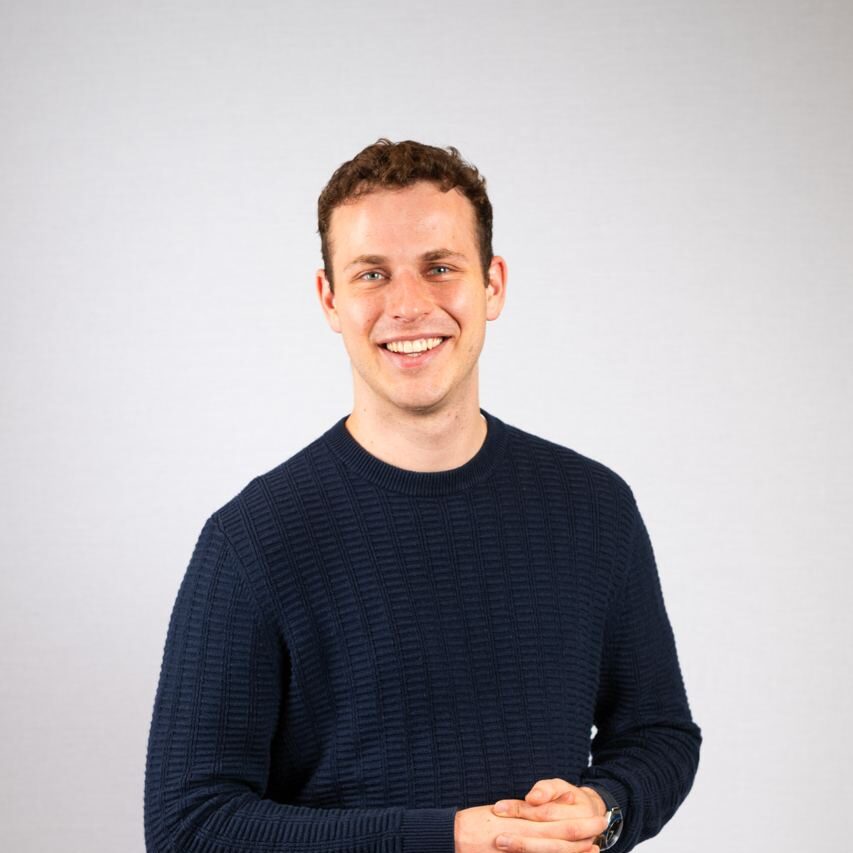
Caspar Barnes is founder and CEO of AminoChain, a decentralized biobanking protocol with a mission to make biospecimen sourcing more transparent, ethical, and efficient.
Transcript of Episode 68: Caspar Barnes
Disclaimer: Transcripts are automated and may contain errors.
Grant Belgard: Welcome to the Bioinformatics CRO Podcast. I’m your host, Grant Belgard. Today, we’re speaking with Caspar Barnes, founder and CEO of AminoChain, a startup marrying biobanking and blockchain to make biospecimen sourcing transparent, ethical, and efficient. We’ll explore what AminoChain is doing today, how Caspar’s path unfolded, and the advice he has for the next wave of biotech builders. Caspar, welcome to the show.
Caspar Barnes: Thank you so much for having me, Grant. Excited to be here.
Grant Belgard: How do you describe AminoChain to someone who you meet in an elevator?
Caspar Barnes: Yeah, absolutely. So AminoChain is a decentralized biobanking protocol. It’s an infrastructure company that connects hospitals, biobanks, pharma companies, and other users and actors in the life sciences industry. And it allows any number of decentralized healthcare applications to be built on top. The first app that we are building on this decentralized biobanking protocol is a biosample marketplace that we call the Specimen Center. And how it works is we want to turn donated specimens into non-fungible tokens. And then we let those digital assets get listed onto a marketplace. And we let life sciences companies license these biospecimens for research use. And we can encode rights into the NFTs that represent broad consent from the patients and royalty rights back to the individual donors, and perhaps even MTA and licensing conditions of the biosamples.
Grant Belgard: Which steps in today’s biospecimen procurement pipeline are most painful?
Caspar Barnes: Oh, there’s so many. Where do we begin, right? So like today, in the United States alone, there’s around 2,500 biobanks out there. And a biobank, for those that don’t know, is a really big fridge filled with donated cancer samples mostly, but all sorts of other disease tissue used for research. And across these 2,500 biobanks, there’s roughly 200 million retrospective specimens stored readily available for research use. And only around 10% of all of those samples ever see the light of day. And that is because of many different reasons. We’ve spoken with hundreds of biobanks when we started AminoChain. And the most common themes that crop up are firstly, poor financial planning. Biobanks say that they’re scientists, they’re not business people. So from their perspective, they’ll go and raise grant funding, they’ll build the infrastructure to store specimens.
Caspar Barnes: The second they start collecting samples, they’ll just go back to doing research. And they don’t think about access policies or governance on the samples or distribution policies or cost recovery models. And so effectively, poor financial planning is the main reason why these biobanks are unsustainable resource. The second thing is searching for samples is really difficult. So today, if you’re a scientist and you want to get access to a specific biospecimen from a bank, you’ll have to go individually to each bank and ask if they have what you need. They have their own bespoke access procedures where you go and try to contact the PI at the institution. They’ll go and look for the sample. And if they find it, then you’re in luck. And if they don’t, yeah, move to the next one. But there’s no real way to harmonize search across these disparate databases.
Caspar Barnes: And then the last thing, of course, is licensing the thing. Once you find what you’re looking for, you could spend on average like three months back and forth debating the conditions of a licensing agreement called material transfer agreement. And then once you’ve actually reached those types of conditions, you can sign a document and get the samples. The whole process of finding, acquiring, licensing, distributing these pre-clinical research assets from biobanks scientists is just riddled with problems. What does a three-month delay in specimen access cost to mid-sized pharma program? It can totally vary, right? But speed is everything within pharma. So your mid-sized biotech or pharma company could, especially if they raise money to build out their own library of omics data, which maybe they’re training AI on, or they’re doing target ID and validation and so on. Speed is everything.
Caspar Barnes: So three months could mean being the first person to find that insight or validate that target or not being that. And if you’re not that, then maybe that’s the entire USP of your company kind of down the drain. And so we found in many instances, people, A, want access to data straight away. And then B, if they can’t have the data, they want their retrospective specimens so that they can turn those specimens into data. And then C, if there are no specimens available, then they want actual human beings so that they can donate samples, so that they can get the specimens, so that they can turn that into data. And so it’s quite difficult to quantify, but it can quite literally be the matter of lack or death for some of these companies. And so speed is everything in the industry.
Grant Belgard: Why did you choose a permissioned blockchain rather than public chain?
Caspar Barnes: Well, we have a lot of different things to consider within the chains that we’re working with. We are actually settling on a public chain. So we most recently decided to work with a private app chain company called Syndicate, which means that we’re able to customize a little bit of the data that isn’t, isn’t visible. It could be permissioned in that aspect, but we still do settle on Arbitrum, which is an open public blockchain. And so we do leverage the security and open transparency of public chains, but we also customize to some extent the transaction data or the publicly visible metadata within a sort of private permissioned app chain infrastructure. And we straddle these two different strategies specifically so that we can be a fully decentralized protocol by settling on Arbitrum eventually. But we also tailor the app chain specific needs towards our users.
Caspar Barnes: We found before, for example, we tried to have a totally open public app on Polygon and that data being totally visible on a public blockchain made a bunch of our users nervous and the language needed to cover all of the functionalities of the blockchain and our technology and our stack in a provider agreement that we would then present towards a hospital. So a biobank was incredibly confusing to these biobankers and researchers that have never even heard of crypto before. And so for all these reasons, we ended up, you know, deciding to focus on developing our own app chain, which basically means we can customize a lot of the information that isn’t as invisible, but we still are leveraging all the benefits of being on a fully decentralized protocol, like by eventually settling on those chains as well.
Grant Belgard: Can you walk us through a typical search match compliance workflow with AminoChain?
Caspar Barnes: Yep, of course. So today, a scientist will log on to the specimen center. They can see all the different biobanks that have created the profile and they’ve listed their specimens on the search platform. We currently have a global network of over 20 biobanks, some in the European Union, some in Eastern Europe, some in Canada, and some in Africa, and some of the United States. Folks can log on and they can see the profile pages of these banks. It’s totally open and transparent. None of the specimens are blinded. None of the suppliers are blinded. Experience is meant to recreate something like Facebook for biobanks. So you can go on and connect, browse each other’s profiles and see the high level overview of the collections of each biorepository. Then you can go down to a more granular level. You can go towards a specimen level.
Caspar Barnes: And across these 20 different biorepositories, we’ve ingested all of the metadata of the collections that these biobanks have. And we’ve mapped all this metadata into a universal. So if you go into the specimen center and you’re looking for a glioblastoma from a Caucasian male, you will also get a brain cancer sample from a white man, for example. Those are the same specimen, but they just have synonyms of each other to describe it, right? So we’ve used a series of different LLMs and AI technologies to map all of these metadata against each other. And now users can come on and search for what they need and harmonize, or they can search across all these 20 different repositories. From there, they can then select the specimens and then turn inquiry. They have extra information that they want to know about the samples or about collection or about provider.
Caspar Barnes: They can add that context into a chat and send that context with the request that they get pinged directly to the biorepository. So we don’t actually get involved in licensing at the moment. We don’t involve payments. We’re just nailing the search experience for the users and for the biobanks.
Grant Belgard: How are you handling private key management for sites that aren’t crypto native?
Caspar Barnes: Right. So the specimen center in its first iteration, she doesn’t have anything on changes yet, right? So we’re slowly starting to integrate all of the app chain enabled features right now and bringing the existing transactions onto the blockchain. How we are going to do it is work closely with third party key abstraction providers, like for example, Privy.io, the company recently acquired by Stripe. And they’re fantastic. We can work with them and they can outsource all of the key management and compliance and they can provide a fantastic that abstracts away the crypto in the backend. So they make building on chain a lot easier than it used to be.
Grant Belgard: What are the best traction metrics for Amino Chain? Samples onboarded, active buyers, cycle time reduction. What do you think best encapsulates your story?
Caspar Barnes: Yeah, fantastic. It’s a good question. So the key metrics that we’re tracking is first of all, the size of the network, right? So, I mean, how many buybacks are on the platform? How many have bought into the mission of improving their visibility and improving their cost recovery? And so that the first and foremost, the main thing that we track is how many providers do we have and how many specimens do we have? And then of course, how many unique individual donors or patients do we have? That’s the main thing that we track. The next thing of course, is how many users, how many scientists are logging on, how many people are looking for biospecimens. And then the most important KPI perhaps is how many requests are actually happening on the platform. So how many channels do people log on? Do they use the full search experience? They find what they need and they send a request to the bank.
Caspar Barnes: And there’s a dual-sided approach there where you need breadth, of course, because you need to be relevant and applicable to so many different types of scientists. But often people will come and if they don’t find the specific bit of insight that they’re looking for, then they would churn and they’ll just go directly to the bank or they’ll go to another one and they’ll try to find the specimens they need elsewhere. So apart from breadth of all these different collections, you also need depth. We need highly detailed information on all of the sample donors and different collections. And at the moment, we’re only tracking perhaps, you know, 18 to 20 different fields of metadata. And some of those fields have largely unstructured data, so people can drop in clinical notes or path notes and so on.
Caspar Barnes: But the way where our search is going is into vector embeddings and into more sort of natural language processing and so on. So that means that people can come on and ask questions in natural language. And we can have, you know, agentic tools to help us find the exact specimens that they need. And we can see then if any of the insights these people are looking for lies within the data that is uploaded onto the specimen center. So all these things considered, I think the most important KPI for this would probably still be transactions or requests, because that shows that our search is providing the experience that the users want.
Grant Belgard: And how do you defend against large CROs that might try to spin up a similar platform?
Caspar Barnes: Yeah. Well, the good news is that over the last like 30 years, people have tried many times and no one has made a lasting successful platform. And the reason for this is the traditional marketplace model is to de-identify where the specimens come from and to add a markup and to force people to do payments and transactions to the platform. We are largely of the opinion that we shouldn’t be brokering retrospective biosamples. We don’t think it’s an ethical practice to add, you know, markups on top of selling diseased tissue. First thing is just the values perspective. But then the second thing as well is that if you don’t de-identify where these specimens are coming from, then there’s the risk that you have marketplace slippage. And that’s the same with any marketplace. So people would log on, they would use your platform for search.
Caspar Barnes: And then if they can see exactly where the sample is, then they’ll just go offline and buy it directly. And, you know, all CROs, all buyer sample brokers, all the big players out there, they’re forced to make money by putting the value of the transaction on the actual brokery of the tissue. So we have tried to find a way to provide value for a network without necessarily focusing on trying to extract value out of a buyer sample transaction. And I don’t think that’s actually really been done before, let alone successfully done before. So that’s our approach. If we make it totally open, and we don’t mind if you do the transaction on our platform or off platform, right? We just want to nail the search experience. Then we could end up being the platform that everybody comes back to because it is actually the thing that is more engaging for the providers.
Caspar Barnes: It does have more rare specimens on it. And there’s no reason to jump off. You actually get a better user experience finishing your transaction on the platform because there’s no, there’s no reason not to do that, right? It’s not going to be more expensive for the user. And then once we have that good retention and we have good network of both provided and procurers, we can monetize in many other ways. Firstly, with the blockchain, all the amazing things we want to do there when the specimens are protocol integrated. But secondly, even without the blockchain, just nailing the search experience is already a good, good value add for these procurers. So like, for example, when you go onto LinkedIn, you can go and scroll through everyone’s profiles in a sort of freemium way.
Caspar Barnes: But there’s these amazing, you know, added tools on top like LinkedIn Sales Navigator or LinkedIn Recruiter or whatever that people have to pay for having an extra service. But we can totally do the same thing for biobanks here, right? If you have a phenomenal search experience and you want to have automated feasibility assessments for prospective collections, you want to have a gently tools where you can drag and drop your protocol and you have an agent search the marketplace for you and so on. All of these amazing things that we want to do later, we can charge subscriptions for or other things for and we can put that onus on the actual, you know, researcher that’s looking for the specimens. We don’t have to provide any barriers towards the providers.
Caspar Barnes: And of course, the most important thing is we can take the whole emphasis on brokering tissue off of, you know, that retrospective transaction.
Grant Belgard: How do HIPAA, GDPR and other laws and regulations interact with your cross-border workflow?
Caspar Barnes: Yeah, that’s a great question. So we do have banks in the EU at the moment and what’s particularly difficult is that each country, you know, can have their own interpretation of GDPR. And so even GDPR in of itself isn’t like, you know, a standalone uniform beast that you can just address one time because each user interprets it differently. So first of all, what we do is we take in de-identified sample metadata. We take in very high level information on the collections and we make that searchable. We don’t actually get involved in the licensing and the payments of the samples as well. We highly vet all of the providers that we work with to make sure that they are GDPR compliant. It’s written into our provider agreements that they also assume the risk of being GDPR compliant and that they have the capacity to erase data if that’s what the users wish.
Caspar Barnes: And we customize the specific fields based on their interpretations of GDPR. So for example, the French banks, they think that including information on a patient that has an age above 90, for example, would be personally identifiable. So for the French banks, or under five as well, by the way. So for the French banks, we would then change the fields to say, you know, 89 plus or six under or something like that, right? So that happened, similar things happen all around the EU. And we basically meet biobank where they’re at. We customize the data fields to their stipulations and their interpretations of the regulations. And we have it baked in, in our process of vetting the providers and in the provider agreements that we assign to these different biobanks.
Grant Belgard: What mechanisms ensure donor reconsent if the intended research scope changes?
Caspar Barnes: Well, at the moment, we’re not in the process of engaging the research participants. It’s all just focusing on retrospective collection. This problem of, you know, the hundreds of millions of samples out there that are sort of languishing and they’re really expensive to keep and they’re never seen the light of day. The first thing that we can do to help the industry is just to go out to those folks and say, we’ll help you increase this sample exposure and visibility and harmonization of search. We’re going to continue to do that likely for the next six to nine months. But at the same time, what we’re currently doing right now, [?] is building out our own prospective cohorts. And that’s a really exciting pivot that AminoChain folks got, or evolution of the product. That looks slightly different.
Caspar Barnes: That basically involves working closely with clinical sites, closely with advocacy groups, designing custom interfaces and user experiences for patients connected to advocacy groups. And either ourselves sponsoring new collections at those sites or raising money on behalf of these advocacy groups to sponsor collections at those sites. And then when these patients are consented, those specimens will be banked in the specimen center. And the data, the multi- data that’s produced from these studies would be put into a database and access to the database would also be governed by smart contracts. And so if a pharma company would have paid out access to the data for discovery or any other researcher would pay to have access to it for research purposes, in that transaction, we can pay back the people that helped sponsor the collections.
Caspar Barnes: We can pay dividends and royalties to advocacy groups, to trial sites, to patients, to anybody who was involved in the curation of data set. The buyer of that data can use it exclusively for an embargo period. And after which the data would be made available within the decentralized biobank, and it can be repackaged and relicensed in another product to somebody else. And so all this considered within this new prospective collection and data management product that we are soon going to launch, the donors will always have a way of identifying how their data set is used within this decentralized biobank. We use a combination of private-public key photography. They can authenticate how their data set is being used by [?] committed on chain. And from that, they’d also be able to claim rewards if the data is used for commercial in certain ways.
Caspar Barnes: And then through this system, we hope to have a fully incentive-aligned, decentralized, community-owned biobank.
Grant Belgard: If you could only track one KPI for 12 months, what would it be and why?
Caspar Barnes: That’s a good question. So it would still be, I mean, in the context of the specimen center, the one KPI would be requests. It would be, you know, that’s our true north is how many suppliers do we have? How many users do we have? And then ultimately how many requests are we making? And then the context of this new product that we’re launching, sort of the prospective collection metric, the one KPI is licensing data for exclusive use. Like, you know, are we finding people that want to buy access to multi-omic data sets for discovery? And that probably is the most important metric, because I think if we’re able to prove out that flywheel of funneling data, aggregating data, and you know, selling it, then all the other apps on top are easy to build and they benefit from the network.
Grant Belgard: Was there a formative experience that pushed you towards decentralized solutions?
Caspar Barnes: Yes. So not so much like a decentralized solution, per se. It just turned out that crypto was a good way to fix the problem of, you know, biosample tracking and so on. But I certainly did have a formative experience, you know, biosamples in general and, you know, the bioethics of donating tissue. And so very quickly, I’ll give you an overview of that. But I grew up in South Africa, right? You might be able to hear that from my accent. And growing up in Cape Town, South Africa, my mother, she started the charity called Yabongo, which helps women with HIV and AIDS get access to antiretroviral treatments and provides homeschooling support towards kids in the townships outside of the cities. And so growing up, I would spend a lot of time in and out of these townships with my older sister.
Caspar Barnes: And so we had very regular discussions around race, equity, privilege, and especially in post-apartheid South Africa, right? There was always a big emphasis on having these conversations openly and saying, why do we live in this area of town? And why do other people live in this area of town? So trying to find ways to give back throughout your career has always been a really big familial and cultural value that’s definitely now playing into the vision of AminoChain with an aspect of health equity. And the second thing was when I was around 12 years old, I had a malignant melanoma and I was very lucky because it was caught super early. So I just needed one big operation to remove tumor. But since then I’ve been thrown into a world of healthcare, right? And I still remember listening to these doctors explain concepts of healthy cells and malignant cells and how cancer spread and so on.
Caspar Barnes: As a little kid, I just listened with wide-eyed fascination and fell in love with biology at that moment. I was like, I have to work in life sciences in some capacity. And so then since then, I, you know, at the age of 16, would already spend my summers working in [oncolytic?] biovector research, did my undergrad degree in neuroscience, did a graduate degree in biotech, another one in bioethics, all at UCL, Columbia and Harvard Medical School. And so I’ve always been in love with biology since those early days. But the key thing is I can still remember waking up from the surgery and the doctor was standing over the bed and he was holding this biopsy sample. And he was like, check it out. This is what we cut from your lower back. And I was like, dude, that’s so cool. Can I take it home? I want to show my friend. We’re not going to believe this.
Caspar Barnes: And the doctor said, no, we need to keep this biospecimen so we can research it. And I was, of course, too young to understand the connotations of what was going on. But my mom, importantly, was like, yep, sure. That’s for the benefit of science. Let’s sign this consent document and give away the sample. And we never saw it again. And then many, many years later, when I was in the lab at Columbia, I was doing research on somebody else’s donated tissue. And we’re generating all this valuable information, finding all these markers. And I went to my PI and I said, can we tell the patient about this information that we’re generating? And she said, I don’t know where that thing came from. It just came from the biobank. And that blew my mind. I was like, how is that possible? How many people around the world are doing research on biospecimens, generating so much data?
Caspar Barnes: And you’re telling me that none of them know where the samples came from. They all just came from the biobank. And the more I dug into it, it turns out consent rates are incredibly low. There’s almost 25% at some major institutions. The people that are periodically not consenting to having their samples and data used are marginalized communities and patients of color more often than not. And so I got fascinated by the problem and I just got kind of sucked down the rabbit hole where I just did everything I could to try to find an interesting new emerging technology that could fix this. Turns out crypto is great, right? It has all the benefits of immutability and prominence tracking and ownership and agency. And this happened to be around the same time as when crypto was booming in 2020. And so it just seemed like a great match. And I was just like, this is awesome.
Caspar Barnes: Let’s go and try to see what all we can build at the nexus of all these incredible fields, which is emerging tech, life sciences, health equity. And now I’ve just become so mired in this, this like interdisciplinary platform and approach. And so it’s kind of become my life’s work and I don’t think I know. So many consent needs to be disrupted. The current consent model is like as recommended by, you know, the OHRP and the HHS and so on. It’s just like informed consent. That’s it. Here’s one document, write what you want on it, get someone a sign. And then if you see a signature, great. That’s basically your waiver of liability. You know, it’s, it’s not at all a way to meaningfully engage someone in what’s happening with their, their samples or their data and so on. And it’s, that’s kind of like a problem that we find ourselves in right now.
Caspar Barnes: Since 1970s or so, we had a period of, you know, like progressive change within America, right? It was like women’s rights were coming up. There was civil rights coming up and there was all these, you know, bioethical discussions happening as well. We ended up having the Belmont report, 1978, 1979. Of the Belmont report, we came up with these principles for human subjects research, which were, you know, autonomy, justice, and beneficence, right? So of these guiding principles, how could we, you know, have a, a scaffold for involving people in research? Well, informed consent legislation seems to be the best policies. Since the late 1970s or eighties, they were like, okay, let’s try to codify this into law as much as we can or at least make it like public policy that anytime you do research, you can only do it with informed consent.
Caspar Barnes: And it was all done with the, you know, great intentions and it made a lot of sense. And so then since the 1980s, we have to ask everybody for informed consent before they’re involved in a procedure, before they donate the best ones and so on. But, you know, even though those consenting frameworks haven’t changed in the last like 45 years-ish, the world has drastically changed. You know, it doesn’t look the same as it did in the 1980s anymore. Particularly the storage of biospecimens for secondary research has become a booming practice, enormous. In the 1990s, we spent billions of dollars to sequence one human genome. Now we can do it in a matter of days or hours for a few hundred bucks. It’s an enormous progression where we now live in a world where there’s a diaspora of data. And it’s like, all these samples are stored for secondary research use.
Caspar Barnes: And things are becoming increasingly re-identifiable. Things are becoming more and more personal, especially with whole genomes even seen. And with all this considered, informed consent just doesn’t cut it anymore at all. People are asking for a one-time consent document and then they’re doing whatever they want with the tissues afterwards because they’re just getting broad clauses. So all this considered, how do we see a new world where consenting can change the biomedical research industry? Well, we’ve jumped up a new framework called Demonstrated Consent. And under Demonstrated Consent, we can basically take personalized conditions for broad use from research participants. And basically like they’re personalized terms, we take them, we put them as metadata of a specimen, as an NFT. So we have ways to automate the record keeping of the samples.
Caspar Barnes: And then we list them on a platform where anybody can acquire these specimens for research use. Their protocol upholds the consent that the patients originally gave. And if it does, then they can license it, they can use it. At all times, patients have a way to stay informed with the outcomes of research and they can stay informed with how the samples are being used. And so therefore, the blockchain would be demonstrating to you how your sample are being used, as opposed to somebody just saying that they’re using it the way that they will. And that changes the paradigm that actually makes a better experience for the research participants. And you actually have the need for flexibility research, which is like a societal benefit, right? You don’t have to compromise between asks for progressing research and the ask for promoting patient autonomy. And so that’s what we see as the future.
Caspar Barnes: And that’s what we want to embed into the AminoChain protocol. It’s actually like personalized conditions for broad use and an automated way to re-contact and re-engage participants.
Grant Belgard: What surprised you the most in your customer discovery process?
Caspar Barnes: Um, surprises? That’s a good question. Many things are surprising. I think, I think, you know, when starting this out, I thought a biobank was a biobank because, you know, it’s just like, they’re all the same. It’s like, you know, a place where you store samples and that’s it. And I didn’t really realize the complexities that go into biobanking and how many different types of users there are within biobanks and how they are all separate from each other in terms of their, their priorities and their missions and approaches and so on. And so what surprised me, you know, one of the things that surprised me was that you, you have so many different types of doing things in biobanks. Some commercial brokers go and buy remnant material from hospitals and emerging economies. And then they add enormous markups and they sell those specimens to labs in Boston and in San Diego.
Caspar Barnes: And I was like, that’s crazy. I didn’t know that was a practice. And then you try to speak with, you know, other biobanks in America and they’re the part of AMCs, academic medical centers, and they don’t really care about cost recovery at all. What they care about is publications and they care about, you know, insights and they care about all these other things that will make them more eligible for grant funding. And so they’re not brokering tissue. They’re more focused on, you know, moving knowledge forward. And so I thought that was super interesting. Others are independent and they’re part of government labs and others are part of hospital networks. And some biobanks just collect remnant materials from clinical trials, which are associated with the pharma companies. And you’ll never be able to see any of those biobanks.
Caspar Barnes: And so all these things I found really interesting, just landscaping the different customers out there, like speaking with them and hearing what their needs are. It’s been fascinating to have the same conversation with different users, but to see the differences and important factors crop up and motivations for each of them.
Grant Belgard: How did you pitch A16Z crypto differently from life science species?
Caspar Barnes: Yeah, that’s also a good question. So, um, you know, building what we’re building, you have to toe the line between the crypto language and the non crypto language quite delicately. A16Z is fantastic because they have, you know, investors across both verticals. They have a healthcare fund and they have a crypto fund. And so when we were pitching A16Z crypto, we can, you know, pitch the crypto vision and how this becomes the Ethereum of healthcare. You know, the world’s biggest composable blockchain for people to build healthcare Apps. And they get it and it makes sense. And biobanking is the wedge to get there and they love it. But then if you try to say the words that I just said to you there, it’s a, the A16Z bio and health team, they get very confused. And as a matter of fact, that’s like what happened. So we spoke with both of the funds.
Caspar Barnes: And then eventually after a few rounds, we first went through their accelerator program, and then afterwards we’re reinvested as a full portfolio company and so on. Even with an A16Z, we have the practice of pitching both the crypto side and the healthcare side. But all in all, how life sciences VCs look at this as opposed to crypto VCs is, you know, how is this an extension of what’s currently happening today? And if you don’t have to give me complex crypto jargon, but you can just explain in normal language, how already what we see in biobanking lays a precedent for distributed ledger technology to help engage, you know, and to help improve user experiences or improve outcomes or whatever, then it builds a more convincing narrative in their head. So our second biggest investor, Socano is the family office of Paul Allen. They have a lot of life sciences companies in their portfolio.
Caspar Barnes: And so when we pitched them, they were basically our life sciences investor. The language that we had to engage with them was stuff like benefit sharing, stuff like co-ownership of IP, concepts of automating provenance tracking and supply chain management and so on. And if you, if we could just, you know, convey the same technology benefits of the tech that we’re using in non crypto language, then, then eventually it made sense to them. And then it, you know, ticks across all the people that we have on the, on the cat table.
Grant Belgard: What traits do you screen for when hiring at the biology web three interface?
Caspar Barnes: Yeah. It’s a great question as well. The people that are well versed and experienced at exactly the nexus of the two are few and far in between. And so when you find them, you really got to look after them. But then all things being equal, I’d see my job as the founder of AminoChain as being the person to stimulate conversation between the either non life sciences experienced people or the non crypto experienced people, such that they learn about the industry and they become experts at both, or they become at least knowledgeable of, of both the fields in which we’re building. And so we have people just that focused on the life sciences with their PhD backgrounds. They’ve worked in bio sample procurement and, and, and in life sciences research in general.
Caspar Barnes: And then on the other side, we hire people that just have cryptography experience and they just have blockchain engineering experience and they know how to build amazing software. And across both, the main thing that I look for is proactivism. Somebody that just says, just let me take care of that. I’ll, I’ll make sure that gets done. I mean, anybody that is autodidactic, anybody that is, you know, self-starter and proactive, tries to make life easier for their teammates is just an instant green flag. We would sooner have someone, you know, that is very proactive, but maybe less experienced as opposed to someone that’s super experienced, but not very motivated. So across both of those, that’s what we look for. And then second to that, we probably do focus mostly on, you know, the experience and the network that built out within the industry.
Caspar Barnes: So we have some folks that have been doing this 30 years and they’ve got fantastic connections within the space and they can just click their fingers and make things happen. And then I think the last thing as well is people that you can just trust, right? I think that’s the most important thing. So the people that you don’t have to worry if they’re, you know, not working today or if they are working today, just trust that they’ve really bought into the mission and they think that we’re building something incredibly important. And they understand that the faster we built, the faster we could actually help human beings. And so if we have that level of trust across anybody with any level of background and experience, that’s probably the most important thing. And I’m very privileged and like grateful that we’ve managed to build that with the team we have so far.
Grant Belgard: What’s the single best piece of advice you’ve received from a board member?
Caspar Barnes: The single best piece of advice I’ve received from a board member, they give us so many pieces of advice. I think, you know, maybe they sound a little bit cliche, but I think probably the most important thing are the best advice. The only time when you are guaranteed to fail is when you give up or when you stop trying. The whole first year of AminoChain, we were picking pennies, trying to make it work. We were like five people living off of a hundred thousand dollars in New York City, like really trying to make it work. And, and we did, you know, we were super frugal, very resourceful. We incredibly proactive, went out and spoke with everybody and did everything we could to move the needle. We took 250 VC meetings before we got our first yes. And somehow that first yes happened to be Andreessen Horowitz, which was incredible, but it was a long, long, long process.
Caspar Barnes: And the one thing that particular board member I’m thinking of reminded me of the entire time was, well, the only way that it’s a hundred percent not going to work is if you stop trying right now. And that was like a real fuel of motivation that got us through the early days. And that’s, you know, kind of resonate with me for a long time.
Grant Belgard: So looking back five years, what would 2020 Caspar find most surprising about today’s AminoChain?
Caspar Barnes: He would be so mind blown that we found ourselves in the situation that we’re in right now. I think that I, old me would probably be very, I’d like to think he’d be very proud of all the things that we’ve achieved so far, but he also probably been very unsatisfied with how far we’ve come because there’s always more to do. But in 2020, we had the earliest trappings of an idea of AminoChain. And so we knew what it could be, but it was so nebulous at the time. We just knew there was potential. It was not at all clear where we should go. We’ve learned so much throughout the process. I think that old me would probably say, we would probably just be excited for the years to come because it’s like, nothing’s guaranteed. Everything’s difficult. So many people are relying on you. It’s not an easy job at all, but for some reason, you just can’t stop.
Caspar Barnes: And so I think you would be happy that we’ve gotten closer to finding something that’s worked. Honestly, I still think we have a way to go to prove the real product market fit that we need to nail the adoption. But maybe 20 year old me would already thought that we’d taken it further than it could have gone, which means now there’s only one way up to keep going and double down the direction that we’re going in. And so it would be a mix of excitement, maybe pride, but then more so above all else, like motivation to keep going. So I’d like to think that’s what 2020 capital would say where we are now.
Grant Belgard: What early mistake would you warn every tech bio entrepreneur about?
Caspar Barnes: Oh, well, don’t over dilute your capital too soon. And I think everybody says that. And I also see other people warn early stage founders about things around the capital and who to bring on and advisor shares and like over promising equity to people that don’t add any value. It’s not all these mistakes I read about, but I didn’t really know what they meant until I found myself in the situation. And so I guess now I’d pass the same advice on to other early stage founders. Be careful with your capital, do the research into what the term mean, what are drag along shares, what are rights of first refusals, what are all these things. Understand it well, model out what your capital looks like between rounds very carefully. And then if you’re going to give anybody more equity than needed, give it to your team, give it to your employees.
Caspar Barnes: Don’t give it to advisors that are just trying to shop for freebies or investors that are giving you very aggressive jabs. So I would definitely say research and be diligent and careful around how you structure your cap table. And on that note, I’ll just put a short plug for a program I did called VC University through Berkeley Law. It really teaches you the fundamentals of venture capital, which as a founder, very useful to understand the nature of the pressures that your investors are under from their own limited partners and to really have a more holistic understanding of the ecosystem.
Grant Belgard: What vanity metrics do you see startup decks overusing right now?
Caspar Barnes: Good question. Vanity metric. I think the first thing that comes to mind, I’m sure there’s many more, but the first thing that I can think of is like logos. There’s people overhype the logos, right? You know, like I think there’s a team slide and there’s like logos that pop out, but then, you know, there’s, there’s Disney, Amazon, Harvard, and MIT on there. And then you look through it and it actually turns out that, you know, I shopped at Amazon one time and I took an online course at MIT or something, like something ridiculous. And so I think people massively overinflate the use of logos, both on the team side and the customer side, that it can come across as a little bit disingenuous and maybe TAM, Sam, some metrics. I think that slide tends to be really overhyped.
Caspar Barnes: And if people say they have, you know, a trillion dollar addressable market, I always like, you know, focus more on that slide and see what they really mean and what they’re actually building.
Grant Belgard: So to wrap us up, when people talk about AminoChain in 20 years, what do you hope they say?
Caspar Barnes: I hope that they say, wow, look at this case study from Harvard business school on AminoChain. They proved that you can build an incredibly successful business by putting bioethics at the heart of your business model. And this company proved that if you really care about patient engagement, patient experience, and align incentives for human beings that make research possible, then downstream, everybody benefits. You know, it’s not like providing a better consent experience compromises pharmaceutical interests. It actually aligns with bringing drugs to market and helping people. And along the way, you know, it’s a fantastic protocol and it’s crypto enabled and it’s innovative and whatever. But like, I really would love it if people talk about AminoChain as being a company that proved you can make, you know, a lot of success by caring to people first and foremost.
Caspar Barnes: And so that’s, that’s the real mission of what we’re doing. I’ll happily hang out my hat once we, once we prove that out.
Grant Belgard: So where can our listeners go to learn more and how can they follow AminoChain’s journey?
Caspar Barnes: Amazing. Yeah. So our website is just www.aminochain.io. You can check out the specimen center. If you like, you can log on there. It’s totally open, free for anybody. Go and browse through the hundreds of thousands of biospecimens that we’ve aggregated on there. You can also find us on LinkedIn and follow us on Twitter. We’re just AminoChain. And yeah, if you’re a builder in the space on the life sciences side, or you’re a protocol crypto engineer, then please don’t hesitate to reach out to us through our website as well. We’d love to.
Grant Belgard: Caspar, thank you so much for joining us.
Caspar Barnes: Thank you so much for having me, Grant, it’s been a whole lot of fun.