The Bioinformatics CRO Podcast
Episode 75 with Chris Yohn
On The Bioinformatics CRO Podcast, we sit down with scientists to discuss interesting topics across biomedical research and to explore what made them who they are today.
You can listen on Spotify, Apple Podcasts, Amazon, YouTube, Pandora, and wherever you get your podcasts.
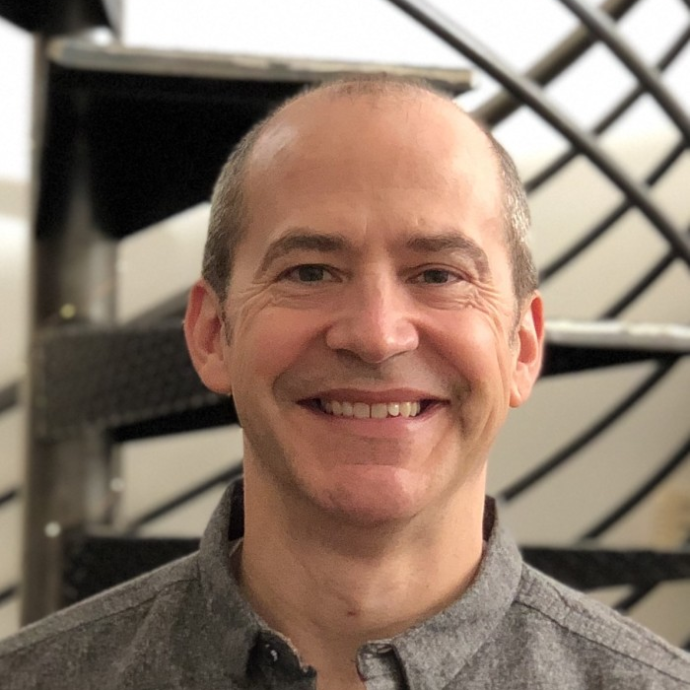
Dr. Chris Yohn is a computational biologist who currently leads CompBio Bridge, which provides a fractional strategy and management practice to help biotech teams bridge data science with the wet lab.
Transcript of Episode 75: Chris Yohn
Disclaimer: Transcripts may contain errors.
Grant Belgard: Welcome to The Bioinformatic CRO Podcast. I’m Grant Belgard. Today we’re joined by Dr. Chris Yohn, a biotechnology leader and computational biologist. He currently leads CompBridge Bio, a fractional strategy and management practice that helps biotech teams bridge data science with the wet lab. Previously, he headed computational biology at TRexBio and held discovery leadership roles at Unity Biotechnology, with earlier industry experience spanning platform buildouts and translational programs. He trained at Scripps Research and later completed postdoctoral work at the Skirball Institute in New York. Chris, welcome.
Chris Yohn: Thanks, Grant. It’s great to be here.
Grant Belgard: How do you describe the work you’re focused on right now?
Chris Yohn: So currently, I do computational biology contracting and consulting. Think of it as a fractional head of computational biology, typically for small companies that maybe can’t afford or aren’t ready to bring on a full-time head of Comp Bio.
Grant Belgard: What kinds of problems are showing up most often in your engagements?
Chris Yohn: I’d say there’s probably three main categories. First is early target identification, validation. Then, of course, there’s once you have a program doing translational informatics. So in that, I would include things like mechanism of action studies, biomarker selection, then a discovery, indication selection, even some like tox flags that you might be able to point out for a program that’s headed towards the clinic. The third category that I think is important that comes up pretty frequently is research informatics. So this is really, you know, essentially kind of managing your data, making sure you capture your data well and that once you capture it, you can use it and visualize it.
Grant Belgard: That’s been fun this week with the AWS outages.
Chris Yohn: Yeah, for sure. Yeah.
Grant Belgard: We’re recording this a good while before it comes out, just for our listeners. AWS hopefully did not go down the week you’re listening to this. So when a new group asks for help, what do you listen for in the first 15 minutes?
Chris Yohn: You know, so my original training is in molecular and cell biology. So, you know, I’m a biologist at heart. So really what I’m thinking about are what are the key biological questions that need to be answered? What’s going to help advance the company? What’s going to advance the programs they’re working on? What’s going to hit their goals? So what is the biology that’s underlying it and what are the questions that they need to really address for that?
Grant Belgard: And what does success look like in a typical project? How do you measure it?
Chris Yohn: Maybe it’s easiest. I’ll give a couple of quick examples. So one company I’m working with, I’m helping them with some mechanism action studies. And in this particular case, this is not typical for a lot of companies, but one of their major goals for this study is publication. You might think of that more for academics, but sometimes companies have that goal, too. So that’s a pretty concrete goal and metric that we can use. Like if the study helps lead to a publication, then that’s success. Another example is I’m working with a group basically to figure out, like, is there a company? So it’s actually the company hasn’t even been formed yet. So is there enough here to actually get something off the ground? So in that case, I guess getting the company started would be the measure of success.
Chris Yohn: And frankly, you know, I think in that case, making a decision not to start the company could be just as good as an outcome. Right. So that’s a good decision, too.
Grant Belgard: Right. You have to know where to allocate resources.
Chris Yohn: That’s right.
Grant Belgard: So where do you see the biggest disconnects between data science and the bench today?
Chris Yohn: You know, many, including myself at some of my previous companies, would talk about this, you know, sort of a design build test loop that really helps, you know, once you get data to bring it back into your modeling. Unfortunately, in many cases, it’s not always a loop. It’s kind of a one way trip. Right. And I think that’s where we see some disconnects. You know, the vision is there, but sometimes the execution to bring the data back into your modeling doesn’t always happen.
Grant Belgard: If you had to pick one capability that most accelerates discovery for your clients, what is it and why?
Chris Yohn: You know, this might be a little bit related to the last question, and I’m not going to pick a technical capability. I’m going to say communication. You know, I kind of consider myself because I’ve had a pretty diverse background. I call myself a multilingual scientist. I’ve worked in a lot of different areas, and because of that, I’m able to really translate between different disciplines. And I think that’s what could really accelerate discovery is that if you can increase communication, help different groups really understand each other and understand what they’re capable of, what their needs and goals are. And then how to move forward with that. I think that’s really what can help discovery move forward quickly.
Grant Belgard: When timelines are tight, how do you choose between depth of analysis and speed to decision?
Chris Yohn: You know, this is probably a common theme for our talk. You know, I really always go back to what are the key questions? Like, you really have to understand what’s the question that’s going to advance your program? What’s the question that when you get the answer, you’re going to make a decision based on it? And so if you can define what that key question is, then you go deep on that and you really dig in on that question. And kind of others that maybe are interesting but aren’t going to help you move forward fall by the wayside. At least when time and money is tight, you’ve got to do that.
Grant Belgard: What’s your framework for deciding build or buy?
Chris Yohn: I always lean towards buy, frankly. I think I want to rely on people who focus on building things, you know, focus on your expertise. You know, again, I’m going to focus on the biological questions and if I need tools for that, I want to find somebody who focuses on building that tool and then use it as opposed to trying to make it myself. Plus, frankly, software engineers are pretty expensive. So if you don’t really need it and to bring that capability in-house, then I’d rather rely on someone else who’s putting all their energy and effort into building a tool, but then I can make use of.
Grant Belgard: Where do you see multi-omic analyses and single-cell or spatial data actually changing decisions?
Chris Yohn: Yeah, you know, sometimes you do see where it’s not peripheral, but it’s just not core to really making things move forward. You know, I’ve seen a few. I helped build a target identification platform based on primarily single-cell data and we use that for some of our translational work, but really to have a big impact, it’s got to be really baked into the core approach of what you’re doing. It can’t be kind of an add-on. I do think that, you know, one place, especially as you move towards translation and getting things closer to the clinic, that you can have a couple of places you can have a big impact there is in certainly mechanisms of action studies, right? That’s going to really get you a lot more insight.
Chris Yohn: And then perhaps I think we’re starting to see a little bit of traction even in biomarkers where people are starting to bring more multi-omics technology later into the clinic and I think that’s going to start to really help us with really understanding both markers that we can use for things like pharmacodynamics and outputs as well as hopefully eventually even like, you know, patient selection and stratification down the road.
Grant Belgard: How do you approach data readiness, metadata, QC and so on?
Chris Yohn: I think you really want to start with consistent, you know, semantics. You know, make sure your IDs, ontologies are all kind of in place. Make sure all parties both on the wet lab side and the dry side really agree ahead of time. And then, you know, I think including biological QC in addition to sort of statistical QC of your experiments, I think is important, like did the experiment even work, right? An example is recently I was working with a company and they did this in vivo experiment where we were doing, you know, some omics readouts on it and we were looking at the data and let’s just say we didn’t see the effect we expected. Some cases we did, so there was like some old and young animals and you could definitely see differences there, but they had a compound treatment and they just didn’t see anything.
Chris Yohn: And so I went back and we talked about the experiment and unfortunately in that case they didn’t have any biological readout from the animals that we used for that study. So we didn’t know like did they see the effect they normally would see with their drug? Maybe somebody misdosed them, maybe like somebody left the drug out on the bench the night before and it was no longer effective and we just had no information. So having that biological QC would have made a huge difference for that experiment.
Grant Belgard: Yeah, that happens far too often and oftentimes, you know, people like you aren’t brought in until after the experiments run, right?
Chris Yohn: Exactly. I mean, that’s a huge point, right? I think that being involved early on as a computational biologist and experimental design is so important. And, you know, not to go off on a tangent here, but I think, you know, most computational biologists and bioinformaticians have experienced someone coming to them, giving them a pile of data and asking the question, what does it say, right? And that’s like the worst experience, I think. So, yeah, definitely getting involved early is critical.
Grant Belgard: Especially when it’s multimodal data, right?
Chris Yohn: Yes, even worse.
Grant Belgard: It does many things.
Chris Yohn: Yes, that’s right.
Grant Belgard: It’s your question. How do you pick evaluation metrics that matter to the biology?
Chris Yohn: You know, it has to fit the biology and the question and what the next testing step is. Like, you want to make sure that you’re getting an answer that’s going to help you make a decision. You know, if we’re looking for, and also like making sure your level of information fits your question. So, like, for example, let’s say we’re picking some targets and you have a screening platform you want to put the targets into and you can fit, you know, maybe 20 things into your screening platform. What you want is what are the top 20, right? You don’t really care like the relative order of numbers two, three and four. You just want to know, am I accurately getting the top 20? So, designing your, you know, experiment so that you get that answer and not like what is two versus three is important.
Grant Belgard: What’s your process for closing the loop, turning predictions into testable decision-relevant hypotheses?
Chris Yohn: I think it’s kind of related to the last question, you know, about making sure that you fit the experiment to the biology. I think also really important here is making sure you have a really good collaboration between the wet and dry side. You need to kind of have buy-in ahead of time that you’re going to be able to test the predictions, you know, as computational biologists, almost everything we do is just a prediction, right? And in order to really show that this is truth, you need to go into the lab most of the time to prove it out. And so having, making sure that that’s in place ahead of time, I think is important. Yeah.
Grant Belgard: In translational settings, what’s the most underrated biomarker characteristic to pressure test early?
Chris Yohn: For that, I would say one thing that I’ve seen is donor or patient variability. Often, especially when you’re doing multi-omics experiments early on, it’s hard to get a large N for your study. And you may not have fully looked at the amount of variability that you might be seeing once you move forward into a clinical setting. So as much as you can, paying attention to donor and patient variability and doing maybe follow-on experiments with larger numbers, where maybe you hone in on a particular set of biomarkers or assays versus, you know, maybe early discovery or kind of bigger experiments with smaller N. But that’s definitely something that I think you really have to pay attention to.
Grant Belgard: I totally agree. How do you keep analyses reproducible without slowing teams?
Chris Yohn: That’s a tough one. You know, usually, you know, I’ve always been at small companies and, you know, you’re always moving fast. And I think one of the things that, you know, we talked about at one of the companies I worked at previously was everybody has to eat their vegetables, meaning that, you know, everybody wants to like do sort of the quote unquote fun analysis where you get to the interesting biological result. But in order to get there, you need to have like, you know, the infrastructure and the process in place. And so we used to say everybody has to eat their vegetables. Everybody has to do some of that as well as sort of more fun analysis. So spreading it out, I think, helps.
Grant Belgard: So on that note, what are your thoughts on, you know, the recent rise of bioinformatics agents? Because I have to say one concern I have is that a lot of the vegetable eating is skipped to some extent, right? So there may be confounds in how the data was produced that, you know, if you’re going through it properly eating your vegetables, you know, looking for all those things, you catch that early. And otherwise, you might get some really nice volcano plot, but it might be nonsense.
Chris Yohn: Yeah, yeah. No, I think it’s a great point. And, you know, I think it’s important to understand the fundamentals. And unfortunately, you know, some AI approaches are going to enable people to skip that. I even think back to like when I was working in the lab and a new cool kit would come out for, you know, doing some process, even, you know, like simple things like mini preps or whatever. And when I was in grad school, my advisor forced us to kind of do it the old school way first so that we really understood the process. And then you could go to like the fancy kit that did it really quick and fast and with simple steps. So I think the same thing applies here. Like I would hope that as we’re training people that we continue to make sure people understand the fundamentals before they jump to sort of the quick and easy path. It’s great to have those. Like I’m not discounting them, right?
Chris Yohn: Like I use them. And but I think knowing the fundamentals and how it actually works under the hood is key.
Grant Belgard: How do you handle batch effects and confounders when experiments are multisite or longitudinal?
Chris Yohn: That’s a tough one. I mean, it’s the one thing that, you know, kind of hits anybody who does these kind of analyses. You know, I think this also gets to what we touched on earlier about being involved in experimental design, because I think if you were involved in the experimental design, then you can help to try to minimize those variables as much as possible. And the other thing is, I think you need to make sure as you’re looking at the data, you model both technical variance as well as biological variance and have them both like distinct so that you can as much as possible understand like where things are, where the variance is coming from. And then if it’s the biological, then you can start to understand like what are your biological questions. I mean, I don’t have a great solution, right? That’s a tough one. And I think everybody struggles with that.
Chris Yohn: So I don’t know if you have any like magic wand that you’ve used that you can help me and your listeners to deal with this.
Grant Belgard: Yeah, I mean, it’s a question we get a lot. And unfortunately, if it’s not baked into the design from the get go, it can be very difficult to do well. I mean, of course, there are approaches to try to mitigate it, but they introduce their own artifacts, right? Unless you have proper controls run everywhere. And ideally, you know, you’re not changing your array midstream or something, right? It causes huge problems that you could do things to try to get around it, but they’re not going to be perfect. It’d be far from perfect.
Chris Yohn: Yeah, yeah. I mean, and that’s I mean, that’s a good point, too, right? It’s really making sure that you pick the right whatever platform and approach like at the beginning so that you don’t realize halfway through that, oh, this is not really fitting my needs. I’ve been able to switch something. And obviously that throws in a whole nother set of issues around batch. So, yeah.
Grant Belgard: So when a single cell or spatial data set underwhelms, what’s your troubleshooting playbook?
Chris Yohn: I think first you have to probably need to define, again, whether it’s a technical or a biological reason that you’re getting underwhelmed. Then you go back to your QC. And this is like that experiment I was mentioning earlier, where it turns out that we didn’t really understand if there was a biological effect. So, you know, talk to the experimentalist who did the data, who produced the data, like, was there anything unusual? Sometimes you can talk to them and they mention, oh, yeah, so happens that these samples looked a little odd when I was processing them, but I just went ahead with it. And then that can maybe explain what you’re seeing in the data. So I think that’s an important thing to follow up on. So really, you know, trying to gather as much information as you can to try to explain why you’re not seeing the effects that you had hoped or expected to see.
Grant Belgard: Where does simulation or in silico perturbation add the most value in your experience?
Chris Yohn: For that, I would say if you have like a really big space that you want to explore, that is just impossible or intractable to approach from in the wet lab, then those simulation or in silico perturbation type approaches could help you then limit or focus your wet lab experiments. And again, I’m probably showing my biological and lab-based bias in that answer a little bit, right? Because I’m always headed back to how do you validate it in the lab, right? So for me, you know, doing simulations or predictions from models just helps you to be more efficient in your lab work, I think.
Grant Belgard: Yeah, totally agree. What’s one technical belief you’ve changed your mind about the last two years?
Chris Yohn: Hmm, that’s interesting. Well, maybe I’m in the process of changing my mind on this one. I haven’t quite settled yet, but if you had asked me a year or two ago, I would have said that in order to build a good model, you really need highly structured, clean data to really get a good model. I think that’s still true. The thing that’s maybe I’m changing a little bit is, and this is all driven by, you know, large language models and everything we’ve seen with ChatGPT, et cetera, is that the fact that they can make sense of sort of the messy data of language makes me reconsider that maybe we can get good value out of the corpus of messy data that we currently have in biology, right? So I think I’m still always, if I have a choice, I’m going to go to like well-structured, clean data as my go-to, but maybe there’s going to be more value out of the messy stuff than I first thought.
Grant Belgard: Switching to talking about building teams and operating models, what responsibilities do you believe belong inside computational biology versus in a central data organization?
Chris Yohn: So I’ve always been at small companies, so usually that’s one organization, usually not a separate group. But I think if you do have it split, certainly biological interpretation, right, lies in the computational biology group, whereas maybe more like infrastructure and enablement of being able to answer those questions, you know, data platforms, you know, shared services are going to be in that central data organization. But that’s, like I said, that’s not from personal experience because for me, it’s always been one and the same in a small group.
Grant Belgard: What competencies do you expect from computational biologists versus data scientists or machine learning engineers?
Chris Yohn: Again, probably my small company bias is showing, but I think there’s overlap. Like you need people who can do a little of a lot of things. But generally, I would say for computational biologists, it’s more about, you know, really understanding like experimental design, getting to the biological results, sort of why things matter. Data science is more about, for me, you know, modeling really rigorous analysis, good statistical approaches to the work, model building, essentially. An engineer like an ML engineer is more about like scale, right, like more system based. Like we’re talking, you know, then you’re talking about bigger data sets and really bringing a lot of things to bear and getting to, like I said, more scale approaches.
Grant Belgard: How do you operationalize scientific prioritization when everything looks interesting?
Chris Yohn: I think the key thing is you need to look at an experiment you’re doing and then decide what decision am I going to make based on the result. So if the result of this experiment is X, I’m going to do this. And if it’s Y, I’m going to do something else. Right. So that really helps, I think, to prioritize what you move forward with.
Grant Belgard: How do you approach hiring in a market with both mass layoffs and at the same time intense competition for certain niche skills?
Chris Yohn: Yeah, it’s really an interesting market for sure in the hiring front lately. You know, I go back to something that’s, I think, pretty critical, especially, again, small companies is it’s about oftentimes it’s about culture and sort of mission alignment. I mean, certainly, obviously, you need to make sure that the skills you need are there. And I think it’s right. There are a lot of people out there looking for jobs. So you kind of if you’re hiring, you kind of have your pick a little bit, but certain skills are still in high demand. So to me, whether you’re in that environment or in a different kind of hiring environment, it’s so important that the folks that you bring in are aligned with, you know, sort of the culture and what you’re doing in the company. You know, I’ve unfortunately experienced had experiences where someone isn’t right and it just throws everything off.
Chris Yohn: So you’ve got to have the baseline of making sure, like the technical competencies are there. But then to me, getting that alignment is is really a critical part of hiring.
Grant Belgard: Yeah, we actually just recorded a podcast with an expert in organizational culture and kind of the emergent properties of individuals. Right. And how, you know, taking the most skilled, best and smartest people in every function and sticking them together rarely creates the most effective team.
Chris Yohn: That’s right. That’s right. That’s right. We’ve probably seen we’ve probably all experienced examples of that, of dysfunctional teams. So then you kind of figure out from that maybe what the right approach is.
Grant Belgard: Yeah. So looking back, what were the pivotal decisions that led you into computational biology in your own career?
Chris Yohn: Oh, wow. You know, I was doing my postdoc. I was in doing in a fly lab doing developmental genetics. This was like a while ago, like late 90s, early 2000s, when really that was really like, you know, genomes are being sequenced and just a lot of great technology coming out. And I think, you know, in my graduate and postdoc work, it was really still kind of a single gene focus. Like I literally worked on like very specific, a couple of genes in both my graduate work and postdoc. And seeing kind of what was possible as the genes were being sequenced really inspired me so that when I started getting into it in my postdoc and like took some programming classes and started doing some work there. And then when I left and I started my first my first biotech job was a bioinformatic scientist.
Chris Yohn: So, you know, I think just that timing, that time was really pivotal for, yeah, just the advances that we were seeing.
Grant Belgard: Yeah. And can you talk about how that transition was for you from academia to biotech?
Chris Yohn: Yeah, I think the way I like to talk about it is in academia, you have time, but no money. And in biotech, you have money, but no time. So that’s really the…
Grant Belgard: Except right now where you neither have time nor money.
Chris Yohn: That’s a good point. And I think along with that, like the willingness to take risks is much greater, right? Because you don’t have time. You’ve got to just try things and move forward. So that was a real difference. And that’s why whenever I talk to people who are kind of thinking about the transition, like that’s one of the things I really try to help them understand, because I’ve seen people make that transition well. And I’ve seen people struggle with it.
Grant Belgard: Yeah. I would say that that’s, I think, the most common answer we get from people and certainly an observation I’ve had. So what experience has prepared you to manage both bioinformatics platform buildouts and translational aspects of that?
Chris Yohn: When I was at Unity Biotechnology, we were working on diseases related to aging. We did a lot of early sort of discovery around new applications in different diseases. And at the same time, we had programs that were advancing into the clinic. So I think the fact that I was able to, for example, I helped design and execute a biomarker clinical trial for osteoarthritis. While I was also working on exploring new indications that we could potentially get into, really helped me to understand kind of what was necessary to move things towards the clinic, but also kind of the exploration that you have to do on those platform buildouts. So being able to do both at one time was really great.
Grant Belgard: What’s a fork in the road moment? You’re glad you chose the path you did? And what’s one where if you had to do it over again, you would make a different choice?
Chris Yohn: Probably, so I’ve spent a lot of my career in San Diego. And then about a decade ago, I moved up to the Bay Area and I think that move was great. So it really allowed me to expand my network as a lot of opportunities. I mean, San Diego is awesome. I love San Diego. It’s got a great biotech community, but the Bay Area is just another level. And that’s been really a great opportunity. And I’ve really enjoyed the work that I’ve been able to do here. In terms of something I would do differently, I’m not sure if there’s anything I would say. I mean, I don’t know, maybe I’d buy Nvidia stock 10 years ago. In terms of my career, I mean, I definitely have been very… I’ve kind of followed opportunities. It’s kind of been my path. It’s not like I’ve decided this is the thing I want to do and I’ve pursued it with passion. It’s more about seeing interesting opportunities and following up on them.
Chris Yohn: And so I don’t think there’s an opportunity that I chose that I would have preferred to have passed on at this point.
Grant Belgard: What habits or practices have been most durable across very different problem domains?
Chris Yohn: I think, and sorry if I’m being a little redundant, but I still go back to focusing on the key questions. That’s so important because I’ve worked in biofuels, in early stage, late stage clinical, across different therapeutic areas, different modalities. And no matter what, in order to really focus, you have to understand what is the question that’s going to help me move forward and do everything you can to get an answer to that question. So I would say, and there’s sort of two pieces in that answer where I say focus on the key questions. You know, certainly part of it is the key questions and the other part is that focus word, right? Because it’s so easy to get distracted. There’s so many things you can do. So making sure that you focus on what’s important has been so important to me.
Grant Belgard: So to get your thoughts on advice for people at different stages of their career, a number of questions. Firstly, for grad students and postdocs, where do you think they should invest their time and focus in learning over the next year?
Chris Yohn: Well, at the risk of sounding like probably what many other people say, you know, I think the sort of obvious answer is to really understand how AI is going to impact what they’re studying, how it’s going to impact them. I think a really important aspect of that is what are the limits of what AI is going to be able to do for you and to you a little bit, but also like what are the opportunities that you can use, that you can follow up on in your studies or in your work. Like I said, it’s maybe an expected answer, but I think it’s super, super important today.
Grant Belgard: And for scientists moving from wet lab to dry lab, what’s your recommended on-ramp?
Chris Yohn: I would say if you can, like look at your own data. I mean, certainly you could go and like there’s a lot of like tutorials and places that you can download data and learn on that. But if you can look at your own data, I think you’re going to be much better. Like, you know the data, you know what the limitations are of the data, you know what makes sense in the data. So I think that’s going to help you a lot more than like coursework or tutorials. And certainly I think if you can find one, find a mentor who can kind of walk with you just to keep you from making silly mistakes that, you know, a lot of people probably would do when they’re just getting started.
Grant Belgard: For first time computational biology managers, what advice would you have?
Chris Yohn: I would say you really want to kind of understand the landscape. Like what do you have? Like, do you have a team? What are the pipelines that are in place? What kind of data do you have? I think for new managers, usually the advice is, you know, don’t come in and start changing everything. You need to learn first, right? And I think that applies here as well. So understand the landscape. And I think out of that, you know, most important is probably really understanding the data, both what you have currently and what’s planned. And then if there’s data being planned, like get involved in planning those experiments, right, that’s really critical to plug in, get on program teams, you know, get, you know, to the project manager people who are actually like moving things forward and get into the planning as soon as you can.
Grant Belgard: And for scientific founders or heads of R&D, how do they set problem statements that are tractable and can be decision driven?
Chris Yohn: I think you have to define the scale of the question or the problem statement so that you can get to a decision. I mean, maybe that’s kind of built into your question, but, you know, you don’t want your problem statement to be too big, right? Like, can we cure Alzheimer’s, right? I mean, that’s way, obviously, that’s way too broad. But if that’s your ultimate question, you need to break that down to the point where you get a question that has like a clear go, no go at the end of it, right? You know, define your problems by what they allow you to decide next, not just by, oh, data we’re going to generate or something, right? You want to be clear about I’m getting, I’m doing this experiment to get this data that’s going to enable me to make this decision.
Grant Belgard: What types of structured communication, for example, memos, dashboards, formal reviews, and so on, do you find most effectively inform and drive decisions?
Chris Yohn: It varies a lot. I mean, to me, the best tool is the one that actually gets used, whatever that is. You know, I’m actually starting an effort right now with a company to create some dashboards, and we’re figuring out, you know, what those use cases are. And it’s going to be different. Like, we actually kind of define the two extremes. One is the person who is a little more data savvy and wants like a big, basically download dump of data that they can then play with, right? And then you have the other extreme, which is usually, you know, the senior management who wants like a PowerPoint slide with a summary of the data.
Grant Belgard: And some nice colors.
Chris Yohn: With some nice colors, right? Exactly, exactly. Some red and green checkboxes and stuff, right? And that’s exactly what we’re doing, right? So I think, and probably what, you know, I think what we’re going to do is, you know, we’re going to create some drafts, we’re going to circulate them, and we’re going to kind of see like, where do we get traction, and then you just double down on those. So I think you have to try a few things and then see, like I said, whatever gets used, that’s the one that you want to focus on.
Grant Belgard: When budgets are tight, as they have been for many companies in recent years, what do you defend first? And how do you go about deciding what can be paused, what can’t be?
Chris Yohn: Yeah, I think you need to define your one-way doors. Like, what are the things that if you stop, it’s really difficult to start again? And what are the things that you can easily restart again, if you do pause them? And so obviously, the ones that are easier to restart, then those are, you know, pretty easy to say, well, we’re going to pause that if it’s not going to be critical to our next step. I think if it’s a one-way door, then that’s when you really have to look at it very carefully. Like, what are the implications of pausing or stopping this, and then base your decisions on that. Like, if it’s a, maybe it’s a collaboration, and if you pause it, then they’re going to go find somebody else to collaborate with, right? And you can’t come back, right?
Chris Yohn: So that might be something you think twice about, versus, you know, something that’s completely controlled internally, you could maybe be a little more flexible with how you prioritize it.
Grant Belgard: And if you could give advice to your younger self, maybe at different stages of your career, what would be the most impactful advice you would impart?
Chris Yohn: Hmm. I think I would probably encourage my younger self to take more risks, and to just go for it. I think that, and this is probably a little bit of my own personality, but you know, I am somewhat conservative and a little risk averse, and you know, that’s probably, you know, held me back a little bit in some cases. So I think, you know, just, you know, failure is not a bad thing. Failure is how you learn and how you learn how to be better. So I think just going for it is important sometimes.
Grant Belgard: And if someone wants to work with you in a fractional leadership capacity, how should they prepare? And what sets an engagement like that up for success?
Chris Yohn: You know, there’s probably two main ways that people interact, that I work with people. One is where someone really knows what they want, right? Like, I need, I need this, I need to answer, I need a mechanism of action study for my compound. Can you help me like with experimental design and execution? And like, I have one customer or clan I’m working with, but that’s what I’m doing. The second is probably a little more open, where, you know, you might have overall goals, and you really need to figure out like, what is the strategy to help us find a solution to meet these goals? And like the company I mentioned earlier, where we’re really trying to figure out, is there a company here, that’s very open and broad, and it’s sort of there’s a overarching goal, but then like, together, we’re figuring out what that what that strategy is.
Chris Yohn: So understanding like where, which of those two categories you’re in, and then helping to define that, I think is important. Yeah.
Grant Belgard: And where could our listeners follow your work or reach you?
Chris Yohn: So LinkedIn is probably a great place to reach me. My website is compbiobridge.com. And my, if you want to just reach me directly, my email is just chris@compbiobridge.com.
Grant Belgard: Great, Chris, thank you so much for your time.
Chris Yohn: Hey, this is great, Grant, I really appreciate the time.