The Bioinformatics CRO Podcast
Episode 71 with Christiaan Engstrom
Christiaan Engstrom, founder and CEO of BLPN, discusses his experience building a space for authentic, non-transactional business networking in the life sciences.
On The Bioinformatics CRO Podcast, we sit down with scientists to discuss interesting topics across biomedical research and to explore what made them who they are today.
You can listen on Spotify, Apple Podcasts, Amazon, YouTube, Pandora, and wherever you get your podcasts.
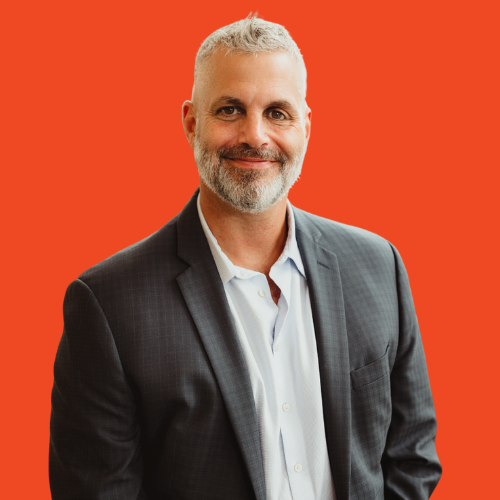
Christiaan Engstrom is founder and CEO of BLPN, an invite-only community for life science investors and senior executives to connect.
Transcript of Episode 71: Christiaan Engstrom
Disclaimer: Transcripts may contain errors.
Grant Belgard: Welcome to the Bioinformatics CRO podcast. I’m your host, Grant Belgard. And joining me today is Christiaan Engstrom, founder and CEO of BLPN, an invite only community where life science investors and senior execs connect to help each other and make better deals with a heavy focus on authentic non-salesy conversations. We’ll talk about what he’s building now, the path that led him here through leadership roles on the tools and services side of biotech, and his best advice for founders and operators navigating today’s market. Christiaan, welcome.
Christiaan Engstrom: Thanks so much for having me. Good to be here. Excited to meet you and your audience.
Grant Belgard: So when someone new asks what you do, how do you describe BLPN in one sentence?
Christiaan Engstrom: I often say that BLPN is better experienced than explained. And in fact, when I try to explain it, people think it’s something it isn’t. So I always just say, we’re doing so many things in the marketplace, come check it out. And that energy is actually at the center of what we do. We have a mantra. So it’s best explained by our mantra, find someone to help, repeat. We are a member-led, invite only club. We don’t spend any money on marketing. We don’t have a sales team. People opt into what we’re doing. And we’ve been lucky enough to have some of the best people opt into what we’re doing.
Grant Belgard: What problem in life science deal-making or executive networking are you trying to solve?
Christiaan Engstrom: I come from non-life science background. And that means I was trained in automotive. I went through Ford Motor Company’s leadership development program. And what I learned in working within dealer channels and working regionally and nationally and internationally is there’s great cooperation amongst the manufacturers. They all share the same vendors. They need the markets to behave a certain way. Technologies that come to market get moved or aggregated quickly to the other manufacturers. They are playing, although there’s great competition within automotive, they are playing a game that preserves the industry. And when I came to life sciences, I found it to be very lonely in my vertical as a CEO, trying to understand how to navigate and bring resources to my team.
Christiaan Engstrom: So over time, I reached out and I did more and more of the partnering systems that are out there for leaders to meet other leaders. And it quite often was transactional. And finally, I just reached out to my banker, JP Morgan, and asked them if they would try to build something with me that is less transactional and more relationship-focused. And that leads to trust, which leads to business. And we’ve been doing that. So that’s the problem we’re solving. Trying to create more of a community within life sciences.
Grant Belgard: So what guardrails keep interactions constructive and non-transactional?
Christiaan Engstrom: We never sell or we try to never sell in that I have something that I need to be helped, but more importantly, I need to be helpful. And there are people that will self-select into that mode and it’s not for everyone. We know that there are certain people who we respect in life that are very focused on their ask in life. And a lot of times they’ll get it through that approach that they’re using. And then I’m not critiquing that. This group is for people who say, I’m gonna go further together. Might go faster alone, but I’m gonna go further if I partner within a community. So I think that’s, I’m not sure if that answers your question, Grant. I told you, this is tough to explain. You gotta check it out and be a part of a community where people are genuinely focused on what you’re into and how I can help you.
Grant Belgard: How do you decide which conversations or connections are worth amplifying?
Christiaan Engstrom: Our members become founding members. Through that process, we commit to supporting them and amplifying their missions. So the members are challenged as founding members to take a hold of the organization and do something really positive. And what’s blossomed from that is one of our members has a family office he invests for and started a fund within BLPN. So in the last six months, we put five investments into companies, the first checks going into amazing technologies. And then our members get the opportunity then to become coaches for those teams and bring them resources and sometimes take advisor roles. So it creates this ecosystem where company is opting in to getting this help and everybody around them has committed to helping. So it goes fast from that perspective. I think that’s one example for you. Also our members more recently have taken more and more control of our events.
Christiaan Engstrom: As we mature and we know how to do events, we can put members in charge of certain breakout rooms. So I’ll take Bio International Convention where we met for three days during Bio and many of our members are going back and forth between the convention center and where we were. So we were at Portal Innovations, Smart Labs and EPAM Continuum, which is doing a lot of bioinformatics stuff at EPAM. And Portal and Smart Labs are also very involved in this space. They opened up their facilities to our community. Our members volunteered to run forums. So for example, we had a Saudi investor forum, Israeli investor forum, South Korea, Japan, Australia, and these folks came in to not sell anything, but to get to know each other and say, I wanna be involved in the South Korean ecosystem.
Christiaan Engstrom: So it creates leadership opportunities, volunteer opportunities for people within the group to help people that are, I think that they wanna help. We get asked to help a lot in life. We create a vehicle for you to be impactful in the areas of interest that you have.
Grant Belgard: If someone joins and engages well, what behaviors do you notice from them early on?
Christiaan Engstrom: Oh, I’m gonna give a shout out to one of our sponsor founding members, Terry Stelter, who’s at Mazzetti. And what they do is a lot of like infrastructure for biotech companies, buildings and HVACs and that sort of thing. It was really important part of building out your organization. Terry continually supports our events financially, but he volunteers every event. We have member volunteers that are ambassadors and they make sure that some of the VIPs that are coming meet our members and that the members interact with each other. They just make the connections happen. It’s really into the, they’re like bees pollinating flowers within a garden. And so Terry is the best at that. We watch him make connections between investors and startups and advisors and nonprofits. So he takes great pride in that and is very good at that.
Christiaan Engstrom: And I think that at some level, most of our members have that inside of them.
Grant Belgard: What are examples of small interactions that ended up mattering a lot?
Christiaan Engstrom: Oh, I’ll tell you today, this morning, I got a call from Linda Templeman. She is CEO at PersistaBio and they are a cell therapy delivery system. And they basically are a subcutaneous implant and they deliver STEM cells to fight diabetes. And so go check it out, PersistaBio. But she spun this out from university and was very green, I think, in her expectations for how her fundraising process might go. Although she’s super intelligent woman, very knowledgeable just when you’re doing this for your first or even your second time, expectations don’t always align. Through a series of little connections, she has moved her technology forward. She entered our Moneyball program. She met one person at a time that led her to take a small investment from the fund we established. She met her head coach, Stella Vnook, who has exited five times in the therapy space, believed in her.
Christiaan Engstrom: So I think it’s a series of small connections and earning the faith of these other amazing people that they are now gonna invest in you. That really matters. You can’t be a Johnny come lately. You don’t just get to hop into the life science game and pretend. You get sniffed out pretty quick, right? And so I would say, Linda, she called me this morning and told me that she was just got some good news on some grants that are gonna fuel her business for the next couple of years. And she has some matching investor opportunities that are gonna follow those grants. And today it’s happening, right? And it was a series of small steps for Linda and Persista. And she has a lot more small steps in front of her.
Grant Belgard: Yeah, that’s really crucial right now with the private funding drying up. So if you could redesign how people prepare for major weeks, like JP Morgan or Bio, what would you suggest?
Christiaan Engstrom: If I was going to give some advice for let’s say JP Morgan, because we’re in planning process right now for our events at JP Morgan, and this year it’s never been bigger. We’re doing a investor summit where we’re taking aspiring life science investors, folks that are accredited investors, but it’s pretty intimidating to put your money into early stage life science companies. It’s a very risky space and we’re going to educate them. We’re partnering with, I’m not gonna put the names out there with several excellent life science entities to bring in venture capitalists and talk to this group of new money. We see it as the current structure is broken. So why do we keep fishing in that pond, right? We need to go fish in different ponds and pull people in and tell our story effectively.
Christiaan Engstrom: So this is also in a way some advice and maybe speaking to the startups that are preparing for JPM, we need to do different things. You can’t go to the same well. It’s not the same as it was two years ago or five or 10 or 15. Some of the folks that are still trying to raise money are operating like they needed to a decade ago and it’s different. And we have to open our minds up, have different conversations. So we’re doing this investors summit in Napa Valley for three days where we’re going to be educating potential life science investors through venture capitalists that have been doing it and bridging that gap, I would say. So preparing for that means I need to go reach out and introduce myself to the investors that I would like to have involved with what I’m doing. And this should sound familiar to startups and I’m doing it now in September.
Christiaan Engstrom: Because if I ask them in November, they’re gonna be booked in January at JPM. So I’m asking them and they say, well, tell me about it. And we set up a meeting and I’m not asking them to sponsor or get on the docket as the keynote yet. I’m just saying, do you think this is cool? And if people do, they get involved. So as a startup, you need to socialize your technology in front of JPM. And then you need to have a meeting where you present your deck or your idea or whatever it is you’re doing, whatever vertical you’re representing within life sciences, socialize your idea. And then before JPM, you need to have a business meeting with them and say, here’s the nuts and bolts of what I was talking about. And when you’re in that meeting, you’ll secure your JP Morgan meeting with the investor or the partner, whoever it is you’re looking for, if you’re both into each other at that point.
Christiaan Engstrom: If they like you and it’s very much about, and I’m speaking directly to the founders and this goes back to a question I always ask our community is should you be the CEO? Because the investor is investing in you, not your CFO, not your board of advisors, not even your technology in some cases. They don’t need to go as if they’re investing in you. So you have to build that relationship and then you need to show up and be credible. And in the end, quarter one, I hope it opens up. After JPM, we were hoping that what happened this year didn’t, there were things, macroeconomics and play that has kept the money in dry powder stage, but it should be opening up in quarter one, quarter two, and you’ll be there, you’ll be ready to take that check.
Christiaan Engstrom: If you wait, if you say, boy, I’d really like to get my 2026 planning in place, so I’m gonna start talking to people at JPM so I can tell them what my plan is, you’re too late and you’re gonna miss out on the next round of funding. So quarter two, quarter three, 2026 funding prep starts now.
Grant Belgard: How do you decide which thematic panels or formats are most useful to your community?
Christiaan Engstrom: Continuously evolving. We did yesterday a partnering panel, which we know is a great community builder for us. So we had 25 and tremendous leaders, including Mayo Clinics, Director of Partnerships, and we were just there, so I mentioned them. Thank you again, Mayo Clinic, for hosting us. And several other entities that were just able to say hello and then move into a breakout room for second hour for introductions, and we went two and a half hours. It’s amazing to see 150 people stick around for two and a half hours. And so there’s something of value going on. That’s a great meeting. We’ll keep doing that every quarter. We’re doing military medicine next. So that is in place of, we normally do non-dilutive funding, but that non-dilutive space is still, we’re waiting for the other shoe to drop, so to speak. But military funding is active.
Christiaan Engstrom: And so we can say, here’s a space that you need to know more about, how to participate. And we have top programs coming in from leaders in Department of Defense to M-TEC, which is the Medical Technology Enterprise Consortium. They’ve deployed a couple billion dollars in the last few years, and you get to come in and hear from the top leaders of these organizations how to get involved and why you should get involved. And then you get to meet them in the second hour. So we’re doing that. The next one is women’s health. We’re starting an investor club, which is focused on these emerging investors, pairing them with current venture capitalists. Venture capitalists like this because they meet potential LPs, folks that they can bring into their fund. So we’re doing that pairing going on. And I think it also depends on people raising their hands and saying, I want to lead this.
Christiaan Engstrom: So the more volunteers we get internally who are excited about a subject, we’ll make room for it.
Grant Belgard: What’s something you’ve changed your mind about in the last year regarding how the community should operate?
Christiaan Engstrom: BLPN needs to start generating some revenue some way. We won’t go into it, but we had a good year last year, slightly profitable. We have no employees. Everybody is a life science leader in some other area. And if they’re volunteering at a certain level, they take a stipend. I think it’s mostly to tell their spouse that I know I was spending all my time over here, but I’m getting something. It’s a humble pittance of what they probably deserve for taking on the role. So me, I’ve been thinking about how do I make this sustainable right now? It’s very much, I need to be involved at some level. How do I get another CEO, like the next CEO ready and have them lead this organization and have a budget for them that allows them to have a staff? So I’m thinking about that. And I haven’t ever really thought about that.
Christiaan Engstrom: And we’ve had some sustaining sponsors step up, including Collaborative Drug Discovery, which is such a perfect match for them. And Prendio, Prendio is a platform for procurement for biotech. And they’re coming in as sustaining sponsors. But that creates obligations for us, right? And I’m trying to be Switzerland neutral within the industry. So that’s a big challenge for me. And I’m not gonna keep doing this forever as CEO. Somebody else, somebody better needs to come in.
Grant Belgard: So looking back, which early experiences most shaped how you operate today?
Christiaan Engstrom: Oh man, you’ll get me going. My father, for sure. And he’s 79 and my dad has been a fixture from time to time as a host or volunteer at our events, especially the Golden Gate Yacht Club. Many of our members have met my father. My father was the son of an immigrant who didn’t graduate from college and had tragedies. I would just say early on in his life that he endured and he built a family and he built a window and door company along with his family. And we lived in Southern Wisconsin and he sold windows and doors all over the Midwest to his little window and door factory. And he hired, I think, just about everybody in the community once or twice when people needed work or they, and they returned the favor to us and to our business. And as a farming community, so people were out at the farms helping each other, doing whatever we needed to do.
Christiaan Engstrom: And for me, that was always just how you did it. The other ways don’t feel comfortable to me. I didn’t grow up in a big city where it’s every man for themselves. It’s like, I’m not sure how I operate outside of that ecosystem. And so my dad, as he watched me grow up as probably a very cocky young man who didn’t understand like this is the way that I’m built to do it. I’m maybe overconfident in my early years, excited, too excited about what I was doing. My dad always would say, I never had to sell anything in my life. I just listened to what the other guy needed and I brought it to him. And so continuously coaching me, my dad, over the years and smoothing me out and just being like, son, I see this. And so I think BLPN manifested from that relationship.
Grant Belgard: Which mistakes have been most instructive for you?
Christiaan Engstrom: Oh gosh, constructive mistakes. Like, I’m not sure if you can look at a mistake and say that that’s a learning. I was just talking with, I’m gonna name drop here, but Stella Vnook, whose daughter recently went to school and my son has transferred schools. And we were talking about trying to influence our child and what they’re gonna choose to do. And her take was, my daughter, I’m not sure. I’m gonna stay out of it. And I think that if she makes the wrong decision, I will be better on the other side. I was like, wow, my son, I stayed out of it. I really wish I would have spoken up. He had a really bad experience and now he’s transferred back home and we’re all happy. So I think we both kind of laughed about you’re damned if you do, you’re damned if you don’t. I think what I think being present in life means is that you just accept what happened, happened and what did I learn from it.
Christiaan Engstrom: So constructive learnings for me has been, you need to be, for me, take risk and get comfortable with it. And what that means for competitors is you’re gonna fail and that is so hard and everybody’s gonna be mad at you. And everybody’s gonna say, you should have done it a different way. You’re gonna have to sit back and kind of live with the decisions you make and you can choose to position them a certain way. You can explain them away. In the end, the result is what the result is and as a leader, you take that on. So the best thing that I’ve learned is learning how to gracefully accept loss and make others continue to stay with me and trust me as I get to go try again. And at some point, they may remove me from a leadership position, but I think get used to loss and don’t let it stop you. You’ve got to keep going.
Grand Belgard: Who are a few people who have changed the trajectory of your career?
Christiaan Engstrom: Oh, Santosh Patel. This is, I’m gonna tell the story of Santosh Patel. He was my boss at Toro company. And so my career was kind of went through this leadership development program at Toro within their dealer network and was at, excuse me, at Ford and was at Ford’s headquarters. And then I got recruited away to do similar things for Toro within their golf business. And what I knew is I didn’t care about cars and I didn’t care about golf, especially like lawnmowers from like a deeply intrigued perspective, I wasn’t. I was learning how to do business. And I told my boss at the time, Santosh Patel, who was a director of customer care at Toro, that I was gonna be leaving the company to go to school and go back and get my MBA. And he said, well, what if I was able to put you into full-time MBA program and you can keep your job? And I said, yes, I would stay. And by the way, we’ll pay for it.
Christiaan Engstrom: And so he went and advocated for me. Now it just happened. He had the time and talked to our CEO, very nice guy, Mike Hoffman. And Mike Hoffman had a tie to the University of Minnesota program. And those two decided to put me into the program. And I was like a rookie. It was my first year coming to Toro from Ford. And it turns out there was a list of dozens of people at Toro with vice president titles and director titles that were way above me that were scheduled to go. And Santosh just kind of stomped his foot and Mike pushed me through. And I went into this full-time MBA program at 30 years old or 29 years old. And it totally changed my life. Like I can’t say how grateful, lucky, privileged, whatever you may call it, it brought me perspectives in seeing, first of all, most of the folks in the program, older than me, 10 years plus, who had had better careers than I could ever hope for.
Christiaan Engstrom: And I said, that’s how I need to, I took notes from how I saw them operating. So they were all very wonderful. And then just the X’s and O’s, thinking about how the bioinformatic person thinks in the business or the stats person. Let’s get down to it. Learning some of those fundamentals and what clinical statistics mean. And I kind of diving into it, it wasn’t my area. I was an operations guy and I was a marketing guy and a little bit of sales. So learning what the CFO was thinking about and being a better teammate for the CFO, getting your MBA from me, didn’t give me that next job right away. Just let me talk to the people that would hire me a little bit more effectively down the road. So thank you, Santosh. Thank you, Toro.
Grant Belgard: Nice, nice shout out. So how do you think about personal brand versus organizational brand in this industry?
Christiaan Engstrom: I don’t know. Try not to think about personal brand too much because every time I do, I get in trouble. It’s just not like for me, it’s been easy for me to celebrate and hide behind our awesome members and rah-rah them and cheerlead them. So I think if there’s any brand I’m trying to get as a cheerleader for these athletes that are out on the field and making it happen. And I don’t know, that’s not a great way to position myself. But I’ve been in their seats too, I’ve been the athlete. And for me, it’s facilitator on the team, maybe the point guard on the basketball team, which I always dreamed of being a pretty big guy who’s slow. So right now on this team, I get to be the point guard. And my advice for others is you have to embrace your authentic brand. And I think for me, there is a little bit of that farm boy community, a little bit shy away from that sort of thing.
Christiaan Engstrom: Now there’s other folks that are beams of light and they got to let it shine. So, and I mean, if you’re on the introverted side and you’re really into the numbers, so might be talking to some of our bioinformaticists that listen to this, it’s okay to dive into the numbers and even share that publicly with the other folks that are into it. But I would say to those introverted folks that say, maybe it’s easy for Christiaan because he’s extroverted. So how do I do it? I think I’ll go back to our mantra. Find someone to help, repeat. You can be so effective at any room if you change your focus to what can I do for that other person? Because I believe that you do have some energy coming out of you at that point.
Christiaan Engstrom: If you’re bought into that and that’s your intention in that room and you make it be about the other person and your pheromones change, your vibe changes and you’ll find the right people in the room.
Grant Belgard: What have you learned about navigating downturns and winter cycles in biotech?
Christiaan Engstrom: That’s all I’ve been through, it seems. When I joined this group called Medical Advanced Pain Specialists, they were at the time, the largest pain specialty group in the country. And they did implants for pain management, surgeries and also they had a CRO attached to it as well. And I was a COO there. So I left from Toro to go do this. And they were on the verge of bankruptcy. So we were in a filing process at the time and I had the luxury of seeing it totally new. And I’d brought my Lean Six Sigma discipline from Ford Motor Company in Toro, which I did a lot of value stream mapping of cash flows and looking at where we can be more profitable. We went and looked at the entire patient experience from booking appointment to getting paid by the payer. And we found so many holes that money was just falling out of that organization.
Christiaan Engstrom: So over the course of the next two years, we were able to double revenue and we were actually able to cut expenses by 20% through logic. If you know Lean, it’s nothing but teamwork and logic. And I would say when you’re going into this downturn, go to your tools, they make sense. It’s like family budget. What do I need? What don’t I need? And your investors want one thing from you. They want you to stay alive and they want you to thrive. But in this economy right now, they want you to stay alive. So other things, that was a downturn. We sold that to a PE group. The owner of that group did very well. And we took it out of this bankruptcy position. The second deal was a phase three immunotherapy program. If anybody’s interested in immunotherapies, this was a autologous antibody-based personalized vaccine.
Christiaan Engstrom: So we would take the patient sample and manipulate it and send it back to the patient. And so we’re doing these milligram batches of antibody work. And we failed. I joined while it was failing, let’s put it that way. Wasn’t because of the people, wasn’t because of the tech, the market changed. We couldn’t get it funded. We had to move on. But what can we do from there? So we spun out a contract manufacturer of antibodies, a GMP manufacturer. We got very mean. We moved from 150 people to 15 people, but grew up to 10 million in revenue over four years. And that is something I say that in this industry, especially you need to be resilient. So I’ve been in, seems like the last few years, everybody who’s still around, they are resilient.
Grant Belgard: Yeah, unfortunately a lot of people have been washed out and I expect that’ll continue as the drought continues. If you could loan one habit to every rising leader in biotech, what would it be?
Christiaan Engstrom: One habit, work on your network. You’re great. I will say this, like, and I get to say this because I see so many of you when I’m speaking specifically to emerging biotech leaders. And from, and I’ll give you the perspectives in just the last week of folks that are trying to figure it out at different levels in different places and are humble enough to understand that they can’t do it alone. So we were just at Mayo Clinic working with their corporate development team and their doctors. Mayo Clinic in my opinion is the pinnacle of healthcare innovation. And if you dive into what they’re doing, they are out there failing and succeeding at the same time. And they are looking, they called for the BLPN to come into their campus and they wanted to learn more. So they’re building their network. They’re trying to grow.
Christiaan Engstrom: If you are so sure that you don’t need that help, good luck with having that strategy. I would say make authentic connections. I have made quite a habit over the last 10 years of using LinkedIn really well and reaching out to people and basically saying, I’m into what you’re into. Nice to meet you. And maxing out at some weeks when I was really committed to it, my connections with people that I just found were fascinating. And I wasn’t asking for a thing. And if they did connect, my response was along the lines of, thanks for connecting. I’m excited to root for you. And good luck with what you’re doing because I was genuinely. Now there’s some work that’s probably, if you’re gonna do, if you’re gonna max out, let’s say 100 invites a week, put aside five hours to do that, right? You’re gonna need a lot of time to be able to send those. But don’t complain.
Christiaan Engstrom: If you’re not doing it, don’t complain when you’re not getting funded, when you’re not getting the next job, because there are fundamentals there and that is a habit as a leader that you’re bored or your teammates or whoever, they’re counting on you to have the answers.
Grant Belgard: And where can our listeners go to learn more about BLPN?
Christiaan Engstrom: Go to BLPN.club. You know, I think that’s a great spot. Our LinkedIn page, BLPN, is full of just photos from Mayo right now, I guess, a lot of posts. It was a wonderful experience, but you can get a sense of what our community is. If you wanna come to a meeting, what we do is we’re looking for decision makers within life science companies, primarily operators and investors, but we also, there’s a whole list of it on a membership, associations, nonprofits, government organizations, all kinds of different groups that participate, but they need to be a decision maker. So it’s not necessarily an education forum. It’s, hey, here’s what I’m working on. You wanna collaborate for them, is what it is. You can fill out a contact form at BLPN.club and then we have a short form that you fill out and we invite you to the meetings. We get you going and that’s it. And then you kind of opt in.
Christiaan Engstrom: You either come to the meeting and if you like it, come back, I hope, but most importantly, we are all there to be helped, but primarily to be helpful.
Grant Belgard: Great, Christiaan, thank you so much for joining us today.
Christiaan Engstrom: Thank you so much.