The Bioinformatics CRO Podcast
Episode 76 with Christopher Woelk
On The Bioinformatics CRO Podcast, we sit down with scientists to discuss interesting topics across biomedical research and to explore what made them who they are today.
You can listen on Spotify, Apple Podcasts, Amazon, YouTube, Pandora, and wherever you get your podcasts.
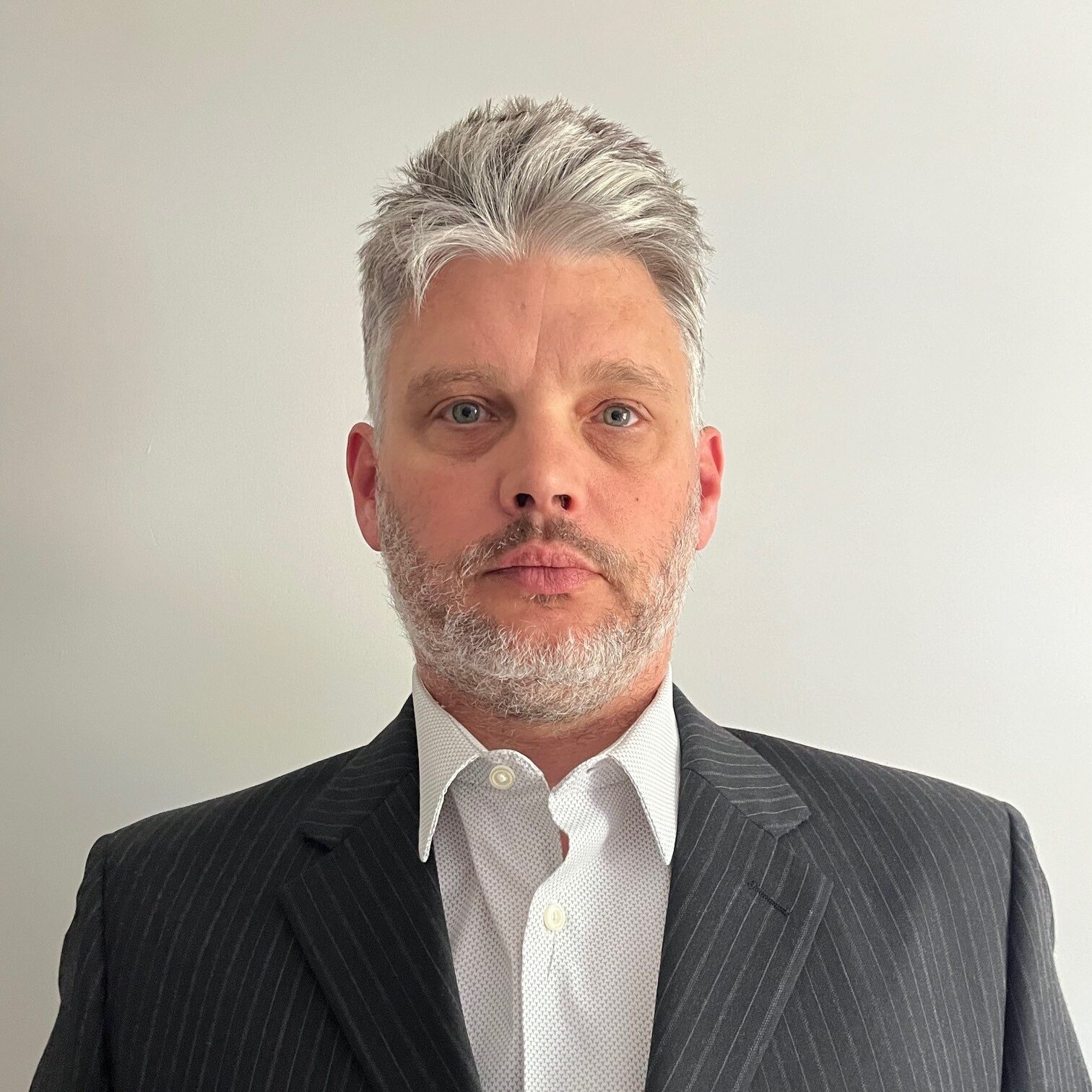
Christopher Woelk is an External Innovation Partner at Astellas, which focuses on developing and supporting transformative disease therapies.
Transcript of Episode 76: Christopher Woelk
Disclaimer: Transcripts may contain errors.
Grant Belgard: Welcome to The Bioinformatics CRO Podcast. I’m Grant Belgard and joining me today is Christopher Woelk, aka Topher, from Astellas. We’ll explore what Topher is working on now, the path that led here, and practical advice for scientists and engineers charting their own course in biotech and pharma. Topher, thanks for joining us.
Christopher Woelk: Thanks, Grant. No, great intro. Thanks for pronouncing my nickname and my last name correctly. People stumble on that all the time.
Grant Belgard: What problems are you and your immediate team focused on solving right now?
Christopher Woelk: Yeah, so right now I work, as you mentioned, for a Japanese pharma called Astellas. I’ve had a bit of a career pivot, which I’m happy to explore into search and evaluation and BD from running large technical groups at biotech and pharma companies. So right now what we’re focused on in my group, so I’m embedded in the therapeutic area oncology. I’m not embedded in BD and so I’m really pushing the science first. I think the real sweet spot for me at the moment is trying to find interesting startups with a platform that preferably can spit out more than one asset and a preclinical data package around that asset that shows some evidence that this therapy or asset will be efficacious. So I’m using that template to search my network and meet new startups to figure out if those assets will plug and play with Astellas programs.
Grant Belgard: What criteria do you use to triage those?
Christopher Woelk: Yeah, that’s a great question. I think the strategic part behind that, again, I’m fairly new to this particular role, but coming up with a template. So obviously there’s internal programs ongoing at Astellas. We’re looking to use a template where we can find backups for those programs out in the ecosystem of startups today. Hopefully things that don’t conflict with internal programs, so things that are maybe novel. Then just going through that rubric, having worked with BD and Ventures arms in previous roles, interviewing these startups, what is their problem statement? What are they actually doing to correct that problem? Why are they different from everybody else? That competitive intelligence piece, who are your competitors and why are you different from them, are a series of questions that I like to work through when I’m chatting with startups.
Grant Belgard: What therapeutic areas or technology platforms do you come across to your work most often?
Christopher Woelk: Yeah, that’s a great question. I think, again, being embedded in oncology, my primary focus is oncology. Astellas is also working in ophthalmology, so I keep my ear out for those disease areas. Then in terms of platforms that I come across, really thinking about target identification, target validation, generative AI for small molecule and biologics design are all at the forefront. I think Perturb-Seq is something that I’m focused particularly on at the moment, and I know you and I have had conversations in other contexts to that regard. But building these models of the cell with Perturb-Seq, finding new targets, validating targets, finding biomarkers, I think this platform is really starting to come into its own with respect to those outputs.
Grant Belgard: What does success look like for your group over the next 6-12 months?
Christopher Woelk: Yeah, that’s a great question. So I’ve been wrestling with this a little bit because in a traditional BD role, of course, success is a transaction. So meaning that you find a company, a startup, they have an interesting platform or an asset, and there is a collaboration or a partnership, or maybe even a merger and acquisition, that type of transaction, of course, is success. I don’t have a budget myself to do transactions, and so I’m trying to figure out what success looks like to your point. And what I think it is, exactly what you brought up earlier, what template can I use to go out there and assess academics and startups? How many things can I feed in the top of that funnel? And it’s probably going to be in the hundreds so that the really good opportunities trickle down and BD gets to transact on them.
Christopher Woelk: So I think success for me is probably getting out there in the world, meeting hundreds of startups, whittling those through that filtering criteria we were talking about, and being able to trickle really high-class opportunities into BD.
Grant Belgard: What have you found to be the biggest differences in your current role versus your previous roles in R&D, and how have you adjusted to those?
Christopher Woelk: Yeah, no, that’s a great question. So previously, I mean, just to cover it briefly, I had a whole academic career at UCSD and at the University of Southampton in the UK, really using AI-ML and multiomics, again, to get to target ID biomarkers, reverse translation mechanism of action of drugs. And so I transitioned into industry after academia. I ran an exploratory science center for Merck and built them up a systems biology group, and then I went through a couple of startups, and I even had my own consultancy business for a while before this current role. So my old jobs were running technical groups of 15 to 20 people, really focused on things like target ID and reverse translation, as I mentioned. And that was getting into a lot of collaborations, bringing in a lot of data, searching through that pay stack for the needle that is really going to be a promising target.
Christopher Woelk: And then shifting over to this new role, sort of a search evaluation in a therapeutic area. I mean, I think one of the reasons I got hired was I did have that technical background. And so when I’m going out in the world and talking to startups, I can actually evaluate what they’re doing from an AI-ML or technical standpoint or causal inference, multiomics, data integration, I can actually dig in and figure that out. So the commonalities, I’m still using my technical background, but I’m using it now to evaluate companies as opposed to sort of solve problems in technical groups. And that’s a lot of fun. That’s a lot of going to conferences. It’s a lot of having coffee chats with startups, and it’s a really nice social aspect of this role.
Grant Belgard: So after the triage step for potential companies of interest, what questions do you ask as you get deeper with them and how does that process typically play out?
Christopher Woelk: Yeah, typically you’ll go under CDA so that you can have those deeper dive conversations. And normally at that stage, you’re pretty excited about the science. But as you go under CDA, presumably you get access to more data that’s not publicly available. So with the scientific hat on, you start to take a deeper dive into maybe its efficacy in a mouse model or a bunch of testing across in vitro cell lines that aren’t in the public domain. And so you can continue to convince yourself that the science is good at the particular startup that you’re vetting. But also going under CDA, you can start to explore what the company is looking for. So is it a fee for service type engagement? Is it a partnership with milestones? Is it more of a collaboration where you’re both going to put things into the pot and then maybe share the data at the end?
Christopher Woelk: And so you can start exploring what the relationship might look like, and then you can also start getting information around costs. And so is the startup just asking for too much and it’s never going to fit into the budget and what we’re trying to do? Or does it look like a good fit and quite a reasonable cost? And we can get a thumbs up from BD.
Grant Belgard: Maybe we can get into some questions that may draw more on some of your experience in some prior roles. But I hope will be interesting for our listeners. So how do you turn exploratory analyses into decision enabling work to inform programs?
Christopher Woelk: Yeah, I think that’s quite a challenge. So in previous roles, I’ve really been tasked with generating multiomics data sets, figuring out where the signal is in those data sets, and delivering targets. And so that sounds relatively easy, but in terms of generating the samples, you either need to find a biobank that has what you need or you need to work with your translational medicine colleagues, spin up a clinical study, which can take years, collect the right samples in the right way to get the data that you want. And then, of course, there’s the big question, well, what data am I going to generate from my samples? Maybe the question is disease versus health or treatment versus untreated. Which omics layers am I going to look at for that particular disease?
Christopher Woelk: The MRC always, the Medical Research Council in the UK, always used to ask which tissue and which modality, meaning are you sampling from the right place and are you sure the modality that you’re going to run on these samples in terms of omics layer is going to give you what you want? I had the privilege in some roles where we weren’t limited by omics modality, and so we ran four or five layers. I came up through transcriptomics, so I always have a slight bias towards transcriptomics. But then I was often surprised in studies that the metabolomics layer, for example, had more signal. And so it’s keeping an omen behind around those omics layers as you’re crunching the data in a data integration project to try and get to target ID. I spent a lot of time with my groups thinking about quality. The last thing I wanted to do was take an omics layer in five and slam it together with the others.
Christopher Woelk: If it was a really noisy layer, it’s just going to diminish the signal from the other layers. And so making sure that each individual layer is quality controlled and that if there’s anything really noisy there, it’s better to leave it out than smush it together with all the other omics layers. And then all these different ways to get to target ID, right, Grant, that I think a lot of places are wrestling with. So do you build some sort of correlation network across your modalities, and then you query that network for health and disease? Or do you query for health and disease and then build a network to try and figure out what the biology looks like? And then, of course, we always sort of get it to fall in this trap. I’m going to bring this up tonight.
Christopher Woelk: I’m actually teaching it at Northeastern, where we hear it all the time, correlation is not causality, right, that ice cream sales are correlated with shark attacks. So if you eat an ice cream, you’re going to get bitten by Jaws. So really, it’s trying to figure out what types of causal methodologies, as I’m combing through these multi-omics layers, can I use to really give me confidence this target is involved with the disease and is not just responding to the disease. And in that context, I’ve always loved that genomics layer. When you have a SNP or a mutation in the DNA, that’s something that’s sort of static and built in. If it’s in a gene that’s related to that disease or it’s related to sort of some co-express module in the protein or the transcript sphere, then you’ve got a causal sort of indicator pointing at some interesting pathway biology in other layers.
Christopher Woelk: So that was a long answer, but hopefully what you’re looking for.
Grant Belgard: Yeah, well, what are your thoughts on methodologies like Mendelian randomization, structural equation modeling, and so on?
Christopher Woelk: Yes. I mean, I think I’m not an expert in sort of the genetic genomic space. I actually had a great colleague at a previous startup who used to spend a lot of time trying to explain Mendelian randomization to me. But I like the concept of these methodologies where you can look at the data set in different ways and get outputs. And then the trick is always to look across those outputs and seeing if they agree with each other. And if a lot of different outputs are pointing at the same pathway or pointing at the same target, then I think you’re in good shape.
Grant Belgard: How does effective cross-functional collaboration look to you?
Christopher Woelk: Yeah, that’s a great question. So for me, it’s interesting. I think biology has gotten very complex, right? There was a concept of a polymath probably a century ago where, as a scientist, you could be an expert in every domain. But even now, just in biology, that’s impossible to do. So I think, to your point, to tackle some of these really interesting questions, you need that diverse group. You need sort of clinical, you need commercial, you need your AI/ML, your software engineer, your bioinformatician, your biologist. And so I’ve been in several collaborations where these people, so if you think about bigger pharmas, these people live in different departments. And so you have to bring them cross-functionally together. It’s a little bit easier. Smaller companies, like startups, where you’re pretty much already all on the same team because the company is only 50 people.
Christopher Woelk: And so you can bring those folks together, build the psychological safety much faster, and tackle whatever the problem is. But at the end of the day, you want to bring those cross-functions together, again, build this environment of psychological safety where everybody feels heard, there are no stupid questions. And then I found it sometimes can take up to a year before everybody’s speaking everybody else’s language because the clinicians think one way, the software engineers think another way, the biologists think a third way. And I’ve been in rooms before where I’ve seen a clinician arguing with someone from IT. They’re actually agreeing, but because their terminology is so different, they think that they’re on different sides of the argument. And so I love being in those rooms and basically guiding the conversation to show that everybody’s in agreement.
Christopher Woelk: We’re just using different semantics.
Grant Belgard: What role, if any, do foundation models or LLMs play in your work right now?
Christopher Woelk: That’s a great question. I think, yeah, I mean, LLMs are becoming fairly pervasive. In my current role, search and evaluation, I’m starting to stumble across some interesting companies that have consolidated data across clinical trials, poster abstracts at conferences on those clinical trials, and patent information. And then once they’ve pulled all that information together, being able to search across it or ask questions through an LLM type interface is starting to look really powerful. So that’s my current role. In previous lives, I got pretty interested in foundational models. I worked with a great company. They were a client of mine when I was consulting called Imugene. And they had built foundational models of histology images from cancer patients.
Christopher Woelk: And to cut a long story short, what they had been able to do is normally when you get cancer, they take a sample of that tumor, and it gets sent off for sequencing to figure out which biomarkers you have. And based on that biomarker profile, it can dictate which therapy you get. And what Imugene had done is they’d gone into the software as a medical device field, and they’d used the image data along with this molecular biomarker data on a subset of patients to build a foundational model that was a neural network that could basically recognize in the image data whether someone was biomarker positive or biomarker negative. And of course, why that’s important is that cancer patient has to sit around for a month and wait for their molecular data to come back, which is a long time in a cancer patient’s life.
Christopher Woelk: And at the time, around diagnosis when these histology images are coming back, if you can make that biomarker call right there and get the patient on the right treatment, you’ve saved four weeks of them not being on a treatment, which is huge. And so that’s a place where I really thought foundational models were having a big effect and a big impact on oncology patients.
Grant Belgard: And on the flip side, where have you seen AI methods under deliver and what tends to make them succeed?
Christopher Woelk: Yeah, I think this is a fascinating space. I spent a bit of time thinking about this. Again, as a consultant, I would help out with strategic plans and platform initiatives for a number of clients. And a component of that was AI. And so the story I have in my head, and I sort of tested this a bit out in the real world, and I think it’s holding up, is that if rewind the clock five years and you were able to sit in a couple C-suites and a couple large pharmas, I think you would get the impression by the conversation that they thought AI was going to be the silver bullet. So let’s get some AI in, whatever that is. It’s going to speed up our drug discovery pipeline. It’s going to reduce our clinical failures, and it’s magically going to increase profits and everybody’s going to win. And I think there’s been a realization that it’s not a silver bullet, right?
Christopher Woelk: People have gotten educated in this domain over the last few years. And in fact, the way that I see AI/ML, especially around the drug discovery pipeline, is a series of accelerators, so modules that you can sort of plug in and they’ll speed up a bottleneck or a particular problem in that drug discovery pipeline. And so I think we’ve had big problems in implementation. You can imagine that if AI is a silver bullet and you’re just going to apply something everywhere regardless of whether it works or not, that’s a path to failure. Whereas I think people have gotten a lot smarter about how to implement AI.
Christopher Woelk: And again, the really successful templates I see are looking at the drug discovery pipeline, identifying a bottleneck in that pipeline, having a strong problem statement, ensuring it’s a fit for an AI/ML solution, building that solution and proving that use case on that single component in the drug discovery pipeline, and then figuring out where else it applies or building other AI/ML tools to accelerate different parts of the pipeline. And then, of course, when we put all of those things together and we’re not there yet, I think we’re still several years away, but you will start to see, especially in the larger companies that have the budget to do this, the ability to accelerate drug discovery, decrease clinical trial failures, and increase profits. But I think the implementation and approach is the real change that is happening right now.
Grant Belgard: What’s overhyped and what’s underhyped in your corner of R&D right now? Yes. That is a good question. I think I feel like, I don’t know where you think we are on that hype cycle curve, but I feel like everything was overhyped, again, a couple of years ago. I feel like we’ve come down the backslope and we’re in that little valley of death. We’re coming up the other side.
Grant Belgard: Trough of disillusionment.
Christopher Woelk: Is that what it is? Yeah. Valley of death might be a little dramatic, but we’re coming up that slope of where the hard work begins and these things might actually work. So I’ve been in meetings before where we’ve been trying to build an infrastructure to handle multi-omics data. And we start talking about patient privacy. We start talking about homogenizing across different array platforms for calling SNPs. And someone’s come along with a sticky note and with AI written on it, sticking on every problem that we have, saying it’s going to fix that. So the danger, the hype is what we were talking about earlier, that AI is going to fix absolutely every problem. I don’t think that’s true. I think there are problems that are suitable and problems that aren’t suitable. So as we move away from that fix-all hype to what’s the specific problem and what is the solution.
Christopher Woelk: And the solution just might be a database as opposed to a whole AI ML approach. But really finding those good use cases, I think, is important.
Grant Belgard: And a question that’s especially topical in light of the continued financing troubles in biotech. How do you keep institutional knowledge from getting lost, especially in the context of layoffs, downsizing, restructuring, et cetera?
Christopher Woelk: Yeah. So that’s a fascinating question. And I’ve actually wrestled with that question and tried to run projects in that space before. So you’re referring to knowledge loss. So what is knowledge loss? You’re right. It’s when somebody leaves a company and they take critical pieces of information with them in their head. And you can no longer do that thing because that person has left. And so I used to think about how, especially, I think, to your point, in our field, again, over the last few years, there seems to be this two, three, four-year cycle of either our companies going boom and bust or people moving to get to a better position at a different company. And that’s in strict contrast to you think of pharma companies of old where people would go and spend their careers. They would work there for 25 or 30 years. And so if you’re in that environment, there is no knowledge loss.
Christopher Woelk: And you just go down the corridor and you ask the subject matter expert and you get your answer. But in the current landscape where people are cycling every three or four years, you’ve got to really think about how you mitigate that knowledge loss. So one of the things that I did at a company is we built what’s akin to a Stack Overflow system where anybody across the company could answer that question. And then the answer that was the best got upvoted and locked in as the correct answer to that particular question. And then as that data accumulated, you could start moving it into wikis and information pages at the company. And so again, I really found that those types of initiatives helped capturing people’s knowledge that was in their head, getting them into a database that was searchable so that when those people left, you could still find the answer to that question.
Grant Belgard: What first drew you into computational biology and translational questions?
Christopher Woelk: Oh, that’s a great question. I think the honest answer is I was horrible on the bench. So I think this is all the way back to my undergrad. I did a biochemistry and genetics degree at the University of Nottingham in the UK. And we had organic chemistry. We had biology labs waiting for things to change color or to stop spinning or centrifuging. I enjoyed the coffee breaks, but I was always frustrated at how long things took. And so when I was at Nottingham, I did my third year project in an evolutionary lab under a gentleman called Paul Sharp. And I realized pulling down sequence data, aligning it, drawing family trees of bacterial families at this stage, it was all quite immediate. You could write code. You could run the software. I could get my answer in a day as opposed to several weeks.
Christopher Woelk: And I guess that speaks to me being quite an impatient person that opened up a whole world of computational biology for me.
Grant Belgard: What career move changed the way you think about drug discovery the most?
Christopher Woelk: Yeah, I think it’s that academic to industry transition. So I love my academic career. I did a lot of great projects. I was part of clinical studies. But I think in academia, and it’s understandable, people haven’t been inside a pharma company, so they don’t fully understand the drug discovery pipeline and all the steps and all the types of data and all the checkpoints that are required. And so when I moved into Merck, it’s a different language. It’s a different way of operating. It took me about a year to really understand the vocabulary and all the checkpoints and how a target gets all the way through to become a drug. And so that was a big transition for me. But then I really enjoyed it because you’re moving away from sort of the theoretical in academia to the real practical in industry.
Grant Belgard: What did you keep doing the same across these different environments and sectors, and what did you have to relearn in those key transitions?
Christopher Woelk: Yeah, that’s a good question. I think it really goes back to this concept of building happy groups and psychological safety. So in academia, my groups were like extended family. They’d come over for Thanksgiving. We’d go out for meals. It was a very close-knit group. And so when I moved into industry, I recreated that. And it works well with small groups, I think 10 or 15 people. I think it’s hard if you’re managing a group of 50 or 100. But I really enjoyed taking that personal element into industry and building those tight-knit groups and forging those relationships with my colleagues. And I found that when groups are happy, they’re very productive. When they’re having fun, they’re very, very productive. And so I like that part. It’s much more effective than going in and screaming at everyone every day to do their job.
Christopher Woelk: So I’ve always tried to maintain that through the jobs that I’ve had.
Grant Belgard: When you’ve considered new roles, what signals told you a team or culture would be a good fit?
Christopher Woelk: Oh, yeah, that’s another good question. I think, yeah, so my approach to interviewing, hopefully this will get at your question, is, of course, asking the same question to many different people. And if I get the same answer, that tells me that that team or that group is all on the same page and the objectives are clear. If I ask the same question, I start getting vastly different answers, especially from people in leadership. That tells me that team is not on the same page and that that’s a bit of a red flag and I need to be careful.
Grant Belgard: Interesting that just to note, that was the same kind of answer we got from the NASA engineer turned organizational culture expert. I was telling you about it before we hit record. Whenever he goes in to assess an organization, that’s like the first thing he does, ask the same questions to people across the organization and particularly look for differences between the leadership and the people on the ground.
Christopher Woelk: Yes, yeah, because ultimately, if the objectives aren’t clear from top to bottom, then you’re not going to be an effective organization. But now you’ve got me thinking I might have missed a career in space frontier in NASA, but we’ll leave that for another day.
Grant Belgard: What kinds of challenges have you found consistently energizing?
Christopher Woelk: Yeah, that’s a good question. So I think I am quite challenge orientated. So often I’ve been told, you know, you sort of, you can’t get an NIH R01 before the age of 45, you’ll never become a full professor. You know, these are sort of personal challenges that I’ve come across. I think from a scientific aspect, what I find quite motivating are these really complex questions. Like, you know, again, we’ve generated five layers of multiomics data in a longitudinal study, and we want to understand the mechanism of vaccine response. How do you put all those layers together across time in order to answer that question? And I find that motivating because it’s complicated. There is a lecture record that needs to be dived into to figure out what the solutions are.
Christopher Woelk: There are teams that need to be brought together to brainstorm where the gaps in existing solutions are and what we would do differently. There’s a strategic plan and an operational plan that needs to be pulled together to get that analysis done. And at the end of the day, there are results that start falling out of these studies that some of them are what is already known, but especially when you hit those normal nuggets that people haven’t discovered before. I find that very motivating.
Grant Belgard: Who shaped your approach to science or leadership and what did you take from them?
Christopher Woelk: Yes, so there’s been a few people, quite a few great mentors over the years. I mean, I can go all the way back to high school biology. I had a great biology teacher, Mr. Williams, at a boarding school in the UK that really excited me about biology and set me on a biology path. My PhD supervisor is a gentleman called Eddie Holmes, who’s down in Australia these days, but I met him at Oxford University, and he really taught me about managing groups. In an Oxford academic group, there were some very different personalities and traits, and I noticed what he would do is, he didn’t have one management style. He would adapt his management style to each individual to get them what they needed. And I always took that away with me in groups that I managed really trying to adapt to my, not force my style on everyone, but adapt to what that individual needed.
Christopher Woelk: And then I had another great mentor at UCSD, Douglas Richmond. He really sort of helped characterize HIV resistance and how to get over resistance with combination therapies. But he was a great academic mentor and sort of taught me about the HIV world and how to climb the academic ladder. And then transitioning into industry, there’s a wonderful scientist called Daria Hazuda, who was my boss when I was at the Exploratory Science Center, and she really helped me understand how industry functioned and educated me on the industry side.
Grant Belgard: What has changed most about the field since you started?
Christopher Woelk: Yeah, that’s great. So I started, you’re going to date me now. I started as a postdoc at UCSD in 2002, when U95A Version 2 Affymetrix arrays were in vogue and the latest array type. And so, again, I think sequencing technology has really opened up a lot of biology that we didn’t have, especially in the transcript arena. And then watching the Human Genome Project kick off, watching Craig Venter lambast academia that we should do this faster and better, and then proving that you could by parallelizing sequencers, seeing sequence technology get better and better in a way that, you know, I don’t know what the dollar amount is on a genome now, but it’s a lot less than back in the early 2000s.
Christopher Woelk: I think the, just the amount, the technology and the amount of data that we can get out of a human sample these days provides an incredible microscope to look at disease that we haven’t had before when I started my career.
Grant Belgard: Looking back, what did you underestimate about working at the interface of computational biology? Yeah, that’s a good question. I think you’re reminding me of a conversation I had with a machine learner at Southampton, [?]. And so it’s basically around this concept of trusting the data that you’re given and not being more curious and exploratory around it. And so, you know, very specifically, it’s a very specific answer to your question. If you looked at the old Affymetrix array data for expression analysis, it came with 14 decimal points. And so [Neurangin?] sat me down one day and said, is this data accurate to 14 decimal points? And I said, what do you mean? And he goes, do we need them? And I said, well, of course we need them. It’s the data, it’s coming off the machine. And he goes, well, let me show you something.
Grant Belgard: And he’d binarized the data, basically zeros and ones, and showed that he could get the same answer that I did when I was using, you know, 14 decimal points. And so, you know, it’s just this concept of, that was a surprise to me, right? That, oh, okay, there’s different ways to look at this data. I should be more curious about these 14 decimal points. And it always stuck in my head that he educated me that just because it’s coming off the machine doesn’t mean it’s useful.
Grant Belgard: For someone just finishing a degree or fellowship, what skills would you prioritize in their first year on the job?
Christopher Woelk: Yeah, I think that’s another good question. I think it’s an interesting landscape right now. You know, they’re saying that, so my girls are 16, they’re heading into college in a couple of years. They’re saying this generation is going to change jobs six or seven times in their lifetime. So, you know, I used to hate this phrase, thriving in ambiguity, but really getting used to change, right? Because it’s coming with all the sort of AI impact, greater efficiencies, increased technologies. I think you’re gonna have to be very flexible in your career. And then I went to a career advice workshop when I was an undergrad and the gentleman got on stage and said, don’t stress too much about where you are today starting your career, because when you finish your career, you’re going to be in a completely different place. And that didn’t appeal to me at the time at all.
Christopher Woelk: I thought he was speaking rubbish, but as I’ve looked at my own career, that’s exactly what has happened is that, you know, where you start and where you end up, I started, you know, in a very technical field, now I’m in sort of more of a research and evaluation role. And just being able to sort of go with the flow of that career and make sure that you’re always curious and you’re always doing something that you find interesting would be really rewarding.
Grant Belgard: How can scientists tell whether management is a good next step for them?
Christopher Woelk: Yes, I’ve had this conversation dozens of times in my career too, because there are these three tracks, right? There’s the management track, there’s the independent contributor track, and then there’s sort of a middle track where you’re an independent contributor, but you have a couple of reports. And I can tell you what really helped formulate my thinking in this space was that work-life podcast series by Adam Grant. Is it Adam Grant? Yeah, I think it is. And he’s like this workplace psychologist at Harvard who sort of gets out into groups and really tries to understand what makes, you know, innovative groups tick. But he has a particular podcast exactly on your question of am I management or am I independent contributor?
Christopher Woelk: And the problem is that the management tract is often the one that everybody thinks they should be going down because it seems to come with these titles and salaries and increased responsibility, but it’s not a good fit for everyone. So there are cases where people leaped into the management track, they’re absolutely miserable, and then they end up in the independent contributor track. And so I think what you really need to do is sit down with a mentor or sit down with a whiteboard and try to figure out the things that really motivate you. You know, do you like coding? Do you like working directly on the data? Do you like solving problems? That feels more independent contributor versus do you like mentoring people? Do you like helping other people solve their problems? That feels slightly more going down that management track.
Christopher Woelk: And I think that, you know, to one of your earlier questions about how do you assess companies or organizations, this is another thing that you can do as you’re looking to onboard at a company. You know, what is their management track and what is their independent contributor track? And do they have an independent contributor track that has senior positions that are equivalent in status and in salary to the management track? And if that’s the case, then that company’s really thought about valuing both managers and independent contributors in a way that I would wanna work at that company.
Grant Belgard: What signs suggest it’s time to change roles?
Christopher Woelk: Yes, there’s a rubric that I worked through for that. I’ve worked through it with myself and I’ve worked through it with mentees. And again, it came from this gentleman, Adam Grant. So I do encourage you to listen to that. The first season of that podcast is fantastic. So it’s voice, loyalty and alternatives. And so if I’m at a job and there’s a problem or something that needs fixing, then the first thing to do is I use my voice, right? So I highlight the problem, I talk to people, I try to make the change by following sort of change management procedures and speaking up. Now that doesn’t always work. Sometimes you’re ignored. And so then you move on to this loyalty bucket. So you’re at a company, are you still loyal to the mission of the company? Are you still loyal to the objectives? Are you still loyal to the people that you work with and that team? And it feels really strong.
Christopher Woelk: But if those loyalties start to get frayed, then I think you start looking at alternatives and those alternatives of course are, what else can I do with my skillset? Can I find a similar role at a company elsewhere? Could I find a different role with my skillset? And then you start exploring those alternatives. But I just found that quite a useful rubric, the voice loyalty alternative. You can work through that and it helps you sort of relax through a very stressful process.
Grant Belgard: What books, papers or resources would you suggest to someone entering this space today?
Christopher Woelk: That’s a good question. I think, again, I think scientifically, everybody’s pretty familiar with downloading reading papers, staying up with the research. I think the thing, at least with my old manager hat on, that’s been harder to teach is around soft skills. And so what I’ve often done is as I see people that could be going down that management track in my groups, or they’re just really talented, independent contributors, there’s some literature around soft skills that I’ll give them. So I used to give out a book called the One Minute Manager, which is a great quick read. And the take home message is one minute objective setting. Everybody should know the objectives. There’s one minute praising. It’s when people do something right, you should tell them they’re doing something right.
Christopher Woelk: And then one minute course corrections, don’t wait for things to go completely off the rails, but get people back on track early on when you see problems. And that’s just a nice little template to run a group. I’ve transitioned recently, again, sticking with soft skills to a book by a friend of mine called Gwen Acton. And I think it’s Leadership for Scientists and Engineers. And it’s a very comprehensive manual explaining the soft skills that are needed in STEM to be successful. She’s got some sort of great examples and role-playing examples in that book, and then a series of things that you can do when you find yourself in certain situations. And so I’ll often give that book out as well. But to wrap up the answer to this question, these types of materials to really help people develop their soft skills is something that I found really important.
Grant Belgard: And last but not least, if you could go back and give just one piece of advice to your younger self, what would it be and why?
Christopher Woelk: Oh, wow. Yeah, I think there’s this phrase, this too shall pass. And so there’ve been fairly stressful parts of my career, trying to get grant funding, transitioning jobs in industry. And it feels sometimes like these periods are never gonna end, but this too shall pass. Hang in there, get the work done, try and show some strong deliveries and ultimately you’ll find yourself in a more productive place.
Grant Belgard: Great, Topher, thank you so much for joining us.
Christopher Woelk: Oh, it was my pleasure, great questions. You had me thinking there.