
The Bioinformatics CRO Podcast
Episode 95 with Cooper Stansbury

On The Bioinformatics CRO Podcast, we sit down with scientists to discuss interesting topics across biomedical research and to explore what made them who they are today.
You can listen on Spotify, Apple Podcasts, Amazon, YouTube, Pandora, and wherever you get your podcasts.
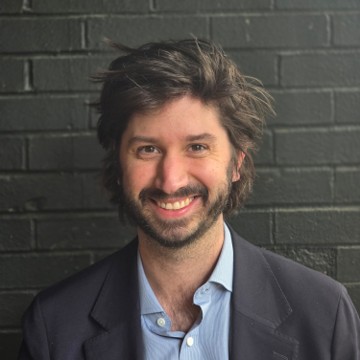
Cooper Stansbury is the Senior Director of Scientific Operations at iReprogram, a biotechnology company working on computational approaches to cellular reprogramming.
Transcript of Episode 95: Cooper Stansbury
Disclaimer: Transcripts are automated and may contain errors.
Grant Belgard: Welcome to the Bioinformatics CRO Podcast. I’m your host, Grant Belgard. Today I’m joined by Dr. Cooper Stansbury, a computational scientist at iReprogram, an Ann Arbor biotechnology company working on computational approaches to cellular reprogramming. Cooper completed his PhD in bioinformatics at the University of Michigan, where his research examined how the form and function of single cells can be understood across multiple scales, from genome architecture and transcriptomics to spatial organization, live cell imaging, and machine learning. His broader work has touched biomarker discovery, automated bioinformatics, and the challenge of determining whether a reprogrammed cell truly resembles and functions like its intended target.
Grant Belgard: We’ll discuss what Cooper is working on now, how his path developed across computation, biology, and biotech operations, and what advice he has for others building interdisciplinary careers. welcome to the podcast.
Cooper Stansbury: Thank you so much for having me. I’m excited to be here
Grant Belgard: For listeners meeting you for the first time, how would you describe your current role or roles and the problems you’re responsible for?
Cooper Stansbury: Great question. Without sounding too cliché, my current role positions me somewhere between the business operations, the laboratory teams, and the software engineering teams. And so my primary role is as a translator. What I need to be able to do is speak a number of different languages and make sure that I’m translating those languages across the aisle. I’ve been fortunate enough to learn a little bit of software and machine learning and computer science, a little bit of philosophy and service, a little bit of business operations, and those things allow me to coordinate the team, make sure we’re all moving the same direction and without friction in order to achieve our goals.
Grant Belgard: What is iReprogram in your own words, and what problem is the company trying to solve?
Cooper Stansbury: That’s great question again. The fundamental premise that we’re targeting is that cells are controllable. At iReprogram, we’re devoted to making cell state programmable with a long-term vision of shifting healthcare from chronic disease management towards engineered biological repair. And so the problem that we’re trying to solve is that right now, three in four adults in the United States are living with some chronic or degenerative condition. These conditions cost trillions of dollars each year in healthcare costs and lost productivity. They erode patient quality of life, and right now they’re largely incurable. So we’d like to address the central bottleneck in developing these cell therapies and the bottleneck that’s preventing these therapies from reaching patients.
Cooper Stansbury: We predict the recipes that help us transform one cell type into another cell type with the purpose of treating chronic disease.
Grant Belgard: Are there parts of your role that would be invisible to someone who only saw the research outputs
Cooper Stansbury: There are. The big picture is thinking about how to achieve the company’s mission and maintain momentum. So right now, there’s a huge amount of momentum in this space both from an investment perspective and also from a research perspective. And when that happens, there’s tremendous opportunity to benefit not just commercial entities like our company, but also all of humankind. And so a lot of what I’m working on is making sure we’re capitalizing on that momentum and propagating it and moving it forward. So we want to be a central driver in sort of the systematic fixes and addressing of the chronic disease issues that we see.
Grant Belgard: What would meaningful progress over the next year look like?
Cooper Stansbury: So our central metric for progress would be calibrating algorithmic predictions to actual results in the laboratory. We are looking to generate a plethora of different cell types using a single algorithm from individual sources. And for us, success at a platform level looks like not just a one-off success in a single cell type, but being able to systematically produce and engineer cell types with the desired characteristics. Right now, we’re focusing on a number of chronic diseases, specifically five of the most deadly diseases in the United States. And our progress is measured in terms of how successfully we can engineer the cell types to address those diseases.
Grant Belgard: How would you explain cellular reprogramming to a scientifically literate listener who doesn’t work in the field?
Cooper Stansbury: I’ll start very high level because I think even from my perspective, even those with a high degree of scientific literacy would benefit from simple analogies. But simply put, cell reprogramming is the practice of controlling a cell’s identity. We talk about cell reprogramming, we often mean can we take a cell of type A and transform it into a cell of type B? And this is most commonly done with specialized proteins called transcription factors, which are the natural genetic switches that control gene expression as stem cells divide to create all of the organs and tissues in the human body. The analogy that I think works really well is to consider a person who, in their youth, could be anything professionally, and then we grow, and we decide to become doctors or lawyers or construction workers.
Cooper Stansbury: And reprogramming, at least direct reprogramming, would refer to can we take a construction worker and change them into a doctor later in life as they’ve already settled into their roles and their careers. They’ve acquired characteristics that make them special and unique and effective in their role. Similarly, cells have specialized roles. We’d like to erase the original identity and replace it with a target identity that has some therapeutic use.
Grant Belgard: How does direct programming compare with approaches that pass through a pluripotent state, and when might each route be preferable?
Cooper Stansbury: Love the question. Fundamentally, direct reprogramming doesn’t pass through a pluripotent state, at least in most cases, to our knowledge. I’ll use another analogy which is understood by many in the adjacent fields of biotech or cellular– molecular cell biology. The landscape, sometimes called Waddington’s epigenetic landscape, is a, a powerful metaphor, and we can picture marbles on, say, a mountainside rolling down the hill and settling in valleys and basins. This is a good metaphor for how differentiation works. What we’d like to do is control the position of the marble, and we can do that in a variety of different ways. In the case where we’re passing through pluripotency, we need to take the marble, we need to push it all the way back up the hill, and then we need to maybe push it in a different direction down the mountain.
Cooper Stansbury: So there’s a huge amount of effort required, and we already know that less than one percent of the effort to push the marble back up the hill is achievable. Even in the best say, fibroblast to iPSC or engineered pluripotent stem cells cases, we’re achieving less than five percent conversion efficiency, which means a small percentage of the cell, they’re reaching their target, and then we’re looking at, somewhere between thirty to a hundred and twenty days to achieve the target cell type after that. Direct reprogramming would circumvent the pass through the top of the mountain and instead either tunnel through the mountain or traverse along the side. It can be more direct. And with that directness comes a couple of key advantages. The first is that you limit your exposure to some of the less desirable properties of pluripotency, like increased risk of tumorigenesis.
Cooper Stansbury: But another really attractive aspect of direct reprogramming is that you could eliminate some of the need to combat the immune responses that are associated with donor-derived iPSC products. So in theory, you could reprogram a patient-specific cell solution for the disease in a much more efficient way. But there are cases where for example, you might wanna create larger pools of semi-stable or intermediate pluripotent states for a different type of use, where the immune problems would be less egregious. So it is case by case dependent, but they are fundamentally different paradigms operating with the same molecular switches in general, such as transcription factors and some supporting media.
Grant Belgard: What makes changing one cell type into another so difficult, both computationally and experimentally?
Cooper Stansbury: There are many difficulties. I’ll speak theoretically first. We just don’t know a lot of the things we need to know We believe that they’re discoverable, but we don’t have the exact mechanistic understanding of how, for example, one transcription factor or one compound would affect the entire genome. That and cells have evolved to retain their identity, to be stable in most cases. So a fully differentiated skin cell has evolved to make it to that endpoint robustly and resiliently across a large number of different organisms. We all have skin, and it looks a little different, but it all functions essentially the same way. It serves as a barrier for the outside world. And so that process needs to be reversed first in order to reprogram a cell.
Cooper Stansbury: You need to shed all of the things that make a cell special, and then you need to navigate a space which is not something that we see in biology, in natural developmental biology, and establish something anew. And that can be very challenging because to use another metaphor or analogy, often we’re shining a light into a dark room. Or to use another analogy, we’re trying to cross a canyon between two lighthouses, and it’s dark, and we don’t know what the canyon holds, and so we need to navigate effectively. And the challenge that we’re facing right now is how do we take the most meaningful steps between those lighthouses in order to get to the second one?
Grant Belgard: Where can computation remove the most trial and error, and where is the bench indispensable?
Cooper Stansbury: We believe that the proof is in the pudding. The bench is indispensable as a tool to show that you’ve done something meaningful in the real world. That said the computational side of things can help us radically reduce what we take into the laboratory. Laboratory experiments are very expensive. They take a long time. They require a lot of nuanced skill and tacit knowledge, and so we need to prioritize what we enter into the lab. We can’t try everything. In the case of reprogramming, we know that small sets of transcription factors can affect cell identity, say one to five transcription factors. And if we consider every combination of five transcription factors, that’s in the trillions of possibilities. It’s just not possible to test everything. And so we need to first predict and triage and prioritize the most promising candidates.
Cooper Stansbury: We then take them to the lab, we test them, we say, “Did this work as we predicted?” And if the answer is no, we’ve got a learning loop and a feedback loop that we improve the algorithm with. And if the answer is yes, we can still ask the same question, how can we improve it further? And that’s how you make progress in this space.
Grant Belgard: Can you walk us through an example from choosing a starting cell type and a target cell type through deciding what to test in the lab?
Cooper Stansbury: Without revealing too much secret sauce, so I’ll keep it fairly high level. A good example might be taking a fibroblast or a skin cell and choosing an intended target like a hematopoietic stem cell or an HSC. Now, hematopoietic stem cells are extremely valuable. They’re somewhat of a holy grail because they give rise to all of the blood and immune cell products that your body needs to survive. That said, there are conditions that prevent immune cells from renewing, and their populations can dwindle in certain disease cases. And because they’re part of the immune system, transplantation is not always an option. You need to match specific characteristics of the donor and the recipient in order to make sure that the stem cell is compatible. So being able to reprogram one from an easily accessible cell, like a skin cell, would be revolutionary and not just for the treatment of disease.
Cooper Stansbury: One can envision lots of other use cases. So our algorithm currently considers three major components. First is the cell state or a characterization of the cell, the initial, the target, and the dynamics that are involved. The second is the chromatin context, so how the genome is folded in order to give rise to accessible and inaccessible regions. And then the third is a map of how transcription factors interact and influence the genome. The idea is that we treat the cell system as a dynamical system. We leverage control theory, which is a field of mathematics, in order to establish a mathematically optimal set of transcription factors, along with their dosage and timing schedules to reach the desired conversion. And this allows us to produce a r- a ranking of candidate recipes.
Cooper Stansbury: So we have a large number of candidate recipes with a large number of transcription factors, and we can run these trials tens of thousands of times against huge sets of single-cell data. And then we analyze the rankings with respect to other biological factors, to cost, to onco gene presence, and to the presence of known transcription factors with roles in the cell type conversion. In the case of fibroblast to HSCs, we might like to see a mix of known and novel transcription factors favored highly. We’d like to see things like GATA2 or RUNX1, things that have been demonstrated in the past to be involved in the natural differentiation process for hematopoietic stem cells and the endothelial to hematopoietic transition, but also in some of the previously successful recipes. We’d also like to see a mix of novel transcription factors.
Cooper Stansbury: For example, chromatin modulators, things like TEAD4 or other transcription factors which we hypothesize may have important roles in regulating either the cell cycle or the ability of the lineage-specific transcription factors to promote their intended consequence. And so we run thousands and thousands of trials, we run a lot of analysis, and then we take a set of controls to the laboratory to evaluate a couple of key questions. The first is we’d like to see that the recipe we’ve predicted to outperform, for example, a known or previously demonstrated recipe, actually outperforms that. And then we’d like to see negative controls that help us calibrate the algorithm further.
Grant Belgard: What evidence do you require before the team can call a reprogramming attempt successful?
Cooper Stansbury: That answer depends on the goal. I will say also it depends on the stage of clinical development. We’re a preclinical company, and so our bars for success are really at the platform level and demonstrating efficacy in multiple cases. That said, in the theoretical sense, to be successful one needs to consider the use case as well. Hair loss and kidney failure have very different costs to the patient. In general, to be successful, one would need to see the identity of the target cell recapitulated. So the cell should look like the identity from a molecular census, from surface proteins, from chromatin accessibility. We’d like as close a match as possible. The second thing we’d like to see is the functional properties are recapitulated so that the cell that we’ve engineered acts like the target and fulfills the same functions and roles. And the third is safety and stability.
Cooper Stansbury: We’d like that the cell that we’ve engineered stays the target without becoming something else or something undesirable long term. But there are lots of caveats and complexities here, and I think they’re very interesting to consider. The first is that we don’t know how close we need to get to the cell’s identity in order to recapitulate the second two criteria, stability and safety or functional properties. We don’t know that the doctor needs to also have the scrubs, for example, in the earlier case of changing someone’s profession. It’s possible that the scrubs are actually not a critical part of what a doctor’s role is. And we’re actively learning how much we need to recapitulate and how much of the original identity we need to shed in order to meet the need. Again, hair loss, kidney failure are very different, and so you need to meet the demand of the target use case.
Grant Belgard: What does a productive feedback loop between your computational predictions and wet lab validation look like?
Cooper Stansbury: Great question. In order to be productive, we need to have high-quality predictions, things that we believe in, that are trustworthy, that are reproducible, and we need a high quality of benchwork. Those two things establish data which can be used to calibrate and also identify our mistakes. Calibration for us is about making sure that the recipe ordering that we predict is correct across multiple use cases. And we can compute fairly directly how close we thought we’d get to how close we actually got in the lab. But we need to iron out all of the little things, the devils in the details they say in benchwork, in order to make sure that is as comparable as possible. And if the ratios are right, we need to further improve the algorithm to not just get the ordering and the rank ordering right, but actually get the magnitude of difference correct. And that’s what I mean by calibration.
Cooper Stansbury: But we also want the feedback loop to be cost-effective, to be fast and easy to execute so that we can do it a large number of times. And that’s one of the primary efforts of our current company is to systematically and mechanically improve the way in which we search for these recipes and provide feedback to computational systems.
Grant Belgard: Where are computational models of cell state most likely to be confidently wrong?
Cooper Stansbury: I think in the points between the two lighthouses. We’re measuring a huge number of cells, and with each successive year, we’re getting more and more granularity and more and more detail as to what separates and defines cells of different types. But when we think about the landscape or the mountain, what we’re doing is we’re really cataloging the cells that we see in nature. And often and this is changing a little bit, but we’re not cataloging the cells that are engineered or the spaces between the cells which exist in nature. And computational models are very good at interpolating, but without full knowledge of the terrain? It can be very difficult. So a computational model will put forth an answer, say, this is what the transcriptome of a cell between A and B might look like.
Cooper Stansbury: And it will be very confident, but there are hundreds of possibilities, and the trajectories that we believe to be at work and the forces at play are likely nonlinear and to catalog, which of those nonlinearities is realized or realizable in practice is non-trivial. So I would say in guessing at what an intermediate outcome might be is a place that cell states are wrong.
Grant Belgard: How do factors such as cell source variability, delivery method, culture conditions, and intervention timing change the prediction problem
Cooper Stansbury: From our end, everything is driven by the data we’re performing thousands and thousands of trials where we’re trying to consider as much of the source variability as possible, from a lab-to-lab variability, from a cell-to-cell variability, from a cell type or a cell line variability. We know that timing and dosage are critical factors in the attempt to successfully engineer things as we intend to. And so we model that very specifically. It’s one of our primary outputs is establishing the dosing and the scheduling policies in order to convert cell types, culture conditions, and the policies and schedules for those are less clear, but they’re an active area of research and development at our current company. And I guess put succinctly, everything depends on the input and the output, where you’re coming from and where you’re going, and the dynamics in between.
Cooper Stansbury: We try to consider everything as much as possible based on the most recent information. We know that there are some gaps, and we’re working to try to fill those gaps.
Grant Belgard: What are the key trade-offs among predictive accuracy, interpretability, speed, and experimental cost?
Cooper Stansbury: Predictive accuracy for us is the number one thing. We can accept a longer time to compute results, a larger number of results at the expense of making a wiser prediction. The experimental time directly in-influences the entire endeavor. So when we talk about the feedback loop earlier, one of the things we wanna do is we wanna shorten that cycle so that we can get feedback as quickly as possible. If the algorithm were to take months and months to establish a small set of factors, and then the experiment were to take six to 12 to nine months, it would be very slow for us to get meaningful results. So the trade-off is that we try to optimize everything for speed so that we can fail fast and learn from our mistakes. But our focus and our commitment is to making sure that the accuracy of the predictions is as good as it can be.
Grant Belgard: Where should manufacturability safety, scalability, and regulatory constraints enter a cell reprogramming program?
Cooper Stansbury: The path towards clinical application is a critical piece of the puzzle. It’s what separates a one-off scientific endeavor from a systematic path to making this work. Said another way, if you can be very successful under a very strict, hard to reproduce set of conditions it might not be commercially viable. That said, we occupy a space of software first enabling platform technology, and there are lots of companies and entities out there that are working on other pieces of the same puzzle. And as is common in most of the biotech and sort of bioinformatics spaces, one can’t do everything alone. We’re specialists in one area, and we know that there are specialists in other areas that can help us optimize those processes
Grant Belgard: How useful is the phrase digital twin for describing a computational model of a cell, and what would such a model need to do for the phrase to be accurate?
Cooper Stansbury: I think digital twin is an ideal. It’s an ideal that there’s a lot of momentum around right now as well. The reason that we might pursue the ideal of a digital twin or a fully computational model that recapitulates all of the aspects of a real cell is that if we can achieve the fidelity that we’re after, we can, in theory, reduce some of the time and cost and effort required to experimentally validate things, at least somewhat. Never entirely. Again, the proof is in the pudding. But the ideal exists because, in theory, it allows us to iterate and discover much more effectively and much more quickly. In order to be useful, then we have to recapitulate all of the pieces of the cell which matter for our intended goal. For us, this would mean not only the gene expression and the dynamics, but how they respond to change. We would need to know surface markers and chromatin accessibility.
Cooper Stansbury: We would need to know how cells evolve long-term after a perturbation, and not just an impulse response. But cell state is constantly evolving. It’s multi-dimensional, and a digital twin, to be fully realized, would need to capture all of the major aspects of cell state, morphology, molecular census, behavior niche and participation in tissues, et cetera.
Grant Belgard: Where can AI agents improve bioinformatics today, and where are they more likely to add risk, noise, or false confidence?
Cooper Stansbury: I think that AI agents are helping us synthesize and access information much more quickly. It is difficult in bioinformatics and in the biotech space to gather all the information you need about the mathematics, about the cell, about the experimental protocols in order to gain a holistic picture. An AI can help us target information and synthesize that information in a way that is beneficial to us. I think that’s also the danger. The danger is that the critical details or the details that matter the most are not necessarily going to bubble up to the top of your summaries. You might get some critical factors, but the critical factor might be missing. And so a danger is that we stop thinking on our own And that we allow and trust the models to recapitulate something that is incorrect or fundamentally flawed
Grant Belgard: Can you tell us about your path into computational biology?
Cooper Stansbury: I came here mostly by happenstance. I studied philosophy as an undergrad. I took a lot of math and physics. I thought that was gonna be my path. And at some point, I was reading a lot, and it made more sense to me to study philosophy. And when I graduated, I told my mother, “I’m never going back to school,” and she laughed at me. Said, “Ha ha. We’ll see.” I spent a couple of years in different types of positions in the industry ultimately doing some work in some technical spaces and operations spaces and found myself bugged by this insatiable curiosity again, and I started, like, reading a ton, and it led me somewhat interestingly to statistics and data science. So I studied statistics and data science, and I was fortunate enough to receive some funding from the university that propelled me further.
Cooper Stansbury: And I landed at biology because the fundamental problems of computer science and artificial intelligence were not as interesting to me, like philosophically, as the problems of biology. And I thought they were amazing tools and necessary tools in order to answer questions that I might have about the world, but I’m a curious guy, and biology is this treasure trove of unsolved problems. And the tools that I’m learning about, over the last two decades are really exciting and really new and may help shed light on those interesting problems. So I wound up here because there are really great questions and because there’s really great opportunity.
Grant Belgard: What have been the key decisions, chance events, and relationships guiding your path?
Cooper Stansbury: The big decision was as a late 20-year-old with a fairly stable career to step away from that and go to grad school. A lot of people do this but you’re sacrificing stable income, weekends, and a lot of other nice things that come with long-term stable employment. And it is a big sacrifice, especially if you do it a little bit later. So that was a big decision that I made that sort of shaped where I landed. Other than that, I would say it’s mostly happenstance. It’s saying yes to things. It’s being open to things. It is letting the people that you trust guide you. And so I was fortunate enough to meet a number of people in my career that encouraged me to do things that were exciting and novel and encouraged me to take chances, and I think that kind of support is really important in getting where you end up.
Cooper Stansbury: The very first statistic class that I took was like a business stat class, and it’s all about T-tests and other fairly simple things that we all are doing in our sort of day-to-day analysis of laboratory data. And the professor was at a community college, and so I would say ninety-nine percent of the people in that class are really fighting to change their lives. And most of them are in that class because it’s a requirement for some other degree. Most people are not taking a statistics class at a community college because they’re, like, curious about statistics. Day one, they say, “Who’s here ’cause they wanna be?” I raise my hand. I’m the only person in the class raising my hand, and I was like, “Oh, oops.” And this professor just worked with me and worked with my curiosity and allowed me to push my personal envelope maybe further than the structure of the class.
Cooper Stansbury: And then encouraged me and helped me apply to grad school thereafter. And I think that kind of support and encouragement is one of the reasons I’m here. But there are a number of powerful figures in my more recent history that have taken a chance on me, and it’s really paid off. I would say that I am a somewhat non-traditional student in the lab that I ended up as a PhD student. I’m a little bit older, and my background is a little bit more hectic and scattered. And I think that my PhD advisor and my committee allowed me to, within the constraints of the research that the lab was doing To be as much of myself as possible. To answer questions a little bit more philosophically, to take a larger view and to take a step back. And I think that freedom also enabled me to stay engaged, which is a really critical part of doing doctoral research and also maintain my curiosity.
Cooper Stansbury: There are worlds where your mentors don’t allow that in you, and I think it’s rare and awesome when the people around you let you be the best version of yourself while developing the weaker versions of yourself. So my thesis advisor, his wife, and my committee were really good about that, about guiding me without forcing me.
Grant Belgard: How did your relationship with iReprogram develop and how have your responsibilities there evolved?
Cooper Stansbury: I came out of the lab that iReprogram was invented in. So my thesis advisor and some of the members of the committee started the company, and during my postdoctoral research, I engaged with the new company leadership and felt that it was a good time for me to transition from the academic space into the industrial space. I started as a director of scientific operations, and I’m the senior director of scientific operations now. My scope has grown. Originally I was very center lane focused on developing materials, scientific thought, and disseminating information across the organization. And the more I’m involved now, I am leading the laboratory teams, including the build-out of a lab and coordinating with the software engineering teams. So I came out of a computational space.
Cooper Stansbury: My first impacts were on the software side, and I’m trying to grow and make sure that the team is harmonized and coordinated and working towards the same goal.
Grant Belgard: Anything unexpectedly different about doing science in a small company versus in a university research environment?
Cooper Stansbury: Yes, but I wouldn’t say unfamiliar. And this is just because I have some history before my academic tenure. I would say the pace of the industry is something that I love. We have clear goals, we have clear milestones, and we’re racing towards them. And that, that’s really exciting because it’s not about necessarily how deeply or how completely you can answer a question, but how sufficiently you can answer a question given finite resources. And to me, that challenge is very exciting. I have said a number of times in my life that creativity is born out of constraints. And so if you have a very small box that you’re allowed to play in, you have to think very carefully about how you want to conduct that business and how you wanna achieve those priorities. You can’t just do everything.
Cooper Stansbury: And in a way, I see that as, as rigorous as sort of the completeness that’s required on the academic and research side is it’s just as intellectually stimulating to figure out how to do something with ten dollars as it is to fully finish the problem with a hundred dollars. And I think there’s a really nice challenge in that.
Grant Belgard: How do you determine when a computational method’s ready for routine operational use rather than needing to stay within research?
Cooper Stansbury: It has to work over and over again, and it has to work at scale in order to be appropriate for production world. It is not enough to show the proof of concept. You need to continuously improve it, and it needs to operate at a scale that facilitates the need of the business. So again, the boutique hard-coded values that you might find in a research software platform are often assumptions that were made to solve a very specific problem. So you need to always be questioning the assumptions. You need to always be improving the speed and the components of the software engineering practices, and you always need to be aligning the outcome of the software to the company’s goals, missions, and milestones. Said another way, I think that a lot of academic projects are extremely exciting because they show something for the first time, but it is often a first draft.
Cooper Stansbury: And professional writing comes with deleting and modifying and rewriting until you have something that can stand on its own, that’s been reviewed by many software engineers, and that’s not only stood the test of time, but shown its validity in the real world, which ultimately is experimental validation.
Grant Belgard: What makes a cross-functional meeting involving computational scientists, experimental biologists, software engineers, and business leaders productive?
Cooper Stansbury: People listening to one another Is at its root, and from my perspective, the single thing that we can do as a team in order to move the needle. There are lots of people with lots of really good opinions and a lot of really smart thinking, and they exist everywhere. There are a lot of smart people in kitchens. There are a lot of smart people on construction sites. And if we don’t listen to one another, or if we’re resistant to the expertise or ideas or creativity of somebody in a different position, we run the risk of missing really great opportunities. So it’s about humility. It’s about communicating. It’s about patience. And ultimately, it’s about listening. But there’s always a chain of command, right? With any structured organization, there is a set of direction that is provided by those that have done it reliably and well. That’s why they’re in those positions, and that’s respected.
Cooper Stansbury: I think that we have to all march towards the same goals. That’s an important aspect of having productive meetings. Make sure we know why we’re in the meeting, and make sure we know why we’re in meetings in general. Make sure we know why we’re in business. But in the meeting, I think it’s about listening
Grant Belgard: How do you communicate uncertainty without either paralyzing the team or making the evidence sound stronger than it is?
Cooper Stansbury: Gotta know your audience. Uncertainty can be like metaphysical in that we’re hypothesizing a thing and that nobody has a concrete answer, or that those that have an answer haven’t fully validated their answer. Or it can be a range of values where we expect something to fall with some amount of probability. So there’s different amounts of rigor and communicating uncertainty depends on the thing that’s being communicated and who’s hearing it. I think that Ultimately, when we talk about uncertainty, what we care about is risk and understanding the effect of that risk and the impact of that risk. And so it’s really important to, again, put the uncertainty in the context. Is it an uncertainty with a patient’s life or a patient outcome, or is it an uncertainty that the algorithm’s version has changed some prediction meaningfully?
Cooper Stansbury: Those are very different, and they can be quantified differently, and the people hearing them need to hear the results communicated differently. I know I’m saying a lot of it depends, but I think truly it does depend.
Grant Belgard: Which traits make someone especially effective in a small interdisciplinary biotech?
Cooper Stansbury: Initiative is a concrete one. In small teams, there’s lots to be done. There’s more to be done than there are people to do. And your real options are put it off or do it now. And the really effective people on small teams are the do-it-now type people. They see that there’s a thing that needs to be doing, and instead of waiting to be told, they start to do it. So I think initiative is an invaluable skill. But also forward-thinking. Many people play chess and many people play the best move on the board, and many people can play the best move on the board in the opening, but it’s much less clear to see how the position will impact the end game, to use another analogy. And so thinking very clearly about how your decisions might impact the future configuration when that’s subject to change is a skill that’s, I think, also very valuable. I think it relates to initiative, too.
Cooper Stansbury: How do you prioritize which pieces to put on your desk and solve today versus shelve and handle tomorrow?
Grant Belgard: What advice would you give someone who wants a career spanning computation, biology, and real-world scientific translation?
Cooper Stansbury: The fundamentals matter. Learn the simple stuff well. I think that especially as artificial intelligence is becoming ubiquitous and giving us sort of this democratic universal access to information, that understanding deeply the simple things are really important. But that said, the academic world prioritizes technical ability, and I think that’s really important. Those fundamentals and those skills are invaluable, and it’s a prerequisite. But there’s a human element to translational science as well, and those skills are often not taught. And so you have to learn how to take feedback well. You have to learn why the PowerPoint you made isn’t good enough. You have to learn what the person listening to you needs to hear, not what you need to say.
Cooper Stansbury: And there are lots of softer skills about mentorship, about changing ourselves and introspection that are important in translational science, and perhaps more important than the technical skills. I do think the technical skills and the fundamentals are a prerequisite. I don’t think you can make your career on a shoddy foundation. But I think if you neglect the human element that you’re also prevented from growing in maybe all the ways that you could
Grant Belgard: Speaking of AI, how can trainees use AI without underdeveloping their own technical judgment and scientific reasoning?
Cooper Stansbury: Such a deep question. I’ll get philosophical for a quick moment. I fundamentally believe that as our tools and our knowledge grow, that the next generation is not tasked with atrophy as much as creative application of the tooling. When I was coming of age, they said concretely in the classroom, “You won’t have a calculator in your pocket at all times.” And that isn’t true. So similarly, in the times of yore, we had to memorize Homer’s Iliad, and then we learned how to write it down so that everyone could have access to it. I think that these tools, rather than stifle us, they demand a higher level of thinking and the next level of creativity and application. So instead of saying, what does it do to damage our trainee’s ability to access the fundamental truths, we can ask, what can they do now that their hands are free?
Cooper Stansbury: And I think that is how I view technological improvements, is it’s an ability for us all now as a species and as scientists and as business operators to take a much bigger step forward, but we have to stop thinking about how it might be holding us back.
Grant Belgard: What advice would you give your younger self?
Cooper Stansbury: I’m not sure I’m old enough to do it yet, but I got some advice, maybe at the time I was ready to hear it in my mid-twenties, where a professor told me the content in the classroom is not the thing that Cooper needs to learn. It’s how to play well with others. And I think maybe the focus on those human elements a little bit earlier could have been really valuable. To myself, I would read more, and I would read more philosophy, and I would read more things that are really interesting to me because the things that are interesting to me, and to anybody who’s studying something deeply will help you get where you’re going, I think more directly than suffering through things that are hard to read or not interesting. Obviously, one has to do the, the latter. There are– there’s lots of important information that’s written poorly and inaccessibly and that you need to know.
Cooper Stansbury: But alongside that, you could be reading poetry, or you can be reading comics, and those things will influence your thinking in ways that are productive.
Grant Belgard: What’s the biggest bottleneck the cellular reprogramming field needs to solve next?
Cooper Stansbury: Speed of the feedback cycle. Right now, laboratory experiments are insanely expensive. Even though single-cell transcriptomics has dropped by a tremendous amount in terms of its cost and its inaccessibility, people can sequence now, it’s still very expensive to catalog a large number of cells very deeply. It also takes a lot of time, and it takes a lot of skills at the bench. Those things are changing, but we can’t wait six months. We can’t wait two years to get one set of results. We need to radically improve the speed that we’re getting feedback back to our algorithms so that, to use the same analogy, we’re not just clicking the flashlight on once and trying to catalog the entire room, but let’s systematically study the room and let’s get where we’re going
Grant Belgard: Which unanswered scientific question do you most hope the field resolves?
Cooper Stansbury: The first is whether every cell has the same ability to be reprogrammed We know that cells are heterogeneous in a cell system, and we hypothesize that some may be more ready or primed than others, but we don’t yet know if every cell in that system can be reprogrammed or if it is able to be reprogrammed. And I think that’s a very interesting question that has really concrete– the answer has really concrete benefits to the science But the answer that I’m interested in is what does it take to control a cell? I think that changing a cell’s type is one application. But modifying the characteristics of a cell reproducibly and precisely as an engineering discipline stands not just to benefit every living person and everyone afflicted with chronic or degenerative diseases, but it has the potential to do something further, which is allow us to prevent, allow us to improve.
Cooper Stansbury: And if we really consider the fundamental problem of controlling a cell as like the unsolved thing, then I think what we could achieve by solving that problem is almost unimaginable
Grant Belgard: What are you most excited to learn next?
Cooper Stansbury: I’m excited to learn how to be more patient with myself. How to take breathers and how to protect my ability to make decisions in the fray in order to make better decisions. I think that is the thing that I’m looking to improve in myself. But I am really looking to close the gap between what we can predict and what we can achieve, and I’m really looking to improve the speed at which we can do that. Those are things that require a lot of different concrete pieces of learning, but from where is the equipment positioned in the lab to who’s working in the lab to how frequently do we provide feedback back to the software engineering team. All those things matter.
Grant Belgard: Cooper, thank you so much for joining us. It’s been a fascinating discussion and great learning about iReprogram.
Cooper Stansbury: Thank you for having me.