The Bioinformatics CRO Podcast
Episode 77 with Ewelina Kurtys
On The Bioinformatics CRO Podcast, we sit down with scientists to discuss interesting topics across biomedical research and to explore what made them who they are today.
You can listen on Spotify, Apple Podcasts, Amazon, YouTube, Pandora, and wherever you get your podcasts.
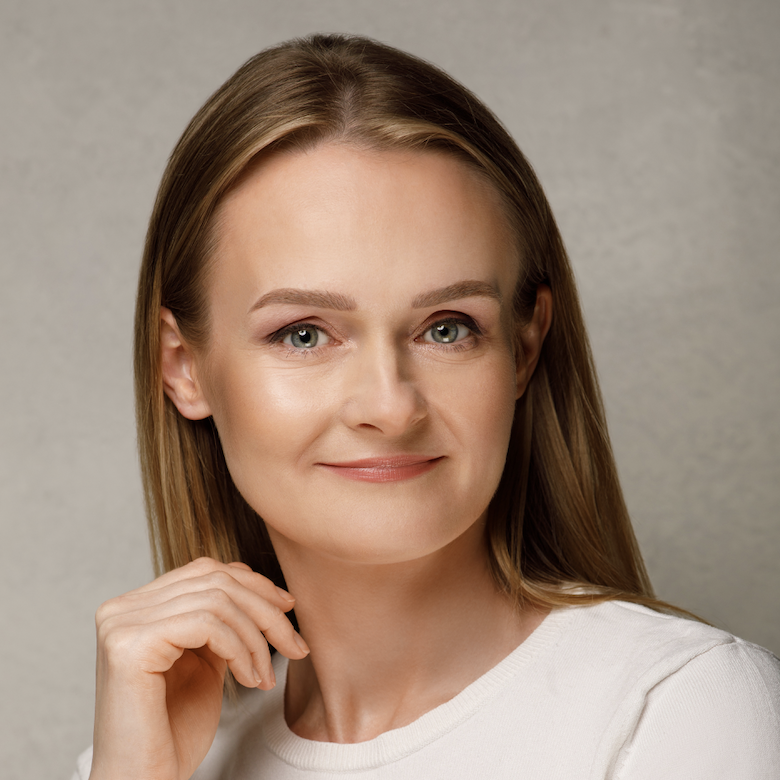
Ewelina Kurtys is a neuroscientist at the biocomputing startup FinalSpark, which is working to create a bioprocessor from human neural organoids.
Transcript of Episode 77: Ewelina Kurtys
Disclaimer: Transcripts are automated and may contain errors.
Grant Belgard: Welcome to The Bioinformatics CRO Podcast. I’m your host, Grant Belgard. Today we’re exploring wetware computing, living neural networks as computing substrates. Our guest, Dr. Ewelina Kurtys, works with FinalSpark, a Swiss biocomputing startup building a remotely accessible neural platform where researchers run experiments on human neural organoids connected to electronics and microfluidics. Ewelina’s background spans pharmacy, biotechnology, and a neuroscience PhD with postdoctoral work in brain imaging before moving into industry and startup work, bridging AI, neurotech, and business development. We’ll cover her current work, the path that led there, and advice for anyone curious about this new frontier. Welcome to the show.
Ewelina Kurtys: Thank you so much. Very happy to be here.
Grant Belgard: So for someone hearing about wetware computing for the first time, how do you explain what you work on and why it matters?
Ewelina Kurtys: So we are trying to build computers using living neurons, the same as we have in our heads. And the reason why we do this is because the neurons are 1 million times more energy efficient than digital computers. So we want to solve the problem, which is now emerging, that artificial intelligence, the silicon one, digital, is using exponentially increasing amount of energy. So this is a problem which is growing and many people are searching for solutions. So there are two ways, basically either alternative energy sources or alternative computing, and we are working on the second option on alternative computing. So we try to program living neurons so that in the future we can build biocomputers, which will have as a heart, as a processor, living neurons.
Grant Belgard: When you say programming living neural networks, what does that look like in practice today?
Ewelina Kurtys: So we know that neurons are producing spikes, which can be measured by electrodes as a current, and this is the way of communication of neurons. So in the lab, we can put them on electrodes and we can send them electrical signals and we can also measure the response from neurons. And actually the response from neurons in real time, you can see on our website, finalspark.com, there is section live. So you can see really how it looks. This is spikes, this electric activity of neurons. So we basically try to send them electrical signals and we measure the response and we would like that there is a sense between this input and output. So we would like to be able to program them in such a way just by sending them some signals and measuring what they answer.
Grant Belgard: So what elements of that are feasible with today’s technology and what still feels out of reach?
Ewelina Kurtys: Well, it’s relatively feasible to put neurons on electrodes and to measure the activity. Let’s say it’s something what is already established in the scientific world and technology. So technology is ready for this, but we don’t know how to program neurons. So we don’t know how to make sense of these signals, which we send to them and which we receive. So that’s the biggest challenge currently in biocomputing.
Grant Belgard: And so is there a way to tell if a neural culture has learned something or is that still in the future?
Ewelina Kurtys: Yes, it’s difficult. At the moment we do really simple experiments, the basics. For example, we just want that neurons increase the activity or decrease the number of spikes they produce. So this is the most simple task you can give to a living neuron. And yes, so this you can measure very easily. If they behave as you want it, that means they learned something, but this is still very difficult and not fully reproducible.
Grant Belgard: And as a readout, are you focused exclusively on spikes or other phenotypes?
Ewelina Kurtys: No, on spikes always. And actually you can measure them in many ways. You can measure them just as an occurrence, yes, no, just as this is called spike train. So you just have a series of dots over time and every dot is representing one spike or you can measure the shape of the signal. So in this case, you sample more data. So you can get exact signal how the voltage is changing over time. But we do measure only actually electrical signals from neurons, yes. We can measure also some other stuff, like for example, the color of the medium, which is the liquid in which neurons are immersed, but this is more for monitoring.
Grant Belgard: How do you structure input/output and what forms of reinforcement have you found meaningful so far?
Ewelina Kurtys: The most simple reinforcement is just sending the impulse, electrical impulse, but we also developed other methods. So we know that neurons are also communicating via neurotransmitters in the brain and we try to reproduce this in our lab. So for example, today you can stimulate neurons with dopamine to reinforce the behavior, which is considered as a reward, the dopamine signal. And we do this in such a way that we chemically neutralize dopamine. Then we put it in the medium in the liquid in which neurons are immersed and then by just putting the UV light, we can activate the dopamine. So basically cells get immediate treatment from dopamine. And this is, this is used also to communicate with neurons and to reinforce the behavior if they do what we wanted.
Grant Belgard: What are the biggest problems you’re focused on solving right now?
Ewelina Kurtys: Yes. So there are many problems. One of the big challenge is how to keep neurons alive for a very long time because we want this biocomputer to be robust. And we know from nature that neurons can live up to a hundred years even because those which we have in our brains, they are usually the same for through the, our lifetime, especially during adulthood. So for now we can keep them alive on electrodes for three months, which is quite a lot considering the industry standards, but it’s still not enough for what we wanted. But the biggest challenge is actually programming neurons. So how to learn, how to interact with them in a meaningful way. And the biggest problem here is because nobody knows really how neurons encode information. So we know quite a lot that they producing spikes and then how they process the spikes, but we do not know what they really mean.
Grant Belgard: And is all this 2D or are you looking at 3D systems?
Ewelina Kurtys: So the data is 2D the voltage over time versus time, but the structure of neurons, which we have is actually three dimensional because we are using neurospheres. So these are around structures of the neurons around half millimeter diameter and they are in 3D. So yes, so the neurons are quite complex. However, the electrodes are only on the surface.
Grant Belgard: How do you think about reproducibility for something like this?
Ewelina Kurtys: Well, that’s quite simple. You just have to do experiments many times and then you have reproducibility if you get the same results over time. But this is very challenging because neurons are not stable system. They are dynamic. So that means that responses can change for the same signal. So this is still challenging. But every time we say we have some results, it’s only if we have repeated them many times. So for example, we managed to store one bit of information in neurons. So that means we have done this many times, but we have done also a lot of things which were working maybe one or twice, and then we don’t report them.
Grant Belgard: When you were starting out, you were comparing energy use and efficiency to digital systems. What’s a good apples to apples way to compare energy usage of biological neurons to artificial neural nets?
Ewelina Kurtys: Well, it’s still a bit tricky to compare, but we can have some ideas about the brain efficiency by neurons efficiency by looking at the human brain. So actually all of what we assume about biocomputers today is based on our observation of the human brain. And we can see that human brain can run on 20 watts is quite low energy consuming. But if you would like to reproduce the workings of the human brain with digital computing, you would need a small nuclear plant. So all these ideas about efficiency of neurons are based on what we see in the human brain.
Grant Belgard: What milestones would convince a skeptic that wetware’s more than a curiosity?
Ewelina Kurtys: Well, it’s not only for the skeptic. I think it’s also for us and for everyone who is following the field. So our milestones, first milestone, which is for the next two, three years after we receive investment, because we are currently considering accepting an investor, we are searching for 50 million Swiss francs, which is around $50 million, let’s say more or less. And with this investment, we can have tight timeline because for now we are self-funded. So everything can take longer, but assuming the investment, we would like to solve the problem of learning in vitro. So the problem I just described that nobody knows how to teach neurons something, how to encode information also. So we would like to do basic algorithm into three years. And after the next around three years would be advanced algorithm, because we would like to match the performance of digital computing.
Ewelina Kurtys: And the last milestone would be scaling because we would like to, of course, be able to build huge structures of neurons, much bigger than human brain, whatever it will be technically possible. And we assume that the biocomputer will be ready in around 10 years. And this will be so-called bioserver. So this will be a computer which will be available remotely as today you can access cloud computing. So that’s the idea which we have in mind. It’s just the difference will be that it will be much, much cheaper. So for example, maybe you will be able to run ChatGPT or something similar on the living neurons, but it will be much, much cheaper because of this lower energy consumption.
Grant Belgard: I’m just thinking about how you typically staff a data center and what very different skills might be required for a wetware data center, right? Your DevOps engineer role would look very different if you’re having to care for living cells. How might that look in practice from the perspective of the engineers running the data center?
Ewelina Kurtys: Well, so yes. So biocomputer will need a little bit different expertise, but we hope that everything will be automated. So now we, of course, do a lot of things by hand, but in the future, we hope it will be all automated facility and I’m sure it will happen. But what you need for running biocomputer is definitely biology knowledge. You have to know something about living neurons, how to keep them alive for a very long time. So of course, coding in digital computers is important because everything is connected to digital computers. However, you need to compliment this with the biology knowledge about how to keep living neurons in the proper condition because they are very demanding. They’re very fragile as living cells. So you have to keep temperature, pH, everything perfect for them.
Grant Belgard: Where might wetware make the earliest real world impact?
Ewelina Kurtys: So we believe in generative AI because it’s very energy consuming and also because we believe that human brain is very good at solving complex problems, generating ideas. So if you use the living neurons for that, it will be working much better. That’s what we believe.
Grant Belgard: Definitely more efficient. What collaborations are most valuable for you at this stage?
Ewelina Kurtys: So for the moment where I would say we maybe, I don’t know if you can call it collaboration. Well, we do collaborate a little bit with the hardware, some hardware providers because we need, for example, some systems for electrodes for living neurons. But what is most important is the maybe more that we give our access to our lab for free or paid access. So for free, we give it to universities. We have accepted nine universities from 34 applications and we prioritize those who have the biggest chance to publish. We also have, which is a surprise for us, we didn’t plan for this. We also have clients who pay us for subscription to get access to our lab remotely because everything in our lab you can do also remotely. You don’t have to be in the lab in Switzerland.
Ewelina Kurtys: And we have this because during COVID our engineers have developed all this remote system to access the lab when they couldn’t go physically. But later we decided to use this opportunity and invite universities to collaborate. And also we got a lot of requests and we started to open paid subscriptions for private clients.
Grant Belgard: That’s really interesting. Yeah.
Ewelina Kurtys: So that’s very important for us because it gives us some revenue and also it gives us some kind of recognition, maybe appreciation to our work because this is emerging field. So still many people don’t know about the bio-computing.
Grant Belgard: What surprised you the most since you started working with neuronal cultures as computing elements?
Ewelina Kurtys: I think the most surprising is how difficult it is to program neurons. I know that people from many years try to figure out this on many models. Also there are a lot of physical models which are not using living cells, but some models of living cells, living neurons, and it’s still nobody knows how neurons encode information. That’s amazing. That’s so difficult.
Grant Belgard: What do people outside the field most often misunderstand and how do you correct it?
Ewelina Kurtys: I think what people don’t understand sometimes they say that we build a human brain in the lab, so that’s not what we do. I think it’s important from ethical perspective because we don’t try to reproduce human brain in the lab. We just use the same building blocks as in human brain, which are living neurons. So this is a big difference. I think because of the anthropomorphic bias, people often see human traits in everything. So of course, if we use human neurons, then people think, oh, is it conscious? Can it feel? So these are actually important ethical questions, although I think they are more raised for general public than for really philosophers or ethicists. I think this requires some thinking from philosophers. Of course, we are happy always to get suggestions and also we hope that we can use some work of philosophers to also kind of answer all these difficult questions.
Ewelina Kurtys: But it’s normal thing that every new technology is always raising some concerns and some surprise in some people. So yes, this is important to address this, but I think philosophers can do this much better. And we actually try to encourage many philosophers to work on biocomputing. We have done a lot of effort. Last year, I was at a conference in the Netherlands about ethics in technology. So we try to reach out to this kind of philosophers who could be interested to work on these topics. I think it doesn’t matter at this stage. We are using human neurons because it’s the easiest to produce at the moment because today you can get stem cells which are commercially available and they are derived from the human skin. So we can produce huge amounts of neurons quite easily. And yes, we could also use animal neurons. Absolutely. At this stage of the project, it doesn’t matter.
Grant Belgard: If you suddenly had a tenfold increase in stable high quality cultures, what would you do that you can’t do now?
Ewelina Kurtys: Well, we would run experiments longer because our lab is fully automated. So we can run experiments 24/7. But of course, because neurons usually live up to three months, you cannot really maybe run this longer. So I think it would be easier to make long-term experiments. That’s first. And the second, the maintenance of the lab would be easier because every time neurons die, we have to exchange them. It’s quite efficient process, but still it would be easier if we don’t have to do this too much.
Grant Belgard: How do you think about the balance between advancing the biology, so getting higher quality, more robust cultures and pushing the tooling that you’re using, electrodes and software and so on?
Ewelina Kurtys: I think both are important. I think definitely the second one is much easier, but keeping cells alive and making sure we have… There’s a lot of questions we can have about how to culture neurons and how to do this. So biology is, I think, much more complex. Engineering is just a matter of time. Of course, resources, we are a very limited team because we are just six people. So of course, we are also limited by this, but let’s say our engineers are so excellent that it’s a matter of time to build stuff. However, biology is just… It’s not only of being good or not, it’s just biology. It’s complex and sometimes you just have to do a lot of trial and error. So this is, I think, much more difficult.
Grant Belgard: So when did you first get interested in this interface of biology and computing?
Ewelina Kurtys: So I actually… No, I did my research in neuroscience. So that was totally different field, pure biology. But I did also research in medical imaging because I was doing brain imaging mainly. So my first job in industry was medical imaging service. I had a little experience there. And in medical imaging, you use a lot of AI. At that time, it was hype. It was hot topic. So I learned this way about AI and I get interested in that. And I had a chance at the time I was living in London and I had the chance to attend many different events, networking. I was also doing business development. So I was interested in connecting to people. And I attended AI Summit in London, which was, I think, 2019. Then I met the founders of FinalSpark. And I get interested because it’s not easy to combine or also to go outside your field.
Ewelina Kurtys: So I said, okay, if they try to build computer from living neurons, but they are engineers, then that must be interesting. So I decided that it’s a cool project because generally I always look at the people because every topic can be interesting or not, but on the daily basis, it all depends with which kind of people you work with. So I think every topic can be good, but it’s just mostly the people. But what I’ve noticed is that when you look at the very deep tech research, usually you have nice people to work with. So that’s why I’m in this field.
Grant Belgard: Looking back at your own degrees in training, what experiences most uniquely shape how you approach problems in this field since this field is so multidisciplinary?
Ewelina Kurtys: Well, I have to say the PhD experience for sure, because it gives you a chance to do independent research. But also before PhD, I did some projects. So it always depends on how much autonomy I had in the lab. I think I learned a lot about this. And also I get the confidence. That’s important because that I realized that I really can solve problems and it works what I do. So it gives you its confidence boost is important. And then when I left academia, then actually maybe setting up my own company in the UK because I work within FinalSpark as a consultant. So I think that gave me a lot of experience and it’s always, yes, it’s amazing, always adventure when you can do things by yourself, even if they’re very small, but trying to organize, let’s say life in your own way is the best you can do, at least from my experience.
Grant Belgard: What did you learn from the business facing roles that scientists often overlook?
Ewelina Kurtys: What I learned, I think the biggest lesson was what I learned as a scientist who left academia is that it’s not so much important to be smart, but what is the most important is that likability that people have to like you. And actually every deal you make in your life depends on whether people like you, not whether you are so smart or not. So I think this is a very big mistake, which maybe especially academics are doing because they think it’s all about technical skills and being clever. But of course, some thresholds you need to pass, you have to maybe pass some minimum, but all the rest is all about, I would say, likability. It’s a lot about, you know, talking to people and everything who usually works if you get a good connection with the clients. So I think that’s extremely important.
Ewelina Kurtys: Let’s say this mental part of the work, not so much technical because technical is easy way, you know, after PhD is easy, but mental part.
Grant Belgard: How do you evaluate opportunities in emerging fields with high uncertainty?
Ewelina Kurtys: Well, you mean opportunities, what are the job opportunities or opportunities for us as FinalSpark?
Grant Belgard: Either.
Ewelina Kurtys: Either. I would say the job opportunities are at the moment quite slim. So if I would be an engineer and you know, thinking about biocomputing, I wouldn’t focus only on this. I would rather think more broadly on the emerging fields because there is a lot of things growing on the intersection of neuroscience and engineering. So there are a lot of stuff, but it’s not only biocomputing, it’s also, for example, brain computer interface or some other stuff. So I think it’s good to look at this more broadly if someone is interested, of course, how to combine biology and engineering. And there are a lot of projects, but if you focus only on biocomputing, it’s quite difficult because to our knowledge, there are only three companies in the world who are doing this and all of them have limited resources. So yeah, it’s quite difficult to be on in this.
Ewelina Kurtys: But I think if you like biology, if you are fascinated with biocomputing, you can also do something similar like brain computer interface, for example, or maybe neuromorphic computing, you know, depends on how much engineering, how much biology you prefer. And so that’s about opportunities, the jobs and yeah, we get a lot of actually questions from interest potential and from potential coworkers. But unfortunately, for the moment we don’t hire, but once we get investor, for sure, we will be searching for more people. And when it comes to opportunities for us as FinalSpark, I think it’s quite interesting because when you’re working on such a deep tech project, a lot of people are interested at least to hear what you do.
Ewelina Kurtys: So that makes the work easier, I think, because when you try to promote the topic, for example, we try to reach out to journalists or podcasters like you, this is quite, I would say maybe easy is maybe, I don’t know if it’s the right word, but it’s not so difficult because the topic by itself is interesting because it shows some totally different point of view on the engineering. And I think it’s, it brings added value to many discussions. So I think it’s quite easy to promote, let’s say if I can say so.
Grant Belgard: How do you maintain credibility while crossing disciplines?
Ewelina Kurtys: Well, you mean myself when I crossed the disciplines for biology to engineering or as FinalSpark?
Grant Belgard: Well, for yourself, what kind of general lessons would be in there?
Ewelina Kurtys: Okay. I would say, well, you always have to be prepared at least. Okay. I said that the mental part is more important in the work, but still you have to be technically prepared. You need to really know what you do. So that’s, that gives you the credibility because you can easily answer questions. And I think that’s, that’s very important that you really know upside down your topic. And as a company, I think it’s important to be transparent. I think, and also we, that’s why we collaborate with universities because we want that they publish something. So there is already one publication, uh, from our free users. And, um, this is very important, uh, to be very transparent that people know what we have exactly so that we are open and explain it. And also I think scientific collaborations are helpful to getting this credibility.
Grant Belgard: For a grad student or postdoc intrigued by wetware computing, what should they learn first?
Ewelina Kurtys: Depends if they’re coming from biology or they’re coming from engineering. So if they come from engineering, they should learn about biology. And if they come from biology, they should learn coding and engineering. So it depends from where you’re from, but it’s very important in biocomputing to combine the knowledge between biology and engineering. That’s, that’s the key.
Grant Belgard: So if someone is strong, uh, on the computing side, but new to what lab biology, what’s a realistic path, uh, for them to quickly get hands on competence that’s relevant for this space?
Ewelina Kurtys: Oh, just to read about neurons, about how they process information, even some Wikipedia articles are usually enough for the start. And also I highly recommend to check our website, FinalSpark.com. We have written a lot of blogs and now also our paper, our technical paper in Frontiers, there’s only one we published, so it’s easy to find. Uh, so yeah, I think checking our paper, our blog articles, it could be interesting and helpful for the beginner to just to see what is important. Yes.
Grant Belgard: For, uh, for when you, you, you do, uh, raise money and start hiring, what kinds of portfolio pieces or proof of works would you be looking for from potential applicants?
Ewelina Kurtys: Uh, well, for example, uh, for sure, most of the people we will hire will be on the engineering side. Maybe there will be also some biologists. So biologists will have to have extensive experience with, uh, in vitro cell culture and how to, you know, work with living neurons, but engineers, uh, not definitely. We look at the coding. They, they have to be people who like to code and also who like hardware because they know, uh, by computing, you have both hardware and software. So we are changing this all the time. And so, and also a lot of signal processing, data science, because we try to search for patterns in the signals. So that’s also very important.
Grant Belgard: What underrated skill is a superpower in this area?
Ewelina Kurtys: Hard to say. I don’t know. It depends on the person because it’s so diverse. So I wouldn’t say there is one thing for everyone. I think maybe if you are coding, then it’s underrated that you have to know biology, for example, but it’s really depends where you come from.
Grant Belgard: What red flags should candidates watch for when they’re choosing a lab or startup in this field?
Ewelina Kurtys: Oh, red flag. This is difficult. I don’t know. I think, um, maybe one thing where you can look at, oh yes, this is something I’ve learned during my experience, life experience, uh, is that you have to look at the people, for example, uh, or the coworkers, if they are happy and relaxed. And if you are not, then you should escape because in the nice environment, people are happy and relaxed. And if they are not, that means that there is some pressure and maybe not very nice environment. And I think this is important, although I have to say also from my experience that it’s very difficult to say from the, you know, at the beginning when you have interview. So it’s very, very difficult to spot, I would say, but yes, maybe this, maybe this. And also of course, that when you have an interview, you it’s also, you are interviewing your future employer or project.
Ewelina Kurtys: Uh, so you have to also look at this, that it’s not only them to check you, but also you to check them. And another thing, which I also heard that actually when you have an interview that people really want that you succeed because they want to find someone. So, because usually people are very stressed and they think that interview is just a search for a bet for your weaknesses, but that’s not really true because everyone wants to find a great person. So actually everyone wants that. It will be successful. That I heard from my friend who is actually HR manager, very experienced. So she always told me this, that people usually misunderstand that, but it is very generic. It’s not only about this field.
Grant Belgard: If you could go back in time and give your earlier self one piece of advice, what would it be?
Ewelina Kurtys: Be more confident because when I was young, I was not confident at all. I always was afraid that I will be wrong, which is not necessary. Yes.
Grant Belgard: Where can our listeners go to learn more about you and your work and about FinalSpark?
Ewelina Kurtys: So, uh, we are very active on LinkedIn. We promote ourselves there as much as we can. And of course our website, finalspark.com. And also on the website, you can send us a request that you are interested in the project. We also send some reading materials. Uh, so it’s very easy to get in touch with us. We are also on discord and this is on our website and, um, we have also newsletter also you can subscribe on our website. So many ways to get in touch and learn more and join the community, which is growing very fast.
Grant Belgard: Well, Ewelina, thank you so much for joining us. This is enlightening.
Ewelina Kurtys: Thank you so much. It was a pleasure.