The Bioinformatics CRO Podcast
Episode 78 with Sun-Gou Ji
On The Bioinformatics CRO Podcast, we sit down with scientists to discuss interesting topics across biomedical research and to explore what made them who they are today.
You can listen on Spotify, Apple Podcasts, Amazon, YouTube, Pandora, and wherever you get your podcasts.
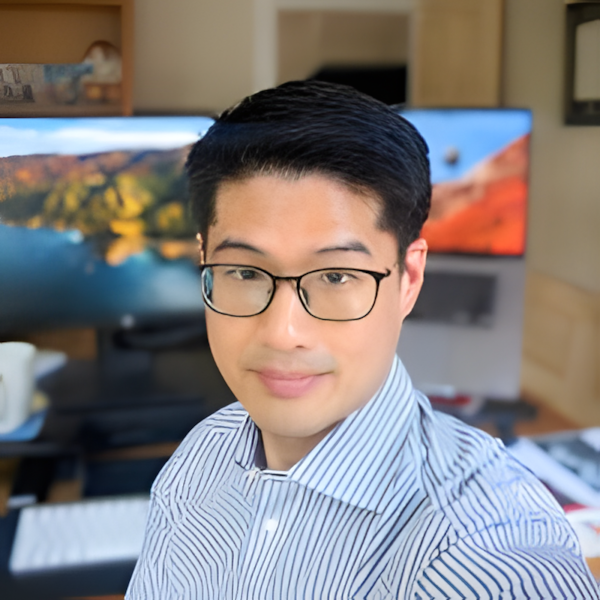
Sun-Gou Ji is VP of Computational Genomics at BridgeBio, supporting target validation and novel target discovery for drug development.
Transcript of Episode 78: Sun-Gou Ji
Disclaimer: Transcript is automated and may contain errors.
Grant Belgard: Welcome to the Bioinformatic CRO podcast. I’m Grant Belgard, and joining us today is Sun-Gou Ji. Sun-Gou is a statistical geneticist at BridgeBio, where he drives scientific decision making based on human genetics. As VP of Computational Genomics, he leads a team of statistical geneticists and data engineers focused on target validation and novel target discovery. Previously, he was at Seven Bridges, where he collaborated with the Million Veteran Program to validate and uncover genetic factors influencing human traits in a highly diverse and admixed population. Welcome to the show.
Sun-Gou Ji: Thanks, Grant, for having me.
Grant Belgard: So how did you first become interested in genetics and drug development and what drew you into the field?
Sun-Gou Ji: Sure, sure. I’m sure everyone has this time where you think about what impact, you know, do you want to make in this world while living here? And the type of lasting impact that I was very struck with was that a drug that I could develop could help people even when I’m gone. It would stick and still help people for perpetuity. So, you know, so once I thought about those things, I was actually lucky enough to then do a Ph.D. at the Sanger Institute at a time when human genetics were showing a pretty meaningful impact to the success of their programs. And here I am now. I feel like I was just, you know, happened to be at the right place at the right time and things aligned and really happy to be contributing to something that will outlive me.
Grant Belgard: So the Sanger Institute, of course, is an epicenter of human genetics. How did your Ph.D. work there shape the way you think about it?
Sun-Gou Ji: I would say it just basically shaped who I am now. I feel like if I had to choose one time in the past, I could go back to it would be doing a Ph.D. at the Sanger, which I think is pretty rare for people that have done Ph.Ds. And, you know, its history started with sequencing the human genome and the density of world-class human geneticists. There’s just no other comparison out there. So especially the scientific rigor and the collaborativeness I learned at Sanger are still the basis of how I operate today. And I would really strongly recommend it to anyone, you know, considering this field.
Sun-Gou Ji: And many of my friends remember the time at Sanger being the best time of our lives, not only the scientific achievements, you know, people at Sanger do publish a lot and pretty high impact journals, but also the diverse culture and its inclusiveness being part of Cambridge culture is a very exceptional experience.
Grant Belgard: What did you take away from your time at Seven Bridges, especially working on the Million Veteran program and the Graph Genome Project?
Sun-Gou Ji: Yeah, sure, sure. I joined Seven Bridges, it was like 2015, 2016. That time it was the data science, big data was the hype, you know, before AI. And back then, it actually took ages to perform imputation on HPC clusters or run a GWAS using LMMMs. And I’m sure you remember that time too, Grant. And being able to run a large compute and know some stats qualified me as a data scientist. And Seven Bridges has kind of occupied this niche where it was almost impossible to orchestrate complicated genomic workflows on AWS directly. And although everyone knew things would move from HPCs to the cloud, I think there was a time where people were scared of having their precious data in the cloud. And I was in the R&D team working on the Graph Genome Project and I met the smartest people I’ve ever met there.
Sun-Gou Ji: It was very different from the crew from Sanger in terms of that it was a completely different group of folks with PhDs in quantum physics, like mathematics and engineers, software engineers with some with like 20 plus years of experience. And this focus team of like a dozen plus work on a single project to create this graph genome ecosystem. And if you know, the name Seven Bridges comes from the seven bridges of Konigsberg, which was solved by Euler and laid the foundation of the graph theory. And he could understand what Seven Bridges was trying to do. And they were trying to use graph genomes and actually revolutionize how we do genomic analysis. And my experience there really opened my eyes on the difference between academia and industry. And because of the, usually when you have this type of project, you have one PhD or postdoc working on it.
Sun-Gou Ji: Whereas here you had dozens of like people with vast experience working on a single project to get one thing done. And I mainly focused on the structural variant aspect of the project and which led to a nice paper back in 2018 or so. And I believe it’s still part of Velsera’s offering, which is, which absorbed Seven Bridges. And it’s really great to see that this graph genome and pan genome approaches are really picking up more recently. And actually I feel like this really shows how difficult it is to commercialize a completely novel bioinformatics tool, even though it could revolutionize the whole field. And as for the MVP work, I was also working with many others at the VA to QC the initial tranche of the genotyping data and imputation. And all these experiences at Seven Bridges is like, I really learned a lot, especially being the only human geneticist in the group.
Sun-Gou Ji: It took me some time to understand that Sanger was sort of a bubble, right? Where like everyone understands human genetics. But here I quickly had to get myself comfortable basically defending the whole field of human genetics in front of mathematicians and physicists and engineers who would listen to you about how, you know, variant calling is done, alignment is done, association testing is done. And they would say, oh, that’s, this is irrational. This is inefficient. This is like very old statistical tools. You could, there’s these novel things you could use. Why are you using this? And, but actually me kind of defend the field in front of these really smart people helped me explain concepts of human genetics from first principles.
Sun-Gou Ji: Why do we do this reasons though, that the human genetics field uses this type of kind of old statistical techniques rather than these very complicated non-linear models a lot of times. And this kind of explaining the reasons of how human genetics done from first principles turned out to be very useful at Bridge Bio.
Grant Belgard: What do you consider to be the most impactful outcomes of the million veteran program?
Sun-Gou Ji: Well, the data itself, it’s, you know, the Million Veteran Program, it’s, it’s like, it’s very amazing that, you know, the veterans are actually contributing the health information, the genomic information for research to advance, you know, veteran, veteran care. And this type of data actually is reaching for a million in a single hospital system is still, there’s no comparison. And actually the Million Veteran data is really special. And in the way of how the ancestry proportions are distributed within the data, it’s very higher proportion of African-Americans as well as Hispanic Americans compared to the other databases that have larger European ancestry. So the type of analysis and knowledge that’s coming out of the MVP data is very orthogonal to what we get from other databases or biobanks.
Grant Belgard: So what led you to then join BridgeBio?
Sun-Gou Ji: Yeah, so honestly there was, of course, a lot of serendipity. And once I was working on these bioinformatics tools and QCing the data for others to use, the only thing I was sure that I wanted to do is move closer to patient impact through developing drugs. Like, like I said, at the beginning, it’s like, I felt I was sort of ready to kind of move closer to actually making a drug. That I feel like I made and, or I contributed significantly to making. And being as choices back then were like big pharmas, you know, thanks to the, the [Nelsted?] et al paper from GSK or the King et al paper from AbbVie, many pharma companies were building huge genomics teams. And, you know, I think there were a lot of choices from a lot of these places, but looking back and trying to justify my choice to join BridgeBio instead was definitely the people I met during interview.
Sun-Gou Ji: I was really impressed by the team. There were super smart in very different ways. There were, I think a lot of people, I would say from Seven Bridges were like really scientific smart, like street, like very academic smart. Whereas the BridgeBio folks felt a bit more street smart and they would just get things done right somehow. And without dwelling too much into the detail, but just enough to actually get things done in a very efficient way. And of course, the other part was, you know, being the opportunity to be interviewed, like world experts like Richard Scheller and the people that are like that, as well as getting personal call-ups from the CEO, you know, you wouldn’t really get that if I was going to be joining like the big pharmas. And it felt like these people could really do something. And this hub-and-spoke model for rare disease really also resonated with me.
Grant Belgard: So speaking of the hub-and-spoke model, that’s pretty uncommon in biotech. Can you explain how it works and why it’s effective in rare disease drug development?
Sun-Gou Ji: Yeah, so I’ll start with the ‘effective’ because I don’t think a lot of people appreciate it. Like one metric I really like to highlight about BridgeBio is like, we’ve been around for 10 years now. And within that time, we’ve delivered 19 INDs and three NDAs. We had two positive phase three trials that just read out in the last year. And we’re waiting for one more that we’ll weed out within this quarter. This efficiency is really rare. And this starts with actually picking the right programs and having a balanced view of the portfolio. So how do we choose? And the majority of rare diseases happen to be genetic. And we know that targets for genetic support have a higher chance of success. And that’s why BridgeBio develops therapies that target the source of these genetic disorders or are very close to it. All of our targets technically have genetic support.
Sun-Gou Ji: But, you know, everyone knows like there’s twofold increased success rate if you have genetic support. But the chance of a single program succeeding is still very low if you think about a single program. But if you bundle enough of them together, you have low probability of success, but you have slightly increased because of genetic support. And then you kind of bundle them all together. And if you bundle enough of them together, it just becomes a mathematical problem of how many programs do you have to try to get a certain probability of the portfolio of making it? So this is a paper from Andrew Lo, one of our founders that actually came up with this concept and our CEO Neil Kumar kind of delivering, executing it on it. And that becomes a very mathematical problem that actually a lot of investors and bankers get.
Sun-Gou Ji: And it’s very hard to raise funding for a single rare disease program that has a low success rate and actually the outcome of that would not be that huge. So it’s actually very difficult to raise for a single program. But if you, because of the higher probability of success of a single rare disorders, bundle them together, then your risk becomes really low. So there are investors that have the appetite for low risk investment under this model. So we were actually, we were like, BridgeBio was able to raise from, you know, unconstitutional investors in biotech. And also not only that, how we raise funding, but also it allows funding towards the smaller indications with smaller upside, which would not be funded individually if this model was not there.
Grant Belgard: So for a company, aside from a successful launch, the best outcome is failing as early as possible, not going as far as possible. What does that mean in practice to fail early in rare disease development? And how do you operationalize that mindset within BridgeBio where you have multiple shots on goal, you know, kind of in principle uncorrelated risk basket of programs?
Sun-Gou Ji: Yeah, that’s actually a very important aspect of our portfolio. We’re not trying to make every program a success where we try to optimize for the portfolio. And usually this is not possible because if you have one company working on this program, if this program fails, you’re done. Whereas at BridgeBio, if this program fails, there’s always new programs that we are starting. So people that are working on a certain program, even if that fails, it’s not mean, does that mean that they’ll lose their job? They might, they actually can be transferred over to other programs that are being created newly or that need support for other things because, you know, everything moves and all these programs that are uncorrelated have different stages of development, different programs and different problems.
Sun-Gou Ji: And as long as you there, that’s how you can actually least incentivize people to make the right decision rather than the decision that makes the program live longer. And, you know, these type of kind of shutting programs happen in very different circumstances. Sometimes it’s kind of happens because of external factors, right? Where the market’s shrinking. Now there you have to kind of figure out which programs you want to, which is kind of similar to what all other biotechs and pharma companies go through. But we also do that very intentionally where we review our programs, especially the early stage programs and make sure when we start a program, we develop these decision points, like clear decision points. Like if we hit a milestone, then it’s a go. But then we also very clearly lay out what a no-go would be for each milestone and try to make harsh decisions.
Sun-Gou Ji: But these are definitely one of the hardest decisions that we always have to make, but we always try to push ourselves to make those decisions before the market makes us make those decisions.
Grant Belgard: And how do you approach risk-adjusted net present value modeling in rare diseases? And why do you think that’s a better framework than focusing on peak sales?
Sun-Gou Ji: Yes. So we actually released a white paper on this and last October called the feasibility of rare disease drug development. And this is all talking about risk-adjusted NPV is the net present value of program, meaning what is the present value of a certain drug development program at this time, considering all the potential path this program could take and aggregating across all the potential outcomes from failure to like failure risk and success risk and how much and all these things and aggregate and cost and taking time into account, which is risk adjusted. Then you have a single number on whether this program is actually positive, meaning it’s worth investing because you’ll get something out of it versus negative, which is just, it’s not like economically viable, financially viable to actually make investment into the program.
Sun-Gou Ji: And I’m sure people have heard of this herding in rare disease drug development, where everyone is working on a select few more common rare diseases. And most of the other rare disease just have no interest. And that’s, I think what happens if you focus on peak sales, there are just a few rare diseases that actually make sense if you just think about peak sales and the biology is understood about disorder. And if you focus on just the peak sales, there’s just, I feel there’s just not much way to avoid herding on select rare diseases. Big sales only considers the potential outcome and ignores potential costs to get there, no way. So in contrast to common diseases like IBD or more like, you know, autism, like our NPV is not relevant because the cost, whatever you spend on it would actually be negligible in the context of the large outcome, like a large fruit at the end.
Sun-Gou Ji: But for rare diseases, comparing the size of the fruit that will bear with some probability against the expected cost and whether that is positive or not is critical. And like a lot of our drugs would not have been like interesting for many other traditional way of just thinking about peak sales. But you know, some of our team are so lean and efficient and then has pulled off like one of the cheapest drug development programs that you could actually, that has been ever run to reach phase three. And all of that, if you only focus on peak sales, it doesn’t really matter. So if anyone’s interested, I would really encourage people to check out our white paper. And there is actually a toy you could play with.
Sun-Gou Ji: You could kind of change how much you think you’re going to, this is going to cost, how long your trial is going to last and what are the things and try to figure out how, what you need to optimize in order to turn your program NPV positive.
Grant Belgard: In broad strokes, how would you define computational genetics for the work that you lead?
Sun-Gou Ji: In broad strokes, any analysis that cannot be done on an Excel file, Excel spreadsheet that is not directly related to clinical trials.
Grant Belgard: I like that definition. Yeah. I haven’t heard that before. That’s a good one. Where in the life cycle from target ID to validation, candidate selection, trial design, post-marketing, is your involvement the heaviest and why?
Sun-Gou Ji: It will be in the earlier stages, especially like once the target is selected and the drug program gets going, there’s not much in terms of the computational genetics that can be done to actually make the full, it can help decision-making while generating different biological kind of support for the pathway, the target and all that, and that we all do. And actually we work across all of them, but the heaviest that we put our effort into is selecting the right target and actually validating it for that. That’s one of the things where you, this is the type of decision, once you make it, there’s no turning back. You can only know after phase three is spending a lot of money and a lot of time, a lot of resources that could have been spent on try to help other around disease patients. If you just pick the right target, there’s no way you could kind of change that.
Sun-Gou Ji: That’s where we put a lot of our efforts and that’s also where, you know, there is trial and tested proof that it does significantly improve your success when you incorporate a lot of genetics data in that stage.
Grant Belgard: What data sets are most actionable for your work right now and what makes them actionable?
Sun-Gou Ji: There are multiple databases that we, of course, like everyone is working with the UK Biobank, the All of Us, it’s very useful and somewhat actionable because of the kind of general population representation that you could actually learn from where you can think about, okay, if you go after certain rare disorders, what are the kind of more common expression of the rare disorder that could be observed in more common patients?
Sun-Gou Ji: And can we actually build like an analytic series around the target based on more common variants that are not directly causing the monogenic disorders, but also because these UK Biobanks and All of Us are usually devoid of a lot of severe rare monogenic disorders, but you do have to complement those with other databases that have a higher enrichment of these more severe rare monogenic disorders that would include databases like Genomics England that we work closely with and also a lot of these genetic testing providers like Invitae and GeneDX where you would get tested because you have a certain concern about a genetic disorder. So those are the databases that would be enriched in the type of patients that we are trying to treat. So in the end, there’s not a single database because they all have different ascertainment bias.
Sun-Gou Ji: And if you just keep sampling from the general population, you would basically have to sample the whole of the US to actually get enough sample size to do anything for any of these rare disorders. So that would take too long, we’ll get there, but it’ll take too long from the other end because you are biased towards people that actually have a reason to be tested. Then you’re missing a lot of these people in those kind of genetic testing vendors. You’re missing a lot of people that are kind of mixed, where they have slightly less severe forms of the disorders that would not get tested. So a lot of the insights you get from those databases will be biased towards more severe expression of the phenotype.
Sun-Gou Ji: So in the end, you have to merge those two together and make sure that what we get from one database can be replicated, or if it’s not replicated, we can explain why you don’t see that in these other databases. And then of course, it doesn’t end by just using the genomics data, especially now the UK Biobank, I think they’re one of the best things about the UK Biobank. Now they provide all these proteomics data and a lot of other multi-omics data sets are being more readily available and kind of layering on top of that from the genetics is becoming more and more important. But again, a lot of these monogenic disorders don’t have a large enough sample size for these multiomics. So how do you use a general population or a general database, the multiomics to incorporate that layer of information to help de-risk our targets or de-risk our program moving forward, it’s always case by case.
Grant Belgard: So the calcium sensing receptor has been described as a system level node for calcium homeostasis. Can you explain why it’s an interesting target?
Sun-Gou Ji: Yeah, so the CasR gene is, like you said, is the calcium sensing receptor. It senses calcium and calcium level in your blood and try to make sure that your calcium levels are kind of kept at check. And one of our programs that read out last year was an inhibitor of this calcium sensing receptor that’s trying to treat autosomal dominant hypocalcemia, where the calcium sensing receptor is overactive and where it’s a monogenic disorder that kind of causes this calcium sensing receptor to be too sensitive to calcium. And that’s why it thinks that our body has more calcium than needed and kind of keeps the calcium level lower. So the hypocalcemia is the symptom of this monogenic disorder. And why CasR as the gene is super important and interesting is actually it’s a genetic target with an allelic series.
Sun-Gou Ji: And what an allelic series is, is to simply put, it’s nature’s dose response curve, where the dosage of the gene correlates with disease outcome. That means if you have low dosage, meaning a loss of function, CasR, then you have hypercalcemia, where you have too much calcium, and then you have your wild type in the middle, where you’re kind of okay. And then you have your gain of function in CasR that actually causes the disorder that we’re trying to treat, which is autosomal dominant hypocalcemia. So you have this outcome, human and phenotypic outcome that correlates with the dose. And the dose response curve is what you want to see in a clinical trial. That kind of proves that you’re actually hitting the target correctly.
Sun-Gou Ji: And having this allelic series of like different types of mutation, where you have very severe loss of function or like a weak loss of function, a very strong gain of function and a weak gain of function that correlates with a human phenotype, that’s the perfect genetic support for a target. And usually when you talk about the allelic series, everyone talks about PCSK9 for lipid metabolism. PCSK9 has been a beautiful story where you have gain of function and loss of function individual, where you have loss of function individuals who are protected from high lipids and coronary artery disease. Because PCSK9 inhibitors are not only used for monogenic hyperlipidemia. It’s used for just the general population. And that’s the analogy that we could use for these CasR inhibitors is that it’s not just for this autosomal dominant hypocalcemia type one monogenic disorder.
Sun-Gou Ji: But if you have this imbalance in calcium, which also leads to an imbalance in the parasite hormone. And usually when that happens, what you try to do is what you get prescribed is like a calcium tablet or that you could get more of the calcium and kind of increase your blood calcium. But then it normalizes your blood calcium. So it kind of gets rid of a lot of these other brain fog or neurological effect or tingling or other tetany or even kind of seizures. But what it actually does then it increases the amount of calcium that has to go through your kidneys. And that would end up leading to kidney damage. So a lot of the ADH1 patients are actually struggling with controlling the level of serum calcium against by using calcium supplements against their kidneys kind of breaking. So that could actually happen to other people that may be using calcium supplements wrongly.
Sun-Gou Ji: And there’s this kind of allelic series that we see in CasR actually indicates that this CasR inhibition as a therapeutic could be used for an other expansion from not just the rare CasR and ADH1 disorders to more complex phenotypes associated with the calcium sensing receptor, especially the anything influenced by calcium balance.
Grant Belgard: Many companies cluster around the same common rare diseases while ultra-rare conditions are left to non-profits. How do you decide which diseases to pursue, especially when patient populations are unknown or trial feasibility?
Sun-Gou Ji: That’s always a moving target, as you can expect. But one of the things that we really focus on is really let the science speak. Meaning, can we really get into the science of understanding the patient beyond the need and the biology of the disorder? And we call that the connect the dots from the genetic perturbation to human phenotype. And where does the proposed treatment is intervening in that whole pathway? So as I alluded to for the CasR example, like for genetic support, the allelic series is the best. That’s the ultimate genetic support of those response curve, super rare. Interestingly, we either find things that obvious and everyone is working on or stumble upon ones that no one is working on. If the rare monogenic disorder is too hard to make a drug, it sometimes makes sense to go straight to the complex disorder. But usually that’s not for us.
Sun-Gou Ji: And we look for partners that are willing to take it on together for these more larger indications that requires a significantly longer and complicated trials.
Grant Belgard: So as we sequence more of the population, what are you seeing about prevalence, penetrance and variable expressivity of monogenic variants?
Sun-Gou Ji: Definitely a higher genetic prevalence, but lower penetrance and wider phenotypic spectrum of expressivity. And this is definitely not new, right? Because pathogenic variants were observed in an exact a long time ago and were called, you know, these people were called super humans at some point. And that kind of led to the search for modifiers of these pathogenic monogenic variant carriers. And that still goes on today. And proceeding our work on ADH1, you know, Hugh Markus’s work on monogenic stroke or Karen Wright’s work on neurodevelopmental disorders and many others consistently show that there’s very many people, a lot more than expected, that carry pathogenic variants, but the penetrance is much lower than we traditionally thought.
Grant Belgard: How do those findings complicate the way we define patients and measure unmet need in rare diseases?
Sun-Gou Ji: Yes, because of the much wider variants and expressivity that we’ve been talking about, it’s just it’s very important to capture all the phenotype, not just the classical ones. And because treatment starts from diagnosis, but diagnosis a lot of times is based on genetic testing. And there’s just too many rare diseases out there. And if the symptoms observed in a patient doesn’t align with the classical symptoms of the genetic disease, the genetic testing will not be recommended a lot of times and may be only considered when symptoms become too severe.
Sun-Gou Ji: So the unmet need of rare diseases today, that’s why it’s harder to, and we’re learning that it’s actually harder to quantify properly because there’s two things, again, that kind of comes back to our old ascertainment bias that we were talking about, the databases where a lot of these testing vendors would be severely biased towards more classical symptoms with severe phenotypes, whereas the general population will just not be picking up enough of these rare, severe monogenic disorders to actually make sense out of. So making sense out of those two is still going to be hard.
Sun-Gou Ji: And because of the variants and phenotypic expressivity, understanding the full spectrum of phenotypic expressivity, meaning like we should actually start from the genetics, get everyone that carries a pathogenic variant and actually try to even identify new phenotypes that are not classically associated with the traditional monogenic disorder and expanding the phenotypic spectrum and defining it through a genetics first approach would be important.
Grant Belgard: So how do you think this will change the definition of a monogenic patient and impact clinical trial inclusion exclusion criteria for deciding who should be part of the trial and later on who should be treated?
Sun-Gou Ji: Well, it’s all going to be part of the continuum, right? You’ll have variants and that’s a very difficult line to draw, right? Because it’s pretty clear when you think about, okay, do you carry a variant in a gene that has been pathogenic before? And there are a bunch of VUSs, so whether you have a pathogenic, likely pathogenic or VUS carrier may actually tell you that you have a mutation, but whether you have the disorder, that may be a very different thing. You may be a monogenic patient because you have the pathogenic variant, but do you have the monogenic disease? Maybe no, but then how do you say no? Like in case of CasR, you have a monogenic variant in CasR that’s pathogenic. You have hypocalcemia, then you are technically an ADH1, but then when do you start treatment? It’s a different question too, right?
Sun-Gou Ji: Because then like, when does it warrant treatment to actually do these things? It’ll be very different by the disorder and the safety profile of the drug. And that’s sort of the start of personalized medicine, right? That’s when you start understanding the genetics and then the phenotype that you’re seeing in that patients, and when do you actually start treatment?
Grant Belgard: So you’ve talked about the importance of genetic support and drug development. What makes it such a powerful tool compared to other methods of validation?
Sun-Gou Ji: Yes, I would say it’s, you know, genetic support is the only tool with predictive validity for clinical success. There is not anything that I know of that have shown this reproducibly, that there is two to four times increased success replicated across so many different groups. But I wouldn’t really say it’s more powerful than any other tools, but it does provide an orthogonal point of validation of the therapeutic hypothesis that’s just basically not possible through models. Even the best models are just models, right? And although we have to be careful, the effect of a lifelong perturbation, which is a variant that you carry or genetic support versus therapeutic intervention, which is a sudden change, it still provides a completely different validation for the target.
Sun-Gou Ji: So, but again, however, despite genetic support showing two times increased odds of success, whether genetic support alone provides any predicted validity is unclear. Because genetic support, given the target had been tested in the clinic, independent of any genetic support, gives you this increased odds of success. So you always have this conditional, where a lot of these drugs were tested not knowing there is any genetic support. But when then you look conditional on that test set of genes that have been tested, you know, without knowing genetic support, then you have this increased odds. But if you only have genetic support, does it actually give you any increase? We just don’t know because there hasn’t been a drug that’s been tested just based on genetic support.
Sun-Gou Ji: And so it’s very powerful, and we are actively working on it, but that should not be a replacement of a target prioritization, target validation.
Grant Belgard: And final question on the future of precision medicine. So in what way would routine newborn sequencing transform precision medicine?
Sun-Gou Ji: Yeah, this does come to quite a personal story too, because I have a one-year-old daughter who’s been recently diagnosed with a rare genetic disorder. And we were lucky enough to be living in Boston, you know, where our pediatrician knew to refer us to a specialist who then quickly sent us to Boston Children’s and then diagnosed us within a couple of days and starts treatment right away. You know, the nurses and doctors were so helpful, you know, they were super supportive, full of empathy, and so grateful for our care team. And now this is what the US and the medical care should be, right? It’s the best medical care. And of course, it’s, we were lucky in the sense, of course, it’s best to not have a rare disorder, but we were lucky as it had been. But one thing, that’s the one thing I regret, though, is that, you know, this is a genetic disorder.
Sun-Gou Ji: And I actually convinced myself that I didn’t want to get her sequence when she was born. I sort of used the exact same logic against newborn sequencing to convince myself that I’d be overwhelmed with this information. You know, you’ll find these pathogenic variants in different like VUSs, am I going to be worried about them without saying but looking back, I feel like it was quite laziness on my end. And if I actually looked at her genome, have the information of the handful of genes that was potentially bad variants, but I have reduced the search space for what I should prioritize. And is it possible that maybe I would have picked up her symptoms earlier before it’s this late? And with the benefit of hindsight, I do feel like it is possible to catch it, it would have been possible for me to catch this a bit earlier and get her treated before.
Sun-Gou Ji: Technically, this is as much as possible now, right? The technology is all there, like assays are as accurate as it can be. And the interpretation, although needs some improvement, but the only way to get better than interpretation is just by doing more. And those are various newborn sequencing efforts, of course, the UK leading and Guardian and Beacon studies along with others in the US.
Grant Belgard: Well, what are your thoughts on whole genome sequencing versus whole exome versus targeted sequencing for newborns?
Sun-Gou Ji: I feel we should future-proof ourselves. And even for the UK BioBank that released the whole genome set last year, they show an improvement in identifying these pathogenic, likely pathogenic variants even with encoding exons over whole exomes. And I just feel like there’s no reason to use these targeted approaches, especially for data generation. For interpretation, there could be a case to make, but we should just do whole genomes to future-proof ourselves and get the highest yield. And then the interpretation could help. And the data sets itself could be very useful. It’s the first step. It will really help cases like my daughter a bit early on and reducing or at least prioritizing the search space, because when you have a baby, you’re worried about everything. But if you know that she has something and you see signs of that, you would be a bit more careful.
Sun-Gou Ji: And I feel like just for that, it should be worth it. But going back to your question about whole genomes, whole exomes and targeted panels. But in addition, I think the more exciting piece that I was thinking about traditionally as a scientist was the data generated, because it will be huge, so valuable for genetic research and drug discovery or development, because this is the true unbiased information of the population.
Sun-Gou Ji: Where I was talking to you about the fascinating bias about the different biobanks and cohorts, but newborn sequencing will be ultimate unbiased sampling of the population, which will open up the first door for the precision medicine that would really help us understand the difference, not just monogenic prevalence or in a transient expressivity, but also even in common disorders and different or complex disorders and really expand how we think about human health with genetics and start of precision medicine. And you would carry that information throughout your life and whenever something happens, you have that background information to best rather than waiting until something goes wrong and figuring out.
Grant Belgard: Yeah, it’s interesting. You know, we’ve heard for years that this is coming and certainly at this point, it’s not a barrier of price, right? I mean, getting a whole genome sequence is a pretty negligible cost in the American healthcare system these days compared to everything else, but it’s still not routine. I wonder when that will finally flip.
Sun-Gou Ji: Yeah, it’s interesting. And also, I guess there’s questions about privacy and who owns the data and who actually gets to analyze the data and how do we make that equitable before and maximize patient benefit over anything else?
Grant Belgard: Well, I guess that’s another challenge, particularly in the US healthcare system, right, is although there’s a ton of money spent, it is very fragmented from a data perspective, many different systems, et cetera, right? So that will be a challenge.
Sun-Gou Ji: This is like an operational problem rather than a technical or scientific problem now. And yeah, there are a lot of sensitivities and issues about it, but there are these pioneers are trying to do these pilots across different institutes in different countries. And hopefully those will change the mind of governments.
Grant Belgard: Thank you so much for joining us. It’s been great.
Sun-Gou Ji: Thank you for having me.