
The Bioinformatics CRO Podcast
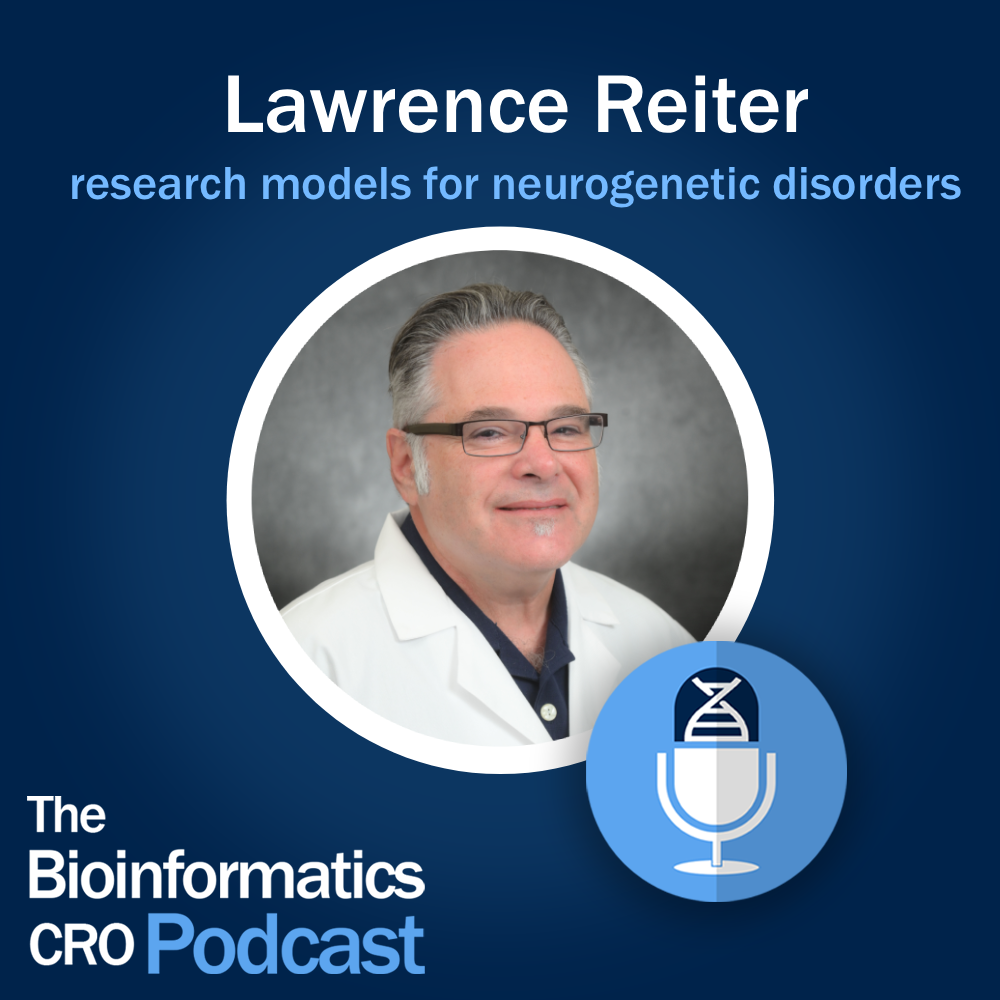
Episode 97 with Lawrence Reiter
Lawrence Reiter, professor of physiology at Tulane University School of Medicine and founder and CEO of PulpNeuro, joins us to discuss his research into rare neurogenetic disorders using dental pulp stem cells as well as Drosophila.

On The Bioinformatics CRO Podcast, we sit down with scientists to discuss interesting topics across biomedical research and to explore what made them who they are today.
You can listen on Spotify, Apple Podcasts, Amazon, YouTube, Pandora, and wherever you get your podcasts.
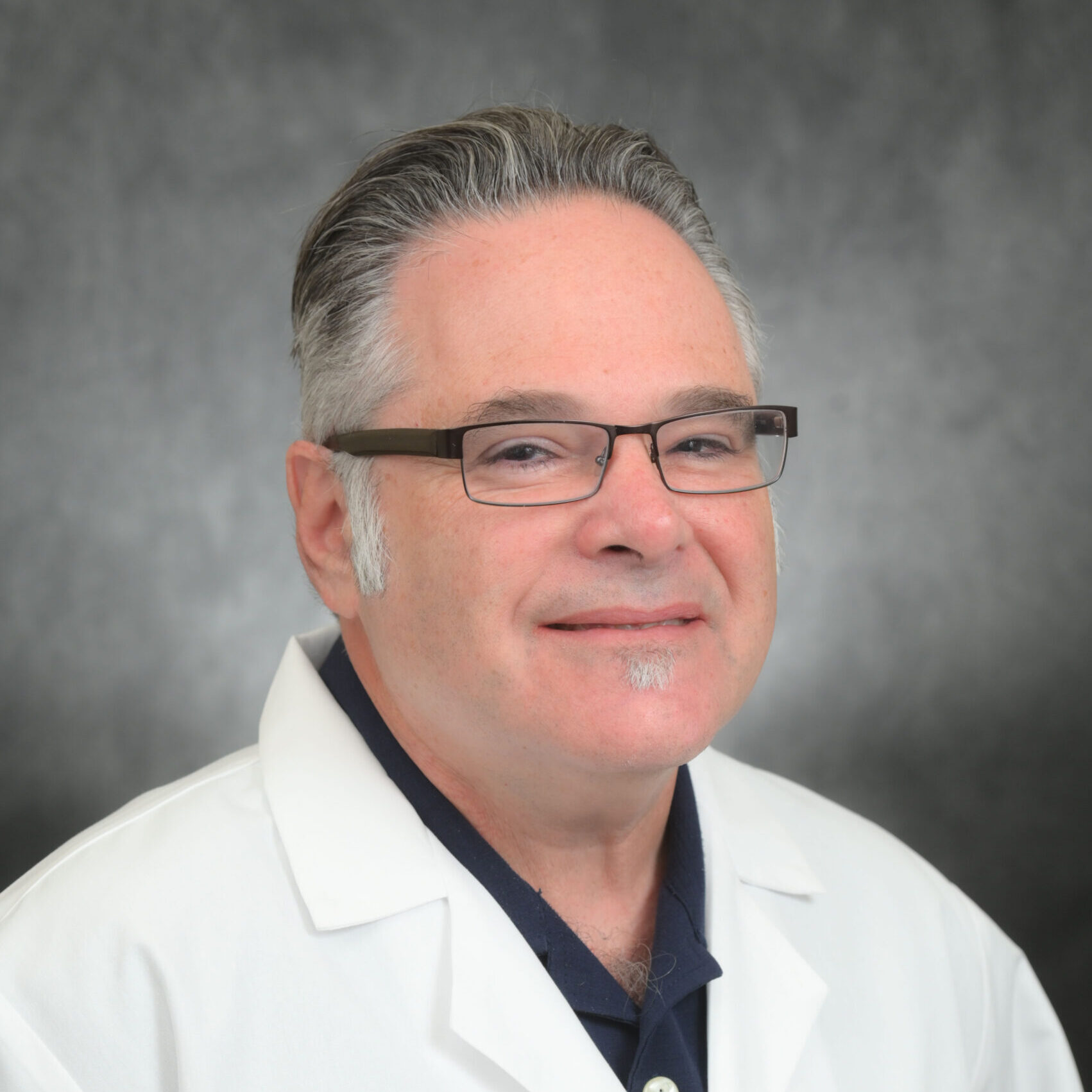
Lawrence Reiter is a professor of physiology at Tulane University School of Medicine as well as founder and CEO of PulpNeuro. His research focuses on developing treatments for neurogenetic disorders like Angelman, Prader-Willi and Duplication 15q syndromes.
Transcript of Episode 97: Lawrence Reiter
Disclaimer: Transcripts are automated and may contain errors.
Grant Belgard: Welcome to the Bioinformatics CRO Podcast. I’m Grant Belgard, and today I’m joined by Dr. Larry Reiter, a professor of physiology at Tulane University School of Medicine and founder and CEO of PulpNeuro. His research uses fruit flies and human dental pulp stem cells to investigate rare neurogenetic disorders, including Angelman syndrome, Prader-Willi syndrome, and duplication 15q syndrome. We’ll talk about choosing models for difficult biological questions, turning discoveries into something useful, how his career took shape, and what he would pass on to scientists finding their own paths. Larry, welcome to the podcast.
Larry Reiter: Hey, it’s good to see you, Grant.
Grant Belgard: Likewise. So how do you describe what you do today and what’s taking most of your attention?
Larry Reiter: Unfortunately I would say paperwork probably. I wish I could sit around and think about research questions, but being an academic scientist, I spend 30% of my day writing grants and, the rest of it I don’t even know what I’m doing. I can’t come home and tell you because I was clicking buttons to get stuff ordered for the lab, and I was checking somebody’s payroll, and I was doing my safety training, and, it just disappears on you. I spend at least 10% going to the lab and talking to people about what they’re doing. But, then I just, I get a lot of emergency admin calls “You must do this by tomorrow.” And I, I didn’t expect that as, as a grad student. That wasn’t what we were really trained to do. But we-
Grant Belgard: Is that something that’s changed over time?
Larry Reiter: I don’t know. I remember my mentor in grad school complaining about when the lawyers moved in next door at Baylor and how everything changed. It feels like, yes, it has changed over time. There was a time when you could just really focus on the research, but as, as a PI, I’m running a small business within the university, and it just gets more and more bureaucratic at academia at least. Not so sure in industry. Maybe you get a little more freedom in industry really.
Grant Belgard: What scientific question would you most like your lab to answer?
Larry Reiter: I’ve moved from scientific questions to therapeutics, right? So my, my main goal is to find compounds that can be used to treat pharmacoresistant epilepsy, especially in Dup15q syndrome. But I also have a broader interest in autism, and we’ve been attacking that with the dental pulp stem cell work on multiple different fronts, trying to figure out the underlying molecular mechanism of autism using a variety of syndromes that are all associated with autism. So not just a, classic scientific question, but more mechanistic stuff that leads directly to therapeutics is really what I’m interested in.
Grant Belgard: On that n ote, how would you introduce Angelman, Prader-Willi, and Dup15q syndromes to listeners, and what questions do raise for a geneticist?
Larry Reiter: I first was aware of Angelman syndrome as a grad student. Art Beaudet worked down the hall and was on my thesis committee. And I was interested right away because this locus is really interesting, right? It’s an imprinted locus. So The genes in that particular region of the genome are expressed, some of them, either on the maternal allele or the paternal allele in neurons, right? So it’s really strange, not like everywhere else in your genome where you get biallelic expression. In this case, the copy that you get from your mother, for example, that’s the copy that expresses the UBE3A gene. The copy that you get from your father expresses a series of imprinted genes, including MAGEL2 and SNORD116. UBE3A is associated with Angelman syndrome. Those other two genes are associated with Prader-Willi syndrome. The whole region, when it’s duplicated, causes duplication 15q syndrome.
Larry Reiter: And in most cases, Prader-Willi syndrome and Angelman syndrome are caused by a deletion, right? So you have duplications and deletions of imprinted genes. It’s sort of a geneticist dream locus, right? ‘Cause it has everything, all the bells and whistles.
Grant Belgard: What can a fly experiment tell you about a human neurological condition, and what can’t it tell you?
Larry Reiter: the idea here is, you really need to think about what the system can do for you instead of worrying so much that you’re not in a mammal. Okay? But one way we did that was at the molecular level, like 20 years ago, we published a paper and showed that 75% of the human disease-associated genes had homologs in flies, and that’s why we work on flies. It’s faster, cheaper, easier to manipulate. The flies have defined seizure behavior, and nervous systems very much, like mammalian nervous systems in terms of signaling, and circuitry is complex. They’re not a simple organism really. At the moment what we’re doing, unlike cultured cells or mouse models, we’re doing a sort of medium scale drug screen in whole animals, right? So we’re looking at thousands of compounds, currently about 4,200 FDA approved compounds to see if they can suppress the seizure behavior in our Dup15q epilepsy model.
Grant Belgard: How do you decide what counts as a seizure phenotype in a fly, and how do you measure it?
Larry Reiter: So you would understand this concept, right? We don’t decide, right? We use hidden Markov modeling, and we let the video just tell us, right? What’s immobilization, what’s walking, what’s uncoordinated movement. And then we compare to the control group and look at statistically at effect sizes for drug treatment, right? So in most cases, good science, you don’t decide, right? You just– you let the statistics and the animal decide for you.
Grant Belgard: How would you work out whether a seizure mechanism involves a neuron, sclera, or an interaction among them?
Larry Reiter: So that’s actually really easy in the fly model ’cause we have a system called the Gal4 UAS system, which would take me a little while to explain. But essentially, it’s an expression system, a bipartite expression system, and we have literally thousands and thousands of Gal4 drivers now. The Gal4 driver can express anything within upstream activator sequence or UAS sequence in front of it that you’ve put in the fly. So that could be any cDNA. It could be a human cDNA. We’ve done that many times, right? Now, you just need a Gal4 driver that expresses in neurons or glia, and in fact, there’s five different neuronal or five different glial Gal4 drivers several neuron, neuronal drivers, that are common. Then you can get drivers that are, like, even down to the individual neurons. There are literally Gal4 drivers for single neurons in the brain. So it’s not hard to manipulate the system.
Larry Reiter: And then in our case, the interaction between the glia and the neurons appears to involve potassium distribution at the synapse, and that has to do with some different proteins in the glia that are not doing their job, some channels that are not pumping potassium back into the glial cell. We can actually see that in the fly brain using a chelating dye that binds to potassium and fluoresces. So now we can look at the brain, take the brain out, look at it and see the relative amount of potassium that’s in or out of the glial cells.
Grant Belgard: Can you tell us how you turn a shed baby tooth into something useful for studying a neurological condition?
Larry Reiter: So the great part about using baby teeth is we don’t have to try very hard. So there are cells inside these teeth, right? Deep actually in the pulp. You have to really break the tooth open to get to these cells, and they’re neural crest-derived stem cells. So they’ve always been stem cells. They’ve always wanted to be neurons. There’s not any reprogramming like induced pluripotent stem cells. You’re not dedifferentiating some terminally differentiated cell. You’re just taking the stem cells, and you coax them down these neuronal lineages with growth factors in the media. That gives us sort of a mixed cortical culture of neurons and glia and other support cells. So also unlike iPSCs, they’re not just neurons, right? They’re more cortical, which is what you want. You want a system that reflects what goes on in the brain.
Larry Reiter: And of course, we’ve shown and other people have shown they fire action potentials, they express neuronal genes, they have glial-specific genes in the glia. They show circadian rhythms. We recently published that cell-autonomous circadian rhythm. So yeah we use them for about 15 or 16 different syndromes in our collection now to make these neuronal cultures. But we’ve also actually recently made them into kidney organoids in collaboration with somebody in my department. So there’s really… They’re stem cells, there’s a lot of potential here. You could make them… i’m gonna send some cells to another person I met at a meeting who makes cardiomyocytes. So we’ll try that as well and see if we can look at the cardiac defects in one of the syndromes using his modeling.
Grant Belgard: Generally, when would you choose dental pulp-derived neurons over iPSC-derived neurons, and vice versa?
Larry Reiter: So forever, I would use dental pulp stem cells over iPSCs. I have several reasons. And we’ve been working on this now, what, 16 odd years, and published multiple papers, and some of them actually comparing iPSCs to dPSCs. IPSCs don’t look normal. People might be using them because it’s the standard in the field, but they– If you look at the methylome, you look at the methylation of the genome, iPSCs don’t look anything like embryonic stem cells, and dPSCs look very much like embryonic stem cells. So when you do the PCA plot, the iPSCs are all by themselves compared to lots of other stem cell types. That’s a big deal. That means that the expression is not normal, right? You’re not really getting, and you may never get normal expression, ’cause a lot of time these, these methyl marks, go with the cells as they differentiate as well. So that’s number one.
Larry Reiter: They’re difficult to make, the iPSCs. They’re difficult to reprogram. They cost a lot of money. They’re typically made from a single isogenic line, and even the disease versions are often somebody making a mutation in an iPSC line instead of using a patient-derived line. And that’s a big deal for me as a geneticist, because now you’re losing all that genetic background influence that we can capitalize on with dPSCs because it’s so easy to collect. For example, we have 43 Prader-Willi lines, right? Not one, 43. So we can actually get that background redundancy in the disease state so that we can now figure out what’s really disease state, what’s background. And we just… if you read the literature carefully, you know the iPSC guys often add like rat glia, so that they can support their iPSCs, so they can do the experiments.
Larry Reiter: We don’t have to do any of those things, so like it’s all in the dish, and it makes everything easier.
Grant Belgard: How do you go from an RNAseq proteomics hit list to deciding what experiment to do next? Can you kind of walk us through how you’ve done that in the past?
Larry Reiter: you and I have worked on some of these things together, right? A long time ago when it was much harder, right? It was– There was maybe… Back then, there was maybe David. There was, like, one tool you could use to pump your differentially expressed gene list in and see what pathways were disrupted. But, now we’re in the AI age where my friend Claude and Perplexity, they both help me out, right? And it’s amazing actually. I recently threw some metabolomics data through Claude and got this incredible analysis that was really useful right away. Even the graphics were really useful for me to understand what was going on in those samples. So I think we’re not as dependent on our bias as we were. Maybe Claude’s bias, but not our bias, right?
Larry Reiter: So we can take those lists now and get very clear pathway analysis that maybe even if you dial in your prompts correctly, you can ask the AI to address phenotypic questions about your data, which before was more difficult. You were getting generic pathways. But now you could say, “Okay find all the genes that you know are involved in hyperphagia and look through my differentially expressed Prader-Willi samples and tell me which genes are doing this,” right? “Which ones are driving this phenotype.”
Grant Belgard: How has that impacted the overall pace of your work?
Larry Reiter: I’d say it, it definitely made it easier to analyze the final differentially expressed gene data. And I assume it’s easier to do some of the upfront raw sequence analysis to get there. But we have a single-cell project ongoing right now that I have contacted you guys about. In fact you’ve helped us a little along the way. I’ve got a postdoc who wants to do this himself, and I feel like that part’s still a struggle. You can’t just plug it into AI and hope for the best, especially when you’ve got a dataset like ours, which is single cell on dental pulp stem cell neurons. There’s no playbook. We don’t have a reference set of cell types that we can use to easily tell what’s going on in the sing- at the single-cell level. So there’s a lot of de novo work that we had to do. And I think, that’s why we have jobs, right? If AI could do all of it, I guess it would be done.
Grant Belgard: How do you separate disease effects from differences among donor cell types or culture batches?
Larry Reiter: I think we already talked a little bit about how the genetic background is really important, right? So if we just look at six or eight different Prader-Willi lines, right? We look at that many neurons, then we’ll get a better feel for which genes are actually driving phenotypes versus which ones are just different among different individuals, right? And if we need to add more, we can always add more. So it’s a power question and it’s, really dependent on the background diversity.
Grant Belgard: Conversations with patients or families change what you chose to study or measure. Can you give us an example?
Larry Reiter: Yeah. I just attended a meeting where some families shared, at the beginning of the science meeting, they shared some things about what they deal with on a daily basis for, in this case, for Prader-Willi syndrome. And anxiety or anger issues or daytime sleepiness, these are the things that are bothering them. These are the things that they would like us to address as scientists. Whereas in the past, I think a lot of researchers think that they know better, “oh there’s an obesity phenotype. We should all work on obesity.” But they’re saying, “No, that’s not really our main problem,” you gotta listen to them and hear that. And also, there are better drugs for regulating the obesity now, so it’s just not an issue.
Larry Reiter: But I think you always need to go back to the families and say, ” what’s the big deal here?” One of the things that I’ve been focusing on lately has been circadian rhythm because in this condition, a lot of kids have daytime sleepiness. That means they’re not getting good sleep. And then there’s a related disorder called Schaaf-Yang syndrome, where, about 80% of those kids don’t sleep. So that’s a big deal for the household, that’s a big deal for the whole family when your kid is not sleeping, right?
Grant Belgard: What is PulpNeuro and what problem are you trying to solve?
Larry Reiter: So, PulpNeuro is a company we started back in June, and initially we started it around some IP for making organoids directly from the dental pulp stem cells, making brain organoids that fire action potentials. So that was very exciting, but in my sort of overall vision of what I think PulpNeuro should be doing, it’s actually a little more like what you’re doing. It’s more like a CRO, right? We want to be a medium pharma development tool. We want people to come to us with their compound library or their ASOs that they want to test, and we can test them now in a large number of real patient neurons, right? Instead of that one iPSC line that they all use, we can actually… In ASOs, that’s really important, right? To dial it in specifically for even the individuals, right?
Larry Reiter: And we can do that with dental pulp stem cells, so we would be able to do precision medicine, N equals one, where you give us a tooth from a kid and now you can dial the ASOs in for that particular child, so the treatment is tailored for that child. So really what we want to be is faster, cheaper, and with a more diverse background than other preclinical systems right now.
Grant Belgard: How do you decide whether a research tool needs a company around it rather than remaining an academic resource?
Larry Reiter: I’ve talked to several people who’ve been on both sides. I have a colleague at La Jolla Lab. She’s actually an advisor for our company. We were post-docs together, so we’ve been in academia and then she went even higher into industry and was a a global ASO leader for Johnson & Johnson, right? But both at the top and in academia, there’s the same issue, and the issue is it’s really hard to get the treatments into patients. She was disappointed that at this larger biotech company, she could never really get to the finish line, and I’m, as an academic, frustrated that I don’t ever see the finish line either. I don’t even have the tools in front of me right now to do that, right? I need to partner with somebody who’s developing therapeutics. So that’s where the kind of medium-sized biotech comes in, right?
Larry Reiter: And starting a company and partnering with those c- other companies to actually start trials to treat patients ’cause we’re not gonna… we can sit around and philosophize about it forever, but in the end, we would like to be able to actually treat someone with this disease and not just talk about the science, right?
Grant Belgard: What would a drug development team need to see before trusting a new patient-derived model with a go/no-go decision?
Larry Reiter: So we already have interest, as I said, from La Jolla Labs has ASOs in the pipeline and, they’re interested in testing them, the antisense oligos in the neurons from the patients that we have. I think a good example of one way to do it is to go from the fly model where we find compounds that are anti-epileptics, and then we jump straight into the dup15Q epilepsy dental pulp stem cell neurons. We’ve been measuring activity on what’s called an MEA system, and so we can see the seizure activity. Now we can use those compounds directly in human neurons, right? I feel like that would probably convince people that yes, okay, now you don’t need a mouse model. You don’t need to mess around for another 100 years to get there. You’re showing this drug is effective in neurons from a patient with this syndrome. I feel like you, you can’t get a lot closer to the clinic than that.
Grant Belgard: What made Larry Reiter first curious about biology and when did research, start to become a a realistic career option?
Larry Reiter: It’s not a realistic career option. I don’t know who told you that. It’s, I think… It’s funny I almost just keep falling into it, i’ve always been good at it. I’ve always enjoyed science. I’ve always been good at, in fact, in high school, good at chemistry and physics. I even have a minor in chemistry for my undergrad degree. But I always understood genetics in a very clear way. I always felt like that was my niche, right? And molecular biology. And it’s actually molecular biology that led me to neuroscience and neurological disorders, not the other way around. It wasn’t I was interested in neuroscience. But you have to learn along the way, and I kept acquiring tools, and I still do it ’cause I seem to be doing okay. I’ve got funding, students, papers, and I don’t wake up curious every day. I go to work and I solve problems, I have… That’s the… I’m a problem solver.
Larry Reiter: And I, and that keeps you interested is being able to help somebody get over a hump in their experiments or think about a new way to do something. That’s satisfying on a daily basis, right? But in the end, the big motivation is what we already talked about. You, I wanna be able to help design therapeutics for human disease and be able to get to the point where somebody is treated with one of these therapeutics that came out of our pipeline.
Grant Belgard: What did you imagine your working life would look like when you were an undergraduate?
Larry Reiter: I was gonna smoke a Pipe and sit in my office and think about things, right? That was the fantasy, right? That you were gonna be this, you wear a a, a robe and but it, it’s kinda ridiculous. There are still people who think this. That’s the odd thing, is there are still academic scientists who think that they’re in this other world where they just sit around, musing problems. And I’m a little more of a practical person and I just, I can’t abide by it. I feel and I tell people often, for all the crisis that there is at the National Institute of Health it’s the National Institutes of Human Health. Not mouse health, not fly health, right? Not your curiosity, not, your favorite idea. And we gotta keep our eye on the ball. When things get tighter especially, we should be thinking, how is this gonna help people? What are we doing here, right?
Grant Belgard: What drew you to your PhD question, and how did you decide where to train?
Larry Reiter: So it’s simpler times. I saw a poster. I was teaching eighth grade earth science. I was in Teach For America in New Orleans, and I just had a moment where I was like, “Okay, it’s time to go to grad school. I need to do something further with my life,” and I saw this poster for Baylor College of Medicine, which I probably wouldn’t get into Baylor now, but at the time, it was the perfect timing, and it was the right place to go, and I didn’t even know I was making such a good decision. I think a lot of people at Baylor in the early ’90s didn’t realize they were making this decision because it was an excellent place to be. It was a really good place to do science and to get mentored and to feel like you were isolated in grad school so that you could just focus on research
Grant Belgard: What were you looking for in postdoctoral training, and how did you decide which scientific direction to pursue?
Larry Reiter: So the simple answer to that was, I was frustrated after grad school because at the time, there were no really good animal models. It was 1998. The mouse models were just… They weren’t great. And they were really inferior to what I was seeing going on in flies. And I knew because Hugo Bellen’s lab was down the hall, and I had interactions with them, and I realized, I needed to learn a different system. So I did my postdoc in Drosophila genetics with the intention of always doing human disease, right? I never really switched fields. I switched organisms.
Grant Belgard: Who most influenced the way you think as a scientist, and what did they do that stayed with you?
Larry Reiter: I’d give Jim Lupski, my mentor in graduate school, a lot of credit for this because first of all, his lab was fun. He was a good guy. I liked him. We got along. Some people might not have liked him actually, he and I definitely understood each other, and that helped. And so when he criticized us or criticized me, it wasn’t a big deal. He was criticizing the science. He showed me how to do that, how to really be hypercritical of, especially of your writing and your role as a, a scientist is to protect the literature, so he allowed me to be part of the review process as well. So I’d review papers, I’d write papers. He taught me the, work hard, play hard science ethic and also to, that everything mattered, right? Every little thing. It’s, there’s nothing you can just ignore in science. You, and you’re writing a paper, it all matters, everything.
Grant Belgard: What part of becoming an independent investigator was hardest to prepare for?
Larry Reiter: I would say the management, budgets, paperwork, all the things that we were never… like if I had known that I was gonna be given and asked and questioned about budgets on a daily basis, I’ve I think in grad school I would’ve taken an MBA course, it’s become very difficult to just do the science, right? It would be nice if you were in a very protected place, and some people are. There are special places. There are places like St. Jude there are institutes where they do get a lot of administrative support, and they don’t have to worry about things as much, right? And yet most academic institutions, I would say, and at least the, the two that I’ve worked at and the ones that other people tell me about, they just don’t get that kind of support. They end up having to do a lot of things, to the extent that at my last institution, I knew how to do everything to submit a grant.
Larry Reiter: I was deep into the forms. I was, I could do everything. So then I got to Tulane, and people started helping me with grants, and I was like, “I don’t know, man. I don’t… I know how to do this, I don’t know. I feel weird letting you touch my grant.”
Grant Belgard: Was there a career crossroads where the best choice wasn’t obvious, and how did you decide?
Larry Reiter: Yeah, I think my first job, it was difficult on many levels. There were two of us. My wife and I both are scientists. That makes everything difficult. So we interview one place, she’s the top candidate, I’m an also-ran. We interview the other place, I’m the top candidate, she’s the also-ran, which is totally ridiculous. They need to stop treating people this way, ’cause what am I gonna do? Leave my wife where she was before? It’s ridiculous. So there was also a bigger issue at the time, was I had spent some time in Antwerp and I know Christine Von Broeckhoven pretty well, and I like her and get along with her, and she invited me out there to give a talk and talk about maybe taking a position in Belgium, which would be a big deal, and at the time, we had a small kid, and our parents on both sides were alive, and so that was a big deal.
Larry Reiter: Do we move to Europe where we might have a better career but then our parents won’t see the kid, and, we’ll be far away from what we know in the US, and… Anyway, long story short, we didn’t take a job in Belgium. And I sometimes think about that. It, it would be a very different career for me if I was a European scientist especially right now.
Grant Belgard: What do you enjoy doing away from science and does any of that influence how you approach your work?
Larry Reiter: I was just talking to a scientist about this last night. We had a visiting speaker, and she’s in a lot of ways typical of some scientists, a huge control freak. I’ve learned a lot of ways to get over that. One of them is riding motorcycles off-road. You can’t be a control freak. You have to go with the flow, and you have to pay attention all the time. So it makes your brain turn off, you’re not thinking about everything all the time and worrying about things and controlling everything. I think scientists need that. They also need… The other side of my hobbies is I like fixing things. I fix motorcycles, I fix pinball machines. That part of being able to take something that’s broken and actually get to the finished fixed stage doesn’t happen in our day job very often, right? We never really get to the end.
Larry Reiter: So it’s nice to be able to have that and do something physical that feels like you’ve accomplished something, right?
Grant Belgard: What would you look for in a lab or a mentor if you were choosing where to train today?
Larry Reiter: like I’ve hinted, you wanna find someone you enjoy talking to in general, not just about science. Somebody you actually wanna be interacting with for a long period of time. But you also, as a grad student, you wanna find somebody who’s not stagnant, somebody who’s on the way up, they may even be a junior person but they need it as bad as you, so you’ll get papers out of their lab, right? Now, if you’re a postdoc, that’s a little different. You want a lab that’s got funding and looks like they’re gonna keep funding for a while so that you can use their playground to develop your own ideas for your future lab. It, these are two different strategies and two different kinds of mentors you would pick.
Larry Reiter: As a mentor for your postdoc, if you were trained well as a grad student, you really want somebody who’s in the systems that you wanna work on more than the PI is able to show you how to do things, you should already know how to do that.
Grant Belgard: How can a scientist tell the difference
Larry Reiter: between a project that needs persistence and one they should halt? So the surprising answer to that is not funding, right? It’s, you would think the easy answer is funding, right? “Oh, I can’t get this funded. I should just stop working on it.” And I think, really good science you’ll find people just, they push through it. Stanley Prusiner is, comes to mind. He worked on the Kuru the prions, right? And so nobody wanted to believe him, and it was a major discovery, right? But no one wanted to believe him. You hear that story in science a lot, and if nobody believes you, you’re not getting a grant, right? So really the idea if you believe in it, and you still believe in it after some hard work and some hiccups, then you really just need to see it to the end. We have a project right now that I’ve never gotten funding for. But I’ve got a paper in revision.
Larry Reiter: And I had a grad student who did his whole PhD on it. It’s just a good project, and it’s something we need to do and we need to finish it. It doesn’t, it’s just not simple, to, It’s not a one-to-one ratio, funded research is always interesting, good, and worth doing,
Grant Belgard: what should ambitious young
Larry Reiter: scientists worry less about? What should they take more seriously? So the quality of the work is the most critical part. Your whole life you’re gonna stand upon your publications. You have to do it right. You have to make sure the results are true. But worry less about getting funded, like what I just said. Write enough grants that you keep going, but just work on things that, that not just interest you, but you think have potential, right? And especially, you’re gonna have to think about things that have potential to be funded. But don’t get discouraged, just keep trying, right? One thing you’ve gotta take seriously as a junior person is tenure. You should be thinking about it right away. What’s gonna happen six years from now, right? You gotta … It seems like a long time, but it’s gonna catch you, and you’ve gotta get your ducks in a row right away. You’ve gotta publish.
Larry Reiter: You can’t wait till year five. You should be publishing all the way along. And in my case, I was able to get, to push off getting my NIH R01 long enough with funding from foundations so that when I was up for tenure, I had a current grant. ‘Cause I think the trick here at a lot of places is, oh you got a grant, but, will you get another grant? Which is a ridiculous thing to do to people, but one way to get around it is to wait and get your grant a little bit later so you still have a grant, and that, and they can’t really say much about it at that point.
Grant Belgard: What would you tell a scientist who wants to work with a rare disease community about earning trust?
Larry Reiter: Be yourself. Just go to the meetings. There’s… Any, any rare disease you work on has a parent support group. Some of them are very well-developed, and they have science meetings, like the Angelman Syndrome Foundation, the dup15 Alliance, you know, all the… You can go to these meetings. When you go to these meetings, they often have a parent family day after the science meeting. Go to that meeting. Go talk to people. Even if you just give a short talk about what you do, people really appreciate that. And, they wanna be part of the research, so I find that’s definitely true, especially with the dental pulp work. They’re excited because they feel like they’re directly contributing to the work when they give you a tooth
Grant Belgard: What haven’t we discussed that you would most like listeners to take away?
Larry Reiter: I would say in the current environment not to be discouraged. I’m the kind of realist person who thinks things are really grim right now. But one of my colleagues Matt Dalva, who heads the Brain Institute, he’s maintained a very positive attitude throughout the funding difficulties at NIH and has really positive leadership in that sense. And so I think every time I hear about really good leadership in academia, it’s people who are like, “You know what? Chill out. Stay the course,” “It’s gonna work out.” ‘Cause in the end it will. If you’re doing good research, it will work out. And I think that’s the end message really, and I don’t want it to sound trivial. Don’t work on things that interest you. I don’t care. The reviewer doesn’t care. Work on things that are important and keep working on them, right?
Grant Belgard: Larry this is a great way to end, thank you so much for coming on the show.
Larry Reiter: Yeah, Grant, thanks for having me on the show, and it was good to talk to you and catch up.