The Bioinformatics CRO Podcast
Episode 63 with Kenny Workman
Kenny Workman, co-founder and CTO of LatchBio, discusses his experience building a cloud platform for modern biology and how Latch has grown since our 2022 episode with his co-founder Alfredo Andere.
On The Bioinformatics CRO Podcast, we sit down with scientists to discuss interesting topics across biomedical research and to explore what made them who they are today.
You can listen on Spotify, Apple Podcasts, Amazon, YouTube, Pandora, and wherever you get your podcasts.
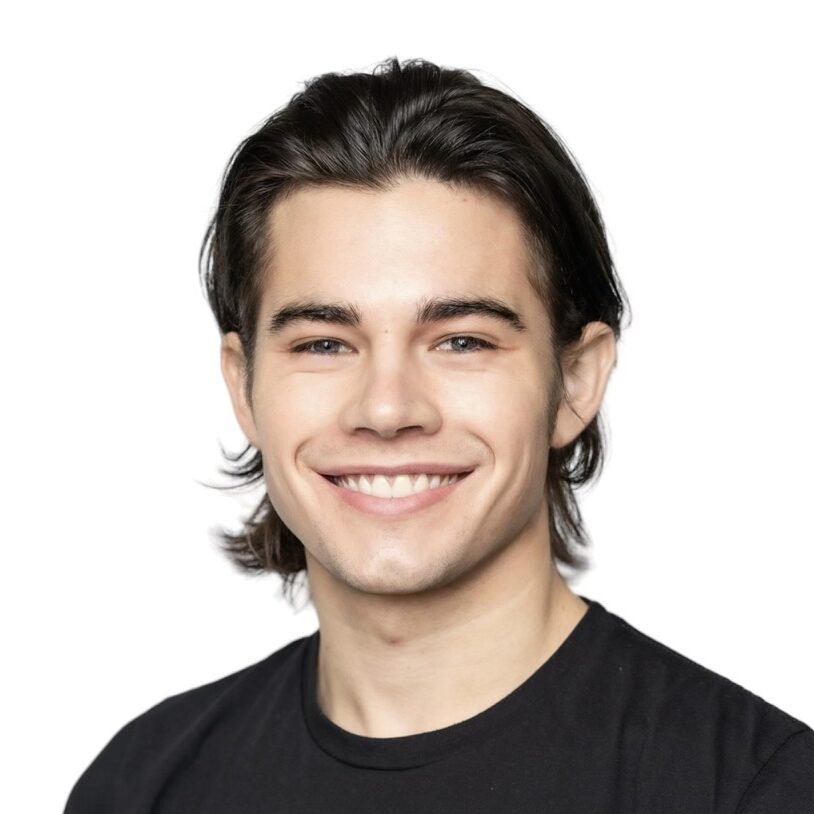
Kenny Workman is the co-founder and CTO of LatchBio, a cloud based data infrastructure solution for working with molecular data.
Transcript of Episode 63: Kenny Workman
Disclaimer: Transcripts are automated and may contain errors.
Grant Belgard: Welcome to the Bioinformatics CRO Podcast. I’m Grant Belgard, and joining me today is Kenny Workman, co-founder and chief technology officer of LatchBio, the data infrastructure making large streams of raw molecular data human interpretable for computational biologists and bench scientists alike. Since we last spoke with his co-founder Alfredo in 2022, Latch has started working with the solution providers developing and distributing new technologies to measure molecules, partnering with spatial omics and single-cell innovators to bring analyses straight to the browser. Kenny studied electrical engineering, computer science, and bioengineering at UC Berkeley before jumping headfirst into biotech entrepreneurship.
Grant Belgard: Today, we’ll explore what’s new at Latch, what drew Kenny to build in this space so early in his career, and the advice he’d give to the next generation of computational biologists. Kenny, welcome.
Kenny Workman: Thank you so much for having me.
Grant Belgard: So for listeners who remember Alfredo’s episode, give us the what’s changed at Latch since 2022 elevator pitch.
Kenny Workman: Yeah, I think the most profound shift has been that away from biotechs into the folks directly generating data. So the solution providers measuring molecules, concretely, these are single-cell spatial providers and working with them directly rather than the original biotech folks.
Grant Belgard: What’s the single biggest misconception newcomers still have about Latch?
Kenny Workman: Oh, it’s a great question. I think biotech data analysis is really more of a project management and human orchestration project than a single point analysis solution. And, you know, what I mean by that is the practical problems are not running a workflow and getting an output. They’re really like, how do you coordinate diverse groups of chemists, immunologists, software engineers, computational biologists to come together and analyze data and speak the same language. And so what that means in practice is the data infrastructure’s, you know, true role is to capture and expose data over a long timeline to people with different levels of computational fluency, and not necessarily like run a workflow.
Kenny Workman: So yeah, I think a lot of the misconceptions are around Latch or similar types of products or technologies being workflow orchestrators, rather than a kind of like more complex and long living thing that brings people together to understand science.
Grant Belgard: If you met someone at a conference and had only 30 seconds, how would you describe your own role at Latch?
Kenny Workman: That’s a great question. I primarily work on engineering a product. I would say that the core of what I do is synthesizing information from customers, you know, scientists and engineers, and trying to figure out how to improve the product and move it in a direction that has the highest probability of impact on the pace of science.
Grant Belgard: And what’s a picture of a typical customer, size of the team, data types, pain points.
Kenny Workman: Yeah. So, you know, within the solution provider buckets, there’s a variety of very interesting emerging technologies. And this is actually one of the super exciting stories of modern biotech is that of increasing data generation on a variety of like different molecular types. So you can look at facial biology, and within that you have several sub-trees, you have imaging-based spatial, sequencing-based spatial, which differ in how they actually read out the molecular information. And within each of those buckets, you have a unique group of customer that Latch works with. And the reason I make this separation is like the actual details of how they use the product, how they distribute data to their customer, you know, it looks quite different depending on like how they’re actually capturing molecular information. A great example of a sequencing-based spatial provider is AtlasXomics.
Kenny Workman: They’ve developed this technology called DBiT-seq, so deterministic barcoding in tissue, where they basically place a chunk of tissue on a purpose-built microfluidic chip and flow barcodes from the X and Y direction over the tissue and resolve them computationally post-fact to understand or basically associate sequencing information with spatial information on the tissue. And so, you know, working with folks like AtlasXomics, their primary concerns are how do we get the raw sequencing information and imaging information from the tissue processed first into a state that’s immediately human interpretable? And then how do we like layer in rich tertiary analysis? So allowing scientists to pan, zoom, manipulate, do things like look at spot A and spot B on the tissue and, you know, look at differential genes and cell types that emerge between those two spots.
Kenny Workman: So it really depends on like the type of customer we work with. And that type is kind of induced by the technology type that the solution provider is. But, you know, AtlasXomics could serve as a great flagship example of like the type of solution provider we do spend time with.
Grant Belgard: What problem keeps you up at night?
Kenny Workman: Yeah. I think, you know, the pace of technology adoption within the biotech industry and, you know, we’re in a tough spot right now in terms of the funding environment, the number of companies trading below cash. You know, more recently, there’s the narrative of the cannibalization of market share by Chinese companies, clinical market share, that is. So the amount of like in licensing behavior, that proportion of that, that is taken up by China versus American biotechs, et cetera. And. Well, especially the delta on that, right. Kind of the rapidity with which that that’s increased versus an all zero baseline a few years ago. Like the rate at which that, that trend is occurring.
Kenny Workman: I forget the exact numbers here, but I think we’re at about a third to maybe as much of the half as to which phase of one, one and two assets can be attributed to Chinese R&D versus, you know, a decade ago is as low as I think sub 10%. Um, so yeah, totally the rates of growth there is what’s staggering. It’s that derivative rather than the absolute number. And, you know, I think a big reason for this is the pace of innovation, the like drug mechanism level. And a lot of that is due to it. We’re still not using the best methods to generate data and go after like new targets or disease mechanisms at a level that perhaps exceeds, you know, human context and still leaning on old guard, rational techniques to develop drugs. So I, it was like very vague hand wavy claims, but, uh, I think at the pace of adoption of, you know, new technologies that really let you measure more molecules.
Kenny Workman: And then the second order effect of data generation is, is really adopting data driven discovery as a result of like having more volume that like lets you discover things that you cannot have interpreted manually. So, so that is one, one thing I think is interesting and, uh, detrimental for the industry.
Grant Belgard: So Latch now claims to offer a single pane of glass for data compute and visualization. What does that look like when the user logs in?
Kenny Workman: Yeah. Um, what that looks like is, you know, biotechs are very different from each other. When you look at the types of experiments they’re running, the team structure, the communication style between those teams, you end up with these like very complex organizations that are in many ways, snowflakes. So building a generalizable data life cycle, uh, that like can be plugged into different teams, given the, the amount of those variabilities, it’s quite a challenging task. Like what we’ve arrived at, I think is, is pretty durable. Like, uh, there’s a high, you know, a high chance that it will work with all these factors. And so concretely, uh, when you get data from an experiment, you know, you can, you can trace out its life cycle. Step one would be, you, you put it in what we call Latch Data, which is a, the Blob-Store-backed distributed file system.
Kenny Workman: And that has graphical accession as well as like programmatic ways to, you know, read out files and do these sorts of things. And you’ll see the theme of having both graphical and code-based controls for each step of the data life cycle is, uh, something we worked heavily on because one of the grand challenges in biotech data analysis, as much as like, like I mentioned earlier, getting the result is, is coordinating diverse groups with these different backgrounds and different fluencies with, with computational tools. So that first step is just getting data, putting it in a Blob-Store-backed distributed file system called Latch Data. The next step is usually, Hey, we usually, we want to, uh, run batch compute.
Kenny Workman: So we have some raw molecular data in its raw form, completely unusable, but we need to turn it into something that’s a little more human interpretable, or at least fit for down to tertiary analysis. And this is where, um, workflows come in. And so bioinformatics workflows at this point are, are in many ways, like a solved problem, but you still need infrastructure, especially at, with scale of data to manage their, their orchestration.
Kenny Workman: So taking those raw files, fanning them out on lots of computers, keeping track of, you know, the containers that are run on those computers, the logs, the versions of the workflows, um, making sure that you have all this information audited and stored for long-term use, especially, you know, if you’re a biotech with an eye for the clinic, which many people are, the third step after you process, you know, information in a batch well-defined way is usually storing it with contextual metadata from the lab, you know, structuring the raw outputs with information about the cell line that was used to produce this data, the temperature in the lab. Um, you could perhaps the name of the, the tech who, who ran the experiment, and these just look like tables.
Kenny Workman: But the fourth step is usually some sort of, um, ad hoc sandbox compute for folks downstream who are interested in running whatever code they want to analyze the data. Um, but often the problem here is, is access to large resources and the, the outputs of the workflows previously. So you can imagine like if you spin up a naked machine, having that original file system mounted to the machine. So you have full access to all the information your team generated is very important and that’s a hard problem, as well as making sure that machine is large enough for your task at hand. And then potentially as the cadence of your analysis goes up and down, shifting those resources with it to making the machine smaller and making the machine larger, um, as your work progresses, the fourth step, we call that Latch Pods. And the fifth step is dashboarding.
Kenny Workman: You need to build visualizations and serve information scientists. So we built a dashboarding framework, um, which is the result of a nearly a year and a half of work. Uh, it’s a reactive Python kernel with widgets that can be specified in Python, as well as the ability to put count matrix based file formats on very large computers to serve information to scientists. So that was a very long winded explanation, but in essence, there’s five steps. There’s data storage, there’s workflows, there’s registry or tables, contextual metadata. There’s ad hoc compute, uh, sandbox compute called Pods, and there’s dashboarding or plot generation called Plots. And over four years, we’ve really added to and extended the platform so that these five components are a pretty good, uh, way to tackle this, this problem of like high variance between analysis life cycles and biotech.
Kenny Workman: They usually work for most companies.
Grant Belgard: Which features did you remove or sunset because they weren’t working?
Kenny Workman: Yeah. Um, it’s a good question. I think very early on, we tried to build a lot of, not a lot of, we, we tried to build some assay specific features before our teams really had a good understanding of the, the real problems with those assays. And we’ve since come full circle. And I think given the amount of years we’ve been in the industry and working with scientists on these problems, come to understand and re-tackle those problems. Very concrete example here is with single cell. You know, single cell analysis, many listeners are probably very familiar with both the biological goal and then the outputs of the data. You’re usually working with count matrices. We know some, some N number of observations and M number of genes. So you end up with like N by M matrix with all sorts of metadata about both the genes, um, more importantly, the cells, things like cell type, disease and tissue.
Kenny Workman: Often scientists need to run a series of pretty data intensive count transformation steps and shove this high dimensional matrix object into basically a two dimensional embedding and then do a whole host of essentially artisanal ad hoc operations to subset, lasso, annotate this point cloud to drive biological meaning from the data. And it, it, this is still quite a hard problem primarily because the footprint of this object is a very large and the ecosystem of tools, you know, while there’s been a lot of progress made is still primarily active open source, um, driven project. So we two, two or three years ago, tried to build a browser that was very similar to cell X gene, which is a very popular browser built by the chance of biohub. And we actually kind of fell flat because we missed the mark of what was important.
Kenny Workman: And more recently, especially with a lot of these, those operations overlapping with spatial retackle this problem. And I think, you know, did things, uh, more correctly. So that’s perhaps a big example of how we taken a stab at a problem, sunsetted it because we realized, you know, we weren’t approaching it correctly and people were really taken to it and coming back to it as, you know, new solution providers are generating, um, a lot more data and having demand for these, these sorts of visualizations.
Grant Belgard: So you’ve expanded from next gen sequencing to imaging and mass spectrometry. How did you pick those verticals?
Kenny Workman: Yeah. Um, we do less with mass. We do a lot, increasingly more with imaging, especially imaging based spatial. The, the primary kind of like selection mechanism we use to identify good customers is how much, how constrained are they likely to be by true computational bottlenecks? And you know, what I mean by this is I’m sure listeners can relate is until recently, there have been very few problems that are truly constrained by a software computers in an end to end experimental cycle at R&D. So, you know, you do have examples of, you know, these single cell assays or like more traditional NGS assays requiring two or three days to process raw data into a more human readable state with computers.
Kenny Workman: But you take those two or three days and you compare it to like the two to three months, six months, sometimes of like an end to end planning the experiment, getting resources that are zero in order, running it in vivo study, getting readouts, you know, playing tag with all these vendors and like kind of organizing resources in the real world, those two to three days pale in comparison to that, to that timeframe. However, you know, with new spatial assays, especially as the, the way that they’re distributing them and packaging them and making kits testable and there’s a direct market incentive to decrease hands on time to run these kits. All the while the data coming from them is truly increasing at a scale that I think many people don’t appreciate. Um, these new spatial assays actually have some concrete delay, um, sometimes weeks to months from data itself and from computation itself.
Kenny Workman: So we tend to look for experimental outputs of that type. And that, that is like usually the heavy approach that we do. And so, and sorry to that point, a mass spec tends not to be one of those. Um, whereas like a lot of the spatial based assays tend to be one of those.
Grant Belgard: So where, where does Latch draw the line between no code and code; do advanced users ever hit a wall?
Kenny Workman: Yeah, we, uh, this is actually maybe another misconception about the platform is we’re very code first and pretty much any aspect of the platform, any feature on the platform has both code and no code tools. And we find this necessary kind of given what I introduced earlier, which is at any given point, a piece of data needs to be interpreted by different folks with different scientific backgrounds. Um, and then, you know, most, you know, some of those folks are going to want to load it into their favorite or a Python library and like play around with a little bit. Some folks are going to want to play with it in the command line. Some folks are going to need click controls and graphical components. So we really don’t build for one or the other. Uh, it’s, it’s very much a hybrid endeavor.
Kenny Workman: And that has been one of the more interesting and challenging aspects of building out the product is like, Hey, anything you, you build needs to speak to not only code and no code cohorts, but kind of like hard mode code, easy mode code, and no code. And whatever you buy hard mode and easy mode is like you tend to have, um, computational biologists who are more of the data scientists flavor who use their domain knowledge and background and like G stat to like write basic code, but they’re not familiar in like a naked Linux environment. And so, yeah, like even you can even stratify code, code tools into, uh, those two, two pockets as well.
Grant Belgard: So walk us through your AI protein engineering launch. Uh, what problems did that solve?
Kenny Workman: Yeah. Um, that was interesting. So, and it, I would say we even do less of this now, but you’re having something of an explosion and new models for variety of molecular prediction tasks. Yep. Post maybe unnecessary long-winded history, but obviously post AlphaFold 1, AlphaFold 2, as people realize a, you know, the scaling of a lot of, basically the base transformer architecture with basic modifications that are fit for the domain, adding things like multiple sequence alignment, et cetera, actually have a quite strong performance and a variety of like concrete, concrete things that are useful in drug discovery. You know, more recently, we’ve seen models like Boltz, Boltz-2 go all the way from, you know, protein structure prediction to a protein ligand binding with comparable accuracy or efficiency to, um, that original problem.
Kenny Workman: And so it’s feeling clear that these, that this approach to training very large models, lots of parameters, applying some expertise in the domain to tweak the architecture and tweak the training process is extending to lots of different practical tasks. The, the same problem of like, Hey, I’m a scientist. I have a lot of domain knowledge and running experiments in the lab, but I’m unable to readily access these amazing new methods, um, can be extended to running a model just as much as it applied to running a bioinformatics workflow. Um, so we definitely mostly by popular demand customers, uh, just started uploading the models that they asked for. So they just had to know, but I will say at least with our customer cohort, these are kind of like nice to have or, or just like fun things that they’re trying out.
Kenny Workman: And very few of them are using them to like actually drive experimental campaigns. So yeah, like they’re, they’re not the source. You can, you can think of like early pre-R&D, what you’d call campaign is like hit discovery, hit [?] maturation, um, these well-defined steps. And at any point within any one of those steps, we didn’t really see the, the driver of new targets or new external structure from like model outputs. It was more like folks getting their feet wet and seeing if it’s something they wanted to use.
Grant Belgard: So the platform’s now HIPAA and SOC 2 Type 2 compliant. What surprised you the most about that journey?
Kenny Workman: Yeah. Getting compliant is important, but it’s super difficult. Yeah. It was a multi-year endeavor. Um, we have absolute beast compliance team led by actually someone that used to work under Obama in the White House. So assembling that team has been fun, but the process is no joke. These compliances exist for a reason. And it was, it was just very rigorous and difficult. Something that was needed as you start, you know, traveling up market and working with more, more and more mature companies.
Grant Belgard: What roughly speaking, what percentage of your revenue come from sales that, that hinge on being, offering compliance with these frameworks?
Kenny Workman: I would say it comes up like 80% of the time, um, in like the evaluation process of a sale. And so, I mean, it’s, it’s, I would say like in the vast majority of those cases, it’s like a need to have, so absolutely an essential thing, you know, for other folks, like considering building data software product in the space. Yeah. Very, very ubiquitous.
Grant Belgard: Not naming names, but a few of your competitors that, that were created around, uh, the time Latch was created, uh, have gone out of business. Why are you guys still around? What, what makes you different?
Kenny Workman: That’s a great question. I think we approach company building as an engineering problem. And what I mean by this is we’ve never had some, you know, deep prescriptive, visionary insights and how people should do things. From the beginning, we’ve always been very intentional about finding deep need, collecting information, doing research, talking to users, talking to customers and always growing in proportion with like the value that we’re creating in the market and aggressively, you know, raising capital and like hiring brilliant people to work with us, but always in step with, um, you know, where we were at the time. I don’t think we ever grew or overextended, um, or, you know, did, did silly things with resource allocation for the most part. I mean, we definitely made our share of mistakes, but none of them were, um, existential.
Kenny Workman: And so I think that the biggest thing here is like, we’re currently a team of under 20 people, mostly engineers, and we’re doing, you know, seven digit revenue. Like it, there’s many companies, I think that were at that stage and probably grew a little bit too fast. And so that like data-driven approach and like careful, slow, you know, and as we, as we grow, we’ll ramp accordingly, but that approach is something we’ve taken. I’d also say like, we focus a lot, maybe to an extent that’s underappreciated on engineering and product. And like those being the sole drivers, not sole, but like the primary drivers of like value we create. And that lets us stay incredibly lean. In computer engineering, it’s especially possible for small teams of highly exceptional people to really create outsized amounts of value.
Kenny Workman: Because at the end of the day, it’s like an information munging discipline where you can have folks that have an incredible amount of context on stack relevant technologies with great ability that can like ship and build quickly. So those two things are top of mind.
Grant Belgard: And how has your ideal customer profile evolved from your seed round to now?
Kenny Workman: It really is that, um, that shift from servicing biotechs directly to servicing the companies that service biotechs. That is the main story I’m really here to tell. And maybe getting a bit into how we discovered that because I consider it an earned secret. It’s quite interesting. You know, we threw, like I told you, we were a very data oriented engineering company. All we always try to be honest with ourselves in terms of results. We, we threw a lot of stuff against the wall and at the edges of the industry for years. And a few things made us realize that biotechs are not actually the best customers. I mean, for starters, I mentioned earlier, the structure of their analysis varies widely between them, you know, because each of them are kind of procuring their own kits, their own machines, their own experiments. It’s really hard to find consistency in the types of problems that they have.
Kenny Workman: Um, another problem is especially pressure. Now the ecosystem is volatile. Uh, R&D is very overrepresented in small and medium startups. And so that means that like a lot of these customers are going out of business, um, a lot of people are getting merged and the company acquiring them no longer, it’s a different, you know, uh, entity. They might have no interest in working with you. And then, uh, another point and perhaps most controversial is like, I actually observed pretty, uh, irrational, like an economically irrational behavior from many biotechs, uh, by virtue of large capital raises and long cycles towards like feedback from, from market forces. And I’ve seen millions of dollars wasted on internal tool build out because it’s kind of like unclear to leadership what the best thing to do at the time.
Kenny Workman: And folks are not like running proper vendor evaluations because, you know, the vendor ecosystem perhaps was quite mature or there wasn’t like a lot of consensus in the field around, you know, is it better to build versus buy? And so there’s a certain amount of like, as a company recognizing truths about your market that you can and cannot control. We control our technology. We control building our product. We cannot control like a broad behavior, like from biotechs to not use a product, even if it might make economic sense. So we can’t fight that. Our original thesis is that data generation uniquely is restructuring a lot of the industry around computation and computers and sources of data generation are where the problems lie. So we did what made sense to us and we went to the source.
Kenny Workman: And solution providers have been a source of most of our growth over the past year and are also directly producing these problems because that way we’re kind of the original thesis of the company. So it’s quite interesting.
Grant Belgard: Have there been any usage patterns that surprised you? Features that people love that you thought were minor?
Kenny Workman: Yeah, we’ve. So that last step in the platform plots, which has really been the focus of our team’s energy over the past year, year and a half, is kind of a Python based dashboarding framework where you can build cells with widgets and compose them with transformations on data that you control and code. integrating basically language models and exposing those language models and like a basic chat interface to biologists has, has been something that both works quite well and has gained a lot of adoption. Much to our surprise, you know, building in this space has been a constant slog of, hey, we think this is a good idea and what, no scientists don’t adopt it. So the amount of, after a number of those cycles, you build a lot of scar tissue and, and you, uh, you get very surprised when things work.
Kenny Workman: So yeah, basically the adoption of asking a language model to generate code and having like scientists like pick that up to translate tasks. Like I want to pull on a table and like make basic plots of that table. And then, you know, maybe, uh, write some statistics or run some transformer of like a column in that table and feed it into another plot. These like frontier models are quite adept at performing those tasks. And then the scientists are actually using them. But that is something that’s like quite interesting. I think that that will only continue.
Grant Belgard: So you raised 5 million in your seed round in 2021 and 28 billion series A in 2022, I think. What milestones unlocked each round?
Kenny Workman: Yeah. So 5 million, you know, back in 2021 really was, we had no idea we’re going to raise that much. We never had any intention of raising that much. The impetus for that was we did 200, 300 customer interviews. I’m in the space reaching out to any scientist who would talk to us.
Grant Belgard: Yeah. I remember those calls.
Kenny Workman: Yeah. I think it’s probably one of the, yeah. Um, it’s a, I mean, you probably remember both our energy and I have a day all in one, but we came to raise with, uh, a pretty concrete thesis or framework about like how companies would both that the state of generation problem was happening. It was unclear at what pace, but it was happening and that companies would need to build out or restructure their companies around, you know, processing it. Uh, and we had like hundreds of pages of notes on like the details of these problems. We didn’t really expect to raise that much money. We ended up doing so. And with that money, we, we built, uh, the first version of our products and sort of working with customers and iterating with users, et cetera. And then the series A was, it was preempted.
Kenny Workman: I mean, it was in a very different market climate, but it sounded the result of like real traction and, and real use and folks continuing to believe in this trend and taking a bet on our team. I’m sure. Yeah. Alfredo covered this two years ago and nothing, nothing’s changed much, but I remain, you know, very grateful and fortunate for those events. And I think at this point we’ve just been very efficiently using that capital to continue growing as a team.
Grant Belgard: So as, uh, I’m sure all our listeners are well aware, uh, in 2022, the tech bio funding climate was frothy and, uh, it is comparatively harsh now, but how has that affected your, your hiring plans and strategic roadmap at, at launch?
Kenny Workman: Yeah. I mean, maybe, um, as I alluded to prior, because I don’t think we’ve really grown too quickly or yeah, forward resources into something haphazardly. We haven’t adjusted too much based on like the biotech industry’s state. I will say, I mean, it’s definitely made, we, we feel the constriction at Latch. Like it is harder to find deals and close deals than it was a year ago, but we continue to grow quite a bit, mostly by working with existing customers and ramping their usage. And it’s a very exciting time, um, in technology for these molecular measurement teams. And despite, and this should be like, you’ll put some optimism for folks that are experiencing the, uh, the, the very negative effects of like the current capital climate, the people building new molecular measurement technologies are growing fast.
Kenny Workman: They’re gaining adoption and they’re doing that despite like the arid funding environment. And, um, yeah, and broad strokes. I think that that is reason to be excited. And the second order of effects of that will be profound across basic research and translational research and industry biotech, et cetera. As data becomes cheap and abundant, a lot of new discoveries will come out of this, but we’re seeing like the leading indicators of that would continue to grow on our side and primarily from this cohort that builds tools. So it’s definitely very exciting.
Grant Belgard: What criteria will dictate when you go to raise a series B?
Kenny Workman: Yeah, really don’t think about this that much. I mean, we’ve only, you know, we’re a series A company and we haven’t, we’ve only been around for four and a half years, but so far we’ve tried to think about technology customers, products, and it’s usually in that order. I mean, depending on if you’re talking to me or Alfredo, the order might change or Kyle, the order might change a little bit. But yeah, just by focusing on like creating real things that scientists use, the funding has always come later. And especially at this stage, like there isn’t really a way to, if we wanted to like hack another fundraising round series B and beyond, it’s like kind of like big company growth territory. And you really have to have something that’s profound to continue raising.
Kenny Workman: And you know, our idea of what’s profound is kind of a ubiquitous data infrastructure that if you go to your top 20, top 50 market cap pharma, you go to, um, any of like these major solution providers, the [Parse Bio?]s, the, the 10Xs, the VizGens, are they using Latch? That’s all I think about. That’s all most of our team thinks about. And funding comes downstream of that.
Grant Belgard: How does a realistic path to profitability look for Latch?
Kenny Workman: There is an argument to be made that profitability in of itself, uh, with a company like this is not the best path. You kind of always want to be a little bit in the red because otherwise you’re not, um, you’re not pouring a fuel on the fire. You’re not working with the best talent, you know, developing technology fast enough. You’re not growing in the market fast enough. Um, so I would say like, we definitely focus on keeping finances tight and having a strong control over our balance sheet, but our goal is never to like hit profitability per se. Uh, we can always leave that as, as an option. And we do have like a plan where that could be an option because our primary goal is to survive and make sure that the product’s around for a long time. But yeah, in not so many words, the short answer that is not a focus focuses on growing in a controlled way and being a little bit in the red.
Grant Belgard: What’s what have you found to be the single hardest cost to predict for Latch?
Kenny Workman: I think I definitely underestimated how expensive good people are. And then second to that, I underestimated how expensive computers are. So another misconception about Latch is we’re not a software, we’re an infrastructure company. So we have like six figure compute bills every month. Uh, it’s not cheap. And then, yeah, you know, good engineers, they really are expensive, but that’s because they are so rare. There’s a huge difference between, you know, someone who studied CS, uh, the average person who studied CS at even like a top university and like someone who approaches engineering computers is like their craft and life blood. They spend like their nights and mornings reading about it. And it really shows in the work that they do. So yeah, those people, uh, they need to be rewarded, you know, appropriately based on like their, their value in the capital markets.
Kenny Workman: And so they’re expensive.
Grant Belgard: How big is the team now and how is it split between engineering, customer success and science?
Kenny Workman: The team is quite tight, quite small. Um, it’s under 20 people. I would say, you know, it’s three quarters of that is, is engineering. And our sales team is very small. We’ve actually found like a lot of information about how to do sales as a software company and other industries did not translate to, um, to biotech very well. And I think a lot of this comes down to the really high technical scientific buffer of, of communication and both like recognizing, you know, problems and like communicating what you do to the people who have those problems, as well as like the heterogeneity and like, uh, you know, the variability between companies I mentioned prior.
Kenny Workman: So having salespeople that can like recognize problems, uh, amongst what is like a lot of noise, like cut through and like find what is the important bit amongst like a lot of scientific jargon and technical complexity, as well as, um, to communicate that, uh, is, is difficult. The other thing that’s interesting is we’re a usage based compute product. And so like most of our like recurring and growing revenue comes from working with, you know, large clients for like long, long periods of time. And so the name of our game isn’t like, let’s go out and have a lot of sales people that are slamming LinkedIn and emails. Um, although it is important to do good outbound. It’s how do we understand existing customer science intimately forecast their problems, work with them on their problems that are related to computational stuff, and then really grow with them over time.
Kenny Workman: And that allows like single traditional account executives to hold much larger quotas than they would in other industries where most of the quotas come from like bringing in contracts for like upfront costs, um, like traditional SaaS. But for us, it’s like, Hey, you can have like a single person working with a lot of like essentially forward deployed engineers or bioinformaticians. That’s just holding this huge basket of business or a larger basket of business than other companies.
Grant Belgard: What’s a cultural mistake you made and had to unwind?
Kenny Workman: We were, we were and continue to be young. So we definitely made a variety of mistakes. Fortunately, none yet existential. I think the, the biggest one we’ve made was rewarding. And we’ve since corrected this, I think quickly, but rewarding experience and rewarding credentials more than rewarding slope, intelligence, and hunger. A few, yeah, like, you know, pretty concrete examples that I probably won’t get into now are top of mind and pretty painful, but from here on out, I think most of the teams aligned here is really closely, I would say core value to the company. It’s reward, hunger, reward, intelligence, reward, um, desire to create and make rather than, you know, what is on your resume. And people that lie in the former camp tend to in many other ways be aligned with, um, uh, you know, like me, the founding team engineers outside of work in so many ways too.
Kenny Workman: It’s interesting, you know, what we’d like to talk about. We like to read on the weekends, et cetera. But yeah, professionally, we definitely were results oriented company and we made mistakes about bringing people who like looked very good on paper, but you know, when rubber met the road, did not execute as well as this, another archetype.
Grant Belgard: Explain your datalake architecture.
Kenny Workman: Yeah. So I think the word datalake is actually quite funny because it’s said it’s a enterprise, it’s like enterprise technology terminology that is pretty disjoint from like what engineers would use to describe things. Uh, we’ve built, like our datalake is basically a blob store backed distributed file system, which is a pretty cool, uh, I would say like innovation that we, we, we built accidentally as the platform unfolded. Uh, it’s basically like a place to store molecular blob data and a central system that can be mounted into, you know, the environments running and workflows into the sandbox pods, into these dashboarding environments. So basically anywhere on the platform, you can mount this central file system, uh, usually with, you know, what you call a fuse implementation. So file system user space that lets you translate normal file operations.
Kenny Workman: So like read, write list, et cetera, POSIX based file operations into like, you know, fetching and loading chunks from the central system. And you, a lot of great ideas and kind of like systems. So transactional stuff on consistency stuff, how do you, uh, make sure that operations are like safe if you are running many of them at the same time is the basic idea with these things went into like making something that was like safe. So you don’t like have data loss or a data corruption when people are like trying to read and write from it, from all these different mountain points. So pretty cool stuff. I think we wrote a little, like not super technical, which is pseudo technical blog post on it. We call it L Data, but yeah, something that emerged from like having a very systems heavy engineering culture and like people just like going deep.
Grant Belgard: Where do you still rely on off the shelf, open source tools? And what have you rewritten from scratch?
Kenny Workman: Our philosophy is generally to support open source tools indirectly by building frameworks that are generalizable and let people write whatever code they want. So they can just like bring whatever open source tool they want to drop it in. Actually, one of our mistakes and then the corrections as a company was like not supporting like the predominant bioinformatics workflow languages of the community and trying to like force some new language that we like half wrote onto people. There’s a lot of like earned wisdom and like kind of latent knowledge shoved both into the languages and the code bases that are built on top of them that we would never want to rip out. If you know, that is not even getting into the the amount of inertia that that lies in a critical mass of people using a set of tools or languages.
Kenny Workman: So with that workflow, for example, instead of like, you know, shoving this like Python based domain language onto folks and like having that be the only option we’ve since supported, you know, like nextflow and snakemake and all these things. And that trend of just like, how do you build like a framework that people can drop in whatever tool they want into it and like play around freely is something we’ve tried to do everywhere, especially with like plotting stuff or like writing code on computers, the pods tool. Um, yeah, definitely, uh, try to support the science.
Grant Belgard: What’s the most common performance bottleneck you notice when onboarding a new user’s pipeline?
Kenny Workman: Yeah. So while I have mentioned that in many cases, you do not see, you know, large bottleneck for compute with new solution providers, you get just because of like often the same data output scaled a lot because that’s like one of the features of these solution providers can just turn to three day workflow run times to like week plus workflow run times. And a lot of, and then our team can go in and works with many of the internal black positions of these solution providers to optimize things a bit.
Kenny Workman: It’s hard to pick out, um, general lessons from those optimization efforts, but I would say like generally there’s inefficiency in file IO or inefficiency in the implementation of like the core algorithm that is running for the majority of that, like two to seven day, like a window for the former, there isn’t, there’s sometimes not a whole lot you can do, but like using modern, you know, filed storage devices that just like have higher IOPS and higher throughput, making sure that you’re like reading and writing from things correctly. You’re doing things async when you need to, these are like useful tools and ideas and broad strokes. And then for the latter, you’ve actually had a decent amount of success. I’m rewriting, um, algorithms for accelerated hardware, GPUs.
Kenny Workman: So, um, most, most of these like batched algorithms are like single instruction, multiple data, so classic SIMD stuff that can be parallelized and rewritten for CUDA and like run much faster. So, um, it’s early days here because there’s like a few technologies that actually experienced is significant enough to justify resources in our rewrite, but yeah, we are seeing them. Actually, I think we re-released, we re-released some of our work here with Chroma Biosciences or Chroma Medicine with, um, GPU implementation of epigenetic peak calling, um, shrinking runtime quite a bit. It’s an example of like, there’s not a lot of people like developing epigenetic peak calling tools. So like the code there ends up being like not very optimized. So it’s low hanging fruit for a GPU re-write.
Grant Belgard: What technical skills did you not have when you started Latch that you had to learn on the fly?
Kenny Workman: Yeah. I mean, like honestly, most of them, I mean, you could say like, I studied, I, I pretty strong coursework and so like applied math, CS on these things, but most industry engineering, um, you really only develop concrete abilities by like doing industry engineering. So, and that doesn’t even get into like company building, sales, marketing and management, all these things, the whole gamut continued to and forever will be learning. But most pressure and probably to listeners is you only get good at, uh, you know, building the system by doing it. And, um, yeah, from the outset, certainly did not have enough years of experience doing it. But at this point, we have a team of incredibly, incredibly competent systems engineers have been building the same system in this highly focused, uh, vertical for over four years.
Grant Belgard: What personal productivity system or tool do you use?
Kenny Workman: I honestly don’t really believe in that stuff too much. I keep, the only thing is I keep, uh, daily notes on like what I’m doing in them. And I have just like a flat file of text files or a flat directory of text files named after like, with each one named after the date, it’s like a lot of what I’m doing in there. And I use like basic Linux tools, like crap to like find past dates or contents of the files within, within, um, the data files. And that system works pretty well. I find like the more complexity you impose on like, at least for me, personal management systems, like severe diminishing returns. And like, you need to kind of structure your life around like getting into the work and just like, yeah, sitting down and doing the thing. So that that’s what I would say very minimal.
Grant Belgard: Describe a day when you thought the company might fail. How did you handle that?
Kenny Workman: It’s like kind of a, there hasn’t been a singular event that was existential that I can think of by not remembering it probably means it has to happen. It’s more just like, you know, most of these things don’t work for reasons that are like a little less acute. Uh, it’s like, you don’t grow fast enough, you know, as you hear a lot about fragility and relationships between the co-founders or like kind of team members, breaking things up, like fraying slowly. And then like, you know, like eventually leading to, um, some sort of yeah, the departure, none of those in the former, the former camp, like the growth camp. Um, I certainly think about that every day. The whole team thinks about it every day. It’s there, there’s a pretty high bar to hit as a company, especially like we aspire to be like a top tier growth company.
Kenny Workman: And especially with some of the numbers coming out of like recent, recent like AI native companies, it can be overwhelming. But yeah, I don’t, I don’t know. Like I don’t, we in broad strokes think about growing quickly and building the best possible product every day, but there hasn’t been a single month. It caused me to like like worry about the long job you watch a cute moment.
Grant Belgard: If you could redo your undergrad years, what would you do? What would you do differently?
Kenny Workman: I’m mostly pretty happy with the path I took, which, um, I had an idea that I would leave early or at least like not, um, despite having a domain interest in biology, um, a lot of like fields in CS, I chose the roots of mostly taking applied math. And in some cases, pure math, pure math, more minimal. It’s like really just the applied math EECS at Berkeley gives you. Uh, I had a pretty influential seminar from one of the folks who re-architected with the EECS curriculum. His name was Anam Sahai and he basically said, if you want to make, you know, like long, durable, long, long standing durable progress in a field, you got to like drill down to its core elements. If you want to study machine learning, which I did at the time, he said, don’t study, don’t take the machine learning class.
Kenny Workman: It’s like take linear algebra, take stat, take like the building blocks that are like going to have longevity and are going to be here to stay and kind of get more of the core of what the subject entails. And so I, I, I think I took a lot of those courses. There’s always more. I would have loved it, but in terms of like compressing, I was in school for two and a half years. Um, I feel like I compressed a lot of really useful coursework and, and in that time it spent a lot of time on fluff and it worked quite a bit while I was at school too. And I think if anything, I would go back and completely not take any of like the prereqs, like English, et cetera. Cause I didn’t need to, I wasn’t going to graduate. That would, that would be one thing I would do concretely.
Grant Belgard: What misconceptions do software engineers have about biology and vice versa?
Kenny Workman: Most of the things you think will be important end up not being important. And you really have to understand the full context of like a biotech’s problems and like all the elements that go into like making a drug before you can have confidence that, um, whatever idea you have around like a system or like a language or like a tool, like it really moving the needle. We were certainly guilty of this. I was guilty of this. And it’s taken years of kind of like growing alongside or being embedded in many cases within biotech organizations, like understand what was important. Um, in many cases, like building a tool that makes mathematics work faster or building a tool that like makes something faster, like shows more data, um, having some more intuitive visualization kind of like misses the mark in terms of what moves a needle for, for, um, big picture progress.
Kenny Workman: And a lot of the most useful tools in many cases are the boring ones, things that aggregate, synthesize, store over a long period of time. And I don’t think this will always be true, but I think if you are a computer scientist interested in building tools, folks here, and we need as many of you as we can get, there should be a lot of kind of studying and mirroring and like following the path of the scientists and not just the scientists, but like a biotech org or complex piece that go along with you develop.
Grant Belgard: What’s the biggest shift you expect in biology R&D tooling by 2030?
Kenny Workman: I think in broad strokes, we are approaching an inflection point, whether it’s now, whether it’s sometime soon, where volume of data generated will fundamentally like reorganize how people design experiments and reach for results. And, and you see in like pretty much every major field of science, when the data generation techniques reached a certain scale, folks weren’t just like doing the same experiments at a bigger scale. They were just conducting fundamentally new types of experiments. Um, I’m, you know, I’ve been a student of, um, attempted student. It feels like immunology over the past few years and digging into how, I mean, I’ll just think about learning things. It’s very artisanal. It’s very micro. In many ways, it’s very hacky.
Kenny Workman: You look at like techniques like adoptive transfer, where you’re trying to like basically take groups of cells, sometimes engineered in small ways, move them from one mice to another mice, look at their effects. Usually looking at their effects in quotes is a very precise, tailored readout of a handful of proteins, a handful of cells, handfuls of tissues. So you’re both on the, you know, write side, like what you’re able to control is small. And then from the read side, you’re getting a very small window, often biased by what you think you should be looking for. Right. All’s that, all that’s to say is like, as you can just read everything in many, in not so many words, and as you can write everything, the, the types of experiments you will run will just be different.
Kenny Workman: So as these things play out, driven by better tooling, the types of drugs, the types of disease mechanisms, mechanisms that are, you know, intertwined between multiple pathways that drastically exceed what a human mind can like shove into their own context, right? Drugs that go after like that thoroughly cover like the, the full chemical space of like what that molecular modality like allows, um, rather than like claiming to do that in the instance of like antibody engineering, claiming to engineer the whole antibody, but really focusing in on the few hundred base pairs that make like the CDR3 region in many cases. There’s actually a very controversial paper from [?] a few years ago for, for HER2, on this exact topic.
Kenny Workman: Um, yeah, so long with it, but data generation driven by better tools will cause companies to reorganize how they develop experiments around measuring everything and then covering the space of both drugs and what they target. And like, this isn’t a particularly profound prediction and many people are building towards this, but that is the broad theme that people should be aware of.
Grant Belgard: Okay. So, uh, wrapping up, what’s, uh, the best place for listeners to follow your work?
Kenny Workman: We have a great website, uh, latch.bio, and then everyone on the team for the most part tries to engage pretty actively on like socials. Well, not all socials. I think it was number that, but Twitter. I personally don’t like LinkedIn that much, but we, we do post on LinkedIn. But yeah, I think Twitter is probably like the best place. And then we have a substack that is, uh, is, I think we regularly try to produce long form content that dig into both how we’re thinking and then the details of the products we’re building. Yeah. We just have an absolutely incredible team. You guys should go check out each and every, uh, one of them co-founders, Kyle and Alfredo, as well as Hannah and the whole engineering team.
Grant Belgard: Cool. Kenny, thank you so much for joining us. It was a nice conversation.
Kenny Workman: Yeah. I really appreciate you having me on. Had a lot of fun. Thanks.