
The Bioinformatics CRO Podcast
Episode 64 with Afshin Beheshti
Afshin Beheshti, director of the University of Pittsburgh’s new Center for Space Biomedicine, discusses the importance of space biomedicine to understanding human health both in space and on earth.

On The Bioinformatics CRO Podcast, we sit down with scientists to discuss interesting topics across biomedical research and to explore what made them who they are today.
You can listen on Spotify, Apple Podcasts, Amazon, YouTube, Pandora, and wherever you get your podcasts.
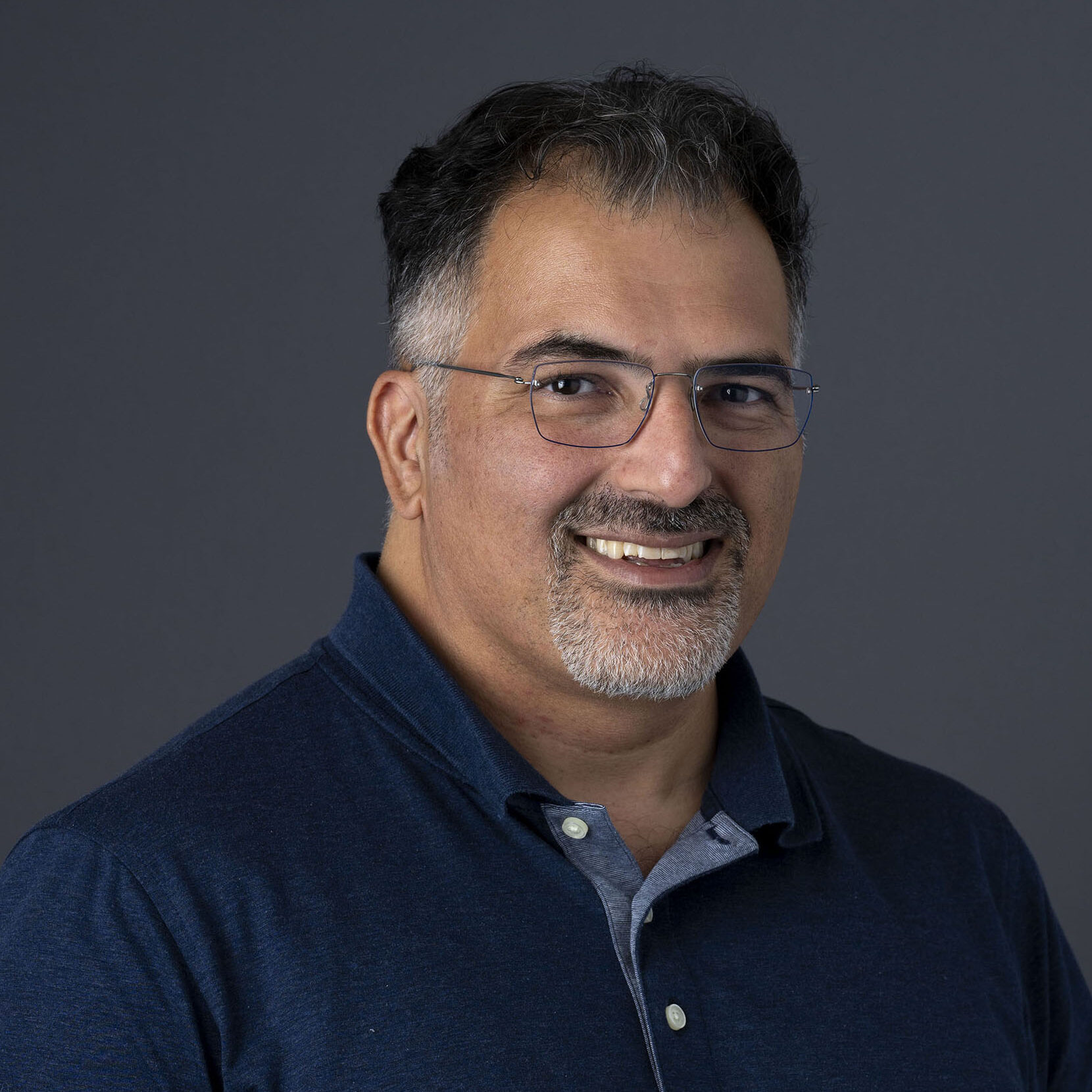
Afshin Beheshti is the Director of the University of Pittsburgh’s new Center for Space Biomedicine in the McGowan Institute for Regenerative Medicine, Associate Director at the McGowan Institute, and Professor of Surgery at the Pitt School of Medicine.
Transcript of Episode 64: Afshin Beheshti
Disclaimer: Transcripts are automated and may contain errors.
Grant Belgard: Welcome to The Bioinformatics CRO Podcast, where we explore the data-driven frontiers of biology and medicine. Today, we’re talking about space biomedicine, keeping humans healthy off planet and bringing that knowledge back home. Our guest is Dr. Afshin Beheshti, a physicist turned systems biologist who has just launched the Center for Space Biomedicine at the University of Pittsburgh’s McGowan Institute for Regenerative Medicine. Welcome to the show.
Afshin Beheshti: Yeah, thanks for having me. Excited to be here.
Grant Belgard: So when someone asks, what is space biomedicine? What do you say?
Afshin Beheshti: It’s basically the exploration of how to make humans safe and travel in space, but it has a lot of clinical applications too. So because a lot of people might say, why is, why are you studying space? Because it only affects a tiny, tiny fraction of humans, right? So, but the reality is, as we probably discussed as we keep going, it’s, it’s, it has a lot of implications to everything that happens in space. So space biomedicine is to make humans travel in space, but it’s also to make humans healthier on earth.
Grant Belgard: So the, the Pitt Center for Space Biomedicine only launched last October. What, what gap did you see that wasn’t being filled by NASA centers?
Afshin Beheshti: NASA centers, they’re a government agency, right? So they have their own rules and, and bound by their own agendas, right? So it’s good that you could collaborate with them, get grants by them, because NASA always gives funding, just like NIH does to investigators like myself and other folks in the, in the US so that that’s a good role to have. And also they have their internal projects, so they have their own agendas, but they’re bound by what is set for them, right? So in an academic setting, you’re bound only by your imagination, right? So then that’s the key there. So when you come to the, let’s say Center for Space Biomedicine here at Pittsburgh, my vision is that we’re, we don’t have any limits. You could work with government agencies like NASA, get grants. So that’s great. But then you could also work with commercial agencies.
Afshin Beheshti: There’s a lot of commercial space agency, like not just Space X, but there’s lots of folks like Axiom Space, Vast Space, the Sierra Space. You go down the list, there’s a whole bunch of new players in the field and then more will pop up, I’m sure in the future. So then the goal is to get everyone excited about it and get lots of collaborative work going, just not just in the US but globally to collaborate with people at Pitt, the University of Pittsburgh Space Center, Space Biomedicine Center. And then also this will help really accelerate the advance because space is a big problem, right? You get one person can’t do it on their own and I don’t think one agency can do it on their own and you need all the space agencies out there, the government ones like NASA, European Space, but you also need all the commercial ones and you also need all the individuals to work together.
Afshin Beheshti: So there are certain rules and regulations because NASA is paid by the taxpayer. So of course they have to follow and be bound to what using taxpayer’s money correctly. When you’re in the institution, like here in the University of Pittsburgh, academic institution, you have grants, which are great, but you all could also have other options to play with, to make the advances you need rather quickly or or efficiently.
Grant Belgard: And what key research verticals are you prioritizing at the beginning?
Afshin Beheshti: I could say I could be cheeky here and say all of them, but that’s the big answer. No, but so for space biomedicine, the ultimate goal, the ultimate goal for anyone working in space biomedicine is to make it safe for humans to travel. So you want to develop countermeasures. So that’s my ultimate goal, but to develop countermeasures, you have to understand the science behind it, right? So you have to know what’s happening in space to take a little backstep is space. Obviously is we humans have not adapted to go to space. Our bodies have been evolutionary here on the earth. The gravity we have, the lack of the space radiation is there. Luckily for us, otherwise I don’t think none of us will adapt very well. But in space you got no microgravity, very minimal gravity to none. And also the space radiation that’s up there. So in space you got the heavy ions all in the background space.
Afshin Beheshti: So you got protons and majority of it, the smaller ions, which some of it’s produced by the sun and solar flares, you get high acute doses, but also the background radiation from other activity in the cosmic radiation is these protons are produced. But then you get the heavier ions, anything, some helium, but anything from oxygen to silicon to all the way to iron particles, huge ones, sometimes bigger particles. And I, and typically from what those are from like supernovas or black holes, they just invented radiation. And then that’s your background radiation. So that, that in itself causes a really harsh environment out there. And there you get this accelerated model for aging. You don’t age faster, but all the conditions with diseases would come with it. You’re aging faster that way. So it’s an accelerated model for a lot of diseases too.
Afshin Beheshti: So for space biomedicine in itself, we want to cover all these health risks that are out there, which then will turn into the countermeasure development that I mentioned in the beginning. But to understand how to, what the countermeasures are, what, what to target, you have to understand all these health risks. And this is where it comes to the fact that every health risk under the sun is, I’m not making space sound very sexy to travel, but I think eventually it will be, once we understand this space will be really important and fun to, for the humanity to actually explore and make it go on to the next phase of what’s happening in our next step, evolutionary for humans too. So yeah, so that’s why we covered a lot of health risks out there because there’s things like cardiovascular risks, brain risks, central nervous, CNS risks, liver issues, just go down the list.
Afshin Beheshti: These are the different health risks we could talk about that are out there. But the ultimate goal then is to what’s happening and then come up with the ultimate way to mitigate damage caused. You might not be able to stop the damage caused, but then you could prevent it from progressing to then make it safer for humans to be up there. And then when that happens, let’s say those disease models that are accelerated in space, those are actually, if you come up with a countermeasure to mitigate the damage that could easily be translated down to earth, the same, the same, like let’s say heart for heart disease or cancer risk, those drugs can not be novel new drugs that you could apply it to help patients in earth for the, all these other diseases that we, everyone has to deal with on earth.
Grant Belgard: So what does success look like for as little as five years? What, what, what would make you say the center’s been wildly successful?
Afshin Beheshti: Yeah, so that’s a, could be a tough question. Well, obviously if we came up with the ultimate cocktail of countermeasures to make it safe for everyone to travel. So in five years, everyone’s out of business and we’re all in space. That would be, that’d be great, but that’s an ambitious goal in five years to do. But that’s everyone’s goal is that, and I think a lot of people’s goals then in the field. But I think in five years you could, my, my goal is as successful as to, for when I can take a step back, when a lot of people in the health sciences, they, there’s a, there’s a small fraction of folks already working on space biomedicine around the US and around the world, there’s a lot of people who are not aware of it, or again, have questions like how do I do applies to space research?
Afshin Beheshti: So when I joined here in University of Pittsburgh and started the center, one of the things, a lot of people were obviously curious and interested in like, Hey, I always wanted to work with space. How do I get involved? And I say, this is colleagues I have in the pulmonary department here. I was like, well, everything you do is involved because of the health risks I just mentioned. So that was one of the goals is create awareness. Then people start realizing that what they’re doing can be applied to space and then their knowledge can be circular. It goes to space. It comes back to the earth, everything that they do. So the XLA model, and then now people are applying for grants. There’s NASA grants solicitation that no one was aware of. So then no one could apply for that. So that one metric of success would be that people start getting funding to do space research.
Afshin Beheshti: So in five years, let’s say even, even if it’s a 5% or 10% increase of people getting funds to work in space world, that’s, that’s successful because that had happened before I showed up, right? That’s one success of that. Another success is to bring awareness that to make Pittsburgh and a central hub of people coming to to say, Oh, where do we go if we want to collaborate with folks on space biomedicine? Well, they come here, they work with us. And then those other people become also knows you, you have one node and then you can start planning the nodes and the network grows now globally. You could create this whole central network of people working together in space biomedicine with, and then the Pittsburgh and the fighters might be recognized as we were the, we are the hub of it and we are creating this. So that’s another goal of it.
Afshin Beheshti: Ultimately it’d be good to, the funding is one, one metric that everyone goes by, right? So if a lot of funding comes in, then you can do a lot more research, whether it’s from government, like NASA funding or other government agencies or commercial or philanthropy, all that stuff is probably important to come in and see how that happens. And the other metrics is to start the volume of papers to come in and publishing in high impact journals, which is one thing, you know, there’s another in academics, obviously papers are your, your, your, your mark on how well you’re doing right in the higher impact journal you publish and the more attention against obviously you’ve done work that’s more impactful.
Afshin Beheshti: So that’s another goal to let more and more people within the Pittsburgh community and the University of Pittsburgh are starting to publish nice impactful papers on what they’re doing and how to apply to space research. So five years is a lot, but if the minimal is like these things that happen. And then in the process, let’s say we come up with some really cool and novel countermeasures that maybe in five years says, Oh, someone like me or the average person can go to space without having too many of the health effects. That’s that’d be, that’d be a huge success, obviously, but that might be five, 10 years or it might be the next year if we get lucky, but probably not.
Grant Belgard: So how, how are you thinking about the evolving funding landscape given, given the coming budget cuts and so on? What do you think is a likely mix of funding resources for the center and the, the, the years ahead?
Afshin Beheshti: Yeah, that’s a, that’s obviously a concerning question in everyone’s mind. Right. Not just space world, but of course, NIH world and health world and no clinical work. Yeah, there’s been, I don’t think it’s approved by the Congress yet, but maybe by the time that this, this goes on, it will be that, yeah, it’s been posed that. So in NASA, as we talked earlier, a lot of the funds, a lot of them, a lot of the funds that come to support space by administration in the US come from that. So it exists like NIH for a lot of the clinical side, which is great. But so, and NASA has a different centers and divisions money comes from so like science mission director. That’s a lot of basic research that is on animal research or using cells in a dish and things like that. So a lot of those research focuses on different types of topics that like plants and other things too.
Afshin Beheshti: That is the human research program that, as it sounds, is a concentrated human and countermeasure development. And each of them have their agendas, but of course the overall goal for a lot of the NASA solicitations to understand the basic science, but also in the meantime, come up with that countermeasure. So it’s been the budget proposal for the SMD, the science mission director, I think previous year was like the, I think about 38, 40 million for what was publicly released, but they’re trying to cut that down to 4 million for the entire thing, clean grants, people’s salaries over it. So that’s a concern. So I know for example, I have some NASA grants in that division and that’s a concern, like what happens if they do that? Can they still fund what they said? They’re going to fund future grants. Will they be getting future announcements listed, which is the key.
Afshin Beheshti: You need these solicitations to what I said earlier, to come up with the countermeasures and help humanity and the human research program. I don’t know exactly the numbers that’s been released, but I think it’s like at least half their budgets could be cut too. So then I forget the numbers there, but that’s a big concern, right? So, so that’s that if someone’s reliant only on the funding, which is essential to do scientific research and help humanity, and most people don’t understand for like every dollar, taxpayer dollar spent on grants, usually it’s been estimated there’s a two, $3 return on society based on what, what it becomes out of, not just job or job growth, because they say, if I get funded, I can employ people to work for me, right?
Afshin Beheshti: From the, if I discover a drug, that drug is going to go to another higher thing and I’m going to employ more people and then save lives and maybe also not only help space, but also when I said coming back to the clinic, lower health costs, because now people don’t get those diseases to put a strain on the community. So those are the things that people might not be aware of, that these cuts are going to have a downstream trickle effect, not just in the NIH, but that’s the world, the same thing. So then you have to start thinking of alternatives. For example, I have some funding also from industry that helps develop countermeasures, just so people, more and more people might have to think about that, which is, it’s there. So industry, for example, has to think about how does space help them.
Afshin Beheshti: And one of the things like, for example, I’m, I have funds to look at this mitochondria supplement. This one company asks, I do a lot of mitochondrial research and mitochondria are the powerhouse of your cells, basically all your energy produced, but this is a very simplified view of it. This does a lot more, but it provides a lot of energy. So you’re in space, we’re showing that mitochondrial is heavily impacted in space. You get that means your energy production is lowered and this is bad news because downstream it causes a lot of downstream effects of immune system dysregulation and so on. So they’ve provided some funds to say, we have a mitochondrial supplement that could just work in space. So they provide funds for me that now I’ve shown that potentially has a lot of promise to maybe be a part of a countermeasure cocktail or to cover some of the damage done.
Afshin Beheshti: So that’s an example of industries coming. And how they benefit from it is now they see, oh, it works for this. Well, they can market it that way, too. You know, also the applications, as I said, clinically, I’ve already said to them, like this, this supplement might also be potentially beneficial for long COVID patients, because what I see happen in space is very mere as what happens with people who had COVID and now experiencing long COVID. So now we find potential therapeutic, which there’s no therapeutic, there’s no help for unfortunate the millions and millions of people suffering with long COVID. But that’s a space application from a school funded research that not only will help mitigate space damage, but also now go back to the clinic that helps potentially help exactly do the tests and that they can potentially provide more funds or someone else. Well, then we can do that.
Afshin Beheshti: So and then, of course, philanthropy is always good because if people there’s a lot of rich people out there, right, if they’re listening. But a lot of those rich people also can be interested in space research. And again, they might be interested in potential ways to provide funding for this. That’s another resource. So those are the things that we I think as a community, especially in this center, we have to start thinking of pivoting to it is it’s a balance of things. But the unfortunate side is, as you mentioned, the government funding and it’s going to be tough, at least in the next three and a half years, things might bounce back afterwards. Things change. So, yeah, that’s that’s a concern for everyone. Not just in the space world, but of course, across the board for all.
Grant Belgard: Well, maybe following on that, get into some of some of your research. Well, tell us about what you discovered about mitochondrial stress and astronaut samples.
Afshin Beheshti: So I guess a little bit of mitochondrial 101 basics of mitochondria, because mitochondria can get very complex, too. As I said, it’s a mitochondria is used to be long, long time ago. It’s a bacteria. It’s not to be bacteria. It’s all an organ, right? And a long time ago, evolutionary cells and cells started interacting with this bacteria. They realized, wait a second, these these things are providing us a boost of energy, right? So why don’t we incorporate this into our cells? And that’s what happened to evolution. They said, oh, wow, this is great. This is actually going to be helping not just humans, but plants have it. Every every animal or invertebrate or vertebrate has mitochondria. Right. And it’s for the energy production. So that’s where bacteria don’t have it, because mitochondria was a bacteria. So that’s the only that’s one of the reasons it doesn’t happen.
Afshin Beheshti: But that’s the thing where evolutionary mitochondria got about to provide their energy. And then this downstream of that makes you also helps your immune system. That’s why there’s some antioxidants out there to reduce reactive reactive oxidant species that causes mitochondrial deficiency. That’s why there’s a lot of antioxidants out there to lower that and then improve your mitochondrial and improve your energy production. Now, your two most bioenergetic organs in your body are your heart and your brains. For example, your your brain’s only two percent of your body mass, but 20 percent of the mitochondria in your brain content.
Afshin Beheshti: So that you could imagine if you get, let’s say, damage done over time or in brain, if something’s targeting your mitochondria, that could be detrimental because things like brain fog or changes in the brain for how you really dysfunction that way, your mitochondria severely damaged can affect your whole body. Again, your heart’s another bioenergetic organ. So that’s the one. Mitochondria damage there. That could be a concern. So that’s the kind of a crash course. Of course, mitochondrial biology and metabolism has a lot more to it. But the simplest they put is, as you might hear, it’s the powerhouse of your cell. That’s a simple simplified version. So. Yeah, getting jealous about about work you’ve done with mitochondrial targeted subjects. Yeah, yeah, yeah, so exactly that. So in space, what we see is that mitochondria give you the little crash course of the mitochondria biology first.
Afshin Beheshti: But in space, so what we see in mitochondria is actually heavily suppressed. So, you know, if the radiation damage that so your energy production is heavily suppressed and then this across all tissues from experiments we’ve done from sending mice to space cells and also simulated experiments we can do on Earth from simulated radiation, space radiation and like microgravity kind of similations. So we see that across the board. That’s detrimental. Right. So how do we stop this? So one of the mitochondrial supplements that’s been funded by this company at Succo, this is a Japanese company, the Nutri-Cellulosecocide had this supplement called Chemferryl. So Chemferryl is a flavonoid. It’s found naturally. You probably had some at lunch, breakfast or when you’re eating this, whenever someone’s listening to dinner. So it’s found in leafy greens like kale, spinach.
Afshin Beheshti: Watercress actually has the highest content of Chemferryl. So out of all the plants that I know of, some fruits have it like blackberries. And I forget, there’s a whole list of them that have it. And this is the flavonoids are a bunch of different flavonoids, Chemferryl is one. And so we’re testing this because Chemferryl is an antioxidant. It actually targets mitochondrial biogenesis, meaning it boosts that signal. So as I said, space actually lowers your mitochondrial energy and your mitochondrial copy numbers and your content. So you want to have something to boost your mitochondrial signal by creating more mitochondria there. And this is one of the things that it does. So this is one thing we’re testing.
Afshin Beheshti: And so far we’re showing that, like, for example, we have these, one of my collaborators, Rob Schwartz at Well Cornell Medicine, he can do these like organoids in a chip, meaning things that are derived from stem cells that someone had determined a long time ago. You put us in factors and you could differentiate the cell into creating like a heart in a dish from cells or creating your liver in a dish. So not real heart, real liver, but it’s from a stem cell and you could create that. So and for example, the organoid, heart organoids, they beat in the dish the same kind of beating your heart does. So it’s cool. So, but for example, radiate, this is the space radiation. What we see is that the heart is actually the beating is actually reduced significantly because of the damage done by the space radiation, which could be detrimental. But we give it chem furrow.
Afshin Beheshti: And remember, I mentioned the heart is one of the most, in your brain is one of the most bioenergetic organs. So it makes sense why the reduction of the beat happens because your mitochondria is being severely damaged. We give chem furrow to that. And now it’s back to the control level. So that was like, wow, this is great. Complete mitigated damage. We’re working on the papers now to probably in the next couple of months, we’ll submit all these papers so the public can see it and then go down the list. Like the liver is heavily impacted by it starts, as I said, space and exhilarating model of diseases. So in the liver, what we see seems like cirrhosis might be being advanced in space for the liver and different factors like that.
Afshin Beheshti: So metabolism, for example, liver, there’s a lot of drug metabolism and the metabolism, a lot of things in your body, those activity gets lowered when you give it the space radiation. We give chem furrow and it starts coming back up to the depending on the radiation dose. We gave it similar space. It starts coming back up to like the normal levels, control levels, that radiation. So that’s really promising. Now, there are some factors that it doesn’t rescue because I don’t think this is one pill is going to not cure all damage done. So I think then we have to think about in mitochondrial, different organs can be targeting different types of mitochondrial factors and pathways. So this is the part now, I think it’s probably a mitochondrial cocktail that eventually will make it safe for people to travel in. So this is the part where this is promising.
Afshin Beheshti: Now we have to go on the avenue and think about what other kind of mitochondrial nutritional supplements or there’s other type of flavonoids similar to this that target different types of mitochondrial biogenesis or metabolism. So what kind of cocktails to get? So this is where more fun things would need more experiments to do. And then once we have the ultimate cocktail, this is like the magic pill in sci-fi movies. Oh, I just took this pill and I’m cured. I could just walk around and get exposed to all this radiation. But that could be reality in five, 10 years. Maybe we’ll do it. That’d be our measure of success. So that’s the key. That’s some of the exciting results that were some of it’s already available in the preprint that we’re addressing. Some of the reviewers comments, this one paper.
Afshin Beheshti: But a lot of these results are going to be public or submitting for peer review papers and publications in a couple of months. And then that would be once it’s gone through the peer review process and then hopefully be published by the end of the year or so.
Grant Belgard: Can you tell us more about the similarities and differences between long COVID and space flight, mitochondrial damage?
Afshin Beheshti: Yeah, yeah, definitely. So this is this is like a really good example of like what I said earlier, when people ask, why do you use space station? Why should we care? So the so, you know, I always tell people it’s always circular. What you do in space accelerates disease models. And then what you find there comes back to the clinic. Vice versa. What you find in the clinic can help space. So it’s a nice circular loop that helps everyone just to back up this one adult thing, like from the Apollo mission, everything like in the morning when you get up, half the stuff you use is what’s developed from the space research space mission, like your camera phones, a camera in there got miniaturized because they had to figure out in satellites how to get miniaturized cameras into all these components.
Afshin Beheshti: That’s the technology of all that, like your glasses here, the scratch was resistant that the glasses have was actually developed from the visors from helmets to prevent space debris. So your glasses are going to maybe potentially, I mean, of course, a little thicker. I would advise going into space with just your glasses. But so this is examples how technology has evolved that way. Now, medicine is the same way. So this is the long COVID example, which is really great. So in SARS, what we have shown from our research is that SARS-CoV-2, the virus of COVID, that it actually targets the mitochondria. So what we in the Q phase, meaning that first get infected with the virus through this one microRNA and microRNAs are these small RNA that target thousands of thousands, bind to thousands and thousands of genes that would inhibit genes. There’s some good microRNAs and some bad ones.
Afshin Beheshti: Sometimes what viruses do is hijack the machinery and incorporate the part of the microRNA that would bind to your genes. And in that case, then what it does is it uses that machinery to produce more of this microRNA to recreate the landscape, bind to all the genes and it needs to bind for it to thrive. What it turns out, what we found, I mean, this is the published data we have in the past few years, is that this microRNA is actually binding to all the mitochondrial genes that you need. So the virus then, if it does that, then it recreates the landscape and inhibits all the energy production your cells need, which is the oxidative phosphorylation activity to create ATP, which is your energy production. And then the virus could thrive better.
Afshin Beheshti: And this is why, let’s say, when you get COVID, you get the brain fog because the brain fog is related to the mitochondrial defense or you get cardiovascular issues or you feel tired, very tired and very, you can’t get out of bed and you get exercise intolerance. Again, your energy production is really heavily damaged. Downstream of that, then it impacts your immune system and all the other things you see that happen to many people. So similar, similar mitochondrial damage happens in space, same kind of activity. Now, people who don’t get long COVID luckily bounce back. The mitochondrial, even if you looked at the data, this is another paper we’re working on, hopefully to be submitted for publication in the next month or two.
Afshin Beheshti: But what we see is that people who recover from, don’t get long COVID, their mitochondrial is actually comes back to level, gets boosted back to normal signals, even maybe it gets a little higher than normal because it’s creating this per basically repairing all the mitochondrial damage done. Now, unfortunately, the people who have long COVID, they have their mitochondrial levels and the suppression that happened never recovers. Even a year after from the data we have in this paper we’re working on. And it’s same in the brain, from the animal models we looked at in the brain, indeed, like the certain regions that are involved with critical thinking or how you’re, how you could actually concentrate with this relates to your brain fog, that suppression like in the cerebellum, for example, that suppression happened of the mitochondrial signal.
Afshin Beheshti: Again, this is like a dissimilar profile that you see in space. Downstream of that, you get an increase of reactive oxygen species, you get more of a hypoxic or lack of oxygen in your cells produced by this, and then it causes cell death or dysfunctional immune system. So that parallel, although long COVID is caused by this virus doing it, space is caused by space radiation and then microgravity, the outcome is the same. In space, that happens a little quicker than the long COVID patients would do. So that’s an auxiliary model of diseases. So this is where now this conferral potentially could be a therapeutic for long COVID patients now, but now we have to get the funds applied to that and see, test it out. I could be wrong because as well as science, you have a good hypothesis, you test it. If it works, that’s wonderful. If it doesn’t, you admit it, you’re wrong.
Afshin Beheshti: You move on to the next step. But that’s what says this is how discovery is made, right? Not every discovery is going to be, not every hypothesis you’re going to be right. But that’s part of science. And then when you learn it’s not right, that helps the community too. So no one wastes money, wastes their effort and repeats the same mistakes or not mistakes, but the same wrong hypothesis.
Grant Belgard: Can you tell us about upcoming flight experiments you’re involved with?
Afshin Beheshti: Yeah, sure. So these are potential flight experiments, I should say. We’re applying for, there’s a company, Sierra Space, that does Dream Chaser and Dream Chaser kind of looks like the futuristic shuttle. It’s one of those, it’s going to basically not be a rocket that shoots up. It’s going to be, looks like a, and right now, currently, usually the payloads that go up is on a rocket, it goes up, right? And it comes back down as like a fireball and then it has a parachute comes up and lands either in the desert or in the water. This one actually is like the old shuttles, but now more futuristic looking. And it’s going to glide back into the atmosphere and land on the runway. So that’s the Dream Chaser, which is being built by Sierra Space. It’s supposed to launch, the first launch of it is in November or December sometime or October, some of them aren’t there.
Afshin Beheshti: So we potentially have opportunity to apply for this. And if they select the opportunity, then we could put, this is unmanned free-flyer missions that we could actually put some cells or some other types of experiments in there. So that’s one of the missions coming up that potentially we have access to. As I said, these commercial entities, NASA has their potential opportunities to get things in space, but then all these commercial companies make it, space is actually becoming more and more accessible to everyone because of all these great things companies do. I have some potential NASA grants in the, in the works or not in the works, but in the review process, which has potential flight to happen if they select it. But again, the grant process goes over peer review. If you get a good score, hopefully there’ll be funding and they select it. Then I could launch that.
Afshin Beheshti: So some of the experiments I do, would like to do with these future experiments is that one of them is can add killifish in space. So it sounds odd, you know, killifish. So this is with my collaborator, Jason Perdesky at Portland State University. So killifish are when they’re hatched normal fish, they’re, they’re just normal fish, not extremophiles. And, but when they’re embryos, they become extremophiles. And extremophiles are basically are a category of organisms that as the name sounds, it are, they’re extremely resistant to a lot of different things. And, and, and in this case could be radiation, could be heat, could be whatever else. And they’re creatures that have developed to live in some extreme environments, hence the name extremophiles.
Afshin Beheshti: So these killifish, they’re, they’re actually found in the Amazon riverbeds, African riverbeds, and nine months out of the year, approximately the riverbed dries out. So it’s basically, it’s like a mud, mud pie sitting in the rain scum that floods again. So the fish three months out of the year have hatched, they’re floating around. So now they have to survive. So they lay their eggs and now the eggs have to survive in that extreme environment without any water. There’s all that heat and everything else. So they’ve developed this evolutionary to become an extremophile. So they have the three stages in their embryos called diapod stages.
Afshin Beheshti: And the diapod’s two stages, their most resistant, resilient stage, and my collaborator who’s done experiments on these embryos and these fish, like they sell, like for example, gamma radiations, which is different from, as I mentioned, the space radiation, you could expose them to 50 gray of gamma radiation, which will kill us if you got exposed to that. So don’t get exposed, force yourself to 50 radiation. They actually start fine. The embryos are fine, they hatch fine. Oh, okay, great. 4% hydrogen peroxide, which would be really toxic to us and damaging to us. They’re fine. So then you could go on the list. They have lots of really neat extremophile properties. So the idea is now, why we’ve done similar experiments already, we already launched from the space a few months ago, rather than new missions to do that, is capture why these things are so resilient, right?
Afshin Beheshti: And so, so resistant. And can we adapt that into human cells and figure out the same mechanism? So we’re not going to create a half fish, half human, although that might be cool. But the key would be to figure out the pathways, the mechanism it’s developed this extreme resistance and apply that to them. So what some evidence and some links were already discovering, and Jason’s the one who’s really running this by, and we’ve done like some sequencing, exposed to space radiation or abandoned space, or, and some things we see that he mentioned is that in that diapause to extreme state of resistance, their metabolism mitochondrial basically shuts down to zero. Basically it’s an extreme hibernation state. And so why, why would that be important? So I mentioned that mitochondrial dysfunction happens, right? It’s suppressed in your space.
Afshin Beheshti: When that happens, you get reactive oxygen species, and a lot of reactive oxygen species in your cells are bad news because that’s creates, perpetuates more and more damage in your body. Wouldn’t be like, that’s what, that’s what would help create this like lack of hypoxic or lack of oxygen in your cells and tissues, which are downstream. It ramp up your glycolysis activity and your metabolism is screwed up in the immune. But if your metabolism is shut down to zero, mitochondria is shut down to zero, it can’t do create the metabolism species. So, okay. So then the cells basically is a dormant sitting there. You radiate them with like the space ratios. Sure. You still get the damage done. The DNA, when things get radiated, your DNA gets damaged, right? But then in your body, you have a bunch of DNA repair protein activity that comes in to try to repair all that damage done.
Afshin Beheshti: But when there’s reactive oxygen species and things like mitochondria dysfunction, there could be dysfunction in that repair to perpetuate damage and cause all the health risk. And this is the case here with the killifish. If that’s shut down, maybe it has just your body, their, their system to repair the DNA is fine. Goes on it and functions fine. And it survives that damage done. So that’s the part where I think that then you might think about using that kind of idea. Can we, let’s say that could be another type of countermeasure. Is it maybe a hibernation model or something? Like you see in the sci-fi movies, they go in the hibernation chamber and they sleep and I have colleagues who are like researching hibernation as a thing for space.
Afshin Beheshti: So that’s, could that be another physical type countermeasure you might do, or maybe adapt the cells to slow down the metabolism space or do something. So that’s, there’s been other types of research people have done to figure out how resilience can be adapted to human biology. Right. So this is another example of it. So that’s one example we’re trying to send these killifish in, other than the sounds neat, we’re sending killifish to space, but the other part is you could figure out what the resilience of how, why this is so resilient, adapted to human. And then not only would that help us in space, but it could also make us adapt to extreme environments on earth since unfortunately things are getting warmer, right? Climate change is happening. So maybe this could be another way of figuring out how humans could adapt to changes that are happening on earth if we see it.
Grant Belgard: That’s pretty cool. So you, you co-authored a nature perspective and what you actually called this the second space age. What distinguishes this from the first space age of the space age of Apollo and the ISS?
Afshin Beheshti: Yeah. No, good question. So few things. So the first space age was really a two state, literally a two state problem is the USSR and United States. That was it. So the amount of things being launched in space was limited because the technology wasn’t there. And then also limited resources because of just that. And of course it’s just a base war between two countries that happened. So the advancements made were based on the, say, if this person did this, oh, this country did this. We’re going to do this in response. And then of course the US did well. They went on the moon first, right. And then the [Sputnik?] program, the USSR did well too. They had, but they’re US, of course, as we know the history. But the second space age now in that paper, you can see this little chart.
Afshin Beheshti: And as you can imagine, what happens, there’s been a kind of a steady line of things from the beginning, from the Apollo mission in the late fifties and go on Apollo mission in the sixties. But the first things lost to space in the late fifties until about 10 years ago, it’s been a steady state of things being launched in space. A steady state amount of things from satellites to manned missions and so on. But in the past 10 years, all of a sudden there’s this huge explosion, like an exponential increase, even bigger exponential where, you know, a thousand fold increase of things being lost in space.
Afshin Beheshti: Because now not only it’s not just two countries, it’s lots of countries above now, like all those European countries or the European space agency, for example, every country in Europe has their own space agencies, Japanese space agencies, the Indian space agency, just go on the list, it’s Australian, so I don’t want to leave out anyone to get mad at me, but everyone has, every country has this space agency, whether some are more active than others, right? If some have more resources than others, but everyone’s involved now because they see the benefits of how space can help humanity. So that’s one thing. So then more things gets launched in space because now more countries are launching things in space that way. In addition to countries, government agencies, now you’ve got all these commercial companies, right?
Afshin Beheshti: I mentioned earlier, obviously everyone knows SpaceX, that’s always in the news, because they’re launching things consistently. But there’s all these other ones, like Axiom Space, for example, is building, the International Space Station has been up there for now, 25 years, I think, is it? And the government could decommission by, I think, estimated by 2030, something like that. But these room, maybe some commercial companies can use what’s there. So Axiom Space is building a module for a new space station there, and then, see the ISIS decommission by the government, they could maybe some of the orders they could detach and be their own space station now. Vast Space is another one that they’re launching. They’re going to launch the first commercial space station up. I think they’re doing very well for themselves and they’re beating everyone.
Afshin Beheshti: And they’re going to have their own space station up now in the next year, supposedly tentative what they’ve been planning. And there’s all these space labs, you just go down, I think there’s at least four or five space companies planned to run space stations up in low Earth orbit. And then there’s other plans for other countries to get together. Gateway was kind of a joint, ESA, NASA, and other, JAXA and other government agencies to be a space station in deep space closer to the moon, as it sounds like. Now, I don’t know if NASA is still part of this approach, but ESA still would be probably going full force with all the European space agencies that are in JAXA and so on. The eventual goal is to have a moon base again, before people are going to start thinking how to do research there. And of course, if we want to go to Mars, right now it’s probably a one-way ticket.
Afshin Beheshti: So maybe the people who are really advocates, send them there. It’s okay. They could be our guinea pigs, a few people in mind, but that’s okay. Eventually, then once it’s safe, then everyone can do that long year trip. But you have to do the baby steps. You have to figure out the condiment. So this is why it’s the second space age, because you got not only just two countries, you got this huge explosion of things being lost in space currently. And then it’s even more things planned to go. As I said, some agencies are planning to do a space hotels or space tourism. Although I would say maybe if you’re up in space for three, four days, that might be okay. You’re still, from some of our work we did in that nature package, that looked like 95% of signals were coming back to normal. But there’s still 5% of signals that don’t, which one of them was a mitochondria.
Afshin Beheshti: So still, even though three days in space, a lot of things come back to normal space, there’s still 5%. Those 5% could be pretty detrimental for you if it’s your mitochondria. I don’t know if I would recommend space tourism just yet, but by the time, let’s say, these space hotels are made, maybe we’ll have the cocktails to make it safer. Do I want to go to Hawaii or do I want to go to space? So that might be the discussion you have with your family in five years. So that’s why it’s the second space age, because it’s the explosion of everyone just watching things in space and wanting people to go.
Grant Belgard: Has anyone looked at frequent flyers? Obviously they’re getting as irradiated as you would in space, but do they accumulate mitochondrial deficits as well?
Afshin Beheshti: I haven’t looked at that. That’s a good question. I haven’t asked that before too. Oh yeah, the frequent flyers. Yeah, you’re getting closer to, of course there’s an atmosphere. I travel a lot, so I’m probably a frequent flyer. And the thing is though, the ozone layer protects you from the galactic cosmic rays. So it’s a different kinds of radiation that you’re impacted then from these. But nonetheless, you do get a higher dose of radiation than non-frequent flyers, right? Although, granted, it’s very low. So my dad was a commercial pilot, so obviously he was a frequent flyer. So there are higher incidents of cancer risks in commercial pilots. Now, is it because of the radiation? I think there’s colon cancer is one. But also one of the things is that the pilots are sitting on the radar without shielding. So if people sit on radar, there’s a cancer risk normally with that.
Afshin Beheshti: But if you’re over your entire career of being a pilot, you sit on it constantly can that contribute to cancer risk? I don’t know. Research has to be done for that. Maybe, maybe not. Again, and for the frequent flyers, I don’t think they should panic that they’re going to get an increase of cancer risk or health risk because the research is either way at this point because no one has done that research. So the short answer to your question is no. No one has really conclusively said, are you going to get increased health risk if you try? That’s a good question to actually explore because that could be another avenue of increased health risk due to maybe more exposure to radiation at that level. And then the next step is now you go to space and get the bigger dose and more damaging radiation.
Grant Belgard: Can you walk us through your career? Tell us how did you end up here?
Afshin Beheshti: Yeah, so I don’t have a, my career is not a straight path. So some people who go into science, they studied some factor in the graduate school and then did that for the postdoc. And then they keep going that career path, that trajectory. Mine’s kind of been all over the place. I started one place and then randomly jumped to somewhere else. I started in undergrad. I got a, I’m a physicist, so I got a bachelor’s degree in high energy. I was looking at high energy physics. So high energy physics is basically when people go into high energy physics, smash particles together. And it’s basically trying to figure out, the basic question is to figure out the fundamentals of life, universe, and everything. And I guess Douglas Adam would say it’s 42, but I don’t know if his high energy physicists will agree with that.
Afshin Beheshti: So then in the graduate school, I switched to, I’m going to put biophysics in quotes because I was looking at, now I was trying to get closer to biology. I was still a physicist. So my PhD was looking at how DNA moves through objects and look at, I didn’t even care about the biology of DNA, but I want to know how they move. As a physicist, we model things. So I was modeling how things, DNA moves, stretches, gets through different networks, because it’s going to answer different kinds of questions about how your body can function or how drugs can behave, things like that. So I did that. And then at one point, I was getting close to the end of my PhD to figure out the next steps to do a postdoc. I said, well, I want to do more things that are clinically and human relevant. This is getting there. So I only took one biology course my entire, the freshman biology course, that was it.
Afshin Beheshti: But I said, you get your PhD, it trains you to think. We all know how to read at that point, hopefully. Maybe some don’t. But at that point, you know how to read and think. And the main thing in graduate school, I think I’ll tell you, you learn your critical thinking. And half the things you learn in biology are wrong 10 years from now, too. It’s not like physics, you get the fundamentals of gravity and the fundamental forces, right? In biology, and this is the nature of biology, it’s just so complex. We learn some things and then some new discovery comes along. Oh, that’s the true mechanism behind it. So they’re almost right. But now it’s a ball to this part, right? So that’s then when I switched to a microbiology lab. I moved to Boston and worked at a place called Foresight Institute, which they concentrate on oral microbiology.
Afshin Beheshti: Now, why they, why the principal investigators, the people in the lab hired me as a postdoc is because the techniques I had, I just go about looking at how DNA moves and separates, apply it to what they want to do with the microbial work. And then after that postdoc, I did another postdoc where I joined the cancer systems biology. [Under?] actually the director. Her name is Lynn Halaki. She was a physicist by training, too. So she understood, oh, the physics is mine. And I joined the cancer systems biology. But systems biology at the time was a newer term. And what that means is biologists have been trying to solve things by their own cancer and things like that for centuries or not, well, decades, we’ll say decades, right? But for centuries, but decades. So in that case, they haven’t really solved the ideas that you haven’t solved as much on your own.
Afshin Beheshti: So and the goal is really to solve complex diseases. You need a multidisciplinary. You just don’t need biologists. You need mathematicians. You need physicists. You need biologists. You need computer folks and computer scientists. And so you go down the list. And once you get all these different ways of thinking together, this is where you might come up with the new discoveries and use all the different tools from the different fields to actually really tackle like a complex thing like cancer, for example. So that’s that’s the system biology. And it’s a top down approach thing. The biologists who look at mechanism, they’ll start the nitty gritty like molecule, how that helps, which is important. But they also need the top down approach. How do you connect all the different nitty gritty details that are there? So that’s where I joined the cancer system biology lab.
Afshin Beheshti: And we’re looking at cancer. I was doing a lot of wet lab work and also computation works, physicists can do work. And then she had a large NASA grant that got us out of the space field. She had NASA grants, started working on NASA work and cancer work and eventually ended up at Tufts Medical Center where I was working on some more on cancer. But then one of my colleagues and friends joined NASA Ames Research Center in Silicon Valley area where they’re starting to develop this tool called GeneLab, which is a platform available for free for everyone to use in the public and the world. And this is where all like the big data, the omics data, which is the bioinformatics sequencing data ends up free and it’s deposited the one resource that the whole world can use. So my colleague’s name is Celan Koss who was the project manager for this. Now it’s called the NASA Open Science Data Repository.
Afshin Beheshti: And there that whole platform was there for the public to use. And now it’s a great resource. So there I joined NASA Ames Research Center and eventually start helping with that because I’ve been a lot of space research now. And then eventually I got my own grants in the past few years of NASA Ames Research Center working on topics of the mitochondria research or also other things like microRNAs, trying to figure out how to make a safe basically for humans travel. And then this is how I ended up at Pittsburgh. Was that about a year before I joined, I was at a meeting, there was some data being presented and then meet some people here and they started recruiting me here because they said, oh, what I’m doing can be applied to that. Just starting the Center for Space Biomedicine, a lot of different things like I mentioned earlier, everything I do applies to many different fields.
Afshin Beheshti: So cancer, COVID, trauma, things like that. So eventually that’s how I ended up now in the Center of Space Biomedicine, but also still working on all the different fields out there because a lot of things you do is plug and play.
Grant Belgard: So what do you think are the key skill sets that tomorrow’s space biomedicine scientists will need?
Afshin Beheshti: I think it’s multiple things. One is there’s still a lot of unknowns in space, right? So that’s what makes space biomedicine really fun because there’s always novel things to discover so far. So one of the key things I always say in science in general, not just space, but space always works is that, yeah, don’t lose your inner child. That’s keep your inner child. So I think the more creative you are, which kids are very creative and imaginative, right? And so that’s the key. I think in space more than others fields, maybe keeping that inner child and creativity is a key because you have to come up with a lot of out of the box thinking. Sometimes it’s design experiments. How do you do it in space? Because when you go on your bench here on earth, you could pipette, you could do this, or you can set up a cell. Now we don’t have any gravity. How do you do that same experiment?
Afshin Beheshti: So that’s the part. Creativity is key, not just design experiments, but also coming up with novel questions to ask. The other part is having, I think in general in science, not just spaces, you could be a wet lab bench scientist, but having the key computational skills is key because now there’s a lot of computational algorithms, AI tools, ML tools, machine learning tools, bioinformatics, the whole sequencing data. This is all integrated now. It’s a lot of times people just focus on be that and computational biologists, and then they collaborate the ones, but understanding the language between the two is key because sometimes they might not, the competition biologists might not fully understand the biology and the wet lab biologists might not fully understand how the computation biology is done.
Afshin Beheshti: So having the inter cross-lingual language, diverse computation and wet lab is key for them to have. And I think that’s a true success for the scientists to have. And the space biomedicine, of course, you have to understand radiation biology because that’s one big thing that happened in space, having understanding how micro impacts and just really understanding the differences between space and earth. But in general, I think any kind of disease focus you have can be applied to space, but understanding the fundamentals there for space is key. And also just having the, if you’re open-minded and want to work on many different subjects, space might be the thing for you because all the different health risks out there is really key. And solving that is like putting the jigsaw together, puzzle systemically, why are these things dysfunctional?
Afshin Beheshti: Maybe there’s one key thing connecting things together like mitochondria.
Grant Belgard: What do you think is the most underappreciated health risk for a Mars mission?
Afshin Beheshti: One that is right now is in the space biomedicine field, most everyone knows what this is called SANS, space-associated neuro-ocular syndrome. But non-space people might not know what that’s saying, non-space biomedicine people. SANS is a space neuro-ocular syndrome. And it’s the case where some astronauts, not all, but some lose their vision or not lose their vision, but they have vision decline. So no one like in the ISS, the International Space Station has lost their vision. But what happens is that they might cut, their vision slowly gets worse and worse. And they come back to Earth. Some of them who didn’t wear glasses, they’re now wearing glasses. Again, it doesn’t happen to everyone. So that’s what classically is thought of.
Afshin Beheshti: Maybe since of the gravity, you get the flattening of the deme, you get like pressure changes, fluid shifts that happen that can contribute to the vision loss. I think it’s mitochondria because I’m a mitochondriac. That’s what we call ourselves when everything’s mitochondria. So because in the mitochondria, there are diseases that due to mitochondrial mutations, patients would lose their vision, the kids would lose. But we’re showing that it could be, but it could be a combination of mitochondria. So I think that’s one, if you’re going to Mars and no one’s been in that deep space condition outside the Earth’s magnetic field, that reduces the dose due to the physics. But going to Mars is about a year, year and a half trip, round trip. So no one’s really done that.
Afshin Beheshti: So if you’re doing that, what happens if your vision declines to a point when you want to be blind by the time you get there or in the middle of it, that’s bad news. So I think that might be one. I think also one of my colleagues, Keith Seward, he’s at University College London. He’s looking at kidney effects. He published a really good paper in that Nature Package looking at comprehensively what happens to your kidney. And he’s finding, yes, health risks related to kidney, the renal tubes in your kidney start collapsing and other things. But more importantly, he thinks there’s going to be a potential risk of kidney stones. So imagine if you’re halfway to Mars and you get a kidney stone out in space, how do you resolve that problem? That’s going to be a huge issue. You do it on Earth, that’s a problem, right? On Earth, when you get a kidney stone, that’s a hard thing to deal with.
Afshin Beheshti: But in space, how does that happen? We could keep going. But I think some of the more interesting things are that I would say all of this is probably heavily related to mitochondria. So that would be the maybe the central focus of a health risk, meaning mitochondrial diseases or like that. So maybe mitochondrial disease would be my number one pick for people at Target because it could maybe impact a lot of these health risks and improve conditions.
Grant Belgard: Mitochondrial deficits are obviously a big area of overlap between what you’ve been discussing, the longevity space. What are other areas of overlap between space biomedicine and longevity research?
Afshin Beheshti: Yeah, there’s a lot. So I don’t research this. I have colleagues and collaborators who do. My collaborators, Susan Bailey and Chris Mason, they’ve looked at telomere length. So, you know, the telomeres that kept the chromosome and as you grow older, they get shorter and shorter. Right. So then that means decline of your aging that happens and that could be the health risk. So interestingly, in space, what happened is when this was first, they did this study The twins study Scott Kelly, who went to space for a year, and his identical twin, Mark Kelly, was on Earth. And now Mark Kelly is a senator, of course. So the idea is comparing genetically identical twins, what might change, what not, you know, what changed. But what they saw was that with Scott Kelly, your telomeres actually got longer. So people were like, what, did he get younger in space? It came back.
Afshin Beheshti: He actually, what happened was it got, it got to the normal length, but then it got shorter than it should have been. So that means it made me, because aging got a little excited. But when he was in space, it got longer. And it’s been told that also he lost weight and he got taller. So it was like, oh, great, a great diet plan. But fortunately, when he came back to space, the telomere thing that happened, and then luckily, well, luckily for science and the reproductions, the NF1, what they’ve done is they’ve looked at telomere links, how they are for other astronauts and other cohorts, like other 10 and more astronauts, and they see the same pattern happen.
Afshin Beheshti: So they have some ideas, maybe potentially this could be like some potential other factors like these non-coding RNAs that could be involved that could be causing this or other factors that, and it’s not a sign that you’re growing younger, it might be a sign that it’s causing damage to your chromosomes and your telomeres because of the environment you’re in. And this could maybe contribute to potential, not as long, for longevity, it could maybe reduce it. So how do we stop that impact? For other longevity kind of type of work, one of the area focus I work on is microRNAs I mentioned earlier. MicroRNAs, the Nobel Prize was won on that last year, people had discovered it. And microRNAs are basically small RNA that’s 22 nucleotides. And before the people discovered won the Nobel Prize, people thought they were just deprived because of the size. They thought, oh, it’s RNA fragments.
Afshin Beheshti: These are not important. So one person’s garbage turned into this Nobel Prize, this huge thing. This is a lesson for people in science and in general, don’t discard things that seem like garbage because they become very important, at least in the scientific world. But anyway, these microRNAs, as I said earlier, they could bind to genes because of this one region called the seeding region. And again, there’s good microRNAs that bind to genes that would cause detrimental impact on your body and accelerate aging and health risks. But then there’s microRNAs that diseases like cancer produce that would bind to tumor suppressor genes for that. Or an aging, there’s a whole set of microRNAs related that are expressed as you get older and older that start binding to genes that would make you age faster, would decline the mitochondria, would decline your immune function.
Afshin Beheshti: This is people have studied this in aging that show only these microRNAs are both there. So my work, I’ve identified certain set of microRNAs that might be related with what happened in space. And then I said, what happens if I inhibit these microRNAs in like mouse models, 3D organ models, human tissues in the chip? And what happens if I bind a set of microRNAs with cardiovascular risk that with aging also occurs? And indeed, when you stop that, the set of microRNAs I identified that would be involved, increase the risk of cardiovascular risk in space, you stop those microRNAs and mitigated the damage done. So that could also then translate to longevity because I think about all these microRNAs that if you inhibit.
Afshin Beheshti: But the key with microRNAs are tricky because some of these microRNAs that are being increased due to the damage, there’s a basal level in your body that microRNAs should exist. So if you inhibit them too much, now you’re going to cause the side effects, detrimental effects that you’re going to not necessarily make you for aging is involved, but it’s going to for your health. It’s important. So this is where the tricky balance is. So this is where you have to figure out exactly what the important microRNAs are, where to inhibit it, how much to inhibit it. And then this could potentially be a way not only to prevent space damage done, but also reduce. It may not make you age as fast, right? But there are people working on microRNAs as a clinical therapeutic on Earth.
Afshin Beheshti: But the issue is there has been no FDA-approved inhibitor for a microRNA because I think sometimes they’re inhibiting the wrong microRNAs involved or sometimes they’re inhibiting the wrong group of microRNAs or they’re inhibiting it too much. So eventually I think someone’s going to come up with a good microRNA therapeutic, but that’s not happened yet. But that’s another example of space research longevity.
Grant Belgard: To wrap us up, what in the space biomedicine field are you most excited about?
Afshin Beheshti: The chance that you and I get to go to space. My wife says I have to get good life insurance before I go to space. So currently I agree that right now you probably should get good life insurance. But that’s the key. Like, I think just going to space right now, people think, oh, we’re here on Earth, why do it? Well, the reason we could do it is because it’s not only the fact that we can, humans want to do things that we can, the fact of how do we push humans forward, but the advancements in science that we can make, all the great things that can be achieved that a space exploration can do. I think that’s exciting. And the chances that it’s getting cheaper and cheaper to do it and maybe more safer and safer once we figure out the cocktail of pills you could take or cocktail or hibernation to prevent that, then the unknown universe is at our disposal, kind of like we’ve seen Star Trek.
Afshin Beheshti: I think that’s what everyone wants in space. Of course, we’re all sci-fi fans. So I think that’s the ultimate goal. The excitement of going past where we are at and expanding humans to new boundaries, that’s I think really good. And then also the excitement of if we are able to make it safer, we’re able to maybe cure a lot of diseases on Earth, too. I think that’s the other part that’s very exciting for me because ultimately we got to help humanity and I think this is a key space.
Grant Belgard: That is a great, optimistic way to end. Thank you so much for joining us.
Afshin Beheshti: Thanks for having me. It’s been fun.