
The Bioinformatics CRO Podcast
Episode 65 with Jeff Bizzaro
Jeff Bizzaro, founder and long-time president of bioinformatics.org, discusses the importance of open source tools and open access in the life sciences.

On The Bioinformatics CRO Podcast, we sit down with scientists to discuss interesting topics across biomedical research and to explore what made them who they are today.
You can listen on Spotify, Apple Podcasts, Amazon, YouTube, Pandora, and wherever you get your podcasts.
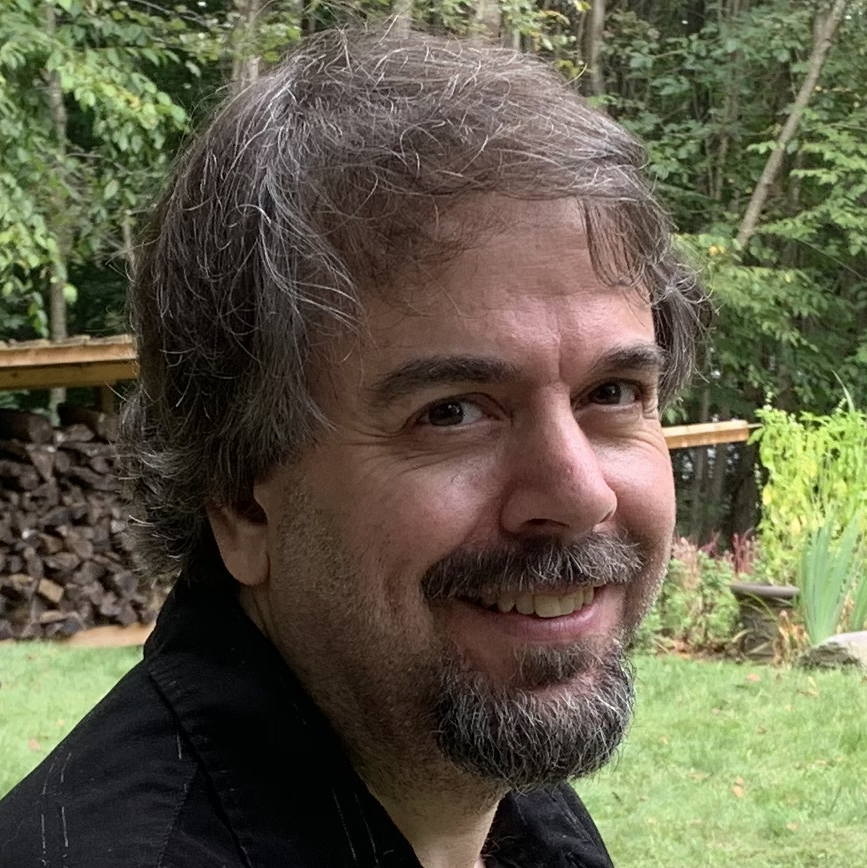
Jeff Bizzaro is the founder of bioinformatics.org, which is committed to hosting resources for open science, bioinformatics webtools and data, and open source software development.
Transcript of Episode 65: Jeff Bizzaro
Disclaimer: Transcripts are automated and may contain errors.
Grant Belgard: Welcome to the Bioinformatics CRO podcast. I’m your host, Grant Belgard, and today I’m joined by Jeff Bizzaro, founder and longtime president of Bioinformatics.org, and a tireless advocate for open access in the life sciences. Welcome, Jeff.
Jeff Bizzaro: Thanks, Grant. Thanks for inviting me.
Grant Belgard: So you’ve called Bioinformatics.org a Swiss army knife for biologists. How would you describe its core value proposition today?
Jeff Bizzaro: Well, we created the site with several goals in mind. First, to host collaborations. Second, to host open source software development. It later grew to include non-developmental goals. First, hosting web tools for analysis. Second, hosting data. Third, hosting education resources and for promoting open science. And hosting forums, primarily news and a jobs board. Many users express surprise at the variety of resources that we have.
Grant Belgard: Several classic web tools still get heavy traffic. How do you keep legacy software alive without stalling innovation?
Jeff Bizzaro: So there’s a sequence manipulation suite, or known as SMS, and a web tool that we have on Bioinformatics.org. It was created by Paul Stothard, who was an early contributor. And it’s one of our most popular tools, actually. The number one tool in terms of traffic, overall use. A lot of the tools that we’ve been hosting, they’re still being developed to some extent. Whether they’re not maintained or new tools are developed to replace them, that really all depends on the community.
Grant Belgard: And you have this Benjamin Franklin award, it’s a marquee event for Bioinformatics.org. How does that fit into your broader mission in 2025, and what impact stories have past winners shared?
Jeff Bizzaro: The Franklin award, it recognizes one member of the community each year, and the contributions that they’ve made to open science. It started off as open source, and as that ideology has spread to publications, it became open access. And then just open science covers both of those, or all of those ideas. We first presented the award in 2002, so going back quite a way. The award’s actually been paused since 2020 because of the COVID pandemic, which shrank the venue, and the host had cut back on the program. It was actually a very relevant award for the early 2000s, when it wasn’t a given that any particular software package that you would download would be open source, even if it was developed in academia. Actually, a few universities had policies that allowed the developed software to be licensed as open source, most of them weren’t familiar with it.
Jeff Bizzaro: At this point, now we’re considering perhaps a different award, maybe one that recognizes innovation. So we’ll see how things go.
Grant Belgard: Bioinformatics.org predates GitHub and even SourceForge. Why keep an independent platform instead of migrating everything to one of the giants?
Jeff Bizzaro: People ask that question from the very beginning, why should they choose bioinformatics.org over SourceForge for hosting. For code management, there wasn’t anything we offered that SourceForge didn’t. Our argument was that we offered more than just SourceForge management. We offered actively hosting tools through the website, for example, SMS. We could also host data, education tools, and we had some other features like news and a jobs board. You didn’t see any of those in SourceForge, you didn’t see that, you don’t really even see that in GitHub. All of these are with a focus on bioinformatics and science, while SourceForge hosted source code for generic software. The same could be said about GitHub today, but GitHub’s source code management tools, of course, far exceed those of SourceForge.
Jeff Bizzaro: Something we’re working on now is a way to integrate GitHub tools with our site using their APIs. So in terms of the availability of source code management tools, we hope to be able to be on par with GitHub just by integrating with them. And still maintain and work on these additional resources for the community.
Grant Belgard: You’ve spoken about serving the citizen scientist. What design choices make the site approachable beyond academia?
Jeff Bizzaro: Well, try to have as much as possible, be free of charge. That’s been important to us. Our basic membership is free. Hosting open projects is free. Downloading resources is free and subscribing to the jobs board is free. So it’s very easy to get on, get started, you don’t have to worry about paying for anything for any member with basic level of resources that they’re looking to make use of.
Grant Belgard: How are you financing your server costs today? Still donations, sponsorships, ads? Any experiments or freemium tiers?
Jeff Bizzaro: It’s been mostly sponsorships, which includes ads. We also have a pro membership tier for a fee, but the basic membership has always been a free tier. Going forward, closer collaboration with sponsors and doing things such as contests and bounties would provide more income.
Grant Belgard: What’s a feature on your 12-month roadmap that you’re most excited or nervous about?
Jeff Bizzaro: Integration with GitHub. As I was saying, it’ll make available the resources we currently can’t afford, such as space to store and manage many more of the bioinformatics resources. Another one is hosting Jupyter notebooks, if you’re familiar with those. Yet another one is hosting bioinformatics games, likely develops using JavaScript since that’s something that really can be done in the browser these days. It doesn’t require anything on the back end or the use of Python. There are quite a few ideas that actually volunteers are welcome to help implement them.
Grant Belgard: What are bioinformatics games? I’m not familiar with this.
Jeff Bizzaro: Well, there have been games developed in the scientific community for quite a while, even more recently. There may not necessarily be games like shooter games, but things like folding at home or whatever, where just the community can learn and participate in research at the same time. So yeah, I guess the overall goal is to help teach bioinformatics, but also related areas of biology, genomics, proteomics, and so forth.
Grant Belgard: Can you do some rapid myth-busting about bioinformatics.org for us?
Jeff Bizzaro: Sure.
Grant Belgard: What are some misconceptions people have sometimes?
Jeff Bizzaro: Yeah. Conceptions? Yeah, sure. What was it you’d like to know?
Grant Belgard: What are common misconceptions people have about the site that you’d like to clarify?
Jeff Bizzaro: Well, whether or not the site is for coders. As I mentioned, we made an effort early on to distinguish the site from SourceForge, which really isn’t a site for coders. So if you come to the site, you’ll find all sorts of other tools, analytical tools, databases, at some point games. So it’s not just for coders. Come and check it out.
Grant Belgard: So take us back to 1998. What unmet need convinced you to register bioinformatics.org? How much of that need exists today?
Jeff Bizzaro: Well, actually, the first name we used was the OpenLab. And that reflected our mission to bring the ideals of the source community to the bioinformatics one. Oddly enough, many of the founders of the open source movement have said their mission was to bring the ideals of the scientific community to software development. I like to say that it’s a double reflection that we’re kind of reflecting back the ideals that people think that we have or the general public thinks that we have with respect to scientific research and collegiality. I wouldn’t say the need for hosting is as great as it used to be, but we still offer shell accounts for selected projects, which requires a lot of trust. There’s some need there. As for the name bioinformatics.org, one of our co-founders got the name. So it started off as the OpenLab became bioinformatics.org in the year 2000.
Grant Belgard: So your background is chemistry and biochemistry. What first nudged you towards computational biology?
Jeff Bizzaro: Well, it was my undergraduate advisor and long-term collaborator, Ken Marks, who was a professor at the University of Massachusetts in Lowell. I was determined to become a biochemist at that time, but I also had an extensive background and an interest in computers. Going back to around 1981, I had always thought I had to choose one of the other science computers. I liked them both. Ken showed me that they could be combined with this field called bioinformatics. This was back in 1995 when bioinformatics was a new buzzword.
Grant Belgard: Can you tell us about the moment you realized bioinformatics.org had outgrown a hobby?
Jeff Bizzaro: It didn’t take long for the site to catch on. We were getting new hosting requests and volunteers in rapid succession in the early 2000s. We were invited by several conference organizers to participate in their events around that time, too. See, we’re on to something. Remember, this was all during a time when anyone could choose a generic site like SourceForge for hosting.
Grant Belgard: How did creating the Benjamin Franklin Award change your own thinking about open science?
Jeff Bizzaro: There were some interesting developments in open science over the years. It was nice to be at least tangentially part of it. Many of the recipients of the award went on to pioneer open access publications and standards for sharing data and results. And we saw all of that happen early in giving the awards.
Grant Belgard: You’ve been both a tool developer and a community builder. Where do those mindsets clash or reinforce each other?
Jeff Bizzaro: A lot of the ethos behind bioinformatics.org came straight from the open source software movement. And I had those luminaries as role models. People like Richard Stallman and Linus Torvalds who created the Linux operating system. Between the late 90s and the early 2000s, which were the formational years, I avidly followed posts on a site called Slashdot, which is an inventory site largely for the open source community. In reading Slashdot, I got to know the ins and outs of working with a community of developers.
Grant Belgard: How did your graduate research projects feed into features on bioinformatics.org?
Jeff Bizzaro: I’ve actually had a development project that ran in parallel to bioinformatics.org, although I haven’t really mentioned it much. It’s been going on now for over 25 years. It started off as a distributed workflow system for bioinformatics. Several points I tried integrating the system with Beltzim and Poly and with bioinformatics.org. It’s morphed a lot over the years, this parallel project. It’s not currently a distributed workflow system. What it is now is something that’s shaping up to be a framework for future development, development of the website. And I think website will at some point become built on it.
Grant Belgard: Open source culture has evolved from CVS to GitHub copilot. What cultural shifts surprised you the most?
Jeff Bizzaro: The most surprising thing to me was the development of again distributed workflow systems by other companies and groups that had no knowledge of my earlier work on the topic. Someone who volunteered back in the day later on told me that whenever he sees one of these systems appear, he thinks back on what we did. So I would say that, and of course, more recently, I would say, yeah, probably the advent of AI and LLM, but I think it’s surprising all of us.
Grant Belgard: Were there any mentor figures or seminal papers that shaped?
Jeff Bizzaro: I’d have to go back to what I said earlier that it would be Richard Stallman and Linus Torvalds, not really bioinformaticists necessarily. These ideas really influenced the founding of bioinformatics.org. Pretty persistently tried to instill those ideas into what we’re doing. And even today, I’d like to stick with that ideology.
Grant Belgard: How do you measure personal success 27 years in?
Jeff Bizzaro: Hearing from people that they personally benefited from what I’m doing really means a lot to me. I think anyone would love to hear that. I’ve met many people at conferences over the years who’ve told me that they got into the field of bioinformatics because of the website or because of the organization. Affecting the trajectory of someone else’s life is amazing to me, I think. And anyone would love to hear that. So it means a lot to me to hear that.
Grant Belgard: What still keeps you up at night?
Jeff Bizzaro: Well, keeping the servers up for the website running, keeping the site secure, paying the expenses. Those are the biggest stresses for me.
Grant Belgard: So turning now to your advice for the next generation. If a student asked, what should I learn first, R or Python or prompt engineering, what would you answer?
Jeff Bizzaro: Well, I’d give the same answer for the field of bioinformatics and now AI. I’d say definitely Python of those. I’ve worked with R in the past, great language, but I think the future really is with Python. There are just many modules that pertain to science, big data, to AI. As for prompt engineering, I think it’ll probably become unnecessary as AI models improve. But I’d also recommend learning a language that can be compiled and even run in parallel. I’ve done some work in C. MELTSIM, for example, is written in C and really needs to be because it is a very demanding application in terms of processing power.
Grant Belgard: Many listeners sit inside big pharma or hospitals. How can they champion open science without risking their jobs?
Jeff Bizzaro: I think it’s much less of a concern than it used to be. I’m not so sure people would be risking their jobs. All of the software giants have now come to embrace open source. Just look at Microsoft as an example. Many of their development tools are open source and they own GitHub. There’s no need to say more if I can say Microsoft is an example of open source advocacy and helping the open source community. Yeah, that would have really surprised the early Slashdaughters, I think. So is it still worth pursuing? I remember a early presentation given by Lakenstein for one of our Benjamin Franklin Award presentations. The ceremony. And he mentioned that the field of bioinformatics would probably disappear at some point as these tools really just become an everyday part of doing biological research.
Jeff Bizzaro: And he joked around that there would be a Microsoft blast application at some point in the future. So I think we’re almost at that point. And a lot of giants like Google are involved in bioinformatics research. Is it Blue Gene actually? IBM has the Blue Gene project and you have the folding projects by Google. So there is, yeah, the open source software is very much standard at this point.
Grant Belgard: Is it still worth pursuing a traditional PhD or are there faster routes to credibility in 2025?
Jeff Bizzaro: I think if you’re going to take the traditional routes, you’ll need the traditional degrees. In academia, you can’t go very far without a doctorate. Even with a doctorate, it’s very competitive. Many businesses also seek PhDs for their R&D departments. If you’re looking for a more technical position, you may want to get at least a master’s. I’d say if you already have a degree, but it’s not closely related to bioinformatics, that’s where certificates and individual courses could help.
Grant Belgard: What ethical frontier in bio data keeps you cautious?
Jeff Bizzaro: Well, yeah, there are a number of ethical issues in bioinformatics in the life sciences. On whole, there’s patient privacy access or open access to data and balancing that with patient privacy. Genomic engineering, everyone working the life sciences, I think, should take a course in bioethics. I think the advancements being made in bio are even more concerning than those in AI. They’re both very concerning. But there’s so many different issues and a lot of people probably aren’t aware of.
Grant Belgard: If you had $10,000 in six months to teach yourself a new skill, what would you pick and why?
Jeff Bizzaro: I think I’d probably choose robotic automation, for example, for laboratory and agricultural use. And AI. It seems those are the big tools of the future.
Grant Belgard: What role do you see for micro-credentials and certificates versus formal degrees?
Jeff Bizzaro: At bioinformatics.org, we created short online courses on various topics in bioinformatics starting around 2008. And this was years before sites like Coursera existed. It was challenging because online conferencing and video streaming were not mature technologies at the time. Our angle was that we taught practical methods or applied bioinformatics. We did it quickly, whereas university courses focused more on fundamentals. If it took a course at a university, it’s a whole semester or nothing, really. There’s pretty much no choice of taking a short course. But I think this type of education, even though it’s a niche, there’s still a need for it.
Grant Belgard: So just a few quick questions to finish this out. What’s your favorite open source tool right now?
Jeff Bizzaro: I’d say Microsoft VS Code. Come back to Microsoft. I think it’s actually probably the best piece of software they’ve ever made. I’d include Windows in that. It really is something else if anyone hasn’t tried it. I was using Eclipse as an editor. I noticed that there’s this thing called VS Code that everyone’s picking up in the community, especially in web development. So I thought I’d give it a try. It works, and it’s great. It has a lot of extensions. It’s even being used as the foundation of a number of third-party editors, a number of editors that are used for AI. For example, one called Cursor. And that shows you that it’s a very flexible environment and very well developed.
Grant Belgard: What’s your coding font or theme of choice?
Jeff Bizzaro: It’s nothing fancy. I just use the Menlo font, which is, I think, the default font for fixed-width text in the Mac environment. I also prefer light themes, as it makes switching between apps easier on the eyes. Some people get to the, these days, have gotten to the point where they try to switch everything, even word processing documents, to have a dark theme. Maybe they’re getting a bit carried away with that. But you’ll always find something that’s not dark, and when you switch from dark to that, it can be a bit annoying. So I think just sticking with light, the traditional use, which is used for traditional interfaces, is fine.
Grant Belgard: So where can people follow you, and how can they get involved?
Jeff Bizzaro: My email address is jeff@bioinformatics.org. Second off bioinformatics.org, I’m on LinkedIn, and connecting with me there is a good choice.
Grant Belgard: Great. Well, Jeff, thank you so much for joining us.
Jeff Bizzaro: Thanks, Grant. It’s been a pleasure.