The Bioinformatics CRO Podcast

Episode 64 with Afshin Beheshti

Afshin Beheshti, director of the University of Pittsburgh’s new Center for Space Biomedicine, discusses the importance of space biomedicine to understanding human health both in space and on earth.
On The Bioinformatics CRO Podcast, we sit down with scientists to discuss interesting topics across biomedical research and to explore what made them who they are today.

You can listen on Spotify, Apple Podcasts, Amazon, YouTube, Pandora, and wherever you get your podcasts.
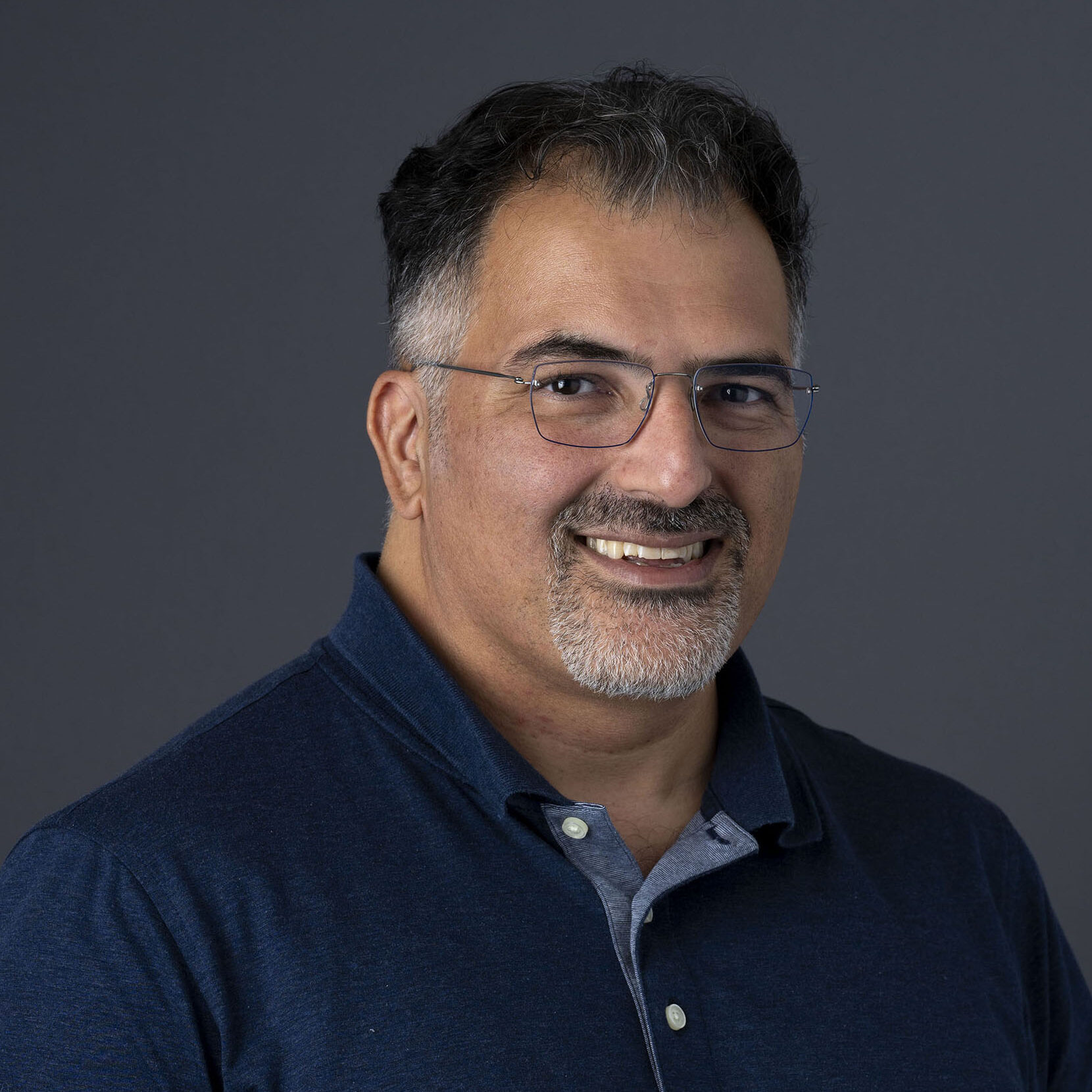
Afshin Beheshti

Afshin Beheshti is the Director of the University of Pittsburgh’s new Center for Space Biomedicine in the McGowan Institute for Regenerative Medicine, Associate Director at the McGowan Institute, and Professor of Surgery at the Pitt School of Medicine.

Transcript of Episode 64: Afshin Beheshti

Disclaimer: Transcripts are automated and may contain errors.

Grant Belgard: Welcome to The Bioinformatics CRO Podcast, where we explore the data-driven frontiers of biology and medicine. Today, we’re talking about space biomedicine, keeping humans healthy off planet and bringing that knowledge back home. Our guest is Dr. Afshin Beheshti, a physicist turned systems biologist who has just launched the Center for Space Biomedicine at the University of Pittsburgh’s McGowan Institute for Regenerative Medicine. Welcome to the show.

Afshin Beheshti: Yeah, thanks for having me. Excited to be here.

Grant Belgard: So when someone asks, what is space biomedicine? What do you say?

Afshin Beheshti: It’s basically the exploration of how to make humans safe and travel in space, but it has a lot of clinical applications too. So because a lot of people might say, why is, why are you studying space? Because it only affects a tiny, tiny fraction of humans, right? So, but the reality is, as we probably discussed as we keep going, it’s, it’s, it has a lot of implications to everything that happens in space. So space biomedicine is to make humans travel in space, but it’s also to make humans healthier on earth.

Grant Belgard: So the, the Pitt Center for Space Biomedicine only launched last October. What, what gap did you see that wasn’t being filled by NASA centers?

Afshin Beheshti: NASA centers, they’re a government agency, right? So they have their own rules and, and bound by their own agendas, right? So it’s good that you could collaborate with them, get grants by them, because NASA always gives funding, just like NIH does to investigators like myself and other folks in the, in the US so that that’s a good role to have. And also they have their internal projects, so they have their own agendas, but they’re bound by what is set for them, right? So in an academic setting, you’re bound only by your imagination, right? So then that’s the key there. So when you come to the, let’s say Center for Space Biomedicine here at Pittsburgh, my vision is that we’re, we don’t have any limits. You could work with government agencies like NASA, get grants. So that’s great. But then you could also work with commercial agencies.

Afshin Beheshti: There’s a lot of commercial space agency, like not just Space X, but there’s lots of folks like Axiom Space, Vast Space, the Sierra Space. You go down the list, there’s a whole bunch of new players in the field and then more will pop up, I’m sure in the future. So then the goal is to get everyone excited about it and get lots of collaborative work going, just not just in the US but globally to collaborate with people at Pitt, the University of Pittsburgh Space Center, Space Biomedicine Center. And then also this will help really accelerate the advance because space is a big problem, right? You get one person can’t do it on their own and I don’t think one agency can do it on their own and you need all the space agencies out there, the government ones like NASA, European Space, but you also need all the commercial ones and you also need all the individuals to work together.

Afshin Beheshti: So there are certain rules and regulations because NASA is paid by the taxpayer. So of course they have to follow and be bound to what using taxpayer’s money correctly. When you’re in the institution, like here in the University of Pittsburgh, academic institution, you have grants, which are great, but you all could also have other options to play with, to make the advances you need rather quickly or or efficiently.

Grant Belgard: And what key research verticals are you prioritizing at the beginning?

Afshin Beheshti: I could say I could be cheeky here and say all of them, but that’s the big answer. No, but so for space biomedicine, the ultimate goal, the ultimate goal for anyone working in space biomedicine is to make it safe for humans to travel. So you want to develop countermeasures. So that’s my ultimate goal, but to develop countermeasures, you have to understand the science behind it, right? So you have to know what’s happening in space to take a little backstep is space. Obviously is we humans have not adapted to go to space. Our bodies have been evolutionary here on the earth. The gravity we have, the lack of the space radiation is there. Luckily for us, otherwise I don’t think none of us will adapt very well. But in space you got no microgravity, very minimal gravity to none. And also the space radiation that’s up there. So in space you got the heavy ions all in the background space.

Afshin Beheshti: So you got protons and majority of it, the smaller ions, which some of it’s produced by the sun and solar flares, you get high acute doses, but also the background radiation from other activity in the cosmic radiation is these protons are produced. But then you get the heavier ions, anything, some helium, but anything from oxygen to silicon to all the way to iron particles, huge ones, sometimes bigger particles. And I, and typically from what those are from like supernovas or black holes, they just invented radiation. And then that’s your background radiation. So that, that in itself causes a really harsh environment out there. And there you get this accelerated model for aging. You don’t age faster, but all the conditions with diseases would come with it. You’re aging faster that way. So it’s an accelerated model for a lot of diseases too.

Afshin Beheshti: So for space biomedicine in itself, we want to cover all these health risks that are out there, which then will turn into the countermeasure development that I mentioned in the beginning. But to understand how to, what the countermeasures are, what, what to target, you have to understand all these health risks. And this is where it comes to the fact that every health risk under the sun is, I’m not making space sound very sexy to travel, but I think eventually it will be, once we understand this space will be really important and fun to, for the humanity to actually explore and make it go on to the next phase of what’s happening in our next step, evolutionary for humans too. So yeah, so that’s why we covered a lot of health risks out there because there’s things like cardiovascular risks, brain risks, central nervous, CNS risks, liver issues, just go down the list.

Afshin Beheshti: These are the different health risks we could talk about that are out there. But the ultimate goal then is to what’s happening and then come up with the ultimate way to mitigate damage caused. You might not be able to stop the damage caused, but then you could prevent it from progressing to then make it safer for humans to be up there. And then when that happens, let’s say those disease models that are accelerated in space, those are actually, if you come up with a countermeasure to mitigate the damage that could easily be translated down to earth, the same, the same, like let’s say heart for heart disease or cancer risk, those drugs can not be novel new drugs that you could apply it to help patients in earth for the, all these other diseases that we, everyone has to deal with on earth.

Grant Belgard: So what does success look like for as little as five years? What, what, what would make you say the center’s been wildly successful?

Afshin Beheshti: Yeah, so that’s a, could be a tough question. Well, obviously if we came up with the ultimate cocktail of countermeasures to make it safe for everyone to travel. So in five years, everyone’s out of business and we’re all in space. That would be, that’d be great, but that’s an ambitious goal in five years to do. But that’s everyone’s goal is that, and I think a lot of people’s goals then in the field. But I think in five years you could, my, my goal is as successful as to, for when I can take a step back, when a lot of people in the health sciences, they, there’s a, there’s a small fraction of folks already working on space biomedicine around the US and around the world, there’s a lot of people who are not aware of it, or again, have questions like how do I do applies to space research?

Afshin Beheshti: So when I joined here in University of Pittsburgh and started the center, one of the things, a lot of people were obviously curious and interested in like, Hey, I always wanted to work with space. How do I get involved? And I say, this is colleagues I have in the pulmonary department here. I was like, well, everything you do is involved because of the health risks I just mentioned. So that was one of the goals is create awareness. Then people start realizing that what they’re doing can be applied to space and then their knowledge can be circular. It goes to space. It comes back to the earth, everything that they do. So the XLA model, and then now people are applying for grants. There’s NASA grants solicitation that no one was aware of. So then no one could apply for that. So that one metric of success would be that people start getting funding to do space research.

Afshin Beheshti: So in five years, let’s say even, even if it’s a 5% or 10% increase of people getting funds to work in space world, that’s, that’s successful because that had happened before I showed up, right? That’s one success of that. Another success is to bring awareness that to make Pittsburgh and a central hub of people coming to to say, Oh, where do we go if we want to collaborate with folks on space biomedicine? Well, they come here, they work with us. And then those other people become also knows you, you have one node and then you can start planning the nodes and the network grows now globally. You could create this whole central network of people working together in space biomedicine with, and then the Pittsburgh and the fighters might be recognized as we were the, we are the hub of it and we are creating this. So that’s another goal of it.

Afshin Beheshti: Ultimately it’d be good to, the funding is one, one metric that everyone goes by, right? So if a lot of funding comes in, then you can do a lot more research, whether it’s from government, like NASA funding or other government agencies or commercial or philanthropy, all that stuff is probably important to come in and see how that happens. And the other metrics is to start the volume of papers to come in and publishing in high impact journals, which is one thing, you know, there’s another in academics, obviously papers are your, your, your, your mark on how well you’re doing right in the higher impact journal you publish and the more attention against obviously you’ve done work that’s more impactful.

Afshin Beheshti: So that’s another goal to let more and more people within the Pittsburgh community and the University of Pittsburgh are starting to publish nice impactful papers on what they’re doing and how to apply to space research. So five years is a lot, but if the minimal is like these things that happen. And then in the process, let’s say we come up with some really cool and novel countermeasures that maybe in five years says, Oh, someone like me or the average person can go to space without having too many of the health effects. That’s that’d be, that’d be a huge success, obviously, but that might be five, 10 years or it might be the next year if we get lucky, but probably not.

Grant Belgard: So how, how are you thinking about the evolving funding landscape given, given the coming budget cuts and so on? What do you think is a likely mix of funding resources for the center and the, the, the years ahead?

Afshin Beheshti: Yeah, that’s a, that’s obviously a concerning question in everyone’s mind. Right. Not just space world, but of course, NIH world and health world and no clinical work. Yeah, there’s been, I don’t think it’s approved by the Congress yet, but maybe by the time that this, this goes on, it will be that, yeah, it’s been posed that. So in NASA, as we talked earlier, a lot of the funds, a lot of them, a lot of the funds that come to support space by administration in the US come from that. So it exists like NIH for a lot of the clinical side, which is great. But so, and NASA has a different centers and divisions money comes from so like science mission director. That’s a lot of basic research that is on animal research or using cells in a dish and things like that. So a lot of those research focuses on different types of topics that like plants and other things too.

Afshin Beheshti: That is the human research program that, as it sounds, is a concentrated human and countermeasure development. And each of them have their agendas, but of course the overall goal for a lot of the NASA solicitations to understand the basic science, but also in the meantime, come up with that countermeasure. So it’s been the budget proposal for the SMD, the science mission director, I think previous year was like the, I think about 38, 40 million for what was publicly released, but they’re trying to cut that down to 4 million for the entire thing, clean grants, people’s salaries over it. So that’s a concern. So I know for example, I have some NASA grants in that division and that’s a concern, like what happens if they do that? Can they still fund what they said? They’re going to fund future grants. Will they be getting future announcements listed, which is the key.

Afshin Beheshti: You need these solicitations to what I said earlier, to come up with the countermeasures and help humanity and the human research program. I don’t know exactly the numbers that’s been released, but I think it’s like at least half their budgets could be cut too. So then I forget the numbers there, but that’s a big concern, right? So, so that’s that if someone’s reliant only on the funding, which is essential to do scientific research and help humanity, and most people don’t understand for like every dollar, taxpayer dollar spent on grants, usually it’s been estimated there’s a two, $3 return on society based on what, what it becomes out of, not just job or job growth, because they say, if I get funded, I can employ people to work for me, right?

Afshin Beheshti: From the, if I discover a drug, that drug is going to go to another higher thing and I’m going to employ more people and then save lives and maybe also not only help space, but also when I said coming back to the clinic, lower health costs, because now people don’t get those diseases to put a strain on the community. So those are the things that people might not be aware of, that these cuts are going to have a downstream trickle effect, not just in the NIH, but that’s the world, the same thing. So then you have to start thinking of alternatives. For example, I have some funding also from industry that helps develop countermeasures, just so people, more and more people might have to think about that, which is, it’s there. So industry, for example, has to think about how does space help them.

Afshin Beheshti: And one of the things like, for example, I’m, I have funds to look at this mitochondria supplement. This one company asks, I do a lot of mitochondrial research and mitochondria are the powerhouse of your cells, basically all your energy produced, but this is a very simplified view of it. This does a lot more, but it provides a lot of energy. So you’re in space, we’re showing that mitochondrial is heavily impacted in space. You get that means your energy production is lowered and this is bad news because downstream it causes a lot of downstream effects of immune system dysregulation and so on. So they’ve provided some funds to say, we have a mitochondrial supplement that could just work in space. So they provide funds for me that now I’ve shown that potentially has a lot of promise to maybe be a part of a countermeasure cocktail or to cover some of the damage done.

Afshin Beheshti: So that’s an example of industries coming. And how they benefit from it is now they see, oh, it works for this. Well, they can market it that way, too. You know, also the applications, as I said, clinically, I’ve already said to them, like this, this supplement might also be potentially beneficial for long COVID patients, because what I see happen in space is very mere as what happens with people who had COVID and now experiencing long COVID. So now we find potential therapeutic, which there’s no therapeutic, there’s no help for unfortunate the millions and millions of people suffering with long COVID. But that’s a space application from a school funded research that not only will help mitigate space damage, but also now go back to the clinic that helps potentially help exactly do the tests and that they can potentially provide more funds or someone else. Well, then we can do that.

Afshin Beheshti: So and then, of course, philanthropy is always good because if people there’s a lot of rich people out there, right, if they’re listening. But a lot of those rich people also can be interested in space research. And again, they might be interested in potential ways to provide funding for this. That’s another resource. So those are the things that we I think as a community, especially in this center, we have to start thinking of pivoting to it is it’s a balance of things. But the unfortunate side is, as you mentioned, the government funding and it’s going to be tough, at least in the next three and a half years, things might bounce back afterwards. Things change. So, yeah, that’s that’s a concern for everyone. Not just in the space world, but of course, across the board for all.

Grant Belgard: Well, maybe following on that, get into some of some of your research. Well, tell us about what you discovered about mitochondrial stress and astronaut samples.

Afshin Beheshti: So I guess a little bit of mitochondrial 101 basics of mitochondria, because mitochondria can get very complex, too. As I said, it’s a mitochondria is used to be long, long time ago. It’s a bacteria. It’s not to be bacteria. It’s all an organ, right? And a long time ago, evolutionary cells and cells started interacting with this bacteria. They realized, wait a second, these these things are providing us a boost of energy, right? So why don’t we incorporate this into our cells? And that’s what happened to evolution. They said, oh, wow, this is great. This is actually going to be helping not just humans, but plants have it. Every every animal or invertebrate or vertebrate has mitochondria. Right. And it’s for the energy production. So that’s where bacteria don’t have it, because mitochondria was a bacteria. So that’s the only that’s one of the reasons it doesn’t happen.

Afshin Beheshti: But that’s the thing where evolutionary mitochondria got about to provide their energy. And then this downstream of that makes you also helps your immune system. That’s why there’s some antioxidants out there to reduce reactive reactive oxidant species that causes mitochondrial deficiency. That’s why there’s a lot of antioxidants out there to lower that and then improve your mitochondrial and improve your energy production. Now, your two most bioenergetic organs in your body are your heart and your brains. For example, your your brain’s only two percent of your body mass, but 20 percent of the mitochondria in your brain content.

Afshin Beheshti: So that you could imagine if you get, let’s say, damage done over time or in brain, if something’s targeting your mitochondria, that could be detrimental because things like brain fog or changes in the brain for how you really dysfunction that way, your mitochondria severely damaged can affect your whole body. Again, your heart’s another bioenergetic organ. So that’s the one. Mitochondria damage there. That could be a concern. So that’s the kind of a crash course. Of course, mitochondrial biology and metabolism has a lot more to it. But the simplest they put is, as you might hear, it’s the powerhouse of your cell. That’s a simple simplified version. So. Yeah, getting jealous about about work you’ve done with mitochondrial targeted subjects. Yeah, yeah, yeah, so exactly that. So in space, what we see is that mitochondria give you the little crash course of the mitochondria biology first.

Afshin Beheshti: But in space, so what we see in mitochondria is actually heavily suppressed. So, you know, if the radiation damage that so your energy production is heavily suppressed and then this across all tissues from experiments we’ve done from sending mice to space cells and also simulated experiments we can do on Earth from simulated radiation, space radiation and like microgravity kind of similations. So we see that across the board. That’s detrimental. Right. So how do we stop this? So one of the mitochondrial supplements that’s been funded by this company at Succo, this is a Japanese company, the Nutri-Cellulosecocide had this supplement called Chemferryl. So Chemferryl is a flavonoid. It’s found naturally. You probably had some at lunch, breakfast or when you’re eating this, whenever someone’s listening to dinner. So it’s found in leafy greens like kale, spinach.

Afshin Beheshti: Watercress actually has the highest content of Chemferryl. So out of all the plants that I know of, some fruits have it like blackberries. And I forget, there’s a whole list of them that have it. And this is the flavonoids are a bunch of different flavonoids, Chemferryl is one. And so we’re testing this because Chemferryl is an antioxidant. It actually targets mitochondrial biogenesis, meaning it boosts that signal. So as I said, space actually lowers your mitochondrial energy and your mitochondrial copy numbers and your content. So you want to have something to boost your mitochondrial signal by creating more mitochondria there. And this is one of the things that it does. So this is one thing we’re testing.

Afshin Beheshti: And so far we’re showing that, like, for example, we have these, one of my collaborators, Rob Schwartz at Well Cornell Medicine, he can do these like organoids in a chip, meaning things that are derived from stem cells that someone had determined a long time ago. You put us in factors and you could differentiate the cell into creating like a heart in a dish from cells or creating your liver in a dish. So not real heart, real liver, but it’s from a stem cell and you could create that. So and for example, the organoid, heart organoids, they beat in the dish the same kind of beating your heart does. So it’s cool. So, but for example, radiate, this is the space radiation. What we see is that the heart is actually the beating is actually reduced significantly because of the damage done by the space radiation, which could be detrimental. But we give it chem furrow.

Afshin Beheshti: And remember, I mentioned the heart is one of the most, in your brain is one of the most bioenergetic organs. So it makes sense why the reduction of the beat happens because your mitochondria is being severely damaged. We give chem furrow to that. And now it’s back to the control level. So that was like, wow, this is great. Complete mitigated damage. We’re working on the papers now to probably in the next couple of months, we’ll submit all these papers so the public can see it and then go down the list. Like the liver is heavily impacted by it starts, as I said, space and exhilarating model of diseases. So in the liver, what we see seems like cirrhosis might be being advanced in space for the liver and different factors like that.

Afshin Beheshti: So metabolism, for example, liver, there’s a lot of drug metabolism and the metabolism, a lot of things in your body, those activity gets lowered when you give it the space radiation. We give chem furrow and it starts coming back up to the depending on the radiation dose. We gave it similar space. It starts coming back up to like the normal levels, control levels, that radiation. So that’s really promising. Now, there are some factors that it doesn’t rescue because I don’t think this is one pill is going to not cure all damage done. So I think then we have to think about in mitochondrial, different organs can be targeting different types of mitochondrial factors and pathways. So this is the part now, I think it’s probably a mitochondrial cocktail that eventually will make it safe for people to travel in. So this is the part where this is promising.

Afshin Beheshti: Now we have to go on the avenue and think about what other kind of mitochondrial nutritional supplements or there’s other type of flavonoids similar to this that target different types of mitochondrial biogenesis or metabolism. So what kind of cocktails to get? So this is where more fun things would need more experiments to do. And then once we have the ultimate cocktail, this is like the magic pill in sci-fi movies. Oh, I just took this pill and I’m cured. I could just walk around and get exposed to all this radiation. But that could be reality in five, 10 years. Maybe we’ll do it. That’d be our measure of success. So that’s the key. That’s some of the exciting results that were some of it’s already available in the preprint that we’re addressing. Some of the reviewers comments, this one paper.

Afshin Beheshti: But a lot of these results are going to be public or submitting for peer review papers and publications in a couple of months. And then that would be once it’s gone through the peer review process and then hopefully be published by the end of the year or so.

Grant Belgard: Can you tell us more about the similarities and differences between long COVID and space flight, mitochondrial damage?

Afshin Beheshti: Yeah, yeah, definitely. So this is this is like a really good example of like what I said earlier, when people ask, why do you use space station? Why should we care? So the so, you know, I always tell people it’s always circular. What you do in space accelerates disease models. And then what you find there comes back to the clinic. Vice versa. What you find in the clinic can help space. So it’s a nice circular loop that helps everyone just to back up this one adult thing, like from the Apollo mission, everything like in the morning when you get up, half the stuff you use is what’s developed from the space research space mission, like your camera phones, a camera in there got miniaturized because they had to figure out in satellites how to get miniaturized cameras into all these components.

Afshin Beheshti: That’s the technology of all that, like your glasses here, the scratch was resistant that the glasses have was actually developed from the visors from helmets to prevent space debris. So your glasses are going to maybe potentially, I mean, of course, a little thicker. I would advise going into space with just your glasses. But so this is examples how technology has evolved that way. Now, medicine is the same way. So this is the long COVID example, which is really great. So in SARS, what we have shown from our research is that SARS-CoV-2, the virus of COVID, that it actually targets the mitochondria. So what we in the Q phase, meaning that first get infected with the virus through this one microRNA and microRNAs are these small RNA that target thousands of thousands, bind to thousands and thousands of genes that would inhibit genes. There’s some good microRNAs and some bad ones.

Afshin Beheshti: Sometimes what viruses do is hijack the machinery and incorporate the part of the microRNA that would bind to your genes. And in that case, then what it does is it uses that machinery to produce more of this microRNA to recreate the landscape, bind to all the genes and it needs to bind for it to thrive. What it turns out, what we found, I mean, this is the published data we have in the past few years, is that this microRNA is actually binding to all the mitochondrial genes that you need. So the virus then, if it does that, then it recreates the landscape and inhibits all the energy production your cells need, which is the oxidative phosphorylation activity to create ATP, which is your energy production. And then the virus could thrive better.

Afshin Beheshti: And this is why, let’s say, when you get COVID, you get the brain fog because the brain fog is related to the mitochondrial defense or you get cardiovascular issues or you feel tired, very tired and very, you can’t get out of bed and you get exercise intolerance. Again, your energy production is really heavily damaged. Downstream of that, then it impacts your immune system and all the other things you see that happen to many people. So similar, similar mitochondrial damage happens in space, same kind of activity. Now, people who don’t get long COVID luckily bounce back. The mitochondrial, even if you looked at the data, this is another paper we’re working on, hopefully to be submitted for publication in the next month or two.

Afshin Beheshti: But what we see is that people who recover from, don’t get long COVID, their mitochondrial is actually comes back to level, gets boosted back to normal signals, even maybe it gets a little higher than normal because it’s creating this per basically repairing all the mitochondrial damage done. Now, unfortunately, the people who have long COVID, they have their mitochondrial levels and the suppression that happened never recovers. Even a year after from the data we have in this paper we’re working on. And it’s same in the brain, from the animal models we looked at in the brain, indeed, like the certain regions that are involved with critical thinking or how you’re, how you could actually concentrate with this relates to your brain fog, that suppression like in the cerebellum, for example, that suppression happened of the mitochondrial signal.

Afshin Beheshti: Again, this is like a dissimilar profile that you see in space. Downstream of that, you get an increase of reactive oxygen species, you get more of a hypoxic or lack of oxygen in your cells produced by this, and then it causes cell death or dysfunctional immune system. So that parallel, although long COVID is caused by this virus doing it, space is caused by space radiation and then microgravity, the outcome is the same. In space, that happens a little quicker than the long COVID patients would do. So that’s an auxiliary model of diseases. So this is where now this conferral potentially could be a therapeutic for long COVID patients now, but now we have to get the funds applied to that and see, test it out. I could be wrong because as well as science, you have a good hypothesis, you test it. If it works, that’s wonderful. If it doesn’t, you admit it, you’re wrong.

Afshin Beheshti: You move on to the next step. But that’s what says this is how discovery is made, right? Not every discovery is going to be, not every hypothesis you’re going to be right. But that’s part of science. And then when you learn it’s not right, that helps the community too. So no one wastes money, wastes their effort and repeats the same mistakes or not mistakes, but the same wrong hypothesis.

Grant Belgard: Can you tell us about upcoming flight experiments you’re involved with?

Afshin Beheshti: Yeah, sure. So these are potential flight experiments, I should say. We’re applying for, there’s a company, Sierra Space, that does Dream Chaser and Dream Chaser kind of looks like the futuristic shuttle. It’s one of those, it’s going to basically not be a rocket that shoots up. It’s going to be, looks like a, and right now, currently, usually the payloads that go up is on a rocket, it goes up, right? And it comes back down as like a fireball and then it has a parachute comes up and lands either in the desert or in the water. This one actually is like the old shuttles, but now more futuristic looking. And it’s going to glide back into the atmosphere and land on the runway. So that’s the Dream Chaser, which is being built by Sierra Space. It’s supposed to launch, the first launch of it is in November or December sometime or October, some of them aren’t there.

Afshin Beheshti: So we potentially have opportunity to apply for this. And if they select the opportunity, then we could put, this is unmanned free-flyer missions that we could actually put some cells or some other types of experiments in there. So that’s one of the missions coming up that potentially we have access to. As I said, these commercial entities, NASA has their potential opportunities to get things in space, but then all these commercial companies make it, space is actually becoming more and more accessible to everyone because of all these great things companies do. I have some potential NASA grants in the, in the works or not in the works, but in the review process, which has potential flight to happen if they select it. But again, the grant process goes over peer review. If you get a good score, hopefully there’ll be funding and they select it. Then I could launch that.

Afshin Beheshti: So some of the experiments I do, would like to do with these future experiments is that one of them is can add killifish in space. So it sounds odd, you know, killifish. So this is with my collaborator, Jason Perdesky at Portland State University. So killifish are when they’re hatched normal fish, they’re, they’re just normal fish, not extremophiles. And, but when they’re embryos, they become extremophiles. And extremophiles are basically are a category of organisms that as the name sounds, it are, they’re extremely resistant to a lot of different things. And, and, and in this case could be radiation, could be heat, could be whatever else. And they’re creatures that have developed to live in some extreme environments, hence the name extremophiles.

Afshin Beheshti: So these killifish, they’re, they’re actually found in the Amazon riverbeds, African riverbeds, and nine months out of the year, approximately the riverbed dries out. So it’s basically, it’s like a mud, mud pie sitting in the rain scum that floods again. So the fish three months out of the year have hatched, they’re floating around. So now they have to survive. So they lay their eggs and now the eggs have to survive in that extreme environment without any water. There’s all that heat and everything else. So they’ve developed this evolutionary to become an extremophile. So they have the three stages in their embryos called diapod stages.

Afshin Beheshti: And the diapod’s two stages, their most resistant, resilient stage, and my collaborator who’s done experiments on these embryos and these fish, like they sell, like for example, gamma radiations, which is different from, as I mentioned, the space radiation, you could expose them to 50 gray of gamma radiation, which will kill us if you got exposed to that. So don’t get exposed, force yourself to 50 radiation. They actually start fine. The embryos are fine, they hatch fine. Oh, okay, great. 4% hydrogen peroxide, which would be really toxic to us and damaging to us. They’re fine. So then you could go on the list. They have lots of really neat extremophile properties. So the idea is now, why we’ve done similar experiments already, we already launched from the space a few months ago, rather than new missions to do that, is capture why these things are so resilient, right?

Afshin Beheshti: And so, so resistant. And can we adapt that into human cells and figure out the same mechanism? So we’re not going to create a half fish, half human, although that might be cool. But the key would be to figure out the pathways, the mechanism it’s developed this extreme resistance and apply that to them. So what some evidence and some links were already discovering, and Jason’s the one who’s really running this by, and we’ve done like some sequencing, exposed to space radiation or abandoned space, or, and some things we see that he mentioned is that in that diapause to extreme state of resistance, their metabolism mitochondrial basically shuts down to zero. Basically it’s an extreme hibernation state. And so why, why would that be important? So I mentioned that mitochondrial dysfunction happens, right? It’s suppressed in your space.

Afshin Beheshti: When that happens, you get reactive oxygen species, and a lot of reactive oxygen species in your cells are bad news because that’s creates, perpetuates more and more damage in your body. Wouldn’t be like, that’s what, that’s what would help create this like lack of hypoxic or lack of oxygen in your cells and tissues, which are downstream. It ramp up your glycolysis activity and your metabolism is screwed up in the immune. But if your metabolism is shut down to zero, mitochondria is shut down to zero, it can’t do create the metabolism species. So, okay. So then the cells basically is a dormant sitting there. You radiate them with like the space ratios. Sure. You still get the damage done. The DNA, when things get radiated, your DNA gets damaged, right? But then in your body, you have a bunch of DNA repair protein activity that comes in to try to repair all that damage done.

Afshin Beheshti: But when there’s reactive oxygen species and things like mitochondria dysfunction, there could be dysfunction in that repair to perpetuate damage and cause all the health risk. And this is the case here with the killifish. If that’s shut down, maybe it has just your body, their, their system to repair the DNA is fine. Goes on it and functions fine. And it survives that damage done. So that’s the part where I think that then you might think about using that kind of idea. Can we, let’s say that could be another type of countermeasure. Is it maybe a hibernation model or something? Like you see in the sci-fi movies, they go in the hibernation chamber and they sleep and I have colleagues who are like researching hibernation as a thing for space.

Afshin Beheshti: So that’s, could that be another physical type countermeasure you might do, or maybe adapt the cells to slow down the metabolism space or do something. So that’s, there’s been other types of research people have done to figure out how resilience can be adapted to human biology. Right. So this is another example of it. So that’s one example we’re trying to send these killifish in, other than the sounds neat, we’re sending killifish to space, but the other part is you could figure out what the resilience of how, why this is so resilient, adapted to human. And then not only would that help us in space, but it could also make us adapt to extreme environments on earth since unfortunately things are getting warmer, right? Climate change is happening. So maybe this could be another way of figuring out how humans could adapt to changes that are happening on earth if we see it.

Grant Belgard: That’s pretty cool. So you, you co-authored a nature perspective and what you actually called this the second space age. What distinguishes this from the first space age of the space age of Apollo and the ISS?

Afshin Beheshti: Yeah. No, good question. So few things. So the first space age was really a two state, literally a two state problem is the USSR and United States. That was it. So the amount of things being launched in space was limited because the technology wasn’t there. And then also limited resources because of just that. And of course it’s just a base war between two countries that happened. So the advancements made were based on the, say, if this person did this, oh, this country did this. We’re going to do this in response. And then of course the US did well. They went on the moon first, right. And then the [Sputnik?] program, the USSR did well too. They had, but they’re US, of course, as we know the history. But the second space age now in that paper, you can see this little chart.

Afshin Beheshti: And as you can imagine, what happens, there’s been a kind of a steady line of things from the beginning, from the Apollo mission in the late fifties and go on Apollo mission in the sixties. But the first things lost to space in the late fifties until about 10 years ago, it’s been a steady state of things being launched in space. A steady state amount of things from satellites to manned missions and so on. But in the past 10 years, all of a sudden there’s this huge explosion, like an exponential increase, even bigger exponential where, you know, a thousand fold increase of things being lost in space.

Afshin Beheshti: Because now not only it’s not just two countries, it’s lots of countries above now, like all those European countries or the European space agency, for example, every country in Europe has their own space agencies, Japanese space agencies, the Indian space agency, just go on the list, it’s Australian, so I don’t want to leave out anyone to get mad at me, but everyone has, every country has this space agency, whether some are more active than others, right? If some have more resources than others, but everyone’s involved now because they see the benefits of how space can help humanity. So that’s one thing. So then more things gets launched in space because now more countries are launching things in space that way. In addition to countries, government agencies, now you’ve got all these commercial companies, right?

Afshin Beheshti: I mentioned earlier, obviously everyone knows SpaceX, that’s always in the news, because they’re launching things consistently. But there’s all these other ones, like Axiom Space, for example, is building, the International Space Station has been up there for now, 25 years, I think, is it? And the government could decommission by, I think, estimated by 2030, something like that. But these room, maybe some commercial companies can use what’s there. So Axiom Space is building a module for a new space station there, and then, see the ISIS decommission by the government, they could maybe some of the orders they could detach and be their own space station now. Vast Space is another one that they’re launching. They’re going to launch the first commercial space station up. I think they’re doing very well for themselves and they’re beating everyone.

Afshin Beheshti: And they’re going to have their own space station up now in the next year, supposedly tentative what they’ve been planning. And there’s all these space labs, you just go down, I think there’s at least four or five space companies planned to run space stations up in low Earth orbit. And then there’s other plans for other countries to get together. Gateway was kind of a joint, ESA, NASA, and other, JAXA and other government agencies to be a space station in deep space closer to the moon, as it sounds like. Now, I don’t know if NASA is still part of this approach, but ESA still would be probably going full force with all the European space agencies that are in JAXA and so on. The eventual goal is to have a moon base again, before people are going to start thinking how to do research there. And of course, if we want to go to Mars, right now it’s probably a one-way ticket.

Afshin Beheshti: So maybe the people who are really advocates, send them there. It’s okay. They could be our guinea pigs, a few people in mind, but that’s okay. Eventually, then once it’s safe, then everyone can do that long year trip. But you have to do the baby steps. You have to figure out the condiment. So this is why it’s the second space age, because you got not only just two countries, you got this huge explosion of things being lost in space currently. And then it’s even more things planned to go. As I said, some agencies are planning to do a space hotels or space tourism. Although I would say maybe if you’re up in space for three, four days, that might be okay. You’re still, from some of our work we did in that nature package, that looked like 95% of signals were coming back to normal. But there’s still 5% of signals that don’t, which one of them was a mitochondria.

Afshin Beheshti: So still, even though three days in space, a lot of things come back to normal space, there’s still 5%. Those 5% could be pretty detrimental for you if it’s your mitochondria. I don’t know if I would recommend space tourism just yet, but by the time, let’s say, these space hotels are made, maybe we’ll have the cocktails to make it safer. Do I want to go to Hawaii or do I want to go to space? So that might be the discussion you have with your family in five years. So that’s why it’s the second space age, because it’s the explosion of everyone just watching things in space and wanting people to go.

Grant Belgard: Has anyone looked at frequent flyers? Obviously they’re getting as irradiated as you would in space, but do they accumulate mitochondrial deficits as well?

Afshin Beheshti: I haven’t looked at that. That’s a good question. I haven’t asked that before too. Oh yeah, the frequent flyers. Yeah, you’re getting closer to, of course there’s an atmosphere. I travel a lot, so I’m probably a frequent flyer. And the thing is though, the ozone layer protects you from the galactic cosmic rays. So it’s a different kinds of radiation that you’re impacted then from these. But nonetheless, you do get a higher dose of radiation than non-frequent flyers, right? Although, granted, it’s very low. So my dad was a commercial pilot, so obviously he was a frequent flyer. So there are higher incidents of cancer risks in commercial pilots. Now, is it because of the radiation? I think there’s colon cancer is one. But also one of the things is that the pilots are sitting on the radar without shielding. So if people sit on radar, there’s a cancer risk normally with that.

Afshin Beheshti: But if you’re over your entire career of being a pilot, you sit on it constantly can that contribute to cancer risk? I don’t know. Research has to be done for that. Maybe, maybe not. Again, and for the frequent flyers, I don’t think they should panic that they’re going to get an increase of cancer risk or health risk because the research is either way at this point because no one has done that research. So the short answer to your question is no. No one has really conclusively said, are you going to get increased health risk if you try? That’s a good question to actually explore because that could be another avenue of increased health risk due to maybe more exposure to radiation at that level. And then the next step is now you go to space and get the bigger dose and more damaging radiation.

Grant Belgard: Can you walk us through your career? Tell us how did you end up here?

Afshin Beheshti: Yeah, so I don’t have a, my career is not a straight path. So some people who go into science, they studied some factor in the graduate school and then did that for the postdoc. And then they keep going that career path, that trajectory. Mine’s kind of been all over the place. I started one place and then randomly jumped to somewhere else. I started in undergrad. I got a, I’m a physicist, so I got a bachelor’s degree in high energy. I was looking at high energy physics. So high energy physics is basically when people go into high energy physics, smash particles together. And it’s basically trying to figure out, the basic question is to figure out the fundamentals of life, universe, and everything. And I guess Douglas Adam would say it’s 42, but I don’t know if his high energy physicists will agree with that.

Afshin Beheshti: So then in the graduate school, I switched to, I’m going to put biophysics in quotes because I was looking at, now I was trying to get closer to biology. I was still a physicist. So my PhD was looking at how DNA moves through objects and look at, I didn’t even care about the biology of DNA, but I want to know how they move. As a physicist, we model things. So I was modeling how things, DNA moves, stretches, gets through different networks, because it’s going to answer different kinds of questions about how your body can function or how drugs can behave, things like that. So I did that. And then at one point, I was getting close to the end of my PhD to figure out the next steps to do a postdoc. I said, well, I want to do more things that are clinically and human relevant. This is getting there. So I only took one biology course my entire, the freshman biology course, that was it.

Afshin Beheshti: But I said, you get your PhD, it trains you to think. We all know how to read at that point, hopefully. Maybe some don’t. But at that point, you know how to read and think. And the main thing in graduate school, I think I’ll tell you, you learn your critical thinking. And half the things you learn in biology are wrong 10 years from now, too. It’s not like physics, you get the fundamentals of gravity and the fundamental forces, right? In biology, and this is the nature of biology, it’s just so complex. We learn some things and then some new discovery comes along. Oh, that’s the true mechanism behind it. So they’re almost right. But now it’s a ball to this part, right? So that’s then when I switched to a microbiology lab. I moved to Boston and worked at a place called Foresight Institute, which they concentrate on oral microbiology.

Afshin Beheshti: Now, why they, why the principal investigators, the people in the lab hired me as a postdoc is because the techniques I had, I just go about looking at how DNA moves and separates, apply it to what they want to do with the microbial work. And then after that postdoc, I did another postdoc where I joined the cancer systems biology. [Under?] actually the director. Her name is Lynn Halaki. She was a physicist by training, too. So she understood, oh, the physics is mine. And I joined the cancer systems biology. But systems biology at the time was a newer term. And what that means is biologists have been trying to solve things by their own cancer and things like that for centuries or not, well, decades, we’ll say decades, right? But for centuries, but decades. So in that case, they haven’t really solved the ideas that you haven’t solved as much on your own.

Afshin Beheshti: So and the goal is really to solve complex diseases. You need a multidisciplinary. You just don’t need biologists. You need mathematicians. You need physicists. You need biologists. You need computer folks and computer scientists. And so you go down the list. And once you get all these different ways of thinking together, this is where you might come up with the new discoveries and use all the different tools from the different fields to actually really tackle like a complex thing like cancer, for example. So that’s that’s the system biology. And it’s a top down approach thing. The biologists who look at mechanism, they’ll start the nitty gritty like molecule, how that helps, which is important. But they also need the top down approach. How do you connect all the different nitty gritty details that are there? So that’s where I joined the cancer system biology lab.

Afshin Beheshti: And we’re looking at cancer. I was doing a lot of wet lab work and also computation works, physicists can do work. And then she had a large NASA grant that got us out of the space field. She had NASA grants, started working on NASA work and cancer work and eventually ended up at Tufts Medical Center where I was working on some more on cancer. But then one of my colleagues and friends joined NASA Ames Research Center in Silicon Valley area where they’re starting to develop this tool called GeneLab, which is a platform available for free for everyone to use in the public and the world. And this is where all like the big data, the omics data, which is the bioinformatics sequencing data ends up free and it’s deposited the one resource that the whole world can use. So my colleague’s name is Celan Koss who was the project manager for this. Now it’s called the NASA Open Science Data Repository.

Afshin Beheshti: And there that whole platform was there for the public to use. And now it’s a great resource. So there I joined NASA Ames Research Center and eventually start helping with that because I’ve been a lot of space research now. And then eventually I got my own grants in the past few years of NASA Ames Research Center working on topics of the mitochondria research or also other things like microRNAs, trying to figure out how to make a safe basically for humans travel. And then this is how I ended up at Pittsburgh. Was that about a year before I joined, I was at a meeting, there was some data being presented and then meet some people here and they started recruiting me here because they said, oh, what I’m doing can be applied to that. Just starting the Center for Space Biomedicine, a lot of different things like I mentioned earlier, everything I do applies to many different fields.

Afshin Beheshti: So cancer, COVID, trauma, things like that. So eventually that’s how I ended up now in the Center of Space Biomedicine, but also still working on all the different fields out there because a lot of things you do is plug and play.

Grant Belgard: So what do you think are the key skill sets that tomorrow’s space biomedicine scientists will need?

Afshin Beheshti: I think it’s multiple things. One is there’s still a lot of unknowns in space, right? So that’s what makes space biomedicine really fun because there’s always novel things to discover so far. So one of the key things I always say in science in general, not just space, but space always works is that, yeah, don’t lose your inner child. That’s keep your inner child. So I think the more creative you are, which kids are very creative and imaginative, right? And so that’s the key. I think in space more than others fields, maybe keeping that inner child and creativity is a key because you have to come up with a lot of out of the box thinking. Sometimes it’s design experiments. How do you do it in space? Because when you go on your bench here on earth, you could pipette, you could do this, or you can set up a cell. Now we don’t have any gravity. How do you do that same experiment?

Afshin Beheshti: So that’s the part. Creativity is key, not just design experiments, but also coming up with novel questions to ask. The other part is having, I think in general in science, not just spaces, you could be a wet lab bench scientist, but having the key computational skills is key because now there’s a lot of computational algorithms, AI tools, ML tools, machine learning tools, bioinformatics, the whole sequencing data. This is all integrated now. It’s a lot of times people just focus on be that and computational biologists, and then they collaborate the ones, but understanding the language between the two is key because sometimes they might not, the competition biologists might not fully understand the biology and the wet lab biologists might not fully understand how the computation biology is done.

Afshin Beheshti: So having the inter cross-lingual language, diverse computation and wet lab is key for them to have. And I think that’s a true success for the scientists to have. And the space biomedicine, of course, you have to understand radiation biology because that’s one big thing that happened in space, having understanding how micro impacts and just really understanding the differences between space and earth. But in general, I think any kind of disease focus you have can be applied to space, but understanding the fundamentals there for space is key. And also just having the, if you’re open-minded and want to work on many different subjects, space might be the thing for you because all the different health risks out there is really key. And solving that is like putting the jigsaw together, puzzle systemically, why are these things dysfunctional?

Afshin Beheshti: Maybe there’s one key thing connecting things together like mitochondria.

Grant Belgard: What do you think is the most underappreciated health risk for a Mars mission?

Afshin Beheshti: One that is right now is in the space biomedicine field, most everyone knows what this is called SANS, space-associated neuro-ocular syndrome. But non-space people might not know what that’s saying, non-space biomedicine people. SANS is a space neuro-ocular syndrome. And it’s the case where some astronauts, not all, but some lose their vision or not lose their vision, but they have vision decline. So no one like in the ISS, the International Space Station has lost their vision. But what happens is that they might cut, their vision slowly gets worse and worse. And they come back to Earth. Some of them who didn’t wear glasses, they’re now wearing glasses. Again, it doesn’t happen to everyone. So that’s what classically is thought of.

Afshin Beheshti: Maybe since of the gravity, you get the flattening of the deme, you get like pressure changes, fluid shifts that happen that can contribute to the vision loss. I think it’s mitochondria because I’m a mitochondriac. That’s what we call ourselves when everything’s mitochondria. So because in the mitochondria, there are diseases that due to mitochondrial mutations, patients would lose their vision, the kids would lose. But we’re showing that it could be, but it could be a combination of mitochondria. So I think that’s one, if you’re going to Mars and no one’s been in that deep space condition outside the Earth’s magnetic field, that reduces the dose due to the physics. But going to Mars is about a year, year and a half trip, round trip. So no one’s really done that.

Afshin Beheshti: So if you’re doing that, what happens if your vision declines to a point when you want to be blind by the time you get there or in the middle of it, that’s bad news. So I think that might be one. I think also one of my colleagues, Keith Seward, he’s at University College London. He’s looking at kidney effects. He published a really good paper in that Nature Package looking at comprehensively what happens to your kidney. And he’s finding, yes, health risks related to kidney, the renal tubes in your kidney start collapsing and other things. But more importantly, he thinks there’s going to be a potential risk of kidney stones. So imagine if you’re halfway to Mars and you get a kidney stone out in space, how do you resolve that problem? That’s going to be a huge issue. You do it on Earth, that’s a problem, right? On Earth, when you get a kidney stone, that’s a hard thing to deal with.

Afshin Beheshti: But in space, how does that happen? We could keep going. But I think some of the more interesting things are that I would say all of this is probably heavily related to mitochondria. So that would be the maybe the central focus of a health risk, meaning mitochondrial diseases or like that. So maybe mitochondrial disease would be my number one pick for people at Target because it could maybe impact a lot of these health risks and improve conditions.

Grant Belgard: Mitochondrial deficits are obviously a big area of overlap between what you’ve been discussing, the longevity space. What are other areas of overlap between space biomedicine and longevity research?

Afshin Beheshti: Yeah, there’s a lot. So I don’t research this. I have colleagues and collaborators who do. My collaborators, Susan Bailey and Chris Mason, they’ve looked at telomere length. So, you know, the telomeres that kept the chromosome and as you grow older, they get shorter and shorter. Right. So then that means decline of your aging that happens and that could be the health risk. So interestingly, in space, what happened is when this was first, they did this study The twins study Scott Kelly, who went to space for a year, and his identical twin, Mark Kelly, was on Earth. And now Mark Kelly is a senator, of course. So the idea is comparing genetically identical twins, what might change, what not, you know, what changed. But what they saw was that with Scott Kelly, your telomeres actually got longer. So people were like, what, did he get younger in space? It came back.

Afshin Beheshti: He actually, what happened was it got, it got to the normal length, but then it got shorter than it should have been. So that means it made me, because aging got a little excited. But when he was in space, it got longer. And it’s been told that also he lost weight and he got taller. So it was like, oh, great, a great diet plan. But fortunately, when he came back to space, the telomere thing that happened, and then luckily, well, luckily for science and the reproductions, the NF1, what they’ve done is they’ve looked at telomere links, how they are for other astronauts and other cohorts, like other 10 and more astronauts, and they see the same pattern happen.

Afshin Beheshti: So they have some ideas, maybe potentially this could be like some potential other factors like these non-coding RNAs that could be involved that could be causing this or other factors that, and it’s not a sign that you’re growing younger, it might be a sign that it’s causing damage to your chromosomes and your telomeres because of the environment you’re in. And this could maybe contribute to potential, not as long, for longevity, it could maybe reduce it. So how do we stop that impact? For other longevity kind of type of work, one of the area focus I work on is microRNAs I mentioned earlier. MicroRNAs, the Nobel Prize was won on that last year, people had discovered it. And microRNAs are basically small RNA that’s 22 nucleotides. And before the people discovered won the Nobel Prize, people thought they were just deprived because of the size. They thought, oh, it’s RNA fragments.

Afshin Beheshti: These are not important. So one person’s garbage turned into this Nobel Prize, this huge thing. This is a lesson for people in science and in general, don’t discard things that seem like garbage because they become very important, at least in the scientific world. But anyway, these microRNAs, as I said earlier, they could bind to genes because of this one region called the seeding region. And again, there’s good microRNAs that bind to genes that would cause detrimental impact on your body and accelerate aging and health risks. But then there’s microRNAs that diseases like cancer produce that would bind to tumor suppressor genes for that. Or an aging, there’s a whole set of microRNAs related that are expressed as you get older and older that start binding to genes that would make you age faster, would decline the mitochondria, would decline your immune function.

Afshin Beheshti: This is people have studied this in aging that show only these microRNAs are both there. So my work, I’ve identified certain set of microRNAs that might be related with what happened in space. And then I said, what happens if I inhibit these microRNAs in like mouse models, 3D organ models, human tissues in the chip? And what happens if I bind a set of microRNAs with cardiovascular risk that with aging also occurs? And indeed, when you stop that, the set of microRNAs I identified that would be involved, increase the risk of cardiovascular risk in space, you stop those microRNAs and mitigated the damage done. So that could also then translate to longevity because I think about all these microRNAs that if you inhibit.

Afshin Beheshti: But the key with microRNAs are tricky because some of these microRNAs that are being increased due to the damage, there’s a basal level in your body that microRNAs should exist. So if you inhibit them too much, now you’re going to cause the side effects, detrimental effects that you’re going to not necessarily make you for aging is involved, but it’s going to for your health. It’s important. So this is where the tricky balance is. So this is where you have to figure out exactly what the important microRNAs are, where to inhibit it, how much to inhibit it. And then this could potentially be a way not only to prevent space damage done, but also reduce. It may not make you age as fast, right? But there are people working on microRNAs as a clinical therapeutic on Earth.

Afshin Beheshti: But the issue is there has been no FDA-approved inhibitor for a microRNA because I think sometimes they’re inhibiting the wrong microRNAs involved or sometimes they’re inhibiting the wrong group of microRNAs or they’re inhibiting it too much. So eventually I think someone’s going to come up with a good microRNA therapeutic, but that’s not happened yet. But that’s another example of space research longevity.

Grant Belgard: To wrap us up, what in the space biomedicine field are you most excited about?

Afshin Beheshti: The chance that you and I get to go to space. My wife says I have to get good life insurance before I go to space. So currently I agree that right now you probably should get good life insurance. But that’s the key. Like, I think just going to space right now, people think, oh, we’re here on Earth, why do it? Well, the reason we could do it is because it’s not only the fact that we can, humans want to do things that we can, the fact of how do we push humans forward, but the advancements in science that we can make, all the great things that can be achieved that a space exploration can do. I think that’s exciting. And the chances that it’s getting cheaper and cheaper to do it and maybe more safer and safer once we figure out the cocktail of pills you could take or cocktail or hibernation to prevent that, then the unknown universe is at our disposal, kind of like we’ve seen Star Trek.

Afshin Beheshti: I think that’s what everyone wants in space. Of course, we’re all sci-fi fans. So I think that’s the ultimate goal. The excitement of going past where we are at and expanding humans to new boundaries, that’s I think really good. And then also the excitement of if we are able to make it safer, we’re able to maybe cure a lot of diseases on Earth, too. I think that’s the other part that’s very exciting for me because ultimately we got to help humanity and I think this is a key space.

Grant Belgard: That is a great, optimistic way to end. Thank you so much for joining us.

Afshin Beheshti: Thanks for having me. It’s been fun.
The Bioinformatics CRO Podcast

Episode 63 with Kenny Workman

Kenny Workman, co-founder and CTO of LatchBio, discusses his experience building a cloud platform for modern biology and how Latch has grown since our 2022 episode with his co-founder Alfredo Andere.

On The Bioinformatics CRO Podcast, we sit down with scientists to discuss interesting topics across biomedical research and to explore what made them who they are today.

You can listen on Spotify, Apple Podcasts, Amazon, YouTube, Pandora, and wherever you get your podcasts.

Kenny Workman

Kenny Workman is the co-founder and CTO of LatchBio, a cloud based data infrastructure solution for working with molecular data.

Transcript of Episode 63: Kenny Workman

Disclaimer: Transcripts are automated and may contain errors.

Grant Belgard: Welcome to the Bioinformatics CRO Podcast. I’m Grant Belgard, and joining me today is Kenny Workman, co-founder and chief technology officer of LatchBio, the data infrastructure making large streams of raw molecular data human interpretable for computational biologists and bench scientists alike. Since we last spoke with his co-founder Alfredo in 2022, Latch has started working with the solution providers developing and distributing new technologies to measure molecules, partnering with spatial omics and single-cell innovators to bring analyses straight to the browser. Kenny studied electrical engineering, computer science, and bioengineering at UC Berkeley before jumping headfirst into biotech entrepreneurship.

Grant Belgard: Today, we’ll explore what’s new at Latch, what drew Kenny to build in this space so early in his career, and the advice he’d give to the next generation of computational biologists. Kenny, welcome.

Kenny Workman: Thank you so much for having me.

Grant Belgard: So for listeners who remember Alfredo’s episode, give us the what’s changed at Latch since 2022 elevator pitch.

Kenny Workman: Yeah, I think the most profound shift has been that away from biotechs into the folks directly generating data. So the solution providers measuring molecules, concretely, these are single-cell spatial providers and working with them directly rather than the original biotech folks.

Grant Belgard: What’s the single biggest misconception newcomers still have about Latch?

Kenny Workman: Oh, it’s a great question. I think biotech data analysis is really more of a project management and human orchestration project than a single point analysis solution. And, you know, what I mean by that is the practical problems are not running a workflow and getting an output. They’re really like, how do you coordinate diverse groups of chemists, immunologists, software engineers, computational biologists to come together and analyze data and speak the same language. And so what that means in practice is the data infrastructure’s, you know, true role is to capture and expose data over a long timeline to people with different levels of computational fluency, and not necessarily like run a workflow.

Kenny Workman: So yeah, I think a lot of the misconceptions are around Latch or similar types of products or technologies being workflow orchestrators, rather than a kind of like more complex and long living thing that brings people together to understand science.

Grant Belgard: If you met someone at a conference and had only 30 seconds, how would you describe your own role at Latch?

Kenny Workman: That’s a great question. I primarily work on engineering a product. I would say that the core of what I do is synthesizing information from customers, you know, scientists and engineers, and trying to figure out how to improve the product and move it in a direction that has the highest probability of impact on the pace of science.

Grant Belgard: And what’s a picture of a typical customer, size of the team, data types, pain points.

Kenny Workman: Yeah. So, you know, within the solution provider buckets, there’s a variety of very interesting emerging technologies. And this is actually one of the super exciting stories of modern biotech is that of increasing data generation on a variety of like different molecular types. So you can look at facial biology, and within that you have several sub-trees, you have imaging-based spatial, sequencing-based spatial, which differ in how they actually read out the molecular information. And within each of those buckets, you have a unique group of customer that Latch works with. And the reason I make this separation is like the actual details of how they use the product, how they distribute data to their customer, you know, it looks quite different depending on like how they’re actually capturing molecular information. A great example of a sequencing-based spatial provider is AtlasXomics.

Kenny Workman: They’ve developed this technology called DBiT-seq, so deterministic barcoding in tissue, where they basically place a chunk of tissue on a purpose-built microfluidic chip and flow barcodes from the X and Y direction over the tissue and resolve them computationally post-fact to understand or basically associate sequencing information with spatial information on the tissue. And so, you know, working with folks like AtlasXomics, their primary concerns are how do we get the raw sequencing information and imaging information from the tissue processed first into a state that’s immediately human interpretable? And then how do we like layer in rich tertiary analysis? So allowing scientists to pan, zoom, manipulate, do things like look at spot A and spot B on the tissue and, you know, look at differential genes and cell types that emerge between those two spots.

Kenny Workman: So it really depends on like the type of customer we work with. And that type is kind of induced by the technology type that the solution provider is. But, you know, AtlasXomics could serve as a great flagship example of like the type of solution provider we do spend time with.

Grant Belgard: What problem keeps you up at night?

Kenny Workman: Yeah. I think, you know, the pace of technology adoption within the biotech industry and, you know, we’re in a tough spot right now in terms of the funding environment, the number of companies trading below cash. You know, more recently, there’s the narrative of the cannibalization of market share by Chinese companies, clinical market share, that is. So the amount of like in licensing behavior, that proportion of that, that is taken up by China versus American biotechs, et cetera. And. Well, especially the delta on that, right. Kind of the rapidity with which that that’s increased versus an all zero baseline a few years ago. Like the rate at which that, that trend is occurring.

Kenny Workman: I forget the exact numbers here, but I think we’re at about a third to maybe as much of the half as to which phase of one, one and two assets can be attributed to Chinese R&D versus, you know, a decade ago is as low as I think sub 10%. Um, so yeah, totally the rates of growth there is what’s staggering. It’s that derivative rather than the absolute number. And, you know, I think a big reason for this is the pace of innovation, the like drug mechanism level. And a lot of that is due to it. We’re still not using the best methods to generate data and go after like new targets or disease mechanisms at a level that perhaps exceeds, you know, human context and still leaning on old guard, rational techniques to develop drugs. So I, it was like very vague hand wavy claims, but, uh, I think at the pace of adoption of, you know, new technologies that really let you measure more molecules.

Kenny Workman: And then the second order effect of data generation is, is really adopting data driven discovery as a result of like having more volume that like lets you discover things that you cannot have interpreted manually. So, so that is one, one thing I think is interesting and, uh, detrimental for the industry.

Grant Belgard: So Latch now claims to offer a single pane of glass for data compute and visualization. What does that look like when the user logs in?

Kenny Workman: Yeah. Um, what that looks like is, you know, biotechs are very different from each other. When you look at the types of experiments they’re running, the team structure, the communication style between those teams, you end up with these like very complex organizations that are in many ways, snowflakes. So building a generalizable data life cycle, uh, that like can be plugged into different teams, given the, the amount of those variabilities, it’s quite a challenging task. Like what we’ve arrived at, I think is, is pretty durable. Like, uh, there’s a high, you know, a high chance that it will work with all these factors. And so concretely, uh, when you get data from an experiment, you know, you can, you can trace out its life cycle. Step one would be, you, you put it in what we call Latch Data, which is a, the Blob-Store-backed distributed file system.

Kenny Workman: And that has graphical accession as well as like programmatic ways to, you know, read out files and do these sorts of things. And you’ll see the theme of having both graphical and code-based controls for each step of the data life cycle is, uh, something we worked heavily on because one of the grand challenges in biotech data analysis, as much as like, like I mentioned earlier, getting the result is, is coordinating diverse groups with these different backgrounds and different fluencies with, with computational tools. So that first step is just getting data, putting it in a Blob-Store-backed distributed file system called Latch Data. The next step is usually, Hey, we usually, we want to, uh, run batch compute.

Kenny Workman: So we have some raw molecular data in its raw form, completely unusable, but we need to turn it into something that’s a little more human interpretable, or at least fit for down to tertiary analysis. And this is where, um, workflows come in. And so bioinformatics workflows at this point are, are in many ways, like a solved problem, but you still need infrastructure, especially at, with scale of data to manage their, their orchestration.

Kenny Workman: So taking those raw files, fanning them out on lots of computers, keeping track of, you know, the containers that are run on those computers, the logs, the versions of the workflows, um, making sure that you have all this information audited and stored for long-term use, especially, you know, if you’re a biotech with an eye for the clinic, which many people are, the third step after you process, you know, information in a batch well-defined way is usually storing it with contextual metadata from the lab, you know, structuring the raw outputs with information about the cell line that was used to produce this data, the temperature in the lab. Um, you could perhaps the name of the, the tech who, who ran the experiment, and these just look like tables.

Kenny Workman: But the fourth step is usually some sort of, um, ad hoc sandbox compute for folks downstream who are interested in running whatever code they want to analyze the data. Um, but often the problem here is, is access to large resources and the, the outputs of the workflows previously. So you can imagine like if you spin up a naked machine, having that original file system mounted to the machine. So you have full access to all the information your team generated is very important and that’s a hard problem, as well as making sure that machine is large enough for your task at hand. And then potentially as the cadence of your analysis goes up and down, shifting those resources with it to making the machine smaller and making the machine larger, um, as your work progresses, the fourth step, we call that Latch Pods. And the fifth step is dashboarding.

Kenny Workman: You need to build visualizations and serve information scientists. So we built a dashboarding framework, um, which is the result of a nearly a year and a half of work. Uh, it’s a reactive Python kernel with widgets that can be specified in Python, as well as the ability to put count matrix based file formats on very large computers to serve information to scientists. So that was a very long winded explanation, but in essence, there’s five steps. There’s data storage, there’s workflows, there’s registry or tables, contextual metadata. There’s ad hoc compute, uh, sandbox compute called Pods, and there’s dashboarding or plot generation called Plots. And over four years, we’ve really added to and extended the platform so that these five components are a pretty good, uh, way to tackle this, this problem of like high variance between analysis life cycles and biotech.

Kenny Workman: They usually work for most companies.

Grant Belgard: Which features did you remove or sunset because they weren’t working?

Kenny Workman: Yeah. Um, it’s a good question. I think very early on, we tried to build a lot of, not a lot of, we, we tried to build some assay specific features before our teams really had a good understanding of the, the real problems with those assays. And we’ve since come full circle. And I think given the amount of years we’ve been in the industry and working with scientists on these problems, come to understand and re-tackle those problems. Very concrete example here is with single cell. You know, single cell analysis, many listeners are probably very familiar with both the biological goal and then the outputs of the data. You’re usually working with count matrices. We know some, some N number of observations and M number of genes. So you end up with like N by M matrix with all sorts of metadata about both the genes, um, more importantly, the cells, things like cell type, disease and tissue.

Kenny Workman: Often scientists need to run a series of pretty data intensive count transformation steps and shove this high dimensional matrix object into basically a two dimensional embedding and then do a whole host of essentially artisanal ad hoc operations to subset, lasso, annotate this point cloud to drive biological meaning from the data. And it, it, this is still quite a hard problem primarily because the footprint of this object is a very large and the ecosystem of tools, you know, while there’s been a lot of progress made is still primarily active open source, um, driven project. So we two, two or three years ago, tried to build a browser that was very similar to cell X gene, which is a very popular browser built by the chance of biohub. And we actually kind of fell flat because we missed the mark of what was important.

Kenny Workman: And more recently, especially with a lot of these, those operations overlapping with spatial retackle this problem. And I think, you know, did things, uh, more correctly. So that’s perhaps a big example of how we taken a stab at a problem, sunsetted it because we realized, you know, we weren’t approaching it correctly and people were really taken to it and coming back to it as, you know, new solution providers are generating, um, a lot more data and having demand for these, these sorts of visualizations.

Grant Belgard: So you’ve expanded from next gen sequencing to imaging and mass spectrometry. How did you pick those verticals?

Kenny Workman: Yeah. Um, we do less with mass. We do a lot, increasingly more with imaging, especially imaging based spatial. The, the primary kind of like selection mechanism we use to identify good customers is how much, how constrained are they likely to be by true computational bottlenecks? And you know, what I mean by this is I’m sure listeners can relate is until recently, there have been very few problems that are truly constrained by a software computers in an end to end experimental cycle at R&D. So, you know, you do have examples of, you know, these single cell assays or like more traditional NGS assays requiring two or three days to process raw data into a more human readable state with computers.

Kenny Workman: But you take those two or three days and you compare it to like the two to three months, six months, sometimes of like an end to end planning the experiment, getting resources that are zero in order, running it in vivo study, getting readouts, you know, playing tag with all these vendors and like kind of organizing resources in the real world, those two to three days pale in comparison to that, to that timeframe. However, you know, with new spatial assays, especially as the, the way that they’re distributing them and packaging them and making kits testable and there’s a direct market incentive to decrease hands on time to run these kits. All the while the data coming from them is truly increasing at a scale that I think many people don’t appreciate. Um, these new spatial assays actually have some concrete delay, um, sometimes weeks to months from data itself and from computation itself.

Kenny Workman: So we tend to look for experimental outputs of that type. And that, that is like usually the heavy approach that we do. And so, and sorry to that point, a mass spec tends not to be one of those. Um, whereas like a lot of the spatial based assays tend to be one of those.

Grant Belgard: So where, where does Latch draw the line between no code and code; do advanced users ever hit a wall?

Kenny Workman: Yeah, we, uh, this is actually maybe another misconception about the platform is we’re very code first and pretty much any aspect of the platform, any feature on the platform has both code and no code tools. And we find this necessary kind of given what I introduced earlier, which is at any given point, a piece of data needs to be interpreted by different folks with different scientific backgrounds. Um, and then, you know, most, you know, some of those folks are going to want to load it into their favorite or a Python library and like play around with a little bit. Some folks are going to want to play with it in the command line. Some folks are going to need click controls and graphical components. So we really don’t build for one or the other. Uh, it’s, it’s very much a hybrid endeavor.

Kenny Workman: And that has been one of the more interesting and challenging aspects of building out the product is like, Hey, anything you, you build needs to speak to not only code and no code cohorts, but kind of like hard mode code, easy mode code, and no code. And whatever you buy hard mode and easy mode is like you tend to have, um, computational biologists who are more of the data scientists flavor who use their domain knowledge and background and like G stat to like write basic code, but they’re not familiar in like a naked Linux environment. And so, yeah, like even you can even stratify code, code tools into, uh, those two, two pockets as well.

Grant Belgard: So walk us through your AI protein engineering launch. Uh, what problems did that solve?

Kenny Workman: Yeah. Um, that was interesting. So, and it, I would say we even do less of this now, but you’re having something of an explosion and new models for variety of molecular prediction tasks. Yep. Post maybe unnecessary long-winded history, but obviously post AlphaFold 1, AlphaFold 2, as people realize a, you know, the scaling of a lot of, basically the base transformer architecture with basic modifications that are fit for the domain, adding things like multiple sequence alignment, et cetera, actually have a quite strong performance and a variety of like concrete, concrete things that are useful in drug discovery. You know, more recently, we’ve seen models like Boltz, Boltz-2 go all the way from, you know, protein structure prediction to a protein ligand binding with comparable accuracy or efficiency to, um, that original problem.

Kenny Workman: And so it’s feeling clear that these, that this approach to training very large models, lots of parameters, applying some expertise in the domain to tweak the architecture and tweak the training process is extending to lots of different practical tasks. The, the same problem of like, Hey, I’m a scientist. I have a lot of domain knowledge and running experiments in the lab, but I’m unable to readily access these amazing new methods, um, can be extended to running a model just as much as it applied to running a bioinformatics workflow. Um, so we definitely mostly by popular demand customers, uh, just started uploading the models that they asked for. So they just had to know, but I will say at least with our customer cohort, these are kind of like nice to have or, or just like fun things that they’re trying out.

Kenny Workman: And very few of them are using them to like actually drive experimental campaigns. So yeah, like they’re, they’re not the source. You can, you can think of like early pre-R&D, what you’d call campaign is like hit discovery, hit [?] maturation, um, these well-defined steps. And at any point within any one of those steps, we didn’t really see the, the driver of new targets or new external structure from like model outputs. It was more like folks getting their feet wet and seeing if it’s something they wanted to use.

Grant Belgard: So the platform’s now HIPAA and SOC 2 Type 2 compliant. What surprised you the most about that journey?

Kenny Workman: Yeah. Getting compliant is important, but it’s super difficult. Yeah. It was a multi-year endeavor. Um, we have absolute beast compliance team led by actually someone that used to work under Obama in the White House. So assembling that team has been fun, but the process is no joke. These compliances exist for a reason. And it was, it was just very rigorous and difficult. Something that was needed as you start, you know, traveling up market and working with more, more and more mature companies.

Grant Belgard: What roughly speaking, what percentage of your revenue come from sales that, that hinge on being, offering compliance with these frameworks?

Kenny Workman: I would say it comes up like 80% of the time, um, in like the evaluation process of a sale. And so, I mean, it’s, it’s, I would say like in the vast majority of those cases, it’s like a need to have, so absolutely an essential thing, you know, for other folks, like considering building data software product in the space. Yeah. Very, very ubiquitous.

Grant Belgard: Not naming names, but a few of your competitors that, that were created around, uh, the time Latch was created, uh, have gone out of business. Why are you guys still around? What, what makes you different?

Kenny Workman: That’s a great question. I think we approach company building as an engineering problem. And what I mean by this is we’ve never had some, you know, deep prescriptive, visionary insights and how people should do things. From the beginning, we’ve always been very intentional about finding deep need, collecting information, doing research, talking to users, talking to customers and always growing in proportion with like the value that we’re creating in the market and aggressively, you know, raising capital and like hiring brilliant people to work with us, but always in step with, um, you know, where we were at the time. I don’t think we ever grew or overextended, um, or, you know, did, did silly things with resource allocation for the most part. I mean, we definitely made our share of mistakes, but none of them were, um, existential.

Kenny Workman: And so I think that the biggest thing here is like, we’re currently a team of under 20 people, mostly engineers, and we’re doing, you know, seven digit revenue. Like it, there’s many companies, I think that were at that stage and probably grew a little bit too fast. And so that like data-driven approach and like careful, slow, you know, and as we, as we grow, we’ll ramp accordingly, but that approach is something we’ve taken. I’d also say like, we focus a lot, maybe to an extent that’s underappreciated on engineering and product. And like those being the sole drivers, not sole, but like the primary drivers of like value we create. And that lets us stay incredibly lean. In computer engineering, it’s especially possible for small teams of highly exceptional people to really create outsized amounts of value.

Kenny Workman: Because at the end of the day, it’s like an information munging discipline where you can have folks that have an incredible amount of context on stack relevant technologies with great ability that can like ship and build quickly. So those two things are top of mind.

Grant Belgard: And how has your ideal customer profile evolved from your seed round to now?

Kenny Workman: It really is that, um, that shift from servicing biotechs directly to servicing the companies that service biotechs. That is the main story I’m really here to tell. And maybe getting a bit into how we discovered that because I consider it an earned secret. It’s quite interesting. You know, we threw, like I told you, we were a very data oriented engineering company. All we always try to be honest with ourselves in terms of results. We, we threw a lot of stuff against the wall and at the edges of the industry for years. And a few things made us realize that biotechs are not actually the best customers. I mean, for starters, I mentioned earlier, the structure of their analysis varies widely between them, you know, because each of them are kind of procuring their own kits, their own machines, their own experiments. It’s really hard to find consistency in the types of problems that they have.

Kenny Workman: Um, another problem is especially pressure. Now the ecosystem is volatile. Uh, R&D is very overrepresented in small and medium startups. And so that means that like a lot of these customers are going out of business, um, a lot of people are getting merged and the company acquiring them no longer, it’s a different, you know, uh, entity. They might have no interest in working with you. And then, uh, another point and perhaps most controversial is like, I actually observed pretty, uh, irrational, like an economically irrational behavior from many biotechs, uh, by virtue of large capital raises and long cycles towards like feedback from, from market forces. And I’ve seen millions of dollars wasted on internal tool build out because it’s kind of like unclear to leadership what the best thing to do at the time.

Kenny Workman: And folks are not like running proper vendor evaluations because, you know, the vendor ecosystem perhaps was quite mature or there wasn’t like a lot of consensus in the field around, you know, is it better to build versus buy? And so there’s a certain amount of like, as a company recognizing truths about your market that you can and cannot control. We control our technology. We control building our product. We cannot control like a broad behavior, like from biotechs to not use a product, even if it might make economic sense. So we can’t fight that. Our original thesis is that data generation uniquely is restructuring a lot of the industry around computation and computers and sources of data generation are where the problems lie. So we did what made sense to us and we went to the source.

Kenny Workman: And solution providers have been a source of most of our growth over the past year and are also directly producing these problems because that way we’re kind of the original thesis of the company. So it’s quite interesting.

Grant Belgard: Have there been any usage patterns that surprised you? Features that people love that you thought were minor?

Kenny Workman: Yeah, we’ve. So that last step in the platform plots, which has really been the focus of our team’s energy over the past year, year and a half, is kind of a Python based dashboarding framework where you can build cells with widgets and compose them with transformations on data that you control and code. integrating basically language models and exposing those language models and like a basic chat interface to biologists has, has been something that both works quite well and has gained a lot of adoption. Much to our surprise, you know, building in this space has been a constant slog of, hey, we think this is a good idea and what, no scientists don’t adopt it. So the amount of, after a number of those cycles, you build a lot of scar tissue and, and you, uh, you get very surprised when things work.

Kenny Workman: So yeah, basically the adoption of asking a language model to generate code and having like scientists like pick that up to translate tasks. Like I want to pull on a table and like make basic plots of that table. And then, you know, maybe, uh, write some statistics or run some transformer of like a column in that table and feed it into another plot. These like frontier models are quite adept at performing those tasks. And then the scientists are actually using them. But that is something that’s like quite interesting. I think that that will only continue.

Grant Belgard: So you raised 5 million in your seed round in 2021 and 28 billion series A in 2022, I think. What milestones unlocked each round?

Kenny Workman: Yeah. So 5 million, you know, back in 2021 really was, we had no idea we’re going to raise that much. We never had any intention of raising that much. The impetus for that was we did 200, 300 customer interviews. I’m in the space reaching out to any scientist who would talk to us.

Grant Belgard: Yeah. I remember those calls.

Kenny Workman: Yeah. I think it’s probably one of the, yeah. Um, it’s a, I mean, you probably remember both our energy and I have a day all in one, but we came to raise with, uh, a pretty concrete thesis or framework about like how companies would both that the state of generation problem was happening. It was unclear at what pace, but it was happening and that companies would need to build out or restructure their companies around, you know, processing it. Uh, and we had like hundreds of pages of notes on like the details of these problems. We didn’t really expect to raise that much money. We ended up doing so. And with that money, we, we built, uh, the first version of our products and sort of working with customers and iterating with users, et cetera. And then the series A was, it was preempted.

Kenny Workman: I mean, it was in a very different market climate, but it sounded the result of like real traction and, and real use and folks continuing to believe in this trend and taking a bet on our team. I’m sure. Yeah. Alfredo covered this two years ago and nothing, nothing’s changed much, but I remain, you know, very grateful and fortunate for those events. And I think at this point we’ve just been very efficiently using that capital to continue growing as a team.

Grant Belgard: So as, uh, I’m sure all our listeners are well aware, uh, in 2022, the tech bio funding climate was frothy and, uh, it is comparatively harsh now, but how has that affected your, your hiring plans and strategic roadmap at, at launch?

Kenny Workman: Yeah. I mean, maybe, um, as I alluded to prior, because I don’t think we’ve really grown too quickly or yeah, forward resources into something haphazardly. We haven’t adjusted too much based on like the biotech industry’s state. I will say, I mean, it’s definitely made, we, we feel the constriction at Latch. Like it is harder to find deals and close deals than it was a year ago, but we continue to grow quite a bit, mostly by working with existing customers and ramping their usage. And it’s a very exciting time, um, in technology for these molecular measurement teams. And despite, and this should be like, you’ll put some optimism for folks that are experiencing the, uh, the, the very negative effects of like the current capital climate, the people building new molecular measurement technologies are growing fast.

Kenny Workman: They’re gaining adoption and they’re doing that despite like the arid funding environment. And, um, yeah, and broad strokes. I think that that is reason to be excited. And the second order of effects of that will be profound across basic research and translational research and industry biotech, et cetera. As data becomes cheap and abundant, a lot of new discoveries will come out of this, but we’re seeing like the leading indicators of that would continue to grow on our side and primarily from this cohort that builds tools. So it’s definitely very exciting.

Grant Belgard: What criteria will dictate when you go to raise a series B?

Kenny Workman: Yeah, really don’t think about this that much. I mean, we’ve only, you know, we’re a series A company and we haven’t, we’ve only been around for four and a half years, but so far we’ve tried to think about technology customers, products, and it’s usually in that order. I mean, depending on if you’re talking to me or Alfredo, the order might change or Kyle, the order might change a little bit. But yeah, just by focusing on like creating real things that scientists use, the funding has always come later. And especially at this stage, like there isn’t really a way to, if we wanted to like hack another fundraising round series B and beyond, it’s like kind of like big company growth territory. And you really have to have something that’s profound to continue raising.

Kenny Workman: And you know, our idea of what’s profound is kind of a ubiquitous data infrastructure that if you go to your top 20, top 50 market cap pharma, you go to, um, any of like these major solution providers, the [Parse Bio?]s, the, the 10Xs, the VizGens, are they using Latch? That’s all I think about. That’s all most of our team thinks about. And funding comes downstream of that.

Grant Belgard: How does a realistic path to profitability look for Latch?

Kenny Workman: There is an argument to be made that profitability in of itself, uh, with a company like this is not the best path. You kind of always want to be a little bit in the red because otherwise you’re not, um, you’re not pouring a fuel on the fire. You’re not working with the best talent, you know, developing technology fast enough. You’re not growing in the market fast enough. Um, so I would say like, we definitely focus on keeping finances tight and having a strong control over our balance sheet, but our goal is never to like hit profitability per se. Uh, we can always leave that as, as an option. And we do have like a plan where that could be an option because our primary goal is to survive and make sure that the product’s around for a long time. But yeah, in not so many words, the short answer that is not a focus focuses on growing in a controlled way and being a little bit in the red.

Grant Belgard: What’s what have you found to be the single hardest cost to predict for Latch?

Kenny Workman: I think I definitely underestimated how expensive good people are. And then second to that, I underestimated how expensive computers are. So another misconception about Latch is we’re not a software, we’re an infrastructure company. So we have like six figure compute bills every month. Uh, it’s not cheap. And then, yeah, you know, good engineers, they really are expensive, but that’s because they are so rare. There’s a huge difference between, you know, someone who studied CS, uh, the average person who studied CS at even like a top university and like someone who approaches engineering computers is like their craft and life blood. They spend like their nights and mornings reading about it. And it really shows in the work that they do. So yeah, those people, uh, they need to be rewarded, you know, appropriately based on like their, their value in the capital markets.

Kenny Workman: And so they’re expensive.

Grant Belgard: How big is the team now and how is it split between engineering, customer success and science?

Kenny Workman: The team is quite tight, quite small. Um, it’s under 20 people. I would say, you know, it’s three quarters of that is, is engineering. And our sales team is very small. We’ve actually found like a lot of information about how to do sales as a software company and other industries did not translate to, um, to biotech very well. And I think a lot of this comes down to the really high technical scientific buffer of, of communication and both like recognizing, you know, problems and like communicating what you do to the people who have those problems, as well as like the heterogeneity and like, uh, you know, the variability between companies I mentioned prior.

Kenny Workman: So having salespeople that can like recognize problems, uh, amongst what is like a lot of noise, like cut through and like find what is the important bit amongst like a lot of scientific jargon and technical complexity, as well as, um, to communicate that, uh, is, is difficult. The other thing that’s interesting is we’re a usage based compute product. And so like most of our like recurring and growing revenue comes from working with, you know, large clients for like long, long periods of time. And so the name of our game isn’t like, let’s go out and have a lot of sales people that are slamming LinkedIn and emails. Um, although it is important to do good outbound. It’s how do we understand existing customer science intimately forecast their problems, work with them on their problems that are related to computational stuff, and then really grow with them over time.

Kenny Workman: And that allows like single traditional account executives to hold much larger quotas than they would in other industries where most of the quotas come from like bringing in contracts for like upfront costs, um, like traditional SaaS. But for us, it’s like, Hey, you can have like a single person working with a lot of like essentially forward deployed engineers or bioinformaticians. That’s just holding this huge basket of business or a larger basket of business than other companies.

Grant Belgard: What’s a cultural mistake you made and had to unwind?

Kenny Workman: We were, we were and continue to be young. So we definitely made a variety of mistakes. Fortunately, none yet existential. I think the, the biggest one we’ve made was rewarding. And we’ve since corrected this, I think quickly, but rewarding experience and rewarding credentials more than rewarding slope, intelligence, and hunger. A few, yeah, like, you know, pretty concrete examples that I probably won’t get into now are top of mind and pretty painful, but from here on out, I think most of the teams aligned here is really closely, I would say core value to the company. It’s reward, hunger, reward, intelligence, reward, um, desire to create and make rather than, you know, what is on your resume. And people that lie in the former camp tend to in many other ways be aligned with, um, uh, you know, like me, the founding team engineers outside of work in so many ways too.

Kenny Workman: It’s interesting, you know, what we’d like to talk about. We like to read on the weekends, et cetera. But yeah, professionally, we definitely were results oriented company and we made mistakes about bringing people who like looked very good on paper, but you know, when rubber met the road, did not execute as well as this, another archetype.

Grant Belgard: Explain your datalake architecture.

Kenny Workman: Yeah. So I think the word datalake is actually quite funny because it’s said it’s a enterprise, it’s like enterprise technology terminology that is pretty disjoint from like what engineers would use to describe things. Uh, we’ve built, like our datalake is basically a blob store backed distributed file system, which is a pretty cool, uh, I would say like innovation that we, we, we built accidentally as the platform unfolded. Uh, it’s basically like a place to store molecular blob data and a central system that can be mounted into, you know, the environments running and workflows into the sandbox pods, into these dashboarding environments. So basically anywhere on the platform, you can mount this central file system, uh, usually with, you know, what you call a fuse implementation. So file system user space that lets you translate normal file operations.

Kenny Workman: So like read, write list, et cetera, POSIX based file operations into like, you know, fetching and loading chunks from the central system. And you, a lot of great ideas and kind of like systems. So transactional stuff on consistency stuff, how do you, uh, make sure that operations are like safe if you are running many of them at the same time is the basic idea with these things went into like making something that was like safe. So you don’t like have data loss or a data corruption when people are like trying to read and write from it, from all these different mountain points. So pretty cool stuff. I think we wrote a little, like not super technical, which is pseudo technical blog post on it. We call it L Data, but yeah, something that emerged from like having a very systems heavy engineering culture and like people just like going deep.

Grant Belgard: Where do you still rely on off the shelf, open source tools? And what have you rewritten from scratch?

Kenny Workman: Our philosophy is generally to support open source tools indirectly by building frameworks that are generalizable and let people write whatever code they want. So they can just like bring whatever open source tool they want to drop it in. Actually, one of our mistakes and then the corrections as a company was like not supporting like the predominant bioinformatics workflow languages of the community and trying to like force some new language that we like half wrote onto people. There’s a lot of like earned wisdom and like kind of latent knowledge shoved both into the languages and the code bases that are built on top of them that we would never want to rip out. If you know, that is not even getting into the the amount of inertia that that lies in a critical mass of people using a set of tools or languages.

Kenny Workman: So with that workflow, for example, instead of like, you know, shoving this like Python based domain language onto folks and like having that be the only option we’ve since supported, you know, like nextflow and snakemake and all these things. And that trend of just like, how do you build like a framework that people can drop in whatever tool they want into it and like play around freely is something we’ve tried to do everywhere, especially with like plotting stuff or like writing code on computers, the pods tool. Um, yeah, definitely, uh, try to support the science.

Grant Belgard: What’s the most common performance bottleneck you notice when onboarding a new user’s pipeline?

Kenny Workman: Yeah. So while I have mentioned that in many cases, you do not see, you know, large bottleneck for compute with new solution providers, you get just because of like often the same data output scaled a lot because that’s like one of the features of these solution providers can just turn to three day workflow run times to like week plus workflow run times. And a lot of, and then our team can go in and works with many of the internal black positions of these solution providers to optimize things a bit.

Kenny Workman: It’s hard to pick out, um, general lessons from those optimization efforts, but I would say like generally there’s inefficiency in file IO or inefficiency in the implementation of like the core algorithm that is running for the majority of that, like two to seven day, like a window for the former, there isn’t, there’s sometimes not a whole lot you can do, but like using modern, you know, filed storage devices that just like have higher IOPS and higher throughput, making sure that you’re like reading and writing from things correctly. You’re doing things async when you need to, these are like useful tools and ideas and broad strokes. And then for the latter, you’ve actually had a decent amount of success. I’m rewriting, um, algorithms for accelerated hardware, GPUs.

Kenny Workman: So, um, most, most of these like batched algorithms are like single instruction, multiple data, so classic SIMD stuff that can be parallelized and rewritten for CUDA and like run much faster. So, um, it’s early days here because there’s like a few technologies that actually experienced is significant enough to justify resources in our rewrite, but yeah, we are seeing them. Actually, I think we re-released, we re-released some of our work here with Chroma Biosciences or Chroma Medicine with, um, GPU implementation of epigenetic peak calling, um, shrinking runtime quite a bit. It’s an example of like, there’s not a lot of people like developing epigenetic peak calling tools. So like the code there ends up being like not very optimized. So it’s low hanging fruit for a GPU re-write.

Grant Belgard: What technical skills did you not have when you started Latch that you had to learn on the fly?

Kenny Workman: Yeah. I mean, like honestly, most of them, I mean, you could say like, I studied, I, I pretty strong coursework and so like applied math, CS on these things, but most industry engineering, um, you really only develop concrete abilities by like doing industry engineering. So, and that doesn’t even get into like company building, sales, marketing and management, all these things, the whole gamut continued to and forever will be learning. But most pressure and probably to listeners is you only get good at, uh, you know, building the system by doing it. And, um, yeah, from the outset, certainly did not have enough years of experience doing it. But at this point, we have a team of incredibly, incredibly competent systems engineers have been building the same system in this highly focused, uh, vertical for over four years.

Grant Belgard: What personal productivity system or tool do you use?

Kenny Workman: I honestly don’t really believe in that stuff too much. I keep, the only thing is I keep, uh, daily notes on like what I’m doing in them. And I have just like a flat file of text files or a flat directory of text files named after like, with each one named after the date, it’s like a lot of what I’m doing in there. And I use like basic Linux tools, like crap to like find past dates or contents of the files within, within, um, the data files. And that system works pretty well. I find like the more complexity you impose on like, at least for me, personal management systems, like severe diminishing returns. And like, you need to kind of structure your life around like getting into the work and just like, yeah, sitting down and doing the thing. So that that’s what I would say very minimal.

Grant Belgard: Describe a day when you thought the company might fail. How did you handle that?

Kenny Workman: It’s like kind of a, there hasn’t been a singular event that was existential that I can think of by not remembering it probably means it has to happen. It’s more just like, you know, most of these things don’t work for reasons that are like a little less acute. Uh, it’s like, you don’t grow fast enough, you know, as you hear a lot about fragility and relationships between the co-founders or like kind of team members, breaking things up, like fraying slowly. And then like, you know, like eventually leading to, um, some sort of yeah, the departure, none of those in the former, the former camp, like the growth camp. Um, I certainly think about that every day. The whole team thinks about it every day. It’s there, there’s a pretty high bar to hit as a company, especially like we aspire to be like a top tier growth company.

Kenny Workman: And especially with some of the numbers coming out of like recent, recent like AI native companies, it can be overwhelming. But yeah, I don’t, I don’t know. Like I don’t, we in broad strokes think about growing quickly and building the best possible product every day, but there hasn’t been a single month. It caused me to like like worry about the long job you watch a cute moment.

Grant Belgard: If you could redo your undergrad years, what would you do? What would you do differently?

Kenny Workman: I’m mostly pretty happy with the path I took, which, um, I had an idea that I would leave early or at least like not, um, despite having a domain interest in biology, um, a lot of like fields in CS, I chose the roots of mostly taking applied math. And in some cases, pure math, pure math, more minimal. It’s like really just the applied math EECS at Berkeley gives you. Uh, I had a pretty influential seminar from one of the folks who re-architected with the EECS curriculum. His name was Anam Sahai and he basically said, if you want to make, you know, like long, durable, long, long standing durable progress in a field, you got to like drill down to its core elements. If you want to study machine learning, which I did at the time, he said, don’t study, don’t take the machine learning class.

Kenny Workman: It’s like take linear algebra, take stat, take like the building blocks that are like going to have longevity and are going to be here to stay and kind of get more of the core of what the subject entails. And so I, I, I think I took a lot of those courses. There’s always more. I would have loved it, but in terms of like compressing, I was in school for two and a half years. Um, I feel like I compressed a lot of really useful coursework and, and in that time it spent a lot of time on fluff and it worked quite a bit while I was at school too. And I think if anything, I would go back and completely not take any of like the prereqs, like English, et cetera. Cause I didn’t need to, I wasn’t going to graduate. That would, that would be one thing I would do concretely.

Grant Belgard: What misconceptions do software engineers have about biology and vice versa?

Kenny Workman: Most of the things you think will be important end up not being important. And you really have to understand the full context of like a biotech’s problems and like all the elements that go into like making a drug before you can have confidence that, um, whatever idea you have around like a system or like a language or like a tool, like it really moving the needle. We were certainly guilty of this. I was guilty of this. And it’s taken years of kind of like growing alongside or being embedded in many cases within biotech organizations, like understand what was important. Um, in many cases, like building a tool that makes mathematics work faster or building a tool that like makes something faster, like shows more data, um, having some more intuitive visualization kind of like misses the mark in terms of what moves a needle for, for, um, big picture progress.

Kenny Workman: And a lot of the most useful tools in many cases are the boring ones, things that aggregate, synthesize, store over a long period of time. And I don’t think this will always be true, but I think if you are a computer scientist interested in building tools, folks here, and we need as many of you as we can get, there should be a lot of kind of studying and mirroring and like following the path of the scientists and not just the scientists, but like a biotech org or complex piece that go along with you develop.

Grant Belgard: What’s the biggest shift you expect in biology R&D tooling by 2030?

Kenny Workman: I think in broad strokes, we are approaching an inflection point, whether it’s now, whether it’s sometime soon, where volume of data generated will fundamentally like reorganize how people design experiments and reach for results. And, and you see in like pretty much every major field of science, when the data generation techniques reached a certain scale, folks weren’t just like doing the same experiments at a bigger scale. They were just conducting fundamentally new types of experiments. Um, I’m, you know, I’ve been a student of, um, attempted student. It feels like immunology over the past few years and digging into how, I mean, I’ll just think about learning things. It’s very artisanal. It’s very micro. In many ways, it’s very hacky.

Kenny Workman: You look at like techniques like adoptive transfer, where you’re trying to like basically take groups of cells, sometimes engineered in small ways, move them from one mice to another mice, look at their effects. Usually looking at their effects in quotes is a very precise, tailored readout of a handful of proteins, a handful of cells, handfuls of tissues. So you’re both on the, you know, write side, like what you’re able to control is small. And then from the read side, you’re getting a very small window, often biased by what you think you should be looking for. Right. All’s that, all that’s to say is like, as you can just read everything in many, in not so many words, and as you can write everything, the, the types of experiments you will run will just be different.

Kenny Workman: So as these things play out, driven by better tooling, the types of drugs, the types of disease mechanisms, mechanisms that are, you know, intertwined between multiple pathways that drastically exceed what a human mind can like shove into their own context, right? Drugs that go after like that thoroughly cover like the, the full chemical space of like what that molecular modality like allows, um, rather than like claiming to do that in the instance of like antibody engineering, claiming to engineer the whole antibody, but really focusing in on the few hundred base pairs that make like the CDR3 region in many cases. There’s actually a very controversial paper from [?] a few years ago for, for HER2, on this exact topic.

Kenny Workman: Um, yeah, so long with it, but data generation driven by better tools will cause companies to reorganize how they develop experiments around measuring everything and then covering the space of both drugs and what they target. And like, this isn’t a particularly profound prediction and many people are building towards this, but that is the broad theme that people should be aware of.

Grant Belgard: Okay. So, uh, wrapping up, what’s, uh, the best place for listeners to follow your work?

Kenny Workman: We have a great website, uh, latch.bio, and then everyone on the team for the most part tries to engage pretty actively on like socials. Well, not all socials. I think it was number that, but Twitter. I personally don’t like LinkedIn that much, but we, we do post on LinkedIn. But yeah, I think Twitter is probably like the best place. And then we have a substack that is, uh, is, I think we regularly try to produce long form content that dig into both how we’re thinking and then the details of the products we’re building. Yeah. We just have an absolutely incredible team. You guys should go check out each and every, uh, one of them co-founders, Kyle and Alfredo, as well as Hannah and the whole engineering team.

Grant Belgard: Cool. Kenny, thank you so much for joining us. It was a nice conversation.

Kenny Workman: Yeah. I really appreciate you having me on. Had a lot of fun. Thanks.

The Bioinformatics CRO Podcast

Episode 62 with Don Alexander

Don Alexander, founder and president of GeneCoda, discusses the current climate in hiring for life sciences, trends in remote and hybrid work, and the impact of AI on expectations for candidates.

On The Bioinformatics CRO Podcast, we sit down with scientists to discuss interesting topics across biomedical research and to explore what made them who they are today.

You can listen on Spotify, Apple Podcasts, Amazon, YouTube, Pandora, and wherever you get your podcasts.

Don Alexander

Don Alexander is the founder, president, and managing director of GeneCoda, an executive search focused on the life sciences sector including biotech, pharma, med tech, and diagnostics. 

Transcript of Episode 62: Don Alexander

Disclaimer: Transcripts are automated and may contain errors.

Grant Belgard: Welcome to The Bioinformatics CRO Podcast. I’m your host Grant Belgard and joining me today is Don Alexander, a certified personnel consultant who has spent more than two decades helping life science companies recruit and retain top talent. In 2018, he launched GeneCoda, an executive search firm headquartered in North Carolina’s research triangle, focused exclusively on biotech, pharma, medtech, and diagnostics. Welcome to the show, Don.

Don Alexander: Hey, it’s great to be with you today, Grant.

Grant Belgard: Great. So how would you summarize the 2025 hiring climate in biotech in one sentence?

Don Alexander: Yeah, I would say that I’m cautiously optimistic post-labored heading into 2026. I mean, beyond that, while overall volume is down, we’re seeing fractional hiring is up and companies are being far more strategic in areas like outsourcing, principally due to capital constraints.

Grant Belgard: And you track over 50,000 job ads each quarter for the Pulse report that you put out. What did Q1 of 2025 tell you that headlines missed?

Don Alexander: Yeah, great question, Grant. So Pulse, backing up just a step, Pulse tracks a cumulative job ad, which are posted in the life sciences sector. We do that, as you mentioned, on a quarterly basis. It’s really what we think of as a leading indicator in hiring, not a rearview mirror, something that’s tracking postings. The Q1 headlines focused on layoffs, but I would say Pulse shows kind of a rebalancing of the market. There was, in fact, a 5% net year-over-year total postings drop, but commercial roles, project management, data-adjacent functions actually grew during the same period. So, you know, I think that’s important to point out, and those kinds of things don’t always grab headlines, if you will.

Don Alexander: So it’s important, I think, the takeaway is that it’s important to understand that although total posts can be increasing or decreasing on a quarter, well, on a year-over-year or quarter-over-quarter basis, certain skill sets remain in favor, irrespective of changing markets.

Grant Belgard: And since this is The Bioinformatics CRO Podcast, I have to ask, how about bioinformatics and comp bio postings?

Don Alexander: Yeah, I think that’s a great question. Computational biologists are expected to be and remain really in high demand, especially those that can kind of bridge the in-silico modeling with experimental validation. We do have a situation where the focus for most venture funds right now is asset-centric companies that are already, you know, maybe they already have products in the clinic, and those are still drawing what I would call the lion’s share of the funding. But I think those companies that are getting funded that might be prior to being in the clinic, a lot of the money that’s flowing or is flowing into kind of those data-first computational platforms. So that would kind of get the background of why, broadly speaking, data analytics, machine learning, and the like, bioinformatics are all part of that ecosystem.

Grant Belgard: And in terms of seniority levels of roles, are you seeing those tracked together for the bioinformatics, comp bio space, or are you seeing a divergence between demand for, you know, more senior level versus more junior level roles?

Don Alexander: You know, I think that’s a great question. I think it’s really a hybrid mix. To be candid, I haven’t looked like what I would call deeply into stratifying those specific layers, but from what we’ve seen, it’s really a mix of skills and seniority levels.

Grant Belgard: So we’ve talked about types of jobs that, you know, have seen hiring rebound and others that haven’t. What about subsectors of the space, for example, cell and gene therapies, CDMOs, MedTech, et cetera, which of those are seeing an increase in net hiring despite the overall dip?

Don Alexander: Yeah, that’s a great question again, Grant. I would say that MedTech overall has been surprisingly resilient, especially in diagnostics and connected devices. CDMOs with more diversified client bases have remained stable, and I would say we’re going to see in some level of growth in areas like cell therapy manufacturing as select players really scale. I also think that, you know, one of the other underpinnings of recent on-shoring, if you will, discussions in biopharmaceutical manufacturing, that may be also kind of factoring into, I guess, the broader manufacturing hiring trend.

Grant Belgard: And how are funding cycles and IPA windows shaping demand for computational biologists? So you mentioned earlier a lot of the funding going towards companies that have assets in clinic, but then also a lot of data-centric and presumably, you know, AI-focused companies getting some large rounds.

Don Alexander: Yeah, absolutely. I mean, again, I think some of the rounds that we’ve seen, in particular with companies that are pre-clinical, have, there have been some sort of constitution about AI machine learning capabilities within the platform constructs themselves. So being able to develop therapeutics in record time at a fraction of the cost, we actually have a client that is doing this by way of example, where they’re examining, in this case, small molecule libraries, really compounds that have made it into the clinic and failed for one reason or another. And they’re looking to machine learning technologies and very rapid iterations to see if they can get products into the clinic. And that, of course, reduces cycle times from, you know, what, seven to 10 years, maybe to get a product into the clinic, oftentimes to, you know, maybe just a year or two and a small fraction of the cost.

Don Alexander: So more shots on goal was kind of the net-net of where we fall, I suppose.

Grant Belgard: Quick ball of that, lower cost, quicker cycle times. And quicker to fail, too, if the asset’s going to fail. And pre-COVID remote work was pretty uncommon. Obviously, with COVID, it became a lot more common. And there have been a lot of headlines about it’s always kind of getting less popular. What are you seeing? Is that a fad that is fading? Are we kind of asymptotically approaching some new normal that’s higher than the pre-COVID norm?

Don Alexander: In terms of, like, the remote and hybrid postings and things like that?

Grant Belgard: Yeah.

Don Alexander: Yeah. You know, I would say hybrid’s here to stay for areas like G&A, technical teams, and various functional components like clinical operations, for example. Wet labs and manufacturing not surprisingly remain primarily location-centric. You know, as a sector, I think what we saw was we experienced rapid growth pre-COVID to about 14% of all roles advertised as being remote or hybrid during COVID’s peak. And that’s since fallen to about 12.5% this past quarter. That still has, in our view, a room to grow, but it’s not growing nearly as quickly as it did by, you know, COVID forced everybody into a specific set of circumstances. So, you know, we saw an enormous rise, and it’s kind of leveled off, tapered off.

Grant Belgard: Have you seen any differences in the prevalence of roles advertised as remote-friendly based on where the company’s center of gravity is, right? So, are companies headquartered in Boston, you know, less likely to be open to that, the companies headquartered outside of major biotech hotspots, or do you see not much difference there?

Don Alexander: Yeah, we don’t, I think it’s really not uncommon. Maybe one way to look at it is it’s really not uncommon to see, you know, the CEO of a company located in Boston, the chief medical officer, be located in the research triangle where I live, and maybe the CSO located in the Bay Area. So it was just, it’s really a hodgepodge. I think, you know, especially when you’re thinking about virtual and early-stage company, you’re thinking about a model that really isn’t quite as location-centric as, you know, if you were later stage, you know, perhaps with the manufacturing facility, you’re going to, you know, kind of building those harder assets.

Grant Belgard: And what impacts are you seeing, the market turbulence on salary expectations?

Don Alexander: Yeah, salaries, this is interesting, I think. Salaries for junior roles, I would say within the last 18 months, have kind of plateaued to some degree for proven commercial or development leaders, those that can lead across maybe functional areas, regulatory, clinical, business development, licensing. I would say that, you know, I don’t want to call them bidding wars, but there certainly hasn’t been no fall-off in remuneration. And, you know, so those tend to be people that can bring, say, investor or FDA credibility. So, we saw the median advertised salary, for instance, on the Pulse report in G1 to 2025 was about $108,000. And that’s across all disciplines, all seniority levels. And remote hybrid roles command a higher median, actually, at $134,000. So, if you think, you know, kind of maybe like, why is that?

Don Alexander: It’s because those are some of those senior roles that tend to be in GNA in some of the areas that I mentioned earlier that can really be done anywhere. So, that would predicate basically a higher, probably a more experienced professional. So, we’ve seen some compression of wages, but not as much as you might expect, given some of the recent layoffs that we’ve also seen in the industry.

Grant Belgard: And what impact are you seeing so far of AI and automation, both in terms of the numbers of jobs that are being advertised and then also of the job descriptions and roles? Are you seeing a consolidation or other changes to what’s expected of candidates?

Don Alexander: So, within the job postings themselves? Yeah, I think that people are putting a little bit, well, I think there is a little bit more emphasis these days on, again, what we’re going to call cross-functional skills, the ability to, in some ways, do two jobs, do more than one job. But I think there’s also an emphasis on, I guess, what people have historically called softer skills as well. So, people that are intellectually curious, they’re natural problem solvers. I think that in our industry, it’s pretty important to have some of those attributes as well.

Grant Belgard: And shifting gears a bit to your career journey, you began an investment in strategy consulting. Can you walk us through your journey into executive search?

Don Alexander: Yeah, absolutely. I appreciate the question. I mean, it basically is somewhat serendipitous. It started with a friend that recruited me into the recruiting field. As you mentioned, I started in the financial services industry. And so, I guess the real, you know, parallel there that I saw is companies, you know, they tend to make million-dollar hiring mistakes, and it’s not necessarily infrequent. And I guess I realized recruiting, you know, it’s not just HR, but it’s capital allocation as well as marketing. And those are both things I was pretty intimately familiar with from my days in the financial services industry.

Grant Belgard: What were the biggest aha moments that convinced you to launch GeneCoda?

Don Alexander: Yeah, Grant, good question again. I’ve always really wanted to own or be part of business ownership. And I wanted to affirm where deep domain expertise, not necessarily just speed or volume, was a differentiator. And when a client told me at one point, you understand our business better than most of our partners, that was kind of my signal to get going with GeneCoda.

Grant Belgard: Nice. Can you walk us through some of your early missteps building a niche firm? What are some things you would do differently if you could transport back to 2018?

Don Alexander: Yeah, no, I think this is a really great question, and it’s kind of reflective in the drug development paradigm as well. So a lot of times in the drug development companies, they tend to go after maybe too many assets rather than focusing on, you know, a single asset. And right, you know, rightfully so. But I think the spirit of it is trying to be everything to everybody. I’ve kind of learned over time that niche focus is really more powerful in concept. And I think I also underestimated how critical marketing would be, even in retained search. So, you know, you’ve got to be continuously marketing, continuously out there in front of people, and don’t try to be everything to everybody.

Grant Belgard: And from your vantage point, how has recruiting and life sciences evolved over time?

Don Alexander: Yeah, I think the biggest single shift that I’ve seen from, you know, perhaps earlier on in my career anyway, a couple decades ago, it’s really shifted from what I’m going to call more pedigree focused and more impact focused. So we’ve really moved away from the idea of where did you go to school to what did you build, launch, or fix. And I would say that’s especially true post-COVID. It’s interesting.

Grant Belgard: Yeah, I guess there’s been a lot of discussion about that same trend in other industries as well. And moving on to what advice you would have for employers. What’s the biggest delay that in closing candidates that you see repeatedly?

Don Alexander: You know, it would be bottlenecks generally in the hiring process, which might include approval. Candidates go cold or get hired elsewhere. When hiring managers wait for things like budget sign-offs, so pre-aligning internal stakeholders, setting expectations with candidates up front to avoid looking unresponsive, those are, there’s a pretty critical ghosting candidates is really bad for a company’s brand.

Grant Belgard: And what advice would you have for employers on building a compelling employee value proposition without overspending on perks?

Don Alexander: Yeah, it’s really interesting. My framework on that is really to lead with purpose and impact. Why does this role matter to science, and why does it matter to patients, ultimately? Always consider your end audience. And then if you add things like flexible work, clear growth paths, a culture where smart risks are in fact encouraged, and managers who mentor, these types of aspects I find matter more to most scientists than, say, a break room with ping-pong tables.

Grant Belgard: And when should the startups start mapping succession plans?

Don Alexander: Yeah, we actually wrote a guide on this and invite anyone to explore it in more detail, but I would say as early as possible for mission-critical roles. What I find in the industry, and I don’t know that this is specific to life sciences, but succession planning is often an afterthought in startups. So waiting until, say, a key executive resigns, or even worse, passes away, it has happened. That’s like trying to buy life insurance post-mortem, truly. One overlooked point that I also think about is demographics. So in our paper, in our reference succession planning, in 2024, we figured out that chief scientific officers and chief medical officers of publicly traded companies in the industry, their average age is skewed to the late 50s. So basically they’re all in their late 50s.

Don Alexander: So what that tells me is that of those that have some of the deepest scientific knowledge in the entire country, you know, if you think about normal retirement age being around 65, I mean, they’ve got about 7 to 10 years of work left. My question is, who’s going to replace them?

Grant Belgard: Who do you think is ultimately going to replace them?

Don Alexander: Well, I hope they’re doing a good job of bringing up the ranks. Because if they’re not, we’re going to be in trouble. No, I do think, as a lot of people do, they continue to matriculate into part-time or mentorship roles, even within a quote-unquote retirement construct. So, you know, I think there’s a lot of different answers to that question. But I do look, cast that rod forward and see that we’re, you know, we may have a bit of a brain drain as an industry on our hands in a few years.

Grant Belgard: So shifting to advice you’d have for job seekers, what are the resume red flags that you still frequently see today?

Don Alexander: Yeah, the biggest thing, well, there are a few, but the biggest thing, well, one that I see pretty consistently is a list of responsibilities with little intrinsic results. So when I talk to people about resumes, I always like to use the premise of a which resulted in statement mindset. So, in other words, I did X, which resulted in Y. That’s really important to think about that formulaically and not just tell someone what you did, but what the results of what you did meant. I would also say frequent job changes, they’re more acceptable, I think, today than they were in the past. But the context matters, so tell the story before someone has to guess would be my advice on frequent job changes.

Grant Belgard: Yeah. And I guess somewhat on that note, it’s not uncommon for people to have an interdisciplinary pivot in the industry, for example, wet lab to bioinformatics. What advice would you have for job seekers on creating a narrative for those who want to pivot?

Don Alexander: Yeah, I would say to own your hybrid skill set. Your career is ultimately up to you. All those startups or interdisciplinary scientific programs are great labs for learning. You know, a bench scientist moving into data science should know not just Python skills, but how they’ve translated biology into code with measurable outcomes.

Grant Belgard: And what advice would you have for job seekers right now on negotiating compensation given the investment challenges of the industry?

Don Alexander: Yeah, I would say don’t anchor to 21, 22 peak salaries. Bring data. Data is king, as it is in many parts of our life. Focus on the value that you create, not just what you want. Then I would say evaluate the total package, including the resume trajectory over the next two to three years. You know, don’t, I would say don’t proactively take a job that doesn’t offer 20 to 30% stretch from what you’re currently doing.

Grant Belgard: And what advice would you have for job seekers when networking?

Don Alexander: Pick five people that you admire. Send a short message. It could be just appreciation, a tip, or an offer to help. Don’t ask for anything. Most people won’t respond, but one might open the door that changes everything if you made that a standard practice every week.

Grant Belgard: And how should employers and employees use labor market data like Pulse to make career hiring decisions?

Don Alexander: Yeah, I would say follow the data, not the headlines. If the top 10 in-demand skills are turning in one direction, that’s where opportunity is growing. If your area is flat, it may be time to reskill or reposition.

Grant Belgard: Are there areas in the comp biospace that you see that might be flattening out relative to what you saw a few years ago?

Don Alexander: You know, I, no. I think this is an area that continues to experience increasing demand from everything I’ve looked at. And I think it will into the foreseeable future.

Grant Belgard: What books, newsletters, podcasts, or other resources would you recommend to our readers, to listeners, to stay sharp?

Don Alexander: Yeah, there are quite a few, but I’ll try and narrow it down. Some of my favorites are The Seven Habits of the Highly Effective People, Stephen Covey, if you haven’t read that. And a couple of other, what I’m going to call business books. I see this, even with people that don’t own businesses, I think could get a lot out of both of these books because they can help, I would say, in a professional career in a general sense. So the first is 10x is Easier Than 2x by Ben Hardy. And Dan Sullivan. And the second is Disciplined Entrepreneurship by Bill Aulet. And of course, I have to put a shameless plug in for my own book, The Unwritten Rules. And that was really written for job seekers and those transitioning careers. In terms of podcasts, of course, The Bioinformatics CRO Podcast.

Don Alexander: My second, and I promise, final shameless plug is for a podcast that we do called Exclusive Insights for Life Sciences Innovators where we focus on innovative scientific founders, people that are running those companies. They’re kind of doing what I think of as the next generation scientific work. Newsletters, you know, things like Endpoints, Fierce Biotech, BioPharmaDot are great resources to kind of stay in touch with the industry.

Grant Belgard: Great. What’s a tool you can’t live without?

Don Alexander: Well, I have to default to HubSpot because it’s my memory, basically marketing engine and relationship map. But I do have to add that more recently, I would have to also include ChatGPT and [the Harpa?].

Grant Belgard: What do you think is the most underrated skill in biotech hiring?

Don Alexander: Storytelling. You know, whether you’re pitching a role as, you know, as a client might or your resume as a candidate by narrative lens.

Grant Belgard: I guess, wrapping it up on a very lighthearted question. So, what’s your go-to way to decompress after back-to-back calls?

Don Alexander: Yeah, absolutely. I am a guitarist. I’m not a great one, but I do enjoy it quite a bit. So, Stairway to Heaven still gets airtime in my home office.

Grant Belgard: Great. Well, Don, it’s been a great conversation. And where can our listeners go to learn more about GeneCoda?

Don Alexander: Absolutely. So, I maintain a LinkedIn profile that’s at D Alexander. My first initial D as in Don, last name Alexander. So, we just type that in the front end of the URL LinkedIn stream. You can also find us online at Gene, G-E-N-E, Coda, Charlie Oscar Delta Alpha, Coda.com, GeneCoda.com.

Grant Belgard: Great. Thank you so much.

Don Alexander: Thank you, Grant.

Cover art for The Bioinformatics CRO Podcast episode: Elizabeth Ruzzo - endogenomics for inclusive scientific discovery

The Bioinformatics CRO Podcast

Episode 61 with Elizabeth Ruzzo

Dr. Elizabeth Ruzzo, founder and CEO of Adyn, discusses precision medicine for personalized birth control and her commitment to using pioneering endogenomics to make scientific discovery more inclusive.

On The Bioinformatics CRO Podcast, we sit down with scientists to discuss interesting topics across biomedical research and to explore what made them who they are today.

You can listen on Spotify, Apple Podcasts, Amazon, YouTube, Pandora, and wherever you get your podcasts.

Dr. Elizabeth Ruzzo

Dr. Elizabeth Ruzzo is the founder and CEO of Adyn, a precision medicine startup pioneering personalized birth control.

Transcript of Episode 61: Elizabeth Ruzzo

Disclaimer: Transcripts are automated and may contain errors.

Grant Belgard: Welcome to the Bioinformatics CRO podcast. I’m Grant Belgard and joining me today is Dr. Elizabeth Ruzzo. Dr. Ruzzo is the founder and CEO of Adyn, a precision medicine startup pioneering personalized birth control. Welcome to the show.

Elizabeth Ruzzo: Hi, thanks for having me.

Grant Belgard: Thanks for coming on. So what is Adyn and what big problem are you aiming to solve with the company?

Elizabeth Ruzzo: Yeah, so Adyn is a precision medicine company and our first product is called the birth control test and that is the first and only test that is designed to prevent birth control side effects. Our bigger mission is really around helping make scientific discovery more inclusive by pioneering endogenomics, which is the combination of genetic data with hormone data.

Grant Belgard: And can you share the personal story behind founding Adyn?

Elizabeth Ruzzo: Yeah, so I was in graduate school working on finding genes that were causing mostly epilepsy and later autism. And at some point in that journey, I unfortunately experienced an adverse drug response from my birth control prescription. In my case, my adverse drug response was suicidal ideation. I was gaslit by my medical professional who told me that no, birth control does not do that. And so I listened to that medical professional, suffered a while longer, and then finally instead trusted myself because everything in my body was screaming, this is the only thing that changed that was associated with you feeling this way.

Elizabeth Ruzzo: So when I finally went off of it and switched to a different medication and started feeling better, I started looking back on it, conducting what were informal user interviews, talking to my girlfriends and realized, you know, not all of them had had depression or suicidal ideation. But I had two friends who had one friend who had crippling death anxiety. I had another friend who had her gallbladder removed in what has it from a drug that’s still on the market despite a class action lawsuit. And then I had a whole other group of friends who were like, no, I love my birth control, right? My mood is better. My skin is better. I use it to skip my period or manage this medical condition. And I realized that this was not only a huge problem, but a precision medicine problem that I was very well trained and positioned to help try to solve for.

Grant Belgard: How big of an issue are birth control side effects in the trial and error process today? Like, what percentage of women would this affect?

Elizabeth Ruzzo: Yeah. So CDC data has shown that 80% of women have to try three or more methods, not counting multiple types of the pill. And 63% of women switch methods due to unwanted side effects. Perhaps the biggest kind of scariest readout from that is a UN study that recently showed that birth control non-use used to be due to cost and lack of access. And now it’s due to experience of or fear of side effects. And that’s at least contributing in large part to why even in the U.S. we have a 50% unintended pregnancy rate.

Grant Belgard: How would you summarize Adyn’s broader mission or vision?

Elizabeth Ruzzo: Yeah, so we really are, this came about, right, when I was studying, like I mentioned, epilepsy and later autism. And when I was doing that work, I had two kind of realizations about health inequities. The first was any time I went to do a sequencing study trying to find disease genes or variants, I had less statistical power to make discovery in non-European populations, which was incredibly, incredibly frustrating. And the second was working in autism. Autism has a sex bias, like many diseases, in this case, four times as many males as females are diagnosed. So one of our studies was trying to understand what’s the biological basis of that difference. And in doing that research, it really became impossible to ignore this massive medical gender research gap that exists, in large part because women weren’t even required to be included in clinical trials in the U.S.

Elizabeth Ruzzo: until, do you want to guess, what year?

Grant Belgard: A few years ago? I don’t know.

Elizabeth Ruzzo: 1993. So this means we just have this massive void in information. So our stated mission is to make scientific discovery more inclusive. And the insight that I had was that hormone levels in particular are just a really underutilized biomarker. They contribute to the etiology or progression of hundreds of diseases. And we’re kind of still taking this, like, dark ages approach to how we analyze them and when we look at them and why. And it’s very reactive as opposed to proactive. And no one has been taking a really big population health approach to understanding them, such that we can leverage them to be more personalized and ideally predictive of disease state.

Grant Belgard: Cool. So let’s dive into the science. How does the birth control test actually work? What does the at-home kit involve and what data are you collecting?

Elizabeth Ruzzo: Yeah. So we have built out a pretty traditional e-commerce experience for a user to come to the site. So maybe I’ll describe her from their point of view and then we can talk more about the back end. So someone would come to Adyn.com. They could purchase the birth control test and then they fill out some general information about themselves, including a detailed medical history to understand general medical history as well as reproductive health goals and preferences, I should say. And then they get shipped a kit. So it’s collection materials for collecting a saliva sample that we use to analyze DNA and then hormone samples that we actually get from a serum separating card. So you can do that at home by pricking your finger. It’s 99% concordant with the venous blood draw. And then you get back personalized recommendations in a report.

Elizabeth Ruzzo: And we didn’t want to leave people there with information like you might be at a 30-fold increased risk of a blood clot. So we actually vertically integrated to offer virtual care visits. You can have a 25-minute visit with a licensed medical provider who can then also write a prescription that we can ship discreetly to your door. So really this end-to-end care experience. And on the back end, technically a physician is ordering that test for you. So we then generate your genetic data and hormone data at CLIA-certified labs. We then run this all through our bioinformatic pipeline where we can combine all of that information. So the medical history with the genetic data and the hormone data, obviously that’s all supported by peer-reviewed publications and CDC guidelines to create these personalized reports.

Elizabeth Ruzzo: And right now each individual is getting one of about 1,000 possible reports, soon to be one of 100,000 possible reports. So a really high level of specificity in terms of which of the 200 prescription birth controls on the market might be the best option for you and why.

Grant Belgard: What kinds of genetic and hormonal factors are you looking at and how do they influence the birth control recommendations?

Elizabeth Ruzzo: Yeah, so we look at things like genetic risk for blood clot, genetic risk for depression, which we actually do using a polygenic risk score. And then we also look at six key reproductive hormones. So it’s really critical that we have you collect on day three of your cycle. So we look at things like estrogen, FSH, AMH, SHBG, and DHEAS. And we can then use those to help basically point out, we kind of think about the recommendations that we give people in one of two categories, either guiding personalization or warning personalization. So guiding personalization is something like, you know, you expressed wanting to use your birth control for the treatment of acne. Here are the options that are best for that. A warning personalization would be something like, you know, you carry the Factor V Leiden mutation, which means you need to avoid these specific birth controls.

Elizabeth Ruzzo: They pose a really unacceptable health risk. In fact, it can be up to a 30-fold increased risk in experiencing a blood clot when you’re on the wrong medication. And I should also say that’s not routinely being screened for in the standard of care today. And we’ve actually identified that risk in about 8% of our population, half of whom were actively using contraindicated birth control method.

Grant Belgard: Wow. So from a bioinformatics or data perspective, how is all the information integrated?

Elizabeth Ruzzo: Yeah, so we, first we make sure to generate, and I said this term, I don’t know how familiar your audience is with the idea of CLIA certified labs, but basically they help, they’re held to the highest standards to make sure you’re generating really reliable data, but we still run those data through a quality control pipeline to do things like a sex check, ancestry check, things like that. And then we have our pipeline create, like pull out of all the genetic variants we look at, just the ones we’re specifically interested in, and then the hormones are sort of reduced down to, right now from a reporting standpoint, are these hormones in or outside of the required reference range? And so then we reduce down what is lots of complex and very valuable data into the most critical ones that we can actually report on and leverage to help drive medical decision making.

Elizabeth Ruzzo: And then we put it all together with what we call triggers. So if you have a certain trigger, then you get a certain piece of language in the report that’s associated with that specific recommendation. And then, of course, we spend time on the front end creating a pretty interactive user experience for individuals who we kind of think of them as skimmers, swimmers, or divers. So do you want to just skim through your report, get to the key takeaways, and be done? Or do you want to go a little bit deeper to understand what genetic variant was it, etc.? Or do you really want to go all the way and read all the drop-downs, get your background information on, you know, what is the genetic variant? What does this population frequency mean? Those kinds of things. So it’s kind of a choose-your-own-adventure in that regard.

Grant Belgard: How did you determine the specific genes and hormones to include in the test?

Elizabeth Ruzzo: So a combination of things. I mean, we did a pretty exhaustive manual literature curation. And I’ll give you just one example. For the blood clot variants, there were, I think, 15 that had been implicated in the literature, sites in the genome associated with blood clot, right? But only two of them met our criteria in terms of sample size, study design, and statistical significance for us to be reporting on them. So when I talk about our mission of making scientific discovery more inclusive, part of what we hope to be able to do is replicate some of those putative findings that were in different non-European populations, for example, so we can really improve upon the way we’re making these recommendations. And on the hormone side, we worked with also with a really incredible endocrinologist. I should say, we didn’t say this already. My PhD is in genetics. So that part I know very well.

Elizabeth Ruzzo: The hormone part I knew less well. So we worked with an amazing advisor there who helped us decide which hormones made the most sense and the proper times to collect them, the proper biospecimen, etc.

Grant Belgard: How are you, at Adyn, how are you dealing with the paucity of data on various minority populations?

Elizabeth Ruzzo: Yeah, so I mean, right now we can only report on what’s really well established in the literature. And so as I alluded to, for some of the genetic variants, they’re more common in European populations. And so we just address that head on by saying, you know, these are the frequencies of this variant in these different populations. We also talk about things like for, you know, the depression polygenic risk score that we look at. Depression is a complex disease. So just because you, let’s say, don’t have an increased genetic likelihood of experiencing depression doesn’t mean you’re not going to experience it when something in your environment changes, for example. But what we’re trying to do is help empower people with that information so that they can pick the right method.

Elizabeth Ruzzo: And if they choose a method that is associated with that increased risk, that they know to maybe monitor their potential symptoms more closely than they might otherwise do.

Grant Belgard: Do you expect one day to have enough data generated at Adyn to start to answer some of these research questions directly?

Elizabeth Ruzzo: Yeah, absolutely. So I think a big part of why I’m optimistic that we can do that is, one, our data is already more diverse than the U.S. Census. But two, one of our key kind of differentiators when you compare what Adyn’s test is doing in the market compared to a lot of other at-home tests is that we’re really rooted in providing insights that have medical actionability. So there’s a lot of tests in the market out there that are more what I would consider infotainment, right? It’s interesting to know. It’s nice to know. But if you brought it to your doctor, they would most likely say, what is this? I don’t know what to do with this.

Elizabeth Ruzzo: And so by giving people something that is medically actionable, I’m hoping that we appeal to all kinds of individuals, including those who have been previously marginalized by the healthcare community and are therefore less likely to participate in research studies or kind of wellness, just infotainment kinds of tests. Whereas what we’re providing is something that is helping solve for a pain point they’re actively experiencing.

Grant Belgard: So you have a rich background in academic research. Could you walk us through your scientific career prior to Adyn?

Elizabeth Ruzzo: Oh, wow. What a fun question. I never get to talk about this. So I went to University of Washington here in Seattle for my undergrad, which is where I like to say I discovered and fell in love with human genetics. So never wanted to be a medical doctor, get kind of woozy around blood. But as soon as I learned that you could use genetics to find the root cause of disease and potentially tailor treatment, I knew that’s what I wanted to do. So I worked briefly at a Paul Allen EdTech startup, which was amazing and kind of my first experience in the startup world. But I missed I missed I missed that science. And so I ended up going back to a research lab in the medical genetics department at University of Washington, where the lab next to me discovered the first gene using next generation sequencing technology. And then I applied to graduate schools. And then I applied to graduate schools.

Elizabeth Ruzzo: I ended up at Duke University and my lab at Duke discovered the second gene using next generation sequencing technology. So I really helped get to pioneer a lot of those early computational biology approaches necessary to analyze those large data sets and find human disease genes. And then I went on to do a postdoc at UCLA where you and I met, worked with Daniel Geschwind. I initially went there thinking I would take my learnings, right? Oh, OK, I know how to find these genetic variants associated with disease in the genome. And now maybe I can model them in iPSCs and organoids and do all of this cool stuff. And instead, there was just an opportunity that I couldn’t pass up because I do love that discovery and got to work with a large whole genome sequencing data set from autism families with two or more children.

Elizabeth Ruzzo: So we ended up using machine learning and that data set to find initially 16 and ultimately 25 new genes causing autism and also demonstrated some of the first evidence for inherited risk in autism. But really have always been passionate about wanting to see that translational aspect, I guess. So being able to not just find, you know, a variant associated with disease, but figure out how that translates into changes in medical care, whether that’s an earlier diagnosis or a change in treatment and really helping move medicine away from this one size fits all or sick care model to really being perfect. So being able to be proactive about how we’re proactive about how we’re delivering personalized care to each patient.

Grant Belgard: So going from academia to founding a startup is a pretty bold leap. Was there a specific moment or motivation to kind of get you over that hump? I mean, you described your motivation earlier, but, you know, I think a lot of academic scientists have dreams and motivation, but, you know, very few kind of go out and do what you did.

Elizabeth Ruzzo: Yeah. I mean, I will say I was a, I don’t know if reluctant founder is the right word, but I was very, very cautious. Right. I kind of only knew this academic world. And so I just, when I started thinking about it, I just took almost like a nerdy scientist academic research approach to it and started reading about startups and reading books from startup founders and watching YC startup videos. And I even did this like mini MBA course and just kind of like dipping my toes in. Right. I didn’t know what a D to C model, the amount of jargon you have to learn is insane. So I didn’t know what a D to C was a B to B business model was. I didn’t know how to think about margins. I didn’t know any of that.

Elizabeth Ruzzo: And so I think there were a few people in my life who were kind of in the San Francisco startup scene that were just really generous with their time and really encouraging of me to, to try it, to do it. But I would say ultimately the biggest push was that I, I did YC at the time. I think they might still have it, had something called startup school. And it was kind of like an accountability.

Grant Belgard: Yeah, we did that as well.

Elizabeth Ruzzo: You did it?

Grant Belgard: Yeah.

Elizabeth Ruzzo: Oh, cool. So, yeah, I don’t, maybe we did it around the same time, but it was kind of like an accountability program. They had like lectures and then you would meet with a small group and just talk about stuff. And at the, at that time they had a apply to YC, do the full application. You might, if you don’t get in, you’ll get, I can’t, I think it was $50,000 equity free or something like that. And so at the time I was like, well, this is idea stage. I’m a solo female technical founder. Like this feels like very much a long shot, but I applied and I got in. And so that was the really big push off the ledge that I needed to, to do it because if Y Combinator was going to think I had a good idea and the ability to execute, then I probably did. And so that was, that was really good.

Elizabeth Ruzzo: And then going through Y Combinator was really helpful in terms of helping me shift my mindset from academic thinking and more importantly, pace to startup thinking and startup speed.

Grant Belgard: What were some of the biggest challenges you faced in the early days as a first time founder?

Elizabeth Ruzzo: I mean, I think fundraising for, as a woman and for a women’s health company was and continues to be one of the biggest challenges. Unfortunately, I wish that weren’t the case, but it just is. So that was definitely, definitely challenging. I also think just learning how to do every aspect of the business. I think I like to joke that if I knew how many legal contracts I would have to read, I might have reconsidered. But it’s sort of just like, you know, I had mentored people before. I’ve been mentoring and managing people in my career for decades at that point. But it’s very different when there’s truly no one above you to, you know, lean on or blame something on or anything else. So just that, that total shift in like pressure of everything lies on you, I think was, was a challenging one.

Elizabeth Ruzzo: So just learning, I think, then how to lean on mentors and my network to, to really get through that helped a ton. Oh, the other fun challenge was once we had the product launched, learning that anything a user can do wrong, they will. Like anything. So we had, I remember we had one, there are two really clear examples in my mind. The first was we launched like our alpha, alpha test to just like close friends in the platform. And I remember we had discovered there was like just, it wasn’t a bug, but it was something really weird about like how you entered your birthday. Like so simple, right? And we were like, nobody’s going to do that. Nope, somebody did it immediately. And then you add the, like, that’s a software issue, right? Users will do something wrong. But then you add in, oh no, you need to collect physical biospecimen, right?

Elizabeth Ruzzo: And so we have, because you have to prick your finger, we learned that people were, you know, potentially nervous about that, et cetera. So we’ve, we’ve started doing what we call prick parties where you can get on a Zoom call with someone on the team. We’ll literally talk you through it. And we watched someone spit into the wrong end of a saliva tube. And that’s the easy part of the two sample collections. So just learning, like, we’ve really had to iterate on everything about those, those collection instructions and, and how to walk people through it to get, to get accurate samples.

Grant Belgard: Consumer facing businesses are hard.

Elizabeth Ruzzo: Yeah. Exactly.

Grant Belgard: Can you, can you talk more about your fundraising journey and, and things you learned?

Elizabeth Ruzzo: Yeah. So, I mean, I think one thing that used to get talked about a lot, I think it’s gotten slightly better is just whenever I pitched a male VC, not whenever, frequently when I pitched a male VC, the answer I got was one of two things. Either like, oh, we already have a women’s health company. Like, okay, doing what? So what? You probably also have 20 e-commerce companies already. Like, so that was one having to, like, explain that it’s not a niche and it’s a huge market. Right. And the second was I would often get, oh, I went home, like, I thought this was interesting, but I went home and I talked to my fill in the blank wife, girlfriend, daughter, sister, and they didn’t have this problem. So I don’t believe it’s real. And I’m like, well, what about this CDC paper I can send you right this second or that was linked in my slides? Doesn’t matter. I don’t think it’s a real problem.

Elizabeth Ruzzo: So that was probably by far and away the biggest hurdle. And then I think the, the close third was just the why hasn’t someone done this before? Almost like it’s too good to be true if this was, you know, something people needed. Surely someone would have figured this out before. Right. But it kind of takes this, like, they talk about this idea of, like, founder market fit. Like, it takes this unique combination of, like, deeply understanding or having experienced the problem with the expertise to actually be able to solve it. So we’ve had a couple of kind of copycats come, come up into the market that have all pivoted away from having a biological testing product involved. I think because it is incredibly hard and complicated to build what we’ve built.

Grant Belgard: Day to day, how different is the life of a startup CEO from life as a researcher? What skills have you found to be transferable from your scientific training and what new skills did you have to develop?

Elizabeth Ruzzo: That’s a good question. Transferable skills, I think, communication, rigorous, critical thinking. I’d say academia does a decent job of teaching you how to take feedback. Sometimes it’s, that’s maybe most frequently in the form of peer review, but that’s, that’s a helpful muscle to be able to continue to flex. And I think the new skills that I needed were being a salesperson, which is not something I’m comfortable with at all. And some of that, I guess, back to the fundraising, you know, academia taught me to be like, well, here, the sky is blue, but here are the 10 caveats about why that might not be 100% true. Right. But if you’re in salesperson mode, you don’t give those caveats. You say it and you maybe even say the biggest picture of it. And if they want to double click down, you can get into all of those reasons. Right.

Elizabeth Ruzzo: Um, I think the other skills I’ve had to learn or skill that’s been really helpful to me is just how powerful network is. I don’t know why this didn’t happen for me in academia to the same extent. And it was sort of just like, you know, you had people around you and you networked with them. And then if there was a collaboration, I guess usually your PI set that up, which is very different than being on your own and figuring out how to network and really try to quickly get to understanding, like, what is this person all about? Where are they in their journey versus me? How can I help them and vice versa? Um, and how do I nurture that relationship? That’s really been a skill that I’ve learned more recently.

Grant Belgard: So building a health tech startup comes with unique challenges. What have been some of the biggest challenges in developing Adyn’s product and bringing it to the market?

Elizabeth Ruzzo: I think startup mentality is move fast and break things. That does not work in healthcare, right? You can’t really have an MVP because the end result is really impacting someone’s life and health. Um, and so that just looks different in terms of the, your ability to go quickly. It’s just a different scale of quickness, right? So I’d say that was one main thing. And then also just really, I think I benefited like probably any direct consumer company, uh, in the genetic space has from watching companies like 23andMe go ahead of us, make those mistakes. And so I was able to find really great regulatory counsel to help us, you know, navigate what we needed to be able to navigate to operate. Um, but all of that has red tape, right? And, and extra things you need to build.

Elizabeth Ruzzo: So for example, in our case, we physically have to have physicians who can, um, order the test and then also review the results before a patient ever sees that. So just figuring out all aspects of, of how to be compliant. It’s not just about language and your terms of service by any means, right? And so checking all of those boxes, um, was really important. But my attitude, I know this isn’t the attitude of all founders, was to really be above and beyond in terms of being conservative and compliant because that will set us up with the foundation to be successful in the long run.

Grant Belgard: What’s a key lesson you’ve learned as a founder that you think other scientists, entrepreneurs would benefit from knowing?

Elizabeth Ruzzo: I think one key lesson is probably to figure out how to fail quickly. I think in academia or in science, a lot of times what you’re trying to do is maybe you’re trying to disprove something, but I also think our attitude is like, let’s keep hammering at it and like figure it out. That’s some, some of that is a similarity, but in entrepreneurship, what you need to be able to do is really quickly say like, that didn’t work. And I believe I have enough data to know that that didn’t work. And then move on to the next idea. And, and that can be radically different, right? It doesn’t have to be like an incremental. Now I’m going to try, I’m going to go from A to B. I might go from A to Z and try something totally on the other side of the spectrum.

Grant Belgard: If you could go back and do one thing differently in your startup journey, what would it be?

Elizabeth Ruzzo: I think I probably would have spent more money more quickly, which sounds insane. But I think that I was so petrified about fundraising again that I didn’t, that I was overly cautious in, at the, at the sacrifice of some, some speed, basically.

Grant Belgard: What advice would you give to fellow scientists or academics who have an idea and are considering starting a company?

Elizabeth Ruzzo: I think I would say, try to find mentors who have done this and ask them for advice. I also think I would say, don’t be too precious with your idea. I think a lot of times people are like, oh, I shouldn’t tell anyone because then they’re going to go and copy me. This is so incredibly hard to start a company. Execution is everything. Execution is everything. And like there aren’t, there probably aren’t that many people, especially if you’re coming from academia, like with your specific set of expertise and with your passion to go and execute against this idea. So especially when you’re trying to figure things out in the beginning, you don’t need to be too cautious about what you share with who. I also think if you’re in an academic setting and trying to spin out technology from that institution, you can potentially work with tech transfer offices.

Elizabeth Ruzzo: I also think I would say, I would probably, looking back, I mean, YC was great for me in terms of being a catalyst to, to go and try it. I think if you can get non-dilutive funding first for those early days of R&D, I absolutely would because venture capital money is very dilutive, meaning you have less ownership over your business ultimately. And so I think I would recommend people look into those options first, including SBIR grants to help you get started.

Grant Belgard: How can life scientists begin to develop the skills or mindset needed for entrepreneurship?

Elizabeth Ruzzo: There’s probably lots of ways to do this. I think I would recommend trying to art surrounding yourself with like-minded individuals who are maybe one step ahead of you in their entrepreneurship journey, as well as just doing things like there’s a ton of free Y Combinator videos online that you can listen to to start understanding the concepts, things like product market fit, go-to-market strategy, all of these things. To really help you start thinking about all the pieces because you might have the best scientific idea in the world, but that doesn’t mean you have a business.

Grant Belgard: Do you have any advice specifically for women in science who want to follow a similar path?

Elizabeth Ruzzo: I think just don’t be afraid to be super gritty and don’t feel alone. You’re going to get rejected a hundred times more than the man down the lab bench from you. And that just is what it is. So be ready and try to let it feed you with that anger. Let it feed you and fuel you rather than make you discouraged because it’s just it’s an uphill battle. And I think, again, find mentors, find resources. There’s tons of communities and groups built for female entrepreneurs that you can be a part of and definitely, definitely have at least some peers that are also women because they’ll be able to relate to what you’re going through in a very different way.

Grant Belgard: Speaking of mentors, who have been your mentors and what impact have they had on you?

Elizabeth Ruzzo: Yeah, I mean, I’ve had quite a few. I think my YC partner Gustav was amazing. He led Airbnb at growth and was incredibly helpful. I had a founder friend named [Kasser] who’s exited successful companies before and now is running, I think, a Series D company. So he has been an incredible mentor. And my sister was incredibly helpful. She worked in startups for a long time on the HR side. So she was incredibly helpful in helping us think about how to build out our culture for the company, which is something that I watched a lot of my peers put kind of on. Oh, you think, oh, hiring culture, whatever. I’ll think about that later when we’re bigger. But really having it baked in from the beginning was incredibly helpful. And then just lots of my other founder peers, I think. I’m in a great women’s health network and just healthcare CEOs that are female network in Seattle.

Elizabeth Ruzzo: That has been incredibly helpful. And I feel very lucky to have found all of those individuals. But they didn’t all come, you know, at the same time. It wasn’t like an overnight, oh, I have all the perfect, perfect mentors for this next phase.

Grant Belgard: Well, what’s the best piece of career advice you’ve ever received?

Elizabeth Ruzzo: Oh, that’s a good question. I think probably either having have a have a growth mindset or be a servant leader. I think both of those have been really helpful to me. Growth mindset kind of goes along with what I was saying before about the skill of being able to, like, take feedback and apply it. Right. I think I definitely have the attitude that I am constantly learning and constantly trying to improve and that that’s just critical for the company to keep evolving and be the best that it can be. And this idea of servant leadership is like you you maybe get side by side with someone on something you’re about to try to ask them to do so that you understand really what it takes or you jump in on the weekend for one of those prick parties. I was saying so that the other people on my team can go have a weekend. Right.

Elizabeth Ruzzo: You don’t have to have this like, well, I’m the boss, so I don’t do that attitude. Right. Really roll up your sleeves and and help. And I think that creates a really strong culture.

Grant Belgard: What’s next for Adyn? How do you see the company and its products evolving in the next few years?

Elizabeth Ruzzo: Yeah. So I think the the next biggest area of focus we want to work on is helping with menopause. So helping women think about hormone replacement therapy and what the best options for them are there. Another huge unmet need, big market, big pain point. Right. But really where I want to see us go is become more of a household name for people who look at us as a company that delivers medically actionable insights from genetic and hormone testing. Right. So they’ll know they’ll know and respect us. And what I mean by they is not just patients, but also hopefully physicians and payers as well. So in the big picture, how do you envision the future of women’s health and precision medicine?

Grant Belgard: What changes do you hope to see and what role do you want Adyn to play in that future?

Elizabeth Ruzzo: I mean, there are a lot of changes I would like to see. I think that a big part of that has to be that we’re investing research dollars and venture dollars into businesses that are capable of conducting research to actually advance the field, to actually understand these conditions. I said that stat earlier, women weren’t even required to be included in clinical trials in the U.S. until 1993. We have a lot of ground to cover, a lot of catching up to do. And so really, I think investing in those companies is part of it. But then also being able to take those learnings and translate them to actually improving care. And I think the other thing that needs to happen is we’re at sort of a really interesting moment in time in terms of women’s health. There has been more investment, more companies that have popped up over the last few years.

Elizabeth Ruzzo: And so now we have to figure out, you know, what does that look like to have what in health care they love to talk about this idea of like, oh, no, a point solution. No one wants a point solution. Like, I don’t want to have to go to one company for my diabetes management and another company for my osteoporosis. Right. I want one company that can give me all of those things in one vertical, integrated, beautiful platform. Right. So in women’s health, we have so much opportunity that there are so many of these different companies that have come up. So how do we synthesize that? Where does that happen? Is there a company who comes in and helps synthesize that for us? What I would hope is that Adyn plays a role in helping deliver that end-to-end care since we are able to do the testing, the virtual care and the pharmaceutical delivery.

Elizabeth Ruzzo: And we can potentially help provide novel insights that then lead to actionable care outcomes. So that might look like us then referring back to a physical hospital or a physician. It might look like us referring to a different digital health company for a specific indication or disease that they might have. And so I really hope that we’re central to this next phase of women’s health that becomes more personalized and leads to measurably improved outcomes.

Grant Belgard: For listeners interested in Adyn, how can they learn more?

Elizabeth Ruzzo: Yeah, I would recommend you come to our website, Adyn.com, A-D-Y-N.com. You can sign up for our newsletter. You can read tons of great medically or PhD-reviewed blog articles on our blog called Mind the Gap. We also have socials at Adyn Health that you can follow, and you can also follow me on LinkedIn.

Grant Belgard: Before we wrap up, on a lighter note, you’re working so hard on revolutionizing health care. How do you unwind or maintain balance in your life?

Elizabeth Ruzzo: This is something I really am working on hard these days. I’m trying to go for many more walks. I’m standing on a walking pad at my desk right now, so that was half the battle. And doing yoga and making more time for friends and dinner parties and walks outside with those friends. So it’s been good.

Grant Belgard: Well, thank you so much for the enlightening conversation. Really appreciate you coming on today. And to our listeners, we hope you enjoyed the discussion. Be sure to check out Adyn if you’re interested. And thanks for tuning in to the Bioinformatics CRO podcast.

Elizabeth Ruzzo: Thank you so much.

The Bioinformatics CRO Podcast

Episode 60 with Max Marchione

Max Marchione, Co-Founder of Superpower, discusses his experience founding a health tech company, making concierge medicine accessible to all, and the future of healthcare.

On The Bioinformatics CRO Podcast, we sit down with scientists to discuss interesting topics across biomedical research and to explore what made them who they are today.

You can listen on Spotify, Apple Podcasts, Amazon, YouTube, Pandora, and wherever you get your podcasts.

Max Marchione

Max Marchione is the Co-Founder of Superpower, where their mission is to move from reactive to proactive and personalized healthcare.

Transcript of Episode 60: Max Marchione

Disclaimer: Transcripts may contain errors.

[Grant Belgard]: Welcome to the Bioinformatics CRO Podcast. I’m your host, Grant Belgard, and joining me today is Max Marchione, a 24-year-old Australian entrepreneur who’s the co-founder and president of Superpower, a San Francisco-based health tech startup. Superpower is building what it calls the world’s first health super app, aiming to prevent disease and enhance human capabilities through proactive, personalized health care. In essence, the company offers a membership-based digital longevity clinic that helps people live longer, healthier lives. Max, welcome to the show.

[Max Marchione]: Excited to be here. Thanks, Grant.

[Grant Belgard]: So, your path is pretty unconventional, from law school in Australia to dropping out and diving into health tech. Can you walk us through that journey? And what pulled you from law into the world of biotech and startups?

[Max Marchione]: Yeah, good question. It seems unconventional, but around three years ago, I was sitting there thinking to myself, what do I want to spend the next 20, 30, 40, 50 years of my life on? And at the time, I had just left my job at Goldman Sachs, and I was running two small companies. One, my brother’s now the CEO of, he does a way better job than I ever did, and the other, a friend of mine runs. And I was sitting there thinking, what do I want to spend the next 30 to 50 years on? And three things really had to be true. One is, whatever I worked with had to be deeply personally meaningful. It had to be something I was really obsessed over. And health was one of the few things that I would spend my weekends — my weekends obsessing over, my spare time obsessing over.

And that really started after going through a 10-year period of misdiagnosis. It would take me three hours to get to sleep every night. I had chronic headaches, chronic sinusitis. I saw over a dozen doctors, had surgery, was told to medicate for life. No one knew it was wrong with me. No doctor could get to the bottom of it. And when that happens to you, you start taking health into your own hands. That’s what I remember in like 2015, 16. 16, wearing a big fat [aura] ring. And all my friends at high school would bully me because tracking your sleep back then was not something you did. Or a year or two later, a continuous glucose monitor. Same story. People thought I was slightly psychopathic, putting a little microneedle in my arm.

But over that period of trying to solve my own health problems, I became a huge health geek, right? And it was something I was really obsessed of. I’d go to doctors and be like, I swear I’ve read more papers than you on this topic. And I ended up getting to the bottom of what was going on by finding something I call a 10X. A 10X doctor, like a really great doctor. The kind of doctor Jeff Bezos might have. And it made me realize there’s a huge gap between that model of care and what everyone else has. And there’s a gap between the best of healthcare and what most people have. And for as long as that gap exists, someone or some company has to come along and close the gap. So health was deeply personally meaningful.

I mean, thinking about it for a very long time, I didn’t really know what to do in the space, but I was really obsessed with it. The other thing that had to be true is I was thinking about what matters to the world, right? What matters to the world. There are a few problems on this earth that genuinely matter. And health is certainly one of them. And then the final thing is, if I’m going to be doing it for 30, 40, 50 years, the company has to have the potential to be at least a $100 billion company. I’m not saying we’ll get there. There’s a lot of things that can get in the way, but that means that we’re actually working on something that is of sufficient scale to actually matter in the world. So I was debating lots of different ideas. One was building a new city.

One was building a new healthcare system. And I decided building a new healthcare system came first. And the US healthcare system, the system is larger and more broken than anywhere else. So three years ago, I moved to the US. I knew no one here. And I moved to San Francisco. And here I still am today.

[Grant Belgard]: What was the light bulb moment for Superpower? Was there a specific incident or conversation that made you say, I’m going to build a new healthcare system?

[Max Marchione]: Not really. So in August, 2020, 2022, I was really, really obsessed with this idea that AI would perform cognition or computation far more effectively than humans. In other words, every single person on earth would have an AI doctor. And I remember when I said that to people in 2020, 22 August, they laughed at me and they’re like, well, what is this not possible? Come on. What about, what about the art of medicine or the humans of medicine? A couple of months later, November the 30th of November, 2020, 2022 ChatGPT comes out. I’m like, see you guys. They’re like, no, no. What are you talking about? This thing’s like, it can hardly even, even write. This thing can’t do anything. And then around a year later, I’m like, okay, now this thing’s getting really good.

And it was around that time when Superpower started. And, uh, in the period between that I explored lots of different ideas, right? I had a belief around what I thought healthcare would look like, but very few people agreed. The inside had said, no quality is fine. What do you mean? Quality standards are fine. No one cares about prevention. Consumers will never pay for, for anything you want to create. There are all of these reasons to not do the thing. And I came full circle after going through this, this trough of disillusionment to be, to realize, hold on the very idea I started with, which is making the very best medicine that today costs a hundred thousand dollars accessible to everyone, making it cost a hundred dollars is actually the idea, which still really matters.

And AI is the enabling technology. So it was no single moment. It was instead this, this long period of ironically coming full circle to where I started.

[Grant Belgard]: Tell us about your co-founders. How, how did the team come together and what unique strengths do each of you bring?

[Max Marchione]: Yeah, totally. So I met, um, Jacob. In, uh, several years ago now, and we’re introduced under the auspice of “you’re the two most health obsessed people I know.” He’d recently, um, lost several organs in hospital and been through a whole health crisis himself, and we’re both running small venture capital funds at the time. So we, we, we would like share [deal flows], we’d invest together, we’d constantly jam and ideas together. And, uh, we both knew we were starting health companies, but we kept it a little hush, hush from each other. And, and then when we started revealing, we’re like, hold up, we’re building basically the same thing. Rather than competing with each other, what does it look like to actually join forces? So that’s what we did.

And then Kevin, uh, the, the third leg of the stool went through Launch House, which was one of the previous companies, kind of like a Y combinator that Jacob started. And, uh, several hundred or maybe even thousand founders went through, uh, Launch House. And Jacob said Kevin was the best engineer he’d ever met. And they, they became good friends through that period. So the three of us, the three of us joined, joined, um, joined forces. And here we are.

[Grant Belgard]: You spent a year in stealth mode, building Superpower before going public. What were you focused on during that time?

[Max Marchione]: I think that if you’re going to commit 30 plus years of your life to something, it makes sense to be pointed in the right direction. And I think that hype is transitory and momentum, if momentum’s low, it’s inertia and stays low. And if it’s high, it’s also inertia and stay stays on the up. And the implication is I actually think that it pays to think very deeply about what to work on iterate on lots of ideas before actually starting to put brand and marketing capital behind it. Because if you start putting brand and marketing capital behind everything, then when you actually do the actual thing, it’s all gone and you can’t actually use it. So that was a big reason for stealth mode. Um, people disagreed with it at the time. Um, why are you in stealth?

And, uh, I think in retrospect, I would, I would certainly do it again.

[Grant Belgard]: What early challenge, challenges, uh, or pivots did you have as you refined the concept?

[Max Marchione]: Uh, we started far more upmarket. So the, the initial belief was we’re trying to take a hundred thousand dollars concierge medicine and make that accessible to everyone at a far lower cost. Surely it makes sense to start with a hundred thousand dollars a year concierge medicine. And to slowly reduce costs and automate more. And that’s not really how it works because when you start having that much capital to play with, you end up making product decisions and engineering decisions and operations decisions and strategic decisions based on that, right. And you end up running essentially another services led company. And you’re competing with all of the other services led companies that charge very high prices.

And yes, there’s a small market that’s willing to pay and therefore it can be a fast path to revenue. But it means that you’re not, we’re not actually thinking sufficiently about scalability from day one. So the change we made was to actually do the opposite, which was to start at an attractive price point, $42 a month or $499 a year. And have a set of things included at that price point that we think are amazing and then just keep adding features, right? So rather than keeping the features the same and reducing the price instead, start with a very low price and keep adding features. And I think that’s a far more scalable way to build because it forces you to make the scale decisions right from the start.

[Grant Belgard]: Superpower’s mission is to move healthcare from reactive to proactive and practical terms. What does that mean for an individual? Can you give an example of how traditional healthcare might miss something that your approach might catch?

[Max Marchione]: So the cancer someone gets at 40 or 50 starts when they’re 20 or 30, the heart disease at 60 starts when someone’s 20 or 30, the Alzheimer’s at 70 starts at 20 to 30, maybe even earlier. Now the healthcare system today will only react one to two years before it actually happens, not 30 to 40 years before it happens. But I think we can and should intervene early. And we have the tools to understand how things that are presenting themselves very early to someone actually could result in something down the stream. For example, heart disease is a classic one. If all of someone’s parents and grandparents died of a heart attack, you’re probably going to die of a heart attack.

But if you use any sort of risk scoring algorithm, 10 year risk is what is used, it’s going to say your 10, if you’re 30 years old, it’s going to say your 10 year risk of a heart attack is very low. It’s so low. We’re going to do nothing about it now. We’re not going to. So I’m like, wait, hold up. I know that’s my 10 year risk, but my 30 year risk, I’m like going to die of a heart attack for almost certain. So why don’t we take preventative measures today? And we can actually start to test for someone’s lipid burden. We can test apolipoprotein B. We can test lipoprotein little a, which basically shows your genetic risk of heart disease. And we can take steps to reduce atherosclerosis early. We can reduce calcification of plaque in the arteries.

And we should do that early if that’s the most likely thing you’re going to die of. And it’s the number one cause of death in the United States. And that’s one example with heart disease, but that applies to everything. And we can see how being out of range in certain biomarkers correlates and likely has some causal effect to diseases downstream. A very high A1c, a sign for being diabetic or pre-diabetic, will increase your risk of all cause mortality, largely from the biggest killers. Having liver enzymes, which are highly elevated when you’re younger, will increase your risk of all cause mortality. And if we look at the way the system, it doesn’t respond. I remember I was 13 years old. My liver enzymes were just outside the normal range.

And every doctor said, it’s fine, it’s just outside the normal range, don’t worry about it. And what I found out several years later is the normal range is the 97.5th percentile. So at 13 years old, I was worse than 97.5% of the entire population. And I was told I was fine. Right? And that’s how the healthcare system is set up. Doctors don’t even know these ranges of percentiles. They’re just like, ah, it’s just the range. So unfortunately, it’s not just the doctor’s fault. They’re not even equipped with the information to know how to respond and behave.

[Grant Belgard]: So you’ve previously mentioned wanting to help people not just avoid disease, but actually enhance capabilities, almost like unlocking a superpower. So what does enhancing human capabilities look like in the context of health? You’re talking longevity, cognitive performance, athleticism. Where do you think the high leverage points are?

[Max Marchione]: So if we look at a sci-fi movie or read a sci-fi book, how often do they talk about, we’re preventing cancer and we’re preventing Alzheimer’s? You don’t hear it. Prevention, no one talks about prevention. And the implication is that in a post-deep biotech world, prevention becomes table stakes. And I do believe we’ll get to that world actually faster than many people think. In a world where prevention is table stakes, what does matter? Well, what you hear in these sci-fi novels and see in these films is that enhancing human performance, enhancing human biology starts to matter. Allowing people to lose weight, allowing people to be smarter, allowing people to live longer, allowing people to be more athletic, allowing people to be more focused and get more done in the day.

These are things which health actually facilitates. Today, it facilitates it through simple things. Even lifestyle behaviors can modify and enhance human capability. Soon, we’re going to see health enhance human capability through more complex modifications. One example or harbinger of that is GLP-1s. They’re good for some reasons, they’re bad for others. But what they’re a harbinger of is healthcare being used for human enhancement. A lot of the people using GLP-1s are actually reasonably slim. They just want to lose a few extra pounds and they’ll turn to pharmacology to do that. And I think that we’re going to see more and more, increasingly healthcare used in this way. For things beyond just… Just I want to lose a few pounds.

And that is what I think of as healthcare for human enhancement. So I say, I often describe Superpower as a healthcare system to prevent disease. Hopefully it becomes table stakes. Hopefully there are dozens of companies supporting that and enhance human capability, which I think is the next frontier for humanity and a biological imperative. Like we need to evolve, particularly in the lights of AGI.

[Grant Belgard]: So a hundred million people rescued from reactive care is a bold goal. How do you begin to approach a number that large? Do you focus on certain demographics first and expand from there? Or kind of what’s your thinking about that?

[Max Marchione]: I think that fundamentally we need to provide something which makes sense for the majority of people to own. And one example of a membership that I think it makes sense for the majority of people to own is a membership, an annual health membership that includes 2 blood tests, there’s a really comprehensive, let’s say, 40 to 70 biomarkers. All of your health data are in one place, right? Wearables, data from electronic or medical records, data from surveys, the ability to interface with that health data via an AI, the ability to chat with a medical team, human medical team that has access to all of that data and is supported by AI, the ability to get prescriptions and referrals and diagnoses from that medical team. And all of this for free.

That’s a pretty cool free health membership to own. And that is entirely possible to do for free. And I think the second a membership like that is free, why wouldn’t 100 million people want to own something like that just in America alone? My sense is they would. And that’s what’s required. How do we deliver massive amounts of value for as close to free or free?

[Grant Belgard]: Let’s walk through the user experience. Say I sign up for Superpower today. What happens next? What does the first month look like for a member?

[Max Marchione]: So today we’re doing three things. One is collecting as much data on someone as possible. And that starts with sending nurses to your home and they’ll collect over a hundred plus blood biomarkers that’s around five times more than an annual physical that will include hormones, toxins, inflammation, metabolism, cardiovascular risk, liver health, and a handful of others. Um, and we do that twice a year. We’ll also in this part number one of collecting data integrate with the EMRs and we’ll pull in all of your past medical records and we’ll also integrate wearables and we’ll give you an onboarding survey.

This, all of this data people love because they’re like, oh, well, I’ve never seen these biomarker before. This is really interesting. Oh, sure. I didn’t realize this was wrong. Now I want to start taking action. But the other reason this data is really important is it defines full context, which is essential in a world where AI is delivering care rather than humans. Very hard for a doctor to process 4,000 pages. The medical records, plus all of this data, very easy for an AI to do it. So part number two is how do we connect the dots across all of this data? We’re inspired by concierge medicine here. If you’re Jeff Bezos and you have a concierge doctor, you probably have a team of five and they spend hours and hours and hours going through all of your data and connecting the dots to get to the root of what is going on and tell you exactly what you should do about it.

That’s what we do largely through AI supported by humans in the loop. So part number two is we’ll say, now that we know everything about you. Here’s exactly what you as an individual should do. Not cookie cutter advice, but here’s what you as an individual should do. And then part number three is now that we’ve told you what to do, how do we actually help you do it? Right? The thing I kind of hated about healthcare when I went through my journey is you leave the doctor’s office and you’re always left to your own devices. We say, no, let’s actually help you do it. So anything you need, we’ll try to bring into one place, follow up diagnostics accessible in one place, uh, supplements accessible in one place. Only our favorite ones, all 20% cheaper than Amazon for members, right?

You shouldn’t have to leave the ecosystem. Uh, pharmaceuticals in one place, ones that we think that we think are highly effective, 20% cheaper than Hims. If you need to message your medical team and you have a question, you can pull out your phone and you can send them an SMS. There’s three people on that team. So the idea is how do we make it really easy for someone to actually follow the protocol we set up by bringing as much as possible into one place, making it cheaper than accessing that in a very fragmented fashion by hunting around the healthcare system. So today we do three things. Test your whole body aggregate data. Connect the dots across that data and then make it really easy to take action. And that is a $42 a month, um, $499 a year membership today.

[Grant Belgard]: So how do you, uh, distill all that information, uh, into, into report to explain it to, to the user?

[Max Marchione]: So we have a report schema and template that we have created, and that is just blank. We’ve built an AI model in house that ingest all of the data. We will ingest our clinical canon, which is our, like basically codified doctors, brains have codified the brains of many of the best doctors and it will take the database of what we know about the patient, the database of what we know about medicine, compute between the two and have an output into the report. And it will generate the first version of the report. And then your doctor will get that report and go through it, review it, edit it. A lot of the time, the doctor will be like, this is so much better than anything I could have created, right? That’s like the, that’s the level of which the AI is performing. At, um, at the moment.

[Grant Belgard]: And how do the physicians then interact with what they get out of the, out of the AI? I guess, kind of, I’m wondering, is it, uh, are they largely getting an, an LLM output or is there, you know, some, uh, statistical kind of work feeding into that as well?

[Max Marchione]: So they get a text output in the format of a report and they have the ability to edit the text within the report. And there are several structured data blocks they can bring into the report. For example, they might want to pull in a biomarker, which gets visualized in the report. They might want to pull in a recommendation, a supplement or a pharmaceutical or a followup diagnostic test, which then then becomes, um, able to be purchased at, at the bottom of the report. But they’re fundamentally dealing with this text report, which is represented to the clinician, the same way as it’s represented to the patient. And they can modify that directly.

[Grant Belgard]: So if someone, uh, goes through the service and, uh, there are a lot of things wrong with them, right? Um, uh, maybe there are lots of, uh, recommended actions for them to take. Uh, how do you prioritize that? Um, so they aren’t overwhelmed by a deluge of 50 things to do.

[Max Marchione]: Yeah. Uh, a lot of that is how we build the AI, which is giving examples of what we think good looks like, how we think medicine should be practiced, how we step through a series of actions, uh, one at a time versus immediately. We take in inputs as well. Like when someone joins the survey, we’ll ask them a question like, um, like how — I forgot the exact framing — but it says like, how much do you like to spend? How many supplements do you like to take? Are you open to pharmaceuticals or just supplements or just lifestyle? How intensive is your regime? How much effort do you want to put in? And all of these are also inputs into understanding what to recommend.

And again, this is the beauty of a world of technological computation, which is that it actually has all of this context in mind. Whereas in a five to 10 minute consult with your PCP, like it’s hard for them to know all of those. Uh, data points about you. So we, most of the time, we’re not saying do everything at once. We’ll say looking at the set of all of the monitored issues. So we’ll say here’s 15 monitored issues, looking at all of these monitored issues. We think there are these underlying drivers of all of them. So we’re going to start by targeting these underlying drivers.

Maybe what we’re going to do is we’re going to fix hormonal balance and we’re going to fix metabolism and let’s just start there and we can take some simple, we can follow some simple interventions to do that and then we’ll retest and we’ll see the effect. And then we can do just more things, um, get downstream.

[Grant Belgard]: That’s interesting. So, um, adherence is a big issue in preventative health and you mentioned, uh, ways you try to, to assist with that. So, so how do you tackle the behavior change aspect?

[Max Marchione]: My sense is that before even getting to behavior change, one of the important things is empowering people with information because information does drive action. I, uh, there’s a hundred million Americans who are pre-diabetic and 80% of them did not know it. I found out two years ago, I was pre-diabetic, right? I had no idea. I’m like, I’m slim. I seem healthy. I was pre-diabetic. And the second I found that out, I’m like, shit. Okay. I’m fixing it. Like, how do they, like information alone has sparked the desire for me to take action. And we see that a lot with our members. Typically they’re actually lacking information and when they can see viscerally what’s wrong with them, they want to take action from their part of driving behavior changes, making it as low cost as possible and as frictionless as possible.

The reality is low friction and low cost drives action. So it should be a single button to get whatever you need. If you want to send a text message to your concierge, they can get you whatever you need. You shouldn’t have to think, how do we reduce the friction to the maximum amount possible? Same with costs, right? We care a lot about everything within the ecosystem and cheaper than the care you would get outside of the ecosystem. Because. Reducing the cost of action, um, or of an intervention will also drive up behavior from there. We get into the actual behavior change stuff. Right.

But I think that so many people would jump straight to the actual behavior change stuff before actually being like, hold up, let’s just improve quality and data and information, reduce costs and reduce friction. Like Uber Eats drives behavior change is like reduce friction, kind of reduce costs and improve quality. If I look at the actual behavior change stuff. I think we still have a, a long way to go, but part of it is via the concierge, which can nudge, which can outreach, which can hold you accountable. And the AI is really good in this world because what the AI does is it drafts or, drafts messages and it puts them in a backlog and the clinicians review it and say, do I want this sent to my patient or do I not? That’s something the AI can do. Cause it has, it can do that infinitely.

And now clinicians just approve or disapprove so much easier than saying to a doctor, here’s your patient panel of a thousand. Think about when to message all of them. Well, it was just a very. Hard thing to do in a, in a human paradigm, whereas the AI can do it in a very personalized way with human in the loop review. So that, that kind of nudging is one example of how we then get to behavior change. I don’t think we’ve solved behavior change yet, but I think there’s this, uh, uh, if we solve behavior change, we’re in a really interesting place.

[Grant Belgard]: So since this podcast is for, you know, uh, comp bio folks, uh, I have to ask, how are you managing and analyzing the sea of data each user provides? Um, do you use machine learning models trained on an internal or external data sets? Both, for example, uh, are you able to predict, uh, uh, people’s individualized risk of a condition through the biomarker patterns? I mean, I, I guess at this point you’re, you’re still quite new, but I would think over time you’ll be gathering longitudinal data.

[Max Marchione]: So I’ll start with what’s the data we gather, how do we process it and then how can we predict risk and what can we actually do? Clinically, there are three main types of data we’re gathering and we’re maybe the, we’re one of the only companies in earth that has all three simultaneously. One is multimodal multi-omic data, right? There are very few companies that will test blood biomarkers, genomics, microbiome toxins, all sorts of imaging tests, and bring that into one place. So we have multimodal multi-omic data. And if we do a good job for our members, they stick around with us and they keep testing through us.

The second thing is we have a longitudinal clinical data, partially because we aggregate medical records, but partially because we actually take care of patients and do it in an ecosystem that, that is data rich and data forward and tech forward. So we don’t just get the survey data at the point in time where they collect or some sort of, where we collect some sort of omic. We also see what’s happening to the patient over time. We see how they evolve and that’s really valuable, right? 23 and me just had survey data point in time at the point of collection. We actually have lots of. Points with a single patient, single, uh, longitudinally. So the second thing is longitudinal clinical data. And the third thing is continuous wearable data by integrating with wearables. We also have that as an input.

And I think wearables are still nascent in terms of being able to predict risk and link what’s happening in wearables to clinical data, to omic data. But I think when we actually build a rich enough data set, we enter a world where the connections are possible. Today, we don’t do any, any clinical risk scoring, like any clinical risk scoring that, that, that is. Is approved that could be used in a hospital to, to modify really complex care. Any risk scoring that we rely on is something that already exists or as guidance and advice to our practitioners, rather than an actual clinical risk score that is meant to modify a treatment plan. My hope is that we get there. I think we’re collecting a really interesting data set.

I don’t think I fully understand the value of, of, of the data set, um, because I’m not as deep into the bioinformatics world as some of your listeners, but I’m optimistic that I will understand the value of that data set. In the, in the next, um, one, one to two years, and that puts us in an interesting place.

[Grant Belgard]: Yeah. I’m wondering if, uh, you’ve thought about, you know, using the data set for, uh, for research purposes, right? Because if you have genomic data along with all the rest of it, uh, there’s, there are really a lot of questions you could ask about, uh, causality and so on that are, that are pretty, um, fundamental questions to require a very large, uh, number of. Of, of patients, um, with, you know, genetic data, then it becomes especially powerful when you, uh, follow large multi modal panels over time.

[Max Marchione]: Uh, yeah, totally. Like Regeneron just bought 23 and me for $256 million. No one saw that coming. Word on the street is that that company would sell for $30 to $60, not $250 million. And the data there was not that great, right? There were 15 million pople with a small number of like, like a little bit of SNP data in the multi-array test that LabCorp was performing, and there was some survey data, but simple questions were asked at a point in time, and that was worth 250 million to someone, wild. So I, I am optimistic that in the long run, we’re able to actually, uh, discover things by having these three types of data and discover things that we don’t actually understand today.

And I think the other thing is just, is the, the richness of the, the longitudinal clinical data. I’ll give one kind of trivial example, but I think it’s kind of interesting because it’s slightly esoteric. When I had pre-diabetes two years ago, I couldn’t get my A1C down, nothing. I tried, I stopped eating sugar. I was exercising a lot. I was slim. I was healthy. Nothing to get my A1C down. Like what the hell is going on? And one doctor said, oh, I’ve heard mega dosing thiamine, vitamin B1, uh, helped. And they gave the me, the mechanistic reasoning that I do not remember. And they said, look, a normal dose was five milligrams, but take 400 milligrams. And I did then my A1C came down, right?

If you look out in the world for clinical studies on thiamine being used to reduce A1C, they don’t really exist. If you look at Superpower, we saw Max bought thiamine and that was new. And after he bought thiamine, we saw that A1C started coming down because we had the, the marketplaces. Like, interconnected data points as well. And that’s a trivial example. I think I’m sure people will nitpick that and tell me why it’s imperfect, but the, the gist of what I’m getting at is that we do enter a world where having this much data does allow us to discover new things.

[Grant Belgard]: So how do you ensure Superpower’s recommendations stay up to date, both as your own data set grows and evolves, but also as new, new research continually comes out, right? It’s a bit difficult to stay on top of everything, right, these days.

[Max Marchione]: Yeah. So we don’t build our own foundation model. Um, we use the existing ones. The magical thing about using these existing ones is that hundreds of billions of dollars are being invested into them. And they’re very good at aggregating research and they’re very good at staying on top of research and the amount of funding going into them and the ability for them to just aggregate talent continues going up. So my sense is that is a reasonably solved problem because foundation models are the magical things they are. The thing which is not necessarily a solved problem is aggregating what I call latent knowledge, which is knowledge that’s in the brains of doctors that is not on the internet. And there’s a lot of this, the thiamine example is like one example of that.

So to do that, what we, what we do is we work with many of the best doctors around the world and they tend to be in their sixties, seventies, eighties. And we say to them, look, you’re making like tens of millions a year in your concierge practice and you should keep doing that, right? You see 500 patients and they pay you a lot. And then you should keep doing that. But if you want, one thing we can do is actually immortalize your brain and we can codify it and make it something that everyone has access to. And many of them are like, holy shit, I’ve always wanted to do this. I, cause they will have like really are proud that they deliver high quality medicine, but they’ve never been able to scale it. They’re like, I’ve always wanted to do this. Let me tell you of everything I know.

And now we start to build out a database of what I call latent knowledge, um, which does not exist on the internet and LLMs do not have access to.

[Grant Belgard]: So here’s, uh, here’s a bit; healthcare is a tough industry for startups. It’s heavily regulated. There’s a need for clinical evidence. Trust is a huge factor. Uh, what have been the biggest challenges you faced, uh, building Superpower in this space?

[Max Marchione]: We tried to do too much too early with not enough capital. And I think that we were naive to how hard things are. It’s so hard to do anything well. So the implication is just do fewer things and do them really well. And we were naive to how costly healthcare is, right? It’s not the same as building software. Healthcare is a complex, operational, legal, clinical problem alongside the usual product engineering design and go to market challenges, right? So it’s basically doubled the complexity. Um, so I think that we just tried to do too much too early. And that was one of the bigger challenges, um, that, that we faced.

[Grant Belgard]: And, uh, you mentioned in an interview that early on a challenge was getting absolute clarity on what to build. And then later it was all about speed. Uh, could you elaborate on that? Uh, what helped you find — what helped you find clarity in your product, uh, and how are you instilling speed and urgency in the team now that you’re scaling?

[Max Marchione]: Yeah. So I think there’s so many people try to speed up before they actually know what to focus on. And it’s kind of like speeding up at running sideways doesn’t actually do anything. So I think that the rate limiting factor in the early days is typically clarity rather than speed or resourcing or who’s on your team or capital. And the implication is that you actually need to move somewhat slow in the early days. With a small group of people with a limited amount of capital, because they’re the set of factors that can increase clarity, right? And when you have clarity, you can start moving quickly. If I look at the way to get clarity, it’s doing those things. It’s moving slowly. It’s thinking deeply. It’s chatting with lots of people. It’s chatting with customers.

It’s testing different things with having hypotheses. It’s seeing how the market responds. It’s thinking deeply. It’s definitely taking action as well. You can’t get the clarity just by thinking, um, often the rate of learning through action is faster than the rate of learning through like twiddling your thumbs and scratching your beard. And those are the things that I think result in clarity. Once you have clarity, once we have clarity, then we can move quickly. Then we can raise more money, hire more people, work faster because we know the direction in which we’re headed.

[Grant Belgard]: And, uh, Superpower’s offering something quite comprehensive for $499 a year, which sounds like a lot of service for the price. So how do you make the unit economics work? Uh, is the idea as you get more data and automation, the cost to serve each customer stays low?

[Max Marchione]: Uh, no, our unit economics are positive today. And we’ve done that through good partnerships, good technology, good AI, good operations, a really, really amazing team. I’m fortunate to work alongside. So unit economics are quite strong today.

[Grant Belgard]: Speaking of your team, uh, you’ve, you’ve onboarded a number of ex-founders, uh, as employees and attracted some big name investors at a young age. Uh, what do you — What do you think convinced them to buy into your vision early on?

[Max Marchione]: I think one is the mission, the importance of what we’re working on. Two is the size of what we’re working on. Right? Like everyone knows that if we succeed, we are one of the more important companies in earth. And that’s very energizing for people. Um, a lot of the people we work with could found the company. Right? So that’s the opportunity cost to them. I think three is the way in which we are thinking about things. I think a lot of the more sophisticated founder types we hire appreciate how we think through strategy, products, go to market, marketing brand. I think four is the existing brand foundations, which are resonant, distinctive, draw people in, give people the sense that we’re going to be a serious brand in the space. So there’s some of the things. Yeah.

So there’s some of the things. And then probably the final one is the company is doing well. I think that when you have momentum, it begets momentum. We have capital, we have, uh, customers and many more coming in. We have a strong foundational team and existing team. Um, and it’s become as a result, more easy to hire or easier over time to hire really great people, right? There’s like a little bit of a J curve initially, and then you come up the J curve and it gets exponentially easier with time.

[Grant Belgard]: So paint us a picture. If Superpower succeeds wildly, how does healthcare 10 years from now look different? Uh, do we all have personalized health dashboards and routine AI health checkups? Uh, what changes for the average person?

[Max Marchione]: I think about this a lot because my belief is that the structure of the healthcare industry is going to fundamentally change. And I think that one of the key changes is that the first place people turn when they have a health question is going to be not to Google, not to ChatGPT, not to their primary care doctor, but to an AI. That will be the first place I believe people will turn. And this AI will know everything about you. Everything. It will know everything about medicine. And it’ll be able to take action, right? It will be able to order, diagnose, prescribe, do whatever you want. And it will be so good that you don’t even question whether the AI is worth trusting.

When you’re in an airplane today, you don’t, you trust the autopilot. If the pilot said, so I’m going to fly without any autopilot today. You’d be like, oh shit. No, you want that autopilot on, right? And I think we get to the world where, where AI is, is quite similar where it’s like, no, I really want my AI. I don’t want to be going at this alone or just with. And just to the doctor without AI. That’s like a pilot flying a, a 737 with zero autopilot and zero technology. Like, no, get me out of there. So I think we have people going to an algorithm as the first part of care. The algorithm knows everything about them and it tells them exactly what to do. And it is so good that we have to trust it and increasingly blindly follow it.

I actually think in, in a little bit longer from now, these things get so good that we don’t have a choice, but to follow it. Right. Because it knows so much more than us. And the only thing we know is that it knows so much more than us. So I think that’s part of how healthcare will look. I also suspect that, um, I, I, for the past 10 years have been very anti-pharma, anti-pharmacology. I’ve actually changed my mind. I suspect that over the next 10 years, we’re going to see many blockbuster drugs that enhance human capabilities and prevent disease. So I, so I think that pharmacology will play a very large role in defining what the future of healthcare looks like because of the rate of change in biotechnology.

And there are several of these molecules or compounds already, peptides being one emergent category, right? Um, still frontier, still taboo, potentially some problems with them, but also able to drive really powerful outcomes for those who use them. And I think, again, they’re one example of many more, um, versions of, of frontier blockbuster, uh, pharmaceutical interventions that, um, are going to emerge in the coming years. So AI, uh, and, and, uh, biotech, I think will define, uh, what the future of medicine looks like.

[Grant Belgard]: So looking at, uh, adjacent fields, do you think this preventative data-driven model could integrate with drug development or clinical trials? For example, you know, how would a, a pharma company partnership look, uh, with, with Super, uh, with Superpower?

[Max Marchione]: I don’t know. I don’t understand the pharma industry well enough yet. I feel like with many of these things, we have to do the set of things, which is like most sensible and reasonable for our business today, and there are all sorts of emergent properties as a result, and every three months that goes by, I’m like, oh, okay, cool. Here’s another interesting emergent property that I didn’t realize three months ago. If I was to speculate, first, we would never share data with anyone without any of our members consent, assuming that our members consent, similar to how members consented to 23 and Me sharing data with pharma to progress human health, assuming our members consent, 85% of 23 and Me members consented. Let’s say 80% of our members consent.

Um, we could do similar, obviously anonymized, de-identified, not being, not possible to be used in any way that can harm people. Um, I think that pharma companies will like to see the mapping between clinical data and omic data. I don’t know the exact way in which they use that, but I do know something that they do like, again, looking at 23 and Me as a case study. There is a world where some like peptides get legalized in the next two years. And just as GLP-1s. Well, like Ozempic was, and Wegovy, were like evolutions on the GOP ones that have existed for 20 years. There might be evolutions on the other peptides, which had been around for 20 years that are patented by big pharma. And there’s a world where we have a data set that shows which ones are efficacious and what doses, et cetera.

I don’t know, again, speculating the short of it is there’ll be a whole lot of emergent use cases and I’m sure we’ll discover them in months or years from now.

[Grant Belgard]: So finally, uh, what’s next for you? And Superpower in, in the coming year that you’re most excited about, or is there any milestone we should watch for? Um, and, uh, where can listeners go to learn more or sign up if they’re interested?

[Max Marchione]: So we’re removing our wait list, um, which is exciting. There’s 200,000 people on it today, and we’re going to be doing everything a little bit more publicly, building in public, sharing more about what we’re up to, uh, and, and growing, which is exciting. And at the same time, we’re building out a lot of additional product features. There’s a whole long list of them. Today, the, the concierge doesn’t handle full stack primary care. We want to be able to handle way more of the stack. We want to be the first place people turn for healthcare. And I don’t think we’re quite there today. Today, we’re still better at testing rather than the full stack of care.

Um, and to build into full stack care without increasing costs is as much, it’s a clinical and operational problem, but it’s primarily a technological problem in the way we address it. So I’m quite excited for that as well.

[Grant Belgard]: Well, I think we’re, our time’s come to an end, but thank you so much for coming on the show. It’s, it’s, it’s been a really interesting conversation.

[Max Marchione]: Yeah. Thank you, Grant. Enjoyed the conversation.

The Bioinformatics CRO Podcast

Episode 59 with Wolfgang Brysch

Wolfgang Brysch, Co-Founder and CSO of MetrioPharm and iüLabs, discusses longevity, inflammation, and his dual path of research into natural and pharmaceutical remedies.

On The Bioinformatics CRO Podcast, we sit down with scientists to discuss interesting topics across biomedical research and to explore what made them who they are today.

You can listen on Spotify, Apple Podcasts, Amazon, YouTube, Pandora, and wherever you get your podcasts.

Wolfgang Brysch

Wolfgang Brysch is the Co-Founder and CSO of iüLabs, which produces plant-based natural compound supplements, and of MetrioPharm, which focuses on small molecule treatments for infectious and inflammatory disease.

Transcript of Episode 59: Wolfgang Brysch

Disclaimer: Transcripts may contain some errors.

[Grant Belgard]: Welcome to the Bioinformatics CRO podcast. I’m Grant Belgard and joining me is Wolfgang Brysch. Wolfgang, welcome.

[Wolfgang Brysch]: Yeah, thanks Grant. Great to be here.

[Grant Belgard]: Happy to have you. Can you tell us a bit about yourself?

[Wolfgang Brysch]: Yeah, I’m a medical doctor by background, but spent most of my life, professional life in research and later on in biotech, drug development. And for the last about 10 years also got increasingly interested in nutraceuticals, natural compounds, etc. All focusing around the topics of chronic inflammation, inflammaging, aging, etc.

[Grant Belgard]: Fantastic. Can you tell us a bit about how you’re translating that? Your two companies.

[Wolfgang Brysch]: Yeah, my main sort of professional hat on is as a chief scientific officer of a company that I co-founded. It’s called MetrioPharm. And there we develop a small molecule, a ethical drug as an anti-inflammatory. And that sort of led to the whole inflammatory research and immunology research led to also get me interested in the whole topic of aging, chronic inflammatory, degenerative diseases. So that that’s my main hat. And through this research over the years, I, of course, in the scientific literature, etc., I came more and more across also very interesting research and results on natural compounds, the, of course, the effect of lifestyle, nutrition, etc. And that also piqued my interest.

And a couple of years ago, out of some, I’ll talk about this later, a special event triggered the foundation of another company called iüLabs, where we produced or develop and produce nutraceutical supplements with the same sort of general, in the same general area, but of course, not on the drug side, but more on the supplemental side.

[Grant Belgard]: So it’s a really interesting strategy, right? Generally, people walk one path or the other, and you’re going down both at once. Can you discuss the rationale behind that? And also, I’d love to hear your thoughts on chatter around changes in regulatory pathways and how that might impact.

[Wolfgang Brysch]: Yeah. So the original impetus to go this in this parallel path was that during the drug development, what I realized that many of the diseases are the chronic diseases are very complex and multifaceted diseases with a lot of different pathologic drivers. And that very often, single drugs or single drug mechanisms are not enough to cover all the different pathways that are involved. And also, what is coming out in research more and more, and also my understanding and my experience is that metabolism plays a major role. Also, also the normal physiological metabolism in driving diseases in also in the efficacy of pharmaceutical drugs that you’re using.

So it’s basically this multi-pronged approach, especially in chronic diseases and aging, that I think we have to follow up in the future. And that’s basically how I came to this dual track.

[Grant Belgard]: What do you think are some of the most promising strategies to control inflammation and its impact on longevity? And how does MP1032 fit into that?

[Wolfgang Brysch]: Yeah. One of the mechanisms that our lead drug is addressing is oxidative stress and the redox balance. And that is, of course, intimately tied with the cellular energy metabolism. And so also over the years, I more and more came to the conclusion that the energy metabolism, energy production, cellular energy production, is really at the core and often driver of all kinds of diseases that ensue downstream. And so that is really where we can really have an impact in metabolism.

And that goes both for pharmaceutical drugs and for lifestyle changes up to all the way to nutraceuticals, optimizing the energy metabolism that will have really very profound and broad acting positive effects on all kinds of disease states and of aging, which is not in a narrow sense of disease state, but it is driving diseases, degenerative diseases of aging.

[Grant Belgard]: What are other strategies for controlling chronic inflammation?

[Wolfgang Brysch]: Well, the one of the strategies that we are using or that we are addressing is to normalize oxidative stress, which is the response of the cell and of organs to all kinds of stressors, external stressors, be it injury or infections, et cetera. So it converges very much converges on, on these oxidative stress, which is a sort of a master signal, again, to, to drive inflammatory responses through certain gene switches like NF-kappa B and RF2. Those are master switches that oxidative stress or these stress responses of the cell elicit to, to then drive inflammation. So inflammation is always already the result of something upstream and it’s on this upstream path that we can really do a lot to mitigate inflammation, chronic degenerative processes.

[Grant Belgard]: What are the largest drivers of chronic inflammation today?

[Wolfgang Brysch]: I would say it’s through, as I said, different insults to the cell or to, to organs, whether they are chemical stressors, infections, they are autoimmune processes. And all of these trigger genetic switches like NF-kappa B is one of the master switches and that downstream then causes the, the expression of pro-inflammatory cytokines, TNF-alpha, IL-6 are very prominent ones. And those then bring this whole machinery of inflammation or start this whole machinery of inflammation, which if you have a, like an acute injury, like a wound or something like that, then subsides again.

But in chronic inflammatory diseases, also if the energy metabolism behind this, on which the cell operates is defunct to a certain extent, very often these pro-inflammatory signals, chronists get chronic. And then they, they, this, the inflammation doesn’t stop. And that sort of over time, then of course injures all kinds of tissues and organs and the chronic diseases that, that we have or that we see are then usually the weak points, the individual weak points that every one of us has maybe genetically. So in one person, the chronic inflammatory process may result in Alzheimer’s disease, in someone else in joint degeneration or kidney failures, things like that.

So that’s the individual differences that we have, but it’s usually very, very common processes that drive all these different diseases.

[Grant Belgard]: After decades in pharma, you’ve become a champion of plant-driven compounds. How do you see traditional herbal medicine and modern biotech intersecting?

[Wolfgang Brysch]: What is interesting is that for a lot of these traditional plant compounds, we are starting to understand what the real mechanism of action is. Why are they beneficial? And that is, again, paradoxically, a lot of these plant compounds are pro-inflammatory or are very mild toxins. And the interesting thing is that these stimulate the cell or the cellular regenerative responses. A lot of the compounds or some of the compounds that are touted as anti-inflammatory are in fact, mild pro-inflammatory compounds. And they train or train the cell to respond better to these kinds of assaults. For example, they improve the antioxidant, the inert or innate antioxidant capacity of cells. Sometimes I say this is metabolic yoga for the cell. It’s the same.

You could easily say, okay, it’s the same as with muscle strength or something like that. Nobody gets more muscle strength by sitting on the sofa. We stress our muscles to a certain extent. Of course, we shouldn’t overstress the muscle because then they get tears or something like that. But that sort of builds muscle strength. And that is exactly the same mechanism that is on the cellular level and the metabolic level that is a mild, well-pointed stress can, over time, train the cell to become more resilient. That’s the interesting thing that comes out of a lot of these natural compounds.

[Grant Belgard]: Are these compounds that one would take for a very prolonged period or for a much shorter period of time then? You take it for a couple of weeks and then stop again later?

[Wolfgang Brysch]: In these sort of stimulatory, small or lower concentrations, there’s good evidence that they are very beneficial if we take them over a long time. So there is no toxicity accumulating. Bear in mind that many of these compounds also are in a healthy diet. So we don’t stop healthy diets, fear of having natural compounds for a prolonged period of time. So I think in the dosing is one important point. It’s even these small amounts that do have these effects. And very importantly also that many of these compounds work synergistically. So a lot of the studies on natural compounds are coming from the pharma side or the pharma thinking are made, are done on with large doses of single substances, which is often not what is really ideal.

It’s the small amounts and the synergistic effects of different of these compounds that address and quote unquote, slightly stress different metabolic pathways that have a hugely synergistic effect. Which on the other hand is something that is very hard to test in a traditional way, like in a controlled, placebo-controlled, double-blind trial, because if you test like three, four or five substances at once, it’s really hard to say which, which part of the effect is due to which, which substance this is mathematically you can, if you extrapolate you, you have like a gazillion different potential combinations. So also the study of these things is probably needs to be a bit different from the way we study single drugs.

[Grant Belgard]: How might that look?

[Wolfgang Brysch]: I think observational studies where we, of course, they can be placebo-controlled. I think that is still a very, very valid approach. And, but then what we can do is we just have to do as long as it’s safe or less trial and error, say, okay, we put together or that’s how we do it. We combine different natural compounds of which there is a certain kind of knowledge of the different pathways that they address. We try to, to combine compounds that, and substances that address different parts or different, for example, different enzyme pathways in the cell that are sort of interlinked.

So we are not just improving one pathway at a time, but different, do small improvements on different interlinked pathways, especially, for example, in the energy metabolism, in the Krebs cycle, in the electron transport chain, you can really nudge these systems to a higher overall performance. And there is an example that I often use is if you compare that with an assembly line, if you have an assembly line, you want to assemble cars and you want to increase production by about 10%, it’s no good to supply like 10 times the amount of tires at the station where you mount the tires, but you have to supply 10% more parts at each step. And that’s where you get the synergism and the overall improvement. And that’s the same for metabolism.

Single to, to address only a single step in metabolism is often not really effective.

[Grant Belgard]: What, if any changes do you think could be made to the current regulatory structure to better accommodate that?

[Wolfgang Brysch]: I think that’s the, if you do, if you want to do trials, if you want to get more information about and more evidence about the effect of these things, I think that what the FDA calls real world evidence is. So if you have clinical endpoints that really show in real life settings, outcomes that are meaningful for, let’s say, quality of life, for general sort of resilience or pain reduction in arthritis or something like that. I think that’s the way to go to look at single parameters or use surrogate markers is often very short-sighted or it just gives you a little, only a little fraction of the whole picture. And in the end, I think in medicine, sometimes we tend to treat symptoms and lab values rather than patients.

And I think it’s really important, is the positive change that you can get, is that meaningful for a patient? Is it, of course, is it safe? That’s very important. Is it long-term safe? And is it meaningful for a patient or is it only meaningful if you do a blood test?

[Grant Belgard]: What natural compounds excite you most in terms of scientific evidence and therapeutic potential?

[Wolfgang Brysch]: There are some classics and it’s like the curcumin is one of those compounds. It’s a very potent anti-inflammatory and antioxidant. Again, it’s actually in the small amounts, it’s a pro-oxidant. It trains the cell to be more resilient. Another substance is resveratrol, which has been touted very much hyped and said it doesn’t do any good at all. But it’s also, we understand now that it’s a sirtuin, it enhances sirtuins and it’s called an HDAC inhibitor. So it modulates the gene expression and that has wide, far-reaching, positive implications looking beyond single effects that you might want to see. Those are, for example, two compounds that I’m very excited about where we’ve seen very good results. There are others, phosphillic acids.

A lot of these sort of broadly used natural compounds are very effective. The only caveat or caveat with a lot of them is that their, what’s called bioavailability, is extremely low. For example, if you look at curcumin, the, if you take that as a powder or something like that, the bioavailability is about 0.1%. So 99.9% of what you ingest just goes straight into the, into the sewage, so to say. And that’s one thing where we also done some work and developed some technology to improve the bioavailability of these natural polyphenols, these plant compounds, which is a major, I think, improvement in the efficacy that, that you can get.

[Grant Belgard]: So you took an unusual path in founding the supplement company, a drug development company. What have you learned about bridging those two worlds?

[Wolfgang Brysch]: I think —

[Grant Belgard]: What advice would you give to biotech entrepreneurs who are considering which route they should go?

[Wolfgang Brysch]: You can go both routes as I did. I think what is really helpful is to have a solid scientific and biochemical background. If you look at these things, if you can, that you can critically read the literature and assess the literature, have a good biochemical and chemical understanding of these compounds. Because in a lot of the, if you look at a lot of the general way that supplements are done. And if you look at the people who are behind supplement companies there, I don’t want to dispute any of that, but sometimes there are like soccer stars or something like that. Definitely they know their game, but do they really understand biochemistry, et cetera, or it’s just a lot of hype. There’s the new big wonder natural compound every year that, that everyone is then hyping.

I think that’s stay away from that. I think we, we need to go back and we can utilize the rigor and, and that we are used to from, from the pharma side. And that’s, I think the big advantage or luck that I had that I came from pharma with all the sort of rigor and scrutiny that, that you’re under and then going venturing into the natural compounds. You can sort of transfer that to, to formulating and to assessing natural compounds and supplementation.

[Grant Belgard]: Shifting gears a little bit, I was wondering what biomarkers you’re tracking your MP10 program.

[Wolfgang Brysch]: One of the, the most consistent biomarker is interleukin-6 IL-6 is a good, very good biomarker of inflammation in a lot of diseases. And that is something that we very consistently see with MP1032 that we have a very good effect in, in, in mitigating that. And I think also what is important with that mechanistic approach is that these pro-inflammatory cytokines on the one hand, they drive chronic inflammation. So that’s not very good, but they also have a physiological function and a lot of pharmaceutical approaches in the past and still today are to completely block with an antibody or so completely block these cytokines. And I think that’s, that’s backfiring because then you get immunosuppression, you get an increased susceptibility to infection, et cetera.

So I think to design drugs and treatment regimens that go the middle ground, that normalize cellular function, I think is much, much more important than completely having very strong inhibitors. And that’s also something that I realized when, from the, from the nutraceutical space, where of course you’re not allowed to do health claims and all you’re allowed to say from the FDA and the European is that it aids normal function. And they, the regulators, I think interpret that, well, this is really not doing anything good, but in the end, if you can get your body, your cellular function back to normal, that’s, I think that’s the ultimate in healing. And that’s also —

[Grant Belgard]: That’s what you want.

[Wolfgang Brysch]: Drugs should do this, should not be completely blockers or attenuators. They should also strive to return or get functions, cell functions back to normal.

[Grant Belgard]: On that note, I understand MP1032 is explored for COVID-19. How does one go about designing a study to balance the anti-inflammatory action without blunting antiviral, and what are some generalizable lessons that came?

[Wolfgang Brysch]: This goes exactly along the same line that I just said, is to normalize cellular function. When you have, when SARS-CoV-2, the, when the virus infects a cell, it reprograms the cell. It changes the cellular environment to facilitate viral replication. And that is, and that sort of then downstream causes these inflammatory responses that it’s not really the virus that, that causes the inflammation. It’s the cell, the response of the infected cells and the immune system that reacts to this. And again, by normalizing, so to say, forcing the cellular metabolism and the redox state back to normal, creates an environment which is physiologic for the cell. But it’s very, not very, how to say, not very positive for viral replication.

So it’s, the mechanism is not really targeting the virus itself. It’s targeting the host, making the host normal and inhibiting or prohibiting the virus to change our metabolism in a way that is advantageous for the virus. And that’s basically how, so it’s not a balance. It’s interconnected by normalizing the cellular function. You also normalize immune function. And so you get a double, a positive double effect from this normalization.

[Grant Belgard]: So we’ve, we’ve talked a bit about inflammation. I have a question that sounds maybe like a stupid question. Some years ago, I was at [a recorded?] conference focused on aging with a lot of the leading researchers in the field. And this question went out, what is aging, right? And there was to say the least substantial disagreement in, in, in the audience. To you, what is aging?

[Wolfgang Brysch]: Of course, I’ll give you a very one-sided answer, but maybe that I think aging is the, put it to extreme, is the, our, the ability of our biological system, our body to maintain adequate energy metabolism. Sounds a little bit strange, but it’s the energy metabolism basically drives all our cellular functions, all our bodily functions. It is very well known now that the, the efficacy of our mitochondria of the sort of cellular energy production systems is declining from like when we’re in the late twenties, it starts to decline at age around 50. Our total capacity is on average only 75% for what it was when we were at our prime at 70, it’s only 50%.

And that really has this long tail of detrimental effects on the immune system, on immune function, on cellular function, on muscle function, on, of course, on cognitive. I forgot to say in the beginning, I spent — also did a PhD in neuroscience. So I’m very interested also in, in neurological function. Cognitive decline is very much also linked to energy metabolism. Of course, the brain is one of the most energy hungry organs in our body. And to give you a pointed answer, I would say energy metabolism is really the, at the core of everything. And if you look a little bit further into the theory of self organizing systems, you need energy to maintain structure. Otherwise that this, the cells, our body would just fall apart and flow apart.

So we need this constant energy to have this self organization. So we stay as a, as an individual. So that we stay literally together. That I would say is if we can keep up or maintain good and functioning energy metabolism, that would be on a broad scale. Population wise, I think that would be the single most effective measure for, to counter aging and diseases of aging.

[Grant Belgard]: Very interesting answer. Yeah. I was wondering if you could walk us through your career. How did you get to where you are now?

[Wolfgang Brysch]: Yeah. I started, studied medicine in, in Germany, in Göttingen and in Cambridge, UK. And then also started while I was still doing medicine, some research in neuro and neuroscience in the Max Planck Institute in Germany. And really was interested in, in, in basic research also. And decided then after my med school, I wanted to go into research at least for some time. Then did one, a year of anesthesiology before that. And in Göttingen and the anesthesiologists were also the, the physicians that were manning the, all the intensive, the acute care, the, the ambulances, et cetera. And I said, before I go into basic research, at least I want to learn some emergency medicine.

So I’m not standing with someone passed out on the street and be just a stupid researcher who doesn’t know how to resuscitate or anything. So I did a year of that. Then went into basic research, into molecular neuroscience. It was just an emerging field at that time where gene function, gene expression in the brain was studied. Did that for five years, was a head of a small research lab there as a postdoc. And out of that co-founded with some colleagues, my first biotech company that was in the very, very early days of antisense technology far before it was even considered that it could be clinically applicable, or there was a dream at that time.

Also, then we spun out another company that, that produced or was in, in cancer, early cancer therapeutics with antisense oligonucleotides, albeit the technology at that time wasn’t par enough yet to really have stable molecules. And then did a stint from 2000 on for a couple of years in, in a company also that I co-founded that, that did special data management systems, electronic data management systems for drug development. We have identified that as a need. So that later on and then started MetrioPharm because I came across some, some old mentions in the literature that a chemical that I had used in my research and my neuroscience research as a lab chemical had promised potentially as a drug, which is one of the variants of that is MP1032.

So that, that, that piqued my interest and, and Metriopharm grew out of that. And I already mentioned how that then spun into also the interest in natural compounds.

[Grant Belgard]: Interesting. So that is a highly varied career path. It is interesting how you were able to bring together those different strands at different points in your career. What advice would you have for, for our listeners? And what are some things that maybe you wish you had known earlier in your career?

[Wolfgang Brysch]: What I wish I had, I wish and wish not, I had known earlier in my career, how drawn out and what kind of long, long game drug development is. I think, had I known before I probably wouldn’t have started. So it’s good. But that is be prepared for the long run. If you start something like that, don’t give up too early. It always takes much longer than you think. In the end, it’s worth it. If nobody does it, you wouldn’t get new drugs. And on the personal side, as I said before, this realization, how natural compounds, how energy metabolism is really, can really positively impact your life. And it’s not just chronic things of aging.

What I really notice and feel if by, of course, lifestyle adjustments and some nutraceuticals, how this improved energy metabolism is really improving, noticeably improving day-to-day life. Especially if you’re still in a job, if you’re really in a demanding job that I am in and probably most of your listeners are in. I think that is something that really has a, can have a massive positive impact on day-to-day life.

[Grant Belgard]: And what supplements do you personally take?

[Wolfgang Brysch]: I take a combination that of course we’ve developed also, that’s the reflecting of, but it’s some anti-inflammatories are resveratrol, resetan is part of that. Alpha lipoic acid is a very potent substance that you can really notice very short term. Some amino acids and your sort of your basic range of vitamins, B vitamins, but not mega doses just to keep the, and of course that that’s a supplement side, of course, paired with very importantly, with a sensible diet. I’m not a sort of a nerd that sort of not very extreme, but a sensible sort of Mediterranean type diet. Enough sleep, if that’s possible, not always. Things like that, that basically all of us know, few of us get really around to do to the extent that we should do.

[Grant Belgard]: I’m always well-intentioned about that, but I flew out to NIH yesterday for a day trip and my return flight was delayed by a few hours. So I was shorted on sleep on both ends.

[Wolfgang Brysch]: That’s how life goes. Yeah.

[Grant Belgard]: Yeah. Thank you so much for coming on the podcast. It was really nice talking with you.

[Wolfgang Brysch]: Well, thanks a lot. It was very nice talking to you. And I think it’s also for me, it was a pleasure to be in a podcast that has, whose audience is something like my background. It’s not just quote unquote, the general public, but so we share the same interests and challenges.

[Grant Belgard]: Yes. Thank you.

[Wolfgang Brysch]: Okay. Thank you.

The Bioinformatics CRO Podcast

Episode 58 with Scott Fahrenkrug

Scott Fahrenkrug, founder of Forjazul, discusses his path toward seaweed research, the importance of genetic knowledge for agriculture, and how Kappaphycus alvarezii can help move us into the future. 

On The Bioinformatics CRO Podcast, we sit down with scientists to discuss interesting topics across biomedical research and to explore what made them who they are today.

You can listen on Spotify, Apple Podcasts, Amazon, YouTube, Pandora, and wherever you get your podcasts.

Scott Fahrenkrug

Scott Fahrenkrug is the founder of Forjazul, which is dedicated to bringing molecular genetics tools to seaweed agriculture.

Transcript of Episode 58: Scott Fahrenkrug

Disclaimer: Transcripts may contain some errors.

[Grant Belgard]: Welcome to The Bioinformatics CRO Podcast. I’m your host Grant Belgard and joining me today is Scott Fahrenkrug. Scott, welcome.

[Scott Fahrenkrug]: Thank you, Grant.

[Grant Belgard]: Can you tell us a bit about yourself?

[Scott Fahrenkrug]: Yeah, I was retired. I had a career doing research in biology, spanning from algae to zebrafish to humans to livestock, generally focused on genetics and how we can use genetics to be more productive and to understand biology better. So, I retired to Brazil after some success in both academia. I was a tenured professor at the University of Minnesota. I left that to start some biotech companies. And Recombinetics is maybe the best known, and Acceligen, these are companies that we’re focused on using gene editing to develop animals with superior traits. So, climate resistance, animal welfare traits, like hornless cattle, you don’t have to brutalize. And so, anyhow, I retired to Brazil after I sold my stake in my companies and got pretty bored pretty quick.

[Grant Belgard]: As often happens with scientists.

[Scott Fahrenkrug]: Yeah, you know, I just, and I had an epiphany, frankly. It was during COVID, and I managed to get out on a boat in Rio de Janeiro and ran across a seaweed farm. Which I didn’t even know existed, that you could have a farm creating seaweed. And that has led me on a very exciting journey around the world to the major seaweed producers in the world, which is in the Coral Triangle, Philippines, Malaysia, Indonesia, but now quite a bit in India as well. Well, what’s interesting about this industry here in Brazil is it’s nascent. It’s brand new. And brand new, except for the fact that there was importation of a tropical seaweed species from the Philippines 30 years ago.

The intervening time has been spent trying to prove that this wasn’t going to be an invasive species, to prove that you could actually run a farm. And Brazil’s come a long way towards that. As it turns out, there’s a match between what seaweed can bring and what industry needs. So, the number one product for seaweed in Brazil is biostimulants for crops. So, this is a giant market. Essentially, simply by extracting the juice of the seaweed and spraying that on crops results in better resilience, better survival under harsh conditions. It induces a stress response. It’s been characterized in a couple of recipient species that have gotten the biostimulant. And they express genes that reflect immune response to the environment. And therefore, they’re protected.

So, that’s an exciting product here in Brazil in particular. You know, Brazil’s the number one producer of soybeans now and sugarcane and cocoa. So, it really is, there’s an opportunity here to make use of this species that, frankly, comes from Asia, but has brought with it opportunity. And would the unit economics of that work out using the species as is, or would modification be required? So, that really is the ultimate focus of my work is to, first, to make this a species. Kappaphycus alvarezii is the name. Bring this species to our current genetic understanding. Okay? So, all the major crops in the world have genetics programs for genetic improvement. And to understand how those various species respond to production. Okay? And so, that was really my first focus.

But my career has really also aimed at trying to accelerate the genetic progress that we can make. And so, indeed, I have some targets for this species. Some of them are more global impact. Some are more focused on specialty products. But they all rely on the same thing, which is selection and direction. And so, selecting for those versions of seaweed that produce more, faster, better, but then also using our comparative biology and our understanding about how genetic systems work to identify targets for improved production. So, really, it’s been a journey because there really weren’t any genetic resources available for Kappaphycus alvarezii. There was an unpublished article that did some genome sequencing. None of the annotation was shared with the public.

And so, I made it a mission to solve that and have, to a great degree, built a bioinformatics system, the Kappaphycus alvarezii Genome Explorer, which has got all the kinds of bells and whistles I always wished for from any of those public informatics sources. And has really revealed itself now to be a great exploratory tool. So, we’re looking now at specific targets that we think would change the production efficiency of seaweed. So, the Green Revolution, most people don’t. Maybe we’re too old because I don’t know if people even know what the Green Revolution is or was. It happened in the 70s. And the naysayers and the pessimists thought the end of the world was upon us, that we had too many people and we were going to all starve. Okay. It was really doom and gloom in the 70s.

As it turns out, there were good genetic scientists, including Norman Borlaug, who got a Nobel Prize, who focused on trying to develop strains that perform better in production systems around the world. And so, lo and behold, they actually came upon a mutation in phytohormone pathway that resulted in producing wheat strains that were shorter, thicker, and produced more grain. And that, along with the development of better fertilizers and pesticides at the time, really led to a dramatic increase in productivity around the world. And really, it changed agriculture forever. We think those same targets, that same biology, also exists in seaweed.

And so, we’re using now our genomic information and comparative biology to develop strains, either select for them or use gene editing tools that rely on this genomic information to develop strains that will grow faster. So, we have a goal. We want to increase the productivity of Kappaphycus alvarezii five-fold in five years. Even if that’s just on our farms, that’s the objective. Okay. We know the world of seaweed production is hungry for other things, too, not just productivity. And by the way, the biggest market for this seaweed, Kappaphycus alvarezii, has historically been carrageenan, which is a hydrocolloid product, and it’s a thickener. You’ll find it in ice cream and toothpaste and various other things.

And actually, carrageenan is great for sort of milk desserts, puddings, and things like that. We like it. And that’s about a billion-dollar-a-year industry in Asia to isolate that. So, there’s real business there. But because we live in a changing world, the productivity of these crops has taken a real dive. We think, although the data is not there yet to make this conclusion, we think the hypothesis is those productivity is going down because this is a crop that has been clonally propagated for almost 50 years. So, there’s no genetic cleanup, right? And so, there seems to be a loss of resilience. There are some diseases that attack the crop. Ice-ice disease. You know, there are people that are working on this disease to understand that disease. And eventually, they will.

But then what do you do with that information, right? And so, our perspective would be, well, we look at how we can grant resilience back to the plant. So, either by finding natural alleles that can improve performance or novel ones, changes we can make to make the species resilient or resistant to that agent. So, what else? The species also has, I see it as a chassis. So, we’ve characterized the metabolic pathways in the species for phytohormones, as I was mentioning, but actually other pathways that are quite interesting to us because this genome of the seaweed is about 370 megabases.

So, it’s not as small and facile as a bacteria, but it’s a heck of a better size to work with than my prior career that was looking at humans and zebrafish, you know, things on the order of 3 times 10 to the 9th base pairs. So, this is much more amenable. It’s a red algae. It’s one of the earliest kingdoms or species, right? Red algae is ancient. There was some sort of symbiotic relationship established between an algae and a green algae. And so, this species photosynthesizes and that’s, I guess, part of the, really the value of the species is it can take carbon out of the air using sunlight with no fertilizer, no pesticides. It turns that into biomass and that biomass has value. So, as carrageenan, as biostimulant, and some other specialty chemicals.

So, there are some quite valuable pigments in the species. There are mycosporins, which can be antibacterial, have various biological activities, including acting as a really good UV protectant. So, we’re looking at this species as a potential factory for those kinds of specialty products, which is really a change in the approach to seaweed farming because it’s been seen and has had success as a commodity. And the farmers don’t get paid much, and it is really instrumental to the livelihoods of hundreds of thousands of people, but they hardly get paid anything because it’s a commodity. It’s just a food thickener, right? That’s that market.

But imagine if, actually, you could, on the same size farm, be producing a specialty chemical, a compound with biological activity, a drug or fertilizer, and that starts to get much more interesting because we can tailor the species to our objectives. One of the wonderful things about the fact that the species is not propagated sexually, it does it itself in the ocean, and indeed, we’re sequencing some of those wild populations to understand the genetics that are there. But for production purposes, people go out to the ocean, they take a sample, and they bring it back to the lab, and they grow it up, and they sell that to farms. And now, going forward, every 30 days, there’s a harvest, and they leave behind a little piece, and so it’s vegetative propagation clones for 50 years, okay?

So, I pointed out the bad side of that before, which is they’re not as resilient against external stress and get infections. But the good side is that indeed in Brazil, all this time that was spent on characterizing the safety of culturing the seaweed has shown that this, at least what’s in Brazil, is not reproductive. So, the risk when you develop new strains, so think about new strains with specialty products, then the risk of loss, the risk of release is dramatically reduced because it doesn’t sexually reproduce. And so, it’s environment where it can potentially spread to is local. So, that, to me, is also interesting. And indeed, you know, using the very same technologies, we can ensure that it will never be reproductive, simply by looking at genes that are involved in reproduction.

So, that has massive implications, and it sounds like there are many, many moving parts.

[Grant Belgard]: Where do you see Forjazul playing a role within that, and, you know, what does that roadmap look like?

[Scott Fahrenkrug]: Well, so, I think, as I’ve come to understand that we’ve got to play in two spaces. The one space is to understand and anticipate that it’s a commodity crop, and that if we, A, need to be not just in Brazil, we need to be in Asia, we need to be in the Coral Triangle. We need to be providing solutions from that industry that already exists, okay? But indeed, as a startup company, you know, we also have to have bread and butter. We have to have some things we can bite off. And so, that’s why there’s an emphasis on specialty products. And indeed, for us, I think in Brazil, it’s very much focused on biostimulants.

Understanding what biostimulants are there, understanding how to make better biostimulant, how to improve the stability of the biostimulant, and really to go participate in that market, which is something I’ve never done. But the results are pretty compelling, I would say, from researchers around the world, particularly in India, about the efficacy of this extract. Really, you just throw it in a blender and push it across a filter, and then you spray that liquid on the crops, okay? So, really, that’s a pretty, that’s straight from the ocean. So, you talk about farm-to-table, right? So, this is ocean-to-farm, and directly. So, pretty fascinating space to be in. So, both those, we have to, and indeed, we have recently secured some funding in association with a biotech company here in Brazil.

They’ve decided to sponsor a, I should say, an oil company from Malaysia that has oil deposits in Brazil, is supporting a project. Focused on increasing and optimizing carbon fixation by seaweed. And it’s part of, and it’s part of, it’s part of, it’s actually law here in Brazil that people that are extracting energy, whether it be oil or hydroelectric, they have to dedicate money to helping the environment, dealing with those issues that result from extraction. Okay? And so, indeed, they like the idea of developing strains of seaweed that fix more carbon faster. And so, that’s an exciting area, and I think those are big objectives, right? Because it’s not just about developing the strain that grows faster. It’s, then you have to think about how do you get that around the world?

How do you do that? I guess that’s a whole other issue, because it was actually not great that somebody illegally brought the seaweed into Brazil 30 years ago. That is a problem. And it’s a problem going forward, too, because the seaweed industry will grow. But the idea that you would take seaweed from one location to another risks contamination, right, risks disease transmission. So, this is the other side of the genetics, is that now the tools are so efficient for us to make genetic improvements that we don’t need to move a strain around the world. We’re targeting strains around the world. So, we deliver that product. So, we have a Brazilian product and a Brazilian project, okay? The objectives and the needs of producers in the Philippines is different.

We don’t, in Brazil, have ice-ice disease. Whatever it is, it’s not really clear yet. It seems to be, someone told me it’s a Vibrio. I don’t know yet. That’ll be coming out sometime in the next year. But they have that problem. We don’t. So, people in Brazil won’t want that product. They’ll want more and better biostimulant so they can use it on their massive production. It is something rather exciting about Brazil. You know, it’s when they decide to do something, they do it in a big way. And so, my first exposure to this was coming to the understanding that the number one beef producer in the world is Brazil. But 50 years ago, they had no industry in beef production. They decided to solve that, and they did. So, that’s kind of impressive. They did the same for soybeans.

I want to see them do the same for seaweed. There’s 8,000 kilometers of coastline in Brazil. And, you know, that’s a real opportunity for productivity.

[Grant Belgard]: So, what challenges have you run into running such an international company, right? I mean, I think you’re set up as a Delaware C Corp and have, obviously, primary operations in Brazil. It sounds like you’re doing, or at least have a number of collaborators in the Philippines, etc.

[Scott Fahrenkrug]: Look, I think we don’t have a lot of money, but we have a lot of knowledge and passion. And what I’ve found is I can decide to go and create a collaboration and find receptive people because everyone likes good science. And if you’re passionate about the same thing as somebody else, that builds a relationship. So, that’s number one. That’s a scientific thing. But I’ve had the good fortune to receive respect from folks who I’ve reached out to and created that relationship. The biggest challenge, of course, is it’s expensive. You know, the meetings are okay. It’s like the morning for me and the evening for them or the other way around. And that’s fine. But actually getting together and sitting down face to face, it’s expensive. It’s an expensive flight to the Philippines.

And so, that’s a challenge. But that is the, those relationships and those efforts in the Philippines and Indonesia are, and Malaysia also now, anticipate success. But those are the long haul, because I’m not there. I’m focused on creating the opportunity right now, which is to really change the philosophy of how to develop this crop, how to produce this crop, and what to do with it. So, that is more proximal and more interesting. So, we’ve got our eyes on an antiviral protein that’s produced by the species, which we have a great interest in developing along with another feature of the species, which it produces cellulose in large quantities. And that cellulose can be turned into fibers and fabrics and masks.

So, the whole thing was born out of a period when the world was under this COVID cloud. And we all came to understand the difference between an N50 and something that’s not an N50 mask. Okay? So, we’ve discovered a protein that inhibits HIV, influenza, and COVID transmission. How? Because it binds to the sugar moieties on the surface of those viruses. So, I’m very interested in us making masks out of seaweed that have this protein, effectively increasing the, or decreasing the permeability of the mask.

[Grant Belgard]: So, Scott, I know you’ve always been a very early adopter of AI. Can you tell us about how you’ve used that in your company?

[Scott Fahrenkrug]: Yeah, everything. It’s kind of changed everything. Right? So, we’re already, one of the early objectives we had was with the Genome Explorer was to permit us to look at gene expression data and make sense of it. Which is super important for somebody who worked on vertebrates his whole life. Right? Suddenly, I have to make sense of gene expression data in an algae. It’s not really a plant, but it’s closer to that universe. Okay? And so, we have, early on, have implemented the use of ChatGPT to help analyze the data and write the paper. Right? So, you have to analyze the data, make sense of it, and publish. And I have to say that I’m much more efficient in writing now than I ever was on the basis of using artificial intelligence.

I think the future use is going to be even more interesting when the models are smart enough to answer complicated questions about, tell me what product to develop today. I think it’s eminently possible that, with an artificial intelligence understanding the corpus of the species and the economic markets and projecting economic markets, I think this will end up being a driving force for our creativity, if nothing else. And if the economics makes sense, the products.

[Grant Belgard]: Well, it certainly seems to improve capital efficiency dramatically, right? If you’re not having to pay people to do all these things, not to mention, I mean, you can investigate a greater number of ideas in less time, right? So, there’s a cost element, I think, of time.

[Scott Fahrenkrug]: By its very nature, the AI is interactive. That was designed to be that way. And it’s amazing because when I was a professor at the University of Minnesota, I was participating in a group that was developing these large language models, and particularly trying to bring it to the biotechnology corpus. And, you know, they were, the group I remember, they were interested in cancer, breast cancer. I was interested in milk production, same organ, okay, different species, different objectives. But the corpus is the same, right? The terminology around that biology is the same. So, that was, I have to say, 1998, 99. So, people, it’s kind of impressive. It’s impressive, these large language models. I kept wondering, when were they going to bust through?

And, wow, it’s revolutionary right now.

[Grant Belgard]: Yeah. So, speaking of your time at the University of Minnesota, I was wondering if we could kind of go to the beginning. You know, what sparked your interest in genetics originally, and how did your early career shape your path?

[Scott Fahrenkrug]: I liked genetics from the first Punnett Square I did in high school. I guess it’s that I’ve always appreciated the information content. So, in a sense, I’m a biologist, but really, computers have always been part of what I do also. And, really, it’s the same thing. It’s information content. You can realize, you can create biology. I understood that even as a high school student. As soon as I saw that you could follow genetics and a trait, it was clear to me that’s the next programmable opportunity. And so, it was computers that led the way first, but I think there’s going to be this sort of biological revolution that is yet to come.

Now that we can read it all, and we can change a single letter in the genome, provided there’s research funding for the world, there’s all kinds of promising opportunities. And we’ll get out of our hole again and again using biology, just like we did during the Green Revolution. And, like, it’s such a huge feat for humanity, the Green Revolution, because it also was addressing humanitarian needs, right? Like, there’s really people hungry in the world. There’s really people suffering. And that’s a satisfying thing. That’s why Norman Borlaug is my hero, right? Because his solution was do good science. It will help other people, and that’s indeed what happened. So, you know, Norman Borlaug is from the University of Minnesota, I’ll just say. I never met him, but.

So, look, I think there’s a difference between this sort of idea that we want to use science to save the world, but we also want to use science to make money. And money from, you know, our investors. And so far, you know, we haven’t taken the show on the road, so to speak. We’ve been in stealth mode using my retirement money. And some investors from my other companies have come on board. We’re at the point now that my focus has been on trying to make the opportunity heavy, to put as much into the opportunity as possible. And I think we’ve done that now. It’s just so obvious. It’s so obvious when we actually present the results, present the opportunity, and people can taste it. So now is the time for us to break out.

And so now one of the challenges, again, it’s about funding, right, and finding investment. And on the one hand, I told you that the 99% of the seaweed industry is in Asia, okay? So how do I participate in that economy when I’m so far away? But the fact that the industry is so small in Brazil with such a high potential makes it more interesting, okay? And as I say, there’s no place to go but up as it stands now for that industry. And it seems to me like the timing is now. People are willing to pay for carbon credits, so maybe the timing is now. So we just also want them to pay for other forms of carbon, including therapeutics.

[Grant]: So are you targeting Brazilian investors or primarily U.S.-based investors or really everyone who?

[Scott Fahrenkrug]: Well, so our focus was first to build a research capacity in Brazil, right? And so on my limited resources, and I know this is indeed the same reason we ended up engaging with BioInfo CRO, is that for a startup company, really shoveling the ground startup, paying for salaries and health insurance and taking on the responsibility of working with people who have families and having that responsibility to take care of them. And, you know, that’s not the right environment for a brand new company. That’s not the way to do it. So I understood that and have instead been focused on building relationships with Brazilian companies that already exist. And I sought out a company called BioBureau. They’ve been in business for about 10 years.

They reproducibly win top or third most successful biotech company in Brazil for various competitions. And so I’ve built a relationship with that company where I’m paying them to perform services, right? Paying them, it’s their business. That’s how they get paid is by doing the research projects that we envision or other companies envision. So that’s important. And that infrastructure, you know, it was actually quite recently we signed a contract that, again, identified the investment by a Malaysian oil company in growing seaweed. So their employees get paid and we get the results, right? The IP is ours. And so now I have that contract. I feel like I can go raise money. Okay. That’s pretty juicy. Now I can talk to investors and say this is, it’s real, right?

There really is money here for this and there’s real opportunity. And so back on the road again. And so that’ll be the next challenge is I have to look and see how many frequent flyer miles I have for the states. And indeed, it is a major objective for us now to, it’s time for us to, we’ve got a mailbox in the states, but we need to create the laboratory now. Right. So because now we have a machine, now there’s pull, right? Now there’s products that we need to be developing. And so now I can justify to investors that it’s time for us to build a lab again. And, you know, my labs have been quite successful over the years.

[Grant Belgard]: Yeah. So speaking of which, I mean, it’s not your first rodeo, right? Can you tell us about Recombinetics?

[Scott Fahrenkrug]: Actually, you know, there were four companies we ended up creating because the markets were so different for the different approaches. So there’s an agricultural part, which is the company Acceligen, which is, you know, we focused on animal welfare traits. We focused on heat resistance, heat resilience in cattle. Actually, it’s pretty tough for a cow in Brazil, really hot and really rough. And so that’s the main reason that the beef industry here is based on a species from India called Nalori, which is okay. It’s not Angus. But so that was one of our objectives was develop Angus that could survive and excel in Brazil. And so discovered a mutation from actually the my CSO for Acceligen discovered the mutation that made some breeds of cattle more resilient against heat. Okay.

So, again, it was about animal welfare, animal comfort, but also productivity, which are intimately linked together. Better animal welfare is better, right? Better animal welfare is better productivity. And so that’s something that people in the agricultural industry understand. So there were other parts to the company. So our first successes were focused on developing pigs that had human diseases, genetic diseases. So we were early gene editors. We were able to replicate specific disease alleles in people, in pigs, and demonstrate the corresponding physiology, the corresponding illnesses. So pigs are a much better model for human disease than mice. We developed, and by the way, along the way, we discovered some things and people just didn’t know.

Like there’s a dilated cardiomyopathy that it turns out it involves a crystallization of a protein. It’s similar to Alzheimer’s, right? So similar to that protein misfolding granules. Nobody expected that would be the reason for a dilated cardiomyopathy, okay? And so that’s fun when the path you take leads to new discoveries. So those companies, you know, I was, you know, when I started, I was a faculty member at the University of Minnesota, tenured. And, you know, once I realized what we could do with genomes, I decided I wanted to do it, not talk about it. And so I left the university. I think overall we ended up raising about $60 million for that company before I handed it off. So not bad. Not bad for my first try is the way I’m looking at it.

And so the second try is probably harder, but I knew how to get here. And so now I think we’re on the right path. It’s all about the contract, right? So, and I think you guys know, you helped me so much in the beginning, putting together the genetics program and the infrastructure that I needed. And it’s really tailored, right? So this is, I think altogether we accomplished something pretty amazing. It doesn’t just involve Kappaphycus alvarezii. You know, we’re simultaneously analyzing about 15 other seaweed species and are taking the large view on that because evolution has lots to tell us.

[Grant Belgard]: What are the biggest differences you found working across all these different industries, but also fields, right? What are some of the common themes? What are some of the big, maybe unexpected differences?

[Scott Fahrenkrug]: Well, I have to say that there are unique challenges for each of them, but more, I think more interesting is it’s all just the same. Okay. It’s just the same thing in another species. I am not a speciest. I’ve never been a speciest, you know, zebrafish, algae, people, cattle. Well, it doesn’t matter, right? And so there is the, you need to have a reproductive strategy, okay? This is important I found for my pigs, for example, right? So we cloned and we set up breeding programs. You’ve got to have that infrastructure to do that. It’s the same thing with seaweed. It’s the same thing with everything. If you want to do it with yeast, it’s the same thing. You’ve got to have that production capacity, that reproduction capacity, okay?

And that reproduction capacity gives you access to the genome, of course. So what reproductive strategy you use influences the tools that you can bring to bear. I used to say, you know, in the end, you can file hundreds of patents, but it’s all about the animal. Right? It really is all about the animal. How big a herd do you have? Right? So for livestock, penetrating that genetics industry was very difficult. Right? So there’s a few global companies that own the genetics of cattle and pigs, and these are big guys, right? And so, but we were able to make huge progress and compete because our technology was better and faster. Okay. Now the same thing is going on with seaweed, right? So it’s why I have a focus on trying to develop high value products.

Indeed, we want to increase biomass production fivefold in five years. That’s a global objective. Okay. Okay. But, you know, I think there’s, you might be familiar with the sort of value pyramid where at the top, it’s biomedical, and at the bottom, it’s commodity stuff, right? And so we’re driving towards the top, right? Because we’re a startup company. We need to drive towards the top because that means fewer farms to develop and create the value. Right? And so I’d rather, and indeed, we’ve encountered some compounds that the world apparently wants that are worth a million dollars a gram. So can we produce that in seaweed? I don’t know. Is it better to do in seaweed or is it better to do it in yeast? We have photosynthesis on our side, and it’s a simpler genome.

So that’s where we’re headed. That’s the future, I think, for us. And the nice thing about it is that that is amenable to spinouts, right, that are focused on a specific product, right? You’re not putting all your eggs in one basket. You’re equipping a company to produce something, and hopefully that brings money to your shareholders, right? But, you know, I remember encountering early on in my life, I think I was interviewing for my faculty position at the University of Minnesota, and the department chair asked me, So do you work with cattle or pigs? You can’t do both. What? Right? That’s, you know, maybe there’s some truth in it in the, you know, I couldn’t really understand either industry, but I was already an outsider.

And to me, it’s information, it’s genetics, and I didn’t see a line. Like I said, I got my PhD working on zebrafish, right, on embryogenesis, and so it seemed absurd. But so that’s, you know, I think a challenge from an investor perspective, though, right, that they’re going to say you have too many ideas, you’re not focused on any one thing. You know, I think that’s a legitimate criticism in an era where you don’t have artificial intelligence and single nucleotide modification capability, right? So the fact that we can create things so fast now, the key is to spin them out fast. And so we’re figuring that out. We’re figuring that out.

[Grant Belgard]: I think the world is changing faster than ever before right now.

[Scott Fahrenkrug]: Yeah. Change is happening faster than change has ever happened. Yes. In fact, it just changed again.

[Grant Belgard]: So knowing what you know today, what advice would you give your younger self?

[Scott Fahrenkrug]: Well, so one of the lessons I learned was from the very beginning of the companies I started, people would ask me what my exit plan was. I’m like, exit plan? This is my life. Exit plan? Seriously? It was naive. Naive. Because as an entrepreneur, without being greedy, of course, you need to be planning for your future. And, you know, you got to have a diverse portfolio, right? You need bread and butter. And the rest is gambling. And so I was bold when I left my tenured faculty position at the University of Minnesota. I’ve wondered how wise that was.

But seeing what’s going on now with research support, you know, I think it was my nature to be more focused on creating and creating opportunity and creating money. I’m more a doer than a talker, although this has gone on a long time.

[Grant Belgard]: Well, we could go for a lot longer if we had more time blocked off, but maybe we can have a second session later. Thank you so much for joining. It’s been really fun.

[Scott Fahrenkrug]: Thanks, Grant. Thanks for the opportunity. And I look forward to working with you guys again.

[Grant Belgard]: Same on this end.

[Scott Fahrenkrug]: Cheers.

The Bioinformatics CRO Podcast

Episode 57 with Nick Wisniewski

Nick Wisniewski, Vice President of Bioinformatics and Data Sciences at Stemson Therapeutics, discusses his journey into cell therapy research, the rise of powerful artificial intelligence tools for biomedical research, and the future of AI in the biotechnology industry.

On The Bioinformatics CRO Podcast, we sit down with scientists to discuss interesting topics across biomedical research and to explore what made them who they are today.

You can listen on Spotify, Apple Podcasts, Amazon, YouTube, Pandora, and wherever you get your podcasts.

Nick Wisniewski

Nicholas Wisniewski is Vice President of Bioinformatics and Data Sciences at Stemson Therapeutics, and an expert on AI in drug development and regenerative medicine.

Transcript of Episode 57: Nick Wisniewski

Disclaimer: Transcripts are automated and may contain errors.

Grant Belgard: Welcome to The Bioinformatics CRO Podcast. I’m your host, Grant Belgard, and joining me today is Nick Wisniewski. Nick is Vice President of Bioinformatics and Data Sciences at Stemson Therapeutics, as well as an expert on the use of artificial intelligence in drug development and regenerative medicine. Thanks for joining us today, Nick.

Nick Wisniewski: Thanks a lot for having me on, Grant. This is great.

Grant Belgard: So, let’s start at the beginning. Who is Nick Wisniewski and how did you come to be?

Nick Wisniewski: Yeah, this is one of the things that I love about your podcast is hearing the stories of everybody’s personal growth from childhood on and stuff that you wouldn’t normally hear about when you’re having an interview or something with them. So, yeah, taking it back to the beginning, I grew up in Michigan in suburban Detroit, and I guess I had early exposure to science and computing very young in life. My dad brought home one day when I was around four years old a Texas Instruments computer. I think it was a TI-99/4A. And you could write code in BASIC and then save it to cassette tape using a normal cassette recorder at the time. So, you know, I got into writing simple programs. There would be magazines that came with programs written out in BASIC and you just type them in, transcribe them and start modifying them.

Nick Wisniewski: And that’s kind of how I learned how to program some stuff and became really fascinated with some of the early gaming that was happening, particularly like the text-based gaming of like Sierra and their mystery house games. And so I remember that being a part of my downtime. If I would get bored in elementary school, I would just start writing code on a piece of notebook paper, sort of sketching out what that sort of thing would look like. I think also around that time, I developed a passion for music. My mom’s side of the family, she played organ and piano and everybody on her side of the family was musical. So whenever all the cousins would get together, everybody played an instrument, guitar, drums, keyboards, and we would write our own songs and record stuff and had a good time there.

Nick Wisniewski: And those two parts of my background, I think, are things that interact and weave through each other throughout the rest of the career story. And so they’re both kind of important to understanding the development. I would say from there, you know, moving into junior high and high school is when you start getting exposed more to mathematics and quantitative science. The first exposure to quantitative science was chemistry in late junior high. And I was kind of captivated by the idea that you had exact mathematical descriptions of chemical reactions of atomic orbitals. And then you could go verify and test it in the lab. And that kind of broke open a new world for me and changed the way that I thought about things. And my teacher there was very supportive. I remember his name, Mr. Shotwell.

Nick Wisniewski: He saw the interest that I took with these things and in his office had a bookshelf full of all his college textbooks and everything. And kind of just let me go at it in my own time, looking at his pchem books, where I started seeing all this molecular orbital stuff and the quantum mechanics underneath it. And then that’s the fun stuff.

Grant Belgard: Yeah, it’s it’s it starts to get real at that point. You’re like, wow, this is this is pretty good stuff.

Nick Wisniewski: So I started learning very early through reading quantum mechanics, relativity. And that was my introduction to physics was through chemistry. It grew beyond that. Once I got into physics, I had already seen some stuff. And so I started asking too many questions. I became disruptive in class with the number of questions and as often happens with gifted kids. So yeah, so they started just just kicking me out and sending me to the library to study on my own, which was fantastic. And that’s where I picked up a bunch of the rest of the stuff and started, you know, just looking into whatever I could out of my own curiosity of what was going to be next, just chasing these ideas. That led me ultimately to start applying to colleges at that time. And I got accepted to Caltech and that kicked off my career as a physicist.

Nick Wisniewski: I remember there were a set of essays you had to write on your application, very open ended stuff, asking you to comment on what it is that you want to learn. What are your scientific interests? And then a lot of other personality questions based around how do you think about science? And kind of set your intent on what you’re going to get out of this experience. And I remember some of the essays that I wrote there had to do, again, with the merging of this mathematical side and all the science that I enjoyed doing combined with a creative side. And so there were particular themes that were woven throughout those essays, talking about wanting to learn about the fundamentals of nature, whatever those were, based on the things that I saw with light and quantum physics and space time, that there were a bunch of riddles that I couldn’t really crack. And I was interested in those.

Nick Wisniewski: And so I wanted to understand what the macrocosm was, what’s the principles of the universe, but then also the sense of there being a microcosm with consciousness and biology and understanding how are we perceiving this stuff? Because it’s clearly at that point, I understood much different from the underlying reality that you look at as a scientist. And I approached those both with a bunch of maybe artistic metaphors. And I remember invoking some King Crimson in the middle of an essay where they had a great album that talked about discipline versus indiscipline and how you become a master of an art form like that. And at the time, I had no idea, but Richard Feynman had a very similar quote about, in his advice to students, to just find something you’re interested in and then study it in the most irreverent, disorganized way and just go at it with everything you’ve got.

Nick Wisniewski: So when I arrived at Caltech, I ended up having two undergraduate advisors. One was Jerry Pine, who was a particle physicist that transitioned into biophysics later in his life, where he was working on a neural chip so that you could study in a dish the electrochemical interactions between neurons and how they communicated with each other. And then my other advisor was Harvey Newman, who was famous, I think, for discovering the charm quark and was a very big leader at CERN in terms of developing the scientific computing and all of the networking that went into ultimately the pig’s discovery. And so my education there straddled both of these fields, from neurobiology and that stuff, and on the particle physics side. And one of the great things about Caltech is that in your summers, you get to spend typically doing research and learning how to be a practicing scientist.

Nick Wisniewski: And so I remember, you know, my first experience was in a neurobiology lab. It was a monkey lab where there were electrodes implanted in visual cortex. And we were trying to decipher how the image processing system of the brain works. So you expose the monkey to different types of images and take the recordings and then you’re trying to demultiplex the whole thing. And it was kind of this early image processing, call it early AI. And then my second year, I started working with Harvey Newman on the particle physics side. And this became a very interesting problem involving a lot of computation. And this is where I learned more of my scientific computing side. The problems there were fascinating. At CERN, we were generating something like 40,000 exabytes of data streaming through the detector per year.

Grant Belgard: That makes NGS data sets sound pretty small.

Nick Wisniewski: Yeah. It’s so big. I think the context that I saw is that it’s like 10 times larger than any amount of data that’s ever been stored on Amazon S3 through its entire existence. And so the problem right there is there is no technology. There wasn’t back in the 90s. There really isn’t now to store that amount of data. You can’t physically write that much to disk in real time. So most of that data has to be discarded. And you have to build hardware triggers to identify in real time using ultra fast algorithms what you think is going to be interesting and that you need to record and write the tape and stuff that you’re just going to ignore and let it go by the wayside. You bring it down to a manageable, you know, 100 petabytes or whatever it was at the time. So I worked a lot on these sorts of algorithms tailored towards what do we need to do to find the Higgs.

Nick Wisniewski: And you’re running these giant Monte Carlo simulations of the physics on huge supercomputing farms that take up entire buildings. And then working on either classic likelihood-based statistical models or neural networks. At the time, were kind of the main competition. I’m just evaluating which one of these is going to perform better and how do I get them on this hardware chip. So again, it’s kind of to put it in the context of maybe the later career, I would call these things early days of AI and data science applied to the natural sciences. From there, I continued to pursue the particle physics track. I got an NSF grant that moved me to CERN in Geneva, Switzerland for a summer. I continued working on that Higgs project. And then when I came back, I started applying to grad schools. And I was already pretty well entrenched in LA, having been there a number of years at Caltech.

Nick Wisniewski: And so I applied to UCLA, also some other Southern California, UCSB. So I was going around and interviewing at all these different places, talking to the different professors that I might end up working with. And it was a lot of interesting conversations. I remember talking with, for example, Gordie Kane at University of Michigan, and Joe Polchinski at Santa Barbara. Joe was a, you know, a giant in the string theory field at the time, which was kind of the it thing to do. And I was keeping an open mind as to what I wanted to do for a PhD. Like particle physics wasn’t a default. I enjoyed it, but I also wanted to consider going back to tabletop physics, whether that’s some sort of quantum stuff or into biophysics, stuff that you can manage without a giant collaboration or theory to be even more minimalist, stuff that you can do alone in your office.

Nick Wisniewski: And what surprised me was in conversations with these folks, particularly Joe, was active discouragement of people doing those things. Not for, at the time, I believe, any disbelief in string theory or where it was going, but kind of just a frustration with maybe job prospects, you know, like trying to get your postdocs, faculty positions and watching them struggle and the funding situation going on. And, you know, I believe his advice to me at the time was to paraphrase it. Don’t go into string theory unless you would commit suicide if you didn’t.

Grant Belgard: Well, that’s a rigging endorsement.

Nick Wisniewski: Yeah, exactly. You don’t, you don’t hear that kind of recruitment a lot of different places, right? And so I thought I should, I should probably take that to heart. Joe’s a really smart guy. And, and I looked up to him. He went to Caltech. He was another Caltech alum. And, and so I felt like he was, he was giving me some solid advice and not, not trying to scare me unnecessarily. So when I eventually went to UCLA, I continued on with particle physics, now working at Fermilab on similar stuff. I mean, now it was super symmetry and looking for some stuff there, but it was more or less using the same triggers that I had developed earlier. And, you know, the more time I spent in it, the more I was hearing those same things now, not just coming from Joe, but coming from everybody.

Nick Wisniewski: And so, you know, the DOE would regularly come to every department in the country and you’d have DOE week where it’s kind of like having your board come and you’ve got to walk them through the lab and tell them everything that you’re doing. And the feedback just kept getting more and more of, well, the budget is going to be flat at best, but it’s more likely going to be declining. And just transparently communicating that we’re producing too many particle physicists as a country. There’s no way we’re going to be able to employ these people. It’s, it’s not a good use of their time.

Grant Belgard: Pyramid scheme.

Nick Wisniewski: And what’s that?

Grant Belgard: Bit of a pyramid scheme.

Nick Wisniewski: Yeah, you could say so. And so that advice was coming around more and more to where you started to have to listen to it. And the thing that I think finally got me was one day at Fermilab, Marty Veltman came and gave a talk. Marty won the Nobel prize, I think in 99 or something for the renormalization of the Higgs. And he gave a talk and the topic was basically like the end of particle physics. It was argument after argument, you know, well reasoned based on rising energy costs and projections of where that’s going to take us over the next decade and the political realities, the history of, you know, America losing the superconducting super collider and the budget fights there and what was going on in Europe at the time and all sorts of other stuff projecting what we needed to build in order to get to the next energy frontier to really probe some of these things.

Nick Wisniewski: And, you know, so his main conclusion was that this is probably the last generation of particle physics and you should be considering whether or not this is what you need to be doing. And so you’re sitting in a room full of postdocs, PhD students or, and it kind of, it kind of hit home with me at that point. And some things were happening in my life that kind of created a natural point for me to step back and take a pause. So I remember having lunch later that week with Marty and he, he kind of, you know, re-energized some of that just general curiosity in me and, and kind of, uh, gave me the, the bravery to take that step back and, and really reconsider what I was doing and think about other problems out there that people were solving that were possibly more interesting. And I think about what I could offer to those.

Nick Wisniewski: So I took a step back and then I took a bunch of time to try to figure out where else I can apply my background. And so having a broad generalist physics background was great, but like I already discussed, theory was, was in a very strange situation. String theory had taken over everything. You couldn’t, you couldn’t do any work into, let’s say more interesting things like the foundations of quantum mechanics, uh, and stuff like that. It was everything that Eric Weinstein talks about in terms of, uh, what was going on in, in physics and string theory at the time. It’s all absolutely true. I think everybody was encountering it and, and it was a bad deal. So that wasn’t, wasn’t really an option. I started looking back into the biophysics and needed to reorient myself as to what was going on. What, what did I miss out on the past few years and so forth.

Nick Wisniewski: So, you know, one of my professors from undergrad at Caltech was Christophe Koch. I got in touch with him again and, uh, and he was gracious enough to, to let me come and spend the summer, uh, back there. Like I was an undergraduate again, just crashing around, uh, different ideas and seeing what he was up to. He was at the time writing his book, the quest for consciousness. So this stuff was on everybody’s mind. And it was while I was there that I stumbled into the work of Shunichi Amari on information geometry. And so anybody who’s not familiar with Amari, this was, let’s call him like the great grandfather of AI. This was kind of slightly before Hinton and, and the others that we now know from the Nobel prize should all be famous. Amari had done a lot of work connecting differential geometry to information theory and statistics.

Nick Wisniewski: And in the ensuing years, all of the machine learning algorithms were gaining natural representations in terms of that framework. So at that time, it was a small little niche topic. AI hadn’t really exploded yet into what we know it as today, but I had the sense that I had found something very interesting that I should continue pursuing because it seemed to unite those two initial streams that I was interested in from the very start. Something having to do with consciousness and neurobiology on one hand, and then on the other hand, kind of foundations of physics and, um, how the universe works. So, uh, at that point, my main goal was trying to find somebody back at UCLA that I could work with on this topic as a way to finish up a PhD. I had taken a master’s as my break point from particle physics. And now it was trying to set up a new project.

Nick Wisniewski: Unfortunately, there weren’t very many people familiar with it because it was this small niche field at the time. And so there wasn’t anybody in physics, uh, that, that was familiar with it. There were a few people, maybe one person in the math department, but when I looked at that, it was sort of way over my head. Uh, it was not something I was going to interface with well. And I remembered I had attended a very interesting lecture by a postdoc of Alan Garfinkel over in the department of medicine at UCLA and was, it was sort of a nonlinear dynamics talk, but I was impressed that that sort of work was happening over in the department of medicine and I was intrigued. So I set up an appointment with Alan and brought these ideas to him, um, with the hopes that maybe he can point me to somebody and he might be more connected into what’s going on.

Nick Wisniewski: And, um, as soon as I started explaining the stuff to him, his eyes lit up and it was immediately a great match. He’s a great guy with a very broad background in a lot of different subjects. He himself was the student of Hillary Putnam, uh, well known for, again, being this polymath with impact in fields from computer science to philosophy to mathematics and a bunch of other stuff. So Alan was technically, I think, a philosopher in terms of his PhD. Um, but, uh, it happened that way because he was trying to do some applications of differential topology to biology, which was so off the beaten path at the time that the math department, uh, at MIT was not happy and kind of sent him elsewhere to finish that.

Nick Wisniewski: So I think we had some shared experience there too, with finding some frontier math that seemed to have a chance for huge impacts on your native field, be it biology or physics, but really nobody supportive of it. So he was, he was immediately supportive and I kind of moved in to his lab and he had a problem that I think by pure coincidence invited the use of information geometry to solve. He was working on some simulations of the electrophysiology of the heart. He was in, we did a lot of work in cardiology. And so you got to do all these simulations on, on a finite element model. And in order to get any sort of realistic behavior, we needed to bring on realistic diffusion tensors onto each of the nodes in order to, to do the, the computations.

Nick Wisniewski: And so he was working with some people in radiology doing diffusion tensor imaging of real hearts, but the resolution didn’t match what we needed in order to do these numerical simulations. And they needed to be upsampled or imputed or whatever we want to call it. It’s a really interesting problem where you’ve got tensors on a lattice and you need to, from that lattice, infer the, the continuous tensor field that exists underneath it. And so we made a deal like, um, I’ll work on that problem and try to solve that. And then he’ll be my wingman as I just start go exploring this math that to, to both of us was new, but we both found exciting. So it was, it was a great relationship and, and that’s how I ended up completing my PhD. And looking back on it, I would say, you know, it’s, it’s a very, very unique experience that most people don’t have. Everything is usually structured.

Nick Wisniewski: You’re assigned a problem and you’re kind of being trained professionally. Whereas, um, you know, this was more a pursuit of curiosity and, um, diving into, to new ideas really without a safety net. Uh, everything was at risk. You know, you had all your skin in the game at that point, uh, and you’re just doing it out of, out of the love of the science and the math and looking back on it, I don’t know if I would have wanted to do it any other way. I feel like I got, you know, actually my money’s worth out of my PhD and it was one of the most difficult experiences, but one of the most rewarding at the time. And you know, you have to, to learn a lot about resilience and facing adversity and challenges and the unknown, um, to get through something like that. So.

Grant Belgard: Right. And I think a lot of PhD students find the ambiguity, um, to be a real challenge after they’ve been in such a structured environment, uh, most of their lives until that point. Um, you know, it can be hard to know how you’re doing day to day.

Nick Wisniewski: Yeah, exactly. And these are long, long degrees, you know, I think average lengths of PhDs at that time. And I don’t know, I think it’s, I don’t think it’s changed any, any sense, but it’s gotten up there to like seven or eight years is, is becoming normal. And, you know, when you’re four years in and maybe you’re stuck on a problem, um, you start going through a dark night of the soul, you start questioning everything and you don’t know if you’re ever going to get out. So it is challenging in, in every way possible. It’s physically challenging. It’s mentally challenging, um, for that to do something for that long with that kind of uncertainty is not easy. So after getting through that, I think the benefit, what I got out of it was one, a confidence in approaching new problems and not needing a deep background before diving into something new.

Nick Wisniewski: And then the second would be, I think having spent that much time with information geometry really prepared me to look at all sorts of statistical and machine learning problems from a more unified framework so that I think everybody has this experience with statistics. When you first learn it, there’s this kind of collection of formulas. And then you learn a bunch of people’s tests and you, you have to figure out which tests do you apply to which situations, but maybe you don’t really understand everything that’s there and you don’t, you don’t really see the, the unity underneath at all. And so it’s this very fragmented rule-based thing. You have a decision tree of what do I need to do for any particular dataset?

Nick Wisniewski: And I think once you get to that underlying framework that tries to unify everything, it becomes a lot more of a first principles type thinking, like, uh, like you’re taught in physics, where you’re not trying to memorize facts or techniques, but you’re taught to be able to drive anything that you need from first principles. And I feel like it gave me a bit of that intuition about statistics and machine learning that enabled me to be able to go into varying different fields with confidence in the ability to to come up with statistical methods that were going to be useful where, where none really existed. So in biology, this was really useful because there were all sorts of new emerging datasets coming. There was obviously the human genome project was now producing, well, it was done, but the results of it were producing huge amounts of data.

Nick Wisniewski: Everybody was either generating microarray data or RNA sequencing data, and not many all that great algorithms to analyze it from, let’s say, a systems perspective. Statistics doesn’t naturally generalize to high dimensions. The stuff was thought through and created, and all the theory you learn applies to, you know, a couple of dimensions. And all sorts of weird stuff starts happening when you get into higher dimensions, and you have to rethink stuff at that point as well. So there were a lot of problems there to play with. There was a lot of more classical statistics that was getting interesting. Lots more meta-analyses started happening around this time, and you could just work with literature itself to try to figure out what’s consistent and what’s not. And that got me into the reproducibility crisis and a lot of the issues there that are happening systemically in science.

Nick Wisniewski: And I started teaching some of these things. I built a class in biostatistics at UCLA, and I started teaching life science students about these methods, how they’re used and misused, and how various factors are driving reproducibility crisis, which, if you’re doing a PhD in life sciences, is great information to have because I don’t know how you get out of it.

Grant Belgard: You don’t want to waste your life.

Nick Wisniewski: Yeah, yeah. And you inevitably are having to recreate whatever you read in some paper. You know, there’s some indication that this will work, I’m going to go in and do it, and then something doesn’t work. When you’re young, you have valid questions about, you know, did my technique mess it up? Do I have bad technique? Am I a bad scientist? And, you know, so you keep trying it, like, five, ten times, and maybe you’re still not getting something. If nobody ever told you that, oh, yeah, there’s probably like a 10% chance you’re going to be able to reproduce anything that you read in a paper, you know, then you’re going to take that, those failures with a grain of salt, and you’re being, well, this initial finding was probably false, and it doesn’t reproduce. But if nobody tells you that, and you go in with the assumption that, well, it got published in Nature, so it’s got to be great.

Nick Wisniewski: Like, all these reviewers can’t be wrong. It’s got to be me. You end up, a lot of people start developing, you know, internalizing that failure and thinking it’s them and not the science. So that’s an interesting thing. So, yeah, I kind of developed a little niche for myself during that time and became an adjunct professor at UCLA with a research program in systems biology and this kind of genomics work, and then other stuff in terms of just widespread statistical consulting. As part of the class I taught, the first five weeks were kind of theory and practice, learning some R programming and how to implement some of these methods. The last five weeks were term paper time, where everybody would take whatever they were working on in their PhD dissertation. And I’d sit down one-on-one with everybody in my class and work through, you know, what are the methods that you need to apply here?

Nick Wisniewski: How do you need to structure the data? What are the hypotheses you’re really trying to test? And work out some advice on how to tackle those problems. So this ended up making it a popular class because it took that load off of the PIs. They didn’t have to engage in statistical oversight of these works anymore. And the students liked it, too, because they got to make a lot of progress on that and felt like they understood what they were doing by the end of the work in terms of the statistics. And so in the process of these things, some of the systems biology work I was doing was centered on inference of gene regulatory networks. There was a group of people at UCLA working on this, you know, most notably was Steve Horvath and Peter Langfelder, who wrote the WGCNA algorithm that’s very popular and useful. And then over in cardiology, I was working with very talented postdoc Christoph Rau.

Nick Wisniewski: We were working in a collaboration on heart failure with a bunch of different labs. And we looked at those methods and wanted to generalize them to more nonlinear measures. So we went through an exercise of trying to generalize it and put out our own variant of this algorithm called maximal information component analysis, again, throwing back to this information geometry concept. And between the four of us at UCLA, we had a lot of coverage across different labs doing genomics across the life sciences, where I know Horvath and Langfelder did a lot of work with Geschwin’s lab, and we were working more on the medicine side and human genetics, but constantly interfacing with each other.

Nick Wisniewski: So what ended up happening was, you know, there was some overlap between my students and some students in Dan Geschwin’s lab, most notably Alice Zhang and Jason Chen, who decided to apply to Y Combinator and got in to start a company based on rolling out these ideas as kind of an AI drug discovery program. So that’s kind of how Verge Genomics got started. And I was very happy when Alice gave me a call very early on in that and recruited me to join that. I think I was like the sixth hire or something as part of that founding team. And early on in those days, I think Peter Langfelder was a consultant. One of my students, Elliot Schwartz, was a consultant. There was so much overlap.

Nick Wisniewski: It was just this very natural transition into a startup where I had the opportunity to scale up everything that I was working on already into a much larger and honestly more well-funded situation and build something really meaningful. I remember also going up during my interview process. I went up for a week and worked with the company. And I remember it as one of the most productive weeks of my life up until that point. Like everybody on the team that she had recruited was an all-star. Everything clicked. The rate that we got science done was so fast that within a week, I had developed a new method, sort of wrote it up. It was essentially ready for publication. That didn’t happen working alone as faculty. So it was an easy call. Moved up, made the decision to leave academia and go up, help build Verge Genomics.

Nick Wisniewski: And as part of one of the early technical leads on that team, I’m really proud of that technology that we were able to build. And the success that Verge has had ever since just amazes me. I think it’s valued now at over half a billion dollars or something. And the validation rates on the targets that we ended up finding in those early days is something incredibly high. It’s like 80% or something is one of the latest that I saw. So I’m amazed by how well that went. You know, but that also got me addicted to startups. I really enjoyed the startup life. Like I said, it was so productive, so fast moving. There was no bureaucracy. There was no sort of internal competition. These teams just function so smooth and you can get so much done. So I moved back to Southern California. There was another professor at Caltech that I had known from my cardiology days, Maury Garib.

Nick Wisniewski: He’s an aerospace guy, but has a lot of insights into cardiology and actually would invite Alan over to give talks at Caltech too. So we had an overlapping network and he was spinning out some medical device technology that needed some AI running on that in order to do a diagnostic for cardiovascular disease. So I came back down and helped spin out that company and put together that. And it’s been a successful company, but it got hit with the COVID lockdowns. We had a trial that was put on pause. A bunch of funding that was committed got disrupted by some of the trade war. There was just like a confluence of all these disruptive events that came down at the same time. And being in LA in biotech can be a bit unnerving because there’s not a big biotech community in LA.

Nick Wisniewski: So one of the benefits of being in a hub city like San Francisco or San Diego is if your company goes under, well, there’s another hundred on the same street that can use your skills. So there’s this built-in ecosystem that in essence provides some job security. So I made the decision at that point because the company had sort of a natural pause there as it regrouped. I made the decision to come down to San Diego to kind of de-risk some of that situation. I knew I was going to be continuing with startups and I wanted to get to a hub. And that all turned out to be, I’d say, a wise move because what we’ve seen since COVID has been this roller coaster of up and down valuations.

Grant Belgard: And a lot of turbulence.

Nick Wisniewski: Yeah. Banks collapsing. You know, the VC world has gotten very strange. Valuations are all over the map. And currently in San Diego, there’s lots of companies shutting down everywhere. There’s so much lab space for rent available here. It’s, uh, it’s really sad to see. Hopefully this is all going to turn around soon, but yeah. So along that path, that’s how I ended up where I am right now at Stemson Therapeutics. And, uh, so Stemson Therapeutics is a cell therapy company that is focused on treating hair loss. And, uh, you know, hair loss is something I think everybody is familiar with to some extent. It’s typically associated with aging. And so almost everybody experiences it to some degree, men, women, no matter which ethnicity or country you’re from around the world, no one really gets spared as part of the aging process.

Nick Wisniewski: So the fact that there aren’t any really truly effective treatments for it out there from a business point of view means there’s a gigantic market that is basically waiting to be treated. In fact, there’s more hair transplants done every year than all other transplants combined, which is an amazing fact, considering that it’s an entirely elective surgery, a self-pay market, which just is a testament to how motivated patients are. There’s a tendency to maybe dismiss hair loss as a aesthetic thing. It’s not life-threatening, so it doesn’t really deserve any research. But I’d say for a couple of reasons, it’s, it’s an interesting path. The first is it does affect people very drastically. The fact that so many people are choosing elective surgery means they’re highly motivated.

Nick Wisniewski: And they’re highly motivated because so much of your identity, your self-confidence, your sense of self is tied into your appearance. And for something on your face or your head to start changing, you know, it’s really noticeable at that point that you’ve aged, you don’t feel like yourself. And it alters your behavior and can induce all sorts of anxiety and depression that is fairly long lasting. Like there’s a pretty steep impact on quality of life that people report from that. So it is beneficial in more ways than just aesthetic. Like it is treating a number of other things as well. The second I would say is in the cell therapy field, there’s been a lot of developments for various conditions that are life-threatening, whether it’s Parkinson’s and the work that Aspen Neuro is doing, or a lot of the work that’s happened, you know, diabetics in trying to replace some of those beta cells.

Nick Wisniewski: These are all great, right? Like we definitely want to see more work done in these fields. There are common challenges that are faced across all cell therapies. Maybe the most notable one is just the cell survival and the ability to engraft into the tissue where you want it and to withstand any sort of immune response that has to follow. And these are very complicated problems to solve, particularly when you’re trying to deliver cells deep into the body where you can’t really find them too well after you put them there. I mean, you’re not, it’s not likely you’re going to be tagging these with some sort of fluorescent marker or something and then trying to locate them later inside a patient. And you can’t excise the tissue after you’ve done it there to see how well you’ve regenerated. You’ve got to rely on more indirect means. And so solving these problems is hard.

Nick Wisniewski: And with something like hair loss, where you’re trying to put a regenerative medicine solution at a surface level of the skin where you can much more easily measure the engraftments and watch it over time. You know, you can literally photograph this thing every day and build a time series of what’s going on. It has the ability to act as a model system that can benefit the entire field of cell therapy. So that’s kind of part of the reason why I got into stems and therapeutics and saw the promise of this technology. And so the basic idea behind the science is that during fetal development, stem cells of various kinds start differentiating into cell types that form little niches and start communicating and interacting with each other in such a way that gives rise to hair follicles.

Nick Wisniewski: By the time that the follicle is fully formed, it’s believed that there’s maybe two major cell types responsible for orchestrating this behavior, one being a dermal papilla, which is kind of a specialized fibroblast, and the other being a keratinocyte or epithelial stem cell of some sort that gives rise to it. And so you can start thinking of strategies to repopulate the skin with those types of cells. And one idea is to extract cells from active hair-bearing skin through a skin biopsy punch, and then to culture expand them to get some population doublings of the cells you need and inject them back into the skin to revitalize dying follicles or dormant follicles and revive them. And there’s an interesting approach. The challenges are that you can’t really culture expand these things too much. They lose their identity, their trichogenicity, whatever properties promote the hair growth.

Nick Wisniewski: They lose it pretty quickly as you start expanding them. So the kinds of solutions that are needed there are basically optimization of culture conditions, which look something like identifying small molecules or proteins that you can add to it that are in some way going to rejuvenate these cells and enable them to expand further so you can create more of them and retain their trichogenicity. A second strategy would be doing this from IPSC. So taking blood from the patient, reprogramming it, and then directing its differentiation into those particular cell types. This has an advantage of giving you an unlimited supply of cells. And so you can repopulate somebody’s entire head theoretically because you don’t have any limitations on how much you can produce. The challenge is that the developmental biology pathways aren’t fully understood yet.

Nick Wisniewski: And, you know, it’s really interesting because even though this is all happening in the skin, the dermal papilla actually come through a neural crest intermediate pathway, whereas the epithelial cells come through a completely different non-neural ectoderm path. And so there’s a bunch of science to be done there, but the more we learn about developmental biology, you know, the more that becomes clear and makes a viable path forward. The role of bioinformatics in both of those endeavors looks a lot like AI-driven drug discovery, where you would say in normal cases, like trying to cure Parkinson’s or something like that, you have examples of sick and healthy tissue. And you try to identify what are the differences between these in terms of gene regulatory networks or pathways and whatnot, and then use the network biology to identify hubs or drivers that you can target.

Nick Wisniewski: And there’s a lot of target identification there meant to make the disease cells more healthy and prove that out. More generally now in the language of AI, you have some high dimensional embedding of sick and healthy cells. And your goal is to find molecular perturbations that move sick cells closer to the healthy cells in this abstract space. So those same methods apply to cell therapies, where all you need to do is kind of redefine what you mean by sick and healthy. So as long as you have a reference cell and a cell that isn’t really doing what it needs to be doing, you can apply a lot of the same methods. And these days, it’s actually even better because you’ve got all sorts of molecular perturbation databases like PerturbSeq to work from that actually give you some causal ability to predict.

Nick Wisniewski: And so in my role as VP of bioinformatics and data science, those are some of the main methods that we applied to help optimize these culture conditions. But I think maybe those are the easier parts. And the more interesting problems have to do with getting the assays up and running and making sure that they’re actually measuring the right phenomena and that you’re quantifying them properly. So part of our challenges was we had to invent a human xenograft mouse model that was capable of dealing with the kinds of transplantations that we were doing at the time. That required a lot of leadership from data sciences in order to arrive at something sufficiently statistically powered, some quantification strategies that really worked out for us. But even with those, you know, it’s an indispensable model, but it’s like 10 weeks to bake in vivo before you start seeing your hair outcomes.

Nick Wisniewski: And then you still got to sacrifice it and section it and put it through histology to do some quantification. So in order to do more experimentation on the perturbation side, we needed to innovate on an organoid model where just by having a 384-well plate and some imaging that you could do every few days on this, you could watch self-organization and the formation of follicular structures in response to different molecular perturbogens and use that to optimize some of the techniques. And that also required a lot of leadership from data science in terms of optimizing the plate maps. You inevitably encounter reproducibility issues from month to month, even running the same positive controls. And you have a good data science team and you’ve been collecting metadata on everything that goes in.

Nick Wisniewski: Not only does it tell you a lot about your assay, it also gives you information about all of the things you’ve been doing way upstream. All of the variables that have been introducing variants into the assay. And so we were able to really have an impact on the protocols that were being used far upstream. And I think examples like that are good examples for explaining why having a good general purpose data science team is critical for any biotech. It’s easy to think about the bioinformatics part, but everything else that goes into producing a good reproducible wet lab pipeline requires a lot of data science.

Grant Belgard: It’s a good point and definitely reflects my experience wearing a variety of hats.

Nick Wisniewski: Someone I work with who is known for saying everything is an edge case, right? Especially whenever you’re talking about any kind of new assay development or new process development, right? Um, and you can have lots of things that, you know, work lots of times and then you do it the end plus one at the time and something new is different and it has to be sorted. So, uh, never a dull moment. Yeah, it’s a constant stream of surprises. I think whenever you’re you’re starting up anything and that’s what makes startups very exciting.

Grant Belgard: And so, uh, on the, the topic of AI, obviously applications, uh, and, um, you know, the pace of development is exploding all over the place. I mean, it’s kind of hard to, to keep up with and even, even triage all the, uh, the new tools that are, that are coming out in, uh, biomedical research. Uh, where do you think all that’s headed?

Nick Wisniewski: Yeah, these days there’s all sorts of new tools, obviously the transformer stuff that we see with GPT, uh, and language and all the multimodal stuff that it’s achieved is now being transferred over to biology with models like gene former SCGPT. And of course the, the alpha fold going back to the Nobel prize. And all this stuff is really promising, at least in terms of bringing the same thought processes and technology over to the field. But there are of course, many limitations and it’s good to see people openly discussing them where maybe the hype and the advances that we’ve seen with language, uh, won’t transfer so easily over to biology. I think, um, you know, one of the great essays on this was the CEO of Anthropic, uh, Dario Amodi wrote one, I think the essay’s name was machines of loving grace. And so he, he identifies kind of three bottlenecks in biology.

Nick Wisniewski: And if I remember them, the first is, is the data itself. Like it’s hard to produce large amounts of data in biology. It’s expensive to do it. And there are reproducibility issues in the data. So whether or not that’s going to scale well, I think is a open question still. Another one is the speed of the physical world. You know, some of these problems that I just discussed that we had to overcome at Stemson involving long in vivo cycles and the need to come up with shorter assays that had predictive power over the long cycles. A lot of that is irreducible. Like it just proceeds at the speed of life and life is slow. So people traditionally have been getting around that by working in model organisms, but we’ve seen that it doesn’t really translate all the, all the mouse models that people use don’t really seem to help that much in terms of clinical translation.

Nick Wisniewski: And then the third would be intrinsic complexity. And I think when people started with language, you still had like the, the Noam Chomsky school of generative grammar and a lot of the ideas based around language there. And it wasn’t clear that we were going to be able to get these sorts of results just through deep learning. And it took a while before people became convinced. And I think there’s still a whole bunch of holdouts that think it’s not actually understanding. But I think what it taught us was language is not as complex as we thought it was. And the question is, are we going to learn something like that about biology or is biology really complex? And I think there are interesting reasons maybe to believe one way or the other.

Nick Wisniewski: One of the things that struck me in the early days when I remember reading about this stuff was Chomsky had developed a classification structure for grammars and there were kind of four classes. And then decades later, Stephen Wolfram came out with his new kind of science, classifying his cellular automata models into four classes of behavior. And they seemed kind of homomorphic in terms of what was going on with each of these. The trick was, in Wolfram’s view, their, you know, class four was something that was computationally irreducible. This kind of tour and complete set, but you could not predict what was going to happen in the future without actually just running the rule forward. So you couldn’t build models of it. You just had to simulate it forward.

Nick Wisniewski: And so there’s a sense that in biology, and in nature in general, you likely have lots of situations that are computationally irreducible that you can’t figure them out without actually doing the numerical simulations. Like we have a lot of this in physics with like fluid dynamics and Navier-Stokes. Nobody has solutions to these equations yet. Possibly we don’t know if they ever will. But when you think about just cellular automata, like these are supposed to be cellular models. They’re, you know, they’re kind of almost biologically inspired coming from von Neumann back in the day and weren’t meant to be complicated, but it turns out that they were. So there was a surprise there that things are going to get complicated really quickly. And I think the argument there is that, you know, all the amount of deep learning that you can do isn’t going to be able to figure out that complexity.

Nick Wisniewski: So we’re going to have a range of phenomena in biology that I think span these four different classes, and we’re going to make good headway in some of them. And hopefully they’ll have great applications and improve quality of life and healthcare and lifespan and things of this nature. But I don’t think we’re going to be able to sort of solve biology just through machine learning.

Grant Belgard: And how do you think the interactions will change for scientists working in biotechs interacting with AI? You know, kind of where are we today and where do you expect we’ll be in five, 10 years?

Nick Wisniewski: Yeah, this is this is a great question, because it affects all of us very directly and and very soon. The different projections that we hear from leaders in the field is that AGI, artificial general intelligence, is very likely within the next three to five years. And so what we mean by AGI, there’s no real precise definition, nobody really agrees upon what it is, but it’s more or less, you can view it as human level intelligence, or AI that’s capable of being a research peer, somebody at the same level as you. And then from there, it will develop into ASI, artificial super intelligence, maybe 10 to 20 years later, with that prediction coming from a lot of just the exponential gains that are going to happen by the AGI being able to redesign itself and optimize itself and come up with new stuff. So I think we have to take those estimates very seriously.

Nick Wisniewski: In my day to day life, the amount of assistance I get with coding is increasing pretty rapidly. Last year, I just started playing around with GPT-3, 3.5. And, you know, it was wrong more than it was right and just kind of frustrating. And then you put it down. And then four came out and now 4.0. And these things are really good. Claude 3.5 is amazing. You hook it up with like cursor. And now you’ve got some superpowers, you can work way faster, it can do things that you don’t particularly enjoy doing whether that’s writing unit tests or refactoring the code to make it better, writing doc strings and improving the documentation of the code. These are all things that maybe junior programmers or bioinformaticians would be tasked with on teams. So it is quickly becoming, I think for anybody programming, it’s becoming a partner and less of a tool, more of a partner.

Nick Wisniewski: And I think that’s the direction that we’re headed in. And we’re headed there very rapidly, I believe. So I think 2025 is going to look like the year of agents. Agentic AI that has the ability to take on longer, more complicated tasks that you can just sort of turn loose on problems, and it’ll come back to you, are looking more and more like an employee of sorts. And so in those respects, it may still benefit computational people most because it’s going to be stuck in the cyber world doing these sorts of things. But it’s going to start taking on or we’re going to start delegating to a decision making authority to do some things that you don’t particularly want to make decisions on or care to make decisions on. Just let it decide which flight to book for me or, you know, let it decide which framework to use for particular software development.

Nick Wisniewski: I think rapidly developing after that, and the real game changer is the physical world. As we get more robots, like this Tesla robot and these, what is it, Boston Dynamics, scary dogs. These sorts of things, they’re already out there, right? They’re employed by the military and other things. We already have autonomous AI ready to do horrible things. I think the key is when do we have autonomous physical AI that will stand beside you at the bench and do pipetting and other tasks that an RA would be doing. And so when I look at the projections for AGI and what’s coming the next few years, I would see that sort of stuff coming. You know, that’s kind of a three-year horizon, I would bet. And the more lab automation that comes, the more efficient a lot of these processes are going to be. The more, you know, hopefully it would improve stuff having to do with reproducibility.

Grant Belgard: Well, it’s easier to get a large sample size, right? You just have them working through the night, through the day.

Nick Wisniewski: Yeah, exactly. It never stops. Come back from Christmas and all your experiments are done. Yeah. And I think people think this is still like off in the future, but there are investments being made in this right now. And I mean, the one that I know about is in Silico Medicine, which has invested in kind of an AI robotic lab that interfaces with their AI drug discovery platform so that it’s an end-to-end AI solution where you’ve got robots picking up plates, moving them to the other side of the lab, and inserting them into other robot machines. And there’s not many humans in the loop, or at least that’s the goal. I haven’t seen exactly the state of this endeavor yet. But I think that’s really visionary, and I think that’s where a lot of this is going. So the role of humans in this, I think, is the oversight of it.

Nick Wisniewski: As we transition into this new regime, of course, you’ve got to keep an eye full watch on the robots to make sure they don’t start doing things that aren’t good. The more kind of ethical frameworks and regulatory frameworks that we have to ensure these things go well is going to be key. And of course, those have to be set up by humans for humans. The alignment problem largely comes down to how do we make sure that these things happen with our values. And it’s not easy either from the technical point of view or from the political point of view. I mean, we’ve seen the issues with alignment and the biases that have been projected onto ChatGPT and some of the kind of nonsense that it puts out. So these are things that have to be negotiated on a human level.

Nick Wisniewski: It’s going to take political systems to work with it, and it’s going to take scientists working with it in order to arrive at a good solution. So I think when I talk to people, I feel like there’s a bit of fear about what’s coming. And my sense is a lot of it stems from the idea that nobody really has a good view as to what comes next. And so when we view our relationship to AI…

Grant Belgard: Well, I would imagine a lot of the consternation would probably be even more personal for most people, right? Them wondering about their own jobs and, you know, what they’ll be doing in five years.

Nick Wisniewski: Yeah, that’s that’s exactly my point is the first thing that comes to your mind is exactly what what is my job? Am I going to become useless to am I a useless input to to production and the fears that come along with that? And I think those fears are all very correct. Like without a real vision put forward for what’s coming next, we have every reason, I think, to fear what’s coming. Because in my opinion, nobody’s done a good job of trying to paint a picture of the future. The one that we have is Harari coming out and saying, you know, we’re gonna have a bunch of useless people. And all he can think of is better video games and drugs. And, you know, that’s not the future that I’m hoping to be part of. I want to continue my curiosity and I want to continue doing science and all the things that I love, rather than adopting habits like those. And so that’s kind of yeah, I agree.

Nick Wisniewski: These job concerns are the big ones. But I don’t think we’re going to be able to resist it. I think we all need to start working more to be visionary about what’s coming next and how we can we can make it good. What I do think one thing it enables is massive, massive leverage as an entrepreneur, right? The amount of capital and and even skills required to start a moderately to highly successful enterprise are going down very quickly. And so I think one possible medium term future, right, is maybe a lot of people displaced from a variety of jobs and not just routine jobs, but you know, high complexity professional careers, but even new opportunities that would be unthinkable even now that that might be very attainable a few years from now with the same technology that kind of pushes them out.

Nick Wisniewski: Yeah, being startup people, I think it’s very easy to think of that kind of next step where startups are already trending towards getting smaller and smaller teams, you know, like what we can do with a smaller computational biology team relative to 10 years ago, you know, it’s half or a third of the size of the same team to do the same things. And yeah, it kind of naturally follows as you can develop agents to perform all sorts of different tasks from legal to finance, all of these different executive functions are going to have very good helpers to carry out different directives. So yeah, one thing that that seems like a high possibility is that the barrier to just getting a few people together that are experts in their respective fields as an executive team with the rest of the company being AI agents, this seems like it’s becoming very close on the horizon.

Nick Wisniewski: And there’s probably a number of different fields that that’s going to be possible in. But I wonder how long that kind of ecosystem can last, right? Like it requires a lot of, if the cost of intelligence goes to zero, a lot of the payment dynamics and, you know, the profit motives and everything are going to catch up or break down. And so we’re going to have to be rethinking a lot of this stuff on the fly. I think like it, it’s so unpredictable and high variance future right now. I think our lack of a good vision for what this is going to look like in three to five years stems from that. Not necessarily a lack of creativity, but I do think we have a blind spot when thinking about what the economy is going to look like because we haven’t entertained alternatives in a long, long time. And that’s, that’s going to be a big challenge politically.

Grant Belgard: How do you see this interfacing with questions about data privacy and ownership, right? This is something that has been a big issue in biotech and particularly in genetics and so on, right? For, for a number of years. But as the technology really comes to a place where, you know, you can start to create some actual economic value out of that data, you know, may, may, may come to more of a head.

Nick Wisniewski: Yeah. Super interesting. What’s, what’s happening right now. Outside of biotech, we’ve got interesting problems with copyright and intellectual property and everything that the chat bots have been trained on being publicly available on YouTube or text on the internet that nobody actually authorized to turn over for that sort of purpose. There’s all sorts of concerns about the effect that this is going to have on the creative arts, whether it’s music or film, all those problems are going to become very real, very, very soon. In biotech, of course, we have some similar problems usually discussed in the context of patient related privacy. So, you know, big concerns over 23andMe, for example, and the stuff that’s happening now with the company being taken private, none of that data is protected under any sort of HIPAA regulation.

Nick Wisniewski: Private companies like that are allowed to change their terms and conditions at any time, enabling them to do what’s necessary. And in times like, like what we’re living in right now with a funding crisis, lots of companies going under, naturally, those are assets that are often up for for sale or lifelines to a company. And so people like insurance companies and pharma are eager to get their hands on on genetic data and stuff. Of course, as we move into a regime where there are more and more electronic health records associated with each of those data sets, which if things are able to be de-anonymized, which sometimes isn’t too hard, being able to link up, you know, even more data to each of these very private data sets can be very problematic.

Nick Wisniewski: And I think there’s already some evidence that in America, in certain sectors like life insurance, people are being denied based on something that may have shown up in a 23andMe test. And there’s even legal mechanisms, I think, that the insurance company can force the applicants to reveal the results of a test in order to even apply if they know that they’ve used that service. So I think even where we are now, there’s problems, there’s there’s stuff that needs to be solved. And we need to get on solid footing before the stuff really starts blowing up. So I think lots of different ethical frameworks need to be put out there. Not sure exactly everything that can be done with data to ensure that patients have individual control. There was a movement afoot about trying to integrate blockchain technology into that. I don’t know where that stands. I don’t know if it was a good idea.

Nick Wisniewski: You know, on face value, it’s it sounded good. I don’t know anything about the practical problems involved. But I think we’re going to need innovation to control some of that data, because it’s going to get more and more personal. As your social media profiles get linked to your genetic and medical records, it’s going to be very easy to predict your behavior. There’s already these results that came out this week about predicting crime. And these sorts of models are going to be employed more and more. Advertisers are going to love this, they’re going to know exactly what to say to you to get you to buy any particular product, you know, what your weaknesses and vulnerabilities are, what your predispositions are.

Nick Wisniewski: So it’s a battle, I think, at that point for control over over your autonomy, not just your data, because that data can and will be used to influence you in ways that aren’t transparent to you at the time.

Grant Belgard: Yeah, it’s interesting, even in the absence of any predictive model, right, Google has a much better idea of what I’ll be doing on any particular date at any particular time, because it’s all in my Google calendar. I don’t I don’t have it in my head, right. And likewise, probably just from, you know, navigation activity on maps and everything. You know, there’s probably a internal model they have of, you know, what’s the likelihood I’ll be in any given place in any given day and time. And it’ll be a lot more accurate than whatever I would say if I’m, if I’m asked to give an answer off the top of my head. What advice would you have for people in this industry when thinking about potential AI disruptions in the years to come? And opportunities, right? The disruption can be good and bad.

Nick Wisniewski: Yeah, I think it’s hard to predict the future at this point. It’s a high variance future. I remember seeing Jensen Huang of NVIDIA talk about how NVIDIA doesn’t have a five year plan. That’s kind of way too, too far off into the future based on where we are right now in the field. So I think those sorts of constraints limit the ability to really set goals in the way that we’re used to setting goals, because so much can change. And so a lot of what I would say to people is, I remember Steve Jobs recounting some advice about if you’re doing the right thing on the top line, the bottom line will follow. And this is great advice for businesses. I’d say there’s a lot of focus on goal setting and goal oriented thinking and behavior in business that makes a lot of sense in a business context where you know to some degree what your goals should be.

Nick Wisniewski: And you also know the consequences of not meeting your goals. All of these, these are kind of known, known variables. But in other contexts, it’s hard to know those things, particularly in personal contexts. A lot of that same reasoning doesn’t apply. So I would say personally, everybody’s goal is pretty much the same, right? We all just want to be happy. And you may have different ideas about what it takes to get there. And at some point, sit and write down a list of life milestones or, you know, chart out a trajectory of I need to have this position or the salary at this time and buy a house and have kids. And I think our generation has has gone through already the observation that those sorts of milestones that our parents had, just don’t line up with the realities of the world that we’re living in.

Nick Wisniewski: And of course, the generation after us is realizing the same about what we’re on, you know, we’re increasingly on this exponential curve that that makes it harder and harder to set these sorts of milestones. On top of that, I think there’s a problem in that people are not very good at predicting what makes them happy. You know, there’s a lot of good research on this that suggests all sorts of cognitive biases will conspire to undermine any sort of goal setting you do. And that the things to focus on have to do more with values, things like your own personal growth, relationships, these things serve you better. Since they’re more challenging to measure, I think sometimes they they get overlooked because it is kind of hard to benchmark.

Nick Wisniewski: I think, you know, the other downside of goals is it’s easy to form an attachment to goals and so much so that you might get impatient about getting to a particular milestone or you might even worse develop a fear of failure. And fear of failure is kind of the most toxic thing to to a scientist because 99% of things are failures, like you’re there to learn, learn from them, not to fear them. So I think that attachment to goals is misplaced and there’s just got to be a middle way to follow to free yourself from that attachment. So I think good advice is to, for a scientist to pursue your curiosity and use that as your north star in terms of what you should be following up on, what you should be doing next.

Nick Wisniewski: And I think as scientists, if you’re in a position where you’re not acting out of some truth-seeking curiosity, you should really be asking yourself whether or not you’re investing your time correctly. Because you’re not going to be very effective at solving the problems you need on whatever product you’re trying to develop. And you’re not going to be happy along the way either. So I find that curiosity makes a good compass because it’s difficult to force. You can’t make yourself curious about something that is either objectively or even subjectively uninteresting. And it’s more of a state of mind, like being present. And in science, it’s basically corresponds to being able to enter a state of flow. And that’s where you’re most productive, that’s where you’re most happy.

Nick Wisniewski: So I think as we progress at a rate that’s accelerating faster and faster into an unknown world where it’s hard to set goals, hard to know what’s coming next, being guided by intrinsic values like curiosity are going to be the things that get us through. And make sure that we’re always making decisions for the right reasons at the time, rather than based on some projection of what we think the following five years is going to look like, which could be totally wrong, and we’d end up over-optimizing something and creating an alternative problem that needs to be addressed then.

Grant Belgard: That’s a good point. Several stories come to mind of specific cases where people over-optimized for the wrong thing and realized their mistake maybe a bit too late, right? They’d blown through a big chunk of their life by that point.

Nick Wisniewski: Yeah, I think it’s very common. I remember seeing some bit of advice from the creator of the C language, basically saying that the same thing, just don’t specialize, be a generalist, because it’s too easy to over-specialize and over-optimize and then realize 10 years later you went down too far into the hole. And I think we see it play out in a lot of different fields. I would claim even in science right now and in medicine, there’s so much over-specialization. And it leads to a decline in crosstalk and cross-pollination between fields. And I think, you know, we kind of see a result of less impactful discoveries coming out despite more and more scientists and higher scientific output. But the differential impact that any of it’s having has plateaued or starting to decrease.

Grant Belgard: Do you have any closing thoughts for our audience?

Nick Wisniewski: Yeah, two. One is keep watching the bioinformatics podcast. Always good stuff coming on here. And these types of venues are becoming more and more important for people to discuss issues on AI and the future. It’s happening through blogs and podcasts right now. So this one’s great. Support Grant Belgard. This is a great podcast. And then the second would be the flip side of participate in these sorts of podcasts. We really need to be having conversations about this vision of the future as we’re racing into it. And these sorts of forums are where they’re going to happen, but we need to bring everybody into them and hearing all points of view. So I encourage everybody to start thinking very deeply about these issues. Start writing down your thoughts. Start putting them out on blogs, talking on podcasts.

Nick Wisniewski: And let’s really start having an open, transparent conversation about this so that we can start producing some some good visions of what’s what’s coming next. I would second that, you know, some people we have to drag on kicking and screaming. And so anyone listening to this can reach out to us info at bioinformatics cro.com and indicate your interest.

Grant Belgard: Well, Nick, thank you so much for joining us. It’s been lovely.

Nick Wisniewski: Thanks for having me on, Grant.

Grant Belgard: Bye.

Nick Wisniewski: Bye.

Outro: The Bioinformatics CRO provides computational biology services to academics, research institutions, biotechs, and pharmaceutical companies on a flexible hourly basis. Visit our website, bioinformaticscro.com to learn more.

An graphic with The Bioinformatics CRO logo and Larkspur Biosciences logo

Bioinformatics for Cancer Research


The Bioinformatics CRO made the 2024 Inc 5000 list! Find our announcement here on LinkedIn.

To continue our series exploring some of the great work the CRO has contributed to over the years, we’d like to highlight a project that a team of our expert bioinformaticians has worked on, each in their own areas of expertise, with special kudos to Meik Kunz. This project is in collaboration with Larkspur Biosciences to characterize unique immune evasion signatures in different cancer types, including colorectal cancer.

An icon combining a stylized microscope and a stylized medication pill, representing drug research.

Larkspur is committed to developing small molecule therapies for cancer patients based on a deep understanding of the evasive properties of cancer cells that help them to create a protective niche. Larkspur’s small molecule therapies target enzymes that control cancer cell state and fitness, with the potential to complement targeted and immune therapy for cancer patients and drive durable responses. Discovering the cancer indications and patient cancer characteristics that are dependent on these pathways is essential to match therapies to the patients most likely to benefit. For this reason, precision treatments for individual cancers and patients are extremely important to the future of the field.

Starting in 2023, we’ve worked with Larkspur to provide bioinformatics support on a project focusing on identifying and characterizing immune evasion signatures specific to different cancer types. Previous studies have indicated the importance of understanding cancer cell gene expression how that drives protection from many physiological mechanisms of cell death. Characterizing the genetic signatures of tumors which do and do not respond to specific immunotherapies is a necessary first step for the potential genetic identification of patients who will or will not respond to a treatment. If responsive patients can be identified using genetic biomarkers prior to the start of treatment, this allows for more effective treatment regimens and the choice of the most appropriate therapy for the patient.

By using TCGA gene expression data from heterogeneous cohorts, together we have been able to create multiple gene expression models for different cancer types which can accurately separate tumors into responders and non-responders to specific tested therapies. Further validation of genes represented in these signatures has led to identification of distinct evasion capabilities in these tumors.

An icon combining a stylized microscope and a stylized DNA molecule, representing searching for genetic information.

The identification of distinct tumor evasion gene signatures is a major step forward in understanding the genetic makeup of cancer cells and the tumor niche. Larkspur is building on this work in the clinical development program of their lead program, an oral heterobifunctional degrader targeting the dark lipid kinase Pip4k2c, which was announced at AACR 2024. For more detail on this project, you can find their AACR poster here on their website.

Bioinformatics for Seaweed Genomics


The Bioinformatics CRO made the 2024 Inc 5000 list! Find our announcement here on LinkedIn.

To start our series exploring some of the exciting work The Bioinformatics CRO has contributed to over the years, we’d like to highlight a collaboration with Forjazul. Forjazul is dedicated to identifying and characterizing genetic diversity in seaweed in order to unlock its unique agricultural potential.

Scott Fahrenkrug at Forjazul is committed to the vision of seaweed as an efficient, sustainable, climate-change resilient agricultural crop in the ocean. Ingredients from seaweed are already being sold as food and cosmetic ingredients and as crop biostimulants. At scale, seaweed is a compelling replacement for petroleum in plastics, textiles, and maybe even jet fuel. Understanding the genetic potential and diversity of seaweed is a research aim in itself with important implications for protecting seaweed species and production in the face of changing ocean conditions. Like every other modern crop, a genetic improvement program requires a molecular genetics infrastructure, which for seaweeds Fahrenkrug found in short supply.

Fahrenkrug moved to start solving this problem in collaboration with Micheal Roleda at the Marine Science Institute in the University of the Philippines. Although a seaweed newbie, with more than 30 years of experience in animal genetics he knew what needed to be done, but as a new start-up he wanted to keep costs to a minimum. That’s where The Bioinformatics CRO came in, with our computational biologists providing qualified scientific and technical expertise to develop the type of biologist driven genome analysis that Fahrenkrug and Forjazul were looking for.

The Forjazul platform enables a Kappaphycus alvarezii genome JBrowse, with an extensive, quantitative Genome/Transcriptome Annotation Explorer, and ShinyKaGE, an integrated suite of Shiny tools for the analysis and interpretation of seaweed gene expression in production and response to stress.

The demands of the project extended from the development and integration of several novel transcriptome assemblies of Kappaphycus alvarezii to annotation by a litany of homology and orthology based comparative analyses. More than 20 other seaweed species were analyzed using the same system, facilitating orthology analysis by Orthofinder, eggNOG and MCL. Furthermore, to greatly enhance the analysis of results, we implemented a series of Cytoscape cluster and pathway viewers and a novel tokenization-based annotation scoring system that leverages the Annotation Explorer to identify and rank functional candidates using even complex Boolean arguments.

“We are all so proud of KaGE, a comprehensive vision realized,” says Fahrenkrug.

Fahrenkrug emphasizes the benefits of partnering with The Bioinformatics CRO on this project: as a start-up, Forjazul would have had to expand and take on multiple long-term employees to develop these tools alone. The CRO provided deep technical expertise to create efficient tools which can now be used for future analysis.

The data infrastructure developed during this project is central to expanding seaweed genetic development programs in Brazil, Malaysia, Indonesia and the Philippines. The Forjazul system also sits at the heart of an Illumina-supported seaweed genome and transcriptome sequencing project focused on Eucheumatoid seaweed species. You can learn more about that project from Illumina here.

Thanks to our work with Scott Fahrenkrug, Forjazul has identified novel genetic targets for enhancing Kappaphycus alvarezii production in Brazil and likely the world. “With the blueprints in our hands”, Fahrenkrug says, “we can play an important part in building the sustainability and productivity of the seaweed industry, multiplying biomass production, creating jobs, capturing and enhancing the value of carbon, and developing novel products that use seaweed as a sustainable chassis.”