The Bioinformatics CRO Podcast

Episode 67 with Manos Metzakopian

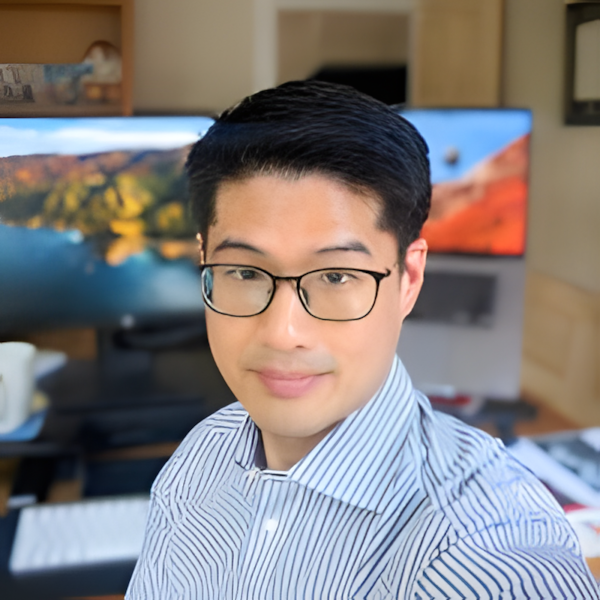
Manos Metzakopian, co-founder and CEO of CellCodex, joins us to discuss CellCodex’s mission to provide high-quality, scalable cellular perturbation data, ready to train advanced AI models for biology.

On The Bioinformatics CRO Podcast, we sit down with scientists to discuss interesting topics across biomedical research and to explore what made them who they are today.

You can listen on Spotify, Apple Podcasts, Amazon, YouTube, Pandora, and wherever you get your podcasts.
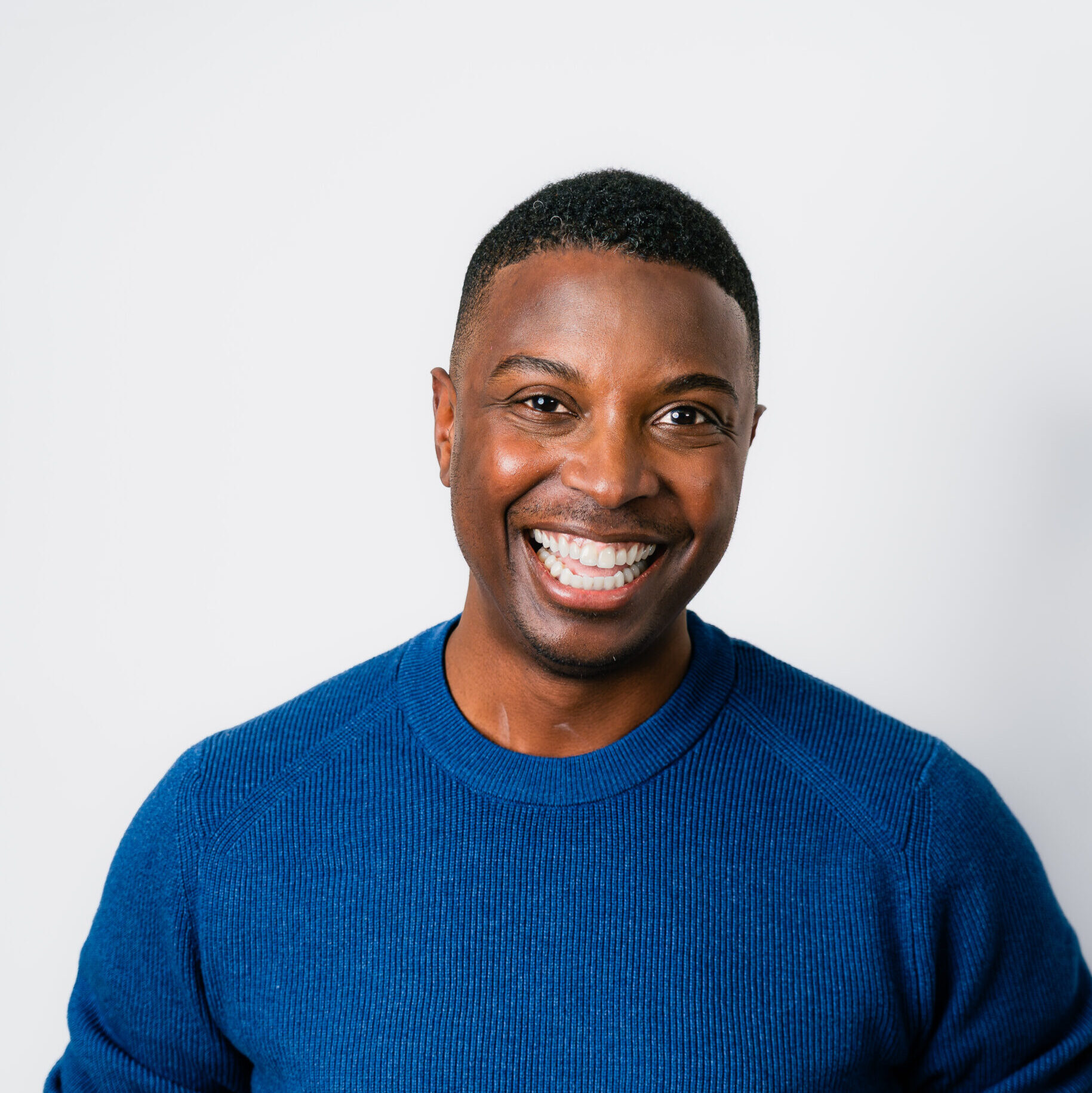
Manos Metzakopian

CellCodex is a CRO that generates AI-ready perturbation data at scale. Our founder and podcast host, Grant Belgard, is also a co-founder and the CTO of CellCodex.

Transcript of Episode 67: Manos Metzakopian

Disclaimer: Transcripts may contain errors.

Coming Soon…

The Bioinformatics CRO Podcast

Episode 66 with Eva-Maria Hempe

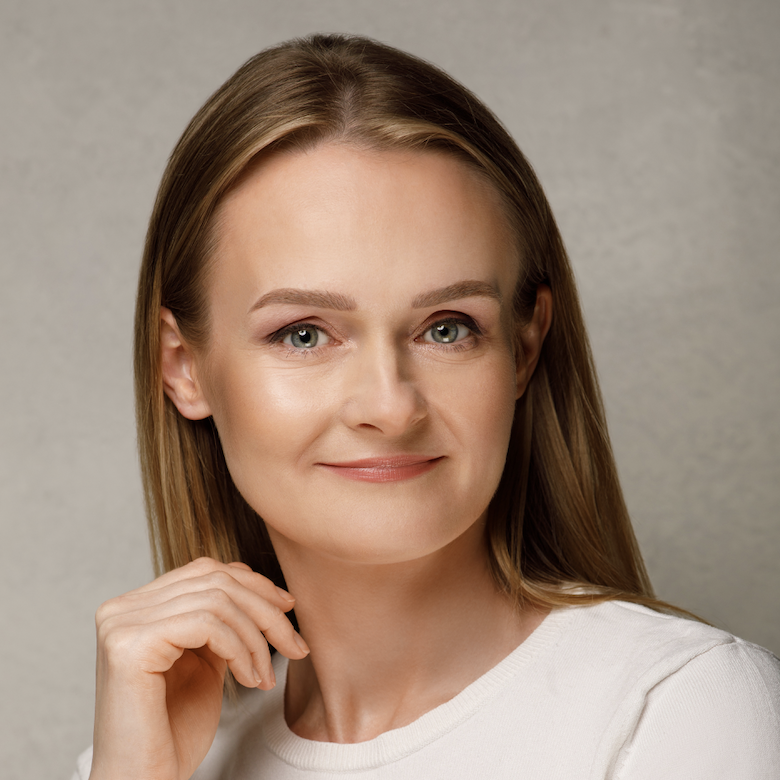
Dr. Eva-Maria Hempe, who leads NVIDIA’s healthcare and life sciences business across Europe, the Middle East, and Africa, joins us to discuss her work at NVIDIA, the gaps that AI can fill in healthcare research, and the future of drug discovery.

On The Bioinformatics CRO Podcast, we sit down with scientists to discuss interesting topics across biomedical research and to explore what made them who they are today.

You can listen on Spotify, Apple Podcasts, Amazon, YouTube, Pandora, and wherever you get your podcasts.

Eva-Maria Hempe

Eva-Maria Hempe leads NVIDIA’s healthcare and life sciences business across Europe, the Middle East, and North Africa. 

Transcript of Episode 66: Eva-Maria Hempe

Disclaimer: Transcripts may contain errors.

Grant Belgard: Welcome to The Bioinformatics CRO podcast. I’m your host, Grant Belgard. Today, we’re joined by Dr. Eva-Maria Hempe, who leads NVIDIA’s healthcare and life sciences business across Europe, the Middle East, and Africa. Eva-Maria, trained as a physicist, earned a Bill and Melinda Gates funded PhD in healthcare service design at Cambridge, and has since moved through roles at the NHS, Bain & Company, VMware, and the World Economic Forum before joining NVIDIA. She now guides strategy for applying accelerated computing and generative AI, think BioNeMo, Parabricks, and DGX Cloud, to genomics, drug discovery, medical imaging, and more. Eva-Maria, welcome to the show.

Eva-Maria Hempe: Hey, great to be here.

Grant Belgard: So what do you do day-to-day at NVIDIA?

Eva-Maria Hempe: I think in general, my day-to-day oscillates between two major poles, like working in the business and working on the business, or playing the short game and the long game. So on the one hand side, I am responsible for the business. And so that means we have to deliver revenue because if you don’t deliver revenue, you’re not a business, you’re a hobby. And when, on the one hand side, I have to hit a revenue number because if you don’t have a revenue, then you’re not a business. But on the other hand, NVIDIA is all about the long game. Like we are creating markets. We are building things that haven’t been built before. And so it’s really about striking this balance. And what it means, very practical, is on the one hand side, as I said, working in the business. So I have customer meetings.

Eva-Maria Hempe: I work with my team. We’re discussing strategies and tactics, like what should be our sales place? How are we going to work with startups? How are we going to work with this customer? I check out KPI if I see like, are we on track to delivering the revenues that is expected of us? I do a lot of talks and evangelizing to spread the message that NVIDIA is so much more than just GPUs that we have all this great software out there as well, which is super helpful and super valuable to our ecosystem that people can save a lot of time by building on top of what we put out there. So that’s the operational part. And then there is the working on the business. So really the more strategizing, making decisions on, should we focus on enterprises or startups? Where within healthcare should we focus?

Eva-Maria Hempe: To whom do we talk about which kind of topics? To which degree are we focusing on the sale? But where do we see new areas emerging which maybe aren’t driving a sale or even a lot of compute initially, but where we really believe that there are, A, making an impact. And then if they make an impact, eventually it will turn into revenue, which is one of the real beauties about working at NVIDIA that the company is set up in this way to build, to disrupt, to change and to, yeah, you have this luxury almost like it’s a bit crazy to call it luxury, but in a lot of businesses, it’s a luxury you don’t have to really work on your business than just working in the business.

Grant Belgard: So BioNeMo just went open source. Can you tell us about that and what pain point it solves?

Eva-Maria Hempe: Yeah, so in general, as I said before, we’re trying to do at NVIDIA, we’re trying to lift up the field. So we’re not looking for the quick buck. So that’s why we’re not looking to, we’re not gonna change the field by collecting licensed revenues on BioNeMo, but we think BioNeMo is a super interesting, super valuable tool for the community. And by putting it out there as open source, we can just make it much more available to a lot more people. And also we can increase the number of people who are contributing to it with their ideas and making it into something that is a lot more valuable to the community and more powerful and much more in line with the community. I think around the same time that we made it open source, we actually also, we changed it.

Eva-Maria Hempe: Like we turned it into, it has two pieces these days, the one is BioNeMo Framework and the other one is NIMs. So Framework is really, it’s also a collection of microservices, but it’s a collection of microservices, which you need to train and deploy models. So it has a curator and an evaluator and a guard railing part to it. And you can use all of these, you can use any of these, whatever helps you to put out models in a better way. And then we have NIMs and so NVIDIA Inference Microservices and some of them are biology specific. So we have some on folding, we’ve got some on generation, we’ve got some on docking, and you can put this together into reference workflows, which we call blueprints.

Eva-Maria Hempe: I often say it’s a bit like, if you think of a big box of Legos, it’s like the building plan, how you build the most basic thing out of them and then you can play with it and turn it into all sorts of other things. But in general, what we’re trying to do with BioNeMo is really solving the main pain points of drug discovery. So drug discovery is slow, it’s expensive and then also quite technically challenging if you want to use computer aided drug discovery. And so here we’re giving researchers tools to handle complex data, to collaborate and just in general, we wanna have an advanced biomolecular research framework out there that people can use and that they can do their best work with.

Grant Belgard: And for our listeners who aren’t already familiar with BioNeMo, can you give a quick primer on what they can do with it?

Eva-Maria Hempe: So, as I said, it is mostly about computer aided drug discovery. So one way I usually explain it, we have another framework called NeMo and that’s not by coincidence. So NeMo is all about training, deploying models that have to do with language, but by now it’s actually also multimodal and BioNeMo is that for the language of biology. So if you think about a sentence has like words and observes grammar and the same way like a molecule has atoms and observes the laws of physics and chemistry. And so that’s a bit the analogy there. And so the same way that with our language model, you might have proprietary data and you might wanna train a model on this or you might wanna fine tune a model with new data, you can do the same thing with biological data.

Eva-Maria Hempe: If you have data coming in, you can curate it and then you can also make sure, so that’s the curator part, then you can also evaluate it against certain benchmarks. So how good is my model? And then finally you can also make sure it has certain guardrails, so it doesn’t do certain things that you don’t want it to do. And so that’s, yeah, that’s in a nutshell about it. It’s about training, deploying and serving biological models for drug discovery.

Grant Belgard: So AlphaFold has made a huge splash in the structural biology world. What do you think is the next big thing that would be GPU enabled in biology?

Eva-Maria Hempe: For me, AlphaFold is really like, I’m a physicist. So I know when I did my PhD, which in my mind hasn’t been that long ago, we locked up PhD students for three years in a basement to find out the 3D structure of a protein. And now you can just do it on a computer. You can go to build.nvidia.com where we host the NIMs, I said before, and we have a model there and you could fold a protein in like a second live on your computer. And it’s just mind blowing. It even works on my phone. I’ve done it during presentations on my phone. So I’ve folded a protein on my phone within less than a second. In general, there are certain things around AlphaFold. There are certain gaps. So it has problems with dynamics. It has problems with multiple conformations. It can’t do disordered proteins.

Eva-Maria Hempe: And 60% of human proteins have at least one intrinsically disordered region. It’s also not great with protein ligand and nucleic acid interaction. So there are a whole lot of things which it cannot do. And so these are actually also the things we see in the field where a lot of work is going on. And as NVIDIA, we’re doing some research ourselves in the spirit I said before, in trying to lift up the field and trying to show what’s possible and trying to also inspire other people to go further down that path. And so we’re doing some research ourselves. We’re doing a lot of research in collaboration with all sorts of other people. Sometimes we’re open about this. Sometimes it’s not disclosed, but yeah, we’re seeing a lot of things that are going on.

Eva-Maria Hempe: And what we’re seeing in particular in terms of frontiers, I would say, are four things. So we see how do you deal with larger complexes and assemblies? How do you deal with post-translational modifications? How do you deal with dynamics, molecular dynamics? And then also how do you deal with protein design? Like how can you turn AlphaFold around? Like with AlphaFold, you have the sequence and you want to know the 3D structure. Can you have a 3D structure and figure out what is the sequence behind it? So there’s a bunch of work going on in the space and I think it’s going to be super exciting to see what will come out of that.

Grant Belgard: How do you see DGX Cloud changing the barrier to entry for academic labs?

Eva-Maria Hempe: DGX Cloud is like an interesting way, which is part of what we offer. And maybe it’s easier to understand in the greater context of what we offer. So in general, we are very much agnostic of what GPU you’re running your workloads on or what NVIDIA GPU you’re running your workloads on. And that is a huge advantage for people who are working with our software because we don’t want to lock anybody in. The only commitment you’re making is you’re going to work on GPUs, which I think is not a bad lock-in. You’re not locked in any other way, but that you’re going to be using GPUs. And those GPUs, the answer what GPUs are the right ones for you will again very much depend on your situation. Like, do you have a data center? Is your data center big enough? Has it liquid cooling?

Eva-Maria Hempe: Does it have enough electricity? Do you even want to run a data center? Or do you have big spikes where you need really high performance computing capacity in a short amount of time? And DGX Cloud is following our reference architecture. So it’s really all the different components, the GPU, CPU, networking perfectly aligned with each other. And it’s in the cloud, it’s on demand. So what we see it used quite often for is spike. And if an academic lab has that, if a lab is trying to train a huge model, it can be the right thing for the lab. And it could be a great way as well to showcase the power of it, but it’s not always the right solution. Sometimes it’s also worthwhile to build your own on-prem capacity or to go with more conventional cloud capacity.

Eva-Maria Hempe: So I think it’s an element of a larger compute discussion, but it definitely allows academic labs if they have the funding, if it’s basically baked into the grants to really get top-notch performant GPU computing on really short timescales.

Grant Belgard: And at what stages in the process does AI assist drug discovery today?

Eva-Maria Hempe: Pretty much along all of them, I think we see different levels of activity. So we see a lot of really early discoveries. So it starts with things like finding new targets, which I think is an interesting one. I think it’s one where we don’t see, I think you could see even, I would hope for even more activity. Somebody told me the other day how many people are working, how big the overlap is between working on the same targets. It’s mind blowing. And for example, what we talked before, intrinsically disordered proteins is a super interesting area to really find new targets, to be able to address parts or proteins, which so far have been undruggable.

Eva-Maria Hempe: And we’re working with a company there, they’re called Peptone, and they actually, AI supported, have found a method to figure out the structures of disordered proteins. So I think this was super exciting. So we’re starting there. And then of course, we have all the virtual screening workflows in terms of, okay, you have a target, you fold the target. Then you have something like MolMIM or like a generative model, which starting from a particular small molecule creates all sorts of variations of that small molecule. And then you take your protein and your multiple variations of small molecules you generated, and then you use another AI model, which can calculate how well they fit together. And as I said, that’s an area of active research as well.

Eva-Maria Hempe: How well can you really calculate those bindings? And again, another company we’ve worked with, they’re called Inoform. They can actually also do a, they can create models that fit into a particular, or molecules that fit into a particular cavity. So there’s a lot of interesting things around there on the real fundamental level. But then there’s even more to it. There’s, we’re trying to figure out how can we also, or companies are figuring out how can you apply AI to pre-clinic?

Eva-Maria Hempe: And then even in clinical research, or the clinical stages of drug discovery and drug development, there is still so much that can be done because so many drugs don’t necessarily fail because the biological mechanism isn’t there, but often also because you can’t recruit patients, you can’t recruit the right patient. And again, AI can actually have a huge contribution to solving these kinds of problems. And then you can go into manufacturing and selling drugs. So I always tell my clients that AI is a topic along the entire value chain. And we are seeing applications today along the entire value chain. Like every single step, there is somebody working on something and a lot of progress is being made.

Eva-Maria Hempe: You still have the whole issue that just things take a very long time because like clinical studies just take the amount of time they take. You can have a bit of time out there by doing optimized recruiting of trial participants, which is usually a pretty of a delaying factor, or you can use AI also to speed up the data analysis and regulatory writing, clinical writing, submissions processes. So there is some speed up you can do there. But I think in terms of the speed up is more happening in the earlier phases of drug discovery. And then in development, we really have more of a trying to figure out where do they work. So a lot of work I see in that area as well is around biomarkers.

Eva-Maria Hempe: Again, figuring out what works for which patients so that it feeds back into the early stages, but then also once you’re in trials, you have the right patients in your trials and you have a better chance of actually making it through phase three, doing efficacy. I said about all those different ways, how AI can help with the preclinical part. And there is actually real good data on that by now. So, and SILCO is really famous about this and they were smashing it. They had 22 developmental candidates between 2021 and 2024. And actually they were able to get on average to a developmental candidate within 13 months. So around 70 molecules synthesized per program. And the fastest was like nine months and the longest was 18 months.

Eva-Maria Hempe: And this is just like a huge, huge speed up to what you usually see, but these kinds of processes take years. Interesting, so that’s the preclinical phase where it’s really about the speed up and you can also go from target and lead identification over lead optimization in 46 days these days. So all of this is amazing. And I said before in the clinical studies, it’s then really about being better. And there was a paper which came out last year where they looked at AI discovered drugs. And for phase one, the success, probability of success was twice as high as for regular drugs. And it was still pretty bad, but it was twice as high. And then for phase two, it was in line with the averages, but for phase two, the numbers started to become quite small.

Eva-Maria Hempe: And for phase three, there wasn’t enough data. But if we assume this holds, if you assume you’re twice as successful in phase one, which is not unrealistic because phase one is all about safety and with better models, we get better idea of target effect, and then phase two and three about efficacy and a dosing on part, then this actually means we’re going from one in 10 drugs, making it to markets to two in 10 drugs. It’s still a lot, but it’s basically, it’s halving our cost per drug. And if a drug costs these days, on average $2 billion to make it to market, saving a billion dollars per drug. So this is huge. Your potential is huge, which I think is why we’re all still working on this despite all the problems we talked about of long timelines and difficulties to get funding.

Grant Belgard: Where are the biggest talent gaps in bio AI today?

Eva-Maria Hempe: I think it’s really about speaking multiple languages. And the question is also talent where? So we have and– and what keeps things from reaching or from reaching impact. So I think if you look at a lot of the biotech, tech bio, we still have the issue that the entire pharma ecosystem is set up in a particular way. Somebody said it the way, like it’s a coin flip. And we know that the coin is unfair. We know that heads gonna come with a 10% probability. Now what these companies are doing, they’re actually trying to improve the coin minting process. So by using AI, we’re trying to mint better coins. We’re trying to mint a coin, which has a 20% chance of heading up, landing heads up. But this is really hard to prove.

Eva-Maria Hempe: And the entire system, the people in the VCs, all their mindset is like a biotech investor mindset. And they’re looking for the things around a 10% coin flip probability. And it’s really hard to evaluate this. Is this really going to get us this lift up or not? And different to other areas of AI like quant trading where you have immediate feedback, you change something, okay, you’re gonna make more money. Great, let’s do more of this. Here, it’s almost the complete opposite of quant trading. You have like 10 years until you see whether it works or not. And I think that’s actually one of the biggest gaps.

Grant Belgard: Even with the 10 years, it’s small in, right? So it trickles through after 10 years.

Eva-Maria Hempe: And so, yes, I think we need to have more people who speak multiple languages of AI and of data science and of biology. But I think we’re starting to see some of that. But I think it’s really more the system as a whole and the incentives and the structures and just the fact that we’re dealing with biology, which takes 10 years to come. But I’m still optimistic.

Grant Belgard: What are your thoughts on community standards such as OpenFold and so on? Are there areas where there are glaringly obvious missing standards or areas that you think are still being held back by a lack of standards?

Eva-Maria Hempe: At NVIDIA, we are big believers in open source. So we think it’s the one way to really harness the power of community. And we are big believers in the community. NVIDIA is all about communities, about ecosystems and us doing our part to help the ecosystem develop, which is why so much of our software is actually open source because we believe in the power of this approach. And we really wanna support it to come to full fruition.

Grant Belgard: Well, it’s essential to save biotech and pharma, right? The internal rate of return on R&D has been abysmal below the cost of capital for many years now. And at last that turns up.

Eva-Maria Hempe: It’s actually interesting because of those $2 billion per drug or one and a half billion dollars per drug, only I think it’s around 300 or so are the actual cost. All the rest is the cost of the failed drugs and the cost of capital because the capital is just locked up for such a long time and you have so many failures all around. And the other thing I think, I don’t know, you’ve probably seen it, it’s called Eroom’s Law. If you take how many drugs $1 billion in research spending buys you, it’s a logarithmic downward over the last 70 years. This is not recent. This has been going on forever, but it’s just starting to get into areas where it’s just really, you just can’t continue this way. We just need a different way of doing things.

Eva-Maria Hempe: We just can’t continue spending more and more and more and getting less and less and less.

Grant Belgard: So shifting gears, let’s talk about your own journey. What pulled you from physics to health?

Eva-Maria Hempe: It was the impact. So I was sitting there in my lab. So I was doing quantum optic, which means I’m sitting in a dark lab because I was dealing with optics and lasers. So you don’t want daylight messing up your experiments. So you go in in the morning, it’s dark. You leave in the evening, it’s dark. And during the day, it’s dark. And I was just thinking to myself, what is this going to do for the world? And back then we kept saying, oh yeah, this could be used for quantum computing. But back then I was like, well, but this is going to be at least 15 years until anything useful. And I have to say, this has been more than 15 years ago by now. So I was just like, okay, is this really it? But then as with those decisions, usually two things have to come together.

Eva-Maria Hempe: And the other part, which was for the ignition to really change tack was just meeting the right person at the right time. So I met this girl and she was an electrical engineer by training. And she studied how procurement processes at the hospital affect patient safety from with this very scientific engineering frame of mind. And I just thought that it was fascinating. Like all the way I’ve been trained to think, which like I really liked the scientific method. I really liked this way of thinking, but applying it to real world problems. And that’s how I got to study healthcare service design.

Grant Belgard: Are there any insights from your PhD that you still use?

Eva-Maria Hempe: Yeah, I think it’s really that organizations are an interplay between structure and people. And that sounds very simple and very obvious, but if you’re designing an organization, you’re not actually designing an organization. You’re designing almost a scaffolding for the organization to grow around. You’re giving some structure, but an organization isn’t the org chart. It isn’t the policies. It isn’t the trainings. It’s the people which are populating those structures, which are interacting, which are meeting each other or not meeting each other. And I think that was a really important insight which has like, it pops up everywhere. Now, one of my big challenges at work is like how do I get enterprises to adopt AI?

Eva-Maria Hempe: That’s again, an organizational question. As much as a technological question, actually technological question is like, maybe not even half of it. A lot is really about how do you get people to adopt it? How I get people to use it? What are the incentives they’re listening to? Who has power in this organization? How is this organization really structured? So yeah, I still use some of the things I learned, I studied.

Grant Belgard: And what did you learn in your time with the NHS that you think tech sector often misses?

Eva-Maria Hempe: I think in the tech sector, it’s easy to look at everything through a technological lens that, oh yeah, we can improve this, we can do this. But a lot of my research and my work was about design thinking, which is very much empathy. You start with the end user, you immerse yourself into the end user. Ideally you get to observe, you get to shadow, but you get a real idea of what are people doing and what’s the real problems and how can technology help that? I think this empathy, this user-centric view is sometimes a little bit missing in tech. I think what we also discussed before, you’re creating a great tool and maybe the people you tested it with like it, but it has to fit into the workflow. It has to fit into the real life. It’s all about minimizing friction.

Eva-Maria Hempe: I was saying the other day, just like if you wanna drive real value in organization, it’s about having something that has as little a friction as possible and as much immediate value as possible. And then you’re gonna see adoption. If it’s high friction, it has to have even higher value. If it’s low value, it has to have even lower friction, but ideally it has both.

Grant Belgard: Can you tell us about your time at the World Economic Forum and how that impacted the work you do today?

Eva-Maria Hempe: Yeah, the forum really is about multi-stakeholder and what role policy plays. And again, about what are the right incentives and how can you align the incentives of multiple different parties towards a common goal. So what I did there, it was about the future of healthy. So how do you make staying healthy a business versus having people get sick first and then making them healthy again? I mean, that’s an established business model, but why are we there? Why can’t we just keep people healthy in the first place? And there it’s really about thinking through the food industry. How can we make it a better business for the food industry to sell healthy food? How can we make it better for the doctors to be paid to keep the patients healthy?

Eva-Maria Hempe: There’s models for that where they get basically paid per patient in their catchment area, but they don’t get paid for the procedures they do, but they get like a fixed fee. It has all its pros and cons, but really think through things from a joint value and joint incentive point of view. And like I said, again, when you’re trying to change big systems, whether it is an organization or whether here it is like a multi-organizational system, it’s really important. And this is something I think I couldn’t imagine a better place to learn how you navigate these things, how you deal with politicians, how you deal with all the different lobbyists and all the different interest groups and really try to drive towards a common goal. And I think there’s no better place than the forum to learn that.

Grant Belgard: Can you tell us about your time rowing in Cambridge and did that develop you in any way that’s useful today?

Eva-Maria Hempe: Yeah, I got to Cambridge twice. The first time I went to Cambridge, it was for a summer research as part of my master’s thesis. And I knew people and they made some connections for me. And so I was at Cambridge during the summer before the freshers arrived. And then the freshers, so the first year students all came in and all the clubs started recruiting and the rowing club started recruiting and they tried to recruit me. And I was like, yeah, no, I’m only here for a few more months it doesn’t make sense, I should still do it. And I didn’t do it. And then I came back to Germany where I was finishing my studies and everybody was like, oh, you were in Cambridge, did you row? I’m like, no. And then I really regretted it. I was like, well, I really should have.

Eva-Maria Hempe: So I promised myself if I make it back in for my PhD I’ll give rowing a go. And so I did, and initially I wasn’t that good. So I was in the second novice boat. I didn’t even make the first novice boat. I was in the second boat, but then I just kept at it. And I barely made the first boat in the next term. There’s three terms in Cambridge. And then in the third term, I was still in the first boat of my college, of my part of the university I was at. And then I was around for the summer. So I thought, okay, the university team is doing a summer program. I might as well try that. So I did that. And then they try to funnel you into joining the team full time. And I was like, well, Cambridge rowing.

Eva-Maria Hempe: The year, my first year I watched the Cambridge boat races and I was like, wow, it must be so nerve wracking and whatever. And then they were like, yeah, you did the summer program. Don’t you want to trial, like just try for the university? And I was like, okay, well, what’s the worst that could happen? I’d taken that lesson of where I hadn’t rowed and regretted it. I’m like, okay, I don’t want to regret. So I just went for it. And then I found myself on the starting line of that boat race, which I just watched a year before. So I went within 18 months from never having rowed in my life to rowing and winning a boat race. And I think the lesson here, as I said, there’s the one about no regrets.

Eva-Maria Hempe: I think the second one about that you’re just capable of a lot more than you give yourself credit for. And I think the third one also just about the power of habits and the power of persistence and the power of community. So there’s nicer things than getting up every single morning at five o’clock, going to the train station, going rowing, barely making it back for nine o’clock to go and to your lab and do your work. And then at five o’clock going back to row. But it’s incredibly disciplining because you only have from nine to five. There is just no, oh, I’ll do this later. You have to be done at five because then you have to leave and go train and you have to be there for training. You can’t skip training.

Eva-Maria Hempe: And so I thought that was actually really useful to fall into this rhythm and go along with it and also shape your environment in a way that helps you do the things you want to do. Because like I said, it’s just not like, I don’t want to get up at five, but I just have to. And then once you’re back from training, you actually feel pretty good. And of course winning the race, nothing feels as good as that. But even if I would have lost the race, I still like, yeah, it was interesting because just before the race, it was about an hour or two before the start. And I remember we were in the boat bay and did like a little circle of the whole crew. And until then I had a bit of nerves, but from that moment on, I was just calm. All the nervousness, all the nerves were just gone.

Eva-Maria Hempe: And I was just like, well, I put everything into this I could, I have no regrets. So whatever happens now on the water, I can look back at this day and I’m proud because I did whatever I could to get to this point. And I think that was interesting because the year before I thought those people must be so nervous when they sit on the start line. But actually when I sat on the start line, I was just calm, I was just ready to do this. And basically put in the work.

Grant Belgard: Why NVIDIA, what sealed the decision for you to join?

Eva-Maria Hempe: It’s because we are a $4 trillion company. No, of course not. Actually, when we joined, I wasn’t. When I joined NVIDIA, it wasn’t a $4 trillion company. No, it’s just, I couldn’t imagine another place right now where you’ll have this impact on the entire ecosystem of healthcare. We work with everybody. We’re the one AI company which works with everybody else. So I get to work with startups. I get to work with established companies. I’m on the forefront of what’s possible. And at the same time on the forefront of what’s possible to do an organization like the thing we thought before. I mean, on the one hand side, we’re looking at models which can design proteins based on 3D structures.

Eva-Maria Hempe: But on the other hand, we’re also looking at rolling out procurement agents because that solves a real problem in the organization today. So it’s just a really exciting place to be at the center of the action around AI and healthcare. And so in general, it just felt like a place where a lot of the things I’ve been doing in the past sort of all came together. Like the multi-stakeholder management of the forum, the strategizing of almost 10 years in consulting, the operationally leading a team and helping people and creating strategies and tactics to make your number, which I did at VMware. And yeah, it just wrapped into sort of this one package of doing something really exciting and really exciting in a field I’m super passionate about.

Grant Belgard: For early career computational biologists who were looking at entering industry, what three skills should they cultivate now?

Eva-Maria Hempe: It’s a bit difficult to say because I’m not a computational biologist, but I think it’s also maybe not so much about the computational and the biologist. I just assume people are well-trained in those fields. I think what’s really important is for them to listen, to sort of to listen where the problems are, what’s being done, where people struggle with. I think the other thing is to really understand value. So I think there’s a lot of interesting work. If you want to do really cool and interesting work, and maybe it’s a bit controversial, but then academia is the place to be. Like if you just are in for the cool, by all means, that’s what academia is supposed to be. If you’re going into industry, then you need to have a nose for value. You need to start to understand like what’s value.

Eva-Maria Hempe: And value can be very different things. Value doesn’t necessarily mean the biggest grossing drug. It can also just be in line with the research portfolio of the organization. It can be in line with individual values of particular managers, but you need to understand value. I think the last thing it’s about teamwork, because so many of these things by now become so difficult that you just can’t solve them alone. You’re dependent on working with others who are bringing complementary skills and complementary experiences. So I would say three things are listening, understanding value, and working well in a team.

Grant Belgard: For life science founders, when is it worth building their own models versus taking existing models or platforms?

Eva-Maria Hempe: So I think you have to be smart. So do you really have an edge? And AI, in my mind, I always think about in three elements. The one is data, compute, and algorithms. So compute, there are some people who have an edge because they can just buy compute for billions of dollars, but that might not be your edge as a founder. So then it probably leaves either algorithms or data. And if you have something there, yeah, you might want to go for it. But very often, actually, you don’t necessarily need to build a model from scratch. You might not even have enough data to build a good model from scratch. And it might be much more worthwhile for what you’re trying to do and you’re coming back to the point of value. What is the value you’re creating?

Eva-Maria Hempe: It might actually be better to stand on the shoulders of giants and just taking a foundation model and retraining it. And in general, I would always advocate for using frameworks out there because they make your work easier. So BioNeMo is not a model per se, but it’s also a framework which helps you do your models better. And I think you shouldn’t write your own data loader and you shouldn’t have tried to configure guardrails from scratch. Like you have, as a founder, you’re massively resource constrained. So try to think about what are the things where you can really differentiate and focus on those and then try to use platforms, existing tools for all the rest.

Eva-Maria Hempe: And I hope that people are taking something from this podcast is we have so much things out there which we’re putting out there, usually often as open source. We have frameworks and libraries and NIMs and all of this is intended to help you and avoid reinventing the wheel. Like if you’re doing medical imaging, you don’t need to write your own segmentation tool. Like this is all out there. Take it and then build a killer application on top of it. But be smart, look at what’s out there and NVIDIA can offer so much and your favorite AI engine, if you ask it, I have this particular problem, what are the latest NVIDIA frameworks? It should give you a whole list of libraries and frameworks you can use, whether it’s for data science or data frames, et cetera. There’s just so much out there.

Eva-Maria Hempe: I think the last thing for life science founders is as well look into Inception. So Inception is NVIDIA’s free virtual accelerator. So it gets you access to NVIDIA experts, which help you even better find the right tools and right frameworks, which make your money last longer. It gets you into a community of like-minded people and there’s also some programs about cloud credits and or discounts for hardware. So join Inception, look at what NVIDIA has and other people have put out there before you build it yourself and just be really smart about what really drives value.

Grant Belgard: What’s your boldest prediction for AI and drug discovery over the next five years?

Eva-Maria Hempe: I don’t know if it’s five years. I would hope it’s five years, but I think at some point we will look back at the way we do drug discovery today and it will seem as archaic and plainly said stupid as the alchemists trying to turn lead into gold. Like today, if you tell kids, oh, back in the middle ages, you had all those alchemists and they were cooking and the idea was lead is this less noble material and you can turn it into more noble material as gold. People are like, why? And I think we look at the same way a lot of things we do today in drug discovery and we’re just like, why did everyone ever think this is going to work?

Eva-Maria Hempe: And there are like on a more practical level, there’s really smart and really interesting things going on about virtual cells and like better predicting like the link between the genome and actually how cells behave. And then also not just cells because we’re not just cells, we’re whole tissues. So I think we’ll see a lot more understanding and understanding biology, at least to some extent. And I think that will get us to this point of alchemy and how could we have been so stupid.

Grant Belgard: What’s a learning resource you would recommend for every trainee?

Eva-Maria Hempe: I think it’s not a learning resource in the conventional way, but I would really encourage to go on build.nvidia.com because it just shows you what’s possible and you have all those different models and you can play with them, you can get an idea what they can do. And then you can also go to the blueprints and basically see how these are put together. So I think that’s a great resource. And then I would maybe pair that with like, I’m a big fan of perplexity, but also any other LLM agent of choice. I think they are great teachers. They can teach you anything. And the other day I used perplexity in voice mode. And so I was like making dinner and just having this really natural conversation. And there is no stupid question. There is no judging.

Eva-Maria Hempe: You can like ask it anything like just, can you please explain to me again how this works? And I sometimes also use it for some of the NVIDIA stuff. I’m like, okay, can we go deeper on RAPIDS? Can you explain the different libraries? Like how does this work? Why does this work? So I think it’s a great tool to learn about AI, but also just anything else you wanna learn. And it can also challenge you. You can actually also ask it to quiz you and to make sure you really understand things and you explain it back to the machine. The machine actually gives you feedback whether you got it right or you need to brush up a bit more.

Grant Belgard: Yeah, I was actually doing the same thing with a bit of yard work yesterday. Also highly recommend that, voice mode is great. Eva-Maria, thank you so much for joining us. It was great.

Eva-Maria Hempe: Thank you, I really enjoyed it.

The Bioinformatics CRO Podcast

Episode 65 with Jeff Bizzaro

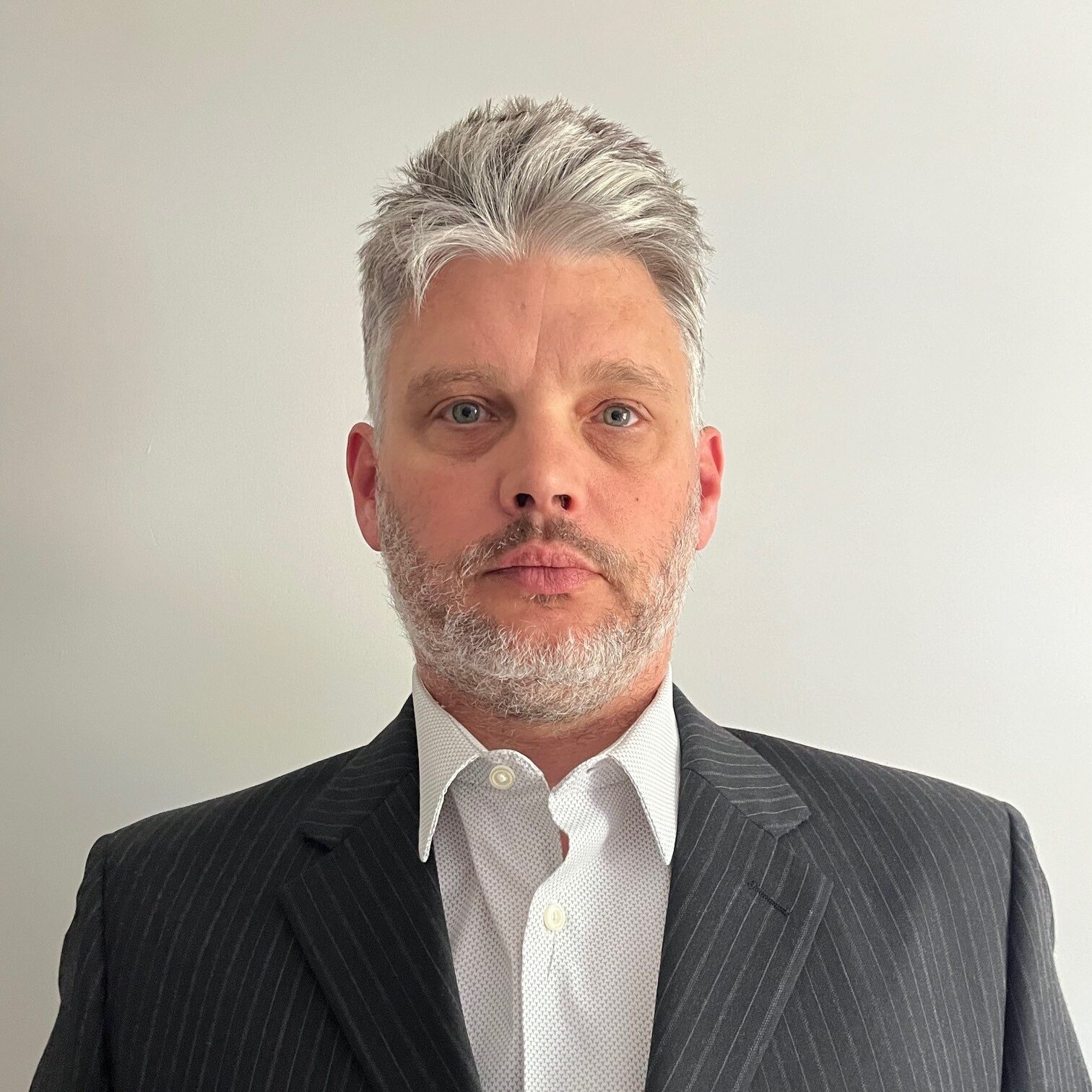
Jeff Bizzaro, founder and long-time president of bioinformatics.org, discusses the importance of open source tools and open access in the life sciences.

On The Bioinformatics CRO Podcast, we sit down with scientists to discuss interesting topics across biomedical research and to explore what made them who they are today.

You can listen on Spotify, Apple Podcasts, Amazon, YouTube, Pandora, and wherever you get your podcasts.

Jeff Bizzaro

Jeff Bizzaro is the founder of bioinformatics.org, which is committed to hosting resources for open science, bioinformatics webtools and data, and open source software development.

Transcript of Episode 65: Jeff Bizzaro

Disclaimer: Transcripts may contain errors.

Coming Soon…

The Bioinformatics CRO Podcast

Episode 64 with Afshin Beheshti

Afshin Beheshti, director of the University of Pittsburgh’s new Center for Space Biomedicine, discusses the importance of space biomedicine to understanding human health both in space and on earth.

On The Bioinformatics CRO Podcast, we sit down with scientists to discuss interesting topics across biomedical research and to explore what made them who they are today.

You can listen on Spotify, Apple Podcasts, Amazon, YouTube, Pandora, and wherever you get your podcasts.

Afshin Beheshti

Afshin Beheshti is the Director of the University of Pittsburgh’s new Center for Space Biomedicine in the McGowan Institute for Regenerative Medicine, Associate Director at the McGowan Institute, and Professor of Surgery at the Pitt School of Medicine.

Transcript of Episode 64: Afshin Beheshti

Disclaimer: Transcripts may contain errors.

Coming Soon…

The Bioinformatics CRO Podcast

Episode 63 with Kenny Workman

Kenny Workman, co-founder and CTO of LatchBio, discusses his experience building a cloud platform for modern biology and how Latch has grown since our 2022 episode with his co-founder Alfredo Andere.

On The Bioinformatics CRO Podcast, we sit down with scientists to discuss interesting topics across biomedical research and to explore what made them who they are today.

You can listen on Spotify, Apple Podcasts, Amazon, YouTube, Pandora, and wherever you get your podcasts.

Kenny Workman

Kenny Workman is the co-founder and CTO of LatchBio, a cloud based data infrastructure solution for working with molecular data.

Transcript of Episode 63: Kenny Workman

Disclaimer: Transcripts may contain errors.

Coming Soon…

The Bioinformatics CRO Podcast

Episode 62 with Don Alexander

Don Alexander, founder and president of GeneCoda, discusses the current climate in hiring for life sciences, trends in remote and hybrid work, and the impact of AI on expectations for candidates.

On The Bioinformatics CRO Podcast, we sit down with scientists to discuss interesting topics across biomedical research and to explore what made them who they are today.

You can listen on Spotify, Apple Podcasts, Amazon, YouTube, Pandora, and wherever you get your podcasts.

Don Alexander

Don Alexander is the founder, president, and managing director of GeneCoda, an executive search focused on the life sciences sector including biotech, pharma, med tech, and diagnostics. 

Transcript of Episode 62: Don Alexander

Disclaimer: Transcripts may contain errors.

Coming Soon…

Cover art for The Bioinformatics CRO Podcast episode: Elizabeth Ruzzo - endogenomics for inclusive scientific discovery

The Bioinformatics CRO Podcast

Episode 61 with Elizabeth Ruzzo

Dr. Elizabeth Ruzzo, founder and CEO of Adyn, discusses precision medicine for personalized birth control and her commitment to using pioneering endogenomics to make scientific discovery more inclusive.

On The Bioinformatics CRO Podcast, we sit down with scientists to discuss interesting topics across biomedical research and to explore what made them who they are today.

You can listen on Spotify, Apple Podcasts, Amazon, YouTube, Pandora, and wherever you get your podcasts.

Dr. Elizabeth Ruzzo

Dr. Elizabeth Ruzzo is the founder and CEO of Adyn, a precision medicine startup pioneering personalized birth control.

Transcript of Episode 61: Elizabeth Ruzzo

Disclaimer: Transcripts may contain errors.

Coming Soon…

The Bioinformatics CRO Podcast

Episode 60 with Max Marchione

Max Marchione, Co-Founder of Superpower, discusses his experience founding a health tech company, making concierge medicine accessible to all, and the future of healthcare.

On The Bioinformatics CRO Podcast, we sit down with scientists to discuss interesting topics across biomedical research and to explore what made them who they are today.

You can listen on Spotify, Apple Podcasts, Amazon, YouTube, Pandora, and wherever you get your podcasts.

Max Marchione

Max Marchione is the Co-Founder of Superpower, where their mission is to move from reactive to proactive and personalized healthcare.

Transcript of Episode 60: Max Marchione

Disclaimer: Transcripts may contain errors.

[Grant Belgard]: Welcome to the Bioinformatics CRO Podcast. I’m your host, Grant Belgard, and joining me today is Max Marchione, a 24-year-old Australian entrepreneur who’s the co-founder and president of Superpower, a San Francisco-based health tech startup. Superpower is building what it calls the world’s first health super app, aiming to prevent disease and enhance human capabilities through proactive, personalized health care. In essence, the company offers a membership-based digital longevity clinic that helps people live longer, healthier lives. Max, welcome to the show.

[Max Marchione]: Excited to be here. Thanks, Grant.

[Grant Belgard]: So, your path is pretty unconventional, from law school in Australia to dropping out and diving into health tech. Can you walk us through that journey? And what pulled you from law into the world of biotech and startups?

[Max Marchione]: Yeah, good question. It seems unconventional, but around three years ago, I was sitting there thinking to myself, what do I want to spend the next 20, 30, 40, 50 years of my life on? And at the time, I had just left my job at Goldman Sachs, and I was running two small companies. One, my brother’s now the CEO of, he does a way better job than I ever did, and the other, a friend of mine runs. And I was sitting there thinking, what do I want to spend the next 30 to 50 years on? And three things really had to be true. One is, whatever I worked with had to be deeply personally meaningful. It had to be something I was really obsessed over. And health was one of the few things that I would spend my weekends — my weekends obsessing over, my spare time obsessing over.

And that really started after going through a 10-year period of misdiagnosis. It would take me three hours to get to sleep every night. I had chronic headaches, chronic sinusitis. I saw over a dozen doctors, had surgery, was told to medicate for life. No one knew it was wrong with me. No doctor could get to the bottom of it. And when that happens to you, you start taking health into your own hands. That’s what I remember in like 2015, 16. 16, wearing a big fat [aura] ring. And all my friends at high school would bully me because tracking your sleep back then was not something you did. Or a year or two later, a continuous glucose monitor. Same story. People thought I was slightly psychopathic, putting a little microneedle in my arm.

But over that period of trying to solve my own health problems, I became a huge health geek, right? And it was something I was really obsessed of. I’d go to doctors and be like, I swear I’ve read more papers than you on this topic. And I ended up getting to the bottom of what was going on by finding something I call a 10X. A 10X doctor, like a really great doctor. The kind of doctor Jeff Bezos might have. And it made me realize there’s a huge gap between that model of care and what everyone else has. And there’s a gap between the best of healthcare and what most people have. And for as long as that gap exists, someone or some company has to come along and close the gap. So health was deeply personally meaningful.

I mean, thinking about it for a very long time, I didn’t really know what to do in the space, but I was really obsessed with it. The other thing that had to be true is I was thinking about what matters to the world, right? What matters to the world. There are a few problems on this earth that genuinely matter. And health is certainly one of them. And then the final thing is, if I’m going to be doing it for 30, 40, 50 years, the company has to have the potential to be at least a $100 billion company. I’m not saying we’ll get there. There’s a lot of things that can get in the way, but that means that we’re actually working on something that is of sufficient scale to actually matter in the world. So I was debating lots of different ideas. One was building a new city.

One was building a new healthcare system. And I decided building a new healthcare system came first. And the US healthcare system, the system is larger and more broken than anywhere else. So three years ago, I moved to the US. I knew no one here. And I moved to San Francisco. And here I still am today.

[Grant Belgard]: What was the light bulb moment for Superpower? Was there a specific incident or conversation that made you say, I’m going to build a new healthcare system?

[Max Marchione]: Not really. So in August, 2020, 2022, I was really, really obsessed with this idea that AI would perform cognition or computation far more effectively than humans. In other words, every single person on earth would have an AI doctor. And I remember when I said that to people in 2020, 22 August, they laughed at me and they’re like, well, what is this not possible? Come on. What about, what about the art of medicine or the humans of medicine? A couple of months later, November the 30th of November, 2020, 2022 ChatGPT comes out. I’m like, see you guys. They’re like, no, no. What are you talking about? This thing’s like, it can hardly even, even write. This thing can’t do anything. And then around a year later, I’m like, okay, now this thing’s getting really good.

And it was around that time when Superpower started. And, uh, in the period between that I explored lots of different ideas, right? I had a belief around what I thought healthcare would look like, but very few people agreed. The inside had said, no quality is fine. What do you mean? Quality standards are fine. No one cares about prevention. Consumers will never pay for, for anything you want to create. There are all of these reasons to not do the thing. And I came full circle after going through this, this trough of disillusionment to be, to realize, hold on the very idea I started with, which is making the very best medicine that today costs a hundred thousand dollars accessible to everyone, making it cost a hundred dollars is actually the idea, which still really matters.

And AI is the enabling technology. So it was no single moment. It was instead this, this long period of ironically coming full circle to where I started.

[Grant Belgard]: Tell us about your co-founders. How, how did the team come together and what unique strengths do each of you bring?

[Max Marchione]: Yeah, totally. So I met, um, Jacob. In, uh, several years ago now, and we’re introduced under the auspice of “you’re the two most health obsessed people I know.” He’d recently, um, lost several organs in hospital and been through a whole health crisis himself, and we’re both running small venture capital funds at the time. So we, we, we would like share [deal flows], we’d invest together, we’d constantly jam and ideas together. And, uh, we both knew we were starting health companies, but we kept it a little hush, hush from each other. And, and then when we started revealing, we’re like, hold up, we’re building basically the same thing. Rather than competing with each other, what does it look like to actually join forces? So that’s what we did.

And then Kevin, uh, the, the third leg of the stool went through Launch House, which was one of the previous companies, kind of like a Y combinator that Jacob started. And, uh, several hundred or maybe even thousand founders went through, uh, Launch House. And Jacob said Kevin was the best engineer he’d ever met. And they, they became good friends through that period. So the three of us, the three of us joined, joined, um, joined forces. And here we are.

[Grant Belgard]: You spent a year in stealth mode, building Superpower before going public. What were you focused on during that time?

[Max Marchione]: I think that if you’re going to commit 30 plus years of your life to something, it makes sense to be pointed in the right direction. And I think that hype is transitory and momentum, if momentum’s low, it’s inertia and stays low. And if it’s high, it’s also inertia and stay stays on the up. And the implication is I actually think that it pays to think very deeply about what to work on iterate on lots of ideas before actually starting to put brand and marketing capital behind it. Because if you start putting brand and marketing capital behind everything, then when you actually do the actual thing, it’s all gone and you can’t actually use it. So that was a big reason for stealth mode. Um, people disagreed with it at the time. Um, why are you in stealth?

And, uh, I think in retrospect, I would, I would certainly do it again.

[Grant Belgard]: What early challenge, challenges, uh, or pivots did you have as you refined the concept?

[Max Marchione]: Uh, we started far more upmarket. So the, the initial belief was we’re trying to take a hundred thousand dollars concierge medicine and make that accessible to everyone at a far lower cost. Surely it makes sense to start with a hundred thousand dollars a year concierge medicine. And to slowly reduce costs and automate more. And that’s not really how it works because when you start having that much capital to play with, you end up making product decisions and engineering decisions and operations decisions and strategic decisions based on that, right. And you end up running essentially another services led company. And you’re competing with all of the other services led companies that charge very high prices.

And yes, there’s a small market that’s willing to pay and therefore it can be a fast path to revenue. But it means that you’re not, we’re not actually thinking sufficiently about scalability from day one. So the change we made was to actually do the opposite, which was to start at an attractive price point, $42 a month or $499 a year. And have a set of things included at that price point that we think are amazing and then just keep adding features, right? So rather than keeping the features the same and reducing the price instead, start with a very low price and keep adding features. And I think that’s a far more scalable way to build because it forces you to make the scale decisions right from the start.

[Grant Belgard]: Superpower’s mission is to move healthcare from reactive to proactive and practical terms. What does that mean for an individual? Can you give an example of how traditional healthcare might miss something that your approach might catch?

[Max Marchione]: So the cancer someone gets at 40 or 50 starts when they’re 20 or 30, the heart disease at 60 starts when someone’s 20 or 30, the Alzheimer’s at 70 starts at 20 to 30, maybe even earlier. Now the healthcare system today will only react one to two years before it actually happens, not 30 to 40 years before it happens. But I think we can and should intervene early. And we have the tools to understand how things that are presenting themselves very early to someone actually could result in something down the stream. For example, heart disease is a classic one. If all of someone’s parents and grandparents died of a heart attack, you’re probably going to die of a heart attack.

But if you use any sort of risk scoring algorithm, 10 year risk is what is used, it’s going to say your 10, if you’re 30 years old, it’s going to say your 10 year risk of a heart attack is very low. It’s so low. We’re going to do nothing about it now. We’re not going to. So I’m like, wait, hold up. I know that’s my 10 year risk, but my 30 year risk, I’m like going to die of a heart attack for almost certain. So why don’t we take preventative measures today? And we can actually start to test for someone’s lipid burden. We can test apolipoprotein B. We can test lipoprotein little a, which basically shows your genetic risk of heart disease. And we can take steps to reduce atherosclerosis early. We can reduce calcification of plaque in the arteries.

And we should do that early if that’s the most likely thing you’re going to die of. And it’s the number one cause of death in the United States. And that’s one example with heart disease, but that applies to everything. And we can see how being out of range in certain biomarkers correlates and likely has some causal effect to diseases downstream. A very high A1c, a sign for being diabetic or pre-diabetic, will increase your risk of all cause mortality, largely from the biggest killers. Having liver enzymes, which are highly elevated when you’re younger, will increase your risk of all cause mortality. And if we look at the way the system, it doesn’t respond. I remember I was 13 years old. My liver enzymes were just outside the normal range.

And every doctor said, it’s fine, it’s just outside the normal range, don’t worry about it. And what I found out several years later is the normal range is the 97.5th percentile. So at 13 years old, I was worse than 97.5% of the entire population. And I was told I was fine. Right? And that’s how the healthcare system is set up. Doctors don’t even know these ranges of percentiles. They’re just like, ah, it’s just the range. So unfortunately, it’s not just the doctor’s fault. They’re not even equipped with the information to know how to respond and behave.

[Grant Belgard]: So you’ve previously mentioned wanting to help people not just avoid disease, but actually enhance capabilities, almost like unlocking a superpower. So what does enhancing human capabilities look like in the context of health? You’re talking longevity, cognitive performance, athleticism. Where do you think the high leverage points are?

[Max Marchione]: So if we look at a sci-fi movie or read a sci-fi book, how often do they talk about, we’re preventing cancer and we’re preventing Alzheimer’s? You don’t hear it. Prevention, no one talks about prevention. And the implication is that in a post-deep biotech world, prevention becomes table stakes. And I do believe we’ll get to that world actually faster than many people think. In a world where prevention is table stakes, what does matter? Well, what you hear in these sci-fi novels and see in these films is that enhancing human performance, enhancing human biology starts to matter. Allowing people to lose weight, allowing people to be smarter, allowing people to live longer, allowing people to be more athletic, allowing people to be more focused and get more done in the day.

These are things which health actually facilitates. Today, it facilitates it through simple things. Even lifestyle behaviors can modify and enhance human capability. Soon, we’re going to see health enhance human capability through more complex modifications. One example or harbinger of that is GLP-1s. They’re good for some reasons, they’re bad for others. But what they’re a harbinger of is healthcare being used for human enhancement. A lot of the people using GLP-1s are actually reasonably slim. They just want to lose a few extra pounds and they’ll turn to pharmacology to do that. And I think that we’re going to see more and more, increasingly healthcare used in this way. For things beyond just… Just I want to lose a few pounds.

And that is what I think of as healthcare for human enhancement. So I say, I often describe Superpower as a healthcare system to prevent disease. Hopefully it becomes table stakes. Hopefully there are dozens of companies supporting that and enhance human capability, which I think is the next frontier for humanity and a biological imperative. Like we need to evolve, particularly in the lights of AGI.

[Grant Belgard]: So a hundred million people rescued from reactive care is a bold goal. How do you begin to approach a number that large? Do you focus on certain demographics first and expand from there? Or kind of what’s your thinking about that?

[Max Marchione]: I think that fundamentally we need to provide something which makes sense for the majority of people to own. And one example of a membership that I think it makes sense for the majority of people to own is a membership, an annual health membership that includes 2 blood tests, there’s a really comprehensive, let’s say, 40 to 70 biomarkers. All of your health data are in one place, right? Wearables, data from electronic or medical records, data from surveys, the ability to interface with that health data via an AI, the ability to chat with a medical team, human medical team that has access to all of that data and is supported by AI, the ability to get prescriptions and referrals and diagnoses from that medical team. And all of this for free.

That’s a pretty cool free health membership to own. And that is entirely possible to do for free. And I think the second a membership like that is free, why wouldn’t 100 million people want to own something like that just in America alone? My sense is they would. And that’s what’s required. How do we deliver massive amounts of value for as close to free or free?

[Grant Belgard]: Let’s walk through the user experience. Say I sign up for Superpower today. What happens next? What does the first month look like for a member?

[Max Marchione]: So today we’re doing three things. One is collecting as much data on someone as possible. And that starts with sending nurses to your home and they’ll collect over a hundred plus blood biomarkers that’s around five times more than an annual physical that will include hormones, toxins, inflammation, metabolism, cardiovascular risk, liver health, and a handful of others. Um, and we do that twice a year. We’ll also in this part number one of collecting data integrate with the EMRs and we’ll pull in all of your past medical records and we’ll also integrate wearables and we’ll give you an onboarding survey.

This, all of this data people love because they’re like, oh, well, I’ve never seen these biomarker before. This is really interesting. Oh, sure. I didn’t realize this was wrong. Now I want to start taking action. But the other reason this data is really important is it defines full context, which is essential in a world where AI is delivering care rather than humans. Very hard for a doctor to process 4,000 pages. The medical records, plus all of this data, very easy for an AI to do it. So part number two is how do we connect the dots across all of this data? We’re inspired by concierge medicine here. If you’re Jeff Bezos and you have a concierge doctor, you probably have a team of five and they spend hours and hours and hours going through all of your data and connecting the dots to get to the root of what is going on and tell you exactly what you should do about it.

That’s what we do largely through AI supported by humans in the loop. So part number two is we’ll say, now that we know everything about you. Here’s exactly what you as an individual should do. Not cookie cutter advice, but here’s what you as an individual should do. And then part number three is now that we’ve told you what to do, how do we actually help you do it? Right? The thing I kind of hated about healthcare when I went through my journey is you leave the doctor’s office and you’re always left to your own devices. We say, no, let’s actually help you do it. So anything you need, we’ll try to bring into one place, follow up diagnostics accessible in one place, uh, supplements accessible in one place. Only our favorite ones, all 20% cheaper than Amazon for members, right?

You shouldn’t have to leave the ecosystem. Uh, pharmaceuticals in one place, ones that we think that we think are highly effective, 20% cheaper than Hims. If you need to message your medical team and you have a question, you can pull out your phone and you can send them an SMS. There’s three people on that team. So the idea is how do we make it really easy for someone to actually follow the protocol we set up by bringing as much as possible into one place, making it cheaper than accessing that in a very fragmented fashion by hunting around the healthcare system. So today we do three things. Test your whole body aggregate data. Connect the dots across that data and then make it really easy to take action. And that is a $42 a month, um, $499 a year membership today.

[Grant Belgard]: So how do you, uh, distill all that information, uh, into, into report to explain it to, to the user?

[Max Marchione]: So we have a report schema and template that we have created, and that is just blank. We’ve built an AI model in house that ingest all of the data. We will ingest our clinical canon, which is our, like basically codified doctors, brains have codified the brains of many of the best doctors and it will take the database of what we know about the patient, the database of what we know about medicine, compute between the two and have an output into the report. And it will generate the first version of the report. And then your doctor will get that report and go through it, review it, edit it. A lot of the time, the doctor will be like, this is so much better than anything I could have created, right? That’s like the, that’s the level of which the AI is performing. At, um, at the moment.

[Grant Belgard]: And how do the physicians then interact with what they get out of the, out of the AI? I guess, kind of, I’m wondering, is it, uh, are they largely getting an, an LLM output or is there, you know, some, uh, statistical kind of work feeding into that as well?

[Max Marchione]: So they get a text output in the format of a report and they have the ability to edit the text within the report. And there are several structured data blocks they can bring into the report. For example, they might want to pull in a biomarker, which gets visualized in the report. They might want to pull in a recommendation, a supplement or a pharmaceutical or a followup diagnostic test, which then then becomes, um, able to be purchased at, at the bottom of the report. But they’re fundamentally dealing with this text report, which is represented to the clinician, the same way as it’s represented to the patient. And they can modify that directly.

[Grant Belgard]: So if someone, uh, goes through the service and, uh, there are a lot of things wrong with them, right? Um, uh, maybe there are lots of, uh, recommended actions for them to take. Uh, how do you prioritize that? Um, so they aren’t overwhelmed by a deluge of 50 things to do.

[Max Marchione]: Yeah. Uh, a lot of that is how we build the AI, which is giving examples of what we think good looks like, how we think medicine should be practiced, how we step through a series of actions, uh, one at a time versus immediately. We take in inputs as well. Like when someone joins the survey, we’ll ask them a question like, um, like how — I forgot the exact framing — but it says like, how much do you like to spend? How many supplements do you like to take? Are you open to pharmaceuticals or just supplements or just lifestyle? How intensive is your regime? How much effort do you want to put in? And all of these are also inputs into understanding what to recommend.

And again, this is the beauty of a world of technological computation, which is that it actually has all of this context in mind. Whereas in a five to 10 minute consult with your PCP, like it’s hard for them to know all of those. Uh, data points about you. So we, most of the time, we’re not saying do everything at once. We’ll say looking at the set of all of the monitored issues. So we’ll say here’s 15 monitored issues, looking at all of these monitored issues. We think there are these underlying drivers of all of them. So we’re going to start by targeting these underlying drivers.

Maybe what we’re going to do is we’re going to fix hormonal balance and we’re going to fix metabolism and let’s just start there and we can take some simple, we can follow some simple interventions to do that and then we’ll retest and we’ll see the effect. And then we can do just more things, um, get downstream.

[Grant Belgard]: That’s interesting. So, um, adherence is a big issue in preventative health and you mentioned, uh, ways you try to, to assist with that. So, so how do you tackle the behavior change aspect?

[Max Marchione]: My sense is that before even getting to behavior change, one of the important things is empowering people with information because information does drive action. I, uh, there’s a hundred million Americans who are pre-diabetic and 80% of them did not know it. I found out two years ago, I was pre-diabetic, right? I had no idea. I’m like, I’m slim. I seem healthy. I was pre-diabetic. And the second I found that out, I’m like, shit. Okay. I’m fixing it. Like, how do they, like information alone has sparked the desire for me to take action. And we see that a lot with our members. Typically they’re actually lacking information and when they can see viscerally what’s wrong with them, they want to take action from their part of driving behavior changes, making it as low cost as possible and as frictionless as possible.

The reality is low friction and low cost drives action. So it should be a single button to get whatever you need. If you want to send a text message to your concierge, they can get you whatever you need. You shouldn’t have to think, how do we reduce the friction to the maximum amount possible? Same with costs, right? We care a lot about everything within the ecosystem and cheaper than the care you would get outside of the ecosystem. Because. Reducing the cost of action, um, or of an intervention will also drive up behavior from there. We get into the actual behavior change stuff. Right.

But I think that so many people would jump straight to the actual behavior change stuff before actually being like, hold up, let’s just improve quality and data and information, reduce costs and reduce friction. Like Uber Eats drives behavior change is like reduce friction, kind of reduce costs and improve quality. If I look at the actual behavior change stuff. I think we still have a, a long way to go, but part of it is via the concierge, which can nudge, which can outreach, which can hold you accountable. And the AI is really good in this world because what the AI does is it drafts or, drafts messages and it puts them in a backlog and the clinicians review it and say, do I want this sent to my patient or do I not? That’s something the AI can do. Cause it has, it can do that infinitely.

And now clinicians just approve or disapprove so much easier than saying to a doctor, here’s your patient panel of a thousand. Think about when to message all of them. Well, it was just a very. Hard thing to do in a, in a human paradigm, whereas the AI can do it in a very personalized way with human in the loop review. So that, that kind of nudging is one example of how we then get to behavior change. I don’t think we’ve solved behavior change yet, but I think there’s this, uh, uh, if we solve behavior change, we’re in a really interesting place.

[Grant Belgard]: So since this podcast is for, you know, uh, comp bio folks, uh, I have to ask, how are you managing and analyzing the sea of data each user provides? Um, do you use machine learning models trained on an internal or external data sets? Both, for example, uh, are you able to predict, uh, uh, people’s individualized risk of a condition through the biomarker patterns? I mean, I, I guess at this point you’re, you’re still quite new, but I would think over time you’ll be gathering longitudinal data.

[Max Marchione]: So I’ll start with what’s the data we gather, how do we process it and then how can we predict risk and what can we actually do? Clinically, there are three main types of data we’re gathering and we’re maybe the, we’re one of the only companies in earth that has all three simultaneously. One is multimodal multi-omic data, right? There are very few companies that will test blood biomarkers, genomics, microbiome toxins, all sorts of imaging tests, and bring that into one place. So we have multimodal multi-omic data. And if we do a good job for our members, they stick around with us and they keep testing through us.

The second thing is we have a longitudinal clinical data, partially because we aggregate medical records, but partially because we actually take care of patients and do it in an ecosystem that, that is data rich and data forward and tech forward. So we don’t just get the survey data at the point in time where they collect or some sort of, where we collect some sort of omic. We also see what’s happening to the patient over time. We see how they evolve and that’s really valuable, right? 23 and me just had survey data point in time at the point of collection. We actually have lots of. Points with a single patient, single, uh, longitudinally. So the second thing is longitudinal clinical data. And the third thing is continuous wearable data by integrating with wearables. We also have that as an input.

And I think wearables are still nascent in terms of being able to predict risk and link what’s happening in wearables to clinical data, to omic data. But I think when we actually build a rich enough data set, we enter a world where the connections are possible. Today, we don’t do any, any clinical risk scoring, like any clinical risk scoring that, that, that is. Is approved that could be used in a hospital to, to modify really complex care. Any risk scoring that we rely on is something that already exists or as guidance and advice to our practitioners, rather than an actual clinical risk score that is meant to modify a treatment plan. My hope is that we get there. I think we’re collecting a really interesting data set.

I don’t think I fully understand the value of, of, of the data set, um, because I’m not as deep into the bioinformatics world as some of your listeners, but I’m optimistic that I will understand the value of that data set. In the, in the next, um, one, one to two years, and that puts us in an interesting place.

[Grant Belgard]: Yeah. I’m wondering if, uh, you’ve thought about, you know, using the data set for, uh, for research purposes, right? Because if you have genomic data along with all the rest of it, uh, there’s, there are really a lot of questions you could ask about, uh, causality and so on that are, that are pretty, um, fundamental questions to require a very large, uh, number of. Of, of patients, um, with, you know, genetic data, then it becomes especially powerful when you, uh, follow large multi modal panels over time.

[Max Marchione]: Uh, yeah, totally. Like Regeneron just bought 23 and me for $256 million. No one saw that coming. Word on the street is that that company would sell for $30 to $60, not $250 million. And the data there was not that great, right? There were 15 million pople with a small number of like, like a little bit of SNP data in the multi-array test that LabCorp was performing, and there was some survey data, but simple questions were asked at a point in time, and that was worth 250 million to someone, wild. So I, I am optimistic that in the long run, we’re able to actually, uh, discover things by having these three types of data and discover things that we don’t actually understand today.

And I think the other thing is just, is the, the richness of the, the longitudinal clinical data. I’ll give one kind of trivial example, but I think it’s kind of interesting because it’s slightly esoteric. When I had pre-diabetes two years ago, I couldn’t get my A1C down, nothing. I tried, I stopped eating sugar. I was exercising a lot. I was slim. I was healthy. Nothing to get my A1C down. Like what the hell is going on? And one doctor said, oh, I’ve heard mega dosing thiamine, vitamin B1, uh, helped. And they gave the me, the mechanistic reasoning that I do not remember. And they said, look, a normal dose was five milligrams, but take 400 milligrams. And I did then my A1C came down, right?

If you look out in the world for clinical studies on thiamine being used to reduce A1C, they don’t really exist. If you look at Superpower, we saw Max bought thiamine and that was new. And after he bought thiamine, we saw that A1C started coming down because we had the, the marketplaces. Like, interconnected data points as well. And that’s a trivial example. I think I’m sure people will nitpick that and tell me why it’s imperfect, but the, the gist of what I’m getting at is that we do enter a world where having this much data does allow us to discover new things.

[Grant Belgard]: So how do you ensure Superpower’s recommendations stay up to date, both as your own data set grows and evolves, but also as new, new research continually comes out, right? It’s a bit difficult to stay on top of everything, right, these days.

[Max Marchione]: Yeah. So we don’t build our own foundation model. Um, we use the existing ones. The magical thing about using these existing ones is that hundreds of billions of dollars are being invested into them. And they’re very good at aggregating research and they’re very good at staying on top of research and the amount of funding going into them and the ability for them to just aggregate talent continues going up. So my sense is that is a reasonably solved problem because foundation models are the magical things they are. The thing which is not necessarily a solved problem is aggregating what I call latent knowledge, which is knowledge that’s in the brains of doctors that is not on the internet. And there’s a lot of this, the thiamine example is like one example of that.

So to do that, what we, what we do is we work with many of the best doctors around the world and they tend to be in their sixties, seventies, eighties. And we say to them, look, you’re making like tens of millions a year in your concierge practice and you should keep doing that, right? You see 500 patients and they pay you a lot. And then you should keep doing that. But if you want, one thing we can do is actually immortalize your brain and we can codify it and make it something that everyone has access to. And many of them are like, holy shit, I’ve always wanted to do this. I, cause they will have like really are proud that they deliver high quality medicine, but they’ve never been able to scale it. They’re like, I’ve always wanted to do this. Let me tell you of everything I know.

And now we start to build out a database of what I call latent knowledge, um, which does not exist on the internet and LLMs do not have access to.

[Grant Belgard]: So here’s, uh, here’s a bit; healthcare is a tough industry for startups. It’s heavily regulated. There’s a need for clinical evidence. Trust is a huge factor. Uh, what have been the biggest challenges you faced, uh, building Superpower in this space?

[Max Marchione]: We tried to do too much too early with not enough capital. And I think that we were naive to how hard things are. It’s so hard to do anything well. So the implication is just do fewer things and do them really well. And we were naive to how costly healthcare is, right? It’s not the same as building software. Healthcare is a complex, operational, legal, clinical problem alongside the usual product engineering design and go to market challenges, right? So it’s basically doubled the complexity. Um, so I think that we just tried to do too much too early. And that was one of the bigger challenges, um, that, that we faced.

[Grant Belgard]: And, uh, you mentioned in an interview that early on a challenge was getting absolute clarity on what to build. And then later it was all about speed. Uh, could you elaborate on that? Uh, what helped you find — what helped you find clarity in your product, uh, and how are you instilling speed and urgency in the team now that you’re scaling?

[Max Marchione]: Yeah. So I think there’s so many people try to speed up before they actually know what to focus on. And it’s kind of like speeding up at running sideways doesn’t actually do anything. So I think that the rate limiting factor in the early days is typically clarity rather than speed or resourcing or who’s on your team or capital. And the implication is that you actually need to move somewhat slow in the early days. With a small group of people with a limited amount of capital, because they’re the set of factors that can increase clarity, right? And when you have clarity, you can start moving quickly. If I look at the way to get clarity, it’s doing those things. It’s moving slowly. It’s thinking deeply. It’s chatting with lots of people. It’s chatting with customers.

It’s testing different things with having hypotheses. It’s seeing how the market responds. It’s thinking deeply. It’s definitely taking action as well. You can’t get the clarity just by thinking, um, often the rate of learning through action is faster than the rate of learning through like twiddling your thumbs and scratching your beard. And those are the things that I think result in clarity. Once you have clarity, once we have clarity, then we can move quickly. Then we can raise more money, hire more people, work faster because we know the direction in which we’re headed.

[Grant Belgard]: And, uh, Superpower’s offering something quite comprehensive for $499 a year, which sounds like a lot of service for the price. So how do you make the unit economics work? Uh, is the idea as you get more data and automation, the cost to serve each customer stays low?

[Max Marchione]: Uh, no, our unit economics are positive today. And we’ve done that through good partnerships, good technology, good AI, good operations, a really, really amazing team. I’m fortunate to work alongside. So unit economics are quite strong today.

[Grant Belgard]: Speaking of your team, uh, you’ve, you’ve onboarded a number of ex-founders, uh, as employees and attracted some big name investors at a young age. Uh, what do you — What do you think convinced them to buy into your vision early on?

[Max Marchione]: I think one is the mission, the importance of what we’re working on. Two is the size of what we’re working on. Right? Like everyone knows that if we succeed, we are one of the more important companies in earth. And that’s very energizing for people. Um, a lot of the people we work with could found the company. Right? So that’s the opportunity cost to them. I think three is the way in which we are thinking about things. I think a lot of the more sophisticated founder types we hire appreciate how we think through strategy, products, go to market, marketing brand. I think four is the existing brand foundations, which are resonant, distinctive, draw people in, give people the sense that we’re going to be a serious brand in the space. So there’s some of the things. Yeah.

So there’s some of the things. And then probably the final one is the company is doing well. I think that when you have momentum, it begets momentum. We have capital, we have, uh, customers and many more coming in. We have a strong foundational team and existing team. Um, and it’s become as a result, more easy to hire or easier over time to hire really great people, right? There’s like a little bit of a J curve initially, and then you come up the J curve and it gets exponentially easier with time.

[Grant Belgard]: So paint us a picture. If Superpower succeeds wildly, how does healthcare 10 years from now look different? Uh, do we all have personalized health dashboards and routine AI health checkups? Uh, what changes for the average person?

[Max Marchione]: I think about this a lot because my belief is that the structure of the healthcare industry is going to fundamentally change. And I think that one of the key changes is that the first place people turn when they have a health question is going to be not to Google, not to ChatGPT, not to their primary care doctor, but to an AI. That will be the first place I believe people will turn. And this AI will know everything about you. Everything. It will know everything about medicine. And it’ll be able to take action, right? It will be able to order, diagnose, prescribe, do whatever you want. And it will be so good that you don’t even question whether the AI is worth trusting.

When you’re in an airplane today, you don’t, you trust the autopilot. If the pilot said, so I’m going to fly without any autopilot today. You’d be like, oh shit. No, you want that autopilot on, right? And I think we get to the world where, where AI is, is quite similar where it’s like, no, I really want my AI. I don’t want to be going at this alone or just with. And just to the doctor without AI. That’s like a pilot flying a, a 737 with zero autopilot and zero technology. Like, no, get me out of there. So I think we have people going to an algorithm as the first part of care. The algorithm knows everything about them and it tells them exactly what to do. And it is so good that we have to trust it and increasingly blindly follow it.

I actually think in, in a little bit longer from now, these things get so good that we don’t have a choice, but to follow it. Right. Because it knows so much more than us. And the only thing we know is that it knows so much more than us. So I think that’s part of how healthcare will look. I also suspect that, um, I, I, for the past 10 years have been very anti-pharma, anti-pharmacology. I’ve actually changed my mind. I suspect that over the next 10 years, we’re going to see many blockbuster drugs that enhance human capabilities and prevent disease. So I, so I think that pharmacology will play a very large role in defining what the future of healthcare looks like because of the rate of change in biotechnology.

And there are several of these molecules or compounds already, peptides being one emergent category, right? Um, still frontier, still taboo, potentially some problems with them, but also able to drive really powerful outcomes for those who use them. And I think, again, they’re one example of many more, um, versions of, of frontier blockbuster, uh, pharmaceutical interventions that, um, are going to emerge in the coming years. So AI, uh, and, and, uh, biotech, I think will define, uh, what the future of medicine looks like.

[Grant Belgard]: So looking at, uh, adjacent fields, do you think this preventative data-driven model could integrate with drug development or clinical trials? For example, you know, how would a, a pharma company partnership look, uh, with, with Super, uh, with Superpower?

[Max Marchione]: I don’t know. I don’t understand the pharma industry well enough yet. I feel like with many of these things, we have to do the set of things, which is like most sensible and reasonable for our business today, and there are all sorts of emergent properties as a result, and every three months that goes by, I’m like, oh, okay, cool. Here’s another interesting emergent property that I didn’t realize three months ago. If I was to speculate, first, we would never share data with anyone without any of our members consent, assuming that our members consent, similar to how members consented to 23 and Me sharing data with pharma to progress human health, assuming our members consent, 85% of 23 and Me members consented. Let’s say 80% of our members consent.

Um, we could do similar, obviously anonymized, de-identified, not being, not possible to be used in any way that can harm people. Um, I think that pharma companies will like to see the mapping between clinical data and omic data. I don’t know the exact way in which they use that, but I do know something that they do like, again, looking at 23 and Me as a case study. There is a world where some like peptides get legalized in the next two years. And just as GLP-1s. Well, like Ozempic was, and Wegovy, were like evolutions on the GOP ones that have existed for 20 years. There might be evolutions on the other peptides, which had been around for 20 years that are patented by big pharma. And there’s a world where we have a data set that shows which ones are efficacious and what doses, et cetera.

I don’t know, again, speculating the short of it is there’ll be a whole lot of emergent use cases and I’m sure we’ll discover them in months or years from now.

[Grant Belgard]: So finally, uh, what’s next for you? And Superpower in, in the coming year that you’re most excited about, or is there any milestone we should watch for? Um, and, uh, where can listeners go to learn more or sign up if they’re interested?

[Max Marchione]: So we’re removing our wait list, um, which is exciting. There’s 200,000 people on it today, and we’re going to be doing everything a little bit more publicly, building in public, sharing more about what we’re up to, uh, and, and growing, which is exciting. And at the same time, we’re building out a lot of additional product features. There’s a whole long list of them. Today, the, the concierge doesn’t handle full stack primary care. We want to be able to handle way more of the stack. We want to be the first place people turn for healthcare. And I don’t think we’re quite there today. Today, we’re still better at testing rather than the full stack of care.

Um, and to build into full stack care without increasing costs is as much, it’s a clinical and operational problem, but it’s primarily a technological problem in the way we address it. So I’m quite excited for that as well.

[Grant Belgard]: Well, I think we’re, our time’s come to an end, but thank you so much for coming on the show. It’s, it’s, it’s been a really interesting conversation.

[Max Marchione]: Yeah. Thank you, Grant. Enjoyed the conversation.

The Bioinformatics CRO Podcast

Episode 59 with Wolfgang Brysch

Wolfgang Brysch, Co-Founder and CSO of MetrioPharm and iüLabs, discusses longevity, inflammation, and his dual path of research into natural and pharmaceutical remedies.

On The Bioinformatics CRO Podcast, we sit down with scientists to discuss interesting topics across biomedical research and to explore what made them who they are today.

You can listen on Spotify, Apple Podcasts, Amazon, YouTube, Pandora, and wherever you get your podcasts.

Wolfgang Brysch

Wolfgang Brysch is the Co-Founder and CSO of iüLabs, which produces plant-based natural compound supplements, and of MetrioPharm, which focuses on small molecule treatments for infectious and inflammatory disease.

Transcript of Episode 59: Wolfgang Brysch

Disclaimer: Transcripts may contain some errors.

[Grant Belgard]: Welcome to the Bioinformatics CRO podcast. I’m Grant Belgard and joining me is Wolfgang Brysch. Wolfgang, welcome.

[Wolfgang Brysch]: Yeah, thanks Grant. Great to be here.

[Grant Belgard]: Happy to have you. Can you tell us a bit about yourself?

[Wolfgang Brysch]: Yeah, I’m a medical doctor by background, but spent most of my life, professional life in research and later on in biotech, drug development. And for the last about 10 years also got increasingly interested in nutraceuticals, natural compounds, etc. All focusing around the topics of chronic inflammation, inflammaging, aging, etc.

[Grant Belgard]: Fantastic. Can you tell us a bit about how you’re translating that? Your two companies.

[Wolfgang Brysch]: Yeah, my main sort of professional hat on is as a chief scientific officer of a company that I co-founded. It’s called MetrioPharm. And there we develop a small molecule, a ethical drug as an anti-inflammatory. And that sort of led to the whole inflammatory research and immunology research led to also get me interested in the whole topic of aging, chronic inflammatory, degenerative diseases. So that that’s my main hat. And through this research over the years, I, of course, in the scientific literature, etc., I came more and more across also very interesting research and results on natural compounds, the, of course, the effect of lifestyle, nutrition, etc. And that also piqued my interest.

And a couple of years ago, out of some, I’ll talk about this later, a special event triggered the foundation of another company called iüLabs, where we produced or develop and produce nutraceutical supplements with the same sort of general, in the same general area, but of course, not on the drug side, but more on the supplemental side.

[Grant Belgard]: So it’s a really interesting strategy, right? Generally, people walk one path or the other, and you’re going down both at once. Can you discuss the rationale behind that? And also, I’d love to hear your thoughts on chatter around changes in regulatory pathways and how that might impact.

[Wolfgang Brysch]: Yeah. So the original impetus to go this in this parallel path was that during the drug development, what I realized that many of the diseases are the chronic diseases are very complex and multifaceted diseases with a lot of different pathologic drivers. And that very often, single drugs or single drug mechanisms are not enough to cover all the different pathways that are involved. And also, what is coming out in research more and more, and also my understanding and my experience is that metabolism plays a major role. Also, also the normal physiological metabolism in driving diseases in also in the efficacy of pharmaceutical drugs that you’re using.

So it’s basically this multi-pronged approach, especially in chronic diseases and aging, that I think we have to follow up in the future. And that’s basically how I came to this dual track.

[Grant Belgard]: What do you think are some of the most promising strategies to control inflammation and its impact on longevity? And how does MP1032 fit into that?

[Wolfgang Brysch]: Yeah. One of the mechanisms that our lead drug is addressing is oxidative stress and the redox balance. And that is, of course, intimately tied with the cellular energy metabolism. And so also over the years, I more and more came to the conclusion that the energy metabolism, energy production, cellular energy production, is really at the core and often driver of all kinds of diseases that ensue downstream. And so that is really where we can really have an impact in metabolism.

And that goes both for pharmaceutical drugs and for lifestyle changes up to all the way to nutraceuticals, optimizing the energy metabolism that will have really very profound and broad acting positive effects on all kinds of disease states and of aging, which is not in a narrow sense of disease state, but it is driving diseases, degenerative diseases of aging.

[Grant Belgard]: What are other strategies for controlling chronic inflammation?

[Wolfgang Brysch]: Well, the one of the strategies that we are using or that we are addressing is to normalize oxidative stress, which is the response of the cell and of organs to all kinds of stressors, external stressors, be it injury or infections, et cetera. So it converges very much converges on, on these oxidative stress, which is a sort of a master signal, again, to, to drive inflammatory responses through certain gene switches like NF-kappa B and RF2. Those are master switches that oxidative stress or these stress responses of the cell elicit to, to then drive inflammation. So inflammation is always already the result of something upstream and it’s on this upstream path that we can really do a lot to mitigate inflammation, chronic degenerative processes.

[Grant Belgard]: What are the largest drivers of chronic inflammation today?

[Wolfgang Brysch]: I would say it’s through, as I said, different insults to the cell or to, to organs, whether they are chemical stressors, infections, they are autoimmune processes. And all of these trigger genetic switches like NF-kappa B is one of the master switches and that downstream then causes the, the expression of pro-inflammatory cytokines, TNF-alpha, IL-6 are very prominent ones. And those then bring this whole machinery of inflammation or start this whole machinery of inflammation, which if you have a, like an acute injury, like a wound or something like that, then subsides again.

But in chronic inflammatory diseases, also if the energy metabolism behind this, on which the cell operates is defunct to a certain extent, very often these pro-inflammatory signals, chronists get chronic. And then they, they, this, the inflammation doesn’t stop. And that sort of over time, then of course injures all kinds of tissues and organs and the chronic diseases that, that we have or that we see are then usually the weak points, the individual weak points that every one of us has maybe genetically. So in one person, the chronic inflammatory process may result in Alzheimer’s disease, in someone else in joint degeneration or kidney failures, things like that.

So that’s the individual differences that we have, but it’s usually very, very common processes that drive all these different diseases.

[Grant Belgard]: After decades in pharma, you’ve become a champion of plant-driven compounds. How do you see traditional herbal medicine and modern biotech intersecting?

[Wolfgang Brysch]: What is interesting is that for a lot of these traditional plant compounds, we are starting to understand what the real mechanism of action is. Why are they beneficial? And that is, again, paradoxically, a lot of these plant compounds are pro-inflammatory or are very mild toxins. And the interesting thing is that these stimulate the cell or the cellular regenerative responses. A lot of the compounds or some of the compounds that are touted as anti-inflammatory are in fact, mild pro-inflammatory compounds. And they train or train the cell to respond better to these kinds of assaults. For example, they improve the antioxidant, the inert or innate antioxidant capacity of cells. Sometimes I say this is metabolic yoga for the cell. It’s the same.

You could easily say, okay, it’s the same as with muscle strength or something like that. Nobody gets more muscle strength by sitting on the sofa. We stress our muscles to a certain extent. Of course, we shouldn’t overstress the muscle because then they get tears or something like that. But that sort of builds muscle strength. And that is exactly the same mechanism that is on the cellular level and the metabolic level that is a mild, well-pointed stress can, over time, train the cell to become more resilient. That’s the interesting thing that comes out of a lot of these natural compounds.

[Grant Belgard]: Are these compounds that one would take for a very prolonged period or for a much shorter period of time then? You take it for a couple of weeks and then stop again later?

[Wolfgang Brysch]: In these sort of stimulatory, small or lower concentrations, there’s good evidence that they are very beneficial if we take them over a long time. So there is no toxicity accumulating. Bear in mind that many of these compounds also are in a healthy diet. So we don’t stop healthy diets, fear of having natural compounds for a prolonged period of time. So I think in the dosing is one important point. It’s even these small amounts that do have these effects. And very importantly also that many of these compounds work synergistically. So a lot of the studies on natural compounds are coming from the pharma side or the pharma thinking are made, are done on with large doses of single substances, which is often not what is really ideal.

It’s the small amounts and the synergistic effects of different of these compounds that address and quote unquote, slightly stress different metabolic pathways that have a hugely synergistic effect. Which on the other hand is something that is very hard to test in a traditional way, like in a controlled, placebo-controlled, double-blind trial, because if you test like three, four or five substances at once, it’s really hard to say which, which part of the effect is due to which, which substance this is mathematically you can, if you extrapolate you, you have like a gazillion different potential combinations. So also the study of these things is probably needs to be a bit different from the way we study single drugs.

[Grant Belgard]: How might that look?

[Wolfgang Brysch]: I think observational studies where we, of course, they can be placebo-controlled. I think that is still a very, very valid approach. And, but then what we can do is we just have to do as long as it’s safe or less trial and error, say, okay, we put together or that’s how we do it. We combine different natural compounds of which there is a certain kind of knowledge of the different pathways that they address. We try to, to combine compounds that, and substances that address different parts or different, for example, different enzyme pathways in the cell that are sort of interlinked.

So we are not just improving one pathway at a time, but different, do small improvements on different interlinked pathways, especially, for example, in the energy metabolism, in the Krebs cycle, in the electron transport chain, you can really nudge these systems to a higher overall performance. And there is an example that I often use is if you compare that with an assembly line, if you have an assembly line, you want to assemble cars and you want to increase production by about 10%, it’s no good to supply like 10 times the amount of tires at the station where you mount the tires, but you have to supply 10% more parts at each step. And that’s where you get the synergism and the overall improvement. And that’s the same for metabolism.

Single to, to address only a single step in metabolism is often not really effective.

[Grant Belgard]: What, if any changes do you think could be made to the current regulatory structure to better accommodate that?

[Wolfgang Brysch]: I think that’s the, if you do, if you want to do trials, if you want to get more information about and more evidence about the effect of these things, I think that what the FDA calls real world evidence is. So if you have clinical endpoints that really show in real life settings, outcomes that are meaningful for, let’s say, quality of life, for general sort of resilience or pain reduction in arthritis or something like that. I think that’s the way to go to look at single parameters or use surrogate markers is often very short-sighted or it just gives you a little, only a little fraction of the whole picture. And in the end, I think in medicine, sometimes we tend to treat symptoms and lab values rather than patients.

And I think it’s really important, is the positive change that you can get, is that meaningful for a patient? Is it, of course, is it safe? That’s very important. Is it long-term safe? And is it meaningful for a patient or is it only meaningful if you do a blood test?

[Grant Belgard]: What natural compounds excite you most in terms of scientific evidence and therapeutic potential?

[Wolfgang Brysch]: There are some classics and it’s like the curcumin is one of those compounds. It’s a very potent anti-inflammatory and antioxidant. Again, it’s actually in the small amounts, it’s a pro-oxidant. It trains the cell to be more resilient. Another substance is resveratrol, which has been touted very much hyped and said it doesn’t do any good at all. But it’s also, we understand now that it’s a sirtuin, it enhances sirtuins and it’s called an HDAC inhibitor. So it modulates the gene expression and that has wide, far-reaching, positive implications looking beyond single effects that you might want to see. Those are, for example, two compounds that I’m very excited about where we’ve seen very good results. There are others, phosphillic acids.

A lot of these sort of broadly used natural compounds are very effective. The only caveat or caveat with a lot of them is that their, what’s called bioavailability, is extremely low. For example, if you look at curcumin, the, if you take that as a powder or something like that, the bioavailability is about 0.1%. So 99.9% of what you ingest just goes straight into the, into the sewage, so to say. And that’s one thing where we also done some work and developed some technology to improve the bioavailability of these natural polyphenols, these plant compounds, which is a major, I think, improvement in the efficacy that, that you can get.

[Grant Belgard]: So you took an unusual path in founding the supplement company, a drug development company. What have you learned about bridging those two worlds?

[Wolfgang Brysch]: I think —

[Grant Belgard]: What advice would you give to biotech entrepreneurs who are considering which route they should go?

[Wolfgang Brysch]: You can go both routes as I did. I think what is really helpful is to have a solid scientific and biochemical background. If you look at these things, if you can, that you can critically read the literature and assess the literature, have a good biochemical and chemical understanding of these compounds. Because in a lot of the, if you look at a lot of the general way that supplements are done. And if you look at the people who are behind supplement companies there, I don’t want to dispute any of that, but sometimes there are like soccer stars or something like that. Definitely they know their game, but do they really understand biochemistry, et cetera, or it’s just a lot of hype. There’s the new big wonder natural compound every year that, that everyone is then hyping.

I think that’s stay away from that. I think we, we need to go back and we can utilize the rigor and, and that we are used to from, from the pharma side. And that’s, I think the big advantage or luck that I had that I came from pharma with all the sort of rigor and scrutiny that, that you’re under and then going venturing into the natural compounds. You can sort of transfer that to, to formulating and to assessing natural compounds and supplementation.

[Grant Belgard]: Shifting gears a little bit, I was wondering what biomarkers you’re tracking your MP10 program.

[Wolfgang Brysch]: One of the, the most consistent biomarker is interleukin-6 IL-6 is a good, very good biomarker of inflammation in a lot of diseases. And that is something that we very consistently see with MP1032 that we have a very good effect in, in, in mitigating that. And I think also what is important with that mechanistic approach is that these pro-inflammatory cytokines on the one hand, they drive chronic inflammation. So that’s not very good, but they also have a physiological function and a lot of pharmaceutical approaches in the past and still today are to completely block with an antibody or so completely block these cytokines. And I think that’s, that’s backfiring because then you get immunosuppression, you get an increased susceptibility to infection, et cetera.

So I think to design drugs and treatment regimens that go the middle ground, that normalize cellular function, I think is much, much more important than completely having very strong inhibitors. And that’s also something that I realized when, from the, from the nutraceutical space, where of course you’re not allowed to do health claims and all you’re allowed to say from the FDA and the European is that it aids normal function. And they, the regulators, I think interpret that, well, this is really not doing anything good, but in the end, if you can get your body, your cellular function back to normal, that’s, I think that’s the ultimate in healing. And that’s also —

[Grant Belgard]: That’s what you want.

[Wolfgang Brysch]: Drugs should do this, should not be completely blockers or attenuators. They should also strive to return or get functions, cell functions back to normal.

[Grant Belgard]: On that note, I understand MP1032 is explored for COVID-19. How does one go about designing a study to balance the anti-inflammatory action without blunting antiviral, and what are some generalizable lessons that came?

[Wolfgang Brysch]: This goes exactly along the same line that I just said, is to normalize cellular function. When you have, when SARS-CoV-2, the, when the virus infects a cell, it reprograms the cell. It changes the cellular environment to facilitate viral replication. And that is, and that sort of then downstream causes these inflammatory responses that it’s not really the virus that, that causes the inflammation. It’s the cell, the response of the infected cells and the immune system that reacts to this. And again, by normalizing, so to say, forcing the cellular metabolism and the redox state back to normal, creates an environment which is physiologic for the cell. But it’s very, not very, how to say, not very positive for viral replication.

So it’s, the mechanism is not really targeting the virus itself. It’s targeting the host, making the host normal and inhibiting or prohibiting the virus to change our metabolism in a way that is advantageous for the virus. And that’s basically how, so it’s not a balance. It’s interconnected by normalizing the cellular function. You also normalize immune function. And so you get a double, a positive double effect from this normalization.

[Grant Belgard]: So we’ve, we’ve talked a bit about inflammation. I have a question that sounds maybe like a stupid question. Some years ago, I was at [a recorded?] conference focused on aging with a lot of the leading researchers in the field. And this question went out, what is aging, right? And there was to say the least substantial disagreement in, in, in the audience. To you, what is aging?

[Wolfgang Brysch]: Of course, I’ll give you a very one-sided answer, but maybe that I think aging is the, put it to extreme, is the, our, the ability of our biological system, our body to maintain adequate energy metabolism. Sounds a little bit strange, but it’s the energy metabolism basically drives all our cellular functions, all our bodily functions. It is very well known now that the, the efficacy of our mitochondria of the sort of cellular energy production systems is declining from like when we’re in the late twenties, it starts to decline at age around 50. Our total capacity is on average only 75% for what it was when we were at our prime at 70, it’s only 50%.

And that really has this long tail of detrimental effects on the immune system, on immune function, on cellular function, on muscle function, on, of course, on cognitive. I forgot to say in the beginning, I spent — also did a PhD in neuroscience. So I’m very interested also in, in neurological function. Cognitive decline is very much also linked to energy metabolism. Of course, the brain is one of the most energy hungry organs in our body. And to give you a pointed answer, I would say energy metabolism is really the, at the core of everything. And if you look a little bit further into the theory of self organizing systems, you need energy to maintain structure. Otherwise that this, the cells, our body would just fall apart and flow apart.

So we need this constant energy to have this self organization. So we stay as a, as an individual. So that we stay literally together. That I would say is if we can keep up or maintain good and functioning energy metabolism, that would be on a broad scale. Population wise, I think that would be the single most effective measure for, to counter aging and diseases of aging.

[Grant Belgard]: Very interesting answer. Yeah. I was wondering if you could walk us through your career. How did you get to where you are now?

[Wolfgang Brysch]: Yeah. I started, studied medicine in, in Germany, in Göttingen and in Cambridge, UK. And then also started while I was still doing medicine, some research in neuro and neuroscience in the Max Planck Institute in Germany. And really was interested in, in, in basic research also. And decided then after my med school, I wanted to go into research at least for some time. Then did one, a year of anesthesiology before that. And in Göttingen and the anesthesiologists were also the, the physicians that were manning the, all the intensive, the acute care, the, the ambulances, et cetera. And I said, before I go into basic research, at least I want to learn some emergency medicine.

So I’m not standing with someone passed out on the street and be just a stupid researcher who doesn’t know how to resuscitate or anything. So I did a year of that. Then went into basic research, into molecular neuroscience. It was just an emerging field at that time where gene function, gene expression in the brain was studied. Did that for five years, was a head of a small research lab there as a postdoc. And out of that co-founded with some colleagues, my first biotech company that was in the very, very early days of antisense technology far before it was even considered that it could be clinically applicable, or there was a dream at that time.

Also, then we spun out another company that, that produced or was in, in cancer, early cancer therapeutics with antisense oligonucleotides, albeit the technology at that time wasn’t par enough yet to really have stable molecules. And then did a stint from 2000 on for a couple of years in, in a company also that I co-founded that, that did special data management systems, electronic data management systems for drug development. We have identified that as a need. So that later on and then started MetrioPharm because I came across some, some old mentions in the literature that a chemical that I had used in my research and my neuroscience research as a lab chemical had promised potentially as a drug, which is one of the variants of that is MP1032.

So that, that, that piqued my interest and, and Metriopharm grew out of that. And I already mentioned how that then spun into also the interest in natural compounds.

[Grant Belgard]: Interesting. So that is a highly varied career path. It is interesting how you were able to bring together those different strands at different points in your career. What advice would you have for, for our listeners? And what are some things that maybe you wish you had known earlier in your career?

[Wolfgang Brysch]: What I wish I had, I wish and wish not, I had known earlier in my career, how drawn out and what kind of long, long game drug development is. I think, had I known before I probably wouldn’t have started. So it’s good. But that is be prepared for the long run. If you start something like that, don’t give up too early. It always takes much longer than you think. In the end, it’s worth it. If nobody does it, you wouldn’t get new drugs. And on the personal side, as I said before, this realization, how natural compounds, how energy metabolism is really, can really positively impact your life. And it’s not just chronic things of aging.

What I really notice and feel if by, of course, lifestyle adjustments and some nutraceuticals, how this improved energy metabolism is really improving, noticeably improving day-to-day life. Especially if you’re still in a job, if you’re really in a demanding job that I am in and probably most of your listeners are in. I think that is something that really has a, can have a massive positive impact on day-to-day life.

[Grant Belgard]: And what supplements do you personally take?

[Wolfgang Brysch]: I take a combination that of course we’ve developed also, that’s the reflecting of, but it’s some anti-inflammatories are resveratrol, resetan is part of that. Alpha lipoic acid is a very potent substance that you can really notice very short term. Some amino acids and your sort of your basic range of vitamins, B vitamins, but not mega doses just to keep the, and of course that that’s a supplement side, of course, paired with very importantly, with a sensible diet. I’m not a sort of a nerd that sort of not very extreme, but a sensible sort of Mediterranean type diet. Enough sleep, if that’s possible, not always. Things like that, that basically all of us know, few of us get really around to do to the extent that we should do.

[Grant Belgard]: I’m always well-intentioned about that, but I flew out to NIH yesterday for a day trip and my return flight was delayed by a few hours. So I was shorted on sleep on both ends.

[Wolfgang Brysch]: That’s how life goes. Yeah.

[Grant Belgard]: Yeah. Thank you so much for coming on the podcast. It was really nice talking with you.

[Wolfgang Brysch]: Well, thanks a lot. It was very nice talking to you. And I think it’s also for me, it was a pleasure to be in a podcast that has, whose audience is something like my background. It’s not just quote unquote, the general public, but so we share the same interests and challenges.

[Grant Belgard]: Yes. Thank you.

[Wolfgang Brysch]: Okay. Thank you.

The Bioinformatics CRO Podcast

Episode 58 with Scott Fahrenkrug

Scott Fahrenkrug, founder of Forjazul, discusses his path toward seaweed research, the importance of genetic knowledge for agriculture, and how Kappaphycus alvarezii can help move us into the future. 

On The Bioinformatics CRO Podcast, we sit down with scientists to discuss interesting topics across biomedical research and to explore what made them who they are today.

You can listen on Spotify, Apple Podcasts, Amazon, YouTube, Pandora, and wherever you get your podcasts.

Scott Fahrenkrug

Scott Fahrenkrug is the founder of Forjazul, which is dedicated to bringing molecular genetics tools to seaweed agriculture.

Transcript of Episode 58: Scott Fahrenkrug

Disclaimer: Transcripts may contain some errors.

[Grant Belgard]: Welcome to The Bioinformatics CRO Podcast. I’m your host Grant Belgard and joining me today is Scott Fahrenkrug. Scott, welcome.

[Scott Fahrenkrug]: Thank you, Grant.

[Grant Belgard]: Can you tell us a bit about yourself?

[Scott Fahrenkrug]: Yeah, I was retired. I had a career doing research in biology, spanning from algae to zebrafish to humans to livestock, generally focused on genetics and how we can use genetics to be more productive and to understand biology better. So, I retired to Brazil after some success in both academia. I was a tenured professor at the University of Minnesota. I left that to start some biotech companies. And Recombinetics is maybe the best known, and Acceligen, these are companies that we’re focused on using gene editing to develop animals with superior traits. So, climate resistance, animal welfare traits, like hornless cattle, you don’t have to brutalize. And so, anyhow, I retired to Brazil after I sold my stake in my companies and got pretty bored pretty quick.

[Grant Belgard]: As often happens with scientists.

[Scott Fahrenkrug]: Yeah, you know, I just, and I had an epiphany, frankly. It was during COVID, and I managed to get out on a boat in Rio de Janeiro and ran across a seaweed farm. Which I didn’t even know existed, that you could have a farm creating seaweed. And that has led me on a very exciting journey around the world to the major seaweed producers in the world, which is in the Coral Triangle, Philippines, Malaysia, Indonesia, but now quite a bit in India as well. Well, what’s interesting about this industry here in Brazil is it’s nascent. It’s brand new. And brand new, except for the fact that there was importation of a tropical seaweed species from the Philippines 30 years ago.

The intervening time has been spent trying to prove that this wasn’t going to be an invasive species, to prove that you could actually run a farm. And Brazil’s come a long way towards that. As it turns out, there’s a match between what seaweed can bring and what industry needs. So, the number one product for seaweed in Brazil is biostimulants for crops. So, this is a giant market. Essentially, simply by extracting the juice of the seaweed and spraying that on crops results in better resilience, better survival under harsh conditions. It induces a stress response. It’s been characterized in a couple of recipient species that have gotten the biostimulant. And they express genes that reflect immune response to the environment. And therefore, they’re protected.

So, that’s an exciting product here in Brazil in particular. You know, Brazil’s the number one producer of soybeans now and sugarcane and cocoa. So, it really is, there’s an opportunity here to make use of this species that, frankly, comes from Asia, but has brought with it opportunity. And would the unit economics of that work out using the species as is, or would modification be required? So, that really is the ultimate focus of my work is to, first, to make this a species. Kappaphycus alvarezii is the name. Bring this species to our current genetic understanding. Okay? So, all the major crops in the world have genetics programs for genetic improvement. And to understand how those various species respond to production. Okay? And so, that was really my first focus.

But my career has really also aimed at trying to accelerate the genetic progress that we can make. And so, indeed, I have some targets for this species. Some of them are more global impact. Some are more focused on specialty products. But they all rely on the same thing, which is selection and direction. And so, selecting for those versions of seaweed that produce more, faster, better, but then also using our comparative biology and our understanding about how genetic systems work to identify targets for improved production. So, really, it’s been a journey because there really weren’t any genetic resources available for Kappaphycus alvarezii. There was an unpublished article that did some genome sequencing. None of the annotation was shared with the public.

And so, I made it a mission to solve that and have, to a great degree, built a bioinformatics system, the Kappaphycus alvarezii Genome Explorer, which has got all the kinds of bells and whistles I always wished for from any of those public informatics sources. And has really revealed itself now to be a great exploratory tool. So, we’re looking now at specific targets that we think would change the production efficiency of seaweed. So, the Green Revolution, most people don’t. Maybe we’re too old because I don’t know if people even know what the Green Revolution is or was. It happened in the 70s. And the naysayers and the pessimists thought the end of the world was upon us, that we had too many people and we were going to all starve. Okay. It was really doom and gloom in the 70s.

As it turns out, there were good genetic scientists, including Norman Borlaug, who got a Nobel Prize, who focused on trying to develop strains that perform better in production systems around the world. And so, lo and behold, they actually came upon a mutation in phytohormone pathway that resulted in producing wheat strains that were shorter, thicker, and produced more grain. And that, along with the development of better fertilizers and pesticides at the time, really led to a dramatic increase in productivity around the world. And really, it changed agriculture forever. We think those same targets, that same biology, also exists in seaweed.

And so, we’re using now our genomic information and comparative biology to develop strains, either select for them or use gene editing tools that rely on this genomic information to develop strains that will grow faster. So, we have a goal. We want to increase the productivity of Kappaphycus alvarezii five-fold in five years. Even if that’s just on our farms, that’s the objective. Okay. We know the world of seaweed production is hungry for other things, too, not just productivity. And by the way, the biggest market for this seaweed, Kappaphycus alvarezii, has historically been carrageenan, which is a hydrocolloid product, and it’s a thickener. You’ll find it in ice cream and toothpaste and various other things.

And actually, carrageenan is great for sort of milk desserts, puddings, and things like that. We like it. And that’s about a billion-dollar-a-year industry in Asia to isolate that. So, there’s real business there. But because we live in a changing world, the productivity of these crops has taken a real dive. We think, although the data is not there yet to make this conclusion, we think the hypothesis is those productivity is going down because this is a crop that has been clonally propagated for almost 50 years. So, there’s no genetic cleanup, right? And so, there seems to be a loss of resilience. There are some diseases that attack the crop. Ice-ice disease. You know, there are people that are working on this disease to understand that disease. And eventually, they will.

But then what do you do with that information, right? And so, our perspective would be, well, we look at how we can grant resilience back to the plant. So, either by finding natural alleles that can improve performance or novel ones, changes we can make to make the species resilient or resistant to that agent. So, what else? The species also has, I see it as a chassis. So, we’ve characterized the metabolic pathways in the species for phytohormones, as I was mentioning, but actually other pathways that are quite interesting to us because this genome of the seaweed is about 370 megabases.

So, it’s not as small and facile as a bacteria, but it’s a heck of a better size to work with than my prior career that was looking at humans and zebrafish, you know, things on the order of 3 times 10 to the 9th base pairs. So, this is much more amenable. It’s a red algae. It’s one of the earliest kingdoms or species, right? Red algae is ancient. There was some sort of symbiotic relationship established between an algae and a green algae. And so, this species photosynthesizes and that’s, I guess, part of the, really the value of the species is it can take carbon out of the air using sunlight with no fertilizer, no pesticides. It turns that into biomass and that biomass has value. So, as carrageenan, as biostimulant, and some other specialty chemicals.

So, there are some quite valuable pigments in the species. There are mycosporins, which can be antibacterial, have various biological activities, including acting as a really good UV protectant. So, we’re looking at this species as a potential factory for those kinds of specialty products, which is really a change in the approach to seaweed farming because it’s been seen and has had success as a commodity. And the farmers don’t get paid much, and it is really instrumental to the livelihoods of hundreds of thousands of people, but they hardly get paid anything because it’s a commodity. It’s just a food thickener, right? That’s that market.

But imagine if, actually, you could, on the same size farm, be producing a specialty chemical, a compound with biological activity, a drug or fertilizer, and that starts to get much more interesting because we can tailor the species to our objectives. One of the wonderful things about the fact that the species is not propagated sexually, it does it itself in the ocean, and indeed, we’re sequencing some of those wild populations to understand the genetics that are there. But for production purposes, people go out to the ocean, they take a sample, and they bring it back to the lab, and they grow it up, and they sell that to farms. And now, going forward, every 30 days, there’s a harvest, and they leave behind a little piece, and so it’s vegetative propagation clones for 50 years, okay?

So, I pointed out the bad side of that before, which is they’re not as resilient against external stress and get infections. But the good side is that indeed in Brazil, all this time that was spent on characterizing the safety of culturing the seaweed has shown that this, at least what’s in Brazil, is not reproductive. So, the risk when you develop new strains, so think about new strains with specialty products, then the risk of loss, the risk of release is dramatically reduced because it doesn’t sexually reproduce. And so, it’s environment where it can potentially spread to is local. So, that, to me, is also interesting. And indeed, you know, using the very same technologies, we can ensure that it will never be reproductive, simply by looking at genes that are involved in reproduction.

So, that has massive implications, and it sounds like there are many, many moving parts.

[Grant Belgard]: Where do you see Forjazul playing a role within that, and, you know, what does that roadmap look like?

[Scott Fahrenkrug]: Well, so, I think, as I’ve come to understand that we’ve got to play in two spaces. The one space is to understand and anticipate that it’s a commodity crop, and that if we, A, need to be not just in Brazil, we need to be in Asia, we need to be in the Coral Triangle. We need to be providing solutions from that industry that already exists, okay? But indeed, as a startup company, you know, we also have to have bread and butter. We have to have some things we can bite off. And so, that’s why there’s an emphasis on specialty products. And indeed, for us, I think in Brazil, it’s very much focused on biostimulants.

Understanding what biostimulants are there, understanding how to make better biostimulant, how to improve the stability of the biostimulant, and really to go participate in that market, which is something I’ve never done. But the results are pretty compelling, I would say, from researchers around the world, particularly in India, about the efficacy of this extract. Really, you just throw it in a blender and push it across a filter, and then you spray that liquid on the crops, okay? So, really, that’s a pretty, that’s straight from the ocean. So, you talk about farm-to-table, right? So, this is ocean-to-farm, and directly. So, pretty fascinating space to be in. So, both those, we have to, and indeed, we have recently secured some funding in association with a biotech company here in Brazil.

They’ve decided to sponsor a, I should say, an oil company from Malaysia that has oil deposits in Brazil, is supporting a project. Focused on increasing and optimizing carbon fixation by seaweed. And it’s part of, and it’s part of, it’s part of, it’s actually law here in Brazil that people that are extracting energy, whether it be oil or hydroelectric, they have to dedicate money to helping the environment, dealing with those issues that result from extraction. Okay? And so, indeed, they like the idea of developing strains of seaweed that fix more carbon faster. And so, that’s an exciting area, and I think those are big objectives, right? Because it’s not just about developing the strain that grows faster. It’s, then you have to think about how do you get that around the world?

How do you do that? I guess that’s a whole other issue, because it was actually not great that somebody illegally brought the seaweed into Brazil 30 years ago. That is a problem. And it’s a problem going forward, too, because the seaweed industry will grow. But the idea that you would take seaweed from one location to another risks contamination, right, risks disease transmission. So, this is the other side of the genetics, is that now the tools are so efficient for us to make genetic improvements that we don’t need to move a strain around the world. We’re targeting strains around the world. So, we deliver that product. So, we have a Brazilian product and a Brazilian project, okay? The objectives and the needs of producers in the Philippines is different.

We don’t, in Brazil, have ice-ice disease. Whatever it is, it’s not really clear yet. It seems to be, someone told me it’s a Vibrio. I don’t know yet. That’ll be coming out sometime in the next year. But they have that problem. We don’t. So, people in Brazil won’t want that product. They’ll want more and better biostimulant so they can use it on their massive production. It is something rather exciting about Brazil. You know, it’s when they decide to do something, they do it in a big way. And so, my first exposure to this was coming to the understanding that the number one beef producer in the world is Brazil. But 50 years ago, they had no industry in beef production. They decided to solve that, and they did. So, that’s kind of impressive. They did the same for soybeans.

I want to see them do the same for seaweed. There’s 8,000 kilometers of coastline in Brazil. And, you know, that’s a real opportunity for productivity.

[Grant Belgard]: So, what challenges have you run into running such an international company, right? I mean, I think you’re set up as a Delaware C Corp and have, obviously, primary operations in Brazil. It sounds like you’re doing, or at least have a number of collaborators in the Philippines, etc.

[Scott Fahrenkrug]: Look, I think we don’t have a lot of money, but we have a lot of knowledge and passion. And what I’ve found is I can decide to go and create a collaboration and find receptive people because everyone likes good science. And if you’re passionate about the same thing as somebody else, that builds a relationship. So, that’s number one. That’s a scientific thing. But I’ve had the good fortune to receive respect from folks who I’ve reached out to and created that relationship. The biggest challenge, of course, is it’s expensive. You know, the meetings are okay. It’s like the morning for me and the evening for them or the other way around. And that’s fine. But actually getting together and sitting down face to face, it’s expensive. It’s an expensive flight to the Philippines.

And so, that’s a challenge. But that is the, those relationships and those efforts in the Philippines and Indonesia are, and Malaysia also now, anticipate success. But those are the long haul, because I’m not there. I’m focused on creating the opportunity right now, which is to really change the philosophy of how to develop this crop, how to produce this crop, and what to do with it. So, that is more proximal and more interesting. So, we’ve got our eyes on an antiviral protein that’s produced by the species, which we have a great interest in developing along with another feature of the species, which it produces cellulose in large quantities. And that cellulose can be turned into fibers and fabrics and masks.

So, the whole thing was born out of a period when the world was under this COVID cloud. And we all came to understand the difference between an N50 and something that’s not an N50 mask. Okay? So, we’ve discovered a protein that inhibits HIV, influenza, and COVID transmission. How? Because it binds to the sugar moieties on the surface of those viruses. So, I’m very interested in us making masks out of seaweed that have this protein, effectively increasing the, or decreasing the permeability of the mask.

[Grant Belgard]: So, Scott, I know you’ve always been a very early adopter of AI. Can you tell us about how you’ve used that in your company?

[Scott Fahrenkrug]: Yeah, everything. It’s kind of changed everything. Right? So, we’re already, one of the early objectives we had was with the Genome Explorer was to permit us to look at gene expression data and make sense of it. Which is super important for somebody who worked on vertebrates his whole life. Right? Suddenly, I have to make sense of gene expression data in an algae. It’s not really a plant, but it’s closer to that universe. Okay? And so, we have, early on, have implemented the use of ChatGPT to help analyze the data and write the paper. Right? So, you have to analyze the data, make sense of it, and publish. And I have to say that I’m much more efficient in writing now than I ever was on the basis of using artificial intelligence.

I think the future use is going to be even more interesting when the models are smart enough to answer complicated questions about, tell me what product to develop today. I think it’s eminently possible that, with an artificial intelligence understanding the corpus of the species and the economic markets and projecting economic markets, I think this will end up being a driving force for our creativity, if nothing else. And if the economics makes sense, the products.

[Grant Belgard]: Well, it certainly seems to improve capital efficiency dramatically, right? If you’re not having to pay people to do all these things, not to mention, I mean, you can investigate a greater number of ideas in less time, right? So, there’s a cost element, I think, of time.

[Scott Fahrenkrug]: By its very nature, the AI is interactive. That was designed to be that way. And it’s amazing because when I was a professor at the University of Minnesota, I was participating in a group that was developing these large language models, and particularly trying to bring it to the biotechnology corpus. And, you know, they were, the group I remember, they were interested in cancer, breast cancer. I was interested in milk production, same organ, okay, different species, different objectives. But the corpus is the same, right? The terminology around that biology is the same. So, that was, I have to say, 1998, 99. So, people, it’s kind of impressive. It’s impressive, these large language models. I kept wondering, when were they going to bust through?

And, wow, it’s revolutionary right now.

[Grant Belgard]: Yeah. So, speaking of your time at the University of Minnesota, I was wondering if we could kind of go to the beginning. You know, what sparked your interest in genetics originally, and how did your early career shape your path?

[Scott Fahrenkrug]: I liked genetics from the first Punnett Square I did in high school. I guess it’s that I’ve always appreciated the information content. So, in a sense, I’m a biologist, but really, computers have always been part of what I do also. And, really, it’s the same thing. It’s information content. You can realize, you can create biology. I understood that even as a high school student. As soon as I saw that you could follow genetics and a trait, it was clear to me that’s the next programmable opportunity. And so, it was computers that led the way first, but I think there’s going to be this sort of biological revolution that is yet to come.

Now that we can read it all, and we can change a single letter in the genome, provided there’s research funding for the world, there’s all kinds of promising opportunities. And we’ll get out of our hole again and again using biology, just like we did during the Green Revolution. And, like, it’s such a huge feat for humanity, the Green Revolution, because it also was addressing humanitarian needs, right? Like, there’s really people hungry in the world. There’s really people suffering. And that’s a satisfying thing. That’s why Norman Borlaug is my hero, right? Because his solution was do good science. It will help other people, and that’s indeed what happened. So, you know, Norman Borlaug is from the University of Minnesota, I’ll just say. I never met him, but.

So, look, I think there’s a difference between this sort of idea that we want to use science to save the world, but we also want to use science to make money. And money from, you know, our investors. And so far, you know, we haven’t taken the show on the road, so to speak. We’ve been in stealth mode using my retirement money. And some investors from my other companies have come on board. We’re at the point now that my focus has been on trying to make the opportunity heavy, to put as much into the opportunity as possible. And I think we’ve done that now. It’s just so obvious. It’s so obvious when we actually present the results, present the opportunity, and people can taste it. So now is the time for us to break out.

And so now one of the challenges, again, it’s about funding, right, and finding investment. And on the one hand, I told you that the 99% of the seaweed industry is in Asia, okay? So how do I participate in that economy when I’m so far away? But the fact that the industry is so small in Brazil with such a high potential makes it more interesting, okay? And as I say, there’s no place to go but up as it stands now for that industry. And it seems to me like the timing is now. People are willing to pay for carbon credits, so maybe the timing is now. So we just also want them to pay for other forms of carbon, including therapeutics.

[Grant]: So are you targeting Brazilian investors or primarily U.S.-based investors or really everyone who?

[Scott Fahrenkrug]: Well, so our focus was first to build a research capacity in Brazil, right? And so on my limited resources, and I know this is indeed the same reason we ended up engaging with BioInfo CRO, is that for a startup company, really shoveling the ground startup, paying for salaries and health insurance and taking on the responsibility of working with people who have families and having that responsibility to take care of them. And, you know, that’s not the right environment for a brand new company. That’s not the way to do it. So I understood that and have instead been focused on building relationships with Brazilian companies that already exist. And I sought out a company called BioBureau. They’ve been in business for about 10 years.

They reproducibly win top or third most successful biotech company in Brazil for various competitions. And so I’ve built a relationship with that company where I’m paying them to perform services, right? Paying them, it’s their business. That’s how they get paid is by doing the research projects that we envision or other companies envision. So that’s important. And that infrastructure, you know, it was actually quite recently we signed a contract that, again, identified the investment by a Malaysian oil company in growing seaweed. So their employees get paid and we get the results, right? The IP is ours. And so now I have that contract. I feel like I can go raise money. Okay. That’s pretty juicy. Now I can talk to investors and say this is, it’s real, right?

There really is money here for this and there’s real opportunity. And so back on the road again. And so that’ll be the next challenge is I have to look and see how many frequent flyer miles I have for the states. And indeed, it is a major objective for us now to, it’s time for us to, we’ve got a mailbox in the states, but we need to create the laboratory now. Right. So because now we have a machine, now there’s pull, right? Now there’s products that we need to be developing. And so now I can justify to investors that it’s time for us to build a lab again. And, you know, my labs have been quite successful over the years.

[Grant Belgard]: Yeah. So speaking of which, I mean, it’s not your first rodeo, right? Can you tell us about Recombinetics?

[Scott Fahrenkrug]: Actually, you know, there were four companies we ended up creating because the markets were so different for the different approaches. So there’s an agricultural part, which is the company Acceligen, which is, you know, we focused on animal welfare traits. We focused on heat resistance, heat resilience in cattle. Actually, it’s pretty tough for a cow in Brazil, really hot and really rough. And so that’s the main reason that the beef industry here is based on a species from India called Nalori, which is okay. It’s not Angus. But so that was one of our objectives was develop Angus that could survive and excel in Brazil. And so discovered a mutation from actually the my CSO for Acceligen discovered the mutation that made some breeds of cattle more resilient against heat. Okay.

So, again, it was about animal welfare, animal comfort, but also productivity, which are intimately linked together. Better animal welfare is better, right? Better animal welfare is better productivity. And so that’s something that people in the agricultural industry understand. So there were other parts to the company. So our first successes were focused on developing pigs that had human diseases, genetic diseases. So we were early gene editors. We were able to replicate specific disease alleles in people, in pigs, and demonstrate the corresponding physiology, the corresponding illnesses. So pigs are a much better model for human disease than mice. We developed, and by the way, along the way, we discovered some things and people just didn’t know.

Like there’s a dilated cardiomyopathy that it turns out it involves a crystallization of a protein. It’s similar to Alzheimer’s, right? So similar to that protein misfolding granules. Nobody expected that would be the reason for a dilated cardiomyopathy, okay? And so that’s fun when the path you take leads to new discoveries. So those companies, you know, I was, you know, when I started, I was a faculty member at the University of Minnesota, tenured. And, you know, once I realized what we could do with genomes, I decided I wanted to do it, not talk about it. And so I left the university. I think overall we ended up raising about $60 million for that company before I handed it off. So not bad. Not bad for my first try is the way I’m looking at it.

And so the second try is probably harder, but I knew how to get here. And so now I think we’re on the right path. It’s all about the contract, right? So, and I think you guys know, you helped me so much in the beginning, putting together the genetics program and the infrastructure that I needed. And it’s really tailored, right? So this is, I think altogether we accomplished something pretty amazing. It doesn’t just involve Kappaphycus alvarezii. You know, we’re simultaneously analyzing about 15 other seaweed species and are taking the large view on that because evolution has lots to tell us.

[Grant Belgard]: What are the biggest differences you found working across all these different industries, but also fields, right? What are some of the common themes? What are some of the big, maybe unexpected differences?

[Scott Fahrenkrug]: Well, I have to say that there are unique challenges for each of them, but more, I think more interesting is it’s all just the same. Okay. It’s just the same thing in another species. I am not a speciest. I’ve never been a speciest, you know, zebrafish, algae, people, cattle. Well, it doesn’t matter, right? And so there is the, you need to have a reproductive strategy, okay? This is important I found for my pigs, for example, right? So we cloned and we set up breeding programs. You’ve got to have that infrastructure to do that. It’s the same thing with seaweed. It’s the same thing with everything. If you want to do it with yeast, it’s the same thing. You’ve got to have that production capacity, that reproduction capacity, okay?

And that reproduction capacity gives you access to the genome, of course. So what reproductive strategy you use influences the tools that you can bring to bear. I used to say, you know, in the end, you can file hundreds of patents, but it’s all about the animal. Right? It really is all about the animal. How big a herd do you have? Right? So for livestock, penetrating that genetics industry was very difficult. Right? So there’s a few global companies that own the genetics of cattle and pigs, and these are big guys, right? And so, but we were able to make huge progress and compete because our technology was better and faster. Okay. Now the same thing is going on with seaweed, right? So it’s why I have a focus on trying to develop high value products.

Indeed, we want to increase biomass production fivefold in five years. That’s a global objective. Okay. Okay. But, you know, I think there’s, you might be familiar with the sort of value pyramid where at the top, it’s biomedical, and at the bottom, it’s commodity stuff, right? And so we’re driving towards the top, right? Because we’re a startup company. We need to drive towards the top because that means fewer farms to develop and create the value. Right? And so I’d rather, and indeed, we’ve encountered some compounds that the world apparently wants that are worth a million dollars a gram. So can we produce that in seaweed? I don’t know. Is it better to do in seaweed or is it better to do it in yeast? We have photosynthesis on our side, and it’s a simpler genome.

So that’s where we’re headed. That’s the future, I think, for us. And the nice thing about it is that that is amenable to spinouts, right, that are focused on a specific product, right? You’re not putting all your eggs in one basket. You’re equipping a company to produce something, and hopefully that brings money to your shareholders, right? But, you know, I remember encountering early on in my life, I think I was interviewing for my faculty position at the University of Minnesota, and the department chair asked me, So do you work with cattle or pigs? You can’t do both. What? Right? That’s, you know, maybe there’s some truth in it in the, you know, I couldn’t really understand either industry, but I was already an outsider.

And to me, it’s information, it’s genetics, and I didn’t see a line. Like I said, I got my PhD working on zebrafish, right, on embryogenesis, and so it seemed absurd. But so that’s, you know, I think a challenge from an investor perspective, though, right, that they’re going to say you have too many ideas, you’re not focused on any one thing. You know, I think that’s a legitimate criticism in an era where you don’t have artificial intelligence and single nucleotide modification capability, right? So the fact that we can create things so fast now, the key is to spin them out fast. And so we’re figuring that out. We’re figuring that out.

[Grant Belgard]: I think the world is changing faster than ever before right now.

[Scott Fahrenkrug]: Yeah. Change is happening faster than change has ever happened. Yes. In fact, it just changed again.

[Grant Belgard]: So knowing what you know today, what advice would you give your younger self?

[Scott Fahrenkrug]: Well, so one of the lessons I learned was from the very beginning of the companies I started, people would ask me what my exit plan was. I’m like, exit plan? This is my life. Exit plan? Seriously? It was naive. Naive. Because as an entrepreneur, without being greedy, of course, you need to be planning for your future. And, you know, you got to have a diverse portfolio, right? You need bread and butter. And the rest is gambling. And so I was bold when I left my tenured faculty position at the University of Minnesota. I’ve wondered how wise that was.

But seeing what’s going on now with research support, you know, I think it was my nature to be more focused on creating and creating opportunity and creating money. I’m more a doer than a talker, although this has gone on a long time.

[Grant Belgard]: Well, we could go for a lot longer if we had more time blocked off, but maybe we can have a second session later. Thank you so much for joining. It’s been really fun.

[Scott Fahrenkrug]: Thanks, Grant. Thanks for the opportunity. And I look forward to working with you guys again.

[Grant Belgard]: Same on this end.

[Scott Fahrenkrug]: Cheers.